2027 Online BA in Psychology - Mental Health for Recovery Coaches: Compare Transferable Skills and Degree Requirements
Audited and Verified:
Our Editorial and Data Verification Process
Research.com uses government datasets, official education statistics and primary institutional information to support its career and degree guides. Our review process checks factual accuracy, occupational definitions, source dates and the requirements associated with the credentials discussed.
How This Article Was Fact-Checked
Our editorial team verifies salary estimates, employment projections, education requirements and program information against original data providers and official organizations. Salary figures are checked against the relevant occupational definitions and reporting periods. Information about licensure, accreditation and required in-person training is reviewed separately.
Fact-checked and verified on:

Co-Founder and Chief Data Scientist
If you already support people in mental health recovery, an online psychology BA could strengthen your understanding of behavior, research, and service systems. But it may not be the quickest route to a recovery-coach job or credential. This guide compares the skills you already use with typical degree requirements, then examines online study, costs, certifications, and career boundaries. It will help you decide whether to pursue the BA, add targeted training to your current experience, or prepare for a different professional role.
Key Things You Should Know
- A psychology BA can strengthen evidence literacy, communication, and understanding of mental health, but it does not authorize diagnosis, psychotherapy, or independent clinical practice.
- Many bachelor's degrees require about 120 semester credits; your remaining time and cost depend on an approved transfer-credit evaluation, course sequence, and tuition schedule.
- Recovery-coach credentials usually depend on the specific certifier or state's training, experience, supervision, and sometimes lived-experience rules - not on a psychology major alone.
What Is an Online BA in Psychology for Mental Health Recovery Coaches?
An online Bachelor of Arts in psychology is an undergraduate degree in psychological science, usually combining general education, psychology courses, research methods, and electives. A program may offer mental health or addictions coursework, but that does not make every psychology BA a formal mental-health concentration. Check the exact credential the school awards.
For a recovery coach, the degree's potential value lies in understanding behavior and evaluating evidence - not acquiring authority to treat a disorder. Coaches generally help people identify self-directed goals, navigate resources, build support, and sustain engagement. Employers and jurisdictions define particular jobs differently. If your intended work is psychotherapy rather than recovery support, compare the BA with the subsequent education described in intensive graduate study in clinical mental health counseling; a psychology BA is preparation for applying, not a substitute for a qualifying professional degree.
What Skills Transfer From a Psychology Degree to Recovery Coaching?
The strongest overlap is between psychology coursework and the coach's need to communicate respectfully, understand behavior without making diagnoses, and assess claims about recovery services. Classroom learning is most persuasive to an employer when paired with examples from supervised support work.
The comparison below separates knowledge a BA can develop from evidence that you can use it within a coach's nonclinical role.
| Psychology learning | Recovery-coaching application | Evidence to build |
| Learning, motivation, and development | Help a participant set manageable, self-chosen goals without prescribing treatment | Supervisor-reviewed examples of goal-setting and follow-up |
| Social and cultural psychology | Adapt communication to the person's context and avoid assumptions about recovery | Feedback on accessible, culturally responsive outreach |
| Research methods and statistics | Question unsupported service claims and interpret basic program reports | A brief, nonconfidential evidence review or evaluation summary |
| Ethics and mental-health coursework | Protect confidentiality, recognize role limits, and follow referral procedures | Documented training and observed adherence to agency protocols |
Prior community-service or lived experience may already demonstrate much of the interpersonal work. If your main gap is local referral knowledge or supervised coaching practice, targeted training may be more useful than another degree. The addiction recovery employment guide can help you distinguish support roles from treatment-oriented positions when reading job postings.
What Degree Requirements Apply to Online Psychology Bachelor's Programs?
Expect general education, psychology-major requirements, electives, and a minimum number of credits earned through the awarding institution. Programs may also require a capstone, laboratory course, internship, or minimum grade in major courses. Requirements vary; an online format does not remove them.
If you are returning to college, distinguish credits accepted from requirements satisfied. A prior statistics course might count as elective credit yet fail to meet the major's methods prerequisite. Ask for an official degree audit showing remaining general education, major, elective, and residency requirements, plus the term in which each required course is offered. Compare institutions on that remaining-work plan, not the headline number of credits they accept.
Speed-focused alternatives deserve the same scrutiny. For example, online forensic psychology bachelor's programs in three years or less address a different subject focus; a shorter advertised timeline is useful only if its courses, transfer policies, and schedule fit your recovery-coaching goal.
Either format can teach the same academic subject matter. The consequential differences for a working coach are scheduled time, access to faculty and classmates, and how any applied requirement is completed. "Online" can mean asynchronous lessons, required live meetings, or both.
This comparison highlights obligations to confirm before choosing a format.
| Decision factor | Online program | Campus program |
| Weekly schedule | May offer flexible coursework but still require live meetings and deadlines | Typically requires travel for scheduled classes |
| Research and feedback | May use virtual office hours, remote projects, and online collaboration | May provide easier access to on-campus labs and face-to-face meetings |
| Applied experience | May require an approved local site and supervisor | May offer nearby partnerships, without guaranteeing a placement |
| Total burden | Technology and possible site travel can add costs | Commuting and time away from work can add costs |
Ask each school whether its psychology major can be completed online, which courses run every term, and whether your current workplace could qualify for an approved nonclinical experience. Use online psychology degree program comparisons as a starting point, then confirm details with the institution for your entry term.
Common foundations include introductory psychology, statistics, research methods, developmental psychology, social psychology, and biological or cognitive psychology. Availability varies for electives in psychopathology, health psychology, substance use, counseling theories, or community psychology. Studying a disorder or a counseling approach is not training or authorization to diagnose or provide therapy.
For recovery coaching, prioritize methods and statistics alongside courses that explain development, motivation, cultural context, and mental-health systems. Methods training helps you distinguish a promising intervention from a claim supported only by testimonials. If your goal is specifically a substance-use treatment credential, compare psychology requirements with online addiction counseling coursework and admissions, then check the credential rules where you intend to work. Similar course titles do not establish equivalent professional eligibility.
First-time applicants generally submit evidence of secondary-school completion and the institution's requested application materials. Transfer applicants generally provide transcripts from each prior college; a school may evaluate admission separately from admission to the psychology major. Policies for grades, prior coursework, and application deadlines differ.
Request a written transfer evaluation before committing. If you have an associate degree, ask specifically whether statistics and other courses satisfy major requirements, not merely whether their credits transfer. Also ask whether a proposed course substitution requires department approval. A coach planning eventual graduate study should keep syllabi and examples of research work: graduate prerequisites vary, and psychology graduate programs with compressed schedules are not automatically licensure-qualifying or suitable for every next step.
A bachelor's degree commonly totals about 120 semester credits, often planned as four years of full-time study from the start. A transfer student's timeline depends on the remaining required courses, their sequencing, and a feasible course load - not simply on credits already earned. Part-time enrollment can make study manageable alongside coaching work but extend completion time.
For a useful cost comparison, obtain each school's remaining-credit degree audit and tuition schedule. Multiply the credits you must take there by its applicable per-credit tuition, then add mandatory fees, materials, and any placement-related costs. Confirm how enrollment intensity affects aid and whether your employer offers education assistance. Do not assume the lowest per-credit price produces the lowest total bill if more courses must be repeated. Comparing the financial value of addiction counseling bachelor's study offers another lens if your objective is substance-use services rather than a broad psychology education.
Possible pathways include state-recognized peer support credentials and recovery-coach certifications offered by certifying organizations. Their eligibility rules are not interchangeable: one may require personal lived experience, another specified training, documented practice hours, supervision, an examination, or continuing education. A psychology BA may contribute knowledge without replacing any required component.
Start with the credential named in local job postings. Check the current certifier or state authority for eligibility, accepted training, application steps, renewal, and permitted duties. Ask whether the position focuses on mental-health peer support, substance-use recovery, or both. An academic program featured in choosing an accredited addiction psychology bachelor's should be checked for its institution's accreditation and exact curriculum; neither institutional accreditation nor an addictions focus automatically awards a recovery credential or counseling license.
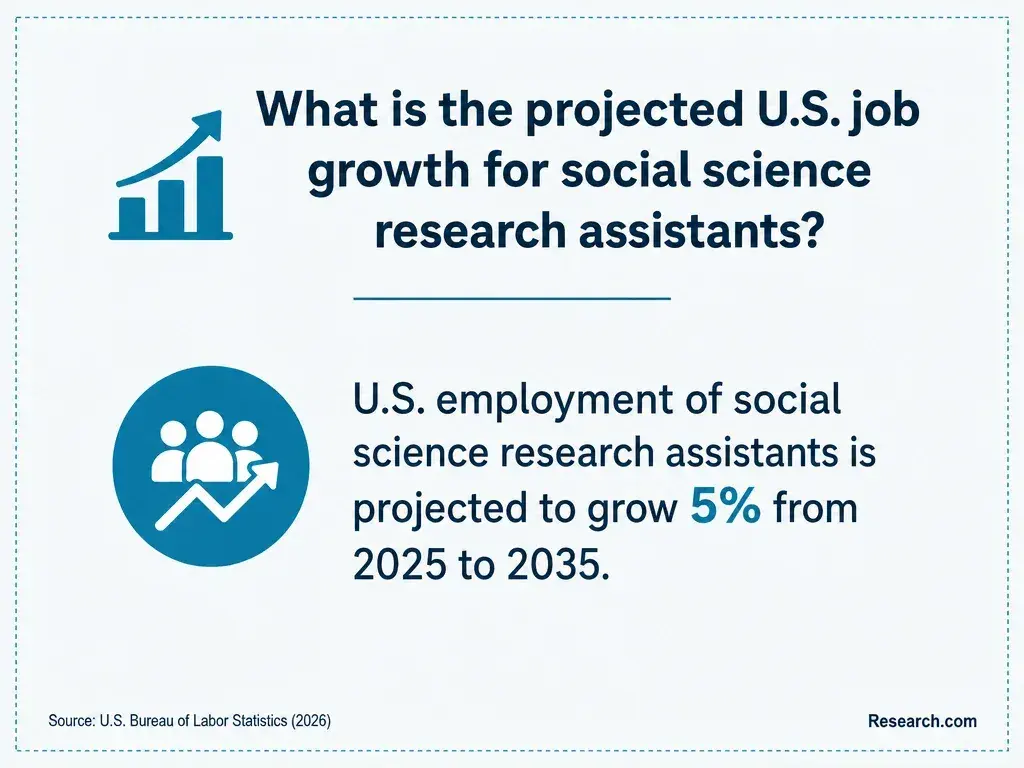
Depending on experience, credentials, and employer requirements, graduates may pursue recovery-support, community outreach, intake coordination, human-services assistance, or program-support positions. A psychology BA can also support applications to research-assistant roles when paired with methods skills and relevant project experience. Job titles alone are unreliable: compare the posting's actual duties, supervision, and credential requirements.
If you already coach, the most plausible gain may be broader responsibility - such as training support, resource coordination, or basic program evaluation - rather than entry into a new profession. Seek supervisor feedback and a nonconfidential work sample that demonstrates the desired skill. If you instead want forensic work, forensic psychology master's education and job earning prospects describe a distinct pathway; neither a BA nor a forensic course grants authority to conduct forensic evaluations. Psychologist and licensed counselor roles require additional, jurisdiction-specific professional preparation.
What Are the Salaries and Job Outlook for Mental Health Careers?
There is no reliable single salary or growth figure for "recovery coach": employers use several titles, and duties may fall across different occupational categories. The US Bureau of Labor Statistics tracks occupations such as social and human service assistants and substance abuse, behavioral disorder, and mental health counselors, but those categories do not isolate recovery coaches. The counselor category also includes roles with education and licensure requirements beyond a psychology BA. Its occupational median should not be presented as a coach's expected pay.
For a realistic comparison, review local postings that match your target duties and credential, then compare their stated pay with your current compensation and the degree's remaining cost. If higher-paying licensed counseling is your aim, account for the additional qualifying education and supervised experience before estimating a return; accelerated clinical counseling degrees and study length address that separate planning decision. Published occupational outlook figures can show broad demand, but local hiring rules determine which openings you can pursue.
Other Things You Should Know About Psychology
Ordinarily, a psychology degree does not require personal disclosure. A particular peer-support credential may have lived-experience criteria, so check its rules separately and ask how applicants' information is handled.
Do not submit identifiable client details without appropriate authorization. Ask your instructor and employer about confidentiality requirements, and use a fictional example or approved public material when needed.
Follow your organization's crisis, emergency, and safeguarding procedures, including applicable reporting obligations. Do not treat psychology coursework as a substitute for the training or authority required to assess and manage a crisis independently.
Online enrollment does not determine where you may provide services. Confirm your employer's policies, the relevant jurisdiction's rules, privacy requirements, and any limits attached to your credential before serving people across state lines.
- Chapter 6 - How To Become a Peer Specialist - NCBI https://www.ncbi.nlm.nih.gov/sites/books/NBK596268/
- Frequently Asked Questions for Mental Health Counselors | nysed.gov https://www.op.nysed.gov/professions/mental-health-counselors/faqs-education-requirements
- Online Psychology B.A. or B.S. Degree Completion Program | gsu.edu https://online.gsu.edu/program/psychology-ba-or-bs-completion-program/
- Professional Recovery Coach | Georgia Southern University https://careertraining.georgiasouthern.edu/training-programs/professional-recovery-coach/
- Credit for Prior Learning | LSU Online https://online.lsu.edu/prior-learning-assessment/
- CCAR Recovery Coach Professional (RCP) Designation | addictionrecoverytraining.org https://addictionrecoverytraining.org/rcp/
- Peer Recovery Coach | Careers of Substance https://careersofsubstance.org/your-career/career-paths/peer-recovery-coach
- Professional Recovery and Wellness Coach (PRC) | CCAPP Credentialing https://ccappcredentialing.org/sud-career-ladder/prc/