
Online MBA in Accounting: curriculum and workload for international applicants

Co-Founder and Chief Data Scientist
An online MBA in accounting can let you study at a US business school without leaving your job or country - but its courses, live-session schedule, and professional value may differ sharply from what you expect. For international applicants, the decision also depends on overseas enrollment rules, time zones, and whether the degree supports a career in the United States or elsewhere. This guide explains what you are likely to study, how to assess the workload, and which program details to confirm before you apply.
Key Things You Should Know
- An accounting MBA combines a broad management core with accounting-focused courses; it is not automatically equivalent to a specialized accounting master's degree or CPA preparation.
- Weekly effort depends on course design, enrollment pace, group projects, and live meetings - not credit hours alone. Confirm schedules in your time zone before applying.
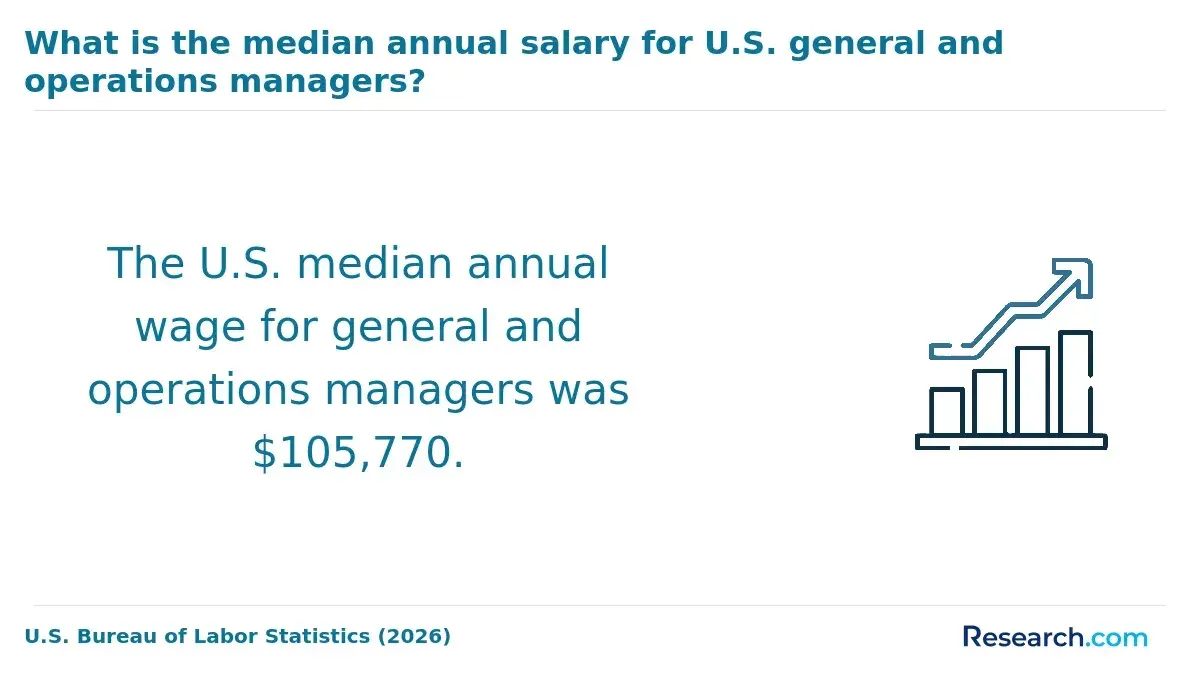
- The US median annual wage for management occupations was $126,520 in May 2025, according to the Bureau of Labor Statistics (BLS); that broad figure is not an expected salary for accounting MBA graduates.
What is an online MBA in accounting?
An online MBA in accounting is a graduate management degree with additional accounting study. The MBA core typically develops skills in finance, strategy, operations, marketing, analytics, and leadership. Accounting electives or a formal concentration may then examine how financial information informs decisions, controls, and organizational performance.
The designation matters: an MBA with one accounting elective is not necessarily an MBA with an accounting concentration. Check the degree requirements and ask whether the concentration appears on the transcript. Compared with a master's in accounting, the MBA generally devotes more of its curriculum to managing a business and less to advanced accounting practice.
Is an online MBA in accounting worth it for international students?
It can be worthwhile if you already work in accounting, finance, or business and want to manage teams, budgets, or financial decisions. Staying employed abroad may preserve income while you study. The value is less certain if your main goal is entry into technical accounting work: employers may place greater weight on local reporting knowledge, relevant experience, or a professional qualification.
Compare the full price and time commitment with the advancement available in your target country. Ask employers there how they view the US institution and degree; recognition and hiring practices are not uniform. If speed is central to your decision, comparisons of one-year graduate business programs mba programs can help you identify an accelerated option, but verify that its accounting coursework and schedule meet your needs.
An online MBA alone does not provide a US visa, permission to work in the United States, or access to campus recruiting. If US employment is your primary objective, investigate immigration eligibility and actual employer connections separately from the degree.
How does an online MBA in accounting compare with a campus program?
The academic award may be similar, but the way you participate can change its usefulness. Online study can preserve your current job and location; campus study may make in-person recruiting, networking, and experiential opportunities easier to access. Neither format guarantees those opportunities.
For an applicant overseas, "online" does not necessarily mean self-paced. Live discussions may fall overnight, and group members may be spread across time zones. Ask for sample class calendars, assessment rules, and the frequency of team assignments. If collaboration is a constraint, research on choosing online MBA programs with limited group work can frame the questions to ask; do not assume any program eliminates teamwork.
There is no universal accounting MBA curriculum. The table separates the course types you may encounter so you can judge how much accounting depth a particular program actually offers.
| Curriculum component | Typical focus | What to examine |
| MBA core | Managerial finance, strategy, operations, marketing, analytics, and leadership | How much of the degree remains available for accounting study |
| Accounting foundation | Financial statements, managerial accounting, budgeting, and costs | Whether introductory material duplicates your prior education |
| Accounting concentration or electives | Possible topics include auditing, taxation, financial reporting, or controls | Which courses are required, offered online, and available when you need them |
| Applied work | Case analysis, group projects, a capstone, or a consulting assignment, where offered | Whether projects involve realistic accounting decisions and workable meeting times |
MBA accounting courses often emphasize interpreting information and making management decisions. Do not infer that a course titled "taxation" or "auditing" provides the technical depth needed for a particular licensing exam. If you will work outside the United States, inspect course descriptions for coverage of the reporting standards and tax systems relevant to your career.
Expect recurring reading, recorded or live instruction, problem sets, discussion, and exams. Accounting assignments can require sustained work with financial statements and spreadsheets; projects may add meetings and revision time. A school's credit count alone cannot establish a reliable weekly-hour estimate because course design and your prior accounting knowledge matter.
Request a recent syllabus for a core accounting course and a concentration course. Check assignment frequency, exam windows, group-work expectations, and whether live sessions are mandatory. Convert every scheduled meeting to your local time, accounting for daylight saving changes in the US. Then test the busiest weeks against your work obligations rather than planning around an average week.
Taking fewer courses at once may make the workload manageable but extend your completion date. Explore MBA degree pacing options as a starting point, then verify the school's actual course sequence, leave policy, and maximum time to finish.
Requirements vary by school, but MBA applications commonly request prior university transcripts, a résumé, and written statements or recommendations. Schools set their own policies on work experience, entrance tests, and English-language evidence; a test waiver at one institution says nothing about another's policy.
International applicants should ask whether transcripts need a course-by-course credential evaluation, certified translation, or direct submission from the awarding institution. Also confirm whether the school accepts students physically located in your country. Admission to a US online program and permission to study or work in the United States are separate matters.
Completion time depends on required credits, the number of courses you take each term, and when accounting electives are offered. An accelerated route may require a demanding, fixed sequence; a slower route can offer more scheduling room while potentially adding term-based charges.
For a meaningful cost comparison, multiply required credits by the applicable tuition rate, then add mandatory fees, books or software, possible travel, and any payment or currency-conversion costs. Ask whether international online students pay a different rate and whether an accounting concentration adds credits. A guide to tuition-focused MBA program search online MBA tuition and total cost can help you organize those figures; the school's current written estimate should control your final budget.
Do not assume eligibility for US federal student aid. Check the school's funding rules and any employer assistance available in your country before committing to a payment plan.
Not automatically. US CPA eligibility is determined by the state or jurisdiction where you apply. A licensing authority may evaluate total education, specific accounting and business coursework, and foreign credentials separately. An MBA's management core can leave gaps in required accounting subjects even when the degree has an accounting concentration.
Choose a target jurisdiction before enrolling, obtain its current education rules, and compare them with your existing transcript and the MBA's course descriptions. Ask how foreign coursework is evaluated and seek a determination through the authority's designated process when available. If CPA eligibility is your chief goal, a targeted accounting master's program or individual qualifying courses may be more direct than an MBA.
For someone with relevant experience, the degree may support progression toward accounting management, financial planning and analysis leadership, controllership, or broader business management. Those paths involve different responsibilities: a controller oversees reporting and controls, while a planning leader uses financial information for forecasts and decisions. Senior roles generally require substantial experience in addition to graduate education.
BLS reports a median annual wage of $126,520 for US management occupations in May 2025. That figure covers many occupations and workers at different career stages; it is not an MBA salary estimate or a forecast of what an international graduate will earn. For a useful comparison, examine job postings in your intended location and occupation alongside your current pay and experience.
How can international students choose an accredited online MBA program?
Start by verifying the institution's recognized US accreditation and whether its business school holds separate specialized business accreditation. These are different checks; neither establishes CPA eligibility, recognition in another country, or the quality of a particular accounting course.
Next, compare the published accounting requirements with your career goal and obtain written answers about overseas enrollment, live sessions, exams, total charges, and access to career services from abroad. If cost is a major filter, a resource on online MBA financial planning mba programs may help build a shortlist, but confirm accreditation status and current program terms directly with each school.
Choose the program whose accounting depth and schedule you can use - not simply the one with the shortest timeline or lowest advertised tuition.
Other Things You Should Know About MBA
Not necessarily. Ask for course descriptions or syllabi if both reporting frameworks matter to your work.
Possibly, depending on your employer's policy. Confirm eligible schools, reimbursement limits, required grades, and any commitment to remain employed.
Do not assume so. Check location restrictions, proctoring software, identity-document rules, and permitted exam times before enrolling.
Transfer-credit policies vary. Ask the school to assess specific courses and explain whether accepted credits would replace core or accounting requirements.
- CPA License Applicants | nccpaboard.gov https://nccpaboard.gov/cpa-license-applicants/
- CPA Certification - Texas State Board of Public Accountancy https://www.tsbpa.texas.gov/candidates/certification/
- Evaluation of Foreign Degrees - United States Department of State https://www.state.gov/global-community-liaison-office/family-member-employment/family-member-employment-in-the-d-c-area/evaluation-of-foreign-degrees
- Online group projects in higher education - PMC https://pmc.ncbi.nlm.nih.gov/articles/PMC10038701/
- How many hours per week should I expect to spend on coursework? - UW-Madison Online https://online.wisc.edu/knowledgebase/how-many-hours-per-week-should-i-expect-to-spend-on-coursework/
- MBA Course Requirements - Accounting Major https://accounting.wharton.upenn.edu/programs/mba/acct-major/
- MBA/MS in Accounting - Academic Catalog https://catalog.uic.edu/gcat/colleges-schools/business-administration/actg/mba-ms-actg/
- Coursework | College of Business | Chicago State University https://www.csu.edu/collegeofbusiness/MBA/coursework.htm
- Admission Requirements - International Applicants | Graduate College https://grad.arizona.edu/admissions/requirements/international-applicants
- Synchronous vs. Asynchronous Learning | Saint Leo University https://www.saintleo.edu/about/stories/blog/synchronous-vs-asynchronous-learning-for-course-delivery


