2027 Online Instructional Design Degree Programs With No Personal Statement or Admissions Essay Required

Co-Founder and Chief Data Scientist
An online instructional design degree can be appealing when you want a streamlined application but still need a credible path into learning design, training, or educational technology. "No personal statement or admissions essay required" usually means the standard application omits that writing sample, not that admission is automatic.
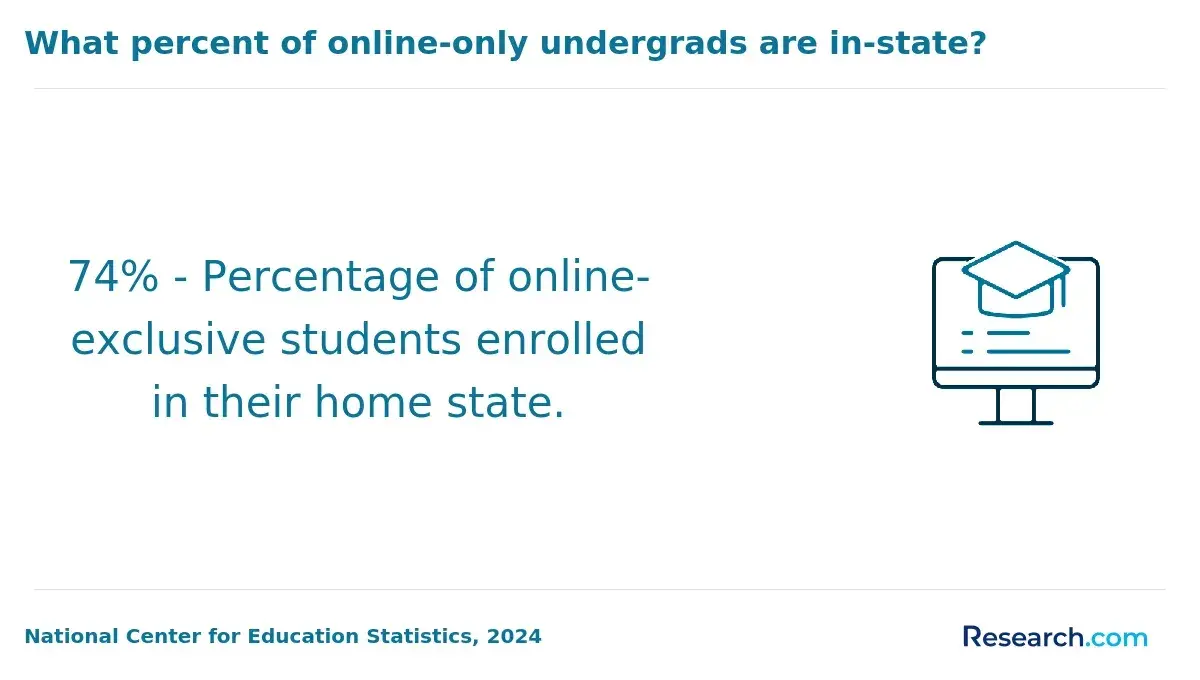
The National Center for Education Statistics reported that more than 7 million U.S. postsecondary students took exclusively distance education courses in fall 2023. This guide helps prospective and transfer students compare requirements, quality, costs, and career fit before applying.
Key Things You Should Know
- A true no-essay policy removes the standard personal statement from the admission application, but schools may still review transcripts, GPA, prerequisite coursework, recommendations, résumés, or graduate-school materials; it is not the same as open admission or automatic acceptance.
- Essay-optional means you may choose to submit writing, while essay-waived commonly means an essay is removed only for a defined applicant group, term, or condition. Scholarship, honors, assistantship, and special-program applications can still require essays.
- The U.S. Bureau of Labor Statistics reported a $65,850 median annual wage for training and development specialists in May 2024, but instructional design outcomes depend on portfolio development, relevant experience, employer needs, and the degree's curriculum, not on whether an admissions essay was required.
What Does No Personal Statement or Admissions Essay Required Mean for Online Instructional Design Degree Programs?
A no-personal-statement or no-admissions-essay policy means that the program does not require the applicant to submit a written narrative explaining goals, experiences, academic interests, or reasons for applying as part of its standard admissions file. This is most common when a school relies on academic records and objective eligibility criteria instead.
For instructional design, the policy may apply differently by credential. Online bachelor's completion programs may focus on prior college credits and general education requirements.
Master's programs in instructional design, learning experience design, educational technology, or training and development may still require a résumé, professional experience, writing sample, or statement for some applicants. A graduate certificate can have a simpler process than a degree, but it may not provide the same depth, financial-aid eligibility, or advancement value.
Read the wording carefully. "No essay required" should mean the essay is absent from the standard application checklist. It does not necessarily cover separate scholarship applications, graduate assistantships, honors programs, appeals for low GPA, or a later request from admissions for clarification.
| Policy term | What it usually means | What applicants should confirm |
| No essay required | No standard admissions essay or personal statement is listed. | Whether a résumé, writing sample, or supplemental form is still required. |
| Essay-optional | Applicants may submit an essay, often to add context. | Whether submitting it can help with review, admission, or scholarships. |
| Essay-waived | An essay requirement is removed for a specific group or application cycle. | The exact waiver conditions and whether they apply to your applicant type. |
| Open admission | Admission is broadly available to qualifying applicants, often at certain institutions. | Whether the instructional design major itself has additional entry requirements. |
A streamlined application can save time, especially for working adults applying to several programs. It should not be treated as evidence that a program has lower academic standards, stronger career preparation, or more flexible coursework.
What Admissions Requirements Do Online Instructional Design Degree Programs Use Instead of an Essay?
When an essay is not required, admissions teams generally assess readiness through records that are easier to verify. Requirements vary by institution and degree level, so use the program-specific checklist rather than a university-wide undergraduate or graduate admissions page.
The following requirements are common substitutes for a personal statement and can affect whether you are admitted, conditionally admitted, or asked to complete prerequisites first:
- Official transcripts from high school, colleges, universities, and sometimes previously attended graduate programs.
- A minimum cumulative GPA, which may differ for first-year, transfer, bachelor's completion, certificate, and master's applicants.
- Completion of required undergraduate coursework, such as statistics, research methods, education foundations, or introductory technology courses.
- A completed online application, residency information, and any required application fee or fee-waiver documentation.
- A résumé or employment history, particularly for graduate programs intended for educators, trainers, human resources professionals, or e-learning developers.
- Recommendation letters, which may be required even when a personal statement is not.
- English-language proficiency documentation when applicable under institutional policy.
Standardized testing is increasingly less central for many online programs, but test-optional and no-essay describe different policies. Test-optional means an institution does not require SAT, ACT, GRE, or similar scores from eligible applicants; it says nothing about essays. Conversely, a no-essay program may still require a test score, though this is less common in many online graduate admissions processes.
Applicants with a lower GPA should look for published conditional-admission rules rather than assume the absence of an essay removes academic thresholds. Conditional admission can require a limited initial course load, a minimum grade in early coursework, or completion of foundation classes before full standing.
Who Is a Good Fit for Online Instructional Design Degree Programs With No Admissions Essay?
No-essay online instructional design programs can fit applicants with a clear academic record who prefer to be evaluated primarily on transcripts, completed credits, and professional documentation. They are especially practical for adults returning to school, transfer students with substantial coursework, and professionals who need an efficient application process while working.
Instructional design prepares students to analyze learning needs, develop digital and instructor-led materials, build assessments, evaluate training, and use learning technologies. Career destinations may include corporate learning and development, higher education, K-12 support, health-care training, government training, and e-learning development.
The U.S. Bureau of Labor Statistics projects 12% employment growth for training and development specialists from 2023 to 2033, faster than the average for all occupations. That outlook is useful context, but it applies to the occupation broadly and does not guarantee a role for any degree holder.
A no-essay route is usually most suitable for these applicants:
- Transfer applicants whose transcripts already demonstrate college readiness and required general education progress.
- Working teachers, trainers, subject-matter experts, or human resources professionals who can document relevant experience through a résumé.
- Applicants seeking a bachelor's completion degree after earning an associate degree or prior college credit.
- Students with strong grades who do not need a written statement to explain gaps, a change in direction, or unusual academic circumstances.
- Career changers who plan to build a portfolio through coursework, projects, internships, or workplace learning-design assignments.
An essay-required or essay-optional program may be better if your transcript does not reflect your potential, you need to explain a GPA issue, or you are shifting from an unrelated field and want to demonstrate focused goals.
For example, a professional choosing between instructional design and business degrees online may benefit from an essay if their career-change rationale or leadership experience adds important context not visible in grades alone.
Do not choose a program solely because it has fewer application materials. A stronger fit has a curriculum aligned with the work you want to do, opportunities to create portfolio artifacts, accessible faculty support, and a schedule you can realistically complete.
These labels sound similar but produce different application strategies. The key distinction is whether writing is never part of the standard review, available as an applicant choice, or temporarily removed for people who meet stated waiver conditions.
This comparison shows how each policy can affect an applicant's decision.
| Admissions policy | Applicant action | Best use case | Potential limitation |
| No-essay | Submit required records without a standard personal statement. | You meet published criteria and want a faster, less writing-intensive application. | You may have fewer ways to explain context beyond transcripts and other documents. |
| Essay-optional | Decide whether an essay would add relevant evidence. | You have a compelling career transition, academic explanation, or professional goal. | Submitting a weak or generic essay may not strengthen the file. |
| Essay-waived | Confirm you meet the waiver's stated criteria. | You qualify through a partner agreement, prior degree, GPA, term-specific promotion, or applicant category. | The waiver may not apply to all students, future terms, or scholarship review. |
| Essay-required | Prepare a focused response to the prompt. | You want an opportunity to show writing, reflection, and professional direction. | It adds time and may require revisions before submission. |
Essay-optional policies often reward judgment rather than volume. Submit the optional essay when it contributes new, specific evidence: explain how teaching experience relates to learning design, describe a project that shows analysis skills, or clarify a documented disruption that affected grades. Do not submit one merely because it is available.
Essay waivers deserve extra caution. A school may waive the statement for applicants who already hold a degree, meet a GPA threshold, apply through an employer partner, or enter a particular online program. Save a copy of the current checklist or confirmation email because published terms can change between admissions cycles.
A no-essay application is easier to complete, but the decision process can still be selective. Schools can evaluate GPA, grades in prerequisite courses, transfer-credit eligibility, professional background, capacity in a cohort, and whether an applicant meets graduate-level preparation standards.
For instructional design programs, selectivity often varies more by degree level than by essay policy. A bachelor's program may admit students to the institution while requiring a later declaration of major.
A master's program may expect a completed bachelor's degree and a stated minimum GPA. Programs with design studios, practicum experiences, or limited faculty capacity may have additional review steps even without a personal statement.
Use these checks to distinguish a truly accessible program from one that simply has a short application:
- Find the admission requirements for your exact credential and applicant category, not just the university's general admissions page.
- Check whether the school publishes minimum GPA, prerequisite, degree-completion, or transfer-credit standards.
- Ask whether admission is full, provisional, conditional, or limited to a future term after review.
- Confirm whether your intended instructional design concentration has a separate portfolio, interview, technology, or field-experience requirement.
- Compare retention support, tutoring, course sequencing, and portfolio development - not only acceptance language.
If your priority is the quickest possible pathway, compare credential requirements and career outcomes rather than assuming all streamlined applications lead to the same work. Applicants exploring other career-oriented options may also examine an accelerated paralegal program, but they should assess the role-specific curriculum, employer expectations, and local hiring environment before changing directions.
A red flag is any provider that emphasizes "easy acceptance" while giving unclear information about accreditation, total cost, faculty, student services, or what graduates learn. Legitimate institutions should be able to explain their standards plainly.
Start with institutional accreditation. In the United States, an accredited institution is reviewed by an accreditor recognized by the U.S. Department of Education or the Council for Higher Education Accreditation. Institutional accreditation matters for federal financial aid eligibility, transfer-credit evaluation, and employer confidence, although acceptance of credits is always decided by the receiving school.
Instructional design does not generally have a single mandatory programmatic accreditation comparable to regulated clinical professions. Therefore, evaluate quality through curriculum, faculty expertise, instructional delivery, student support, and evidence that students develop usable work samples.
Specialized fields may have external standards. For comparison, students researching clinical communication disorders should verify whether ASHA approved SLP programs online meet profession-specific requirements. Instructional design applicants should similarly verify the standards relevant to their own intended workplace.
Before enrolling, look for evidence in these areas:
- A clearly identified institutional accreditor and an accreditation status that can be independently confirmed.
- Courses in learning theory, needs assessment, instructional strategy, accessibility, assessment, evaluation, multimedia development, and learning technologies.
- Opportunities to produce a portfolio, such as storyboards, e-learning modules, design documents, evaluation plans, or accessible learning materials.
- Faculty with relevant academic preparation and professional experience in instructional design, learning technology, adult learning, training, or related disciplines.
- Transparent information about online course format, live-session expectations, practicum requirements, technical support, and accessibility services.
- Published tuition, fees, refund rules, transfer-credit policies, and graduation requirements.
Ask whether courses address accessible design, including captions, readable documents, navigation, and inclusive assessment. Employers increasingly expect learning professionals to understand digital accessibility and responsible use of AI-enabled authoring tools. A program need not teach every platform, but it should help students apply transferable design, evaluation, and ethical-use skills.
The process is usually shorter because there is no standard statement to draft, but applicants should still allow time for transcript processing and transfer evaluation. Application portals may show a checklist that updates only after each institution sends records directly.
Follow this sequence to avoid missing requirements or applying under the wrong policy:
- Identify the exact online instructional design degree, concentration, start term, and applicant category.
- Read the current program-level admissions page and download or save the requirements list.
- Confirm in writing that no personal statement, admissions essay, or writing sample is required for your applicant type and term.
- Request official transcripts early, including records from every previously attended college when required.
- Prepare supporting documents such as a résumé, recommendation contacts, proof of degree completion, or prerequisite-course records.
- Submit the application and application fee or fee-waiver request before the posted deadline.
- Monitor the portal and respond promptly if admissions requests clarification, additional records, or an academic explanation.
- After admission, review transfer credit, financial-aid steps, course availability, orientation, and technology requirements before committing.
Keep screenshots or PDFs of the checklist and email confirmations. This is useful if a general university page conflicts with the program's online application portal or if a waiver is listed for a limited time.
Do not confuse admission with registration. Some programs require an orientation, adviser approval, background check for a field placement, or completion of technical onboarding before you can begin courses.
Many online programs use no-essay admission pathways for transfer and adult students, particularly bachelor's completion programs. These applicants may be evaluated chiefly on postsecondary transcripts, transferable credits, prior degree status, and completion of lower-division requirements.
Transfer policies can be more consequential than the essay policy. A program that accepts your application without an essay may still accept only certain credits, require official course descriptions or syllabi, limit how long ago coursework was completed, or require a minimum number of credits earned through the institution. Obtain a preliminary transfer evaluation whenever possible before making enrollment decisions.
Adult learners should also ask how professional learning is recognized. Some schools offer credit for prior learning, military training evaluation, standardized examinations, or portfolio assessment, but these routes have their own rules and may involve fees. A résumé is not automatically college credit.
For professionals considering a career change, compare degree level and field alignment. Someone with a bachelor's degree who wants behavior-focused graduate preparation, for example, should examine academic prerequisites and supervised-practice rules separately from admissions convenience when evaluating BCBA masters programs. The same principle applies to instructional design: convenient entry does not replace the coursework or experience employers expect.
Before applying as a transfer or adult student, confirm whether you are classified as a transfer, post-baccalaureate, second-degree, graduate, certificate, or nondegree applicant. Each category can have different deadlines, documentation standards, and essay rules.
No-essay admissions policies do not inherently make tuition lower or higher. Tuition is typically determined by the institution, degree level, residency rules where applicable, credit load, and required fees. A simple application can reduce your time cost, but it does not determine the total price of completing the credential.
Use the school's net price information and aid offer to compare your likely cost rather than relying only on per-credit tuition. Include technology fees, online-course fees, books, software, required residencies, and the number of credits likely to transfer. If a program accepts fewer credits than expected, its apparently low per-credit cost may result in a higher total bill.
Federal financial aid depends on eligibility, enrollment status, satisfactory academic progress, and participation in an eligible program - not on whether an admissions essay was required. Complete the Free Application for Federal Student Aid (FAFSA) according to the school's deadlines and ask the financial-aid office whether the program is eligible for the aid you expect to use.
Scholarships are a separate issue. Many institutional and private scholarships request essays, short answers, recommendations, or evidence of community involvement even when the academic program has no essay requirement. Do not skip scholarship applications just because your admission file is essay-free.
| Cost or aid factor | Why it matters | What to verify |
| Per-credit tuition | It is only one part of total cost. | Required credits after transfer evaluation and whether rates change by residency or program. |
| Mandatory fees | Online, technology, graduation, and course fees can add to billed costs. | A full fee schedule for online students. |
| Transfer credit | Accepted credits can reduce time and total tuition. | Maximum transfer limit, course equivalencies, and final evaluation timing. |
| Federal aid | Eligibility can help cover approved educational costs. | Program eligibility, enrollment requirements, and FAFSA deadlines. |
| Scholarships | They may reduce out-of-pocket cost but often have separate applications. | Essay, deadline, GPA, enrollment, and renewal conditions. |
A useful comparison is the net cost after grants and scholarships, plus realistic borrowing needs, rather than the advertised application convenience. Review loan terms carefully and avoid treating potential aid as guaranteed until it appears in an official offer.
How Should You Compare Online Instructional Design Degree Programs With No Admissions Essay?
Compare programs using an outcome-first approach: begin with the role you want, then assess whether each program's curriculum, format, cost, and admission standards support that goal.
Common instructional design roles include instructional designer, learning experience designer, e-learning developer, training specialist, curriculum developer, and learning and development coordinator. Job titles and degree expectations differ by employer.
The comparison points below help separate a convenient application from a strong educational investment.
| Comparison factor | Why it matters for instructional design | Question to ask |
| Credential and curriculum | A certificate, bachelor's degree, and master's degree serve different career stages. | Does the course sequence build design, technology, assessment, evaluation, and accessibility skills? |
| Portfolio development | Employers often want evidence of practical design work. | What finished artifacts will I create, and can I retain them in a professional portfolio? |
| Online format | Asynchronous and live courses require different schedules and participation styles. | Are there required meeting times, group projects, practica, or residencies? |
| Faculty and support | Feedback can improve project quality and career preparation. | Who teaches the courses, and what advising, tutoring, and career support are available online? |
| Total cost | Low published tuition may not reflect fees or lost transfer credits. | What is my estimated total cost after accepted credits and likely aid? |
| Admissions policy | No essay may simplify applying but does not establish quality. | Are there GPA, prerequisite, recommendation, portfolio, or conditional-admission requirements? |
Build a short list of two to four accredited options, then contact each admissions office with the same questions. Ask whether the no-essay policy applies to your start term, whether any supplemental writing can be requested, how many credits are likely to transfer, and when you will receive a final cost estimate.
Consider an essay-required program if it offers a substantially better curriculum fit, stronger portfolio support, or access to specialization you need. For professionals whose longer-term goal is executive learning leadership or organizational change rather than hands-on instructional design, an online PhD in leadership represents a distinct advanced pathway and should be compared on purpose, time commitment, research expectations, and cost.
Finally, watch for common mistakes: assuming no essay means admission is guaranteed, overlooking prerequisites, accepting a vague accreditation claim, ignoring separate scholarship essays, and choosing based on speed alone. The best program is the one whose requirements you can meet and whose learning outcomes match the work you intend to pursue.
Other Things You Should Know About Instructional Design Programs
Not always. Policies can differ for first-year, transfer, graduate, international, readmission, and nondegree applicants. Confirm the requirement for your exact program, degree level, start term, and applicant category.
Yes. Admissions may request clarification about transcripts, academic history, prerequisite coursework, or eligibility. This is different from a standard required personal statement, but you should be prepared to respond clearly and promptly.
Often, yes. Scholarship applications may have separate essays, short-answer prompts, recommendations, or renewal requirements. Review the financial-aid and scholarship pages independently from program admissions requirements.
Instructional design is not generally a licensed profession in the United States. Requirements depend on the setting: K-12 roles may favor educator credentials, while corporate roles often prioritize portfolio quality, learning technology skills, subject knowledge, and relevant experience.
- Top 20 Online Master's in Instructional Design https://www.topeducationdegrees.org/rankings/online-masters-instructional-design/
- Do You Still Need Essay Writing Programs in an AI Era? https://www.c2educate.com/is-an-essay-writing-program-right-for-you/
- Do You Need a Masters Degree to be an Instructional Designer? https://www.yourlearningcareer.com/do-you-need-a-masters-degree-to-be-an-instructional-designer/
- Admission Essay vs Personal Statement | What's the Difference? https://www.proof-reading.com/resources/admission-essay-vs-personal-statement