2027 Online Industrial Engineering Degree Programs With No Application Fee and Rolling Admissions

Co-Founder and Chief Data Scientist
Choosing an online industrial engineering degree is partly an admissions decision and partly a return-on-investment decision. The appeal is clear: no application fee lowers the cost of comparing programs, while rolling admissions can help working adults start sooner.
The Bureau of Labor Statistics reports a 2024 median pay of $101,140 for industrial engineers and projects 12% employment growth from 2024 to 2034, which makes program quality and affordability worth checking carefully. This guide shows how to compare flexible admissions policies without overlooking tuition, accreditation, start dates, transfer credit, and career fit.
Key Things You Should Know
- No application fee usually saves only $30 to $100 per school, so the bigger financial decision is total tuition, technology fees, transfer-credit acceptance, employer reimbursement, and financial aid eligibility.
- Rolling admissions means applications are reviewed as they arrive, but schools may still have priority dates for scholarships, course registration, visa processing, transcript evaluation, or a specific term start.
- Industrial engineering can support roles in process improvement, logistics, manufacturing, healthcare systems, analytics, and operations; BLS projects 12% growth for industrial engineers from 2024 to 2034, but outcomes vary by experience, location, degree level, and technical skills.
Which Online Industrial Engineering Degree Programs Have No Application Fee and Rolling Admissions?
The direct answer is that true online industrial engineering programs advertising both a waived application fee and rolling admissions are relatively uncommon. Many reputable online industrial engineering programs have one of the two features, but not both: they may charge an application fee, use fixed graduate deadlines, or accept students for only certain terms.
Because application-fee waivers and admissions calendars change, students should treat any shortlist as a starting point rather than a final answer. The table below shows how to evaluate programs that publicly market online industrial engineering or closely related industrial engineering graduate study and flexible admissions features.
| Program or program type | Degree level | Online format | No application fee status | Rolling admissions status | Best fit |
| LSU Online Master of Science in Industrial Engineering | Master's | Online | Commonly promoted by LSU Online as no application fee for many online programs; students should confirm on the program application page before submitting | Multiple online start dates are typically available; students should verify the exact review and start-date calendar | Working professionals seeking a direct industrial engineering graduate pathway with flexible online enrollment |
| Online master's in industrial engineering at public research universities | Master's | Online or hybrid-online | Often not free; many graduate schools charge a central application fee | May use priority or fixed deadlines rather than true rolling admission | Students who prioritize research reputation, ABET-linked engineering departments, and technical depth over fee savings |
| Online engineering management programs with industrial engineering coursework | Master's | Online | More likely to waive application fees at some institutions | More likely to offer rolling admissions or multiple annual starts | Engineers moving toward operations leadership, quality systems, supply chain, or process management |
| Online operations, systems engineering, or manufacturing engineering programs | Bachelor's or master's | Online, hybrid, or low-residency | Varies widely | Varies widely | Students whose career goal overlaps with industrial engineering but does not require a degree titled "industrial engineering" |
A no-fee, rolling-admission program is most valuable when it is also academically aligned with your goal. Industrial engineering is a quantitative field, so a lower-friction application process should not outweigh curriculum quality in optimization, statistics, simulation, data analysis, production systems, human factors, supply chain, and quality improvement.
Students comparing industrial engineering with adjacent online fields should be careful not to broaden the search too far. For example, an affordable business administration degree may build management skills, but it will not usually substitute for the engineering, analytics, and systems-design coursework expected in industrial engineering roles.
Before adding a program to your application list, check these items directly with the admissions office. This prevents two common mistakes: assuming "online" means fully asynchronous and assuming "rolling" means every applicant can start immediately.
- Ask whether the application fee is automatically waived or requires a waiver code, employer partnership, webinar attendance, military status, or early application.
- Confirm whether admissions are truly rolling or whether the school uses priority deadlines for each start date.
- Ask how many annual start dates are available and whether all required courses are offered at each start.
- Request a full tuition-and-fee estimate for your expected number of credits, including online, technology, graduation, transcript, and proctoring fees.
- Verify whether the degree title, transcript, and diploma identify the program as online or campus-based, if that matters to your employer.
How Does Rolling Admission Work for Online Industrial Engineering Degree Programs?
Rolling admission means a school reviews applications as they are completed instead of waiting until one fixed deadline has passed. For online industrial engineering students, that can shorten the time between deciding to apply and receiving an admissions decision, especially at programs with several start dates per year.
Rolling admission does not mean unlimited seats, automatic acceptance, or no deadlines. Graduate engineering departments still need time to evaluate transcripts, prerequisite math and engineering coursework, recommendation letters, statements of purpose, and sometimes international credential evaluations.
The comparison below shows why rolling admission can feel flexible but still requires planning. Use it to decide whether you need speed, scholarship consideration, or the strongest possible application review.
| Feature | Rolling admissions | Fixed-deadline admissions | Decision impact |
| Application review | Reviewed after the file is complete | Reviewed after a stated deadline or in admission rounds | Rolling review may produce faster decisions |
| Start-date flexibility | Often tied to multiple terms or sessions | Often tied to fall, spring, or summer admission | Rolling programs can help students avoid waiting a full semester |
| Scholarship timing | May still have priority dates | Usually tied to deadline rounds | Applying late can reduce aid options even if admission remains open |
| Course availability | Not always identical across every start date | Usually mapped to a standard academic calendar | Students should confirm first-semester course options |
| Admissions selectivity | Standards still apply | Standards still apply | Rolling admission is a timing model, not a lower-quality review |
Rolling admissions are especially useful for working adults who need to align school with employer tuition reimbursement, relocation, military service, or family responsibilities. Similar flexibility appears in other online pathways, including paralegal courses online, but engineering students should pay closer attention to prerequisites because math and technical sequencing can delay progress if courses are missed.
A practical rolling-admission timeline should work backward from the start date you want. Most students should allow time for transcripts, recommendation requests, prerequisite review, financial aid processing, and an employer reimbursement decision.
- Choose a target start date and ask the program for the last date to submit a complete file for that term.
- Order official transcripts early, especially if you attended multiple colleges or earned international credits.
- Ask recommenders at least three to four weeks before you want the application reviewed.
- Submit the FAFSA and any institutional aid forms before priority aid dates, even if admissions remain open later.
- Confirm course registration dates because admitted students may still lose access to preferred classes if they apply too close to the term.
How Much Can Students Save by Choosing an Online Industrial Engineering Degree With No Application Fee?
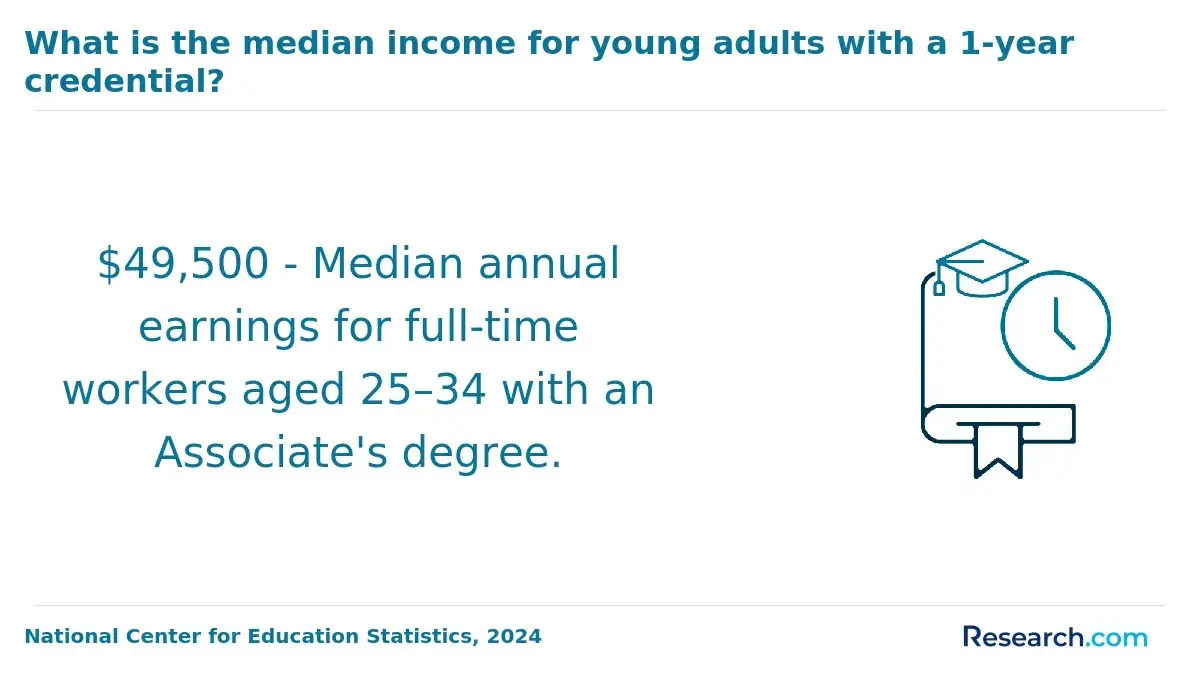
A waived application fee is useful, but it is rarely the main cost driver. If a student applies to four programs that each would have charged $60, the immediate savings would be $240. That helps, especially for applicants comparing several schools, but it is small compared with graduate tuition, course fees, books, software, and the opportunity cost of time.
The more important question is whether the no-fee program remains affordable after all required credits and fees are counted. College Board's 2024 Trends in College Pricing and Student Aid report lists average published tuition and fees for public four-year in-state undergraduates at $11,610 and private nonprofit four-year undergraduates at $43,350 for the academic year, illustrating how institution type and pricing structure can create much larger differences than an application fee.
The table below separates application-stage savings from enrollment-stage costs. This distinction matters because a program can be free to apply to but still expensive to complete.
| Cost category | What to check | Why it matters more than the application fee |
| Application fee | Whether the fee is automatically waived or conditional | It affects comparison shopping but not long-term affordability |
| Tuition per credit | Resident, nonresident, online, and graduate rates | Small per-credit differences multiply across a full degree |
| Required credits | Total credits after transfer or prerequisite review | A lower tuition rate can lose value if more credits are required |
| Online and technology fees | Per-credit, per-course, or per-term charges | These can raise the actual cost beyond advertised tuition |
| Residency or campus requirements | Travel, lodging, time off work, and lab visits | A mostly online program may still create in-person costs |
| Employer reimbursement rules | Grade minimums, annual caps, eligible schools, and repayment clauses | Employer support can matter more than a waived fee |
Students should avoid choosing a higher-tuition program simply because it has no application fee. A better strategy is to use free applications to compare more programs, then make the final decision based on total net cost, accreditation, course fit, scheduling, student support, and career relevance.
To calculate the real savings, build a simple side-by-side estimate before enrolling. Include costs that are easy to miss because they are not always shown in the marketing price.
- Total tuition based on the exact number of credits you must complete after transfer evaluation
- Mandatory online, technology, student services, graduation, and proctoring fees
- Books, analytics software, statistical packages, simulation tools, or required hardware
- Travel costs for any residency, orientation, lab, exam, or presentation requirement
- Lost income or reduced hours if the program requires synchronous attendance during work time
- Estimated employer tuition reimbursement, scholarships, grants, and federal loan eligibility
No-fee application policies usually do not reduce academic expectations. Online industrial engineering programs, especially at the master's level, often look for evidence that applicants can handle advanced quantitative coursework in probability, statistics, optimization, systems modeling, engineering economics, production systems, and data-driven decision-making.
Requirements vary by institution and degree level, but the table below summarizes the items students most often need to prepare. It also explains why each item matters in an engineering admissions review.
| Requirement | Common expectation | Why it matters |
| Prior degree | Bachelor's degree for master's programs; high school diploma or equivalent for bachelor's programs | Confirms academic level and eligibility for the degree |
| Academic background | Engineering, math, computer science, physics, technology, or related quantitative preparation | Shows readiness for technical industrial engineering coursework |
| Prerequisite coursework | Calculus, statistics, linear algebra, programming, engineering economy, or operations research may be required | Missing prerequisites can delay enrollment or require bridge courses |
| GPA | Minimums vary, and some schools review recent or major-specific coursework more heavily | Helps admissions teams assess academic consistency |
| Resume | Professional experience, internships, process improvement work, manufacturing, analytics, logistics, or quality roles | Connects the applicant's background to program outcomes |
| Statement of purpose | Career goals, technical interests, and reason for choosing the program | Shows fit between the student's goals and the curriculum |
| Recommendations | Academic or professional references, depending on the school | Provides outside evidence of readiness and work habits |
| Test scores | GRE may be optional, waived, or not required at many online programs | Policies vary, so students should verify before spending time or money on testing |
| English proficiency | Required for many applicants whose prior education was not in English | Confirms readiness for graduate-level technical communication |
Applicants from non-engineering backgrounds are not always excluded, but they should expect closer review. Some programs admit students conditionally if they complete bridge coursework first, while others require a stronger technical foundation before admission.
Students comparing industrial engineering with other online graduate pathways should also recognize that admissions flexibility differs by field. An accelerated master's in psychology online, for example, may emphasize different prerequisites, supervised experience, or licensure considerations, while industrial engineering usually focuses more heavily on quantitative readiness and technical coursework.
Before applying, gather evidence that answers the admissions committee's main question: can you succeed in a rigorous online engineering curriculum? The strongest applications make that answer easy to see.
- Highlight coursework or work experience involving statistics, process improvement, programming, operations, manufacturing, supply chain, quality control, simulation, or data analysis.
- Use the statement of purpose to name the industrial engineering problems you want to solve, such as reducing waste, improving throughput, optimizing staffing, or designing safer systems.
- If your GPA is uneven, explain improvement patterns and point to recent quantitative coursework or professional achievements.
- Ask recommenders to discuss analytical ability, independence, communication, and follow-through in remote or project-based settings.
- Request a prerequisite review before enrolling so you do not discover missing coursework after admission.
Students should apply earlier than the final rolling-admission cutoff whenever possible. Early submission gives the school time to evaluate transcripts, request missing materials, award available aid, and help the student register for the right first courses.
A good rule is to start preparing two to four months before the desired start date, longer if you need international transcript evaluation, prerequisite review, employer approval, or recommendation letters. For online programs with shorter academic sessions, waiting until the last minute can limit course choice even if admission is still technically open.
The table below shows how application timing affects common student priorities. It can help you decide whether to apply now, wait for a stronger file, or target a later start date.
| Student priority | Best application timing | Reason |
| Maximize scholarship consideration | Before priority aid deadlines | Some aid funds are limited even when admission remains open |
| Start as soon as possible | As soon as transcripts and core materials are ready | Rolling review may reduce waiting time |
| Use employer tuition assistance | Before the employer's approval cycle closes | Company reimbursement may require pre-approval |
| Transfer graduate credits | Early enough for a formal credit review | Transfer evaluation can change cost and time to completion |
| Strengthen a weak application | After completing a relevant course or certification | A stronger file may be better than a faster submission |
Rolling admissions can be especially helpful for students who missed a traditional deadline elsewhere. However, speed should not come at the expense of fit. If a fixed-deadline program offers a stronger curriculum, lower net cost, better faculty match, or more employer recognition, it may be worth waiting.
Students who are comparing speed-focused online education options across fields may also want to review how accelerated and compressed formats work in one year doctoral programs. Industrial engineering master's programs are usually not that compressed, but the same lesson applies: faster entry is valuable only when the academic model supports the student's workload and goals.
Common timing mistakes are easy to avoid if you treat rolling admission as rolling review, not rolling preparation. Build your calendar around the program's actual enrollment process.
- Do not wait until the last posted date if you need financial aid, transfer review, or employer reimbursement approval.
- Do not assume every start date includes the same core industrial engineering courses.
- Do not submit an incomplete file just because applications are accepted continuously.
- Do not overlook separate deadlines for scholarships, assistantships, veterans benefits, or international documents.
- Do not resign from work, relocate, or reduce hours until you have admission, cost, and course-registration details in writing.
A strong industrial engineering application shows more than interest in engineering. It demonstrates quantitative readiness, professional maturity, and a clear reason for studying systems improvement, productivity, logistics, quality, human factors, or operations analytics.
For many applicants, the most effective strategy is to connect past experience to future coursework. A manufacturing supervisor, healthcare operations analyst, military logistics specialist, software quality analyst, or supply chain coordinator can all make a strong case if they show how industrial engineering methods will deepen their problem-solving ability.
Use the following steps to make your application easier to evaluate. They are especially important in rolling admissions because schools may review your file quickly once it is complete.
- Map your background to the curriculum by identifying courses that match your goals, such as operations research, simulation, quality engineering, ergonomics, data analytics, or supply chain systems.
- Quantify work achievements where possible, such as reducing cycle time, improving scheduling, lowering defects, standardizing processes, or supporting automation projects.
- Address prerequisite gaps before applying or explain your plan to complete bridge coursework.
- Choose recommenders who can speak to analytical thinking, independent work, communication, and persistence in technical projects.
- Write a focused statement of purpose that names the industries, systems, or operational problems you want to work on.
- Prepare for online learning by confirming time availability, software access, exam proctoring rules, and synchronous session expectations.
Applicants should also be realistic about AI and automation. Industrial engineering increasingly intersects with data tools, simulation software, process automation, digital twins, and analytics-supported decision-making. You do not need to be a machine learning expert to apply, but comfort with data, spreadsheets, programming basics, and statistical reasoning can strengthen both the application and the student's later performance.
If your background is closer to information technology than manufacturing or operations, compare the curriculum carefully before applying. A cybersecurity online degree may be a better fit for students whose primary goal is network defense, risk management, or security operations rather than industrial systems optimization.
The strongest applications also avoid exaggeration. Admissions committees do not need a perfect career story; they need credible evidence that the applicant understands the degree, can handle the workload, and has a practical reason for choosing industrial engineering online.
A no-fee application does not make a program less legitimate by itself. Schools waive application fees for many reasons: recruitment strategy, online-program promotion, employer partnerships, military-affiliated admissions, alumni incentives, or limited-time campaigns. The real question is whether the institution and program meet recognized academic standards.
For U.S. students, institutional accreditation is the baseline. It affects federal financial aid eligibility, transfer-credit recognition, employer acceptance, and graduate-school pathways. Programmatic accreditation is also important in engineering, especially at the bachelor's level, where ABET accreditation can matter for certain employers, graduate programs, and professional engineering licensure pathways.
The table below summarizes what to verify before trusting any no-fee, rolling-admission online industrial engineering program. This is one of the most important checks because admissions convenience can distract students from quality signals.
| Quality check | What to verify | Why it matters |
| Institutional accreditation | The college or university is accredited by a recognized institutional accreditor | Supports financial aid eligibility and broad academic recognition |
| Engineering accreditation | ABET status for bachelor's engineering programs when relevant | Can affect licensure pathways and employer expectations |
| Degree title | The official transcripted degree name | Prevents confusion between industrial engineering, engineering management, operations management, and industrial technology |
| Faculty qualifications | Engineering faculty experience, research, industry background, and teaching role in the online program | Shows whether the online program has academic depth |
| Student outcomes | Career services, employer connections, graduation information, and alumni pathways when available | Helps evaluate value beyond admissions convenience |
| Online requirements | Synchronous sessions, proctored exams, labs, residencies, software, and time-zone expectations | Confirms whether the program is workable for your schedule |
Students considering engineering licensure should be especially careful. Industrial engineers do not always need a Professional Engineer license, but some roles in consulting, public-sector work, safety-critical systems, or regulated environments may value or require licensure. Licensure rules vary by state, and online students should verify requirements with the relevant state board before enrolling.
Red flags include vague accreditation language, unclear tuition, pressure to enroll immediately, missing faculty information, no official catalog listing, unrealistic completion promises, or refusal to provide written confirmation of fees and start dates. A legitimate program should be willing to answer specific questions before you apply.
- Ask for the exact accreditor name and verify it through official accreditation databases.
- Request the catalog page for the degree, not just the marketing page.
- Confirm whether the program is industrial engineering, industrial engineering technology, systems engineering, engineering management, or operations management.
- Ask whether online students receive the same academic credit, transcript language, and faculty access as campus students.
- Verify licensure implications if your target role may require Professional Engineer eligibility.
Financial aid can matter far more than a waived application fee. Online industrial engineering students may use federal loans if the institution and program are eligible, and some students also combine employer tuition assistance, military education benefits, scholarships, payment plans, and transfer credits.
For graduate students, Federal Student Aid currently lists the annual Direct Unsubsidized Loan limit for many graduate or professional students at $20,500. That figure helps students understand borrowing capacity, but it should not be treated as a target; borrowing less is usually preferable when tuition discounts, employer reimbursement, or slower part-time enrollment can reduce debt.
The table below shows cost variables that often differ among online engineering programs. Use it to compare the net cost of attendance rather than the advertised tuition line alone.
| Cost or aid factor | What can vary by program | Question to ask |
| Tuition rate | Resident, nonresident, online-only, cohort, or flat-rate pricing | What is my exact tuition rate for this online industrial engineering program? |
| Credit requirement | Typical master's programs may require different credit totals depending on thesis, non-thesis, or transfer options | How many credits will I personally need after transcript review? |
| Transfer credit | Some programs accept prior graduate engineering credits, while others limit transfer credit sharply | Which prior courses can reduce my required credits? |
| Fees | Online, technology, student services, graduation, proctoring, and course fees | Which fees are mandatory for online students? |
| Financial aid deadlines | Admissions may be rolling while aid deadlines are fixed | What aid deadlines apply to my intended start date? |
| Employer reimbursement | Annual caps, eligible grades, pre-approval, and repayment obligations | Will my employer reimburse this specific program and format? |
| Time to completion | Part-time students may pay over more terms, while full-time students may reduce time away from career advancement | How will my pace affect fees, workload, and reimbursement? |
Students should compare at least three cost scenarios: fastest completion, part-time completion, and lowest-debt completion. The cheapest option on paper is not always the best if it delays graduation, blocks employer reimbursement, or creates an unsustainable workload.
Use a short decision checklist before committing to a program. The goal is to understand the total net price before enrollment, not after the first bill arrives.
- Ask for a written program cost estimate based on your degree level, residency status, and expected credit load.
- Submit the FAFSA early if you plan to use federal aid, even when admission decisions are rolling.
- Request transfer-credit evaluation before comparing final prices.
- Check whether scholarships require a separate application or earlier priority date.
- Confirm whether employer reimbursement is paid upfront, after grades post, or after a service commitment.
- Compare monthly cash-flow impact, not just total tuition, if you will study while working.
No-fee, rolling-admission online industrial engineering programs are most helpful for students who need flexibility but are still disciplined enough to compare quality and cost. They are especially useful when the applicant wants to explore multiple schools without paying several application fees and does not want to wait for a single annual admissions cycle.
The best-fit students often share practical constraints: full-time jobs, family responsibilities, employer tuition deadlines, military schedules, relocation uncertainty, or a need to start after missing a traditional deadline. For these students, rolling admission can reduce friction and help turn planning into enrollment.
The table below identifies who benefits most and who should be cautious. It can help students decide whether admissions flexibility should be a major factor or only a small bonus.
| Student profile | Why no-fee and rolling admissions help | Main caution |
| Working engineers and technical professionals | They can apply around work projects, reimbursement cycles, and family schedules | They still need to confirm workload and synchronous class expectations |
| Applicants comparing several programs | No application fee lowers the cost of building a broader shortlist | They should not apply randomly without checking fit |
| Students who missed a fixed deadline | Rolling review may allow a sooner start at another qualified program | A later start at a stronger program may still be better |
| Career changers with quantitative backgrounds | Flexible review may help them discuss bridge coursework and readiness | They may need prerequisites before full admission |
| Students relying on financial aid or scholarships | No-fee applications reduce upfront costs | Aid deadlines may be earlier than admissions deadlines |
| Students choosing only by convenience | They may enroll faster | They risk overlooking accreditation, total cost, and curriculum quality |
Students should avoid choosing this pathway primarily because it is easy to apply. Industrial engineering is a technical field, and the degree is most valuable when it builds the skills needed for the student's target role, such as process engineer, quality engineer, logistics analyst, operations research analyst, manufacturing systems specialist, healthcare process improvement analyst, or supply chain optimization professional.
Students whose goals are mainly administrative, finance-focused, marketing-focused, or general management-oriented may want a broader management degree instead. Conversely, students who want deep quantitative operations training should make sure they are not substituting a general business program for industrial engineering simply because the admissions process is easier.
How Should Students Choose Among No-Fee Online Industrial Engineering Degree Programs?
The best choice is the program that offers the strongest combination of academic fit, total affordability, admissions flexibility, recognized accreditation, and career relevance. No application fee and rolling admissions are useful decision factors, but they should function as tie-breakers, not the foundation of the decision.
Start with your career goal, then work backward. A student aiming for manufacturing process improvement may need different courses than someone targeting logistics analytics, healthcare systems, human factors, operations research, or engineering management. If two programs are similar in quality and cost, the no-fee, rolling-admission option may be the more convenient choice.
The table below gives a practical scoring framework. Use it to compare programs consistently instead of being swayed by marketing language.
| Decision factor | What strong programs show | When to be cautious |
| Curriculum fit | Courses match your target roles and technical skill gaps | The degree title sounds right, but courses are mostly general management |
| Total net cost | Tuition, fees, aid, transfer credit, and reimbursement are clear | The school highlights no application fee but does not provide full cost details |
| Admissions flexibility | Rolling review, multiple starts, and clear enrollment dates are documented | "Rolling" is used vaguely without term-specific deadlines |
| Accreditation | Institutional accreditation is clear, and engineering accreditation is addressed where relevant | Accreditation claims are hard to verify |
| Online learning design | Schedule, software, exams, support, and faculty access are explained | Hidden synchronous or residency requirements conflict with work |
| Career value | Courses, projects, career services, and alumni pathways align with your goals | The program cannot explain how students apply industrial engineering skills |
A simple ranking process can keep the decision grounded. Use the same evidence for each school so you are comparing programs, not promotional claims.
- Eliminate programs without recognized institutional accreditation or unclear degree status.
- Separate direct industrial engineering programs from engineering management, systems engineering, operations management, and industrial technology alternatives.
- Request written confirmation of application-fee waiver rules, rolling admissions procedures, start dates, and final file-completion dates.
- Calculate net cost after transfer credit, fees, scholarships, employer reimbursement, and expected borrowing.
- Compare course plans against your target job functions and preferred industries.
- Choose the program that best balances fit, cost, quality, and timing rather than the one that is simply easiest to apply to.
If you are still unsure, apply to a small set of no-fee programs and one or two stronger-fit programs that may charge a fee. That approach keeps upfront costs manageable while preserving quality options. A waived application fee is helpful, but the best long-term value comes from a program that you can afford, complete, and use toward a realistic career goal.
Other Things You Should Know About Industrial Engineering
Industrial engineers improve systems that involve people, materials, equipment, information, energy, and money. They may redesign workflows, reduce production bottlenecks, improve quality, model supply chains, analyze staffing, or make healthcare, manufacturing, logistics, and service operations more efficient.
It includes both, but the technical core is quantitative. Students commonly study statistics, optimization, simulation, engineering economics, data analysis, production systems, and quality control. Management skills matter because industrial engineers often lead process changes across teams.
Many graduate programs can be completed online, especially non-thesis or professional master's options. Bachelor's programs may be harder to find fully online because engineering labs, design projects, and accreditation requirements can create in-person or hybrid components.
Related roles include process improvement analyst, quality engineer, manufacturing engineer, logistics analyst, operations analyst, supply chain analyst, systems engineer, healthcare improvement specialist, production planner, and continuous improvement manager. Job titles vary by industry and employer.
- BACHELOR INDUSTRIAL ENGINEERING & MANAGEMENT https://americaneuropeanacademy.com/industrial-engineering-management/
- World's Largest platform as University Common Application https://www.planstudyabroad.uniagents.com/course-details.php
- Online Industrial Engineering Degrees: Master's & Bachelor's https://www.onlineengineeringprograms.com/industrial
- 2025 Most Affordable Bachelor's in Engineering Online https://www.onlineu.com/most-affordable-colleges/engineering-degrees
- Online Colleges No Application Fee: Schools With No Fees to Apply https://www.top10onlinecolleges.org/with-no-application-fee/
- Find Programs - ABET https://www.abet.org/accreditation/find-programs/
- Opintopolku https://opintopolku.fi/konfo/en/hakukohde/1.2.246.562.20.00000000000000080229/valintaperuste