2027 Online Industrial Engineering Degree Programs With No Personal Statement or Admissions Essay Required

Co-Founder and Chief Data Scientist
Applying to an online industrial engineering program can be simpler when no personal statement or admissions essay is required, but applicants still need to meet academic and technical prerequisites. This pathway can help working adults, transfer students, and applicants who prefer a less writing-intensive process.
The National Center for Education Statistics reported that 53.5% of U.S. postsecondary students take at least one distance education course, underscoring the scale of online learning. This guide explains what no-essay admissions actually means, what schools evaluate instead, and how to choose a credible program.
Key Things You Should Know
- A true no-essay policy means the standard application does not require a personal statement; it does not mean automatic, open, or guaranteed admission. Schools may still evaluate transcripts, GPA, math preparation, transfer credits, and prerequisites.
- Essay-optional and essay-waived policies are different from no-essay admissions: an optional statement may strengthen a borderline application, while a waiver may apply only to certain applicants. Scholarship, honors, and conditional-admission applications can still request written materials.
- Industrial engineers had a $99,380 median annual wage in May 2024, and the U.S. Bureau of Labor Statistics projects 12% employment growth through 2033. Compare program accreditation, engineering curriculum, total cost, and career support - not application simplicity alone.
What Does No Personal Statement or Admissions Essay Required Mean for Online Industrial Engineering Degree Programs?
For an online industrial engineering degree, "no personal statement or admissions essay required" usually means the school does not ask for a written narrative about your goals, background, challenges, or interest in engineering as part of its standard admission file. Instead, admissions staff make an initial decision using objective documents such as academic transcripts and application information.
This policy should be read narrowly. It may apply to a particular degree level, enrollment term, applicant category, or campus format rather than every applicant at the institution. For example, a university may not require an essay for transfer admission to a bachelor's completion pathway but may require one for graduate admission, honors consideration, or a competitive scholarship.
Industrial engineering programs can lead to work involving process improvement, production planning, quality systems, supply chains, ergonomics, data analysis, and operations management. Because the field relies heavily on mathematics, statistics, and systems thinking, schools may place more emphasis on prior coursework than on a narrative essay.
| Policy description | What it usually means | What may still be required |
| No essay required | No personal statement is part of the standard application. | Application, transcripts, GPA review, prerequisites, and possibly recommendations. |
| Essay-optional | You can submit a statement, but it is not mandatory. | Required core documents; an essay may help explain unusual academic circumstances. |
| Essay-waived | An essay requirement is removed for a defined applicant group or term. | Eligibility documentation and all remaining admissions requirements. |
| No essay listed | The public page may omit an essay without confirming it is unnecessary. | Verification with admissions before submitting an application. |
Use the exact program-level application checklist, not a general university admissions page, to confirm the policy. A missing essay field in an application portal is useful evidence, but it is not a substitute for checking the published requirements for your intended term.
What Admissions Requirements Do Online Industrial Engineering Degree Programs Use Instead of an Essay?
Without an essay, colleges typically rely more directly on evidence of academic readiness and program fit. Requirements vary substantially by degree level: a first-time bachelor's applicant may need high school records, while a degree-completion or master's applicant may need college-level calculus, statistics, or prior engineering coursework.
The following materials are common because they help a program assess whether an applicant can manage quantitative engineering classes.
- Official high school, college, or university transcripts showing completed coursework and cumulative GPA.
- Completion of prerequisites such as algebra, precalculus, calculus, statistics, physics, chemistry, programming, or economics, depending on the curriculum.
- A completed application with residency, identity, prior-education, and intended-start-term information.
- Transfer-credit documentation, including course descriptions or syllabi when equivalencies are unclear.
- Test scores only when required by the institution or useful under a test-optional policy.
- Recommendations, résumé materials, interviews, or writing samples when required for a graduate, conditional, or selective pathway.
Test-optional is not the same policy as no-essay. Test-optional concerns SAT, ACT, GRE, or similar scores; no-essay concerns written admissions narratives. An applicant can face no essay requirement and still need to submit scores, or face an essay requirement at a test-optional institution.
Review GPA language carefully. A published minimum GPA can establish eligibility, while admission may remain competitive if seats are limited. Similarly, conditional admission can permit enrollment with requirements such as completing foundational math courses or earning a specified grade during an initial term.
Who Is a Good Fit for Online Industrial Engineering Degree Programs With No Admissions Essay?
A no-essay pathway can be a strong fit for applicants whose transcripts already communicate their academic preparation. It may reduce application friction for people balancing shift work, caregiving, military obligations, or multiple transfer applications. It is especially practical when the program's required technical preparation aligns clearly with the courses already completed.
Working professionals comparing operational or management-focused degree routes may also want to examine an affordable business administration degree if their target role emphasizes leadership, finance, or general management more than engineering analysis. Industrial engineering is generally the better match when the work requires quantitative process design, optimization, quality analysis, and technical systems improvement.
A no-essay program may be less suitable when your application needs context. An essay can be useful for explaining a low GPA, a long academic gap, inconsistent grades, a career transition, or strong engineering experience that is not evident in transcripts. In those situations, an essay-optional program may offer more control over your application story.
| Applicant situation | Potential fit for no-essay admission | Decision consideration |
| Strong math and science transcript | Often a good fit | Confirm that every prerequisite is accepted. |
| Transfer student with technical credits | Often a good fit | Compare transfer evaluation and residency-credit rules. |
| Working adult returning after several years | Potentially a good fit | Ask whether placement testing or refresher courses are needed. |
| Applicant with weak or uneven grades | May need a more flexible option | An optional essay may help provide context if the school considers it. |
| Student seeking highly selective scholarships | Application may be simple, funding may not be | Expect separate scholarship essays or interviews. |
Choose the admissions format that best presents your qualifications, not merely the one requiring the fewest documents. A short essay can be worthwhile when it materially improves how a program understands your readiness and goals.
These labels describe different admissions policies, and confusing them can lead to an incomplete application. The key question is whether the school will review an essay, whether you may submit one, and whether the rule changes by applicant type.
A true no-essay policy removes the personal statement from the standard application. Essay-optional admission permits a statement but does not require it. Essay-waived admission means an essay normally exists but is temporarily or conditionally removed, such as for applicants with a completed associate degree, a partner-school agreement, or a designated enrollment period.
Before deciding not to write anything, check whether an optional statement could address information the transcript does not show. Do not submit an unsolicited essay unless the college permits supplemental material; some admissions offices will not review documents outside their stated process.
- Read the program's admissions page and identify the degree level, term, and applicant type covered by the policy.
- Open the application checklist or portal and look for separate requirements for transfer, international, graduate, honors, and scholarship applicants.
- Ask admissions in writing whether a personal statement, goal statement, or supplemental written response is required in your specific case.
- Save the response and submit every required item before the deadline, even if no essay is requested.
A waiver is not permanent proof of a no-essay policy. Requirements can change by term, and a school may request clarification or additional documentation when the initial file does not establish eligibility.
Not necessarily. Removing a personal statement reduces one application task, but it does not lower the academic standards, prerequisite expectations, capacity limits, or transfer-credit rules of a program. A selective program can use GPA, course rigor, calculus grades, prior degree completion, and available seats to make admissions decisions without an essay.
For industrial engineering, the most consequential barrier may be preparation in quantitative coursework rather than writing. Applicants should confirm whether they need college algebra, calculus, calculus-based physics, statistics, programming, or a specified grade in prerequisite courses. Online delivery changes where instruction occurs, not necessarily the intellectual demands of an engineering curriculum.
The U.S. Bureau of Labor Statistics projects 12% growth in industrial engineer employment through 2033, faster than the average for all occupations. That outlook supports interest in the field, but it does not indicate the admission rate or quality of any individual online program. Use it to evaluate the broader career context, then examine each school's academic standards and outcomes.
Be cautious of language suggesting "easy acceptance" without clear explanations of accreditation, faculty, curriculum, or student-support policies. A legitimate program should be able to explain its admissions criteria and the academic support available to students who need to strengthen math or computing skills.
Accreditation and curriculum quality matter more than whether an application includes an essay. Start by confirming institutional accreditation through the college's official disclosures and then determine whether the specific engineering program holds relevant programmatic accreditation. For engineering programs, ABET accreditation can be particularly important for students who may pursue employers, graduate programs, or pathways that value an accredited engineering education.
Not every online program using industrial engineering language is an ABET-accredited Bachelor of Science in Industrial Engineering. Some may be operations management, engineering technology, systems engineering, or degree-completion programs with different curriculum and career implications. Ask for the exact degree title and accreditation status rather than assuming equivalence.
Students interested in technology-adjacent process and systems work can also compare a cybersecurity online degree, but it prepares for a distinct discipline focused on protecting information systems and networks. It should not be treated as a substitute for an industrial engineering curriculum unless it fits your intended role.
Use this quality review to distinguish a convenient application from a sound education.
- Verify institutional accreditation and identify the recognized accreditor named by the school.
- Check whether the exact degree program, not merely the university, has ABET accreditation when that credential matters to your goals.
- Review required courses for calculus, statistics, operations research, quality engineering, production systems, simulation, data analysis, and capstone work.
- Ask how online students complete labs, team projects, proctored assessments, advising, tutoring, and career services.
- Request transparent information on faculty qualifications, transfer-credit evaluation, graduation requirements, and total estimated costs.
- Confirm whether your state has any restrictions on online enrollment or professional requirements relevant to your intended path.
Quality verification is especially important when a program advertises speed or convenience. A shorter application should not prevent you from comparing the learning experience, technical resources, and employer relevance of the credential.
The process is usually document-centered: you identify the correct program, submit the institutional application, authorize transcripts, and satisfy any prerequisite review. Some applicants receive a decision after an initial transcript review; others must complete placement testing, submit course descriptions, or wait for a formal transfer evaluation.
Follow a deliberate sequence so that an absent essay field does not cause you to overlook another requirement.
- Select the exact online industrial engineering degree, concentration, and start term rather than relying on the university's general online catalog.
- Read the admissions checklist for your applicant category, such as first-year, transfer, returning, adult, graduate, or nondegree student.
- Submit the application and arrange official transcripts from every required school or college.
- Provide prerequisite evidence, placement results, or course descriptions if the program requests them.
- Check the applicant portal for missing items, financial-aid tasks, and any separate scholarship application.
- Keep copies of confirmation emails and ask admissions to clarify any item that changes your application status.
Do not assume a school cannot request more information because its standard process has no essay. Admissions offices may ask for an explanation of academic history, proof of degree completion, residency documents, or a statement related to a specific program condition. Respond promptly and accurately, but distinguish a case-specific request from a universal essay requirement.
Application deadlines can differ from transcript, financial-aid, and course-registration deadlines. Applying early gives time to resolve transfer-credit questions before committing to a schedule.
Yes, many transfer and adult applicants can apply without a personal statement when the program's published transfer or adult-admission checklist does not require one. However, these applicants often face more detailed academic review than first-time students because the college must determine which prior courses apply to the industrial engineering curriculum.
Transferability is not the same as admission. A school may admit you but accept only some credits toward the major, particularly for calculus, physics, engineering science, programming, or upper-division technical courses. Ask for an unofficial review before enrollment when available, then obtain the formal evaluation after admission.
Adult learners considering a change from legal support work into a technical field should understand that paralegal courses online and industrial engineering programs have different prerequisite structures and employment objectives. Prior professional experience can support readiness, but it may not replace required math and science coursework.
| Applicant type | Likely no-essay possibility | Extra issue to verify |
| Community college transfer | Common in structured transfer pathways | Major-course equivalencies and minimum grades. |
| Transfer from another engineering major | Often possible | Sequence placement in calculus, physics, and engineering courses. |
| Adult learner with old credits | Possible, but policies vary | Currency of technical coursework and placement requirements. |
| Returning student at the same university | Often streamlined | Readmission rules, academic standing, and catalog-year requirements. |
Before applying, calculate the likely remaining credits, not just the credits a school might accept. A large transfer total may include electives that reduce general education requirements without shortening the engineering-major sequence as much as expected.
A no-essay admissions policy does not inherently reduce tuition or change eligibility for federal financial aid. Tuition is set by the institution and may vary by residency, undergraduate or graduate level, online fee structure, credit load, and whether students are charged a separate distance-learning rate.
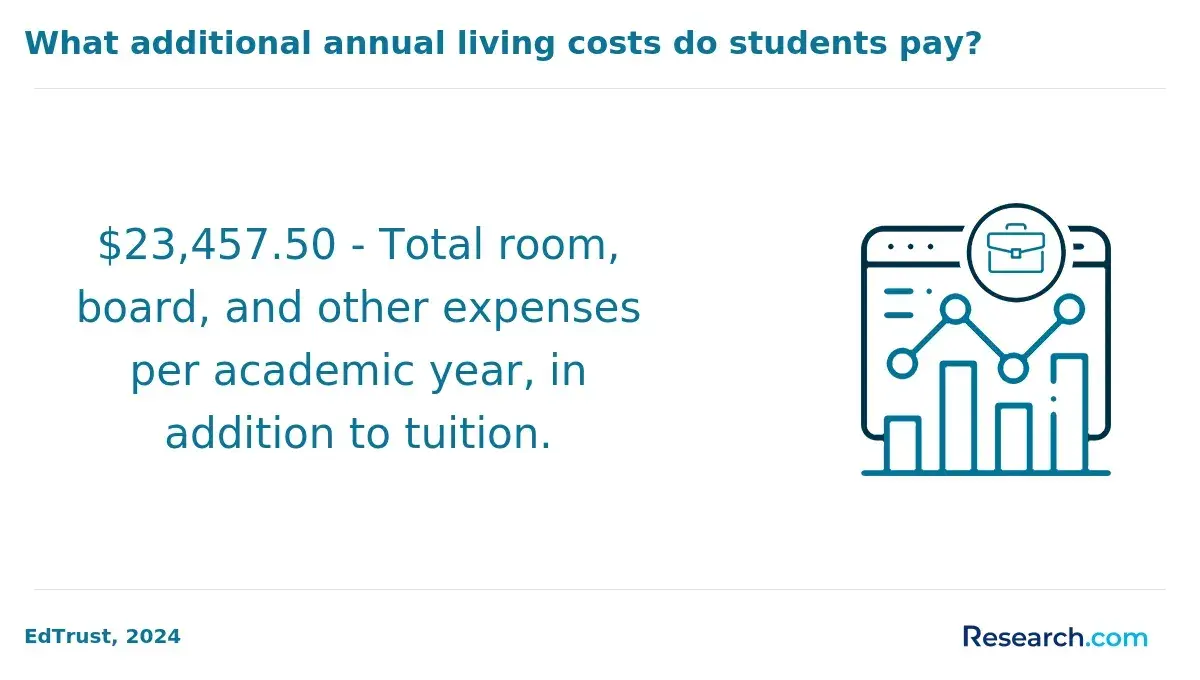
For context, College Board reported average published tuition and fees of $11,610 for in-state students at public four-year institutions in 2024-25. That national benchmark does not represent the price of a particular online engineering program, and published tuition is not the same as net price after grants. Request a program-specific estimate that includes required fees, technology charges, proctoring, textbooks, software, and any lab or residency costs.
Applicants who want a faster graduate credential should compare program duration, prerequisites, and total borrowing carefully; one-year doctoral programs represent a different degree level and should not be assumed to have the same admissions, tuition, or engineering-career value.
Financial aid and scholarships frequently use separate processes. The federal aid application may not require a personal essay, while institutional scholarships, engineering scholarships, honors awards, and employer-sponsored funding may require essays, recommendations, résumés, or interviews.
- Compare per-credit tuition and mandatory fees for the full number of credits you will actually need after transfer evaluation.
- Complete the FAFSA as early as possible if you may seek federal grants, work-study, or loans.
- Check whether online students qualify for the same institutional scholarships as campus students.
- Read scholarship instructions separately from degree-admission instructions and note any essay or recommendation deadline.
- Compare net-price estimates and borrowing needs rather than selecting a program solely because it has no application fee or essay.
The financial trade-off is straightforward: a simpler admission file can save time, but it may also remove an opportunity to compete for merit funding through a strong written statement. If scholarship funding is important, evaluate the complete funding process before deciding that an essay-free route is best.
How Should You Compare Online Industrial Engineering Degree Programs With No Admissions Essay?
Compare programs in the order that affects your long-term options: credential quality, curriculum, transfer efficiency, affordability, learning format, and then application convenience. A no-essay policy is valuable when it removes an unnecessary hurdle, but it should be a tie-breaker rather than the main selection criterion.
Students weighing technical and people-centered fields may find that an accelerated master's in psychology online aligns better with behavioral research, counseling-related study, or organizational behavior interests. Industrial engineering is typically more appropriate for optimization, production, logistics, analytics, and systems-design goals.
This comparison framework highlights the questions that can reveal meaningful differences between two apparently similar online options.
| Comparison factor | What to check | Why it matters |
| Degree and accreditation | Exact degree title, institutional accreditation, and applicable programmatic accreditation | Determines curriculum credibility and may affect employer or graduate-school expectations. |
| Admissions policy | Whether no-essay status applies to your degree level and applicant category | Prevents an incomplete application or incorrect assumption about a waiver. |
| Prerequisites | Required math, science, programming, and minimum course grades | Shows whether you can begin major courses immediately. |
| Transfer evaluation | Credit limits, major-course acceptance, residency credits, and written evaluation timing | Has a major effect on completion time and total cost. |
| Online delivery | Live-session expectations, labs, exams, group work, and any campus visits | Helps determine whether the format fits work and family commitments. |
| Total price and aid | Tuition, fees, materials, net price, scholarship rules, and financing options | Supports a realistic affordability decision. |
| Career preparation | Capstone projects, internships, employer connections, and career services | Connects coursework to the process-improvement and operations roles you want. |
Before committing, contact each program with a short set of targeted questions: Does the no-essay policy apply to me? Which prerequisites remain outstanding? Is the program accredited as represented? How many credits will count toward the major? What will I pay after transfer credit and aid? Clear written answers are a better basis for decision-making than broad marketing claims.
Other Things You Should Know About Industrial Engineering
It can, provided the degree has an appropriate engineering curriculum and meets the expectations of employers you plan to target. Review job postings in your region and ask the school about the degree title, accreditation, technical coursework, and capstone experience. Some roles may prefer or require a bachelor's degree in industrial engineering or a closely related engineering field.
It can request additional information when your file needs clarification, such as an explanation of missing records, academic standing, prerequisite completion, or transfer history. This does not necessarily mean the school has a standard essay requirement. Ask whether the request applies only to your application.
Not always. International applicants may have additional documentation requirements, such as proof of English proficiency, credential evaluations, financial documentation, or immigration-related forms. Confirm the policy with the international admissions office for the specific online program.
Often, yes. Scholarship committees may use essays, recommendations, résumés, or interviews to distinguish among eligible applicants. Treat scholarship applications as separate from degree admission and review each funding opportunity's requirements independently.
- Criteria for Accrediting Engineering Programs, 2025 - 2026 - ABET https://www.abet.org/accreditation/accreditation-criteria/criteria-for-accrediting-engineering-programs-2025-2026/
- College Applications Without Essays: Do They Exist? https://collegewise.com/blog/college-application-without-essay
- 30 Best Online Master's In Industrial Or Systems Engineering Degrees - GradSchoolHub.com https://www.gradschoolhub.com/best/online-masters-industrial-systems-engineering/
- How to Write a Standout Engineering College Essay (With Examples) - Lantern College Counseling https://www.lanterncollegecounseling.com/insights/how-to-write-a-standout-college-essay-for-computer-science-and-engineering-applicants
- Navigating College Applications with AI: What Colleges Say + CEG's Advice to Students and Counselors https://www.collegeessayguy.com/blog/navigating-college-apps-with-ai
- 2025 Best Online Industrial Engineering Degrees https://www.onlineu.com/degrees/industrial-engineering
- Engineering Personal Statement Tips: Undergraduate or Graduate School https://www.onlineengineeringprograms.com/features/how-to-write-an-engineering-school-personal-statement
- Admission Essay vs Personal Statement | What's the Difference? https://www.proof-reading.com/resources/admission-essay-vs-personal-statement
- Crafting Your Story: How to Write a Compelling College Application Essay https://www.envisionexperience.com/blog/how-to-write-a-compelling-college-application-essay
- Industrial Engineering Specialization | BSE https://engineering.mercer.edu/academic-programs/bachelor-of-science-engineering/industrial-engineering/