2027 Online Industrial Engineering Degree Programs With No Letters of Recommendation Required

Co-Founder and Chief Data Scientist
Applicants returning to school often have the grades and work experience for industrial engineering but lack recent academic references. Online programs with no required letters of recommendation can reduce that barrier while still reviewing transcripts, prerequisites, and professional readiness. National Center for Education Statistics data show that 53.5% of U.S. postsecondary students took at least one distance-education course in fall 2022.
This guide helps working adults and career changers identify legitimate options, confirm each program's current policy, compare costs, and decide whether streamlined admissions fit their goals.
Key Things You Should Know
- "No letters of recommendation required" means applicants do not need to submit references for admission; it does not mean transcripts, GPA standards, prerequisite math courses, resumes, essays, or application fees are waived.
- Fully online industrial engineering options are more common at the master's level than the bachelor's level; verify both institutional accreditation and ABET program accreditation when it matters for your intended employer or engineering path.
- Industrial engineers had a $101,140 median annual wage in May 2024, and the U.S. Bureau of Labor Statistics projects 12% employment growth from 2023 to 2033; program quality, technical coursework, and relevant experience matter more than whether recommendations were requested.
Which Online Industrial Engineering Degree Programs Require No Letters of Recommendation?
Online industrial engineering programs with a clearly published "no recommendation letters" policy are less common than programs that request letters, particularly for research-oriented master's degrees. Policies also change by degree level, term, applicant type, and whether an applicant seeks a thesis option. A school may waive letters for a course-based professional degree while requiring them for a research track.
The most reliable approach is to treat a school's current graduate or undergraduate application checklist as controlling. Do not rely solely on an admissions portal, third-party directory, or an old program webpage. Ask admissions in writing whether recommendation letters are not required, merely optional, or waived only under stated conditions.
This comparison shows the distinction applicants should make when screening online options. It is useful because similar wording can lead to very different application obligations.
| Program type | Where no-letter policies are most likely | What to confirm before applying | |
| Online bachelor's completion or applied engineering degree | Programs designed for transfer students or adult learners | Whether the degree is industrial engineering specifically, required calculus and physics preparation, and transfer-credit rules | |
| Online Master of Engineering | Coursework-focused, professional programs | Whether the application checklist lists references, a statement, resume, GRE, and prerequisite coursework | |
| Online Master of Science in Industrial Engineering | Some non-thesis or professional tracks | Whether recommendation letters differ between thesis and non-thesis options | |
| Graduate certificate in operations, quality, or systems engineering | Shorter, workforce-oriented programs | Whether the credential can later apply to a master's degree and whether it meets your career objective |
Prospective applicants should also confirm that "industrial engineering" is the actual degree or concentration, rather than a broader operations management, engineering management, manufacturing, or supply chain program. Those alternatives can be valuable, but their mathematics, simulation, optimization, and engineering-design content may differ.
Applicants exploring adjacent management-oriented pathways may also compare an online business administration degree when their goal is operations leadership rather than an engineering role.
What Are the Admission Requirements for Online Industrial Engineering Degree Programs With No Recommendation Letters?
No-recommendation admissions generally replace one source of evidence with other documents that show academic preparation and professional fit. Requirements vary substantially, but industrial engineering programs commonly expect evidence that an applicant can handle quantitative coursework.
The following materials are typical substitutes or companion requirements. They matter because omitting one can delay review even when references are not requested.
- Official or unofficial transcripts from every college attended, followed by official transcripts after admission when required
- A minimum cumulative or last-60-credit GPA, often with separate expectations for math, science, or engineering courses
- Prerequisite coursework such as calculus, probability and statistics, linear algebra, programming, physics, economics, or operations research, depending on degree level
- A current resume documenting engineering, manufacturing, logistics, quality, analytics, military, or technical experience
- A statement of purpose or short-answer responses explaining career goals and quantitative preparation
- GRE scores only when the program requires them; many professional online programs are test-optional or do not use the GRE
- English-language proficiency documentation for applicants who must meet the institution's language requirement
For a bachelor's program, expect high school records or transferable college credits and foundational math and science requirements. For a master's program, a bachelor's degree in engineering, mathematics, computer science, physics, or a related field is common; applicants from other disciplines may need prerequisite courses before or alongside graduate study.
Before paying an application fee, save a dated copy or screenshot of the degree-specific admissions page and ask whether requirements apply to your intended start term. This is especially important when an institution uses a central graduate application with program-level exceptions.
Are Online Industrial Engineering Programs With No Letters of Recommendation Easier to Get Into?
Not necessarily. Removing recommendation letters makes the application more accessible for applicants who have been out of school, changed careers, or cannot reasonably ask a supervisor for a confidential reference. It does not indicate open admission, lower curriculum standards, or automatic acceptance.
Admissions teams still need evidence that students can succeed in quantitative courses. A program may use transcript review, prerequisite grades, a statement of purpose, a resume, placement expectations, or an interview to make that judgment. Selective programs can have streamlined document requirements, while less selective programs can still require letters.
A practical way to assess fit is to compare your preparation with the published baseline rather than trying to infer difficulty from the recommendation policy. Strong grades in calculus, statistics, programming, and technical courses can be more relevant to an industrial engineering application than a general endorsement.
Applicants who need an alternate route into advanced study can review accelerated master's in psychology online options only if their goals are behavioral, human-factors, or organizational rather than core industrial engineering. A different degree should not be chosen simply because its admissions process is shorter.
Without letters, reviewers usually place more weight on direct, verifiable evidence. They may look for academic readiness, the ability to communicate professional goals, and experience relevant to systems improvement, data analysis, production, quality, supply chains, ergonomics, or project work.
This table explains how common application materials can demonstrate readiness in place of references. It can help applicants decide where to spend time strengthening an application.
| Application material | What it can show | How to make it more useful |
| Transcript | Performance in quantitative and technical coursework | Highlight completed prerequisites accurately; do not assume unrelated credits meet engineering requirements |
| Resume | Applied experience with processes, data, equipment, teams, or operations | Use concrete responsibilities and tools, such as Excel, Python, SQL, CAD, simulation, Lean, or quality methods when accurate |
| Statement of purpose | Career direction and alignment with the curriculum | Connect specific educational needs to realistic goals instead of making broad claims |
| Prerequisite review | Readiness for courses in optimization, statistics, simulation, and systems analysis | Address gaps with completed coursework or ask whether approved bridge courses are available |
| Interview or supplemental response | Communication, motivation, and understanding of online study expectations | Prepare examples of technical problem-solving and time-management practices |
A polished resume cannot replace missing mathematical preparation. If your undergraduate record lacks required calculus or statistics, ask whether the school permits conditional admission, post-baccalaureate coursework, or an individual prerequisite evaluation.
A no-recommendation policy says nothing by itself about legitimacy. Start by confirming that the institution is accredited by an accreditor recognized by the U.S. Department of Education or the Council for Higher Education Accreditation. Then determine whether programmatic accreditation is relevant to the degree and career path.
For industrial engineering, ABET accreditation is particularly important to investigate for bachelor's degrees. ABET accredits specific programs, not an entire university or every online format. Some online graduate programs may be institutionally accredited but not ABET-accredited because ABET accreditation is most commonly associated with undergraduate engineering programs. Employers' expectations vary, so applicants should examine job postings and speak with prospective employers when accreditation is central to their target role.
Use the following verification process before enrolling. It helps distinguish a streamlined application from a weakly documented or misleading offering.
- Locate the exact degree title, delivery format, and academic department on the university's official website.
- Verify institutional accreditation through a recognized accreditor and confirm the school's standing in federal and accreditor directories.
- Search the ABET directory for the specific program if you need an ABET-accredited engineering degree; confirm the campus or delivery designation rather than assuming institutional accreditation is enough.
- Review the curriculum for calculus, statistics, optimization, simulation, quality, manufacturing, human factors, and systems content appropriate to the credential.
- Ask whether online students receive the same diploma, faculty access, career services, laboratory experiences, and transcript designation as campus students.
- Request the current tuition schedule, refund policy, technology requirements, and written confirmation that letters are not required for your application type.
Red flags include vague accreditation language, pressure to enroll before you receive a written cost estimate, claims that a degree has "automatic" professional recognition, and a curriculum with little quantitative or engineering content. A reputable institution should provide clear program, faculty, cost, and policy information.
Technical learners comparing fields can also examine a cybersecurity online degree, but cybersecurity accreditation and career expectations are distinct from industrial engineering requirements.
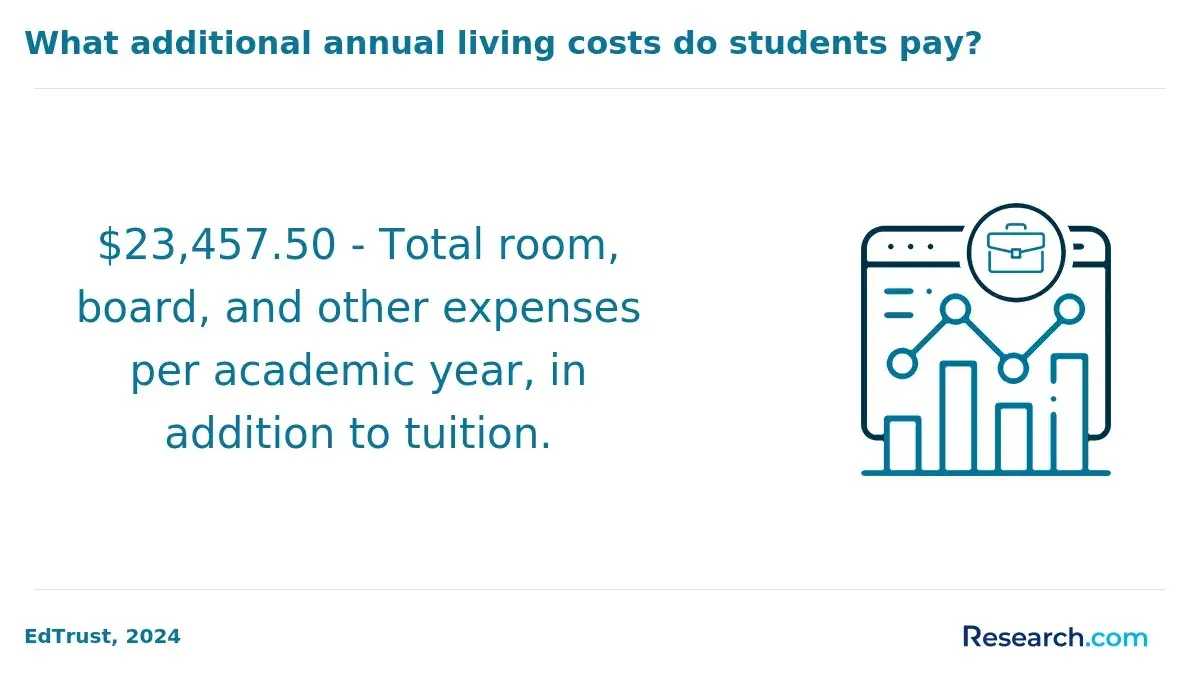
Costs vary more by institution, residency policy, degree level, transfer credit, and required fees than by whether letters of recommendation are required. Streamlined admissions should not be treated as a proxy for affordability. Compare the total estimated program cost, not just a prominently displayed per-credit tuition rate.
The table identifies the cost categories that can change the financial decision. Ask each school to provide an estimate based on your expected number of credits and pace of enrollment.
| Cost factor | Why it changes total cost | What to request |
| Tuition per credit | Rates may differ by graduate level, residency, or online status | The published rate for your degree and start term |
| Credits required | Bridge courses, electives, and transferred credits can alter the bill | A degree plan showing required and remaining credits |
| Mandatory fees | Technology, distance-learning, student-service, laboratory, or graduation fees may apply | An itemized fee schedule |
| Course materials and software | Simulation, analytics, proctoring, and textbook costs may not be in tuition | Typical annual materials and technology costs |
| Travel or residency requirements | Some "online" programs require short campus visits, exams, or labs | Written confirmation of any in-person requirement |
For economic context, the College Board reported that average published tuition and fees for full-time in-state students at U.S. public four-year institutions were $11,610 in 2024-25. That national undergraduate benchmark is not a quote for an online industrial engineering degree, but it illustrates why applicants should compare published charges with their personalized estimate.
Do not choose solely on tuition. A lower-cost program may still be a poor value if it lacks the required prerequisites, accreditation, technical depth, scheduling flexibility, or employer relevance. Students considering longer academic progression can compare typical structures of one year doctoral programs, while recognizing that engineering doctorates commonly have research and residency expectations that make unusually short timelines unsuitable for many goals.
Yes. Students in eligible online programs at accredited U.S. institutions may generally qualify for federal financial aid if they meet federal student-aid eligibility rules and are enrolled in an eligible degree or certificate program. Admission requirements and financial-aid eligibility are separate: not submitting recommendations does not reduce or create aid eligibility.
Complete the Free Application for Federal Student Aid (FAFSA) early and review the aid offer carefully. Undergraduate students may be considered for federal grants, work-study where available, and federal loans; graduate students commonly rely on federal Direct Unsubsidized Loans and, when needed and eligible, Graduate PLUS Loans. Schools may also offer scholarships, employer-partnership discounts, payment plans, veterans' benefits support, or tuition reimbursement guidance.
Borrow only after comparing the program's total cost with your expected career benefit and monthly budget. Ask the financial-aid office whether part-time online enrollment changes eligibility, whether summer terms use separate aid periods, and whether prerequisite courses count toward aid for your degree plan.
Working professionals who want legal-support training instead of engineering may find paralegal courses online useful for comparison, although financial aid, accreditation, and occupational pathways differ by program.
Completion time depends on degree level, transfer credits, prerequisite gaps, course sequencing, and whether a student enrolls full time or part time. A bachelor's degree commonly requires about 120 semester credits, although transfer students may need substantially fewer remaining credits. Coursework-focused master's programs often require roughly 30 to 36 credits, but the actual timeline depends on how often required courses are offered.
Online delivery can make scheduling more flexible, particularly for working adults, but it does not eliminate workload. Industrial engineering courses in operations research, simulation, statistics, programming, systems design, and quality methods can require regular project, software, and team-based work.
Before enrolling, ask for a term-by-term course map rather than relying on an advertised fastest completion estimate. Confirm whether critical courses are available every term, whether classes are asynchronous or have live sessions, how examinations are proctored, and whether any laboratory or capstone requirements must be completed in person.
A no-letter application process may reduce the time needed to collect references, but it does not shorten the academic program. Applicants should avoid schools that imply otherwise.
Often, yes, especially at the undergraduate level, but acceptance of credits is never automatic. Institutions review transfer work based on accreditation, course content, grades, credit age, and alignment with their own curriculum. Engineering programs may scrutinize calculus, calculus-based physics, statistics, programming, and technical courses more closely than general education credits.
Graduate transfer policies are usually more restrictive. A master's program may cap the number of transferable graduate credits, require a minimum grade, limit how old a course can be, and reject coursework that duplicates required classes. Professional experience can strengthen an application, but it rarely replaces required academic credits unless the institution has a formal prior-learning policy.
Take these steps before selecting a program:
- Send official transcripts and course descriptions for a preliminary transfer evaluation before committing to enrollment whenever possible.
- Request a written estimate of accepted credits and a list of courses still required for graduation.
- Confirm whether transferred courses satisfy prerequisites, degree requirements, or only elective credit.
- Ask whether taking a prerequisite elsewhere requires preapproval to ensure it will transfer.
- Compare the revised graduation timeline and total cost after transfer credit, not the school's standard curriculum alone.
Do not assume that a school's simplified admissions process means it will accept more transfer credit. Admissions and transfer evaluation are separate decisions.
How Should You Compare Online Industrial Engineering Degree Programs That Do Not Require Letters of Recommendation?
Compare programs using your intended outcome first: entry-level engineering preparation, advancement in manufacturing or quality, analytics and operations work, or preparation for graduate research. The right no-recommendation program should meet that goal without asking you to sacrifice curriculum rigor, recognized accreditation, or financial clarity.
This scorecard focuses on the factors most likely to affect program fit and return on investment. Use it to compare the same degree level across schools.
| Comparison factor | What a strong answer looks like | Potential concern |
| Recommendation policy | The program's current checklist explicitly says letters are not required for your applicant category | Only verbal assurances or unclear "optional" language |
| Accreditation | Recognized institutional accreditation and a clear explanation of ABET status where relevant | Unverifiable, vague, or institution-wide claims about program accreditation |
| Curriculum | Substantial coverage of statistics, optimization, simulation, quality, systems, and applied projects | Mostly general business courses presented as engineering |
| Faculty and learning format | Identified faculty, predictable course schedule, accessible support, and clear expectations for group work and exams | Little information about instructors, assessments, or required meetings |
| Total cost | Written estimate covering tuition, mandatory fees, materials, and any travel | Per-credit price without required-credit or fee details |
| Career alignment | Relevant electives, projects, career services, and outcomes information for your target sector | Broad career promises without evidence of curricular connection |
When speaking with admissions representatives, ask for the current application checklist, prerequisite matrix, course rotation, sample degree plan, online attendance expectations, accreditation details, transfer-credit process, and complete cost estimate. Keep answers in writing so you can compare schools accurately.
Common mistakes include treating "no letters required" as guaranteed admission, overlooking prerequisite gaps, confusing institutional accreditation with ABET accreditation, and selecting the least demanding application rather than the best technical fit. A better choice is a program whose requirements you can meet and whose curriculum supports the role you want after graduation.
Other Things You Should Know About Industrial Engineering
Usually, only if the application system permits optional uploads. Do not send unsolicited materials unless admissions confirms they will be reviewed. A strong transcript, resume, and focused statement may be more useful when the program does not evaluate letters.
You may still qualify for some master's programs if you have sufficient quantitative preparation or complete prerequisites. Ask the department to review your transcript for calculus, statistics, programming, and science requirements before you apply.
Check the current degree-specific application page, not just the university's general graduate admissions page. Then email admissions with your degree, concentration, and start term and request written confirmation that recommendation letters are not required.
Employers generally focus on the degree-awarding institution, curriculum, projects, technical skills, and experience. Ask the school whether online and campus students receive the same diploma and whether any online designation appears on the transcript.
- Criteria for Accrediting Engineering Programs, 2025 - 2026 - ABET https://www.abet.org/accreditation/accreditation-criteria/criteria-for-accrediting-engineering-programs-2025-2026/
- Employment Assistance - Orleans Technical College https://orleanstech.edu/career-services/finding-a-job/
- Best Career Services Software (2026) | Prentus https://prentus.com/blog/best-career-services-software-for-colleges-and-universities
- Online Industrial Engineering Degrees: Master's & Bachelor's https://www.onlineengineeringprograms.com/industrial
- Tech Companies That Don't Require a College Degree https://www.computerscience.org/resources/companies-that-dont-require-a-college-degree/
- 30 Best Online Master's In Industrial Or Systems Engineering Degrees - GradSchoolHub.com https://www.gradschoolhub.com/best/online-masters-industrial-systems-engineering/
- Job Placement Assistance with North American Trade Schools https://natradeschools.edu/job-placement/
- 2025 Best Online Industrial Engineering Degrees https://www.onlineu.com/degrees/industrial-engineering