2027 Online Industrial Design Master's Programs Under $20,000: Total Tuition and Required Fees

Co-Founder and Chief Data Scientist
An advertised online master's price can be misleading when required fees, extra credits, software, and residency rules are excluded. The U.S. Bureau of Labor Statistics reports a $79,450 median annual wage for industrial designers in 2024, making cost-to-career alignment especially important.
This guide is for prospective industrial designers and working professionals trying to keep a graduate degree below $20,000 in total institutional charges. Learn how to calculate the real price, verify program quality, compare formats, and decide whether an affordable online option fits your goals.
Key Things You Should Know
- A program is truly under $20,000 only when its required tuition and mandatory school fees for every required credit remain below that ceiling; books, hardware, travel, and optional costs should be budgeted separately.
- Industrial design master's programs vary substantially in credit requirements, studio expectations, portfolio requirements, and online delivery. Compare the full curriculum and completion rules, not the advertised per-credit rate alone.
- Industrial designers had a $79,450 median annual wage in 2024, but a master's degree does not guarantee a job or pay increase. Its value depends on the portfolio, specialization, experience, and roles it supports.
How Much Does an Online Industrial Design Master's Degree Under $20,000 Cost in Total?
The total cost of an online industrial design master's degree is the amount needed to complete all required graduate credits plus mandatory institutional and program fees. A school may market a low tuition rate while requiring more credits than a competing program, charging recurring distance-learning fees, or excluding a required capstone charge.
Because fully online master's programs specifically labeled industrial design are relatively limited, applicants should not assume that every online design, innovation, or product-development degree offers equivalent preparation. Ask each institution for a written program-of-study estimate based on your anticipated start term, residency status, and transfer-credit evaluation.
This calculation framework shows the cost items that belong in a meaningful under-$20,000 comparison. It helps separate a low sticker price from a realistic institutional total.
| Cost component | How to calculate it | Include in the $20,000 test? |
| Tuition | Per-credit rate × required billable credits, or published flat program rate | Yes |
| Mandatory institutional fees | Required fee per term × expected enrollment terms | Yes |
| Mandatory program or course fees | Required studio, capstone, technology, or graduation charges | Yes |
| Required materials and software | School-required supplies, subscriptions, printing, or equipment | Budget separately and ask whether charges are billed by the school |
| Travel or residency expenses | Transportation, lodging, and meals for required in-person sessions | Budget separately unless billed as a mandatory school fee |
Use this formula before applying: estimated institutional total = tuition + all mandatory institutional fees + all mandatory program fees. Then add a separate personal budget for materials, technology upgrades, professional portfolio production, and any travel. A program at $19,700 before a required graduation fee is not safely below the target.
A lower-cost program can be the better choice when it includes the design methods, digital modeling, prototyping, research, and portfolio development relevant to the work you want.
Paying modestly more may be reasonable when a program offers a needed specialization, required access to studios, stronger faculty mentoring, or an employer-recognized credential that the cheaper option does not provide.
What Required Fees Can Increase the Cost of an Online Industrial Design Master's Degree Beyond $20,000?
Required fees can push a seemingly affordable program over budget, particularly when a fee is assessed every term rather than once. Online students may still be charged technology, student services, registration, graduation, course, laboratory, or program fees. Fee names and policies vary by institution, so "online" does not automatically mean "fee-free."
The following charges deserve direct confirmation because they can change the final institutional bill even when tuition is fixed.
| Potential required charge | Why it matters | What to ask the school |
| Technology or distance-learning fee | May apply each term or to each enrolled credit | Does it apply to fully online graduate students, and is it charged per term or per credit? |
| Student services fee | May be mandatory even if the student does not use campus facilities | Which student fees are required for online enrollment? |
| Course, studio, or lab fee | May apply to design software, fabrication, or portfolio courses | Which required courses carry additional fees? |
| Capstone or thesis fee | Can be billed late in the program, after initial tuition comparisons | Is there a separate project, thesis, exhibition, or defense charge? |
| Graduation fee | Often required to receive the degree | What mandatory completion and diploma fees apply? |
A common mistake is multiplying tuition by credits and stopping there. Avoid it by requesting the current graduate fee schedule and identifying the number of terms you will enroll. Students taking one course at a time can pay more in per-term fees than students who complete the same credits over fewer terms.
Also distinguish mandatory charges from elective expenses. A school may recommend a premium drawing tablet, 3D printer, or conference trip without requiring it for graduation. Those purchases still matter to your personal budget, but they should not be presented as required institutional fees unless the program explicitly requires them.
How Does Per-Credit Tuition Affect the Total Cost of an Online Industrial Design Master's Degree Under $20,000?
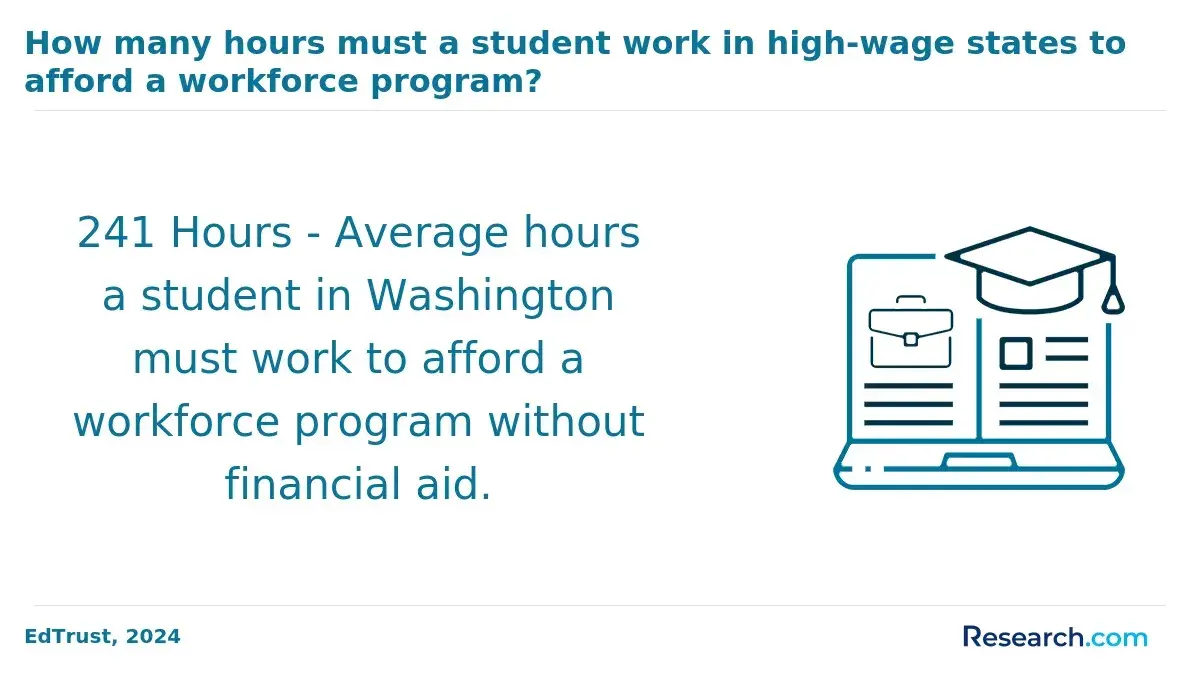
Per-credit tuition affects total price only when considered with the number of credits required. A 30-credit degree at $600 per credit has $18,000 in tuition, while a 36-credit degree at the same rate has $21,600 in tuition before fees. Flat-rate tuition can be easier to budget, but applicants should verify whether it covers all required terms and whether an extension triggers additional charges.
This comparison illustrates why credit count is as important as the listed rate. The figures are examples for calculation, not quotations from specific universities.
| Example structure | Required credits | Tuition rate | Estimated tuition before mandatory fees | Under $20,000 before fees? |
| Lower-credit program | 30 | $600 per credit | $18,000 | Yes, but fees may change the result |
| Higher-credit program | 36 | $500 per credit | $18,000 | Yes, but fees may change the result |
| Higher-rate program | 30 | $675 per credit | $20,250 | No |
Compare whether credits support meaningful learning rather than treating fewer credits as automatically better. A 30-credit professional master's may suit an experienced designer seeking design strategy or leadership skills. A longer curriculum may make more sense for a career changer who needs portfolio-building, user research, CAD, visualization, materials, manufacturing, or human-centered design foundations.
Before relying on a rate, confirm whether it is guaranteed for your cohort, whether it changes after a certain number of credits, and whether prerequisite courses are billed separately. Prerequisites can add both tuition and time, particularly for applicants whose bachelor's degree is outside art, design, engineering, or a closely related field.
How Long Does It Take to Complete an Online Industrial Design Master's Degree Under $20,000?
Most online master's programs take longer or shorter based on credit requirements, course sequencing, enrollment intensity, and capstone expectations. A program marketed as asynchronous may still have fixed deadlines, group-project meetings, live critiques, or required presentations. "Online" describes location more than pace.
For working adults, a part-time plan may protect income and reduce weekly workload, but recurring term fees can increase the total. A faster full-time plan can limit those fees but may be difficult when studio assignments, portfolio work, and team projects demand sustained time outside class.
This format comparison helps applicants match a completion plan to their work and financial constraints.
| Format pattern | Typical fit | Cost and scheduling consideration |
| Mostly asynchronous online | Working adults who need location flexibility | Check for required live critiques and whether per-term fees continue during part-time enrollment |
| Synchronous online | Students who value scheduled faculty and peer interaction | Confirm meeting times, time-zone expectations, and whether attendance rules conflict with work |
| Hybrid or low-residency | Students who need hands-on studio access or intensive networking | Add travel, lodging, and time away from work to the budget |
| Accelerated cohort | Students able to maintain a steady, higher course load | Verify that course sequencing and capstone timing allow completion as advertised |
Review the academic calendar before choosing a pace. Map every required course, prerequisite, internship or practicum if applicable, and capstone to expected terms.
Students comparing other online graduate formats can also see how scheduling affects affordability in the best MFT programs, although clinical counseling pathways have requirements that differ substantially from design education.
How Can Students Verify Accreditation for an Online Industrial Design Master's Degree Under $20,000?
Accreditation is a quality-assurance process, but applicants should distinguish institutional accreditation from specialized accreditation.
For an online industrial design master's, institutional accreditation is the baseline check because it can affect federal aid eligibility, credit acceptance, employer confidence, and admission to later study. Specialized design accreditation may be relevant, but availability and applicability can vary by program and delivery format.
Verify accreditation directly rather than relying on a marketing statement. The most reliable process is:
- Find the institution in the U.S. Department of Education's Database of Accredited Postsecondary Institutions and Programs or confirm the accreditor named on the school's official website.
- Confirm that the accrediting organization is recognized and that the institution's status is current.
- Ask the department whether the specific online degree has the same curriculum, faculty oversight, transcript designation, and learning outcomes as its campus-based counterpart.
- For a career requiring a particular credential, ask employers, licensing authorities, or professional organizations whether the degree meets the relevant expectation.
Do not assume that an institution's accreditation automatically means a particular degree will meet every employer's preference.
Industrial design is generally portfolio-centered, so the quality of project work, feedback, technical preparation, and professional connections may be as consequential as the degree title. If a program promises specialized recognition, request the name of the accreditor and confirmation that the exact program is covered.
Do Out-Of-State Students Pay More for an Online Industrial Design Master's Degree Under $20,000?
Out-of-state students may pay more when a public university uses resident and nonresident graduate tuition. However, many online programs charge one distance-learning rate regardless of residency, and some use a flat program price. Never infer the policy from the institution's public or private status.
Ask admissions or student accounts for the tuition category that will appear on your bill. This is especially important for students planning to move, military-affiliated students, and applicants whose employment location differs from their legal residence. A residency classification can affect tuition even if every class is online.
Use the questions below to avoid an inaccurate comparison across states.
- Does the published online graduate rate apply equally to residents and nonresidents?
- Are online students eligible for any residency-based discount, employer partnership rate, or military tuition policy?
- Will tuition change if I move while enrolled, and when is residency determined?
- Are distance learners charged campus-based fees that differ by residency or course location?
Students considering adjacent online graduate fields should make the same distinction. For example, an LMFT online program may have different state authorization, clinical-placement, and licensure considerations than an industrial design program, even when its tuition structure looks similar.
Can Transfer Credits Keep the Total Cost of an Online Industrial Design Master's Degree Under $20,000?
Transfer credits can reduce total tuition only if the receiving program accepts them and reduces the credits you must complete. Many master's programs restrict transfer credit by number of credits, grade, course age, curricular match, and accreditation of the prior institution. Cohort programs may accept few or no transfers because their courses build in sequence.
Do not subtract prior graduate credits from a published total until the registrar provides a written evaluation. A course with a similar title may not substitute for a studio, research, portfolio, or capstone requirement.
Before applying, gather the materials that allow a meaningful transfer review.
- An official transcript showing completed graduate-level coursework and final grades.
- Course descriptions, syllabi, learning outcomes, and major assignments for design-related classes.
- A current transfer-credit policy stating maximum credits, minimum grades, time limits, and restrictions on capstone work.
- A written statement showing which specific degree requirements, if any, the accepted credits will replace.
Transfer credit makes the most sense for students with recent, directly comparable graduate work. It is less likely to help applicants with undergraduate design courses, informal training, certificates without graduate credit, or work experience alone. Prior experience may strengthen admission and shorten the learning curve, but it does not necessarily reduce degree credits.
Can Financial Aid Bring the Cost of an Online Industrial Design Master's Degree Below $20,000?
Financial aid can lower what you pay out of pocket, but it does not change the school's published tuition and required fees. Eligible students may use federal student loans, employer tuition assistance, scholarships, veterans' education benefits, payment plans, and institutional awards. Grant eligibility and loan limits depend on individual circumstances and school participation.
Start by submitting the FAFSA if the institution participates in federal aid programs, then compare each award letter by the amount of grants and scholarships rather than the total package. Loans can make enrollment possible, but they remain borrowed funds that usually require repayment with interest.
Take these steps before treating aid as part of an under-$20,000 strategy.
- Request the program's total institutional cost estimate for your intended enrollment pace.
- Separate gift aid from loans, work opportunities, and payment-plan offers.
- Ask whether scholarships are renewable, what enrollment level they require, and whether they apply to online students.
- Confirm whether employer reimbursement requires a minimum grade, continued employment, or payment after course completion.
- Calculate the remaining amount you would need to pay or borrow across the full program.
Students exploring helping-profession graduate options can compare aid and total-cost questions in guides to cheap online masters in counseling, but counseling degrees may include supervised clinical requirements that create costs not typical of industrial design programs.
Is an Online Industrial Design Master's Degree Under $20,000 Worth the Cost for Career Advancement?
An affordable online industrial design master's can be worth the cost when it fills a specific career gap: advanced product-development methods, user research, sustainable materials, design strategy, leadership, digital visualization, or a stronger portfolio for roles you intend to pursue.
Industrial designers develop concepts for manufactured products and typically combine aesthetic judgment with knowledge of materials, production processes, usability, and market needs.
The U.S. Bureau of Labor Statistics projects 3% employment growth for industrial designers from 2024 to 2034. That modest projected growth means applicants should view a degree as a way to build relevant capability and evidence of work, not as an automatic advantage in a limited hiring market. Employers may evaluate portfolios, software fluency, collaboration, manufacturing knowledge, and relevant experience alongside education.
This comparison can clarify whether a graduate degree is the right investment for your current position and goal.
| Career situation | When an online master's may help | When another path may be stronger |
| Experienced designer seeking advancement | Useful for leadership, design strategy, research, or a focused specialization | A targeted portfolio, management experience, or employer-supported training may meet the need at lower cost |
| Career changer with limited design background | Useful if the curriculum includes foundational studio work and portfolio development | A prerequisite-heavy program may exceed the planned time and budget; a foundational design program may fit better |
| Product or engineering professional moving toward design | Useful for human-centered methods, concept development, and cross-functional leadership | Short courses may suffice if the goal is design collaboration rather than a design role |
| Professional interested in learning design | Useful only if product and industrial design are the intended focus | instructional design aligns more directly with learning experiences, training, and education technology |
Assess return on investment using your own likely outcome: the role you want, its local or remote pay range, your present compensation, the time you may reduce work hours, and the amount you would borrow. Compare this against the program's portfolio support, faculty expertise, alumni access, career services, and curriculum, not salary claims alone.
Alternatively, consider other disciplines, such as an urban planning degree online, which produce career pathways within the same field.
How Should Students Choose the Best-Value Flat-Rate Online Industrial Design Master's Program?
The best-value flat-rate online industrial design master's program is not necessarily the one with the lowest advertised figure.
A flat rate is valuable when it clearly covers the full required curriculum and lets you predict costs, but it can be less favorable if it excludes fees, limits the number of terms, or does not provide the specialization and portfolio development you need.
Use a consistent evaluation process so that each program is measured on total cost, fit, and academic substance.
- Confirm the degree title, required credits, delivery format, and whether any campus visits, residencies, internships, or intensives are mandatory.
- Obtain a written estimate covering tuition and every mandatory institutional and program fee through graduation.
- Verify whether the rate is flat for the entire program, limited to a set number of terms, or subject to future increases.
- Review required courses for design research, ideation, CAD or visualization, materials and manufacturing, sustainability, prototyping, portfolio development, and the specialization you need.
- Check institutional accreditation, faculty credentials, student support, accessibility of software and studios, and career or portfolio services.
- Compare your expected net cost after grants and employer support, then consider borrowing only after evaluating the remaining balance.
- Speak with admissions and, when possible, current students or alumni about workload, feedback quality, live-session expectations, and capstone outcomes.
Red flags include a price that omits the credit count, vague references to "fees may apply," no clear statement about online delivery, a curriculum with little evidence of design practice, or career claims unsupported by specific outcomes.
A more expensive program may be the better value if it resolves one of these weaknesses and directly supports your intended role. Conversely, a lower-cost program can be a strong choice when its curriculum, format, accreditation, and project opportunities match your goal without unnecessary extras.
Students evaluating graduate affordability across fields may encounter a BCBA degree online during their search, but behavior analysis has certification and supervised-experience expectations that should not be used as a model for judging an industrial design curriculum.
Other Things You Should Know About Industrial Design Programs
Industrial design traditionally focuses on the design of manufactured products, including form, usability, materials, production, and user needs. Product design can overlap heavily but may also refer to digital products and user-experience work. Review course descriptions and portfolio examples to determine how a program uses these terms.
Many design-focused graduate programs request a portfolio, especially when applicants seek advanced studio work. Requirements vary: some programs accept professional projects, while others provide pathways for applicants from engineering, business, or related backgrounds. Confirm the required number, format, and type of work before applying.
Useful skills often include 2D visualization, 3D modeling, rendering, presentation, and digital collaboration tools. The specific software depends on the program and intended field. Ask whether licenses are included, whether a computer must meet particular specifications, and whether instruction begins at a foundational level.
It can, if the curriculum includes substantial project work, iterative feedback, documentation of process, and a capstone or portfolio review. Before enrolling, examine examples of student work when available and ask how faculty evaluate prototypes, sketches, models, research, and final presentations in the online format.
References
- Online Master of Professional Studies in UX Design - CCAD https://www.ccad.edu/academics/ux
- Master of Science in Instructional Design and Technology https://financialaid.mercer.edu/cost-of-attendance/graduate-and-professional/college-of-education/master-of-science-in-instructional-design-and-technology/
- Admissions: Online Tuition | Full Sail University https://www.fullsail.edu/admissions/tuition-online
- Graduate Industrial Design MS Program https://www.artcenter.edu/academics/graduate-degrees/industrial-design/overview.html
- A Guide to Getting Financial Aid for Graduate School | Elmhurst University Elmhurst University Blog https://www.elmhurst.edu/blog/a-guide-to-getting-financial-aid-for-graduate-school/
- EdAssist | Understanding college pricing models https://www.brighthorizons.com/resources/blog/edassist/understanding-college-pricing-models
- California college costs: why so high and how to get help - CalMatters https://calmatters.org/explainers/cost-of-college-california/
- Average Cost of College [2025]: Yearly Tuition + Expenses https://educationdata.org/average-cost-of-college
- Decoding Tuition, Fees, and Other College Costs: A Practical Guide for Students https://www.onlineu.com/magazine/decoding-tuition-fees-and-other-college-costs