
2027 Online Health Services Doctorate Programs with Practicum, Internship, Clinical, or Fieldwork Requirements

Co-Founder and Chief Data Scientist
Choosing an online health services doctorate is rarely just about online coursework; many programs still require supervised, in-person experience. That matters because the U.S. Bureau of Labor Statistics reported a $117,960 median annual wage for medical and health services managers in May 2024, but higher-level roles often expect applied leadership experience.
This guide helps prospective doctoral students understand which programs require practicum, internship, clinical, or fieldwork hours, how placements work, what costs to expect, and how to decide whether the required hands-on training fits your career goal, location, and schedule.
Key Things You Should Know
- Practice-focused online health services doctorates are often hybrid in practice: DNP programs commonly require at least 1,000 post-baccalaureate practice hours, while DHA, DHSc, DrPH, and health services leadership doctorates vary by school and specialization.
- Experiential requirements can improve career readiness, especially for leadership, population health, quality improvement, informatics, and clinical administration roles, but they can also add travel, background-check, immunization, supervision, and delayed-completion costs.
- Before enrolling, verify who secures the placement, whether your state is approved, whether your employer can qualify as a site, what happens if a site falls through, and whether the hours support accreditation, certification, or licensure requirements in your field.
Which Online Health Services Doctorate Programs Require Practicum, Internship, Clinical, or Fieldwork Experience?
Online health services doctorates with experiential requirements are usually designed for working professionals who need applied leadership, clinical, policy, informatics, or public health preparation rather than a purely theoretical credential. Students moving beyond a master's in healthcare administration should pay close attention to whether the doctoral program is practice-focused or research-focused, because that distinction often determines how much supervised field experience is required.
The table below compares common online health services doctorate pathways and the kinds of hands-on requirements students are most likely to encounter. Exact requirements vary by university, state authorization rules, specialization, and accreditor expectations.
| Doctorate type | Typical experiential requirement | How online students usually complete it | Best fit |
| Doctor of Health Administration, or DHA | Administrative practicum, leadership project, consulting project, residency, or applied capstone | Often completed at a healthcare organization, employer site, community agency, or approved administrative setting | Healthcare managers, executives, operations leaders, and quality improvement professionals |
| Doctor of Health Science, or DHSc | Applied project, fieldwork, professional practicum, teaching practicum, or capstone | Often local or workplace-based if the site and supervisor meet program standards | Allied health leaders, educators, clinical department leaders, and interprofessional healthcare professionals |
| Doctor of Public Health, or DrPH | Applied practice experience, integrative learning experience, field-based leadership project, or public health practicum | Usually completed through a health department, nonprofit, healthcare system, policy organization, or community health partner | Public health executives, population health leaders, policy professionals, and program directors |
| Doctor of Nursing Practice, or DNP, in executive leadership or health systems leadership | Supervised practice hours, clinical scholarship project, systems leadership practicum, or population health practice experience | Completed in approved clinical, administrative, population health, or leadership settings under qualified supervision | Licensed nurses pursuing advanced systems leadership, executive, informatics, or quality roles |
| PhD in Health Services, Health Policy, or Health Administration | Research apprenticeship, dissertation research, teaching experience, residency, or occasional field-based data collection | More likely to involve research supervision than clinical placement, though some programs require campus residencies | Future researchers, faculty members, policy analysts, and research directors |
A simple rule helps: if the degree title emphasizes practice, leadership, public health implementation, clinical systems, or executive decision-making, assume some form of applied experience may be required. If the program emphasizes research methods and dissertation scholarship, the hands-on component may be less like a practicum and more like research training, teaching, or field data collection.
What Are the Practicum, Internship, Clinical, and Fieldwork Requirements for Online Health Services Doctorates?
The terms practicum, internship, clinical placement, and fieldwork are sometimes used loosely, but they do not always mean the same thing. Understanding the difference helps you compare programs accurately and avoid enrolling in a program that requires more in-person time than you expected.
| Requirement type | What it usually means | Common examples in health services doctorates | Decision point for students |
| Practicum | A supervised, structured learning experience tied to course outcomes | Quality improvement plan, administrative leadership practicum, health systems assessment, population health project | Ask how many hours are required and whether your current workplace can be used |
| Internship | A longer applied experience that may resemble professional role immersion | Executive internship, policy internship, health administration field placement, community health leadership internship | Ask whether the internship is paid, unpaid, full-time, part-time, or scheduled during business hours |
| Clinical experience | Supervised practice involving clinical systems, patient care environments, or licensed health professionals | DNP leadership practice hours, clinical operations project, informatics implementation, care delivery redesign | Ask whether state licensure, RN licensure, malpractice coverage, or clinical site contracts are required |
| Fieldwork | Applied work in a real-world organization, community, agency, or health system | Public health fieldwork, needs assessment, program evaluation, community partnership project, rural health project | Ask whether remote project work is allowed or whether on-site attendance is mandatory |
Hours vary widely. DNP programs aligned with national nursing education expectations commonly require at least 1,000 post-baccalaureate practice hours, while DrPH, DHA, and DHSc programs may define requirements by competencies, deliverables, courses, projects, or minimum clock hours. A program that requires fewer hours is not automatically weaker, but it should clearly explain how students demonstrate applied competence.
Students should also distinguish between required experiences and optional professional development. A doctoral residency, for example, may involve campus seminars rather than fieldwork. A capstone may require organizational access but not a formal internship. A dissertation may require data collection at a health site without counting as supervised clinical training.
How Do Online Health Services Doctorate Programs Arrange Practicum and Clinical Placements?
Placement models differ dramatically. Some universities maintain formal site agreements and assign placement coordinators, while others expect students to identify a qualified organization and supervisor for approval. This difference can affect stress, timeline, and total cost as much as tuition does.
Most online doctoral programs use one of three placement models:
- School-arranged placement: The university identifies or directly coordinates approved sites, supervisors, affiliation agreements, and compliance paperwork.
- Student-identified placement with school approval: The student proposes a local site, but the program must approve the organization, supervisor, project scope, and legal agreement before hours begin.
- Employer-based placement: The student completes approved practicum or fieldwork through a current employer, often in a role, department, or project that differs from normal job duties.
The safest programs explain the placement process before admission, not after the first year. Ask admissions staff to describe the approval timeline, required forms, site contract process, supervisor qualifications, and backup plan if a local site becomes unavailable.
Common red flags include vague promises that students can "complete hours locally" without naming the approval criteria, no clear contact for placement support, limited state authorization disclosures, and no written explanation of what happens if the school cannot finalize a site agreement in time.
Many students can complete fieldwork near home, but local completion is not automatic. The answer depends on state authorization, site availability, supervisor credentials, program policy, licensure rules, and whether the school has permission to place students in your state.
Before assuming a nearby hospital, clinic, public health agency, nonprofit, or employer will qualify, confirm these details with the program in writing:
- Whether the university is authorized to enroll and place doctoral students in your state
- Whether your preferred site has an existing affiliation agreement or would need a new contract
- Whether the site can provide the required type of supervision, documentation, and evaluation
- Whether your normal job duties can count, or whether the practicum must involve new responsibilities
- Whether telehealth, remote administration, data analysis, or virtual project meetings can count toward required hours
- Whether the program restricts placements in certain states, regions, federal facilities, correctional settings, or international locations
Local fieldwork is most realistic for students who already work in healthcare or public health and have access to qualified supervisors. It can be harder for students who are changing careers, live in rural areas with few eligible sites, or need a specialized placement such as informatics, executive leadership, epidemiology, or clinical quality improvement.
If local placement is central to your decision, ask for examples of recent placements in your state or region. Programs may not be able to disclose student names, but they should be able to describe the types of organizations where students have completed approved experiences.
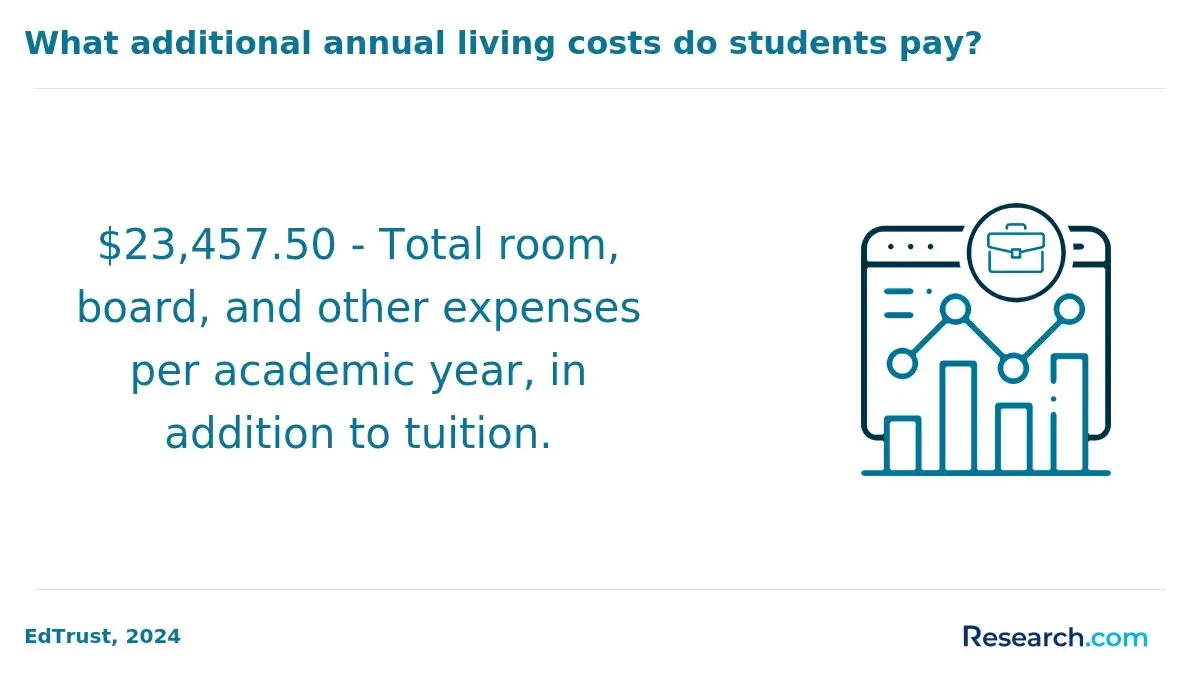
Experiential requirements can change the real price of an online doctorate because they add costs that are not always visible in tuition charts. Students comparing doctoral programs after looking at the cheapest online healthcare administration degree should use a broader cost model at the doctoral level, especially if unpaid field hours may reduce work availability.
Tuition is only one part of the budget. Fieldwork-related costs may include compliance documentation, background checks, drug screening, immunizations, malpractice or liability coverage, parking, commuting, lodging for intensives, professional attire, software, project materials, and term-extension fees if placement approval is delayed.
The table below shows common cost and timeline pressure points so students can compare programs beyond advertised tuition.
| Factor | How it can affect cost | How it can affect timeline | What to verify before enrolling |
| Required hours | More hours can mean more unpaid time, commuting, or reduced work availability | High-hour requirements may extend completion if hours must be spread across terms | Minimum hours, weekly schedule expectations, and whether prior graduate hours count |
| Site approval | New affiliation agreements may involve compliance expenses | Contract delays can push practicum start dates into a later term | Average approval time and deadline for submitting site paperwork |
| Residencies or intensives | Travel, hotel, meals, and time away from work may be required | Missed residency dates may delay progression | Number, location, length, and frequency of required in-person sessions |
| Employer-based fieldwork | Can reduce commuting and lodging costs if approved | May be easier to schedule around work, but only if project scope is approved early | Rules for using current workplace, supervisor conflicts, and project boundaries |
| Placement delays | Extra terms can increase tuition and fees | Graduation may be delayed even after coursework is complete | Backup placement process and whether the school guarantees support |
For debt planning, remember that federal graduate borrowing can carry origination fees and interest that increase total repayment cost. The U.S. Department of Education lists a 1.057% origination fee for Direct Unsubsidized Loans first disbursed during the 2024-25 award year, which means even small fee differences matter when doctoral borrowing is layered on top of living expenses and fieldwork costs.
Online coursework may be asynchronous, but practicum and internship requirements often depend on the operating hours of hospitals, agencies, clinics, public health departments, or administrative offices. Students comparing doctoral timelines with accelerated healthcare programs should separate course speed from placement speed, because field experiences cannot always be compressed.
Flexibility usually appears in several areas, and each one should be evaluated separately:
- Scheduling flexibility: Some placements allow evening, weekend, or project-based hours, while others require weekday access to leadership meetings, clinical operations, or community partners.
- Location flexibility: Some programs approve local sites nationwide, while others restrict placements to states where the school has authorization or site agreements.
- Format flexibility: Some projects can be partly remote, especially analytics, policy, informatics, and quality improvement work, but supervision and site engagement may still require synchronous meetings.
- Pacing flexibility: Some programs allow students to complete hours across multiple terms, while others attach hours to specific courses with fixed start and end dates.
- Workplace flexibility: Some schools approve employer-based projects, but they may require a new project, a different supervisor, or duties beyond the student's paid job description.
The most common mistake is assuming that "online" means "self-paced." In health services doctorates, the online format usually applies to didactic coursework, advising, and doctoral seminars. Applied requirements still depend on supervisors, organization schedules, compliance deadlines, and site approval.
Students working full time should request a sample practicum calendar. If the program cannot provide one, ask current students or program staff how many hours per week are typical during fieldwork terms and whether students commonly reduce work hours during the busiest phases.
Experiential requirements often exist because accrediting bodies, professional standards, or licensing expectations require evidence that students can apply advanced knowledge in real settings. However, accreditation and licensure are not the same thing, and students should not assume that completing doctoral fieldwork automatically qualifies them for a license, certification, or role.
Accreditation considerations vary by degree type. Public health students may look for Council on Education for Public Health expectations in DrPH programs. Healthcare management students may consider whether the program or related school has specialized healthcare management accreditation, although not every doctoral program is individually accredited that way. Nursing students should pay close attention to DNP accreditation, state board expectations, and whether practice hours align with their professional pathway.
Use the following verification steps before committing to a program with clinical or fieldwork requirements:
- Identify the accreditor relevant to your profession, not just the university's institutional accreditor.
- Ask whether the doctoral practicum, internship, clinical, or fieldwork hours are required for graduation, accreditation compliance, professional certification, licensure, or all of these.
- Contact your state licensing board if you expect the degree to support a licensed role.
- Confirm whether field hours completed outside your state will be accepted by your board or employer.
- Ask the school whether supervisor qualifications meet professional standards, including licensure, degree level, role, and years of experience.
A key limitation is that many health services doctorates are leadership or practice doctorates rather than direct licensure degrees. A DHA or DHSc may strengthen leadership preparation, but it typically does not replace profession-specific licensure such as nursing, medicine, therapy, counseling, or social work licensure.
Strong student support can make the difference between a manageable practicum and a delayed graduation plan. Because online students are often balancing employment, family responsibilities, and site logistics, support should be specific, documented, and available before the fieldwork term begins.
Look for programs that provide several layers of support:
- Placement advising: Guidance on identifying appropriate organizations, supervisors, project types, and timelines
- Compliance support: Clear instructions for background checks, immunizations, training modules, liability coverage, and site documentation
- Faculty supervision: Regular check-ins with a doctoral faculty member who evaluates academic progress and applied learning
- Site supervisor orientation: Written expectations for workplace supervisors, including evaluation forms and communication procedures
- Project approval: Early review of practicum goals, deliverables, ethical considerations, and data access needs
- Problem resolution: A defined escalation process if supervision changes, a site becomes unavailable, or the project scope no longer meets requirements
Students should also ask whether support continues during breaks, summer terms, or nonstandard academic calendars. Healthcare organizations do not always operate on the university's schedule, so delays can occur when contracts, compliance reviews, or supervisor approvals fall between terms.
One practical test is to ask the program for a placement checklist. A school that can provide a detailed checklist, timeline, and named contact is usually easier to evaluate than one that relies on informal advising conversations.
Practicum and clinical experiences can strengthen career outcomes when they help students build evidence of advanced competence: leading teams, improving quality metrics, implementing informatics systems, evaluating programs, managing budgets, or translating research into practice. They are most valuable when the experience produces work samples, measurable project results, executive references, or skills directly tied to the student's target role.
Career value depends on the role. Medical and health services management remains a strong labor market: the BLS projected 29% employment growth for medical and health services managers through 2033, which is much faster than the average for all occupations. For readers exploring analytics or records leadership, comparing doctorate-level goals with health information management salary context can help clarify whether a doctorate is necessary or whether a master's degree, certification, or informatics credential may be sufficient.
Practice-based doctoral training may be especially useful for students targeting these outcomes:
- Executive healthcare administration roles that require evidence of strategic planning, financial stewardship, and change management
- Quality, safety, and performance improvement roles that depend on applied project leadership
- Population health and public health leadership roles that require community partnership and program evaluation experience
- Health informatics and digital transformation roles where implementation experience matters as much as technical knowledge
- Academic or clinical education roles that value doctoral-level teaching, curriculum, or interprofessional training experience
Still, a doctorate does not guarantee promotion. Employers may weigh prior leadership experience, professional licensure, certifications, organizational fit, and measurable accomplishments more heavily than the degree title alone. The best fieldwork experience is one that closes a specific gap between your current resume and your intended next role.
How Should Students Choose an Online Health Services Doctorate With Experiential Requirements?
The right program is not simply the one with the fewest hours or the most flexible online format. It is the one whose experiential requirements are realistic for your location, compatible with your schedule, aligned with your profession, and valuable for your career target.
Use this step-by-step process to evaluate programs before applying:
- Define your target outcome: Decide whether you want executive leadership, public health leadership, clinical systems leadership, informatics, teaching, research, consulting, or policy work.
- Match the degree type to the outcome: Consider DHA or DHSc for applied health leadership, DrPH for public health practice, DNP for nursing systems leadership, and PhD pathways for research or faculty careers.
- Request the fieldwork handbook: Do not rely only on marketing pages; ask for the official practicum, internship, clinical, or doctoral project manual.
- Confirm required hours and timing: Identify exactly when hours begin, how many are required, whether they are tied to specific courses, and whether prior graduate hours may count.
- Verify placement responsibility: Ask whether the school arranges placements, approves student-found sites, or expects students to secure sites independently.
- Check geographic restrictions: Confirm that the program can enroll you and support fieldwork in your state before paying an application or deposit fee.
- Estimate the full cost: Add tuition, fees, travel, compliance expenses, technology, reduced work hours, and possible extra terms.
- Evaluate accreditation and licensure fit: Contact relevant boards or professional organizations if the fieldwork is supposed to support licensure, certification, or specialized practice.
- Ask about recent placement outcomes: Request examples of approved sites, common delays, and how many students use employer-based placements.
- Compare support quality: Favor programs with named placement staff, written timelines, supervisor criteria, and backup procedures.
Students should avoid programs that cannot clearly explain site approval, supervision standards, state authorization, or what happens if a placement falls through. An online doctorate can be worthwhile, but only if the in-person requirements are feasible before you enroll.
As a final decision rule, choose the program whose hands-on requirement creates career-relevant evidence you can use after graduation. If fieldwork only adds inconvenience without helping you build leadership experience, licensure progress, applied skills, or a stronger professional network, the trade-off may not be worth the added commitment.
Other Things You Should Know About Health Services
Often, yes. Many DHA, DHSc, DrPH, DNP, and PhD programs prefer or require a relevant master's degree, professional experience, and a graduate GPA that meets the school's standard. Some programs admit bachelor's-prepared students into longer doctoral pathways, but these are less common.
Some programs have removed GRE requirements, especially for experienced healthcare professionals, while others may still require or optionally accept scores. Applicants should verify current admissions rules because test policies can change by program, term, and applicant background.
It depends on the degree. PhD programs usually require a dissertation, while DHA, DHSc, DrPH, and DNP programs often use an applied dissertation, doctoral project, capstone, or practice-based scholarly project. The format matters because it affects research expectations, faculty supervision, and completion time.
Sometimes. Programs may accept relevant doctoral or graduate credits, but limits vary and experiential hours are often harder to transfer than classroom credits. Students should request a formal transfer evaluation before assuming prior coursework will reduce cost or time to completion.
- Clinical Internship Programs - Devereux Advanced Behavioral Health Massachusetts and Rhode Island https://www.devereux.org/site/SPageServer/
- Online Ph.D. in Human Services | AcademicEarth.org https://academicearth.org/ph-d-in-human-services/
- Global Insights on Online PA Training Programs - European Society of Medicine https://esmed.org/global-insights-on-online-pa-training-programs/
- Health and Human Services: Campus & Online Degrees and Careers https://www.publichealthonline.org/human-services/online-degree-programs/
- Top 5 Things to Know About Licensure: Before you choose your degree program! — Higher Education Licensure Pros https://www.higheredlicensurepros.com/blog/top-5-things-to-know-about-licensure-before-you-choose-your-degree-program
- Doctoral Healthcare Programs | ACE https://ace.edu/degree-programs/doctoral-degrees/doctoral-healthcare/
- Telemedicine and Virtual Care Training for Future Physicians https://medical.rossu.edu/blog/telemedicine-virtual-care-training-future-physicians
- Pre-Internship Experiences https://www.childlife.org/certification/become-certified/pre-internship-experiences
- Best Online Doctorates in Healthcare Administration 2026 https://www.onlineu.com/degrees/doctoral-healthcare-administration


