
2027 Online Health Education Doctorate Programs with Quantitative, Qualitative, and Mixed-Methods Research Options

Co-Founder and Chief Data Scientist
Choosing an online health education doctorate is not just about format or tuition; it is about whether the program can support the research you want to conduct. The U.S. Bureau of Labor Statistics projects 7% employment growth for health education specialists and community health workers from 2023 to 2033, making advanced research skills increasingly useful in universities, public health agencies, healthcare systems, and nonprofits.
This guide helps prospective doctoral students compare quantitative, qualitative, and mixed-methods options, evaluate faculty and dissertation support, and choose a program that fits their goals.
Key Things You Should Know
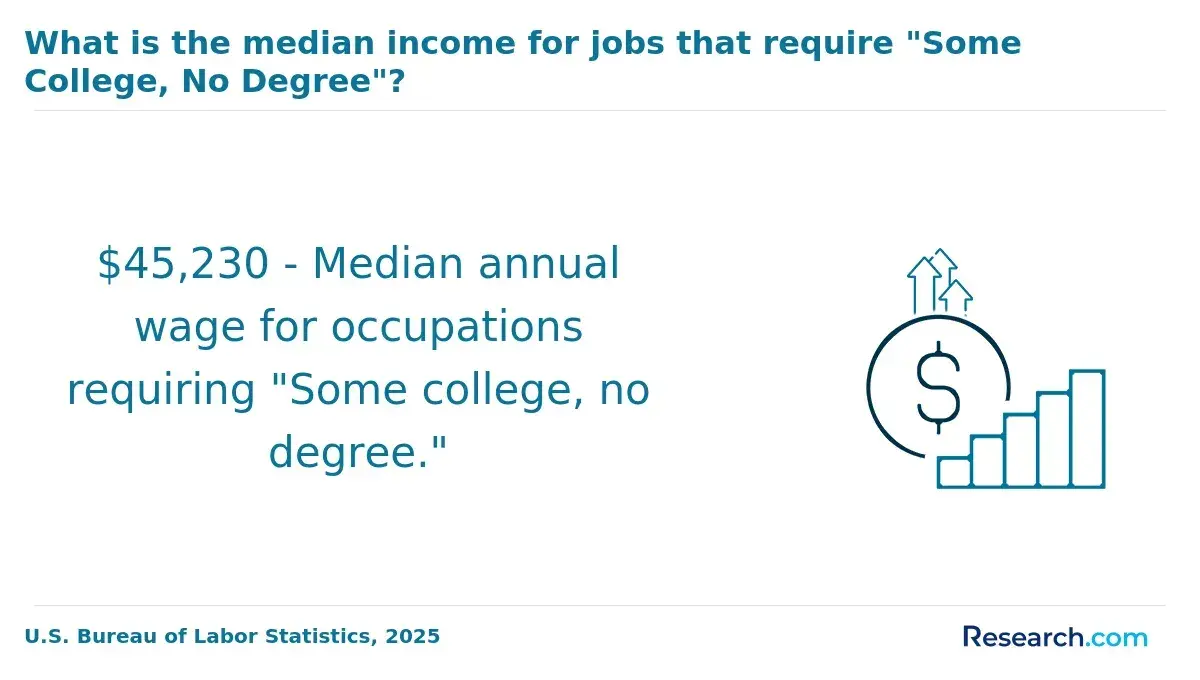
- Quantitative research is best for students who want to test relationships, measure intervention effects, analyze survey or population data, or prepare for research-heavy roles. BLS May 2024 data lists $63,000 as the median annual wage for health education specialists.
- Qualitative research is strongest when the dissertation question depends on lived experience, program implementation, culture, access, behavior, or stakeholder perspectives rather than numerical outcomes alone.
- Mixed-methods research can produce a richer dissertation, but it usually requires more coursework, more faculty support, and more time. Federal graduate Direct Unsubsidized Loans carried an 8.08% fixed interest rate for 2024-25, so extra semesters can materially affect total cost.
Which Online Health Education Doctorate Programs Offer Quantitative, Qualitative, or Mixed-Methods Research?
Online health education doctorate programs vary widely in how explicitly they support quantitative, qualitative, and mixed-methods research. Some programs advertise all three approaches in research coursework, while others allow multiple methods only if the dissertation chair and committee have the right expertise.
The table below summarizes examples of U.S. online or mostly online doctoral programs relevant to health education, health promotion, public health education, or health professions education. Use it as a starting point, then verify current catalog language, dissertation handbooks, faculty availability, and residency requirements before applying.
| Program example | Degree type | Health education focus | Research methods typically supported | Decision point for applicants |
| Walden University, PhD in Health Education and Promotion | PhD | Health education, health promotion, community health, behavior change | Quantitative, qualitative, and mixed methods are commonly used in dissertation pathways | Best for students who want a traditional research dissertation and broad methodology flexibility |
| A.T. Still University, EdD in Health Professions | EdD | Teaching, leadership, curriculum, and outcomes in health professions education | Quantitative, qualitative, and applied mixed-methods designs may fit depending on dissertation topic | Best for clinicians, faculty, and healthcare educators studying learning outcomes or educational practice |
| Logan University, Doctor of Health Professions Education | DHPE | Health professions teaching, assessment, and educational leadership | Quantitative and qualitative methods are central; mixed methods may depend on project approval | Best for professionals focused on education practice rather than broad public health policy |
| Nebraska Methodist College, EdD in Education and Leadership in Healthcare | EdD | Healthcare education, leadership, organizational learning, workforce development | Quantitative, qualitative, and applied research designs may be used in dissertation work | Best for students studying healthcare organizations, leadership, training, or educational change |
| University of St. Augustine for Health Sciences, EdD | EdD | Health science education, interprofessional learning, teaching practice | Quantitative, qualitative, and mixed approaches may be possible based on faculty and dissertation approval | Best for working health professionals who want an education-focused doctorate with applied outcomes |
| Loma Linda University, DrPH in Health Education | DrPH | Public health education, population health, community-based practice | Quantitative, qualitative, and mixed-methods public health research may be appropriate | Best for students seeking a practice-focused public health doctorate; confirm online format and residency expectations |
The most important takeaway is that "supports mixed methods" does not always mean every student can choose that design freely. Dissertation approval usually depends on the research question, ethics review, data access, faculty expertise, and whether the student has completed sufficient methods training.
How Do Quantitative, Qualitative, and Mixed-Methods Research Differ in Online Health Education Doctorates?
Quantitative, qualitative, and mixed-methods research differ in the type of question they answer. In an online health education doctorate, the right method should follow the research problem, not the other way around.
The comparison below shows how each methodology functions in doctoral health education research and what kind of student it tends to fit.
| Methodology | Best for questions about | Common data sources | Typical analysis | Strong fit for students who | Main caution |
| Quantitative | Effect size, associations, prediction, differences between groups, measurable outcomes | Surveys, assessments, EHR-derived datasets, public health databases, intervention results | Descriptive statistics, regression, comparison tests, modeling, survey validation | Like structured designs, numbers, statistical software, and hypothesis testing | Requires enough statistical preparation and an adequate sample size |
| Qualitative | Experience, meaning, barriers, culture, motivation, implementation, trust, perceptions | Interviews, focus groups, observation notes, documents, open-ended responses | Thematic analysis, coding, narrative analysis, case study analysis, grounded theory approaches | Want to understand how people interpret or experience health education programs | Requires careful recruitment, deep analysis, and strong writing discipline |
| Mixed methods | Questions that need both measurable outcomes and human explanation | Surveys plus interviews, intervention data plus focus groups, administrative data plus case studies | Statistical analysis combined with qualitative coding and integration of findings | Need a fuller picture of a complex program, population, or intervention | Often takes longer because two datasets must be collected, analyzed, and integrated |
A quantitative dissertation might ask whether a diabetes self-management education intervention is associated with improved knowledge scores. A qualitative dissertation might ask how rural adults experience barriers to attending the same program.
A mixed-methods dissertation might measure the change in knowledge scores and then interview participants to explain why some parts of the intervention worked better than others.
How Does Research Methodology Affect the Dissertation or Capstone in an Online Health Education Doctorate?
Research methodology shapes the dissertation or capstone from the first proposal draft to the final defense. It affects the literature review, sampling plan, institutional review board application, data collection schedule, analysis chapter, and the kind of committee expertise required.
The table below explains how methodology changes the work students actually complete. This matters because two programs with the same credit count can feel very different once dissertation design begins.
| Dissertation element | Quantitative design | Qualitative design | Mixed-methods design |
| Research question | Usually framed around variables, outcomes, groups, or measurable relationships | Usually framed around experiences, perceptions, processes, or meaning | Combines an outcome question with an explanatory or exploratory question |
| Proposal challenge | Justifying measures, sampling, power, statistical tests, and assumptions | Justifying design tradition, participant selection, interview protocol, and trustworthiness | Justifying why both forms of data are necessary and how they will be integrated |
| IRB concerns | Use of identifiable records, survey burden, secondary data permissions | Participant privacy, sensitive disclosures, interview storage, confidentiality | Both numerical and narrative data protections, often with a more complex protocol |
| Analysis chapter | Tables, tests, model results, interpretation of significance and practical meaning | Themes, participant quotations, coding logic, reflexivity, credibility strategies | Separate analyses plus an integrated explanation of where findings converge or diverge |
| Time risk | Low sample size or poor-quality data can delay completion | Recruitment, transcription, and coding can take longer than expected | Delays can compound because two forms of evidence must be completed |
Students often underestimate the dissertation effect of methodology choice. A design that looks attractive in a research methods course may become unrealistic if the student cannot access participants, lacks statistical preparation, or cannot find a chair with experience in that method.
Most online health education doctorates include doctoral research design, statistics or data analysis, qualitative inquiry, ethics, and dissertation seminars. The depth varies: a PhD usually emphasizes original scholarship, an EdD often emphasizes applied educational or organizational problems, and a DrPH typically emphasizes advanced public health practice and leadership.
Students should look beyond course titles and ask whether the curriculum builds enough skill for the dissertation method they are considering. A strong sequence usually includes the following training components:
- Research design courses that teach how to align the problem statement, theoretical framework, research question, data source, and analysis plan.
- Quantitative coursework covering descriptive statistics, inferential statistics, survey design, validity, reliability, and interpretation of results.
- Qualitative coursework covering interviewing, focus groups, coding, trustworthiness, reflexivity, and ethical treatment of participant narratives.
- Mixed-methods instruction that explains sequential, convergent, and embedded designs rather than simply adding one qualitative course to one statistics course.
- Ethics and IRB preparation focused on human subjects protection, informed consent, privacy, vulnerable populations, and responsible data storage.
- Dissertation seminars or research residencies that help students move from broad interest to a committee-approved prospectus.
Applicants coming from nutrition, dietetics, nursing, health science, or public health backgrounds may need extra preparation if their master's program did not include research methods. Students still completing earlier credentials can compare an online dietitian degree if they are building toward future health education or nutrition education roles.
Faculty mentorship is often the difference between a feasible doctoral study and a stalled dissertation. In online programs, students need not only a subject-matter expert but also a chair or committee member who understands the chosen methodology.
Before committing to a program, prospective students should evaluate mentor fit systematically. The following questions reveal whether methodology support is real or only implied:
- Which faculty have chaired quantitative, qualitative, or mixed-methods dissertations in health education or health professions education?
- Are students assigned a chair, or can they request a mentor based on research topic and method?
- How many active dissertation students does a typical chair supervise at one time?
- Does the program provide a separate methodologist if the chair is a content expert but not a methods expert?
- Are dissertation examples available so applicants can see which designs have actually been approved?
- How are disagreements handled if a committee member rejects a proposed methodology?
A common red flag is a program that lists broad faculty interests such as "health promotion" or "community health" but does not show whether faculty have supervised the type of analysis the student wants to conduct. Faculty topic match and faculty methods match are related, but they are not the same.
Online doctoral research is increasingly practical because many health education studies can be conducted through secure surveys, video interviews, learning management system data, program evaluation records, or publicly available public health datasets. Still, online access does not remove the need for rigorous sampling, privacy safeguards, and clear data management.
Students should think through the full data workflow before selecting a methodology. A strong plan usually includes these steps:
- Identify whether the data will come from people, records, public datasets, program documents, or a combination of sources.
- Confirm that the student can legally and ethically access the population or dataset before writing the final proposal.
- Choose software that fits the method, such as SPSS, R, SAS, Stata, Excel, NVivo, ATLAS.ti, Dedoose, MAXQDA, or secure survey platforms.
- Build a storage plan for consent forms, recordings, transcripts, de-identified files, codebooks, and analysis outputs.
- Check whether artificial intelligence tools are allowed for transcription, coding assistance, literature organization, or editing under university policy.
- Document every decision so the dissertation committee can evaluate transparency, reproducibility, and ethical compliance.
AI is becoming more common in research workflows, especially for transcription, literature screening, and organization. Doctoral students should treat AI as a support tool, not a substitute for human analysis, because dissertation committees and IRBs may require disclosure, data security review, and verification of all AI-assisted work.
Research methodology can affect both time and cost because dissertation delays often add enrollment fees, continuation credits, technology expenses, and loan interest. Mixed-methods projects are not automatically more expensive, but they are more vulnerable to delays if recruitment, quantitative analysis, qualitative coding, or integration takes longer than planned.
Applicants should calculate cost using the full doctoral pathway, not just per-credit tuition. Key cost drivers usually include:
- Tuition per credit and the total number of required doctoral credits.
- Dissertation continuation fees if research extends beyond standard coursework.
- Residency, intensive, or campus-visit costs if the online program is not fully asynchronous.
- Software, transcription, survey platform, statistical consulting, qualitative analysis tools, and secure data storage.
- Opportunity cost if the dissertation timeline reduces work hours or delays promotion eligibility.
- Loan cost, including federal graduate Direct Unsubsidized Loans at 8.08% and Grad PLUS Loans at 9.08% for 2024-25 first disbursements.
For students unsure whether a doctorate is necessary, a lower-cost master's degree can be a practical intermediate step. Nutrition-focused students, for example, may want to compare the cheapest online master's in nutrition before committing to doctoral-level research debt.
The best research method depends on the career problem the student wants to solve after graduation. Doctoral methodology should support the type of evidence the student will use in academic, healthcare, public health, nonprofit, government, or consulting work.
The table below connects common career goals with research-methodology fit. Salary figures are not guarantees; they are national medians from BLS May 2024 data and can vary by employer, region, experience, and job title.
| Career goal | Relevant BLS median wage context | Best-fitting methodology | Why it fits |
| University faculty or academic researcher in health education | Health specialties teachers, postsecondary: $105,650 | Quantitative or mixed methods | Academic roles often value publishable designs, measurable outcomes, and grant-ready evidence |
| Community health program leader | Health education specialists: $63,000 | Qualitative or mixed methods | Program improvement often depends on participant experience, access barriers, and implementation context |
| Healthcare training, curriculum, or professional education director | Training and development managers: $127,090 | Quantitative, qualitative, or mixed methods | Education leaders may study learning outcomes, competency assessment, faculty development, or learner experience |
| Public health analyst or evaluator | Epidemiologists: $83,980 | Quantitative or mixed methods | Evaluation and surveillance roles often require statistical reasoning and population-level evidence |
| Healthcare administrator focused on population health education | Medical and health services managers: $117,960 | Mixed methods | Leaders may need both performance metrics and stakeholder explanations to guide organizational change |
Students targeting nutrition education, wellness promotion, or dietetics leadership may also compare doctoral goals with the best online registered dietitian programs, especially if credentialing requirements matter more than a research doctorate for their intended role.
Research resources matter more in an online doctorate because students cannot assume informal campus access to labs, advisors, software, or peer writing groups. A program with strong online infrastructure can make quantitative, qualitative, or mixed-methods research far more manageable.
Use the following checklist when comparing programs. It is designed to reveal whether the school can support the dissertation method you are likely to use:
- Confirm institutional accreditation and, for public health doctorates, check whether programmatic accreditation such as CEPH applies to the specific degree.
- Ask whether students receive licenses or discounts for statistical, survey, transcription, and qualitative analysis software.
- Review dissertation handbooks for rules on secondary data, intervention studies, vulnerable populations, case studies, and mixed-methods integration.
- Look for online library support, systematic review help, research consultations, interlibrary loan access, and data-management guidance.
- Ask whether the program provides statistics tutors, qualitative coding support, writing center access, or dissertation boot camps for online students.
- Check whether students can conduct research in their workplace and what conflict-of-interest rules apply.
- Ask how transfer credits are evaluated and whether transferred research courses satisfy doctoral methods requirements.
- Verify whether the program requires synchronous residencies, live defenses, research intensives, or in-person presentations.
A strong resource package does not make the dissertation easy, but it reduces avoidable friction. The weakest programs leave students to find their own software, participants, statistical support, and methodological guidance after coursework is already complete.
How Should Students Choose an Online Health Education Doctorate Based on Research Methodology?
Students should choose an online health education doctorate by working backward from the research question, career goal, available data, and preferred evidence style. The best program is not always the one with the most methodology labels; it is the one with the right combination of faculty expertise, dissertation structure, accreditation, cost, and student support.
A practical selection process includes the following steps:
- Define the problem you want to study in one sentence before choosing a method.
- Decide whether the problem requires measurement, lived experience, or both.
- Identify the degree type that fits your goal: PhD for original scholarship, EdD for applied education or leadership problems, DrPH for advanced public health practice.
- Compare admissions requirements, including master's degree expectations, GPA minimums, professional experience, writing samples, statistics background, and interview requirements.
- Confirm whether the program has approved dissertations using your preferred method in the last few years.
- Review faculty profiles for both topic expertise and methodology expertise.
- Estimate total cost under a realistic timeline, including dissertation continuation and technology expenses.
- Ask admissions advisors what happens if your first-choice methodology is not approved by the committee.
- Choose the program that can support the dissertation you can realistically complete, not just the project you find most interesting.
Students who are not yet ready for doctoral admissions may want to strengthen public health preparation first. Comparing the easiest MPH online programs to get into can help applicants identify a more accessible step before advanced doctoral research.
The biggest mistake is choosing a methodology because it sounds impressive. Quantitative research is not better simply because it uses statistics, qualitative research is not easier because it uses interviews, and mixed methods is not automatically stronger because it uses both.
The right choice is the method that answers the question credibly within the time, resources, and mentorship the program can provide.
Other Things You Should Know About Health Education Programs
It can be, if the institution is accredited, the curriculum is rigorous, and the degree fits the role. Employers usually look at accreditation, dissertation quality, professional experience, and whether the doctorate aligns with teaching, leadership, public health, or research responsibilities.
Usually no. A doctorate in health education, health promotion, or health professions education is generally not a clinical license. Licensure depends on the profession and state, such as nursing, dietetics, counseling, or medicine, so students should check the relevant licensing board.
CHES and MCHES are professional certifications for health education specialists, while a doctorate is an academic degree. Certification may support professional credibility, but it does not replace doctoral coursework, dissertation research, or university degree requirements.
Many students do, but the dissertation stage often requires protected weekly time for reading, writing, data collection, and analysis. Applicants should ask programs about part-time pacing, maximum time to completion, leave policies, and dissertation support for working adults.
- Choosing the Right Research Methodology for Doctoral Studies https://www.globalxpublications.com/blog/choosing-right-research-methodology-doctoral-studies
- Mixed-Methods Research: Combining Qualitative and Quantitative Data https://www.nngroup.com/articles/mixed-methods-research/
- Ed.D. in Public Health Education | ACE https://ace.edu/degree-programs/doctoral-degrees/doctoral-healthcare/doctor-of-education-in-public-health-education/
- Best Online Ph.D. and Doctoral Programs | OEDb https://www.oedb.org/rankings/online-phd-programs/
- Quantitative and Qualitative Methods Doctoral Programs https://www.apadivisions.org/division-5/resources/doctoral
- The Science and Art of Mixed Methods in Medical Education Research https://journals.stfm.org/familymedicine/2026/february/ledford-0205/
- Research Methods: The Ultimate Guide for Academic and Professional Success https://www.litmaps.com/articles/types-of-research-methods
- 25 Best Online EdD Programs of 2025 https://www.eddprograms.org/schools/best-online-doctor-of-education-programs/
- Health Science Ph.D. (Online/Hybrid) - Degree Info & School Reviews https://www.edumed.org/online-schools/health-science-degrees/phd-doctorate/


