
2027 Online Health Education Doctorate Programs with Practicum, Internship, Clinical, or Fieldwork Requirements

Co-Founder and Chief Data Scientist
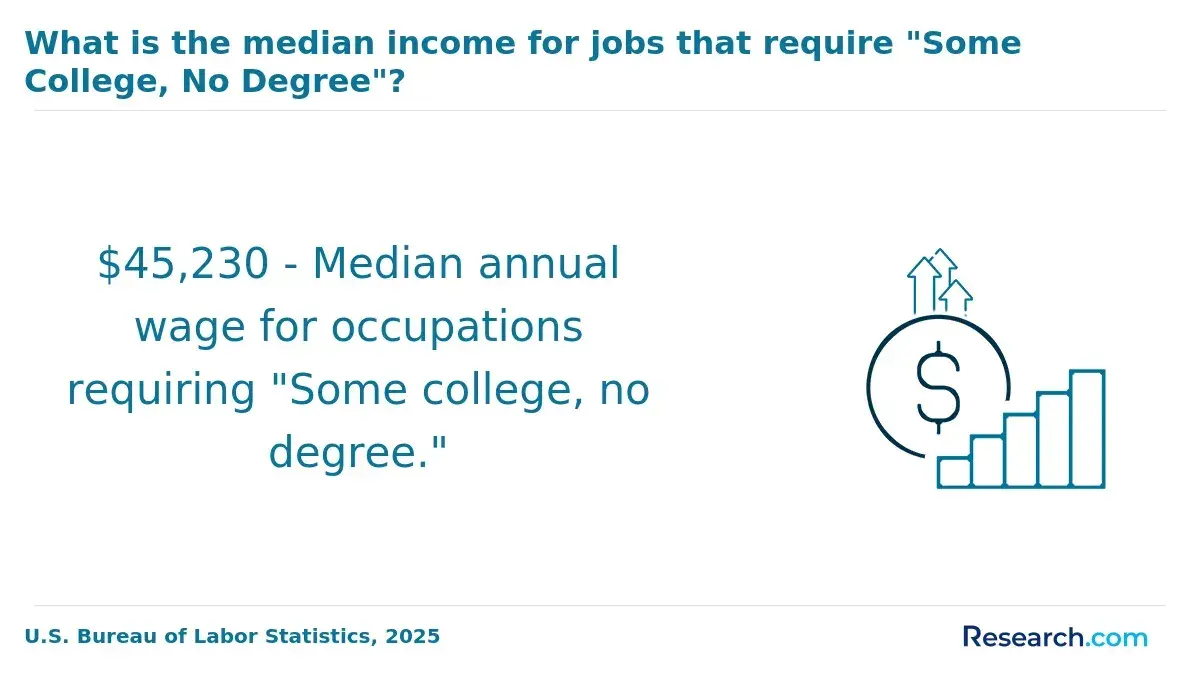
Choosing an online health education doctorate is not just about coursework; it is about whether you can realistically complete supervised practice requirements. The Bureau of Labor Statistics projects 7% employment growth for health education specialists and community health workers from 2024 to 2034, making advanced preparation valuable for leadership, teaching, and program evaluation roles.
This guide is for working professionals comparing online doctorates with practicum, internship, clinical, or fieldwork components. You will learn how these requirements affect location, scheduling, cost, accreditation, licensure, and career fit before you enroll.
Key Things You Should Know
- Most online health education doctorates with required hands-on experience are practice-oriented degrees such as DrPH, DHSc, EdD, or clinically adjacent doctorates. Research-heavy PhD programs may require research practica instead of community or clinical fieldwork.
- Fieldwork can add indirect costs for transportation, background checks, immunizations, liability coverage, unpaid work hours, and possible travel, even when tuition is charged fully online.
- The BLS reported a May 2024 median annual wage of $62,860 for health education specialists, while doctoral-level roles may also align with higher-paying management, faculty, policy, or consulting positions depending on experience and employer requirements.
Which Online Health Education Doctorate Programs Require Practicum, Internship, Clinical, or Fieldwork Experience?
Online health education doctorate programs with experiential requirements are usually designed for professionals who need applied leadership preparation, not just academic research training.
The requirement may be called a practicum, internship, applied practice experience, clinical placement, fieldwork, residency, doctoral project, or community-based capstone, so students should read the catalog language carefully instead of relying on the word "online."
The table below summarizes the main online doctorate types that may include hands-on requirements and explains what each format usually means for students. It is a comparison tool, not a substitute for checking the current program handbook, because hours and placement rules vary by university, state, and accreditation status.
| Degree type | Common program focus | Typical experiential requirement | Best fit | Important caution |
| DrPH in Health Education, Health Promotion, or Public Health | Public health leadership, population health, program planning, policy, evaluation | Applied practice experience, field placement, leadership practicum, integrative project | Public health practitioners seeking senior roles in agencies, nonprofits, health systems, or government | CEPH-accredited DrPH programs generally include applied practice expectations, so "online" rarely means no field component. |
| EdD in Health Education or Health Promotion | Teaching, curriculum design, community health education, organizational learning | Field-based dissertation, practicum, internship, or applied improvement project | Educators, trainers, school health leaders, and community program directors | Some programs are flexible, but others require access to a real education or health setting for data collection and implementation. |
| DHSc or Doctor of Health Science | Interprofessional health leadership, evidence-based practice, health systems improvement | Applied project, practicum, professional residency, or workplace-based implementation experience | Clinicians, administrators, allied health professionals, and health educators moving into leadership | Clinical authority depends on the student's prior license, not the doctorate alone. |
| PhD in Health Education, Health Promotion, or Public Health Education | Research methods, theory, faculty preparation, scholarship | Research practicum, teaching experience, dissertation research, occasional field-based data collection | Students targeting research, tenure-track faculty roles, or evaluation science | Fieldwork may be less structured than in a DrPH, but dissertation access to communities or datasets can still create practical constraints. |
| Clinical doctorate with health education emphasis | Patient education, clinical care, prevention, health behavior change | Clinical hours, supervised practice, preceptorship, or capstone hours | Licensed clinicians whose scope of practice requires supervised clinical training | These programs may not be health education doctorates in the narrow sense and may have licensure rules that differ sharply by profession. |
Students coming from nutrition, dietetics, wellness, or community health backgrounds should also check whether they need a doctoral degree at all. For example, someone still building eligibility for nutrition-related practice may first need an online dietitian degree or a graduate credential that satisfies professional prerequisites before a doctorate adds value.
A practical way to identify programs with required experience is to search the curriculum for terms such as "applied practice," "field experience," "internship," "clinical," "precepted," "residency," "doctoral project," and "community placement."
If those terms appear in required courses rather than electives, treat the program as a hybrid experience even when lectures, seminars, and advising are online.
What Are the Practicum, Internship, Clinical, and Fieldwork Requirements for Online Health Education Doctorates?
The terms practicum, internship, clinical, and fieldwork are often used loosely, but they are not interchangeable. Understanding the difference helps students estimate the time commitment, supervision level, site approval process, and career value of each requirement.
The table below clarifies how common experiential formats differ in online health education doctorates. Use it to decode program catalogs and to ask more precise questions before applying.
| Requirement | What it usually involves | Typical setting | Supervision model | Decision impact |
| Practicum | Structured application of health education theory, program planning, assessment, or evaluation | Public health department, community agency, school, nonprofit, hospital education office, workplace wellness program | Faculty oversight plus approved site supervisor | Good for students who need guided experience but may have limited daytime availability. |
| Internship | More immersive professional experience tied to role development or leadership practice | Agency, health system, government office, university, advocacy organization | Site supervisor with periodic faculty review | Can be valuable for career changers but may be harder to complete while working full time. |
| Clinical placement | Supervised patient-facing or clinically regulated practice connected to an existing health profession | Clinic, hospital, school-based health center, long-term care facility, telehealth-supported care site | Licensed preceptor or clinician, often with strict documentation | Most restrictive option; students must confirm state authorization, licensure compatibility, and preceptor availability. |
| Fieldwork | Broad community-based or organization-based work such as needs assessment, outreach, data collection, curriculum testing, or program implementation | Community, workplace, school, public health organization, tribal health program, correctional setting, or nonprofit | Varies by project and institution | Often flexible, but project approval can take time if the site needs agreements or ethics review. |
| Applied dissertation or doctoral project | Original improvement, evaluation, intervention, or scholarship project grounded in a real problem | Student's workplace, partner organization, school, community site, or health system | Doctoral committee, faculty chair, and sometimes site mentor | May be the most career-relevant requirement, but delays in permissions, data access, or institutional review can extend the timeline. |
Students should ask for three documents before committing: the current curriculum plan, the field experience handbook, and the student-site agreement template. These documents reveal whether the requirement is a short applied project, a multi-term placement, or a highly regulated clinical experience with documentation rules.
Common mistakes usually happen when students assume the name of the requirement tells the whole story. To avoid surprises, verify the following details before accepting an offer:
- The exact number of required hours, if the program publishes a specific hour requirement.
- Whether hours must be completed during standard business hours, evenings, weekends, or academic terms only.
- Whether the experience must involve direct community or patient contact, leadership work, teaching, research, or program evaluation.
- Whether the site must sign an affiliation agreement before the student can start.
- Whether the supervisor must hold a doctorate, professional license, CHES or MCHES certification, faculty appointment, or specific job title.
- Whether the experience can be completed at the student's current workplace and, if so, whether it must be outside normal job duties.
For some applicants, a master's credential may be a better first step than a doctorate if they lack the public health foundation needed for doctoral fieldwork. Students still building that foundation may want to compare the easiest MPH online programs to get into before choosing a doctoral path.
How Do Online Health Education Doctorate Programs Arrange Practicum and Clinical Placements?
Placement responsibility is one of the biggest differences among online doctoral programs. Some universities maintain formal site networks and help match students; others require students to identify a site, secure a supervisor, and obtain approval before the experience begins.
The table below compares common placement models. This matters because a program with lower tuition may still be difficult or expensive if students must build their own placement network from scratch.
| Placement model | How it works | Advantages | Risks for students | Best question to ask |
| School-arranged placement | The university identifies or assigns approved sites, often within authorized states or partner regions. | Less networking burden and clearer compliance process | May require travel, limited site choice, or longer wait times in high-demand areas | "Do you guarantee an approved placement within a reasonable commuting distance?" |
| Student-arranged placement with school approval | The student proposes a site and supervisor, and the university reviews qualifications and agreements. | More local flexibility and potential use of existing professional contacts | Students carry more responsibility if sites decline or paperwork is delayed | "What happens if my proposed site is not approved?" |
| Workplace-based placement | The student completes the requirement through a current employer, often with a project beyond ordinary duties. | May reduce travel and scheduling conflicts | Conflict-of-interest rules, supervisor limitations, and data permissions can complicate approval | "Can my employer serve as a site, and what must be different from my paid role?" |
| Regional cohort or residency-supported placement | Online coursework is combined with short in-person intensives, campus residencies, or regional field experiences. | Stronger faculty connection and structured skill-building | Travel, lodging, missed work, and fixed dates add cost and planning pressure | "How many in-person visits are required, and are they mandatory?" |
| Clinical preceptor model | Students complete hours under a licensed or credentialed professional approved by the program. | Essential for clinically regulated preparation | Preceptor shortages and state rules can delay progress | "Who is responsible for finding a preceptor in my state?" |
Students should not enroll until they understand who owns the placement process. Admissions teams may describe a program as flexible, but the written handbook usually shows whether the school provides placement coordination or simply reviews student-proposed sites.
A strong placement process usually includes these steps, and students should ask where the program gives direct support:
- Initial eligibility review to confirm the student's state, licensure background, employment setting, and fieldwork goals.
- Site identification or site proposal, including supervisor credentials and role description.
- Affiliation agreement, liability documentation, background check, immunization, privacy training, or compliance clearance when required.
- Faculty approval of learning objectives, deliverables, hour expectations, and evaluation methods.
- Ongoing check-ins, progress logs, supervisor feedback, and final assessment of competencies.
A major red flag is vague language such as "students are responsible for arranging all practicum experiences" without a clear backup process. If the school cannot explain what happens when a local site falls through, the student carries the risk of delay.
Many students can complete fieldwork near home, but local completion is never automatic. It depends on the university's state authorization, the type of experience, affiliation agreements, supervisor qualifications, site capacity, and whether the student's state or profession has extra rules.
The table below highlights factors that determine whether a local placement is realistic. Use it as a feasibility checklist before you apply, especially if relocation is not an option.
| Feasibility factor | Why it matters | What to verify |
| State authorization | Online programs may be limited in where they can enroll students or place them for field experiences. | Confirm the university can supervise fieldwork in your state before enrollment. |
| Site type | Community health fieldwork is often easier to place locally than regulated clinical practice. | Ask whether acceptable sites include nonprofits, schools, public health agencies, hospitals, or workplaces. |
| Supervisor qualifications | The site may be convenient but still unacceptable if the supervisor lacks required credentials. | Request the written supervisor criteria before contacting sites. |
| Affiliation agreement | Some sites will not sign university agreements or require legal review that can take months. | Ask how long agreements usually take and whether the school already has partners nearby. |
| Workplace approval | Using your employer can be efficient but may require separation from normal paid duties. | Ask whether projects at your workplace are allowed and how conflicts of interest are handled. |
| Schedule compatibility | Many health education activities occur during weekday business hours. | Ask whether evening, weekend, remote, or hybrid field activities count toward requirements. |
Students in rural areas, military families, shift workers, and caregivers should be especially careful. A program may be academically online but still assume that students have weekday access to public health agencies, clinical sites, schools, or community organizations.
Before enrolling, take these practical steps to test local placement feasibility:
- Ask the program for a state-specific answer in writing, not a general statement about online availability.
- List three to five possible local sites and compare them with the program's approved site criteria.
- Ask whether the program has previously placed students in your state, region, or type of community.
- Confirm whether telehealth, virtual program evaluation, remote curriculum development, or data-based projects can satisfy any portion of the requirement.
- Ask current students or alumni whether local placement was realistic and how long site approval took.
If a program requires a placement type that is scarce in your area, compare alternatives with fewer clinical constraints or stronger placement support. Students from nutrition backgrounds may also review pathways such as the best online registered dietitian programs if their long-term goal is credentialed nutrition practice rather than doctoral health education leadership.
Hands-on requirements can change both the direct and indirect cost of an online doctorate. Tuition is only one part of the budget; students may also need to pay for travel, background checks, health documentation, professional liability insurance, software, conference-style residencies, parking, childcare, and unpaid hours away from work.
The National Center for Education Statistics reported in 2024 that average graduate tuition and required fees were higher at private nonprofit institutions than at public institutions, but tuition averages do not capture fieldwork costs.
For online doctorate students, the most important financial question is the total cost to complete the degree from your location and schedule, not simply the per-credit tuition rate.
The table below separates common tuition-related and fieldwork-related cost drivers. It helps students compare programs with similar online coursework but different in-person expectations.
| Cost or time factor | How it affects students | What to ask before enrolling |
| Required credits | More credits usually increase tuition and may extend completion time. | "How many total credits are required after transfer or advanced standing review?" |
| Fieldwork hours | More hours can limit work availability and may stretch across multiple terms. | "Are hours completed in one term or spread across the program?" |
| Residencies or intensives | Short campus visits can add airfare, lodging, meals, local transportation, and missed work. | "How many in-person sessions are mandatory and when are they scheduled?" |
| Compliance requirements | Background checks, drug screening, immunizations, CPR training, or health records may be required by sites. | "Which compliance costs are paid by the student?" |
| Affiliation delays | Site paperwork can postpone registration, fieldwork start dates, or graduation. | "What is the average site approval timeline?" |
| Unpaid placement time | Students may need to reduce work hours or use leave for weekday field activities. | "Can required experiences be completed outside standard business hours?" |
| Dissertation or doctoral project approvals | Ethics review, data access, and site permissions can extend the final phase. | "What are the most common causes of doctoral project delay?" |
Timeline effects vary by program design. A structured cohort program may keep students moving but offer less scheduling flexibility, while a self-paced or dissertation-heavy program may allow flexibility but require more self-management and site coordination.
To estimate the real cost and timeline, students should build a completion budget that includes both money and time. Include these items before comparing offers:
- Total tuition after transfer credit, employer benefits, scholarships, assistantships, or military education benefits.
- Mandatory fees, technology fees, graduation fees, residency fees, and dissertation continuation fees.
- Travel, lodging, parking, fuel, public transportation, childcare, and meal costs for required in-person experiences.
- Lost income or paid time off used for weekday practicum, internship, clinical, or fieldwork hours.
- Compliance costs such as background checks, immunizations, liability insurance, training modules, or site onboarding.
- A time buffer for site approval, preceptor changes, data access delays, and institutional review board requirements.
Students comparing nutrition or health promotion pathways should also weigh whether a less expensive graduate degree can meet their immediate career goal before a doctorate. For some, the cheapest online master's in nutrition may provide a better near-term return if doctoral leadership or faculty roles are not yet required.
Flexibility varies widely. Online coursework may be asynchronous, but practicum, internship, clinical, or fieldwork requirements often depend on site schedules, supervisor availability, community events, school calendars, or patient-care hours.
The table below shows where students usually find flexibility and where they should expect firm rules. This distinction helps working professionals avoid assuming that every requirement can be completed at night or from home.
| Program feature | Usually flexible | Often not flexible |
| Online classes | Recorded lectures, discussion boards, independent assignments, virtual advising | Live seminars, synchronous presentations, cohort meetings, exam windows |
| Practicum site | Student-proposed community sites, workplace projects, local agencies | Sites requiring formal agreements, licensed supervisors, or specific populations |
| Fieldwork schedule | Some project work, data analysis, curriculum design, virtual meetings | Health fairs, school programs, clinic hours, agency meetings, supervised contact hours |
| Clinical hours | Limited flexibility if telehealth or multiple shifts are allowed | Preceptor schedule, patient availability, state rules, documentation requirements |
| Doctoral project | Topic selection, local problem focus, applied setting | Committee approval, ethics review, site permission, data collection timelines |
Students who work full time should look for programs that publish realistic plans for completing supervised experience alongside employment. Flexibility is strongest when the program allows local sites, workplace-based projects, remote deliverables, and multiple start windows for practicum courses.
When comparing programs, ask questions that reveal the actual flexibility behind the marketing language:
- Can fieldwork be completed in evenings, weekends, compressed formats, or split across terms?
- Are there required synchronous meetings during business hours?
- Can remote health education program planning, evaluation, or data analysis count toward experiential hours?
- Does the program allow students to pause fieldwork if a work schedule changes?
- Are students required to complete a minimum number of hours each week?
- Can the practicum be completed at a current employer, and what approvals are needed?
- Are there blackout periods when placements cannot begin because of academic calendars or site cycles?
A common mistake is choosing the program with the fewest advertised in-person requirements without checking the type of experience. A short but rigid clinical placement can be harder for a working student than a longer applied project that can be completed through a flexible community partner.
Experiential requirements are closely tied to accreditation and professional standards, but they do not always lead to licensure. In health education, most roles are not licensed in the way nursing, dietetics, counseling, medicine, or clinical psychology roles are licensed.
However, employers may prefer or require documented applied experience, public health competencies, CHES or MCHES certification, or discipline-specific credentials.
The table below explains which quality and credential checks matter most. Students should use it to separate institutional legitimacy, programmatic accreditation, certification relevance, and state licensure requirements.
| Credential or quality area | Why it matters | How experiential requirements connect | Student action |
| Institutional accreditation | Confirms the university meets recognized academic quality standards and is usually necessary for federal financial aid eligibility. | Does not guarantee local placement, but it is a baseline requirement for credibility. | Confirm accreditation through the university and recognized accreditor listings. |
| CEPH accreditation | Relevant for many public health degrees, especially DrPH and MPH programs. | Applied practice and integrative learning expectations are central to many accredited public health programs. | Ask whether the exact doctorate, school, or program is covered by CEPH accreditation. |
| CHES or MCHES certification alignment | Important for health education specialists who want a recognized professional credential. | Fieldwork may help build competencies but does not automatically award certification. | Compare coursework and experience with current NCHEC eligibility requirements. |
| State licensure | Critical for regulated clinical professions but usually not required for general health education roles. | Clinical placements may need to satisfy state board standards if the doctorate is tied to a licensed profession. | Contact the relevant state board before enrolling if your goal involves a licensed scope of practice. |
| Employer requirements | Government agencies, universities, hospitals, and health systems may set their own expectations. | Supervised experience can support hiring for leadership, teaching, evaluation, or patient education roles. | Review job postings in your target region and ask employers which credentials they value. |
Students should be especially cautious if they are pursuing a doctorate to change into a regulated clinical profession. A health education doctorate alone usually does not replace a required clinical degree, supervised clinical hours, board exam, or state license.
Use this verification sequence before enrolling if licensure, certification, or employer recognition matters to your career plan:
- Identify the exact job title or credential you want after graduation.
- Check whether the role is licensed, certified, employer-preferred, or unregulated in your state.
- Confirm whether the doctorate is accredited at the institutional and, when relevant, programmatic level.
- Ask the program whether its fieldwork is designed to satisfy a specific external standard or only internal graduation requirements.
- Contact the licensing board, certification body, or target employer directly and save written responses.
A red flag is any program that implies a doctorate automatically qualifies students for a licensed clinical role without reviewing the student's prior education, state rules, and required supervised experience. Accreditation and licensure are separate questions, and both must be verified independently.
Good support can make the difference between a manageable field experience and a delayed graduation plan. Strong online programs provide more than a faculty email address; they offer clear placement procedures, realistic timelines, documentation tools, site approval guidance, and escalation options when problems arise.
The table below outlines the support services students should expect or request. These supports are especially important for students who live far from campus or work in regions with fewer approved sites.
| Support type | What it should include | Why it matters |
| Placement advising | Early review of state, location, career goals, site options, and timeline | Helps students avoid applying to a program they cannot practically complete. |
| Site approval guidance | Templates, supervisor criteria, affiliation agreement process, compliance checklist | Reduces delays caused by missing paperwork or unsuitable sites. |
| Faculty mentorship | Help connecting fieldwork to theory, competencies, research methods, and doctoral project goals | Improves the academic and career value of the experience. |
| Technology tools | Hour logs, learning contracts, evaluation forms, secure communication, project management platforms | Creates clear documentation for graduation and professional portfolios. |
| Site supervisor orientation | Explanation of expectations, evaluation rubrics, communication schedule, and student role | Prevents confusion between paid work, volunteer activity, and doctoral-level practice. |
| Problem-resolution process | Steps for replacing a site, addressing supervisor issues, or modifying learning objectives | Protects students if a site closes, a supervisor leaves, or a placement becomes unsuitable. |
Students should ask for examples of support before enrollment, not after a problem appears. A program that can describe its placement workflow in detail is usually more prepared than one that gives only broad reassurance.
When speaking with admissions advisors, faculty, or current students, ask questions that reveal the quality of support:
- When do students begin planning for practicum, internship, clinical, or fieldwork requirements?
- Is there a dedicated placement coordinator or only faculty advising?
- How many proposed sites are rejected, and why?
- What support is available if a site agreement stalls in legal review?
- Can students see sample learning contracts, hour logs, and evaluation forms before enrolling?
- How often do faculty communicate with site supervisors?
- What happens if a student moves to another state during the program?
Strong support does not mean the program removes all responsibility from the student. Doctoral students are usually expected to network professionally, clarify career goals, and take initiative, but the university should provide enough structure to make completion realistic.
Experiential requirements can strengthen career outcomes when they build evidence of real doctoral-level work: designing programs, leading teams, evaluating interventions, translating research, teaching adults, managing partnerships, or improving population health systems. The value is highest when the field experience aligns with the student's target role.
According to BLS May 2024 wage data, medical and health services managers had a median annual wage of $117,960, which shows why some health education doctorate students target leadership roles rather than only direct health education specialist jobs.
However, a doctorate does not automatically move a graduate into management; experience, sector, location, prior credentials, and employer needs remain major factors.
The table below connects common experiential experiences with potential career directions. Use it to evaluate whether a program's hands-on requirement supports your specific goal.
| Experiential focus | Skills developed | Possible career alignment | How to judge value |
| Community health program planning | Needs assessment, stakeholder engagement, intervention design | Health promotion director, community health strategist, nonprofit program leader | Look for projects that produce usable plans, curricula, or implementation tools. |
| Program evaluation and data use | Evaluation design, survey methods, outcomes reporting, quality improvement | Evaluator, public health analyst, grant-funded program manager, consultant | Choose experiences that produce measurable findings and a portfolio-ready report. |
| Teaching and curriculum development | Instructional design, adult learning, assessment, health communication | University faculty, health education faculty, corporate wellness trainer, clinical educator | Seek supervised teaching, curriculum revision, or learning assessment experience. |
| Policy or systems leadership | Coalition building, advocacy, strategic planning, implementation science | Public health administrator, policy advisor, systems improvement leader | Prioritize placements with cross-sector leadership exposure. |
| Clinical patient education | Behavior change counseling, care coordination, patient communication, documentation | Clinical educator, patient education specialist, prevention program leader | Verify whether the experience fits your existing license and employer expectations. |
| Research or scholarly practice | Study design, ethics review, dissemination, manuscript or conference preparation | Faculty member, research associate, principal investigator, evidence-based practice leader | Look for mentorship that leads to publications, presentations, or funded project experience. |
Current trends are raising the value of applied doctoral experience. Employers increasingly expect health education leaders to use data dashboards, digital health tools, culturally responsive communication, AI-supported content review, and evidence-based program evaluation. A strong field experience can help students demonstrate those skills in a real setting rather than only describing them in coursework.
Students should avoid choosing a placement solely because it is convenient. A nearby site may be acceptable for graduation but weak for career advancement if it does not build relevant leadership, evaluation, teaching, or population health evidence.
To turn fieldwork into career value, students should aim to leave the program with concrete professional assets:
- A portfolio-ready program plan, evaluation report, curriculum, policy brief, grant product, or quality improvement deliverable.
- Documented supervisory feedback that speaks to doctoral-level competencies.
- Evidence of partnership management, leadership, data interpretation, and ethical practice.
- Conference abstracts, publications, professional presentations, or internal reports when appropriate.
- References from faculty, site supervisors, and community partners who can speak to applied performance.
How Should Students Choose an Online Health Education Doctorate With Experiential Requirements?
The right program is the one that matches your career goal and that you can realistically complete from your location, with your schedule, finances, and professional obligations. A prestigious or affordable online doctorate can become a poor choice if the fieldwork model does not fit your life.
Use the table below to compare programs on the factors that most affect completion and career value. Focus on evidence from catalogs, handbooks, accreditation pages, and written advisor responses rather than marketing claims.
| Decision factor | Strong fit | Potential red flag |
| Career alignment | Experiential work directly supports your target role in leadership, teaching, evaluation, policy, or clinical education. | The requirement is generic, unrelated to your goals, or impossible to explain to employers. |
| Placement feasibility | The school confirms fieldwork is allowed in your state and provides clear site approval rules. | The school gives broad online-program claims but avoids state-specific placement answers. |
| Support model | There is a placement coordinator, field handbook, supervisor orientation, and backup process. | Students must find placements independently with little guidance. |
| Schedule compatibility | Hours can be completed through local, workplace, hybrid, or project-based options that fit employment. | Most required activities occur during business hours and cannot be adjusted. |
| Accreditation and credential fit | The program's accreditation and competencies match your public health, education, or clinical goals. | The program implies licensure or certification outcomes without documentation. |
| Total cost | The student budget includes tuition, fees, travel, compliance, unpaid hours, and possible delays. | The school discusses tuition only and minimizes fieldwork-related expenses. |
| Doctoral project structure | The project can be completed in an accessible setting with realistic data and permissions. | The project requires site access or data approvals the student cannot control. |
A good decision process should move from career goal to feasibility, not the other way around. Students who start with "Which program is cheapest?" or "Which program is fastest?" may overlook the placement requirement that ultimately determines whether they can finish.
Before submitting an enrollment deposit, complete this practical checklist:
- Define your target role, preferred sector, and whether the job requires a doctorate, license, certification, or supervised experience.
- Request the fieldwork handbook, curriculum plan, residency schedule, and doctoral project requirements.
- Confirm in writing that the program can enroll you and supervise fieldwork in your state.
- Ask who arranges placements, who approves supervisors, and what happens if a site falls through.
- Estimate total cost, including unpaid time, travel, compliance, childcare, parking, and possible extension fees.
- Speak with current students or alumni who completed fieldwork while working in a similar schedule or region.
- Compare at least three programs using the same criteria rather than relying on program names or rankings alone.
Students who benefit most from practice-based online doctorates are usually experienced professionals who already have access to health, education, community, or public health settings and want to move into leadership, faculty, evaluation, policy, or advanced program design roles.
Students who should be cautious include those with no local site options, no schedule flexibility, unclear career goals, or a desire for a licensed clinical profession that the doctorate does not actually prepare them to enter.
The bottom line: an online health education doctorate with practicum, internship, clinical, or fieldwork requirements can be worth it when the hands-on experience builds relevant professional evidence and the placement model fits your life. It is a poor investment when "online" hides rigid in-person obligations, unclear placement responsibility, or costs the student did not plan for.
Other Things You Should Know About Health Education Programs
Many online doctoral programs no longer require the GRE, especially practice-focused programs for working professionals. However, requirements vary, and programs may still evaluate graduate GPA, professional experience, writing samples, interviews, recommendations, and a statement of purpose.
Sometimes. Some programs accept applicants with related master's degrees in education, nursing, nutrition, healthcare administration, psychology, social work, or allied health. Students without public health coursework may need prerequisites or leveling courses.
A DrPH is usually better for applied public health leadership, while a PhD is usually better for research-intensive academic careers. For health education leadership, choose based on whether you want to lead programs and systems or conduct original research as your primary role.
Many students do, but full-time work is easier during coursework than during fieldwork, residencies, comprehensive exams, or the doctoral project phase. Ask programs for sample schedules from working students before assuming the workload will fit your job.
- Ed.D. in Public Health Education | ACE https://ace.edu/degree-programs/doctoral-degrees/doctoral-healthcare/doctor-of-education-in-public-health-education/
- Practicum vs. Internship in Counseling Programs: What’s the Difference? https://www.nec.edu/news/practicum-vs-internship-counseling-programs
- Section 3: Professional Practice - CACREP https://www.cacrep.org/section-3-professional-practice/
- How Technology is Changing Healthcare Education https://www.edumed.org/resources/technology-in-healthcare-education/
- Doctor of Public Health (DrPH) | Claremont Graduate University https://www.cgu.edu/academics/program/doctor-public-health/
- Top Online PhD in Public Health (DrPH) Programs - MPH Online https://www.mphonline.org/online-phd-in-public-health/
- EdD in Healthcare Education & Leadership | Health Doctorate | NMC https://www.methodistcollege.edu/health-professions/doctoral-healthcare-education
- 25 Best Online EdD Programs of 2025 https://www.eddprograms.org/schools/best-online-doctor-of-education-programs/
- Health and Human Services: Campus & Online Degrees and Careers https://www.publichealthonline.org/human-services/online-degree-programs/


