2027 Best Online Health Education Doctorate Programs for Nonprofit, Policy, and Community Leadership Careers

Co-Founder and Chief Data Scientist
Choosing an online health education doctorate is a high-stakes decision if your goal is to lead nonprofits, shape health policy, or improve community systems. The nonprofit sector employs more than 12 million U. S. workers, according to 2024 National Council of Nonprofits workforce reporting, and health-focused organizations increasingly need leaders who can use data, partnerships, and evidence-based education.
This guide helps working professionals compare program quality, specialization fit, cost, accreditation, online format, and career alignment so they can choose a doctorate that supports mission-driven leadership rather than just adding a credential.
Key Things You Should Know
- The strongest online health education doctorate programs for leadership usually combine public health education, organizational leadership, evaluation, policy, grant strategy, and applied community research rather than focusing only on classroom teaching.
- Program fit matters more than the degree label: an EdD may suit nonprofit and community leadership, a DrPH may fit applied public health policy leadership, and a PhD may be better for research-intensive or faculty careers.
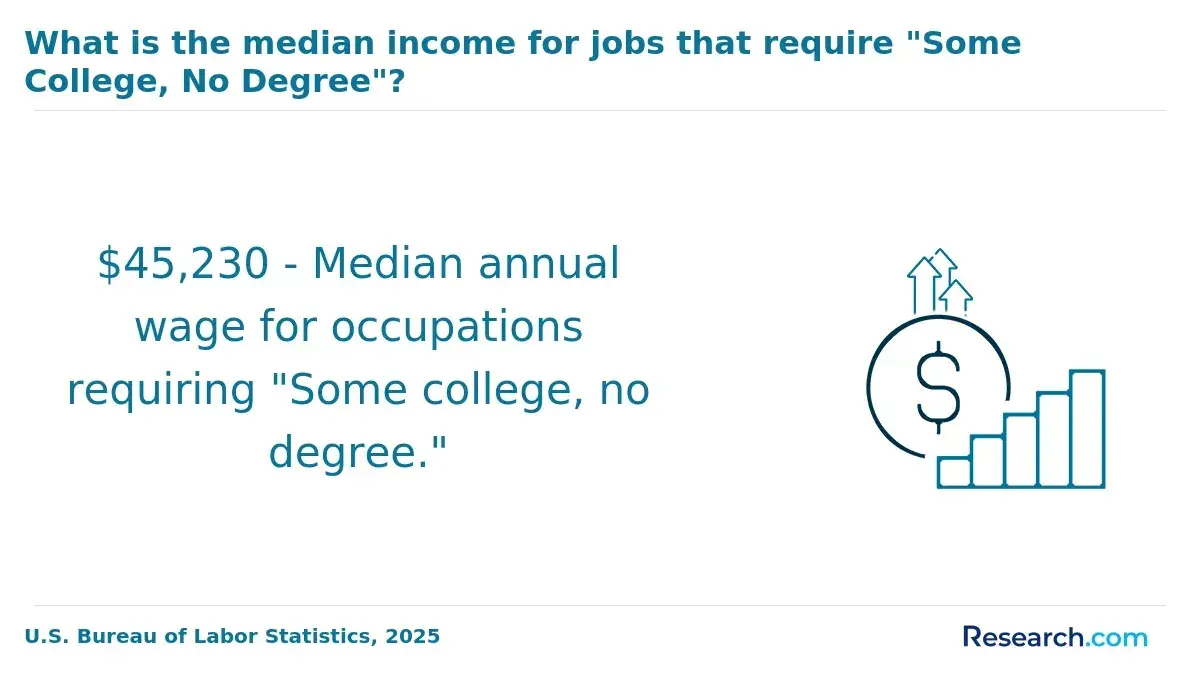
- Use cost and labor-market data cautiously: BLS May 2024 data lists median annual pay of $78,240 for social and community service managers and $117,960 for medical and health services managers, but role, sector, geography, and prior experience strongly affect ROI.
Which Online Health Education Doctorate Programs Are Best for Nonprofit, Policy, and Community Leadership?
The best online health education doctorate program is the one whose curriculum, faculty, applied learning, and network match the kind of leadership you want to practice. For nonprofit, policy, and community leadership careers, that usually means looking beyond rankings and asking whether the program trains you to design interventions, manage cross-sector partnerships, evaluate outcomes, secure funding, and communicate evidence to decision-makers.
Most candidates should compare programs by career fit first, then by cost, format, and reputation. The table below summarizes the major program types that commonly serve health education professionals pursuing mission-driven leadership roles.
| Program type | Best fit | Leadership strengths | Potential limitation |
| Online EdD in Health Education, Health Promotion, or Health Professions Education | Nonprofit directors, training leaders, community education leaders, curriculum leaders | Applied leadership, program improvement, adult learning, organizational change | May be less policy-heavy unless electives or faculty expertise support public health systems work |
| Online DrPH with health education, community health, or leadership emphasis | Public health executives, policy advocates, coalition leaders, health department leaders | Population health strategy, policy implementation, applied research, systems leadership | May require public health prerequisites, an MPH, or substantial professional experience |
| Online PhD in Health Education, Health Promotion, or Community Health | Researchers, faculty candidates, evaluation scientists, evidence-generation leaders | Research design, theory development, publication, advanced methods | May be less practice-oriented for candidates seeking immediate executive leadership roles |
| Online DHA, DHSc, or leadership doctorate with health education coursework | Healthcare nonprofit executives, health system education leaders, workforce development leaders | Operations, administration, strategic planning, interprofessional leadership | May not provide enough depth in community health education theory or policy advocacy |
A good shortlist should include programs that can clearly explain how students complete applied projects, dissertation research, or practicums connected to real organizations. If a program cannot show how doctoral work translates into nonprofit, policy, or community impact, it may be a weak fit even if it has a recognizable university brand.
Use these criteria to separate strong leadership-focused programs from programs that are merely convenient:
- Look for coursework in health behavior theory, community assessment, program planning, evaluation, leadership, policy, budgeting, grant development, and ethics.
- Ask whether the dissertation or doctoral project can be completed with a nonprofit, public agency, advocacy organization, school system, clinic, foundation, or community coalition.
- Review faculty profiles for work in health disparities, community-based participatory research, health communication, nonprofit leadership, public health policy, or implementation science.
- Compare total program cost, not only per-credit tuition, because doctoral fees, residencies, travel, technology costs, and extension credits can change affordability.
- Confirm that the program is institutionally accredited and that public health-related programs disclose any relevant specialized accreditation or reasons they do not hold it.
Common mistakes include choosing the cheapest program without checking project support, choosing a prestigious university without verifying online student access to faculty, or assuming that all health education doctorates prepare graduates for executive leadership. A better approach is to create a two-column comparison: one column for your target role and one for the evidence that each program directly supports that role.
Which Health Education Doctorate Specializations Best Align With Nonprofit, Policy, and Community Leadership?
Specialization is one of the most important decisions because health education leadership is not a single career path. A nonprofit executive, policy strategist, community coalition director, and academic researcher may all use health education expertise, but they need different doctoral training.
The best specialization depends on the problems you want to solve and the organizations you want to influence. The table below shows how common specialization areas align with nonprofit, policy, and community leadership goals.
| Specialization area | Best aligned careers | What to look for in the program |
| Community health education | Community health director, coalition leader, outreach strategist, health equity program manager | Community assessment, participatory methods, culturally responsive education, partnership development |
| Public health policy and advocacy | Policy analyst, advocacy director, legislative affairs leader, public health strategist | Policy analysis, health law, systems change, communication with policymakers, implementation evaluation |
| Nonprofit leadership and administration | Executive director, program director, foundation program officer, development-focused health leader | Budgeting, grant writing, governance, strategic planning, evaluation, board relations |
| Health promotion and behavior change | Health promotion director, prevention program leader, worksite wellness strategist | Behavioral theory, intervention design, communication campaigns, outcomes measurement |
| Health equity and social determinants of health | Equity officer, community benefit leader, population health strategist | Structural determinants, disparities research, ethics, community engagement, data-informed equity planning |
| Nutrition, food policy, and community wellness | Nutrition nonprofit leader, food access advocate, community wellness director | Nutrition policy, food systems, program evaluation, community education, interdisciplinary practice |
Nutrition-focused applicants should be especially careful about credential alignment. A doctorate in health education can support leadership in nutrition advocacy or community wellness, but candidates seeking dietetics practice credentials may need a different pathway; comparing the best online registered dietitian programs can clarify whether a dietetics credential or a leadership doctorate better fits the goal.
Choose a policy-focused specialization if you want to influence laws, agency rules, funding priorities, or systems-level interventions. Choose a community leadership specialization if your work depends on building trust, partnering with local organizations, and adapting programs to specific populations. Choose a nonprofit administration emphasis if your next step is executive leadership, fundraising, board management, or large-scale program oversight.
Avoid specializations that sound appealing but do not show up in required coursework, faculty expertise, or capstone options. If "health equity" appears only in marketing copy and not in course titles, faculty publications, practicum sites, or dissertation examples, the specialization may not provide the depth needed for serious leadership work.
What Curriculum Should a Health Education Doctorate Offer for Mission-Driven Leadership?
A leadership-oriented health education doctorate should teach you how to move from evidence to action. That means the curriculum should cover not only health education theory, but also how to design programs, evaluate impact, lead teams, communicate with funders, and operate within political and community realities.
Strong programs usually include a core that blends theory, methods, and leadership practice. Look for a curriculum that includes these areas because each one maps to real nonprofit, policy, or community leadership responsibilities:
- Health behavior and health education theory for designing interventions that are grounded in evidence rather than intuition.
- Community needs assessment for identifying priorities, assets, barriers, and stakeholder perspectives before launching programs.
- Program planning and implementation for translating research into services, campaigns, trainings, or policy initiatives.
- Evaluation methods for measuring outcomes, improving programs, and reporting results to boards, funders, agencies, and communities.
- Quantitative, qualitative, and mixed-methods research for using data responsibly in complex community settings.
- Leadership, management, and organizational change for supervising teams, navigating conflict, and scaling initiatives.
- Health policy, advocacy, and ethics for understanding how laws, funding systems, and equity concerns shape health education work.
- Grant writing, budgeting, and sustainability planning for leaders who must finance mission-driven programs.
Applicants from nutrition, wellness, or health promotion backgrounds should also check whether the curriculum supports their content area. For example, someone who began with an online dietitian degree or nutrition-related bachelor's program may want doctoral electives in food policy, chronic disease prevention, or community nutrition education.
The strongest curriculum will also let students apply coursework to their own workplace or a partner organization. This is especially valuable for working adults because a grant proposal, evaluation plan, policy brief, or community assessment created in class can become a usable professional product.
Red flags include programs with many generic leadership courses but little health education content, programs with research courses that do not connect to applied settings, and programs that require a dissertation topic unrelated to your professional sector. Ask for recent dissertation or doctoral project titles before enrolling; they often reveal what the program actually supports.
The applied-versus-research choice is central. Both types of doctorates can be valuable, but they serve different professional goals. An applied doctorate is usually better for leaders who want to improve organizations and systems, while a research-focused doctorate is usually better for professionals who want to generate new evidence, publish, or teach in research-intensive settings.
The comparison below can help you decide which model matches your target role, working style, and expected doctoral product.
| Decision factor | Applied doctorate | Research-focused doctorate |
| Common degree labels | EdD, DrPH, DHSc, DHA | PhD |
| Best for | Nonprofit executives, health department leaders, community program directors, applied policy leaders | Faculty candidates, research directors, evaluation scientists, policy researchers |
| Typical final project | Applied dissertation, doctoral project, practice-based capstone, organizational improvement study | Traditional dissertation designed to contribute original research to the field |
| Methods emphasis | Applied evaluation, implementation research, mixed methods, improvement science | Advanced theory, research design, statistical methods, qualitative inquiry, publication-oriented scholarship |
| Career advantage | Direct relevance to workplace leadership and organizational change | Stronger preparation for academic research and evidence-generation roles |
| Possible drawback | May be less competitive for some tenure-track research roles | May feel less practical for candidates seeking immediate executive or community leadership impact |
Choose an applied doctorate if your main goal is to solve a defined problem in a nonprofit, public agency, school, health system, or community coalition. Examples include improving diabetes education participation, evaluating a maternal health outreach program, strengthening health literacy campaigns, or developing a policy implementation plan.
Choose a research-focused doctorate if your main goal is to study health behavior, test interventions, publish research, or compete for academic and research institute roles. A PhD can also support policy and nonprofit leadership, but it is usually most valuable when research credibility is central to the role.
The practical question is not which doctorate is "better." It is which doctoral product you want to spend several years producing. If you want a dissertation that becomes a peer-reviewed research agenda, lean research-focused. If you want a project that changes a program, organization, or community partnership, lean applied.
Accreditation is a nonnegotiable filter. At minimum, an online health education doctorate should be offered by an institution that holds recognized institutional accreditation from an accreditor acknowledged by the U.S. Department of Education or the Council for Higher Education Accreditation. Without it, credit transfer, employer recognition, federal financial aid eligibility, and academic credibility can become serious problems.
Specialized accreditation depends on the program type. Public health schools or programs may hold Council on Education for Public Health accreditation, while some education-oriented doctorates may sit within accredited colleges of education. Health education itself does not operate under one universal doctoral accreditation requirement, so applicants should evaluate both institutional legitimacy and field-specific fit.
Use this accreditation checklist before applying or paying a deposit:
- Confirm institutional accreditation through the school's official accreditation page and a recognized accreditor database.
- Check whether the program is housed in public health, education, health sciences, medicine, nursing, or another unit, because the academic home affects curriculum and faculty networks.
- Ask whether the program has specialized accreditation, and if not, ask why it is not applicable to that degree.
- Verify whether the doctorate meets employer expectations for your target role, especially if you work in government, higher education, healthcare, or a large nonprofit.
- Confirm whether the program supports eligibility for any certification, advancement pathway, or faculty role you are pursuing.
Be cautious with programs that emphasize speed, vague "life experience" credit, or unclear accreditation language. Accreditation should be easy to verify, not something an admissions representative explains only verbally. If the school's accreditation status is confusing, pause the application and verify it independently.
Also remember that accreditation is a floor, not a full quality measure. A program can be accredited and still be a poor fit if it lacks relevant faculty, weakens applied learning through oversized online sections, or offers little support for doctoral completion.
Online doctorate formats vary widely, and format can affect both your learning experience and total cost. Some programs are fully online, while others require campus residencies, synchronous sessions, in-person intensives, local practicums, or field-based research. For working professionals, these details often determine whether a program is realistic.
Compare online structure carefully because "online" does not always mean flexible. The table below summarizes the common format differences that matter most for nonprofit, policy, and community leaders.
| Format feature | What it means | Why it matters |
| Asynchronous coursework | Students complete weekly work without fixed class meeting times | Best for professionals with irregular schedules, travel, or leadership responsibilities |
| Synchronous online classes | Students attend live virtual sessions | Can improve discussion and networking, but may be difficult across time zones or demanding jobs |
| Campus residencies | Short in-person sessions for seminars, exams, advising, or cohort building | Can strengthen connection but adds travel, lodging, and time-away costs |
| Local practicum or fieldwork | Students complete applied work in their own region or workplace | Valuable for community leadership if the school permits relevant local partners |
| Cohort model | Students move through courses with the same peer group | Supports accountability and networking but may reduce scheduling flexibility |
| Self-paced or flexible pacing | Students control more of the completion timeline | Can help experienced learners but may require stronger self-management and dissertation planning |
Experiential learning is especially important for mission-driven careers. A strong online program should help you build a portfolio of leadership products, such as community assessments, policy briefs, evaluation plans, strategic plans, grant narratives, or implementation reports.
Before choosing a program, ask these practical format questions:
- How many required campus visits are there, and what are the estimated travel and lodging costs?
- Are live classes required, recorded, or optional?
- Can practicum, capstone, or dissertation work be completed through your current employer?
- Does the program help students secure community partners, or must students arrange all fieldwork independently?
- How are online doctoral students matched with advisors, methodologists, and dissertation committee members?
- What happens if your work schedule changes or a leadership role becomes more demanding?
A fully online program may be best if you need maximum flexibility and already have a strong professional network. A residency-based program may be better if you value cohort relationships, faculty access, and structured milestones. The right choice depends on how much support you need to complete the doctorate, not just how convenient the course delivery looks.
Admissions requirements vary by school and degree type, but most online health education doctorate programs look for evidence that applicants can handle advanced scholarship and apply it to professional practice. Competitive applicants usually show relevant graduate preparation, leadership experience, writing ability, and a clear research or applied project interest.
Applicants should expect several common requirements. Review each one early because missing prerequisites can delay admission or push you toward a different degree pathway.
- A master's degree in health education, public health, education, health sciences, nutrition, nursing, social work, healthcare administration, or a related field.
- Official transcripts showing graduate-level academic readiness, with minimum GPA expectations that vary by institution.
- A resume or CV documenting professional experience, leadership responsibilities, community engagement, research, teaching, or program management.
- A statement of purpose explaining why the doctorate fits your nonprofit, policy, or community leadership goals.
- Writing sample, research proposal, policy analysis, or scholarly paper, especially for research-focused programs.
- Letters of recommendation from supervisors, faculty, or professional leaders who can evaluate readiness for doctoral work.
- Interview with faculty or admissions staff, often used to assess fit with the program's advising capacity and mission.
Some DrPH programs prefer or require an MPH, while some EdD or health sciences doctorates accept applicants from broader graduate backgrounds. If you do not yet have a public health master's degree, you may need prerequisite coursework in epidemiology, biostatistics, health behavior, or public health foundations before starting doctoral work.
Applicants who are not ready for doctoral admission should consider whether a master's program is a better next step. For example, professionals comparing public health entry points may find that the easiest MPH online programs to get into provide a more realistic bridge into leadership-focused doctoral study.
A strong application connects your background to a feasible doctoral agenda. Instead of saying you want to "help communities," describe the population, issue, organization type, and leadership problem you want to address. Faculty are more likely to support applicants who understand the difference between broad passion and a researchable or actionable doctoral project.
Cost varies widely because online doctorate programs differ in credit load, tuition model, residency requirements, fees, and dissertation timelines. Public universities may charge lower in-state rates, but some online programs use flat tuition for all distance learners. Private nonprofit universities may charge more per credit but sometimes offer scholarships, employer partnerships, or cohort discounts.
NCES data released in 2024 shows that average graduate tuition and required fees remain substantially higher at private nonprofit institutions than at public institutions. For doctorate shoppers, that means institution type can influence affordability, but the total program price still depends on credits, fees, transfer policies, and how long the dissertation or doctoral project takes.
When comparing costs, separate advertised tuition from the real cost of completion. A program that looks affordable per credit may become expensive if it requires more credits, multiple residencies, or paid continuation credits after coursework ends.
| Cost factor | How it affects total price | What to ask |
| Per-credit tuition | Main cost driver for most online doctorates | Is tuition fixed for online students, and can it increase during the program? |
| Required credits | More credits usually means higher tuition and longer completion time | How many credits are required after transfer or master's-level review? |
| Residencies | Add travel, lodging, meals, and time away from work | How many visits are required, and are virtual alternatives available? |
| Dissertation or project extension | Can add fees if the final project takes longer than planned | What do students pay after coursework while completing the dissertation? |
| Technology and student fees | May be charged each term or per credit | Are fees included in the tuition estimate? |
| Lost work time | May affect income if residencies, practicum, or workload reduce availability | Can the program be completed part time without penalty? |
Funding options may include federal graduate loans, employer tuition assistance, university scholarships, assistantships, fellowships, foundation support, veterans benefits, tribal education funding, or professional association awards. Doctoral funding is often more limited for online and part-time students, so ask specifically whether distance learners qualify for the same aid as campus students.
Some professionals may not need a doctorate yet. If your immediate goal is nutrition leadership, program coordination, or a salary step that does not require doctoral training, the cheapest online master's in nutrition option may offer a lower-cost route before committing to doctoral tuition.
To avoid cost mistakes, request a full cost-of-attendance estimate in writing, including tuition, fees, residency expenses, books, technology costs, dissertation continuation fees, and expected annual increases. Also ask how many students complete the program within the advertised timeline, because delayed completion is one of the most common ways doctoral costs rise.
Faculty and professional connections can make or break an online doctorate. In leadership-focused health education programs, the best faculty are not only scholars; they are mentors who understand community partnerships, public agencies, nonprofit constraints, policy implementation, and applied evaluation.
Strong programs show evidence of faculty-student alignment. This matters because doctoral students need advisors who can guide a feasible project, connect them to relevant literature, and help them translate findings for decision-makers outside the university.
Look for these indicators of strong faculty and networking support:
- Faculty research or practice in community health, health equity, nonprofit management, public health policy, implementation science, health communication, or program evaluation.
- Recent doctoral project or dissertation titles that resemble the kind of work you want to do.
- Online access to faculty through advising, office hours, research groups, writing support, and dissertation milestones.
- Partnerships with public health departments, nonprofit organizations, school systems, foundations, clinics, advocacy groups, or community coalitions.
- Opportunities to present work at conferences, publish with faculty, join professional associations, or participate in policy and practice networks.
- Career services that understand executive, nonprofit, public health, and academic pathways rather than only entry-level job placement.
Networking is not only about prestige. A smaller program with active faculty mentorship and relevant community partnerships may be more valuable than a larger program where online students struggle to find advisors. Ask admissions teams how many advisees each faculty member carries and how dissertation chairs are assigned.
Also ask whether online students can join research centers, grant-funded projects, leadership institutes, alumni events, and professional development workshops. If the answer is vague, the program may treat online learners as course consumers rather than doctoral scholars and emerging leaders.
For nonprofit and community leadership, peer networks are especially valuable. Cohorts often include public health practitioners, educators, clinicians, administrators, and nonprofit professionals. These peers can become collaborators, referral sources, board contacts, and policy allies long after graduation.
How Should You Evaluate Career Outcomes and ROI When Choosing an Online Health Education Doctorate?
ROI for an online health education doctorate should be evaluated in more than salary terms. The degree may support executive advancement, policy credibility, teaching opportunities, research leadership, grant competitiveness, or the ability to lead larger community initiatives. Still, because doctorates require major investments of time and money, applicants should compare career outcomes realistically.
BLS May 2024 wage data provides useful salary context for several related roles, but it does not isolate outcomes for doctorate graduates. Use the figures below as labor-market benchmarks, not as promises of what any specific program will produce.
| Career path | Relevant BLS May 2024 median pay | How a doctorate may help | Important limitation |
| Social and community service manager | $78,240 | Can support advancement into senior program, regional, or executive roles | Many nonprofit salaries depend on funding, organization size, and geography |
| Medical and health services manager | $117,960 | Can strengthen qualifications for population health, community benefit, or education leadership in healthcare settings | Some roles prioritize operational healthcare experience over doctoral education |
| Health education specialist | $63,000 | Can support movement from direct education roles into evaluation, leadership, or strategy positions | Entry-level health education roles may not require a doctorate |
| Postsecondary teacher | $83,980 | Can qualify candidates for teaching or faculty roles, depending on institution and research expectations | Tenure-track roles may prefer a PhD and a strong publication record |
Career outlook also differs by path. BLS projections published in 2024 show faster-than-average growth for medical and health services managers from 2023 to 2033, reflecting ongoing demand for healthcare administration and population health leadership. For readers, this means healthcare-adjacent leadership may offer broader opportunity than narrow health education roles, but the best path still depends on experience and sector fit.
Use this process to evaluate ROI before enrolling:
- Define your target role clearly, including sector, title level, and organization type.
- Review job postings for that role and note whether a doctorate is required, preferred, or rarely mentioned.
- Compare total program cost with realistic salary ranges in your region and sector.
- Ask programs for completion rates, average time to degree, dissertation support, alumni roles, and examples of student projects.
- Estimate opportunity cost, including weekly study time, reduced consulting capacity, unpaid practicum hours, travel, and delayed promotions.
- Check whether the degree builds portable assets, such as publications, policy briefs, evaluation reports, grant proposals, teaching experience, or executive networks.
Current trends strengthen the case for some doctoral pathways. Nonprofits and public agencies are under pressure to prove outcomes, use data ethically, address health inequities, and collaborate across sectors. AI and analytics are also changing how organizations monitor community needs, design communications, and evaluate programs, which makes research literacy and responsible data governance more important for leaders.
The best ROI often comes when the doctorate connects directly to work you are already doing or a near-term leadership move. It is usually a weaker investment if you are unsure of your sector, need a basic credential first, or expect the degree alone to create an executive career without relevant experience.
Other Things You Should Know About Health Education
Many programs are designed for working adults, but full-time employment is still demanding during research, practicum, or dissertation phases. Ask about weekly workload, live class requirements, residency dates, and whether students commonly reduce work hours near the end of the program.
Usually no, but certification can strengthen an application for health education-focused programs and may be valued by employers. Requirements vary by school, so check whether certification is recommended, required, or simply optional.
It can, especially for practitioner-oriented, adjunct, teaching-focused, or health professions education roles. Research universities and tenure-track positions may prefer a PhD, publications, teaching experience, and a strong research agenda.
Choose a program with flexible electives, applied research options, and faculty who work across sectors. A broad leadership doctorate can work well if your final project can focus on a real policy or community problem within a nonprofit or public health setting.
- Top Roles for Graduates of an EdD in Healthcare Education & Leadership https://blog.methodistcollege.edu/top-roles-for-graduates-of-an-edd-in-healthcare-education-leadership
- PhD Scholarships: Explore Your Online Education Aid Options https://www.oedb.org/phd-scholarship/
- Earning an Online Ph.D. in Nonprofit Management https://www.gograd.org/online-phd-programs/best-nonprofit-management-degrees/
- 25 Best Online EdD Programs of 2025 https://www.eddprograms.org/schools/best-online-doctor-of-education-programs/
- Top Online PhD in Public Health (DrPH) Programs - MPH Online https://www.mphonline.org/online-phd-in-public-health/
- Minority Doctoral Students: Scholarships & Financing for Your PhD https://www.phds.me/financial-aid/scholarships-and-grants/minority-students/
- Educational Funding https://phdproject.org/educational-funding/
- Financing Your Degree https://aspph.org/student-journey/financing-your-degree/
- Doctorate of Social Work (DSW) Degree Programs Online https://socialworklicensemap.com/social-work-degrees/doctorate-in-social-work/
- Scholarships for Doctor of Education (EdD) Students | Teach.com https://teach.com/online-ed/education-degrees/online-edd-programs/scholarships/