2027 Online General Psychology Doctorate vs Master's Degree: Cost, Salary, Career Outcomes, and ROI

Co-Founder and Chief Data Scientist
Choosing between an online general psychology doctorate and a master's degree is really a decision about time, debt, career access, and payoff. The stakes are significant: the BLS reported a $94,310 median annual wage for psychologists in May 2024, but many psychologist roles require doctoral training and licensure.
This guide is for students weighing graduate psychology options, career changers, and working adults comparing online programs. You'll learn how costs, salaries, timelines, opportunity cost, and career outcomes differ so you can choose the degree that best matches your goals.
Key Things You Should Know
- A master's degree usually has the faster and lower-cost path because it requires fewer credits and less time, while a doctorate can open psychologist, faculty, advanced research, and leadership paths that may not be available with a general psychology master's alone.
- The BLS reported a $94,310 median annual wage for psychologists in May 2024, but that figure reflects many doctoral-level and licensed roles; master's-level outcomes vary more by industry, specialization, state rules, and experience.
- The better ROI depends on your target role: a doctorate may be worth it for licensure, academia, or high-level research, but a master's may produce a stronger near-term return if it gets you into a desired nonlicensed role faster with less debt and lower opportunity cost.
What Are the Key Differences Between an Online General Psychology Doctorate and Master's Degree?
An online general psychology master's degree is typically a graduate program focused on psychological theory, research methods, human behavior, assessment foundations, and applied behavioral science. An online doctorate goes deeper into advanced research, theory, leadership, teaching, dissertation work, and, depending on the program type, preparation for clinical or professional practice.
The main difference is not simply "more education." The doctorate changes the range of roles you may qualify for, the time you spend in school, the kind of research or clinical preparation you receive, and the level of financial risk you take on.
This table summarizes the degree-level differences that matter most when comparing cost, salary potential, and career outcomes.
| Comparison point | Online general psychology master's degree | Online general psychology doctorate |
| Primary purpose | Build graduate-level knowledge for applied, research-support, administrative, human services, or further doctoral study | Prepare for advanced research, teaching, leadership, consulting, or psychologist-level pathways when the program and state requirements align |
| Typical credential | MA or MS in Psychology, General Psychology, Applied Psychology, or related concentration | PhD, PsyD, or professional doctorate such as EdD in a psychology-adjacent field |
| Admissions expectations | Bachelor's degree, transcripts, statement of purpose, recommendations, and sometimes statistics or psychology prerequisites | Graduate preparation, stronger research fit, writing sample, faculty alignment, interview, and sometimes a master's degree or clinical experience |
| Online format | Often fully online, with asynchronous coursework common | May be online or hybrid; dissertation, residencies, internships, practica, or research milestones may require in-person components |
| Licensure relevance | May support some counseling-adjacent or human services careers, but a general psychology master's alone often does not qualify someone to be a licensed psychologist | Can support psychologist licensure only if it meets state, accreditation, supervised experience, and exam requirements |
| Best fit | Students seeking faster advancement, career exploration, nonlicensed psychology-related roles, or a stepping stone to doctoral study | Students committed to psychologist-level practice, academic research, college teaching, high-level consulting, or advanced leadership |
If your interest is a population-specific or specialty path, compare general psychology with targeted programs before enrolling. For example, students focused on youth development may find child psychology master's programs more aligned than a broad general psychology curriculum.
A common mistake is assuming that "online" means the same structure at both levels. A master's program can often be completed around work, while a doctoral program may still require synchronous seminars, research supervision, dissertation defense, on-campus residencies, or field training.
How Much Does an Online General Psychology Doctorate Cost Compared With a Master's Degree?
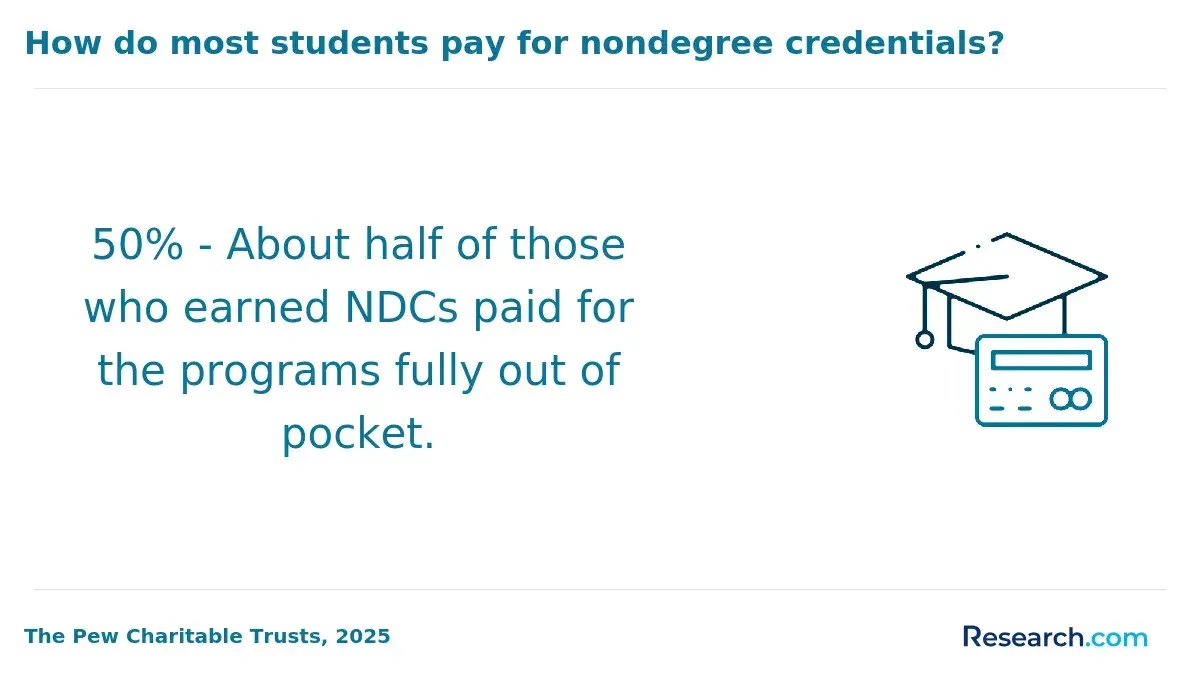
The cost difference between a master's and doctorate is usually driven by credits, length, residency requirements, dissertation fees, technology fees, and whether the doctoral program is funded or self-funded. NCES data released in 2024 show that average graduate tuition and required fees were much higher at private nonprofit institutions than at public institutions, which means school type can matter as much as degree level.
The table below shows how the major cost categories usually compare. Use it to look beyond advertised tuition and estimate the real price of finishing the degree.
| Cost factor | Master's degree impact | Doctorate impact |
| Tuition | Usually lower total tuition because the program is shorter | Usually higher total tuition unless tuition remission, assistantships, or employer sponsorship apply |
| Fees | May include technology, graduation, and course fees | May include technology, residency, dissertation, continuation, research, and clinical placement fees |
| Books and materials | Moderate, especially in research methods and statistics courses | Higher over time because of longer enrollment and advanced research requirements |
| Travel | Often minimal in fully online programs | Can be meaningful if the program requires residencies, intensives, conferences, practica, or dissertation defense travel |
| Lost earnings | Lower if the student can continue working full time | Higher if research, internship, or dissertation demands reduce work hours |
| Debt risk | Usually easier to limit because the program ends sooner | Can grow quickly in self-funded online doctorates, especially when living costs are financed |
Before comparing programs, separate the direct price from the total degree cost. Direct price is tuition and fees; total cost includes books, software, travel, lost income, loan interest, and extra terms needed to finish a thesis, capstone, internship, or dissertation.
Use this sequence when estimating the real cost of each option:
- Ask each school for the total credits required to graduate, not just the cost per credit.
- Confirm whether online students pay separate technology, residency, assessment, dissertation, or continuation fees.
- Ask whether transfer credits, prior graduate credits, or waived prerequisites can reduce the total cost.
- Estimate the cost of any required campus visits, practicum placements, research conferences, or dissertation travel.
- Calculate loan interest under realistic repayment assumptions instead of comparing tuition alone.
The biggest red flag is a program that advertises a low per-credit price but does not clearly disclose the total credits, required fees, and expected time to completion. A lower sticker price can become expensive if students regularly need extra terms to finish the dissertation or practicum sequence.
How Long Does a General Psychology Doctorate Take Compared With a Master's Degree?
A master's degree in general psychology usually takes far less time than a doctorate. Many online master's programs are designed for working adults and can often be completed in about one to three years, depending on enrollment pace, transfer credit, and whether the program requires a thesis or capstone.
A doctorate usually takes several years because it includes advanced coursework, comprehensive exams or milestone reviews, dissertation research, and sometimes internships or practicum requirements. Even when coursework is online, the dissertation stage can extend the timeline if the student has limited research time, changes topics, or has difficulty securing committee approvals.
This table compares the timeline factors that most often affect completion.
| Timeline factor | Master's degree | Doctorate |
| Coursework load | Shorter sequence of core psychology, research, and elective courses | Longer sequence with advanced theory, methodology, specialization, and doctoral seminars |
| Research requirement | May require a capstone, applied project, or thesis | Usually requires original doctoral research and a dissertation or doctoral project |
| Work compatibility | Often easier to complete while working full time | May require reduced work hours during research, residency, internship, or dissertation phases |
| Completion risk | Lower risk of delay because requirements are narrower | Higher risk of delay if dissertation approvals, data collection, or supervision take longer than expected |
| Time-to-career impact | Faster entry into many psychology-related roles | Delayed full-time earnings may be offset only if the doctorate unlocks a higher-value role |
The timeline matters because ROI is not only about tuition. If a doctorate takes several additional years, the student may also delay promotions, full-time earnings, retirement contributions, and work experience that a master's graduate could begin accumulating sooner.
When speaking with admissions advisors, ask for completion data by enrollment status. A "designed to be completed in" timeline is less useful than knowing how long part-time online students actually take to finish.
Salary comparisons are tricky because "general psychology" is a field of study, not one single job. A master's graduate might work in research coordination, human services, people analytics, behavioral program management, education, marketing research, or organizational roles. A doctorate graduate may qualify for psychologist roles, postsecondary teaching, advanced research, assessment, consulting, or leadership, depending on specialization and licensure.
The clearest national benchmark is the BLS psychologist category. The BLS reported a $94,310 median annual wage for psychologists in May 2024, but readers should treat that as an occupation benchmark, not a guaranteed outcome for every psychology graduate.
This table shows how salary potential generally differs by pathway and why the credential alone is not the only driver.
| Career direction | Typical master's-level positioning | Typical doctorate-level positioning | Salary interpretation |
| Research | Research assistant, coordinator, analyst, or program evaluator | Principal investigator, senior researcher, research director, or faculty researcher | Doctoral training can matter when employers expect independent research design and publication experience |
| Clinical or counseling psychology | May support adjacent roles, but general psychology alone is often insufficient for independent psychologist licensure | Doctorate is commonly required for licensed psychologist pathways when the program meets state rules | Salary potential depends heavily on licensure, setting, state, payer mix, and specialization |
| Education | Academic advising, student services, community college support, or training roles | College teaching, tenure-track research roles, academic administration, or supervision | Doctoral credentials are more important for faculty and advanced academic roles |
| Business and organizations | Human resources, talent development, UX research support, survey research, or people operations | Consulting leadership, organizational research, assessment strategy, or executive advisory work | Experience and industry skills may influence pay as much as the degree level |
| Forensic-adjacent work | Case management, victim services, corrections programming, or research support | Expert evaluation, assessment, testimony, or forensic psychology practice when licensed and trained appropriately | Credential requirements depend on role scope and jurisdiction |
Specialization can also change salary expectations. If you are comparing general psychology with forensic work, reviewing how much do forensic psychologists make can help you see why licensure, setting, and specialty training affect compensation more than the degree label alone.
The practical takeaway is that a doctorate may raise the ceiling, but a master's can sometimes produce a stronger near-term return if it leads to faster employment in a well-paid applied role. Salary should be evaluated alongside debt, time, credential requirements, and the likelihood that you will actually pursue the roles that require doctoral training.
A master's degree can open psychology-related careers, but it may not open the same legally protected or advanced roles as a doctorate. The most important distinction is whether the job requires independent diagnosis, psychological testing, treatment authority, university-level research, or formal psychologist licensure.
The table below separates common career directions by the level of access each degree may provide. Requirements vary by employer and state, so use this as a planning guide rather than a licensing checklist.
| Career opportunity | Master's degree access | Doctorate access |
| Licensed psychologist | Usually not enough with a general psychology master's alone | Often required, along with accredited training, supervised hours, exams, and state approval |
| Behavioral health administration | Can be useful for program coordination, operations, compliance, and community services leadership | Can support executive leadership, clinical supervision, policy design, and advanced program evaluation |
| Research and evaluation | Can qualify for research support, data collection, survey analysis, and program evaluation roles | Can qualify for independent research design, principal investigator roles, and grant-funded leadership |
| Teaching | May qualify for some adjunct, training, or lower-division teaching opportunities depending on institution rules | More competitive for full-time faculty, doctoral supervision, and research university roles |
| Consulting | Can support organizational training, human services consulting, and applied behavioral projects | Can support expert consulting, assessment design, forensic consultation, or executive advisory work |
If you already know you want a specialized applied pathway, a focused master's can sometimes be more efficient than a broad doctorate. For instance, students comparing justice-system roles may want to review forensic psychology master's programs before assuming a general psychology doctorate is necessary.
Current employer expectations are also changing. Many organizations increasingly value data literacy, ethical AI awareness, assessment design, and evidence-based decision-making. A master's graduate with strong statistics, research software, and applied experience may be more competitive for some industry roles than a doctoral student whose training is highly academic but less directly aligned with the employer's needs.
Neither degree automatically has the better ROI. A master's degree often has stronger short-term ROI because it costs less, takes less time, and allows faster labor-market entry. A doctorate may have stronger long-term ROI only when it unlocks roles that the master's degree cannot realistically access, such as psychologist licensure, advanced research leadership, certain faculty positions, or high-level consulting.
A useful ROI comparison should include both financial and career-fit variables. The simplest way to think about it is this: the doctorate must produce enough additional career value to justify its added tuition, fees, time, debt, and delayed earnings.
This table summarizes the ROI logic for common student profiles.
| Student profile | Likely stronger ROI | Why |
| Wants a nonlicensed role in HR, UX research support, program evaluation, or human services management | Master's degree | The master's may provide enough credential value without the extra doctoral cost and time |
| Wants to become a licensed psychologist | Doctorate | Many psychologist licensure pathways require doctoral-level education that meets state standards |
| Wants university faculty or advanced research roles | Doctorate | Doctoral research training and dissertation work are often expected for independent scholarship |
| Is unsure about specialization or licensure | Master's degree | A master's can test fit and build credentials before committing to a longer doctoral path |
| Has strong funding for doctoral study | Doctorate may improve | Funding reduces the debt burden and can shorten the break-even period |
| Would self-fund a long online doctorate while reducing work hours | Master's may improve | Debt and opportunity cost can outweigh the salary premium if the doctorate is not required for the target role |
To compare ROI, evaluate these items in order:
- Identify the exact job titles you want, not just the field of psychology.
- Check whether those roles require a doctorate, a license, a supervised internship, or a specialized degree.
- Compare total program cost, including fees, travel, dissertation terms, and loan interest.
- Estimate how many years of full-time work or promotions you would delay by choosing the doctorate.
- Compare realistic salary ranges for your target state, setting, and role.
- Ask whether the doctorate gives you access to opportunities the master's degree cannot provide.
A doctorate has a better ROI when it is a required gateway to your goal and the program is affordable enough to keep debt manageable. A master's has a better ROI when it gets you to a satisfactory career outcome faster and the doctorate would mostly add prestige rather than necessary access.
Opportunity cost is the value of what you give up while studying. For graduate psychology students, it can include delayed earnings, fewer promotions, reduced work hours, lost retirement contributions, postponed licensure progress, and less time building applied experience.
This issue is especially important for online students because many choose online study to keep working. If a doctorate is technically online but still requires heavy research time, residencies, or fieldwork, it may reduce the work flexibility that made online education appealing in the first place.
The most important opportunity-cost trade-offs usually include the following:
- Lost income: A longer doctorate can delay full-time earnings or reduce work hours during demanding phases.
- Delayed experience: A master's graduate may gain several years of job experience while a doctoral student is still completing research milestones.
- Delayed promotions: If your current employer rewards a master's but does not require a doctorate, staying in school longer may slow advancement.
- Delayed retirement savings: Reduced earnings during school can mean fewer years of employer matching or retirement contributions.
- Personal bandwidth: Doctoral work can affect family time, health, relocation flexibility, and the ability to take on internships or side projects.
A common mistake is counting only tuition and ignoring the income you could have earned with the master's. If two programs lead to similar roles in your target market, the faster master's path may have a meaningful advantage even if the doctorate sounds more prestigious.
To make this practical, compare two timelines: one where you finish the master's and work, and one where you continue into a doctorate. Then ask whether the doctorate changes your role, authority, pay ceiling, or licensure eligibility enough to justify the years you would not spend building full-time experience.
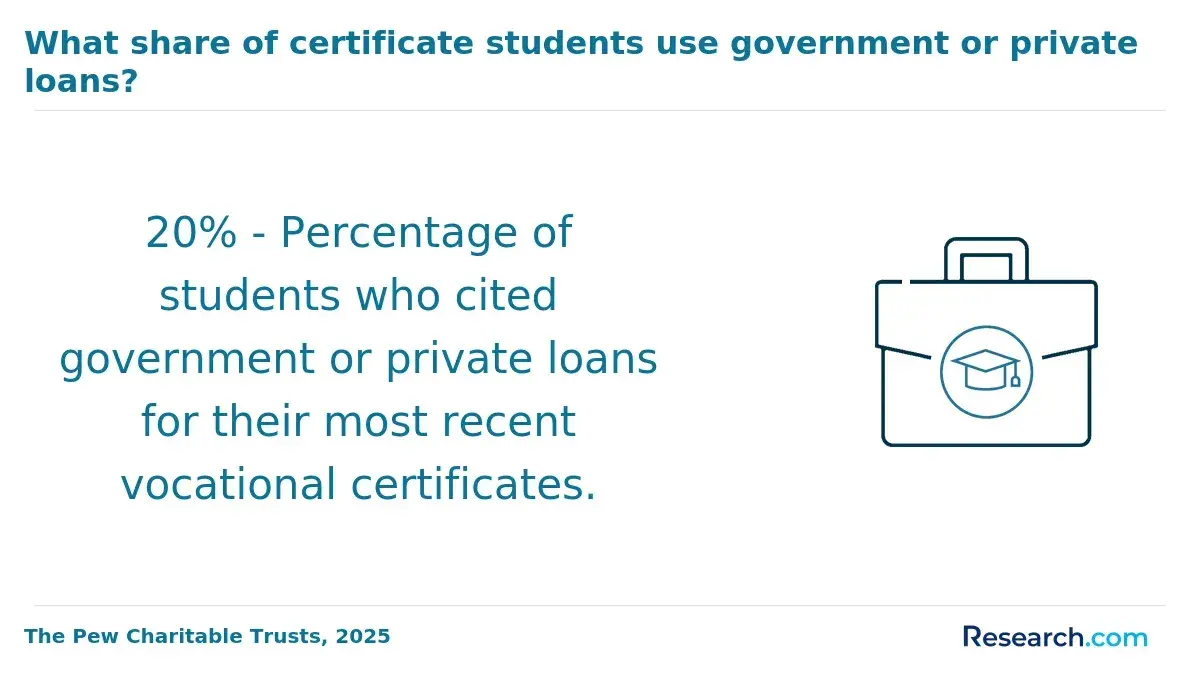
Financial aid can change the ROI equation dramatically. A self-funded doctorate with high borrowing risk is a very different investment from a funded doctoral program with tuition remission, assistantship income, or employer support.
Graduate students can generally borrow up to $20,500 per year in federal Direct Unsubsidized Loans, with additional borrowing sometimes available through graduate PLUS loans. That access can help students enroll, but it also makes it easier to borrow more than the degree can comfortably repay.
Compare funding sources carefully before deciding between the two degrees:
- Assistantships: More common in research-focused doctoral programs, but less common in many online professional doctorates.
- Tuition remission: Can sharply improve doctoral ROI if it covers a substantial share of tuition.
- Employer tuition benefits: Often more useful for part-time online master's students who continue working.
- Scholarships and grants: Helpful but rarely enough by themselves to make a high-cost program affordable.
- Federal loans: Flexible but still need to be repaid with interest, so borrowing should be tied to realistic career outcomes.
- Paid internships or practicum support: Important for doctoral students if field requirements reduce outside employment.
Ask each program direct financial questions before applying:
- What is the average total debt among graduates who borrowed?
- How many online students receive assistantships, tuition remission, or stipends?
- Are dissertation, continuation, residency, or clinical placement fees charged separately?
- Can employer benefits be applied to every term?
- What happens financially if a student needs extra time to finish the dissertation?
The red flag is vague funding language. "Financial aid available" may simply mean loans. For ROI, grants, tuition waivers, stipends, and employer-paid tuition are very different from borrowed money.
Not all psychology doctorates serve the same purpose. A research doctorate, such as a PhD, is usually centered on scholarship, methodology, statistics, publication, teaching, and original research. A professional doctorate, such as a PsyD, is typically more practice-oriented, although requirements vary widely by program.
A master's degree is different because it usually develops graduate-level competence without requiring the same depth of independent research or doctoral practice preparation. That can be an advantage if your goal is applied work that does not require psychologist licensure.
This table compares the three options at a high level.
| Path | Main emphasis | Best fit | ROI concern |
| General psychology master's | Graduate theory, research literacy, applied behavioral science, and career flexibility | Students seeking faster entry into psychology-related roles or a foundation for later doctoral study | May not qualify for protected psychologist roles or independent clinical practice |
| Research doctorate | Original research, advanced methods, teaching, publication, and scholarly contribution | Students aiming for academia, research leadership, policy research, or data-intensive behavioral science roles | Long timeline may not pay off if the student does not want research-heavy work |
| Professional doctorate | Applied practice, assessment, intervention, supervision, and professional preparation | Students pursuing psychologist-level practice when the program meets accreditation and state requirements | Can be expensive if unfunded, and licensure requirements must be verified before enrollment |
Students interested in therapy, assessment, or mental health practice should be especially careful with program labels. A broad general psychology doctorate is not the same as a licensure-focused clinical program, and applicants may also want to compare online clinical psychology master's if their goal is closer to counseling, assessment, or clinical service pathways.
The best choice depends on the work you want to do every week. If you like research design, theory, and teaching, a research doctorate may fit. If you want applied psychological practice, verify licensure alignment. If you want broader behavioral knowledge for management, analytics, education, or human services, a master's may be enough.
When Is a General Psychology Doctorate Worth It Instead of a Master's Degree?
A general psychology doctorate is worth choosing over a master's when it is clearly connected to a role, license, or professional identity you cannot realistically reach with the master's alone. It is less likely to be worth it when the doctorate mainly adds status without changing your job access, earning ceiling, or long-term direction.
You are a stronger candidate for the doctorate path if several of these statements are true:
- You want a licensed psychologist pathway and have verified that the program meets state and accreditation requirements.
- You want to conduct independent research, publish, teach at the college level, or compete for faculty roles.
- You have a defined specialization and understand the supervised experience, internship, and exam requirements attached to it.
- You have funding, employer support, savings, or a low-debt plan that keeps borrowing manageable.
- You are prepared for dissertation work, research design, statistics, committee feedback, and a longer timeline.
A master's degree may be the better choice if these statements describe your situation:
- You want a psychology-related role in business, education, human services, research support, or program management.
- You are not sure whether you want licensure, academia, or doctoral-level research.
- Your target jobs list a master's as preferred or sufficient.
- You want to keep working full time and minimize debt.
- You may later specialize in counseling, industrial-organizational psychology, school psychology, forensic psychology, or another focused area.
The safest decision is to work backward from job postings, licensure boards, and program outcomes. Do not start with the degree title and assume it will create the career path. Start with the career path, then choose the lowest-cost credential that legitimately gets you there.
Before enrolling, ask schools for outcomes specific to online students, not just all graduates. Useful questions include completion rates, average time to completion, internship placement support, dissertation support, licensure exam preparation, alumni job titles, and average debt among borrowers.
Other Things You Should Know About General Psychology
Possibly, but only if the doctoral program meets your state's education, accreditation, supervised experience, internship, and exam requirements. A general psychology master's alone usually does not qualify someone for independent psychologist licensure.
Yes, it can be, especially if it strengthens your research skills, statistics background, writing sample, and faculty fit. However, not all doctoral programs accept transfer credits, so confirm whether the master's will shorten the doctorate before enrolling.
Many employers consider online degrees acceptable when the school is properly accredited and the program matches the role. For licensure-track careers, the bigger issue is whether the program meets state and professional requirements, not simply whether courses were online.
Choose general psychology if you want broad behavioral science training or are still exploring career directions. Choose a specialization if you already know your target field, such as clinical, forensic, child and adolescent, school, or industrial-organizational psychology.
- How Much Does a PhD Cost https://aituedu.org/how-much-does-a-phd-cost/
- 2025's Most Affordable Online Master’s Degrees in Psychology https://www.onlinemastersdegrees.org/most-affordable/psychology-programs/
- Return on Investment For an Online Psychology Degree https://www.onlinepsychologydegrees.com/articles/return-on-investment-for-an-online-psychology-degree/
- 2025 Most Affordable Online Master's Programs https://www.onlineu.com/most-affordable-colleges/masters-degrees
- 13 Best Online Doctorate in Psychology Programs for 2026 - Online Psychology Programs https://onlinepsychologyprograms.org/doctoral/
- Is Grad School Worth It? A Comprehensive Return on Investment Analysis - FREOPP https://freopp.org/whitepapers/is-grad-school-worth-it-a-comprehensive-return-on-investment-analysis/
- Master’s in Psychology - Is it Worth it? https://onlinecounselingprograms.com/online-counseling-degrees/online-masters-in-psychology/reasons-get-masters-in-psychology/
- What Can You Do With A Ph.D. In Psychology? | Psychology.org https://www.psychology.org/resources/jobs-with-a-doctorate-in-psychology/
- Industrial Organization Psychology Salary Outlook for Masters & PhD Students https://mastersinpsychologyguide.com/articles/industrial-organization-psychology-salary-outlook-masters-phd-students/
- Is College Worth it? | Return on Investment Analysis of College Degree https://educationdata.org/college-degree-roi