2027 Online Esports Business Master's Curriculum Breakdown: Core Courses & Specializations

Co-Founder and Chief Data Scientist
An online esports business master’s program is a targeted graduate option for people who want to work at the business side of competitive gaming: teams, leagues, publishers, tournament operators, agencies, sponsors, media platforms, and analytics vendors. The main curriculum decision is whether to build a broad business foundation or specialize early in a narrower area such as event operations, sponsorship strategy, esports analytics, or fan engagement.
That choice matters because esports changes quickly. The 2024 uptick in esports event commercialization and data-driven fan engagement strategies reported by the Entertainment Software Association shows why programs now need to teach more than general management theory. Students should look for coursework that connects finance, marketing, law, operations, data, and applied industry projects.
This guide explains the core courses, specialization options, elective flexibility, delivery formats, internship expectations, certification alignment, and career trade-offs in online esports business master’s programs. It is designed for working professionals, career changers, and recent graduates who want to compare curricula before committing time, tuition, and professional momentum to a specialized degree.
Key Things to Know About Online Esports Business Master's Curriculum
- Specializing early in marketing or event management narrows versatility but aligns tightly with industry roles where 58% of esports firms report needing targeted expertise, impacting job mobility within evolving markets.
- Employers prioritize strategic analytics and sponsorship knowledge from core courses, favoring candidates with cross-functional skills but often undervaluing generalized management, influencing hireability post-graduation.
- The extended duration and higher cost of comprehensive specialization tracks pose access barriers for working professionals, requiring trade-offs between timely completion and depth of sector-specific mastery.
What Core Courses Are Included in an Online Esports Business Master's Program?
Core courses in an online esports business master’s program should give students a working command of how competitive gaming organizations make money, manage risk, attract audiences, run events, and use data. The strongest curricula do not simply rebrand general business courses with esports examples; they apply business concepts to the realities of teams, publishers, tournaments, sponsors, streaming platforms, and digital communities.
Most programs build the curriculum around a sequence of management, marketing, finance, legal, analytics, and leadership courses. Students should review not only course titles but also assignments, software exposure, capstone requirements, and whether projects use current esports business cases.
- Esports Management: This course typically covers team operations, league structures, franchise models, publisher relationships, event coordination, and stakeholder management. It helps students understand how esports organizations differ from traditional sports, entertainment companies, and gaming studios.
- Marketing and Sponsorship Strategies: Because over half of esports revenue in recent analyses stems from sponsorships and digital advertising, this course is central to the degree. Students usually study brand partnerships, influencer campaigns, fan segmentation, digital activations, and sponsor value measurement. A strong course will teach students how to build campaigns that fit esports fan culture rather than simply copying traditional sports marketing.
- Financial Management and Economics: This course focuses on budgets, revenue streams, contract structures, valuation issues, and financial sustainability in a marketplace exceeding $1.4 billion globally. Students should expect to analyze sponsorship income, media rights, merchandising, event costs, team expenses, and monetization models.
- Legal and Ethical Issues: Legal coursework commonly addresses intellectual property, player contracts, gambling regulations, labor questions, international compliance, privacy issues, and ethical concerns around minors, betting, and competitive integrity. This area is especially important because esports organizations often operate across jurisdictions and platforms.
- Data Analytics: Analytics courses teach students to interpret player metrics, audience behavior, campaign performance, market trends, and operational data. These skills support roles in sponsorship strategy, performance analysis, fan engagement, consulting, and executive decision-making.
- Leadership and Organizational Behavior: Esports work often involves distributed teams, creators, sponsors, developers, event staff, players, and community managers. Leadership coursework should prepare students to manage cross-functional projects, resolve conflicts, and communicate across creative, technical, and commercial groups.
Students should prefer programs that start with a broad core before moving into specialized electives. That structure gives graduates more adaptability if the esports job market shifts or if a student later moves into adjacent fields such as digital media, gaming, sports business, entertainment marketing, or business analytics.
For working professionals, sequencing is also a workload issue. Data analytics, finance, and legal courses can be demanding if taken together, while marketing and management courses may require group projects or live collaboration. Students comparing tuition and financing options can also review pathways at FAFSA-approved online colleges when planning how to manage the cost of an intensive graduate curriculum.
What Specializations Are Available in Online Esports Business Master's Programs?
Specializations in online esports business master’s programs allow students to signal a clearer career direction. The right concentration can make a graduate more competitive for specific roles, but it can also narrow the kinds of jobs for which the degree appears immediately relevant. Students should choose a specialization based on target roles, existing skills, preferred work style, and tolerance for a fast-changing industry.
- Esports Management: This specialization emphasizes organizational leadership, league operations, team administration, business strategy, and stakeholder coordination. It fits students aiming for roles in franchise operations, league coordination, team management, partnerships, or business development. It is often the broadest esports-focused track.
- Marketing and Branding: This track prepares students to work with sponsorships, fan engagement, social media campaigns, influencer partnerships, brand activations, and audience analytics. According to a 2024 industry report, esports marketing departments grew 15% year-over-year, which underscores the need for professionals who understand both digital entertainment and measurable campaign performance.
- Event Production and Tournament Management: This specialization focuses on live and online tournament execution, venue logistics, broadcast coordination, vendor management, registration systems, compliance, and contingency planning. It can be highly practical and labor-intensive because employers often expect direct experience with event workflows.
- Data Analytics: This concentration develops quantitative skills for player performance, audience behavior, monetization, sponsorship reporting, market research, and strategic planning. It can be valuable for students who want roles in team analytics, consulting, digital strategy, or business intelligence, but it may require stronger comfort with statistics, visualization tools, and data interpretation.
A practical way to compare specializations is to ask what evidence each track will help you produce by graduation. Marketing students should leave with campaign plans and sponsorship decks. Event management students should have operations plans or practicum experience. Analytics students should have dashboards, models, or data projects. Management students should be able to show strategic plans, organizational analyses, or consulting-style projects.
Can Students Choose Electives Outside Their Specialization?
Many online esports business master’s programs allow some elective choice outside the student’s specialization, but the actual flexibility is often more limited than the catalog suggests. Advisor approval, prerequisites, course rotation, enrollment caps, and specialization rules can determine whether a student can realistically take a cross-disciplinary elective without delaying graduation.
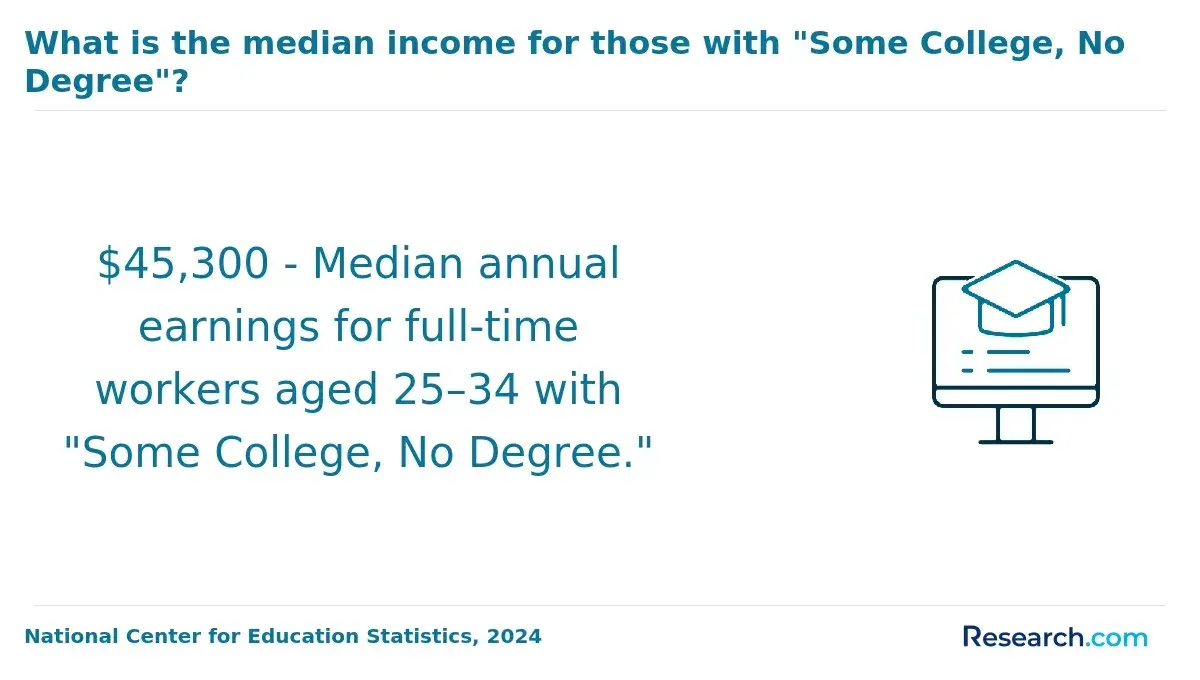
According to the National Center for Education Statistics (2024), roughly 62% of these programs allow at least one elective outside the main specialization. In practice, students should verify which courses qualify, how often they are offered, whether they count toward degree requirements, and whether choosing them affects financial aid status, course load, or time to completion.
When outside electives make sense
Electives outside the specialization can be useful when they strengthen a clear career goal. A marketing student might add analytics to improve campaign measurement. An event production student might add legal coursework to better understand contracts and compliance. A management student might add digital media strategy to prepare for work with platforms, creators, or sponsors.
When outside electives can create problems
Outside electives can also dilute a student’s profile if they do not connect to a job target. Employers hiring for esports roles may look for evidence of specific skills such as sponsorship strategy, event execution, game monetization, audience analytics, or partnership management. A general business elective can be useful, but students should be prepared to explain how it supports their esports career plan.
One graduate recalled hesitating during rolling admissions because they were unsure whether the program would approve an elective outside esports business that was important to a career pivot. The delay in advisor confirmation created stress over scheduling and the possibility of deferring enrollment. After the elective was approved, the student adjusted their course load, but the experience showed how important clear elective policies are before starting a program.
Before enrolling, students should request a sample degree plan for their intended specialization and ask the advisor to identify which outside electives are allowed, which require approval, and which could extend the program timeline.
How Are Online Esports Business Master's Courses Delivered?
Online esports business master’s courses are commonly delivered through a mix of asynchronous coursework and synchronous live sessions. Asynchronous components may include recorded lectures, readings, discussion boards, quizzes, simulations, and project work. Synchronous components may include live classes, guest speaker sessions, group presentations, case discussions, networking events, and faculty check-ins.
This blended model gives working professionals flexibility while preserving some real-time interaction. It is especially relevant in esports business because students often need to practice pitching, collaboration, event planning, campaign critique, and stakeholder communication rather than only completing individual written assignments.
According to a 2024 Online Learning Consortium report, about 68% of graduate business programs integrate live sessions. Students should not assume that “online” means entirely self-paced. Live attendance expectations can affect students with rotating work schedules, caregiving responsibilities, or time-zone constraints.
Common delivery formats
- Fully asynchronous: Best for maximum flexibility, but it requires strong self-discipline and may offer fewer spontaneous networking opportunities.
- Hybrid online with live sessions: Useful for discussion, presentations, and industry guest access, but students must plan around scheduled meeting times.
- Cohort-based pacing: Encourages peer connection and structured progress, but offers less freedom to accelerate or pause.
- Modular or accelerated courses: Can shorten time to completion, but the workload may be intense during each term.
Students should ask how group projects are managed online, whether live sessions are recorded, how faculty office hours work, and whether industry networking is built into the virtual format. Those comparing online learning expectations across fields may find that delivery models vary widely, including in programs such as a psychology degree online.
Which Core Classes Are Considered the Most Challenging?
The most challenging core classes in online esports business master’s programs are usually the courses that require students to combine technical skill, strategic judgment, and industry-specific application. Data analytics and financial management are often the toughest for students who have limited quantitative backgrounds, while legal, marketing, and operations courses can be difficult because they require fast application to complex esports scenarios.
- Data analytics: Students may need to work with statistics, dashboards, visualization tools, audience data, player metrics, and predictive analysis. A 2024 survey from the National Association of Graduate Esports Programs found that 68% of students identified predictive analytics and data visualization as their top obstacles.
- Financial management: This course can be difficult because students must connect budgeting, forecasting, revenue models, contracts, and market valuation to a fast-changing esports economy.
- Legal and ethical issues: The challenge is not just memorizing rules. Students must apply legal reasoning to intellectual property, contracts, gambling regulations, international operations, platform rules, and competitive integrity.
- Marketing and sponsorship strategy: Students must understand brand objectives, fan behavior, creator partnerships, campaign performance, and sponsorship valuation. The work often requires both creativity and metrics.
- Event operations: Tournament and production courses can be demanding because they involve logistics, scheduling, risk management, broadcast coordination, vendor communication, and contingency planning.
For working professionals, the hardest part may be the pace rather than the content. Analytics assignments, group projects, and case deadlines can be difficult to manage alongside full-time employment. Students who have been out of school for several years should consider refreshing spreadsheet, statistics, presentation, and writing skills before the first term.
One student recalled being unsure whether to enroll during the rolling admissions period because the early core included data-intensive coursework. Delaying enrollment to strengthen quantitative skills seemed appealing, but it also risked missing the preferred specialization track. The student eventually enrolled with a modest preparatory background and found the first weeks demanding, but early exposure helped build momentum.
Do Online Esports Business Master's Programs Require Internships or Practicums?
Internship and practicum requirements vary by program. Some online esports business master’s programs require experiential learning, especially those focused on management, marketing, event operations, or applied analytics. Others use simulations, consulting projects, virtual collaborations, or capstones instead of a formal internship.
According to a recent 2024 analysis from the National Center for Education Statistics, about 42% of online master's programs nationally require mandatory experiential components. Esports business programs follow a similar pattern: some treat internships as essential professional preparation, while others prioritize flexibility for working adults.
Benefits of required internships or practicums
- They help students build a portfolio of applied work.
- They can create networking opportunities with teams, agencies, publishers, event companies, or sponsors.
- They give employers evidence that the graduate can operate in a real esports business setting.
- They can clarify whether a student actually wants a role in events, sponsorship, analytics, operations, or management.
Potential drawbacks
- Placement schedules may conflict with full-time work.
- Some opportunities may be geographically limited even in an online program.
- Unpaid or low-paid placements can create financial pressure.
- International students may need to confirm work authorization rules with the institution.
- Required hours can extend the timeline if not planned early.
Students who already work in esports, gaming, sports, media, or marketing may prefer a program that lets them use a current employer project as a practicum or capstone. Career changers may benefit more from a required internship because it can provide the industry exposure their resumes lack.
Prospective students should ask whether the school secures placements, whether remote placements are allowed, how many hours are required, and whether internships are graded, paid, optional, or mandatory. Internship structures can shape outcomes in many graduate fields, as seen in programs such as online PsyD programs accredited by APA, where applied training expectations are central to program design.
Which Courses Are Required for Professional Certification Exams?
Professional certification alignment depends on the certification provider and the program’s curriculum. Online esports business master’s programs may design courses around competencies tested by credentials such as the Certified Esports Executive (CEE) and Esports Management Professional (EMP), but students should not assume that earning the degree automatically satisfies every certification requirement.
Courses most likely to support certification preparation include market analysis, event logistics, digital media strategy, sponsorship strategy, legal frameworks, analytics, player management, and game economics. These areas correspond to the kinds of operational, strategic, and industry-specific knowledge often assessed in esports business credentials.
- Market analysis and business strategy: Supports questions about audience trends, competitive positioning, revenue models, and strategic planning.
- Event logistics and tournament management: Helps with operational standards, scheduling, vendor coordination, production planning, and risk management.
- Digital media and sponsorship strategy: Builds knowledge of brand partnerships, fan engagement, media channels, influencer campaigns, and monetization.
- Legal and ethical frameworks: Prepares students to address contracts, intellectual property, gambling regulations, compliance, and integrity issues.
- Analytics and data visualization: Strengthens preparation for data-driven decision-making, audience reporting, and performance measurement.
- Capstone, internship, or practicum: May help students demonstrate applied experience if a credential requires professional evidence as well as exam knowledge.
A curriculum that skips advanced analytics, event operations, or legal coursework may leave students with gaps that require additional study before sitting for a certification exam. According to a 2024 report from the Global Esports Federation, candidates focusing on coursework aligned with certification priorities report higher pass rates and smoother transitions into esports business roles.
Before enrolling, students should ask the program to map required courses to the certification exams they are considering. They should also verify directly with the certification body because eligibility rules, experience expectations, and exam content can change.
Do Specialization Requirements Extend Graduation Timelines?
Specialization requirements can extend graduation timelines, but they do not always do so. The impact depends on how the program sequences prerequisites, how often specialization courses are offered, whether internships or capstones are required, and whether students can take courses year-round.
Some programs build specializations into the standard degree plan, allowing students to finish on the same timeline as generalist peers. Others require additional credits, strict course sequences, annual capstone offerings, or practicum hours that can add time. Students should pay close attention to course rotation because a required class offered only once per year can delay graduation if missed.
According to a 2024 report by the National Center for Education Statistics, about 38% of master's students opting for specialized tracks in related fields experience 6 to 12 months of extended study compared to generalist peers. For working professionals, that delay can affect tuition planning, employer reimbursement, promotion timing, and personal workload.
Timeline risks to check before enrolling
- Whether specialization courses have prerequisites.
- Whether required courses are offered every term or only annually.
- Whether the capstone is tied to a specific term.
- Whether internships require fixed hours or approved placements.
- Whether part-time students can access the same course sequence as full-time students.
- Whether elective substitutions are allowed if a course is unavailable.
A specialization may still be worth the added time if it produces a stronger portfolio, clearer employer signal, or access to a specific career path. However, students should calculate the full cost of any extension, including tuition, fees, delayed earnings, and the opportunity cost of remaining in school longer.
How Do Esports Business Specializations Affect Career Opportunities?
Esports business specializations affect career opportunities by making a graduate’s skills easier for employers to interpret. A general master’s degree may show broad business training, but a concentration in analytics, marketing, event operations, or management gives recruiters a clearer signal about the roles the candidate is prepared to pursue.
According to a 2024 report by the National Association of Colleges and Employers (NACE), candidates with focused specializations are 35% more likely to receive targeted job offers aligned with their concentration. In esports, where many roles are project-based, network-driven, and skill-specific, that alignment can matter.
- Esports marketing and branding: Can support roles in sponsorship activation, social media strategy, influencer partnerships, agency work, brand partnerships, and fan engagement.
- Event production and tournament management: Can lead toward event coordinator, tournament operations, broadcast operations support, logistics, and production planning roles.
- Data analytics: Can prepare students for audience insights, team analytics, sponsorship reporting, business intelligence, consulting, and digital strategy roles.
- Esports management: Can support broader roles in team operations, league administration, partnerships, business development, and organizational strategy.
The trade-off is mobility. A highly specialized esports analytics graduate may stand out for data-driven roles with teams or leagues, but may need additional experience to move into broader corporate analytics. A graduate focused on esports marketing may be well positioned for sponsorship agencies or gaming brands, but may need to translate their skills carefully for corporate marketing roles outside esports.
Students should choose a specialization that produces transferable evidence. Analytics projects, sponsorship decks, operations plans, financial models, and campaign reports can help graduates compete both inside esports and in adjacent industries. Students interested in broader quantitative pathways may also compare alternatives such as physics programs, which emphasize analytical training in a different academic context.
How Should Students Compare Online Esports Business Master's Curriculum?
Students should compare online esports business master’s curricula by looking at outcomes, course design, applied experience, flexibility, and total cost—not just program titles. Two programs with similar names can differ sharply in workload, specialization depth, employer relevance, and time to completion.
- Core Course Composition: Review whether the curriculum covers esports management, marketing, sponsorship, finance, legal issues, analytics, event operations, and digital media rights. Strong programs connect each topic to esports business problems rather than relying only on general business cases.
- Specialization Depth and Focus: Determine whether the concentration matches your target roles. A useful specialization should include advanced coursework, applied projects, and portfolio-ready assignments.
- Elective and Cross-disciplinary Flexibility: Check whether students can take electives in analytics, digital marketing, entrepreneurship, media, sports business, or related fields. Flexibility matters if you want to adapt to changing industry needs.
- Delivery Format and Scheduling: Compare asynchronous and synchronous requirements, cohort pacing, term length, live attendance policies, and group project expectations. The best format is the one you can complete consistently.
- Practicum and Experiential Learning Integration: Look for internships, consulting projects, capstones, esports organization partnerships, or applied simulations. A recent 2024 report by the International Esports Federation found that 68% of hiring managers prefer candidates with experiential components.
- Certification Alignment and Industry Standards: Ask whether required courses map to recognized certifications and whether the program provides exam preparation, portfolio support, or employer-recognized projects.
- Progression Sequencing and Prerequisite Structuring: Review the exact degree plan. Poor sequencing can create unnecessary delays, especially if a required specialization course is not offered every term.
- Cost, Aid, and Return on Investment: Compare tuition, fees, technology costs, internship requirements, employer reimbursement, and financial aid eligibility. Students focused on cost control may also compare broader business options, including the most affordable online business administration degree, before choosing a niche esports curriculum.
Cost transparency is especially important because a specialized graduate degree can require extra software, travel for events, unpaid practicum hours, or extended enrollment. Lessons from other online programs, including online animal science programs, show why students should compare tuition and fee disclosures alongside curriculum depth.
A practical comparison process is to request a sample two-year or part-time degree plan from each school, identify the required applied projects, ask how graduates build portfolios, and confirm whether specialization courses are guaranteed to run on schedule. The strongest curriculum is the one that matches your career target, fits your schedule, and produces evidence employers can evaluate.
What Graduates Say About Online Esports Business Master's Curriculum
- : "Completing the esports business master’s courses gave me a strong foundation, but I learned quickly that employers cared about portfolios and practical internships as much as the degree. Freelance projects helped me show what I could do and were important in landing my current role. — Pierce"
- : "The online format helped me keep working while I changed careers. The flexibility was valuable, but advancement still depended on proving my skills, building relationships, and earning trust inside the industry. The trade-offs were worth it for my move into esports marketing. — Aryan"
- : "After graduation, I found the job market competitive. The core and specialized courses sharpened my knowledge, but hands-on experience and networking mattered a lot. I had to build a portfolio and make industry connections to stand out. — Jonathan"
Other Things You Should Know About Esports Business Degrees
Many online esports business master's programs allocate a significant portion of credits to core courses, which can limit time available for specialization depth. This structure demands students prioritize foundational knowledge early, often leading to a heavier workload upfront. For working professionals or career changers, programs with a more integrated approach-where specialization courses are interspersed with cores-may provide better opportunities to immediately apply industry-specific skills without delaying career-relevant learning.
Theoretical frameworks provide vital strategic insights, but overly theory-heavy programs risk alienating students seeking hands-on industry skills. Conversely, application-focused courses can better prepare students for immediate roles in esports operations or marketing but may lack rigorous critical thinking training employers expect at the master's level. Prospective students should evaluate how each program balances research, strategic analysis, and operational practice, choosing curricula aligned with their career goals-whether that's leadership strategy or tactical industry entry.
In 2027, the balance between core courses and specialization in an Online Esports Business Master's program allows students to gain foundational knowledge while honing skills specific to their career goals. This structure provides a manageable workload, enabling students to focus on both essential principles and niche industry aspects.
While selecting a specialization tied closely to existing esports market trends may enhance short-term employability, this approach risks obsolescence as the industry rapidly evolves. A forward-thinking strategy involves weighing emerging areas like esports analytics or event innovation that currently have smaller footprints but strong growth potential. Students with a longer career horizon should consider specializations that build adaptable skills and strategic thinking, positioning them to lead and innovate rather than simply fill today's vacancies.
References
- Esports Business Management https://www.keele.ac.uk/study/undergraduate/undergraduatecourses/esportsbusinessmanagement/
- What are eSports and their business model? https://bitsacard.com/blog/en/what-are-esports-and-their-business-model
- Esports Management Concentration (Online or On Campus) - Fisher College https://www.fisher.edu/academics/undergraduate-programs/bs-in-management/esports-management-concentration
- E-Sports Business and Management https://www.fh-joanneum.at/e-sports-management/master/en/
- Online Bachelor of Business Administration and Digital Innovation with Sports and eSports Management https://www.global-business-school.org/programs/bachelor-europe-bachelor-of-business-administration-online/online-bachelor-of-business-administration-and-digital-innovation-with-sports-and-esports-management/
- Free elective courses https://studiegids.tue.nl/opleidingen/graduate-school/masters-programs/systems-and-control/curriculum/free-elective-courses
- Explore Career Pathways in Esports https://britishesports.org/esports-and-education/career-pathways/
- Esports Management and Game Development Professional Certificate https://www.edx.org/certificates/professional-certificate/hp-esports-management-and-game-development
- eSports - Academic program in eSports management https://esbs-spain.com/en/programa/esports-management/
- Bachelor's Degree in Esports Business https://kamk.fi/en/koulutukset/bachelors-degree-in-esports-business/