2027 Online Epidemiology Doctorate Programs with One-on-One Faculty Mentorship

Co-Founder and Chief Data Scientist
Choosing an online epidemiology doctorate often comes down to one question: will faculty know your work well enough to help you finish strong? The stakes are real: the U. S. Bureau of Labor Statistics projects epidemiologist employment to grow 19% from 2023 to 2033, much faster than average. This guide is for working public health professionals, researchers, clinicians, and data-focused health leaders comparing doctoral programs. You will learn how mentorship works, what to verify before applying, and when individualized faculty support is worth the added time, tuition, or admissions effort.
Key Things You Should Know
- Strong one-on-one mentorship is most valuable when the program requires a dissertation, applied research project, publication-quality analysis, or field-based epidemiologic study rather than coursework alone.
- The best online options disclose how mentors are assigned, how often students meet faculty, whether students can request a research-fit advisor, and how dissertation committees are formed.
- Career value depends on fit: BLS data show a May 2024 median annual wage of $83,980 for epidemiologists, but doctoral ROI is strongest when mentorship builds research, leadership, methods, and professional network advantages.
How Does One-on-One Faculty Mentorship Work in Online Epidemiology Doctorate Programs?
One-on-one faculty mentorship means sustained guidance from a qualified faculty member who understands your research interests, professional goals, and doctoral milestones. It is different from routine academic advising, which usually focuses on course registration, policies, and degree requirements.
In an online epidemiology doctorate, mentorship may include synchronous video meetings, asynchronous feedback on research proposals, methods consultation, dissertation chairing, professional networking, and career guidance. In practice, the quality of mentorship depends less on whether a program says "personalized support" and more on whether the model is formal, documented, and available throughout the program.
Students should understand the different support roles they may encounter. The following table separates common roles because schools sometimes use similar language for very different levels of faculty access.
| Support role | What the role usually covers | Why it matters |
| Academic advisor | Degree plan, registration, policy questions, transfer credit, and progression rules | Helpful for staying eligible and enrolled, but not the same as research mentorship |
| Faculty mentor | Research direction, professional development, methods guidance, and intellectual fit | Most important for students with specific epidemiology interests such as chronic disease, infectious disease, social epidemiology, or environmental health |
| Dissertation chair | Proposal development, study design, analysis plan, committee coordination, and final defense preparation | Critical for completion because the chair often controls the pace and quality of dissertation feedback |
| Committee member | Specialized expertise in statistics, methods, topic area, ethics, or practice setting | Adds depth when one mentor cannot cover every technical or applied area |
| Program director | Program standards, faculty assignment process, milestones, and escalation if mentorship breaks down | Important when a mentor leaves, becomes unavailable, or is not a good fit |
A meaningful online mentorship model should state when students are matched with faculty, how often meetings occur, what happens if the match is not working, and whether faculty have capacity to supervise the student's topic. If a school cannot explain these details clearly, the mentorship claim may be more of a marketing phrase than a core program feature.
Which Online Epidemiology Doctorate Programs Offer the Strongest Faculty Mentorship?
The strongest programs are not necessarily the most expensive or the most selective. They are the ones where faculty expertise, student research interests, dissertation structure, and communication expectations align before the student commits.
Because fully online doctorates specifically titled "epidemiology" are limited, applicants often compare online PhD in Public Health programs with epidemiology specializations, DrPH programs with epidemiologic methods depth, and hybrid doctorates that allow remote coursework but require residencies or dissertation milestones. The table below shows the mentorship features to prioritize when comparing programs rather than relying on advertising language alone.
| Program type | Mentorship strength indicators | Best fit | Caution |
| Online PhD in Public Health with epidemiology specialization | Named faculty research areas, dissertation chair process, methods-focused committee, publication expectations | Students seeking research, academic, analytic, or senior epidemiology roles | May be less flexible if the dissertation requires a narrow faculty research match |
| Online DrPH with epidemiology or applied epidemiology focus | Practice-based mentor, applied dissertation or doctoral project, leadership coaching, field partner connections | Working professionals aiming for public health leadership, surveillance, program evaluation, or health department roles | May emphasize applied leadership more than original epidemiologic research |
| Hybrid epidemiology doctorate | Structured residencies, face-to-face research intensives, faculty labs or seminars, remote advising between visits | Students who want online flexibility but benefit from periodic in-person research immersion | Travel costs and residency scheduling can affect total value |
| General online health sciences doctorate with epidemiology coursework | Faculty with epidemiology credentials, quantitative methods support, approved dissertation topics in population health | Students whose goals span health systems, outcomes research, informatics, or prevention science | May not carry the same epidemiology identity as a public health or epidemiology doctorate |
A practical shortlist should begin with faculty, not brochures. Look for at least two faculty members whose current publications, grants, practice work, or methods expertise match your intended area. One ideal mentor is useful, but two or three potential fits reduce risk if availability changes.
Before ranking programs, applicants should ask schools to identify the formal mentoring sequence. Strong programs can explain the following without vague answers:
- Whether every doctoral student receives an assigned faculty mentor during the first term or only after completing coursework
- Whether students can request a mentor based on research interests
- How dissertation chairs are approved and how committee members are selected
- How often mentor meetings are expected during coursework, proposal development, data analysis, and final defense
- What process exists if a mentor becomes unavailable or the research fit changes
How Does Faculty Mentorship Support Dissertation or Applied Research in an Online Epidemiology Doctorate?
Faculty mentorship becomes most visible when coursework ends and independent doctoral work begins. Epidemiology dissertations and applied projects often require careful decisions about research design, dataset access, institutional review board approval, measurement, bias, confounding, statistical modeling, and interpretation for public health action.
A strong mentor does not write the dissertation for the student. Instead, the mentor helps the student narrow a feasible question, avoid methods mistakes, maintain ethical standards, and produce work that can withstand committee review. In applied doctorates, the mentor may also help the student connect a project to a workplace, health department, hospital system, nonprofit, or population health initiative.
The support students need changes as the project matures. This sequence shows how one-on-one guidance typically adds value across the dissertation or applied research cycle:
- Topic fit: the mentor helps the student turn a broad interest, such as infectious disease surveillance or cancer disparities, into a focused doctoral question.
- Feasibility review: the mentor evaluates whether the student has access to data, participants, analytic tools, and approvals needed to finish.
- Methods alignment: the mentor guides choices around study design, sampling, variable selection, bias control, and statistical strategy.
- Proposal defense preparation: the mentor reviews drafts and helps the student anticipate committee concerns before formal review.
- Analysis and interpretation: the mentor helps the student avoid overstating findings and connect results to epidemiologic evidence.
- Final defense and dissemination: the mentor may support conference abstracts, manuscripts, policy briefs, or employer-facing deliverables.
The biggest red flag is a program that delays substantive faculty matching until late in the degree. If your research interests are specialized, waiting until the dissertation phase to discover that no faculty member can supervise your topic can add time, frustration, and cost.
One-on-one mentorship can support progress, but it does not automatically make a doctorate faster. Its main value is reducing ambiguity: students receive clearer expectations, more targeted feedback, and earlier warnings when a research plan is becoming unrealistic.
Online doctoral students often balance employment, caregiving, and field responsibilities. A mentor who responds consistently can help the student maintain momentum between formal terms, especially during the less structured dissertation stage. However, the benefit depends on meeting frequency, feedback quality, and whether the student follows through on agreed milestones.
Students should compare programs by the amount of structure built around mentorship. The table below highlights why two programs that both advertise faculty support can feel very different once the dissertation begins.
| Mentorship structure | Likely student experience | Completion risk |
| Scheduled mentor meetings with milestone tracking | Clear deadlines, regular feedback, easier escalation if delays occur | Lower risk if the student also has time to complete work |
| Mentor available on request | Flexible, but students must initiate contact and manage momentum | Moderate risk for students who need accountability |
| Dissertation chair assigned after coursework | Coursework may go smoothly, but research fit is uncertain until later | Higher risk if the student has a specialized topic |
| Cohort-based support with limited individual faculty time | Strong peer structure, but less individualized research guidance | Variable risk depending on project complexity |
Mentorship also affects persistence psychologically. Doctoral work can be isolating online, and a responsive faculty member can help students interpret criticism, recover from proposal revisions, and make realistic decisions about scope. That said, students should avoid assuming that one-on-one mentorship will compensate for weak time management, insufficient statistics preparation, or a topic outside the program's faculty expertise.
Online programs usually combine several support models. The best choice depends on whether you need deep research supervision, applied professional coaching, structured accountability, or maximum scheduling flexibility.
Students with interests in surveillance systems, informatics, and population-level data management may also compare public health doctorates with adjacent pathways such as a health information management degree online, especially if their career goal is health data governance rather than independent epidemiologic research.
The comparison below helps clarify common mentorship models and the trade-offs they create.
| Model | Main advantage | Main limitation | Who should prioritize it |
| Dedicated faculty mentor from entry | Early research alignment and stronger continuity | May require a clear topic before admission | Applicants with defined epidemiology interests |
| Dissertation chair assigned after core coursework | Allows students to refine interests before committing | Mentor fit may be uncertain for the first part of the program | Students still exploring topic options |
| Committee-based mentoring | Multiple experts can support methods, content, and practice application | Feedback may be slower or less consistent if roles are unclear | Students with interdisciplinary or technically complex projects |
| Cohort model with faculty facilitation | Peer accountability and predictable schedule | Less individualized attention unless paired with a mentor | Working professionals who benefit from structure |
| Residency-enhanced online model | In-person intensives can deepen relationships and clarify expectations | Travel, lodging, and time away from work add costs | Students who want online coursework but value periodic campus engagement |
When comparing models, do not ask only, "Will I have a mentor?" Ask, "What decisions will the mentor help me make, how often will we interact, and what happens if I need more support?" Those answers reveal the practical value of the model.
Faculty mentorship can affect career development when it goes beyond dissertation approval. A strong mentor can help students choose market-relevant methods, identify conferences, refine manuscripts, interpret job descriptions, and connect doctoral work to employer needs.
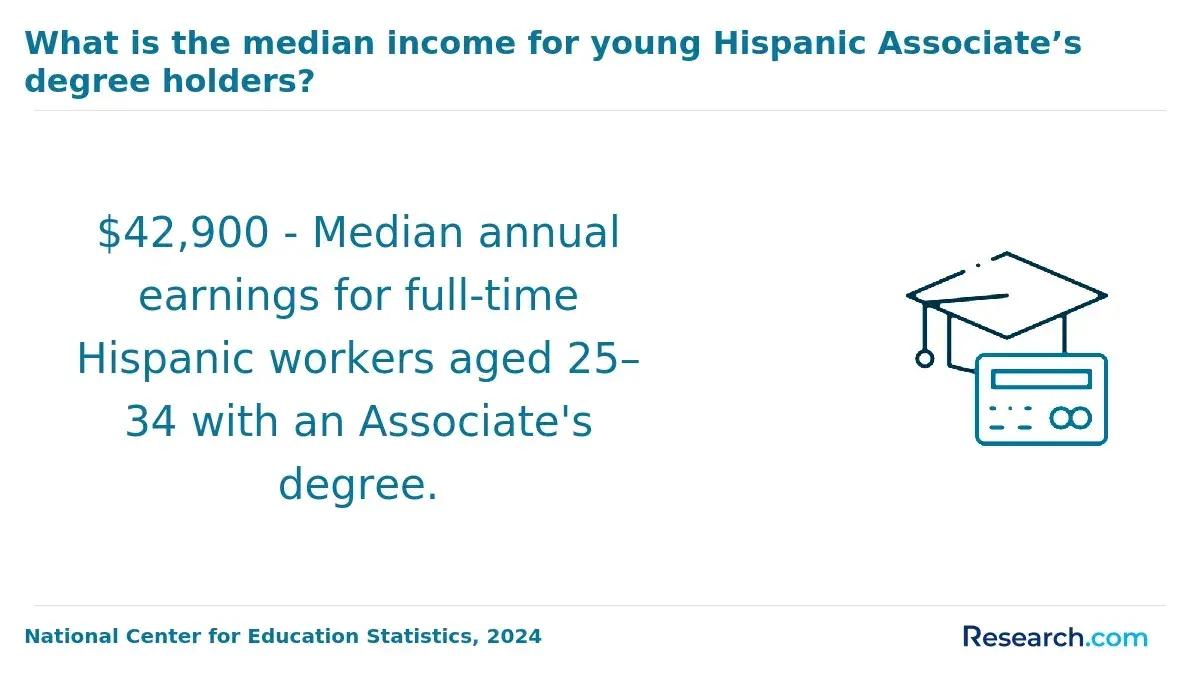
The career context matters. According to the U.S. Bureau of Labor Statistics, the median annual wage for epidemiologists was $83,980 in May 2024. That figure is not a promise of earnings, but it gives applicants a useful benchmark when comparing doctoral cost against roles in government, hospitals, universities, consulting, health systems, and research organizations.
Mentorship is especially valuable because epidemiology careers are becoming more data-intensive. Employers increasingly look for professionals who can use statistical software, manage large datasets, evaluate interventions, communicate uncertainty, and work with interdisciplinary teams. Faculty who publish, consult, lead grants, or maintain health agency partnerships can help students translate coursework into credible professional evidence.
Applicants considering leadership roles that combine public health data, compliance, and health systems operations may also review health information management salary expectations to compare adjacent career paths before committing to a research-heavy doctorate.
Good career-focused mentorship may include the following forms of support:
- Guidance on whether a dissertation topic supports academic, agency, industry, or nonprofit career goals
- Feedback on conference abstracts, manuscripts, policy briefs, or technical reports
- Introductions to alumni, field partners, research collaborators, or professional associations when appropriate
- Advice on building a methods portfolio in biostatistics, causal inference, spatial analysis, surveillance, implementation science, or health equity measurement
- Help translating doctoral research into interview examples, leadership narratives, and employer-facing deliverables
The key is to verify whether career mentorship is part of the faculty role or handled separately by a career services office. Both can be useful, but they are not interchangeable.
An effective epidemiology mentor should have both doctoral-level expertise and a relevant connection to the student's research or professional goal. Credentials alone are not enough. A senior scholar with no availability may be less useful than a less famous faculty member who has the right methods expertise and responds consistently.
For most students, the ideal mentor has a terminal degree in epidemiology, public health, biostatistics, medicine, health services research, environmental health, or a closely related field. The mentor should also have evidence of current work: publications, funded projects, applied public health leadership, surveillance experience, program evaluation, or partnerships with health agencies and healthcare organizations.
Students interested in nutrition epidemiology, chronic disease prevention, or diet-related population health may also compare faculty expertise with preparation pathways such as an online dietitian degree if they are still deciding between clinical nutrition, public health nutrition, and epidemiologic research routes.
When reviewing faculty profiles, look for evidence that the mentor can support your actual doctoral work. These indicators are more useful than title alone:
- Recent publications or projects related to your population, disease area, exposure, intervention, or analytic method
- Experience supervising doctoral dissertations, applied doctoral projects, or graduate research teams
- Expertise in the methods you expect to use, such as regression modeling, survival analysis, qualitative epidemiology, causal inference, GIS, or mixed methods
- Connections to practice settings if your project requires agency, hospital, community, or employer collaboration
- Clear availability for online students, including response-time expectations and meeting options
One common mistake is choosing a program because one impressive faculty member appears on the website. Before applying, confirm that the person is currently teaching, accepting doctoral mentees, and able to supervise your topic. Faculty pages are not always updated quickly after sabbaticals, role changes, retirements, or grant shifts.
One-on-one mentorship can increase value, but it should not be evaluated separately from total cost. Online doctoral students may pay tuition, technology fees, dissertation continuation fees, residency travel costs, statistical software costs, books, graduation fees, and lost income from reduced work hours.
Federal Student Aid currently lists the annual Direct Unsubsidized Loan limit for graduate and professional students at $20,500. That matters because doctoral programs can exceed that amount in annual cost, pushing students toward savings, employer benefits, scholarships, assistantships, payment plans, or Graduate PLUS Loans.
Because tuition structures vary widely, applicants should calculate cost using the full degree plan rather than one term of tuition. Use the following cost categories when comparing programs:
- Tuition per credit multiplied by the total number of required credits
- Mandatory university, technology, student services, or online learning fees
- Dissertation, doctoral project, or continuation fees after coursework ends
- Residency, intensive, practicum, or campus visit travel expenses
- Software, data access, transcription, survey, or statistical consulting costs
- Opportunity cost if the program requires reduced work hours or unpaid fieldwork
Mentorship is worth a higher price when it reduces avoidable delays, improves research quality, expands professional opportunities, or provides expertise that is difficult to access elsewhere. It is less likely to justify extra cost if the program offers only occasional check-ins, if the mentor does not match your topic, or if the same career goal could be reached through a less expensive master's, certificate, or employer-supported pathway.
For quick comparison, students can model tuition with simple scenarios:
- $800 per credit for 60 credits equals $48,000 before fees and travel.
- $1,100 per credit for 60 credits equals $66,000 before fees and travel.
- $1,500 per credit for 60 credits equals $90,000 before fees and travel.
These examples are not program quotes. They show why small per-credit differences become significant over a full doctorate. A program with stronger mentorship may be a better value if it helps you complete efficiently, but only if the support is real, accessible, and aligned with your goals.
One-on-one mentorship is most beneficial for students whose goals require original research, advanced methods, topic-specific faculty expertise, or career positioning beyond the credential itself. It is less essential for students who mainly need a structured leadership credential and already have strong research support through their employer.
Students coming from nutrition, wellness, or prevention backgrounds may compare an epidemiology doctorate with an accelerated nutrition degree online if they are still deciding whether they need doctoral research training or a faster credential aligned with practice advancement.
The following students tend to gain the most from individualized doctoral mentoring:
- Working epidemiologists who want to move into senior research, surveillance, faculty, or principal investigator roles
- Public health professionals with a specific dissertation topic requiring specialized methods or population expertise
- Clinicians who want to study outcomes, prevention, implementation, or population health questions using epidemiologic methods
- Students who need help turning workplace data into a rigorous and ethically approved applied project
- Applicants changing fields who need guidance building credibility, research identity, and professional networks
- Students targeting publication, conference presentation, grant writing, or academic career pathways
Some students may be better served by a highly structured cohort program, even if it offers less individualized faculty access. If you need predictable deadlines, peer accountability, and a fixed part-time schedule more than research customization, cohort structure may matter more than one-on-one flexibility.
Students should be cautious if they are choosing a doctorate mainly because the program promises "personal attention" but they do not yet know their career goal. Mentorship is most powerful when there is something specific to mentor: a research question, leadership problem, field project, analytic skill gap, or professional transition.
How Should Students Evaluate Faculty Mentorship Before Choosing an Online Epidemiology Doctorate?
The best way to evaluate mentorship is to treat it like an academic resource you must verify, not a benefit you assume. Admissions teams can explain policies, but current students, alumni, faculty profiles, dissertation lists, and program handbooks often reveal how mentorship actually works.
Use a structured process before committing to a program. These steps help separate meaningful mentorship from general claims of accessibility:
- Identify your likely research or applied project area before contacting schools.
- Review faculty profiles for recent work that matches your topic, population, setting, or methods.
- Ask whether faculty mentors are assigned at admission, during coursework, or at the dissertation stage.
- Request the expected meeting frequency and communication channels for online doctoral students.
- Ask how many doctoral students each faculty member typically advises and whether advising loads affect availability.
- Confirm whether students can request a mentor or change mentors if the fit is poor.
- Ask for examples of recent dissertations, applied projects, publications, or field placements related to your interests.
- Speak with current students or alumni about response times, feedback quality, and faculty engagement.
- Compare mentorship strength with tuition, residency requirements, flexibility, accreditation, and career outcomes.
Applicants should also watch for red flags. A program deserves closer scrutiny if it cannot name potential mentors, avoids questions about advising loads, provides no dissertation examples, relies only on asynchronous message boards, or implies that all students receive the same level of faculty attention regardless of topic.
Before enrolling, ask direct questions such as:
- Who would likely supervise a dissertation or applied project in my area?
- How soon would I meet that person after starting the program?
- What is the normal response time for faculty feedback on dissertation drafts?
- How are conflicts, delays, or mentor changes handled?
- Are online students eligible for research groups, teaching opportunities, conference support, or faculty-led projects?
- Does the program hold CEPH accreditation if it is a school or program of public health, and does the institution hold recognized institutional accreditation?
The final decision should balance mentorship, cost, flexibility, and career value. If you cannot maximize all four, prioritize based on your goal: research-focused students should protect faculty fit, working professionals should protect scheduling feasibility, and cost-sensitive students should avoid programs where vague mentorship claims do not clearly reduce risk or improve outcomes.
Other Things You Should Know About Epidemiology
No. Epidemiology is a core public health discipline focused on patterns, causes, and prevention of disease or health outcomes in populations. Public health is broader and also includes policy, environmental health, health behavior, administration, biostatistics, and community practice.
Many programs prefer or require graduate-level public health preparation, but requirements vary. Some accept applicants with related master's degrees in statistics, biology, medicine, nursing, health sciences, social science, or data-focused fields if they meet prerequisite expectations.
Many online doctoral students do work full time, especially in part-time DrPH or professional doctorate formats. Research-heavy PhD programs may be harder to balance with full-time work during dissertation, data analysis, teaching, or research assistantship periods.
Some are fully online, while others require residencies, intensives, orientations, qualifying exams, practicum meetings, or dissertation defenses on campus. Applicants should confirm travel requirements before enrolling because they can affect cost, scheduling, and employer approval.
- PhD in Public Health - How to apply https://phspot.org/tips-for-applying-to-a-public-health-phd-program/
- Faculty-Student Mentoring in Online Higher Education https://www.facultyfocus.com/articles/online-education/online-assessment-grading-and-feedback/faculty-student-mentoring-in-online-higher-education/
- Best Online PhD Programs for Working Professionals in the USA https://www.euroamerican.eu/best-online-phd-programs-usa-for-working-professionals
- Online Doctorate in International Public Health https://www.euclid.int/online-doctorate-international-public-health/
- Mentorship Training for Supervisors Co-Developing and Supervising PhD and Master’s by Research Programmes with Industry https://run-eu.eu/2025/04/16/mentorship-training-for-supervisors-co-developing-and-supervising-phd-and-masters-by-research-programmes-with-industry/
- Financing Your Degree https://aspph.org/student-journey/financing-your-degree/
- Global Public Health Mentorship - GHO https://globalhealthotherwise.com/global-public-health-mentorship/
- 25 Best Doctor of Public Health Programs - MPH Online https://www.mphonline.org/top-public-health-phd-programs/
- Effective Mentorship in FETP - Micro Course Series | TEPHINET https://www.tephinet.org/tephinet-learning-center/tephinet-library/effective-mentorship-fetp-micro-course-series
- The Hidden ROI of Faculty Mentorship https://www.scholaro.com/db/News/how-faculty-mentor-students-308