2027 Online Environmental Management Master's Programs With No Application Fee

Co-Founder and Chief Data Scientist
An application fee can make it harder to compare several online environmental management master's programs, especially when admission is uncertain. No-fee programs and targeted waivers can reduce that upfront risk for military-affiliated students, alumni, and applicants with documented financial need. The U.S. Bureau of Labor Statistics reported a 2024 median annual wage of $78,980 for environmental scientists and specialists, illustrating the value of carefully evaluating environmental career pathways.
This guide identifies no-fee options, explains waiver rules, and shows how to compare total program value beyond the application charge.
Key Things to Know About Environmental Management Master's Programs with No Application Fee
- Online environmental management programs with permanently waived application fees are available, but applicants should confirm the policy for their exact degree, term, and applicant category before submitting.
- A typical graduate-school application fee often falls around $50 to $100, so applying to three no-fee programs may preserve roughly $150 to $300 for transcripts, technology, or enrollment expenses.
- No-fee status does not signal lower quality or easier admission; accreditation, curriculum, faculty expertise, tuition, career alignment, and total borrowing matter far more.
How much do application fees typically cost for Environmental Management master's programs?
There is no single national average limited to environmental management master's programs because universities set their own graduate admissions charges. In practice, applicants commonly encounter fees in the $50 to $100 range, with some research universities charging more and some online-focused institutions charging nothing.
For budgeting, treat $75 as a reasonable planning midpoint rather than a guaranteed charge. At that level, applying to four paid programs costs about $300 before an applicant has enrolled anywhere. That is why a no-fee school can be a useful addition to a balanced application list, particularly for applicants changing careers or comparing multiple online formats.
The application fee is only one part of the pre-enrollment budget. The following cost categories can still apply even when the university does not charge to submit an application:
| Potential expense | Why it may be required | What to confirm |
| Official transcripts | Schools may require records from every college attended. | Whether electronic delivery is accepted and whether unofficial copies are sufficient for review. |
| Credential evaluation | Applicants educated outside the U.S. may need a course-by-course evaluation. | The approved evaluation agencies, document format, and who pays. |
| English-language testing | Some international applicants must document English proficiency. | Whether a prior English-language degree or other evidence qualifies for an exemption. |
| Standardized testing | A GRE may be optional, recommended, or not required depending on the program. | Whether test scores meaningfully strengthen an application before paying to send them. |
| Enrollment and learning costs | Technology, books, course materials, field experiences, and deposits may arise after admission. | The estimated total cost of attendance, not just tuition per credit. |
A paid application can still be worthwhile when a program is an unusually strong fit for your target role, location, schedule, or professional network. Avoid eliminating a top-choice program solely because of a modest fee if its curriculum and outcomes are materially better than the alternatives.
What does the application fee typically cover for Environmental Management master's programs?
An application fee generally helps a university support the admissions process rather than reserve a seat in the program. It may contribute to application-platform licensing, file processing, transcript matching, credential review, admissions staffing, and communications with applicants.
It usually does not cover enrollment costs, tuition, academic advising after admission, textbooks, software, travel, or professional certifications. A waived fee also does not mean the school has waived any required documentation.
Before paying or requesting a waiver, review these points in the application portal and in writing from admissions:
- Check whether the charge applies to the graduate school, the environmental management program, or both.
- Confirm whether the fee is refundable if you withdraw before a decision.
- Ask whether a fee-waiver code must be entered before payment, because many schools cannot reverse a completed transaction.
- Verify whether the institution needs official transcripts at application time or only after admission.
Applicants comparing adjacent education pathways may also find it helpful to review the cheapest online degrees when they need undergraduate prerequisites or a lower-cost route into environmental work before pursuing graduate study.
Which online Environmental Management master's programs have no application fees?
A small but meaningful group of online institutions publishes a no-application-fee policy for graduate applicants. Environmental management may appear under related titles such as environmental policy and management, environmental studies, sustainability management, natural resources, or environmental science. Title differences matter: compare the curriculum, not just the program name.
The programs below are examples of online or primarily online graduate options that have advertised no application fee policies. Policies can change by term, residency category, or application channel, so verify the current policy directly with admissions before investing time in the application.
| Institution | Relevant online graduate option | Published no-fee approach to verify | Best fit to investigate |
| American Public University System | Master's program in environmental policy and management | Graduate applications have been promoted without an application fee. | Working adults seeking policy, compliance, planning, or environmental administration coursework. |
| University of Maryland Global Campus | Environmental management master's program | Graduate admissions materials have promoted no application fee enrollment. | Students seeking an online public-university format and management-oriented environmental study. |
| Unity Environmental University | Online environmental studies master's program | The institution has promoted a no-application-fee admissions process. | Applicants whose goals overlap with sustainability, conservation, environmental leadership, or education. |
Do not assume that every specialization at an institution shares the same policy. Some schools waive a fee only for online applicants, only during recruitment events, or only through a specific application platform. Ask for confirmation that identifies the degree, start term, and your applicant type.
A practical search strategy is to create a short list of six to eight academically suitable programs, then sort them into three groups: permanently no-fee, fee-waiver eligible, and paid-only. Apply first to the programs with the strongest fit, not simply to every school that costs nothing to apply to.
Why do some Environmental Management master's programs forego application fees entirely?
Schools may eliminate application fees to reduce a barrier for prospective students, broaden their applicant pool, simplify online enrollment, and compete for qualified working professionals. This approach is particularly common among institutions that use centralized online admissions systems and want prospective students to explore a program before making a financial commitment.
No-fee policies can also support access goals. A fee is a fixed upfront cost that affects applicants differently depending on income, family responsibilities, military transitions, and the number of programs they need to compare. Removing it can encourage qualified applicants who might otherwise limit their options.
That recruitment choice does not mean the institution has reduced academic standards. Admissions teams can still require prerequisite coursework, professional experience, recommendation letters, a statement of purpose, writing samples, or a minimum GPA. The important distinction is between access to apply and criteria for admission.
Students considering a longer academic ladder should separate application savings from time-to-completion goals. For example, options described in the shortest doctoral programs may be relevant later, but they should not influence a master's decision unless the environmental management curriculum supports a clearly defined doctoral or research goal.
Are no-fee Environmental Management master's programs less competitive than others?
No. A no-application-fee policy does not by itself make an online environmental management master's program less competitive, less rigorous, or less valuable to employers. Competitiveness depends on applicant demand, cohort capacity, admission prerequisites, faculty resources, and the program's stated selection process.
Applicants should look for evidence that a program is a credible fit rather than using application price as a quality shortcut. A school can waive fees while maintaining selective admission, and a school can charge a fee while offering broad access admissions.
Use these indicators to evaluate academic and career value before applying:
- Institutional accreditation from a recognized accrediting body and clear disclosure of the university's authorization to offer online education.
- A curriculum that includes environmental regulation, sustainability strategy, risk assessment, environmental policy, data analysis, project management, or other skills tied to your intended role.
- Faculty backgrounds and course experiences that match your interests in government, consulting, corporate sustainability, conservation, public health, or compliance.
- Transparent information about credit requirements, practicum or capstone expectations, student support, and total estimated cost.
- Admission requirements that are specific enough to show how the school evaluates academic readiness and professional experience.
A common mistake is applying broadly to no-fee programs without checking whether they offer the technical depth or geographic relevance you need. A focused list of well-matched programs is more useful than a large list built around waived fees alone.
Do military members get fee waivers for Environmental Management master's programs?
Many U.S. universities offer application-fee waivers to active-duty service members, veterans, reservists, National Guard members, and sometimes military spouses or dependents. Eligibility is institution-specific, so military affiliation does not automatically eliminate a fee at every environmental management program.
Military applicants should request the waiver before submitting payment and ask whether the school requires proof such as a military ID, DD Form 214, orders, a veterans-benefits certificate, or verification through a military education office. Some institutions apply the waiver automatically once the applicant identifies military status; others require an admissions representative to issue a code.
The following comparison shows what to verify because policies differ substantially:
| Applicant category | Waiver availability | Typical verification to ask about |
| Active-duty service member | Often available at military-friendly institutions. | Military ID, current orders, or service verification. |
| Veteran | Frequently available, but not universal. | DD Form 214 or other separation documentation. |
| Reservist or National Guard member | May be covered under military-affiliated policies. | Current status documentation or unit verification. |
| Military spouse or dependent | Available at some institutions and excluded at others. | Relationship and benefits eligibility documentation. |
Military experience can also strengthen an application when applicants clearly connect it to environmental logistics, occupational safety, emergency management, infrastructure, natural-resource stewardship, or regulatory compliance. If you are exploring another clinical career transition as well, the career information for SLPs illustrates why degree requirements and licensure pathways should be checked separately for each field.
Do alumni receive fee waivers when applying to Environmental Management master's programs?
Alumni fee waivers are available at some universities, particularly when a graduate applicant previously completed a degree or certificate through the same institution. However, the policy may apply only to graduates of a specific campus, degree level, or university system.
Ask admissions whether "alumni" includes former nondegree students, certificate completers, transfer students, and graduates from affiliated institutions. Also ask whether an alumni waiver is automatic or must be requested before submitting the application. An admissions office may need to locate your prior student record before it can remove the charge.
Do not confuse an alumni application-fee waiver with an alumni tuition discount. They are separate benefits, and either one may have different eligibility rules, exclusions, or enrollment deadlines. A tuition discount can have much greater long-term financial value than a waived $50 to $100 application fee.
Can financial need qualify applicants for Environmental Management master's program fee waivers?
Financial need can qualify applicants for a graduate application-fee waiver, but the process is less standardized than undergraduate admissions. Universities commonly consider documentation of limited income, public-benefit participation, unemployment, participation in access programs, or a demonstrated inability to pay the charge.
Request the waiver early. Many schools require approval before you submit the application, and some will not refund a fee that was already paid. The documentation should be accurate, current, and limited to what the school specifically requests.
These questions help applicants determine whether the extra paperwork is worthwhile:
- Does the school offer need-based graduate fee waivers for online applicants, or only for campus-based programs?
- What evidence is accepted, and can sensitive documents be securely uploaded?
- Is there a deadline before the program's application deadline?
- Will a denial of the waiver affect admission review? It generally should not, but applicants can ask for confirmation.
- Is a recruitment event, information session, or partner organization offering a simpler waiver-code route?
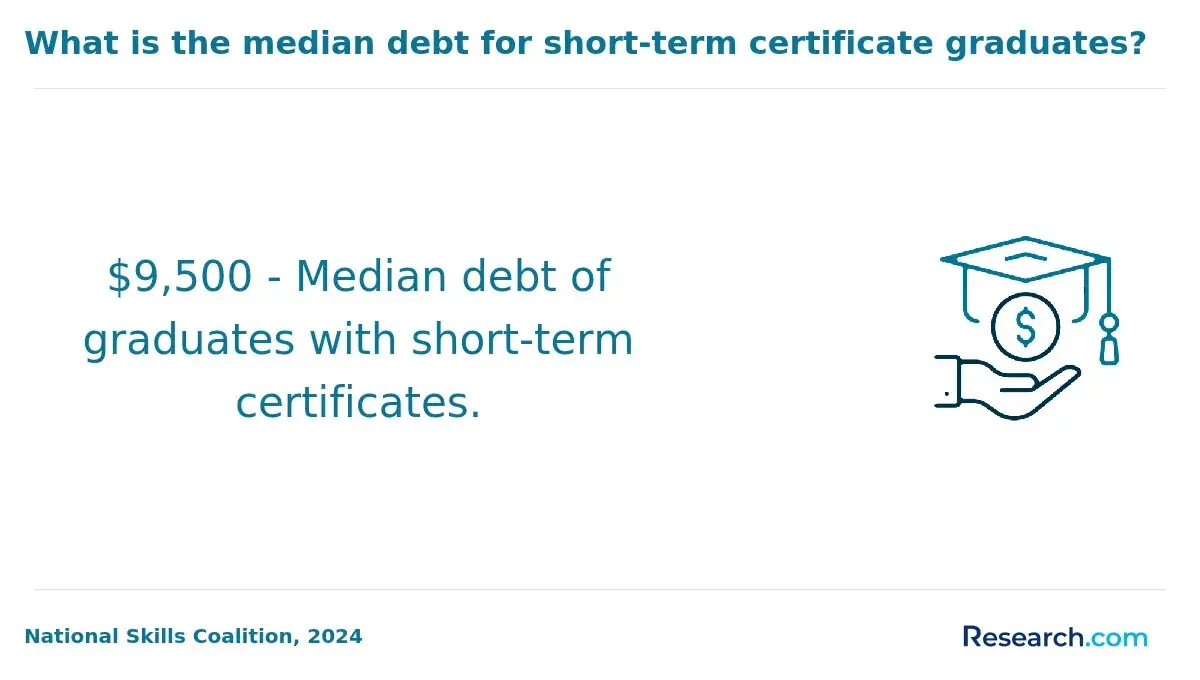
Applicants managing a tight education budget may also compare short-term training before committing to graduate tuition. Some short certificate programs that pay well can help build job-ready skills, although they are not substitutes for a master's degree when an employer specifically requires graduate-level environmental management preparation.
Are fee waivers available for international applicants to Environmental Management master's programs?
International applicants may be eligible for a no-fee application policy when the program waives fees for all applicants. Need-based, military, and alumni waivers are more variable, and some are limited to U.S. citizens, permanent residents, domestic applicants, or participants in U.S.-based access programs.
International applicants should confirm the total application cost rather than focusing only on the fee. A waived application charge may still leave costs for credential evaluation, translations, secure transcript delivery, English-proficiency testing, visa documentation for any required residency, and international payment processing.
Before applying, contact admissions with a concise written question identifying your country of prior education, intended online program, and start term. Ask whether the fee waiver applies to international applicants and whether the degree can be completed from your location. Online availability does not always mean a program is authorized or practical in every country.
What should applicants consider when choosing Environmental Management master's programs with no application fee?
The best no-fee environmental management master's program is the one that supports a specific professional objective at an acceptable total cost. For example, a sustainability manager may prioritize business strategy and reporting coursework, while an applicant targeting public-sector compliance may need environmental law, permitting, policy, and geographic relevance.
Compare the following factors before deciding that a no-fee program is the right investment:
| Decision factor | Why it matters | How to use it |
| Total program cost | Tuition and required charges will usually outweigh the application fee. | Request a complete estimate for all credits, mandatory fees, materials, and likely financing costs. |
| Accreditation and authorization | These affect institutional legitimacy and, in some cases, employer or aid eligibility. | Confirm institutional accreditation and whether the school can enroll students in your state. |
| Career alignment | Environmental management covers several distinct occupations. | Match electives, capstone topics, and faculty expertise to the job descriptions you want after graduation. |
| Online delivery | "Online" can include live sessions, group projects, local fieldwork, or occasional residencies. | Ask about meeting times, time-zone expectations, practicum placement, and attendance requirements. |
| Admission fit | Applying strategically improves the value of each application. | Compare your GPA, prerequisites, experience, and writing materials with published requirements. |
| Student outcomes support | Career services and employer connections can influence practical return on investment. | Ask about internships, networking, career coaching, and examples of environmental roles pursued by students. |
A sensible approach is to include at least one no-fee program that meets your standards, one program where you have a strong admissions fit, and one aspirational program if it offers a distinct advantage. Request a waiver from paid programs when eligible, but do not choose a degree solely because the school removed a one-time charge.
Be especially cautious of programs that provide unclear tuition estimates, vague faculty information, unsupported career claims, or pressure to enroll before you can review financial aid. Prospective students considering doctoral-level clinical education should likewise compare program requirements closely; PsyD online options involve professional training and licensure considerations that differ from environmental management.
Other Things You Should Know About Environmental Management
Sometimes. A no-fee application eliminates the university's submission charge, but you may still pay for official transcripts, credential evaluations, test scores, or document translations. Review the full application checklist before assuming the process is free.
Many online programs make the GRE optional or do not require it, but policies vary. Check the exact degree and term because a university may have different requirements across departments. Submit scores only when they are required or likely to strengthen your application.
Completion time depends on the required credits, transfer policy, course schedule, and whether you study full time or part time. Many working professionals choose part-time enrollment, so compare the published curriculum sequence and any capstone or practicum timing.
Environmental management is not one uniformly licensed profession. Some jobs require no license, while specialized roles may require separate credentials, field experience, or state-specific qualifications. Check the requirements for your intended occupation and state before enrolling.
References
- Online Master's Degree: Environmental Management https://www.umgc.edu/online-degrees/masters/environmental-management
- Master of Environmental Management - MEnvMgmt https://www.massey.ac.nz/study/all-qualifications-and-degrees/master-of-environmental-management-PMENM/
- Master of Environmental Studies Online | Batten University https://online.batten.edu/graduate/master-of-environmental-studies