2027 Online Environmental Management Master's Programs With No Personal Statement or Admissions Essay Required

Co-Founder and Chief Data Scientist
Applying to graduate school can feel unnecessarily slow when a personal statement is required alongside transcripts, recommendations, and test scores. Online Environmental Management master's programs may streamline that process, but "no essay" rarely means "no review." The U.S. Bureau of Labor Statistics reported a $80,060 median annual wage for environmental scientists and specialists in 2024, underscoring the value of choosing a credible program aligned with your goals. This guide explains how to find genuine no-essay options, compare replacement requirements, verify quality, and decide whether simplified admissions fit your career plan.
Key Things You Should Know
- A "no personal statement" online Environmental Management master's program generally omits a long narrative essay, but it may still require official transcripts, a resume, short responses, recommendations, prerequisite coursework, or an admissions interview.
- No-essay status is separate from GRE/GMAT policy and GPA standards: many programs are test-optional or do not require the GRE, while still expecting a bachelor's degree and often a minimum cumulative GPA near 2.5 to 3.0.
- Verify each application term directly with the university, then confirm institutional accreditation, online course delivery, total tuition, and environmental-management curriculum before treating streamlined admissions as a sign of lower selectivity or lower quality.
What Does "No Personal Statement or Admissions Essay Required" Mean for Online Environmental Management Master's Programs?
In this context, "no personal statement" means the program does not list a traditional applicant-written narrative explaining your goals, background, motivation, and fit as a required application item. "No admissions essay" is often used similarly. Neither phrase automatically means the application contains no writing or no individualized review.
Schools use these terms inconsistently. A personal statement is usually reflective and career-focused; a statement of purpose is often more academic and may ask about research or professional objectives; and an admissions essay can cover either purpose. A short-answer field asking why you selected the program, however, may still function as a brief written assessment even when the school does not call it an essay.
Compare the wording on the program's application checklist rather than relying on a marketing headline. Programs can also change requirements by term, applicant type, GPA range, or whether an applicant seeks conditional admission.
| Application item | What its absence usually means | What may still be required |
| Personal statement | No long reflective narrative is listed | Resume, transcripts, short-answer questions |
| Statement of purpose | No formal academic-goals document is listed | Prerequisite review or faculty evaluation |
| Admissions essay | No separately uploaded essay is listed | Application responses or an interview |
| GRE/GMAT | No standardized test score is required | Minimum GPA and academic record review |
A streamlined application can be particularly useful for an experienced environmental professional who has clear credentials but little time for multiple tailored essays. Applicants changing fields, seeking research-intensive training, or needing to explain weak grades may prefer a program that allows a statement, even if it is optional, because it gives them context not visible in a transcript.
Graduate admissions practices vary across disciplines. Applicants comparing other practice-oriented paths, including PsyD online options, should expect more extensive written and clinical-fit requirements than are typical in many applied environmental management programs.
Which Online Environmental Management Master's Programs Do Not Require a Personal Statement or Admissions Essay?
There is no stable national registry of no-essay Environmental Management master's programs, and universities may revise their checklists without changing the degree title. The most responsible approach is to treat a school as a possible match only when its current graduate application page and program-specific checklist omit a personal statement, statement of purpose, and essay.
One program prospective students may investigate is the online Master of Science in Environmental Management at the University of Maryland Global Campus. Its graduate admissions process has generally emphasized an application and official transcripts rather than a traditional admissions essay. Because requirements can differ for provisional admission, international documentation, or academic exceptions, applicants should confirm the active checklist before submitting an application.
The table identifies useful types of programs to screen. It is a comparison framework, not a guarantee that every school in a category currently waives written materials.
| Program type to search | Common online degree titles | Why it may use streamlined admissions | Verification priority |
| Applied public-university program | MS in Environmental Management | May rely heavily on transcripts and undergraduate degree status | Check the program-specific application checklist |
| Adult-focused online university | MS in Environmental Management, Sustainability, or Natural Resources | May use rolling admissions and centralized graduate review | Check whether a resume or short response replaces an essay |
| Professional sustainability program | MS in Sustainability Management or Environmental Policy | May prioritize work experience and academic readiness | Confirm whether a statement of purpose is required |
| Research-oriented university program | MS in Environmental Science and Management | May evaluate faculty fit or research preparation | Expect a statement even if the GRE is waived |
Use exact search terms such as "online MS environmental management application requirements," "personal statement," "statement of purpose," and "supplemental materials." If the program page is vague, ask admissions for a written confirmation that addresses your entry term and concentration.
A common mistake is treating a general graduate-school page as the final authority. Environmental management programs can have department-level requirements that are stricter than the university-wide application instructions.
What Admission Requirements Do Online Environmental Management Master's Programs Use Instead of an Essay?
Without an essay, admissions teams usually place greater weight on evidence that you can complete graduate-level work. That review may be primarily administrative at some broad-access programs, while more selective programs may evaluate coursework, professional experience, and fit in greater depth.
The following materials are common substitutes or companion requirements. Knowing them early helps you avoid assuming that a shorter application is automatically a simpler admission decision.
- Official transcripts showing a completed bachelor's degree and relevant academic preparation
- A cumulative or upper-division GPA that meets the published minimum, with some schools reviewing applicants below the threshold individually
- Prerequisites in environmental science, biology, chemistry, statistics, geography, economics, or related quantitative subjects
- A resume documenting environmental compliance, sustainability, conservation, public-sector, engineering, or management experience
- Professional or academic recommendations, particularly for programs that assess leadership potential
- Short-answer prompts, an interview, portfolio materials, or an explanation of prior academic performance
Requirements should match the curriculum. A program emphasizing environmental law, regulation, and organizational sustainability may value professional experience, while a program with geographic information systems, environmental assessment, or data analysis courses may scrutinize quantitative prerequisites more closely.
No-GRE policies remain common in professionally oriented graduate education, but a GRE waiver should not be confused with a no-essay policy. Ask admissions separately whether the program requires a test score, personal statement, recommendation letters, and prerequisite courses.
Can You Get Into an Online Environmental Management Master's Program With No Essay, No GRE, or a Low GPA?
Yes, it may be possible to find programs with both no essay and no GRE requirements, but admission still depends on the institution's minimum standards and review process. A school may admit applicants with lower GPAs through individual review, conditional admission, probationary enrollment, prerequisite coursework, or evidence of substantial professional experience. None of those pathways should be assumed.
A low GPA is most manageable when the applicant can document stronger recent performance, relevant work history, or completion of missing prerequisites. If an application has no essay field, ask whether the admissions office accepts an optional academic explanation; do not upload unrequested materials without permission.
This comparison separates three policies that are often incorrectly grouped together.
| Policy | What it changes | What it does not change |
| No essay | Removes a required long-form written narrative | GPA, transcripts, prerequisites, or recommendations |
| No GRE | Removes a standardized-test submission requirement | Academic readiness review or written-material requirements |
| Low-GPA consideration | May permit individualized or conditional review | The school's right to deny admission or require conditions |
| Rolling admission | May provide multiple application windows | Academic and document requirements |
Applicants whose main barrier is cost should compare total program cost, not only admissions flexibility. Lower-cost undergraduate pathways and cheapest online degrees may also be relevant for students who first need a qualifying bachelor's degree or additional foundational coursework.
Before applying with a GPA below the published minimum, request answers to three questions: whether the minimum is firm, whether conditional admission exists, and whether an optional explanation or additional transcript can be considered. A clear written response is more reliable than an informal assumption based on an advertisement.
Are Online Environmental Management Master's Programs With No Personal Statement Easier to Get Into?
Not necessarily. A no-personal-statement policy removes one application component; it does not reveal an acceptance rate, guarantee admission, or indicate that academic standards are lower. Programs can screen applicants through GPA, course history, prerequisites, work experience, recommendations, interviews, and enrollment capacity.
The trade-off is largely about information. A traditional essay lets applicants explain a career transition, an uneven academic record, environmental leadership, or a specialized interest. A streamlined program may offer greater speed and convenience, but it gives you fewer opportunities to shape the committee's understanding of your background.
Use the following factors to judge fit rather than treating essay requirements as a quality signal.
- Choose a no-essay pathway when your transcript, prerequisite record, and work experience already show clear readiness.
- Consider an application with an essay option when you need to explain a GPA trend, career change, gap in education, or specialized environmental goal.
- Prioritize the curriculum, faculty expertise, applied projects, accreditation, and employer relevance over the number of application documents.
- Ask whether admissions are selective, space-available, cohort-based, or reviewed on a rolling basis before assuming the program is easier.
For students building a longer academic plan, a master's degree is not always the final credential. Review shortest doctoral programs carefully if your eventual target is senior research, university teaching, or high-level organizational leadership; doctoral admissions commonly require more extensive evidence of academic fit.
How Can You Tell Whether a No-Essay Online Environmental Management Master's Program Is Accredited and Reputable?
Start with institutional accreditation. In the United States, institutional accreditation indicates that an accrediting agency recognized by the U.S. Department of Education or the Council for Higher Education Accreditation has reviewed the institution. It is especially important for federal financial aid eligibility, credit transfer, employer confidence, and future graduate study.
Environmental Management master's degrees do not have one universal programmatic accreditor equivalent to the accreditation systems used in some licensed professions. That makes curriculum and outcomes review particularly important. A legitimate program should clearly identify the awarding university, accreditation status, faculty, course sequence, learning format, student support, and tuition.
Use this screening process before paying an application fee or enrolling.
- Confirm the university's institutional accreditation through the institution and the federal accreditation database.
- Match the degree title, concentration, and online delivery format on the admissions page to the academic catalog.
- Review required courses for environmental policy, regulation, sustainability, environmental assessment, data analysis, project management, or another focus relevant to your goal.
- Check whether online students receive the same degree designation, faculty access, library services, and career support as other students.
- Ask for the full tuition schedule, mandatory fees, transfer-credit policy, withdrawal policy, and current application checklist in writing.
Red flags include vague claims about accreditation, pressure to enroll before you see the catalog, unclear ownership of the degree, implausibly short completion claims, or a curriculum that lacks environmental-management substance. Simplified admissions can be legitimate; missing institutional transparency is not.
How Much Do Online Environmental Management Master's Programs With No Admissions Essay Cost, and What Financial Aid Is Available?
No-essay admission does not lower tuition by itself. Total cost depends on the institution, residency policy, number of credits, per-credit rate, required fees, transfer credits, and whether the program uses a cohort tuition model. Public universities may offer lower published rates, while private institutions may provide different scholarship structures or employer partnerships.
For federal aid planning, graduate students are generally considered independent for FAFSA purposes and may be eligible for Direct Unsubsidized Loans up to the applicable annual and aggregate limits. Graduate students may also use Grad PLUS loans after credit review. Aid availability, institutional scholarships, and loan eligibility depend on the school and the student's circumstances.
This cost framework shows what to compare before using a tuition figure in an enrollment decision.
| Cost factor | Why it matters | Question to ask |
| Required credits | Per-credit pricing is incomplete without the degree's credit total | How many credits are required after transfer credit? |
| Tuition rate | Rates may differ by residency, program, or academic year | Is the advertised rate guaranteed for continuing students? |
| Mandatory fees | Technology, graduation, course, and distance-learning fees increase cost | What charges are required beyond tuition? |
| Employer support | Reimbursement may reduce out-of-pocket cost | Does the employer require preapproval or a minimum grade? |
| Opportunity cost | Course load can affect work hours and completion time | Can I study part time without delaying my career objective? |
Complete the FAFSA early, then compare school aid offers using net cost rather than the headline tuition rate. Also ask about departmental awards, sustainability-sector employer reimbursement, military benefits where applicable, and payment plans. Do not assume a scholarship applies to online students or that an application fee waiver applies to tuition.
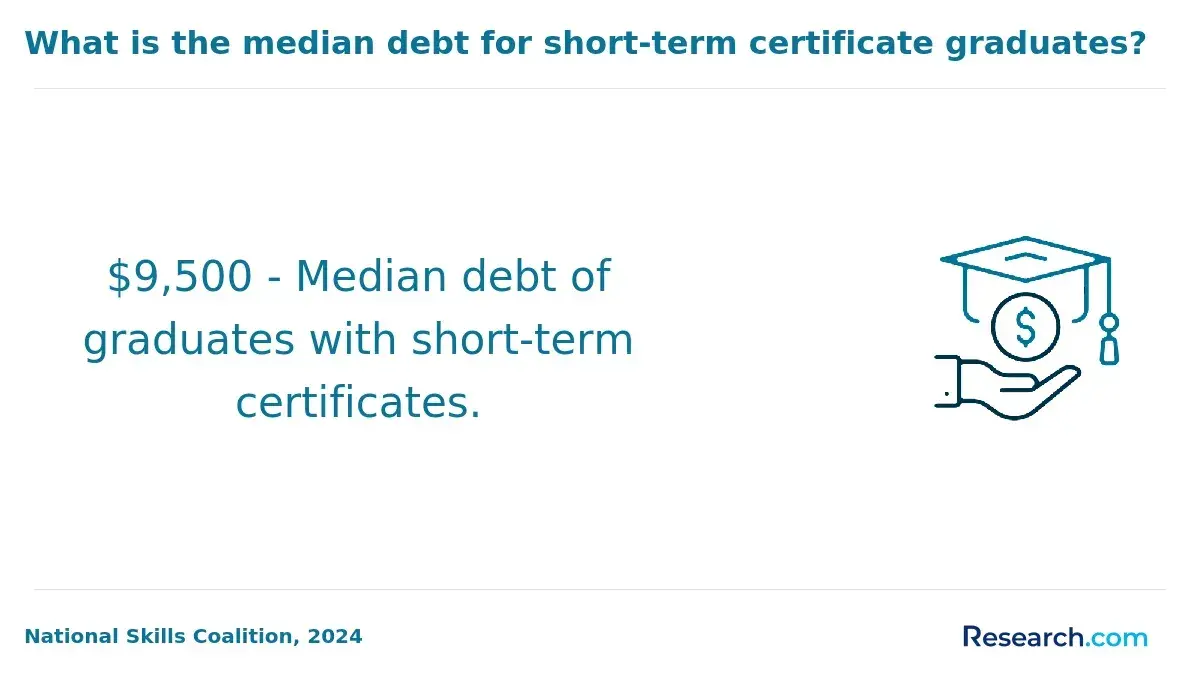
If a master's degree is not necessary for your immediate goal, targeted upskilling may be a less expensive starting point. Explore short certificate programs that pay well as a separate option, while recognizing that a short certificate is not equivalent to graduate environmental-management training.
How Do You Apply to an Online Environmental Management Master's Program With No Personal Statement Required?
A no-essay application is fastest when you confirm requirements before ordering transcripts or paying fees. Start with the exact degree and concentration rather than the university's general graduate admissions page, because the department may add requirements not shown in a central application portal.
Follow these steps to verify a genuinely streamlined application and submit a complete file.
- Open the program's current admissions page and download or save the application checklist for your intended start term.
- Identify every written requirement by searching for "personal statement," "essay," "statement of purpose," "supplemental," "short answer," and "additional information."
- Confirm degree, GPA, prerequisite, GRE/GMAT, resume, recommendation, and work-experience requirements with an admissions representative.
- Request official transcripts early, including transcripts from every postsecondary institution the school requires.
- Prepare an accurate resume that highlights environmental, regulatory, operational, analytical, leadership, and project-management experience if it is requested or permitted.
- Submit the application before the priority deadline, retain confirmation records, and monitor the portal for missing items.
- Review any admission conditions carefully before accepting an offer, especially required prerequisites or minimum first-term grades.
Do not mistake an online application form for a complete application. Missing transcripts, delayed recommendations, unverified prerequisite equivalencies, and overlooked residency documentation are frequent reasons decisions take longer than expected.
If you are changing careers, connect your prior work to relevant transferable skills - such as compliance documentation, stakeholder communication, budgeting, risk assessment, data interpretation, or operations management - even when the application does not ask for a formal essay. A well-organized resume can become more important when there is no narrative statement.
How Long Does an Online Environmental Management Master's Program With No Admissions Essay Take to Complete?
Admissions requirements do not determine academic length. Most online Environmental Management master's programs require roughly 30 to 36 credits, though credit totals and pacing vary. A full-time student may finish in about 12 to 24 months, while a part-time working professional may take two or more years. Capstones, internships, prerequisite courses, and course sequencing can extend the timeline.
Evaluate the published course map, not only the advertised completion estimate. An accelerated format can work well for students with substantial weekly availability, but it may be harder to manage alongside environmental fieldwork, travel, seasonal responsibilities, or full-time employment.
| Enrollment pattern | Typical planning advantage | Potential limitation |
| Full time | Faster completion and concentrated momentum | Higher weekly workload and potentially reduced employment flexibility |
| Part time | More manageable alongside a full-time job | Longer exposure to tuition increases or curriculum changes |
| Accelerated terms | Frequent starts and quicker course progression | Compressed reading, projects, and deadlines |
| Asynchronous format | Greater scheduling flexibility | Requires strong independent time management |
| Synchronous format | Regular faculty and peer interaction | Fixed meeting times may conflict with work schedules |
Ask whether courses are offered every term, whether a capstone can be completed remotely, and whether transfer credits are accepted. These details affect real completion time more than the lack of an admissions essay.
Is an Online Environmental Management Master's Degree With No Admissions Essay Worth It for Your Career?
An online Environmental Management master's degree can be worthwhile when it builds skills needed for your target role and comes from a credible institution at a manageable total cost. The absence of an admissions essay does not appear on the diploma, change the curriculum, or determine employer value. Employers are more likely to evaluate the institution, degree content, relevant experience, technical and leadership skills, and your ability to apply environmental knowledge to organizational decisions.
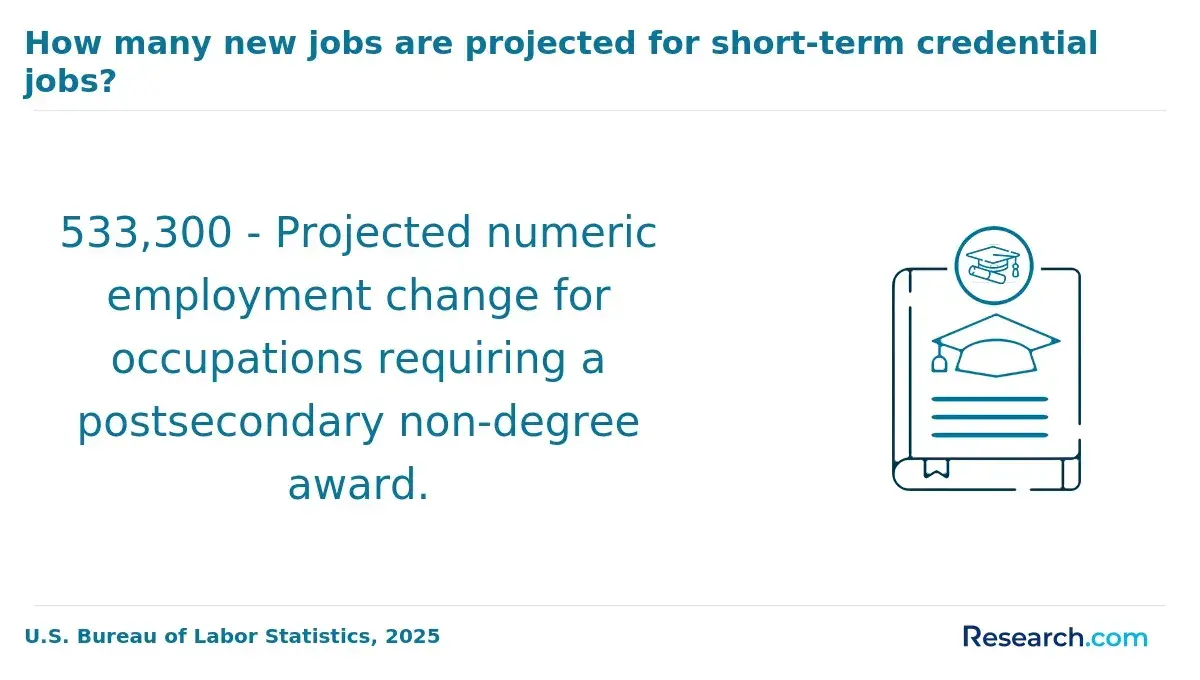
Environmental management can support careers in sustainability, environmental compliance, natural-resource administration, environmental health and safety, conservation program management, policy implementation, consulting, and corporate environmental reporting. The U.S. Bureau of Labor Statistics projects employment of environmental scientists and specialists to grow 6% from 2023 to 2033, faster than the average for all occupations. That projection is broad and does not guarantee a job for any individual graduate, but it indicates continued demand for environmental analysis and regulatory expertise.
This table connects common career directions with the skills an Environmental Management curriculum may help develop.
| Career direction | Typical responsibilities | Useful graduate skills |
| Environmental compliance | Track permits, regulations, audits, and corrective actions | Environmental law, risk management, documentation |
| Sustainability management | Coordinate organizational sustainability goals and reporting | Strategy, reporting, stakeholder engagement, project management |
| Conservation or resource management | Support land, water, habitat, or resource programs | Environmental assessment, policy, geospatial or data skills |
| Environmental consulting | Assist clients with assessments, compliance, and planning | Technical communication, project delivery, regulatory knowledge |
| Public-sector program management | Administer environmental initiatives and public programs | Policy analysis, budgeting, community engagement |
Before enrolling, compare the curriculum to job postings in your intended location and ask whether the program includes applied projects, current regulatory content, analytics, or industry partnerships. Career changers may also benefit from examining how professionals move between fields; for example, this guide for SLPs illustrates the broader importance of mapping prior skills, required credentials, and realistic transition steps.
A no-essay program is a strong fit when convenience removes an application barrier without compromising your need for quality, affordability, and relevant training. A more selective program with an essay may be the better investment when faculty mentorship, research alignment, specialized technical preparation, or a competitive professional network matters more to your goals.
Other Things You Should Know About Environmental Management
No. It means a traditional personal statement is not required. The program may still ask short-answer questions, request a resume, require an academic explanation for a low GPA, or use a supplemental form. Review every field in the application portal before assuming no writing is required.
Yes. Universities do not always use these terms consistently. A statement of purpose may be treated as a separate required document, especially in research-focused or department-administered programs. Ask whether any statement, essay, narrative response, or supplemental writing is required for your start term.
Environmental management is not one universally licensed profession. Some jobs may require separate credentials, field-specific experience, state licensing, or certifications, particularly in engineering, environmental health and safety, or regulated technical roles. Check the requirements for your intended job and state before enrolling.
Only submit optional material if the school explicitly invites it. An optional statement may help explain unusual circumstances or a career transition, but unrequested documents can create review delays or be disregarded. Ask admissions what materials are accepted and how they are used.
References
- How to Apply to Environmental Graduate Programs https://www.cjbnetwork.com/articles/how-to-apply-to-environmental-graduate-programs
- 2026 Best Online Environmental Science Master's Degrees https://www.onlineu.com/degrees/masters-environmental-science
- Online Master's Degree: Environmental Management https://www.umgc.edu/online-degrees/masters/environmental-management
- MSc Environmental Management vs a Management Route: Where Each Degree Excels in 2026 https://sumas.ch/blog/msc-environmental-management-where-it-excels-and-when-to-choose-a-management-route/
- The Best Online Masterâs in Environmental Management Degrees https://www.gograd.org/online-masters-programs/best-environmental-management-degrees/
- Top 20 Low-Cost Online Master's in Environmental Management for 2020 https://www.greatvaluecolleges.net/rankings/online-masters-environmental-management/
- Grad Schools with No Application Fees https://www.onlinemastersdegrees.org/best-programs/no-application-fees/