2027 Online Elementary Education Degree Programs With No Letters of Recommendation Required

Co-Founder and Chief Data Scientist
An online elementary education degree can be a practical route for future teachers, career changers, and working adults who do not have recent academic references. Programs with no required recommendation letters simplify one application step, but they still review transcripts, GPA, prerequisites, and licensure readiness.
The Bureau of Labor Statistics reports a $62,340 median annual wage for kindergarten and elementary school teachers as of 2024. This guide explains how to identify legitimate no-recommendation programs, compare their requirements and costs, and choose an option that supports your state teaching goals.
Key Things You Should Know
- "No letters of recommendation required" means the standard application for the named program does not require letters; it does not mean letters are merely optional, waived temporarily, or unnecessary for scholarships, student teaching, or graduate admission.
- Online elementary education programs may omit recommendations while still requiring official transcripts, a qualifying GPA, background checks, prerequisite courses, an essay, placement testing, or an admission interview; teacher-preparation and state licensure requirements remain rigorous.
- Cost and career value depend more on total tuition, transfer-credit policy, state authorization, clinical-placement support, and licensure alignment than on application simplicity; the 2024 median pay for kindergarten and elementary school teachers was $62,340, according to the U.S. Bureau of Labor Statistics.
Which Online Elementary Education Degree Programs Require No Letters of Recommendation?
The most common options are undergraduate bachelor's programs, degree-completion programs, and competency-based programs. Many colleges do not request recommendation letters for standard undergraduate admission, although program-level teacher education admission can add separate requirements after enrollment.
The programs below are examples of institutions whose standard published undergraduate application processes have generally not listed recommendation letters as required for online elementary education applicants. Requirements can change by start term, residency status, transfer status, and licensure track, so verify the program-specific checklist before paying an application fee.
| Institution and online pathway | Degree focus | Recommendation-letter status to verify | Important consideration |
| Western Governors University | B.A. in Elementary Education | Standard admission materials generally emphasize transcripts and enrollment requirements rather than recommendations | Confirm the program is available and licensure-aligned in your state before applying |
| Arizona State University Online | B.A.E. in Elementary Education | Undergraduate admission commonly relies on academic records rather than recommendation letters | Professional experience and student teaching requirements may involve in-person placement |
| University of Central Florida Online | Elementary Education pathway or completion option, where available | General undergraduate applications may not require recommendations | Determine whether the online option serves first-year, transfer, or Florida-specific licensure students |
| Fort Hays State University | Online elementary education-related undergraduate study | Standard undergraduate admission may not list recommendations | Ask whether the specific major leads to initial teacher licensure in your state |
These examples are starting points, not a ranking or guarantee of eligibility. Students seeking low-cost bachelor's options can also review cheap online colleges, then narrow the list to institutions that offer an elementary education pathway approved for their intended state.
Use the school's program page and application portal rather than a general admissions page alone. A college may not require recommendations for university admission but may require them later for admission to a teacher-candidacy phase, internship, scholarship, or graduate-level alternative certification program.
What Are the Admission Requirements for Online Elementary Education Degree Programs With No Recommendation Letters?
No-recommendation admission usually removes one document rather than lowering the academic or professional expectations of a teacher-preparation program. First-year applicants commonly submit a high school transcript or GED-equivalent record, while transfer applicants submit official college transcripts. Requirements vary substantially among institutions.
This comparison shows the materials applicants should expect to encounter in place of recommendation letters.
| Requirement | How commonly it appears | Why the school uses it |
| Official transcripts | Nearly universal | Confirms prior coursework, academic standing, and transferable credit |
| Minimum GPA | Common for admission or teacher candidacy | Shows academic readiness, particularly in writing, math, and general education |
| Completed prerequisites | Common for transfer and upper-division entry | Ensures students are prepared for education methods and content courses |
| Personal statement or short responses | Varies by school | Assesses motivation, communication, and understanding of teaching |
| Resume or work history | More common for adult and competency-based applicants | Provides context for childcare, tutoring, classroom, or leadership experience |
| Background check and fingerprinting | Common before fieldwork | Meets district, placement-site, and state safety requirements |
| Basic skills or content assessments | Depends on the state and program | May be needed for teacher-candidacy progression or licensure |
Before applying, distinguish between university admission and admission to the teacher-preparation program. Some students enter the college with a broad education major, complete foundational courses, and then apply separately for clinical practice or student teaching. Ask the admissions office for both checklists in writing.
Applicants should also ask whether standardized tests are required. Many undergraduate programs have test-flexible or test-optional admissions policies, but a state or educator-preparation program may still require skills, subject-area, or pedagogy assessments later in the degree.
Are Online Elementary Education Programs With No Letters of Recommendation Easier to Get Into?
Not necessarily. A program that does not request recommendation letters has a more streamlined application, but it may still be selective or have progression standards. Schools can evaluate transcripts, GPA, prerequisite grades, writing samples, interviews, and readiness for supervised classroom work instead.
The distinction matters because elementary education is tied to public-school licensure in most states. Programs must document that candidates meet academic and professional expectations before placing them with children in field experiences. A straightforward initial application may therefore be followed by a formal teacher-candidacy review.
No-recommendation pathways can be especially useful for applicants who have been out of school for years, changed careers, attended large online colleges, or have supervisors who cannot provide a detailed letter. They may be a poor fit for students who choose solely on admissions convenience and do not confirm state licensure eligibility, local placement availability, and total cost.
A better way to judge accessibility is to compare the complete pathway: initial admission, education-major progression, required exams, fieldwork approval, student teaching, and graduation-to-licensure steps. Do not interpret the absence of letters as guaranteed admission or as evidence that the degree will be less demanding.
What Do Online Elementary Education Programs Evaluate Instead of Letters of Recommendation?
Recommendation letters typically provide evidence of reliability, communication, academic potential, and professional conduct. When a program does not collect them, it usually builds that evidence from more direct and standardized application materials.
Admissions teams may place particular weight on the following information because it helps them assess readiness without relying on a third party's opinion.
- Academic record: Grades in composition, mathematics, science, social studies, and prior college coursework can indicate preparation for elementary content and college-level study.
- Personal statement: A concise explanation of why you want to teach, whom you hope to serve, and how you will manage online study can demonstrate purpose and writing ability.
- Resume and experience: Tutoring, paraprofessional work, childcare, coaching, military service, customer service, and volunteer roles can provide useful context when described accurately.
- Interview or enrollment conversation: Some programs use a conversation to discuss time management, technology access, professional expectations, and licensure goals.
- Prerequisite performance: Passing required general education courses can be more relevant than a recommendation because it demonstrates current academic readiness.
Strengthen your application by submitting complete, accurate records and explaining any academic gaps briefly and factually. If an essay is optional, use it strategically: connect your experience to teaching rather than repeating your resume. Avoid overstating classroom experience, since schools and placement districts may verify background, employment, and eligibility information.
How Can You Tell if an Online Elementary Education Degree With No Recommendation Requirement Is Accredited and Legitimate?
Start with institutional accreditation. A legitimate college should be accredited by an accreditor recognized by the U.S. Department of Education or the Council for Higher Education Accreditation. Institutional accreditation supports federal-aid eligibility and credit-transfer review, but it does not by itself prove that an elementary education degree leads to teacher licensure.
For initial teacher preparation, confirm that the program meets the approval requirements of the state where you intend to become licensed. Some programs also hold specialized accreditation through the Council for the Accreditation of Educator Preparation (CAEP), which can be useful evidence of quality but is not the only marker of a legitimate state-approved pathway.
Use this verification sequence before enrolling. It protects you from a common and costly mistake: assuming that "online" means a program works in every state.
- Find the institution in the federal accreditation database and confirm its accredited status.
- Read the degree page to determine whether it is an initial licensure program, a non-licensure education degree, or a degree-completion option.
- Check the school's state authorization and professional-licensure disclosures for your state of residence.
- Contact your state education agency to confirm the program's route to elementary teacher licensure.
- Ask whether the college arranges local field placements and whether you must locate an approved school or mentor yourself.
- Request the total program cost, clinical requirements, graduation requirements, and cancellation or withdrawal policy in writing.
Other useful indicators include transparent faculty information, clear course descriptions, published student-teaching expectations, accessible student services, and a school email address and physical institutional identity. To broaden your comparison, review institutions included among the best online universities, while still checking the specific elementary education program's state approval.
Red flags include promises of quick teacher licensure without supervised practice, vague statements about accreditation, pressure to enroll before seeing a degree plan, and no clear answer about your state. Employers generally focus on whether you hold the required state license and meet district hiring standards, not whether your application included recommendation letters.
How Much Do Online Elementary Education Degree Programs With No Letters of Recommendation Cost?
Recommendation-letter policies do not determine tuition. Cost depends on whether the school charges per credit or per term, whether you are an in-state student, how many credits transfer, required clinical fees, textbooks, fingerprinting, assessments, and travel to field placements.
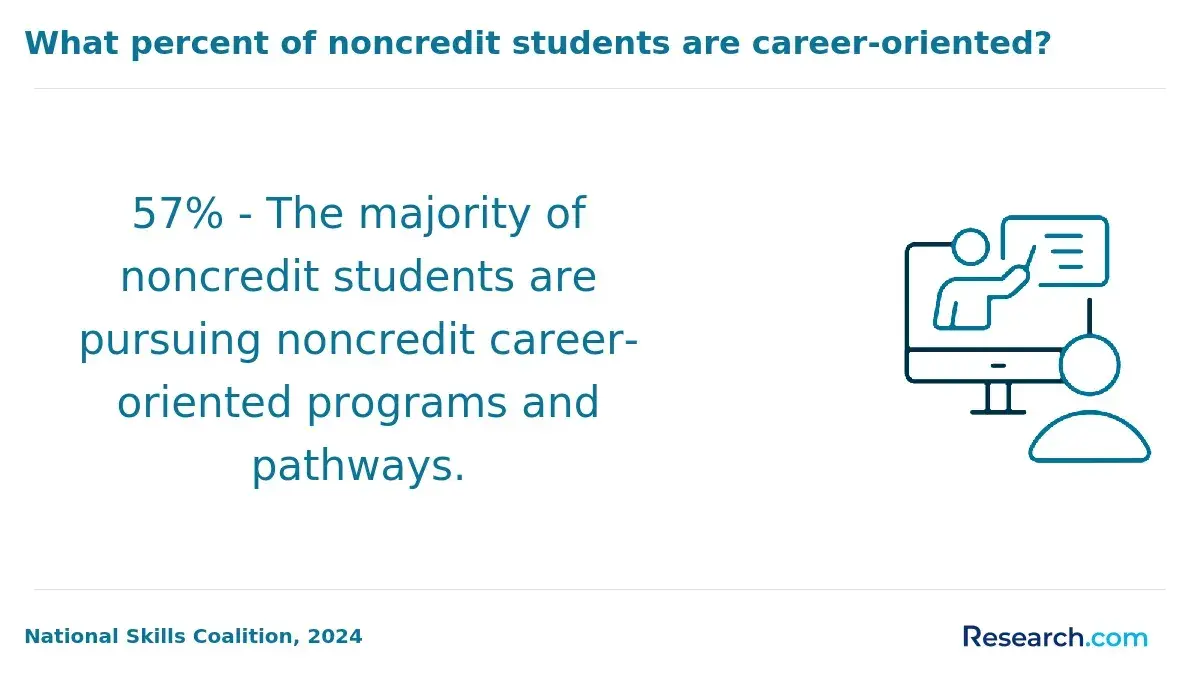
For context, College Board's 2024-25 published tuition-and-fee average for in-state students at public four-year colleges was $11,610; the average at private nonprofit four-year colleges was $43,350. These figures are not online elementary education price quotes and exclude many living and program-specific costs, but they show why comparing the full degree budget matters.
The following cost categories are more useful than advertised tuition alone when evaluating online teacher-preparation programs.
| Cost category | What to confirm | Why it matters |
| Tuition model | Per-credit, per-course, or flat-rate term pricing | A flat-rate model may benefit students who can complete more coursework in a term |
| Transfer credit | Number and type of credits accepted | Accepted credits can reduce both time to completion and tuition |
| Technology and materials | Courseware, proctoring, laptop, software, and textbook needs | Online delivery can shift costs rather than eliminate them |
| Licensure and fieldwork | Fingerprinting, tests, background checks, transportation, and placement-related expenses | These costs can be substantial and may not be included in tuition |
| Residency and fees | Online tuition rate, mandatory fees, and out-of-state charges | Online students do not always receive an in-state or discounted rate |
Request a written estimate for your transfer-credit situation, not just the published annual price. If you are comparing online professional programs in other fields as well, BCBA master's programs online can illustrate why program-specific practicum and credentialing costs should be considered alongside tuition.
For return on investment, compare your likely borrowing with the earnings and hiring conditions in the district or state where you plan to work. The BLS reports that employment of kindergarten and elementary school teachers is projected to grow 1% from 2023 to 2033, so local vacancies, salary schedules, and licensure portability deserve as much attention as the degree's sticker price.
Can You Get Financial Aid for an Online Elementary Education Degree With Streamlined Admissions?
Yes. A no-recommendation admissions policy does not normally affect eligibility for federal financial aid. Students enrolled in an eligible program at an accredited institution may submit the Free Application for Federal Student Aid (FAFSA) to be considered for federal grants, work-study, and loans, subject to federal eligibility rules and the school's aid policies.
Online students should confirm that their exact program is eligible, that they meet satisfactory academic progress requirements, and that their enrollment level supports the aid they expect. Aid can change when students withdraw, repeat courses, change pace, or fall below half-time enrollment.
Build an aid plan that separates gift aid from borrowing. The following questions help reveal the actual amount you may need to finance.
- What grants and scholarships are available to online teacher-candidates, transfer students, and future educators?
- Does the institution package aid for summer, accelerated terms, or competency-based terms differently from traditional semesters?
- What is the estimated net price after grants, rather than the published tuition rate?
- Can federal loans cover required testing, background checks, books, and field-placement travel, or must those costs be paid separately?
- Are there state teacher-scholarship, loan-forgiveness, or district-sponsored programs for candidates who commit to high-need schools?
Private scholarships may request essays, service commitments, or recommendation letters even when the degree program does not. Keep that distinction in mind so a streamlined college application does not leave you unprepared for scholarship deadlines. Applicants exploring career-oriented graduate alternatives can see how aid and affordability vary across fields through human resources master's programs online.
Borrow cautiously. Federal loan terms, state incentives, and teacher-loan programs can change, and eligibility is not automatic. Ask the financial aid office for a year-by-year borrowing projection and compare it with your expected completion timeline.
How Long Does an Online Elementary Education Degree With No Letters of Recommendation Take to Complete?
A traditional bachelor's degree is commonly designed around about four years of full-time study, but the actual timeline depends on prior credits, course sequencing, fieldwork, and student-teaching availability. The absence of recommendation letters affects the application process, not the academic length or clinical expectations of the degree.
First-year students typically complete general education, elementary content, child development, assessment, instructional methods, and special education coursework before student teaching. Transfer students may finish faster if a school accepts their general education and lower-division credits. Competency-based formats can allow students to move at an individualized pace, but they still must complete required competencies and supervised experiences.
Student teaching is often the timing constraint. It may require a full-time daytime placement in a local elementary school for a set period, which can be difficult to combine with full-time employment. Online coursework provides flexibility, while fieldwork and clinical practice usually occur in person.
When comparing timelines, ask for a sample term-by-term plan based on your evaluated transfer credits. Also ask whether classes are offered every term, whether clinical placements are guaranteed or student-arranged, and what happens if a placement is delayed. A program that appears shorter on a marketing page may take longer if prerequisites or placement approvals are incomplete.
Can You Transfer Credits Into an Online Elementary Education Degree Program With No Recommendation Letters?
In many cases, yes. Transfer policies are separate from recommendation-letter requirements. Colleges usually review official transcripts to decide which coursework meets general education, elective, and major prerequisites. A strong transfer evaluation can reduce both cost and completion time.
General education courses such as English composition, college algebra, psychology, history, and laboratory science often have the clearest transfer potential. Education methods, child development, and practicum courses may receive closer review because schools must ensure they meet current teacher-preparation standards.
Take these steps before committing to a program. They will help you avoid losing credits or enrolling in a pathway that does not meet your licensing objective.
- Send transcripts for a formal or preliminary evaluation before accepting an enrollment offer whenever possible.
- Request a written degree plan showing accepted credits, remaining requirements, and the anticipated student-teaching term.
- Save syllabi and course descriptions for education, psychology, and content-area courses that may need department review.
- Ask whether credits have an age limit, particularly for technology, science, or teacher-preparation coursework.
- Confirm that transferred education courses satisfy your destination state's licensure rules, not only institutional graduation requirements.
- Compare the cost of completing missing prerequisites at the degree-granting school with approved community-college alternatives.
Do not assume that a large transfer-credit maximum means all of your credits will apply to the elementary education major. A school may accept a course as an elective while still requiring a specific program course for licensure or student-teaching eligibility.
How Should You Compare Online Elementary Education Degree Programs That Do Not Require Letters of Recommendation?
Compare complete teacher-preparation pathways, not just admissions checklists. The right program should fit your academic history, budget, work schedule, state licensing goal, and ability to complete in-person fieldwork. A program with easy document requirements can still be a poor choice if it does not lead to eligibility where you want to teach.
This side-by-side framework focuses attention on the factors that most directly affect whether an online degree is usable and affordable.
| Comparison factor | Strong evidence to look for | Potential concern |
| Recommendation policy | Program-specific checklist explicitly states no recommendations are required | Only a general university page is available, or requirements are unclear |
| Licensure alignment | Clear disclosure for your state and grade range | Claims of nationwide eligibility without state-specific details |
| Accreditation and approval | Recognized institutional accreditation and state educator-preparation approval | Vague accreditation language or no explanation of licensure status |
| Field experience | Transparent placement process, supervision, hours, and local requirements | Unclear responsibility for finding schools or mentors |
| Total cost | Written net-price estimate including fees, tests, and clinical expenses | Tuition advertised without required program charges |
| Transfer evaluation | Course-by-course review and documented degree plan | Broad promises without a formal evaluation |
| Student support | Advising, tutoring, accessibility services, career support, and placement guidance | Limited contact options or pressure to enroll immediately |
After narrowing your choices, contact each program with a short, consistent set of questions: Is a recommendation letter required at any stage? Does this degree lead to initial elementary licensure in my state? Who arranges student teaching? What will I pay after transfer credits and aid? Can I see the full program handbook?
It can also help to compare how other regulated online programs disclose clinical requirements and career pathways. For example, online clinical psychology masters programs often require applicants to examine authorization, supervised practice, and professional eligibility carefully - considerations that are similarly important in teacher education.
Choose a no-recommendation elementary education program if you value a less burdensome application and the school clearly supports your licensure plan. Consider a different route if you need a fully asynchronous experience with no daytime commitments, because initial teacher licensure nearly always includes live classroom observation, fieldwork, and student teaching.
Other Things You Should Know About Elementary Education
Usually, yes. Many undergraduate programs accept applicants without classroom experience. However, you will generally need to complete supervised observations, practicum work, and student teaching before graduating or qualifying for initial licensure.
They can be. A college may not require them for initial admission but may request references for scholarships, teacher-candidacy review, a field placement, or a graduate program. Review each stage of the program, not only the first application.
Optional is different from not required. Ask the admissions office whether optional letters are considered in admission decisions, whether they are recommended for applicants below a GPA threshold, and whether the policy applies to the exact online elementary education program.
Districts generally focus on your degree, state license or eligibility, student-teaching record, background clearance, interview, and their own hiring requirements. The admissions documents used by your college are usually not part of a district hiring file.
References
- Guide to Online Education Degrees | OEDb.org https://www.oedb.org/rankings/online-education-programs/
- How Colleges Deflate Acceptance Rates - Solution Prep https://solutionprep.com/how-colleges-deflate-acceptance-rates/
- 2025 Most Popular Online Elementary Education Degrees https://www.onlineu.com/degrees/elementary-education
- Class of 2031 Admissions Preview: How This Year's Record-Low Acceptance Rates Change Your Strategy https://orieladmissions.com/class-of-2031-acceptance-rates/
- Education (Undergraduate) https://georgian.edu/academics/undergraduate-programs/education/
- Acceptance Rate: Definition, Formula & College Rankings https://www.remnote.com/blog/college-acceptance-rate
- How to Ask for Letters of Recommendation as an Online Student https://summitlearningcharter.org/resources/blog/how-online-students-should-ask-for-letters-of-recommendation/