
2027 Online Data Science Master's Programs for Frequent Business Travelers

Co-Founder and Chief Data Scientist
An online data science master's degree can fit a travel-heavy job, but "online" does not necessarily mean you can study whenever or wherever you want. Live classes, timed exams, group projects, and campus visits can turn a promising program into a scheduling problem.
This guide helps frequent business travelers compare the operational details that matter most, then weigh curriculum, cost, and career goals before applying.
Key Things You Should Know
- For unpredictable travel, prioritize recorded instruction, flexible assessment windows, and no required campus visits; confirm each policy directly rather than relying on an "online" label.
- Compare the full degree cost and realistic weekly workload, not just advertised tuition or the fastest possible completion time.
- The U.S. Bureau of Labor Statistics projects 35% growth in data scientist employment from 2025 to 2035, but that occupation-wide forecast does not predict an individual graduate's job prospects.
What is an online data science master's program for frequent business travelers?
It is a graduate data science program whose delivery rules are workable around recurring trips, changing time zones, and uneven access to quiet study time. That is a program-fit description, not a distinct degree or accreditation category. A suitable program still needs to teach the statistics, computing, and applied analysis relevant to your goals.
The central trade-off is flexibility versus structure. Recorded classes and broad assignment windows make missed flights less disruptive; scheduled discussions and team projects can provide useful interaction but demand more calendar control. If your goal is primarily to build AI applications rather than pursue a broader data science curriculum, compare the subject matter as well as the schedule. Online artificial intelligence degrees on a budget may be worth considering as a separate option, not as an assumed substitute for data science training.
How can frequent travelers choose an accredited online data science master's program?
Start by verifying the university's institutional accreditation through the institution and its recognized accreditor. Then check whether the school can enroll you from your state of residence. Accreditation and state authorization answer different questions: neither establishes that a particular course schedule will work during your trips.
Before applying, request the current academic calendar, a sample syllabus for a required course, and written answers to the following questions. They reveal constraints that a program overview may not show:
- Are any live sessions, orientations, exams, or campus visits mandatory? What time zone governs their schedules?
- How long are assignment and exam windows, and what happens when work travel conflicts with a deadline?
- Can students reduce their course load, skip a term, or take an approved leave without losing their place or exceeding a completion limit?
- When are group meetings and capstone milestones normally set, and can projects use public or simulated data?
A red flag is a promise of "study anywhere" that omits exam-proctoring rules, attendance policies, or location restrictions. Ask for the policy that governs the activity, not just an informal assurance from an admissions representative.
What online data science master's formats work best for frequent travel?
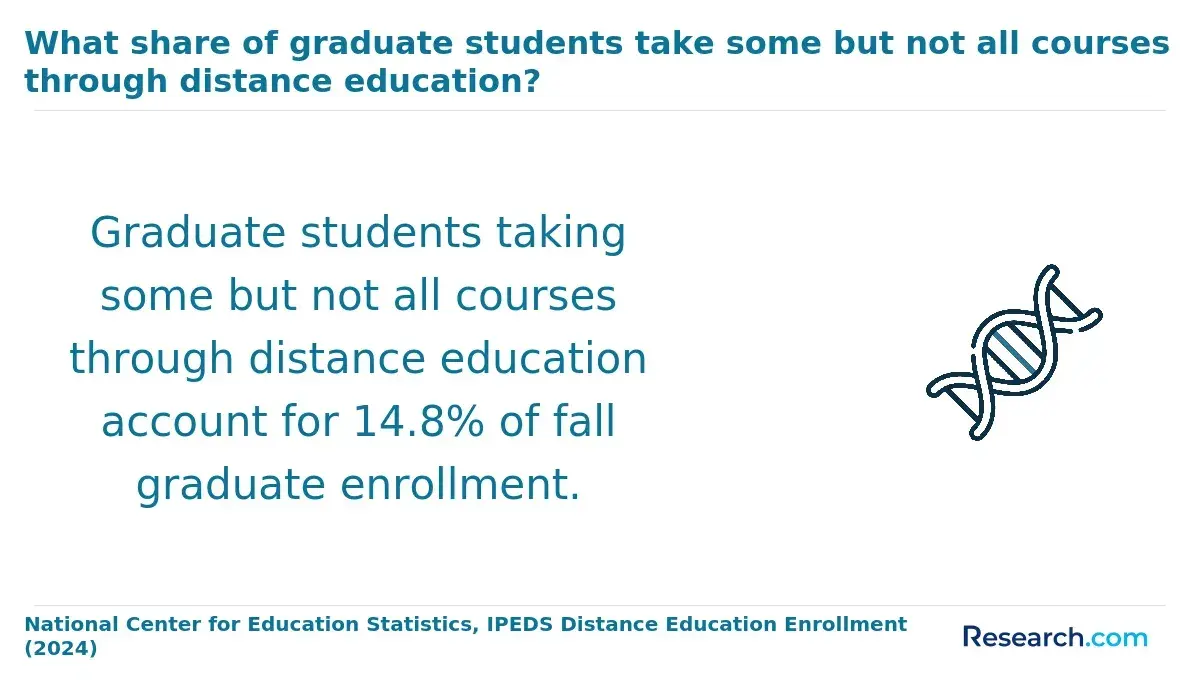
Asynchronous courses with recorded instruction generally give travelers the most control, but they may still have fixed weekly deadlines. The comparison below separates how instruction is delivered from how much scheduling freedom students actually receive.
| Format | Scheduling advantage | Travel-related constraint |
| Mostly asynchronous, term-based | Watch lessons around flights and meetings | Weekly deadlines and exams may remain fixed |
| Synchronous or hybrid online | Predictable live contact with faculty and peers | Attendance can be difficult across time zones |
| Self-paced or extended-window study | More room to shift work between travel-heavy and quieter weeks | Availability, assessment rules, and maximum completion periods vary |
Choose mostly asynchronous study if trips change at short notice. A live format can work better if your travel calendar is predictable and you value scheduled discussion. Self-paced study may suit uneven workloads, provided you can maintain momentum without frequent class meetings. In every format, check whether exams use narrow proctoring appointments and whether team members must meet at set times.
Do not mistake a short advertised completion time for an easier travel fit: it may require a heavier course load each term. If finishing quickly is important, compare data science master's programs with shorter timelines against the pace you could sustain during your busiest travel season.
What courses are included in an online data science master's degree?
Curricula vary, but commonly cover statistical inference, programming, data management, machine learning, and communicating results. Electives or applied projects may add visualization, optimization, cloud computing, or a domain such as healthcare or finance. For a traveler, sequencing matters alongside subject matter: a required course offered infrequently can delay progress if you need to miss a term.
Look beyond course titles. A machine learning course might emphasize model theory, applied implementation, or both; a capstone might require a team schedule or allow an individual project. Ask for recent syllabi and the required-course rotation. If your target role involves building and maintaining data pipelines, check for substantial database and engineering work rather than assuming it sits inside a general analytics course. AI graduate programs with data infrastructure training provide another curriculum comparison for that goal.
What are the admission requirements for online data science master's programs?
Requirements differ by institution. Applicants commonly need a bachelor's degree and evidence that they can handle quantitative and programming coursework; individual programs may specify prior courses, professional experience, recommendations, or application essays. Do not assume a job title substitutes for a formal prerequisite, or that a missing course automatically rules you out.
Compare each program's published prerequisites with your transcript, then ask admissions how it evaluates work experience and noncredit learning. If you need preparation, artificial intelligence master's foundation courses illustrate one type of bridge option to investigate; confirm whether a particular course fulfills the data science program's formal requirement. Travelers should also check whether any prerequisite must be completed on a fixed schedule before the first term.
How long do online data science master's programs take, and what do they cost?
There is no reliable universal timeline or price: credit requirements, course loads, tuition policies, and fees differ by school. For travelers, the useful comparison is a personalized completion plan. Ask the program to map its required courses across terms at the load you could manage during a typical work quarter, including terms when you might take no classes.
Calculate total expected cost from the current tuition schedule and required credits, then add mandatory fees, software or computing expenses, books, and any required travel. Check whether slower enrollment changes fees or financial-aid eligibility. An employer reimbursement policy may reduce your expense, but confirm its annual limits, grade rules, and repayment conditions before counting on it. For a fuller financing comparison, see how to fund a data science master's.
Comparing one school's tuition-only figure with another's all-in estimate is a common mistake. Request the same cost components and a course-by-course timeline from each finalist; if a school cannot confirm a future tuition rate, treat the estimate as subject to change.
What data science careers can an online master's degree prepare you for?
Depending on coursework and prior experience, the degree may support a move toward data scientist, machine learning, analytics, or data-focused product roles. It can also deepen skills for someone already working in analysis. Employers assess practical ability as well as credentials, so the best target depends on the work you can demonstrate, not the degree title alone.
Frequent travelers can turn existing industry knowledge into an advantage: a project addressing a problem they understand may show both technical judgment and business context. Before enrolling, identify a target role and compare job descriptions with the program's required courses and project opportunities. If a narrower skills gap separates you from that role, a shorter course or employer-supported project may be preferable to a full master's degree.
How much can graduates with a data science master's degree earn?
The U.S. Bureau of Labor Statistics reports a $120,230 median annual wage for data scientists in May 2025. That is an occupation-wide figure, not the median for master's graduates or a forecast of what a new graduate will earn. Pay depends on experience, duties, industry, location, and employer.
For a personal return-on-investment estimate, compare your current compensation with plausible roles you could pursue, then account for the degree's full cost and the time you would spend studying. Treat a promotion or salary increase as a scenario, not an outcome caused or guaranteed by enrollment.
What is the job outlook for data science careers in the United States?
The U.S. Bureau of Labor Statistics projects 35% growth in data scientist employment from 2025 to 2035, much faster than the average for all occupations. This indicates strong projected demand for the occupation overall, but it does not measure competition for a particular opening or the prospects of graduates from a specific program.
For a traveler choosing a degree, the practical implication is to favor coursework and projects that produce evidence of usable skills, including sound evaluation and communication of results. The employment projection is a reason to investigate the field, not a reason to overlook a program whose schedule or curriculum is a poor fit.
Are certifications or licenses required after earning a data science master's degree?
Data scientist roles generally do not require an occupational license. Employers may value specific cloud, software, or industry certifications, but these are separate from the master's degree and should be judged against the roles you want. Requirements can differ for regulated work or responsibilities outside data science itself.
If an employer names a certification in its job postings, check whether the program teaches the underlying skills and whether preparing for the exam would add work during travel-heavy periods. Avoid paying for a credential simply because it appears in a school's marketing materials.
Other Things You Should Know About Data Science
Possibly, but do not assume lessons or coding environments work offline. Ask whether readings and recordings can be downloaded and whether assignments require a live connection to school-hosted tools.
Ask the university before relying on this option. Access to learning platforms, proctored exams, and support services may depend on your location; brief work trips and a change of residence may be treated differently.
Only if your employer permits it and the project meets the school's rules. When approval is uncertain, plan to use public, synthetic, or properly de-identified data instead.
Look for accessible faculty office hours, virtual events, alumni activities, and project collaboration. Ask how often they occur and whether recordings or alternative meeting times are available when you travel.
References
- How students leverage assignment submission flexibility - PMC https://pmc.ncbi.nlm.nih.gov/articles/PMC11570477/
- Cost of Attendance (Budget) | 2025-2026 Federal Student Aid Handbook https://fsapartners.ed.gov/knowledge-center/fsa-handbook/2025-2026/vol3/ch2-cost-attendance-budget
- MS in Data Science | Online | $9900 | Eastern University https://www.eastern.edu/academics/graduate-programs/ms-data-science
- M.S. in Data Science, Online | virginia.edu https://datascience.virginia.edu/degrees/msds-online
- 4. Statistics & Data Science Major Course Requirements | arizona.edu https://kb.math.arizona.edu/mathcenter/index.php
- Student Identity Verification - WCET - WICHE https://wcet.wiche.edu/policy/student-identity-verification/
- Policy for Student Identity Verification in Distance Learning | Financial Aid & Scholarships https://www.rochester.edu/provost/academic-administration-accreditation-and-assessment/verification-of-compliance/policy-for-student-identity-verification-in-distance-learning/
- Campus Tuition - Admissions | fullsail.edu https://www.fullsail.edu/admissions/tuition
- Master's in Data Science - University of Notre Dame https://datascience.nd.edu/masters/
- Asynchronous and Synchronous Online Courses | nmsu.edu https://dacc.nmsu.edu/faculty-and-staff/online-quality-assurance/asynchronous-and-synchronous-online-courses.html


