2027 Online Data Science Master's for Cybersecurity Analysts: A Career Transition Guide

Co-Founder and Chief Data Scientist
Cybersecurity analysts already investigate unusual behavior in complex data. Moving into data science means building on that experience with stronger statistics, programming, and model evaluation, not necessarily starting a new career from scratch.
This guide helps analysts decide whether an online master's is worth the investment, which programs deserve a closer look, and what evidence they need to make a credible move into a data-focused role.
Key Things You Should Know
- The most direct transitions are often into security analytics, fraud analytics, or detection engineering. A general data scientist role may require a broader portfolio outside security.
- Prioritize programs with substantial statistics, machine learning, data engineering, and applied projects, not just courses that mention AI or cybersecurity.
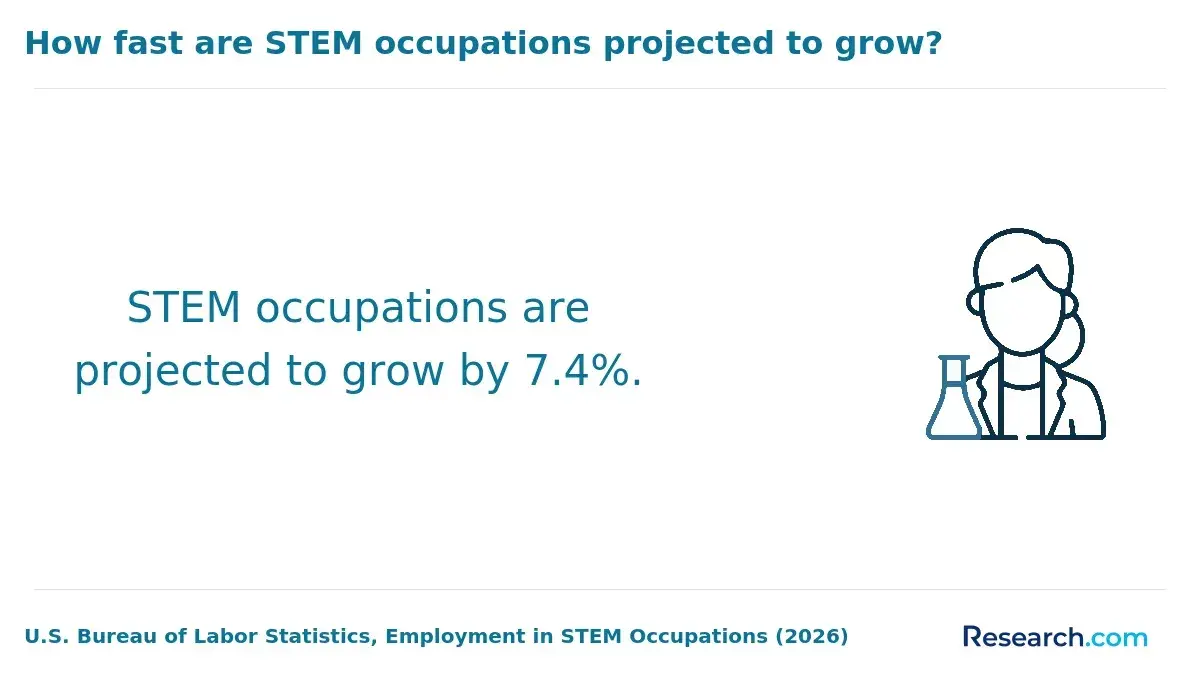
- The U.S. Bureau of Labor Statistics projects 35% growth in data scientist employment from 2025 to 2035, but that occupation-wide forecast does not predict an individual graduate's job prospects.
What Is an Online Data Science Master's for Cybersecurity Analysts?
It is usually a general data science master's completed remotely and applied to security problems. Analysts might use graduate coursework to move from investigating alerts manually toward building anomaly-detection systems, analyzing attack patterns, or measuring whether a detection rule works.
A security-specific degree is not required for that path; rigorous analytical training paired with existing domain knowledge can be more useful than a narrow program with limited statistics.
The distinction matters when choosing a degree. Data science programs emphasize statistical inference, predictive modeling, and working with data at scale.
If the intended role is primarily developing AI systems rather than analyzing security data, options for studying artificial intelligence online may be a better comparison. Neither degree substitutes for hands-on experience with security data and operational constraints.
How Can Cybersecurity Analysts Transition Into Data Science?
Start with the work you already do. Alert triage, log analysis, incident investigation, and explaining findings to stakeholders all involve useful data-science habits: framing questions, recognizing noisy data, testing hypotheses, and communicating uncertainty.
The likely gaps are more formal—probability, statistical inference, Python-based analysis, SQL, and evaluating models against appropriate baselines.
A transition does not have to begin with enrollment. This sequence helps test both readiness and whether the degree addresses a real career gap:
- Choose a target role, such as security data scientist or fraud analyst, and compare several job descriptions for recurring technical requirements.
- Build a small project using suitably licensed or synthetic security data; document data cleaning, a baseline method, false positives, and operational limitations.
- Fill missing math or coding foundations, then ask prospective programs whether that preparation meets formal admissions prerequisites.
- Compare the roles accessible through your current experience and portfolio with those for which graduate-level training would materially strengthen your candidacy.
A short course may be enough if you want better analytics in your current security role. A master's is more defensible when target jobs repeatedly call for deeper statistical or machine-learning work and you need sustained instruction and project feedback.
Analysts considering an AI-heavy path but lacking formal preparation can also examine AI master's programs with prerequisite preparation; confirm whether any foundation courses count toward the degree before assuming they reduce its total time or cost.
What Are the Best Online Data Science Master's Programs for Cybersecurity Analysts?
There is no universal best program for a cybersecurity analyst. A useful shortlist begins with the technical gap you need to close, then checks whether the format lets you complete a credible security-related project.
The following established online options illustrate different starting points; verify current curricula, eligibility, delivery, and charges with each institution before applying.
| Program to investigate | Why an analyst might consider it | Most important fit check |
| University of Texas at Austin, online Master of Science in Data Science | A direct data science degree to assess for statistical and computational depth. | Review current course choices and whether projects can address security data. |
| University of Colorado Boulder, online Master of Science in Data Science | Another direct data science option with a distinctive admissions pathway to examine. | Confirm current pathway rules, course sequence, and the total cost for your circumstances. |
| Georgia Institute of Technology, Online Master of Science in Analytics | An adjacent analytics degree worth comparing if applied modeling is the priority. | Check whether its analytics curriculum provides the machine-learning and computing depth required by your target jobs. |
Do not rank these options by degree title alone. Ask for current syllabi or project examples, and compare required courses rather than assuming an elective will be available when you need it. A program with room for a well-evaluated detection project may serve a security-focused analyst better than one with a broader AI label but little applied work.
How Do Online Data Science Programs Compare With Campus Programs?
For a working analyst, online study can preserve income and allow immediate application of coursework at work. Campus study may be more suitable if you can attend regularly and place high value on in-person research, recruiting, or collaboration.
Neither format alone establishes technical rigor or employer recognition; the curriculum, faculty engagement, and work you produce matter more.
Check operational details before choosing online study: whether classes meet live, which time zone applies, how group projects are scheduled, and whether any campus visits are required.
These details matter especially for analysts on rotating shifts or incident-response duty. Compare the same degree requirements and support services across formats rather than treating "online" as a single, predictable experience.
What Courses Are Included in a Data Science Master's Curriculum?
Look for a coherent sequence in programming, databases or data engineering, probability and statistics, machine learning, and model evaluation. Security analysts should be particularly attentive to imbalanced data, changing patterns over time, and false-positive costs: a model can score well on a classroom dataset yet create an unmanageable alert queue.
Course titles are only a starting point. A substantial security-relevant curriculum should let you test a model against a sensible baseline, explain its errors, and address privacy and access restrictions on logs or incident data.
An applied project or capstone can provide stronger evidence of those skills than a passing mention of anomaly detection in an elective. If automated decisions and governance are central to your goal, compare AI master's curricula with ethical decision-making against the data science programs on your shortlist.
What Are the Admission Requirements for Online Data Science Master's Programs?
Requirements vary by institution. Expect to check the current policy for a bachelor's degree, academic transcripts, quantitative and programming preparation, recommendations, and any statement or test requirement. Cybersecurity experience can demonstrate problem-solving and domain expertise, but it does not automatically satisfy a specified course prerequisite.
Before paying an application fee, send admissions staff a concise summary of your math courses, coding experience, and relevant projects. Ask which prerequisites are mandatory, whether equivalent professional work is accepted, and whether missing preparation can be completed before or after admission. Keep the answer in writing: preparation that helps you succeed academically is not necessarily preparation the school accepts for eligibility.
How Long Does an Online Data Science Master's Take and Cost?
Time and price depend on required credits or courses, enrollment pace, tuition rules, and fees. A part-time plan may let an analyst keep working but extend the period of tuition payments and competing obligations. Without a current, program-specific schedule, a precise completion date or total price would be misleading.
For each finalist, calculate the cost of the full degree, not just the advertised tuition rate, including mandatory fees, prerequisite courses, materials, and any travel. Ask how often required courses run and what happens if you need to pause during a demanding work assignment.
If speed is a major constraint, compare shorter online data science master's programs, but check whether the faster pace leaves enough time for the technical foundations and portfolio work you need.
Employer tuition assistance can change the calculation, particularly when a proposed project supports your organization's detection or fraud work. Confirm reimbursement limits and any repayment conditions before counting that support as a reduction in cost. Do not treat a possible future salary increase as guaranteed return on the degree.
What Jobs Can Cybersecurity Analysts Get With a Data Science Master's?
Security data scientist, detection engineer with modeling responsibilities, fraud analytics specialist, and threat-intelligence analyst with advanced analytics duties are plausible adjacent targets.
A broader data scientist position is possible, but employers may expect evidence that you can solve problems beyond security. Titles vary by organization, so judge postings by their actual work rather than their labels.
A strong portfolio makes the transition legible. For example, compare a simple alert-prioritization baseline with a more complex model, evaluate both on data separated by time, and explain false positives and potential data leakage.
Use public, properly licensed, or synthetic data unless your employer has explicitly authorized another use. A common mistake is showcasing only model accuracy while omitting whether the result would help an investigation team.
How Much Can Data Science Professionals Earn After Graduate School?
The U.S. Bureau of Labor Statistics reports a $120,230 median annual wage for data scientists in May 2025. That is an occupation-wide figure, not a starting salary for new master's graduates or a forecast for cybersecurity analysts who change roles. Pay for a particular move depends on prior experience, responsibilities, location, employer, and the type of data science work.
For a realistic financial comparison, look at compensation for roles you could plausibly pursue with your current background, then compare it with roles that require the additional skills you intend to gain. If a program advertises graduate salaries, check who responded, whether respondents already had substantial experience, and whether the figure measures salary level or an actual increase.
How Should You Evaluate Accreditation, Certifications, and Program Quality?
First verify the institution's current accreditation through the institution and its recognized accreditor. Then assess the specific degree: required technical coursework, opportunities for applied work, instructor access, and support for remote students. Institutional accreditation establishes an important baseline; it does not prove that a particular curriculum fits security analytics.
Cybersecurity certifications can remain useful evidence of domain knowledge, but they do not replace statistical and programming evidence for a data science role. Conversely, a master's does not replace security experience when the work requires understanding investigations and attacker behavior.
If networking is important to your transition, review AI master's programs by alumni community as a comparison point, then ask each data science program what career services and alumni access online students actually receive.
Before committing, request the current degree plan and total-cost estimate, speak with a program representative about security-related projects, and compare those answers with several target job descriptions. Be cautious of rankings or marketing claims that offer no evidence about course depth, student support, or the outcomes of people with backgrounds like yours.
Other Things You Should Know About Data Science Programs
Yes, if the data belongs to an employer or contains sensitive information, obtain explicit authorization and follow applicable handling rules. Public or synthetic data is often a safer choice for a portfolio you intend to share.
It may matter for positions that require one, but it does not demonstrate statistical or modeling ability. Check the requirements of the specific role.
Use the language that best supports your target roles and lets you produce reproducible work. Being able to explain the analysis, validation, and operational trade-offs matters more than presenting a particular language as universally best.
Do not assume so. Check your employer's intellectual-property, confidentiality, and security policies before sharing code, data, methods, or results. A separate project using approved data can demonstrate similar skills without exposing internal systems.
References
- Cost of Attendance (Budget) | 2025-2026 Federal Student Aid Handbook https://fsapartners.ed.gov/knowledge-center/fsa-handbook/2025-2026/vol3/ch2-cost-attendance-budget
- Qualified Ed expenses | Internal Revenue Service https://www.irs.gov/credits-deductions/individuals/qualified-ed-expenses
- Statistics and Data Science for Cybersecurity | Harvard Data Science Review https://hdsr.mitpress.mit.edu/pub/koyzu1te
- Profiling data scientists in the digital labour market | sciencedirect.com https://www.sciencedirect.com/science/article/pii/S0263237322000810
- Data Science vs. Cybersecurity: Key Differences Explained | Syracuse University https://ischool.syracuse.edu/data-science-vs-cybersecurity/
- Capstones vs. Experiential Learning (Internships) | bellevuecollege.edu https://www.bellevuecollege.edu/cybersecurity/capstones-vs-experiential-learning-internships/
- Data Science - School of Professional Studies - CUNY https://sps.catalog.cuny.edu/programs/DATSC-MS
- How to Become a Data Scientist | Harvard SEAS https://seas.harvard.edu/news/how-become-data-scientist
- Cost and Financial Aid: Online Education - Academic Affairs https://academics.iusb.edu/online-education/cost-financial-aid.html
- Choosing a Cybersecurity Program: 7 Things to Consider | American Public University https://www.apu.apus.edu/area-of-study/information-technology/resources/choosing-a-cybersecurity-program-7-things-to-consider/