2027 Online Data Science Degree Programs With University Scholarships: Awards, Eligibility, and Net Cost

Co-Founder and Chief Data Scientist
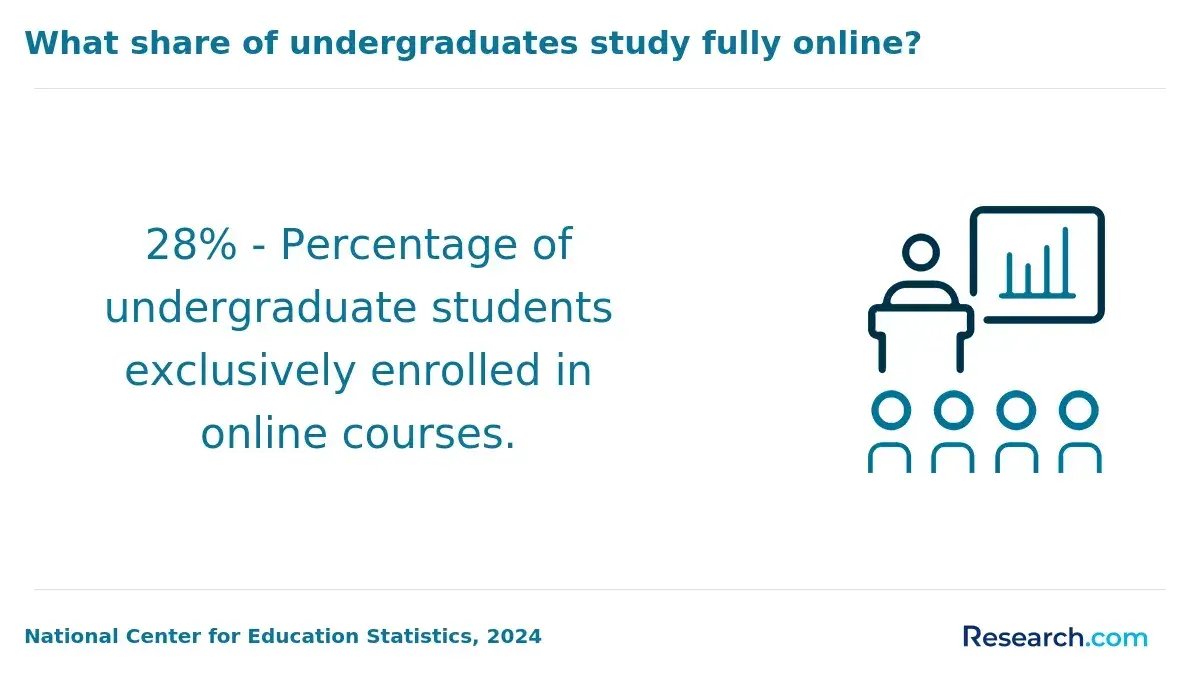
An online data science degree can look affordable until tuition, technology fees, enrollment requirements, and scholarship limits are added together. This guide is for prospective undergraduate and graduate students comparing university-funded aid. National Center for Education Statistics data show that more than half of U.S. postsecondary students took at least one distance-education course in 2022, making online-aid rules increasingly important. Learn how to compare scholarship awards, eligibility, renewal terms, and your likely net cost - not just advertised tuition.
Key Things You Should Know
- University scholarships for online data science students are not automatic: awards may require a separate application, FAFSA information, a minimum GPA, a particular enrollment level, or enrollment in an eligible degree rather than a certificate.
- A scholarship's value depends on total program price and renewal terms; a $5,000 award can cost more overall than a lower award at a public university with lower per-credit tuition and fees.
- For the 2025-26 award year, the maximum Federal Pell Grant is $7,395 for eligible undergraduates, but Pell eligibility, institutional scholarships, loans, and outside awards can change the final out-of-pocket cost differently.
Which Online Data Science Degree Programs Offer University Scholarships?
Online data science scholarship availability varies more by institution and student type than by degree title. A university may fund scholarships for its online undergraduate students, reserve awards for campus students, or offer limited funds through a college of computing, graduate school, alumni association, or donor fund. A program advertised as fully online is not necessarily scholarship-eligible.
Start with regionally accredited universities that publish both an online data science, data analytics, computer science, statistics, or related degree and an institutional scholarship process. Examples worth investigating include online degree offerings at University of Maryland Global Campus, Oregon State University Ecampus, Arizona State University Online, and University of Massachusetts Global. These institutions may have institution-administered scholarship opportunities, but applicants should obtain written confirmation that their specific online program, start term, residency status, and enrollment pattern qualify.
The comparison below identifies common program settings and the scholarship questions that matter most. It is designed to prevent an applicant from assuming that a scholarship page applies to every online learner.
| Program setting | Common institutional-aid pattern | What to verify before applying |
| Public university online bachelor's degree | May offer general university, transfer, departmental, or donor scholarships | Whether distance learners, out-of-state students, and part-time students qualify |
| Public university online master's degree | May offer competitive graduate, professional, or departmental awards | Whether the award applies to online tuition and whether graduate students must enroll full time |
| Private nonprofit online degree | May package institutional grants with merit awards or employer benefits | Whether the offer is a scholarship, tuition discount, or conditional grant |
| Direct-assessment or subscription-tuition program | May use fixed-term scholarships rather than per-credit awards | How an award applies when coursework takes longer than planned |
Use the same scrutiny when comparing adjacent online pathways. For example, a student deciding between analytics preparation and a faster graduate route can review 1 year online masters options, then ask each institution whether its scholarship policy differs by program level.
How Much Scholarship Money Can Online Data Science Degree Students Receive?
There is no standard university scholarship amount for an online data science degree. Awards can range from small one-time awards that offset books or fees to renewable awards that cover a meaningful share of tuition. The stated amount alone is incomplete: some awards are annual, some are split across terms, and some are reduced for part-time attendance.
For context, College Board reported average published tuition and fees of $11,610 for in-state students at public four-year colleges and $43,350 at private nonprofit four-year colleges for 2024-25. Online tuition may be lower, similar, or higher than these figures depending on residency pricing, delivery model, and program level. This is why the percentage of the total degree cost covered is more useful than an award headline.
When an institution provides an award amount, translate it into a program-level comparison using the following framework.
| Scholarship description | How to interpret it | Potential limitation |
| "Up to" a stated amount | This is a maximum, not a typical or guaranteed award | The actual offer may be lower or require exceptional credentials |
| Amount per academic year | Multiply only by years for which renewal is confirmed | Summer, accelerated terms, and reduced enrollment may not be covered |
| Amount per credit | Multiply by the credits that are eligible for the award | Transfer, repeat, prerequisite, or elective credits may be excluded |
| Full tuition | Determine whether mandatory fees, books, software, and living expenses remain | "Tuition" rarely means every educational expense |
A strong offer states the amount, disbursement schedule, number of covered terms, and renewal conditions in writing. If an aid office cannot provide those terms before enrollment, use a conservative estimate rather than treating the maximum award as certain.
What Are the Eligibility Requirements for Online Data Science Degree Scholarships?
Eligibility requirements determine whether an advertised scholarship is realistically available. Institutional scholarships are funded or administered by the university, unlike federal grants and many private scholarships. They commonly evaluate academic record, financial need, program participation, background, or a combination of factors.
Applicants should check the following requirements against their own circumstances before spending time on an application.
- Degree status: Confirm that the online data science degree, concentration, and academic level are eligible; nondegree students and certificate students are often excluded.
- Enrollment level: Determine whether the award requires full-time enrollment, a minimum number of credits, or continuous enrollment through fall and spring terms.
- Academic record: Review the required admission GPA, current cumulative GPA, standardized-test policy if applicable, and any quantitative-course prerequisites.
- Residency and citizenship status: Some university awards prioritize state residents, U.S. citizens, permanent residents, or students who meet a particular state-aid definition.
- Financial-need documentation: Need-based awards may require FAFSA data, verification documents, or a university financial-aid application.
- Application timing: Competitive funds can have deadlines that precede admission, FAFSA filing, or the program start date.
Data science programs also often expect readiness in algebra, statistics, programming, or calculus. These are normally admission requirements rather than scholarship requirements, but strong performance in quantitative coursework can strengthen a merit-based application. Ask whether scholarship review uses your admission GPA, all-college GPA, or only coursework completed at the awarding university.
How Do You Apply for University Scholarships for an Online Data Science Degree?
Most applicants should treat admission, financial aid, and scholarship applications as separate tasks unless the university explicitly says it uses automatic consideration. Applying early matters because limited institutional funds may be awarded in rounds or exhausted before a later start term.
Follow this sequence to create a complete, comparable application record.
- Apply for admission to the eligible online data science degree and save the program, term, and student-status confirmation.
- Submit the FAFSA if you are eligible and the university requests it, even when you expect to pursue merit aid rather than need-based aid.
- Search the university scholarship portal and the data science, computer science, mathematics, and graduate-school pages for awards with separate applications.
- Prepare required materials, which may include transcripts, a résumé, recommendation letters, a personal statement, proof of employment, or a project portfolio.
- Ask financial aid in writing whether online enrollment is eligible, whether the award is renewable, and whether it can be combined with other institutional aid.
- Compare official aid offers only after confirming the number of credits and terms each offer covers.
A common mistake is assuming that admission automatically triggers scholarship review. Avoid it by taking a screenshot or saving an email that states whether consideration is automatic and by recording the deadline for every separate application.
Are Scholarships for Online Data Science Degree Programs Renewable Every Year?
Some scholarships renew, but renewal is never safe to assume. Renewable aid is an award that continues for additional academic years or terms when the student meets stated conditions. A one-year scholarship may still be valuable, but it should be counted only once in a multiyear cost estimate.
Renewal rules usually fall into several patterns, each with a different financial risk.
| Renewal pattern | Typical condition | Planning implication |
| Automatic renewable award | Maintain required GPA, satisfactory academic progress, and enrollment | Request the maximum number of renewal terms in writing |
| Annual reapplication | Submit a new application and remain competitive | Do not count future funding as guaranteed |
| One-time award | Usually applies to the first term or first academic year only | Build later-term tuition into the budget |
| Conditional retention award | Meet a higher GPA, course-load, or participation standard | Evaluate whether the standard is manageable while taking technical courses |
Ask whether withdrawals, incomplete grades, leaves of absence, transferred credits, summer enrollment, or switching from full time to part time affect renewal. Data science courses can be mathematically demanding, so a scholarship with a high GPA threshold may carry more risk than a slightly smaller award with reasonable academic-progress requirements.
Do not confuse federal satisfactory academic progress with scholarship renewal. Federal aid commonly requires satisfactory progress under the school's policy, while an institutional scholarship can impose a separate and stricter GPA or enrollment rule.
Can You Combine an Online Data Science Scholarship With FAFSA and Other Financial Aid?
Often, yes. FAFSA is the application used to assess eligibility for federal student aid and, at many schools, need-based institutional aid. A university scholarship can often be combined with Pell Grants, Direct Loans, state aid, veterans' education benefits, employer tuition assistance, and outside scholarships. However, the school's packaging policy and federal cost-of-attendance limits can change the final mix.
Students should understand these common stacking outcomes before accepting aid.
- Grants and scholarships may reduce unmet tuition and fee costs before loans are offered or borrowed.
- An outside scholarship can lead the financial-aid office to reduce loans first, but an institution's policy may allow or require adjustment to other aid.
- Need-based institutional awards may be reduced when another resource lowers demonstrated financial need.
- Employer tuition assistance may have repayment obligations if you leave the employer before an agreed service period.
- Veterans' benefits and military tuition programs have separate eligibility and certification processes that can affect institutional-aid packaging.
For 2025-26, the Federal Pell Grant maximum is $7,395 for students who qualify. It is not a universal award, and graduate students generally are not eligible for Pell Grants. Submit FAFSA early and give the aid office every outside-award notice so it can issue a compliant revised offer before you commit to enrollment.
Students also evaluating doctoral study should compare funding structures carefully; affordable online EdD programs may use different tuition, employer-benefit, and institutional-aid arrangements than an online data science degree.
How Much Does an Online Data Science Degree Cost After Scholarships and Financial Aid?
Net cost is the amount you and your family are expected to cover after gift aid, not the published tuition price. For a practical comparison, start with direct educational charges and subtract scholarships and grants. Then separately consider books, required software, equipment, proctoring, travel for any residency, and living costs. Loans lower the amount due now but do not lower the underlying cost because they must generally be repaid with interest.
This illustration shows why award size should be evaluated alongside program price. It is a hypothetical calculation, not a quote or an estimate of any specific university's charges.
| Illustrative annual comparison | Program A | Program B |
| Tuition and required institutional fees | $18,000 | $12,000 |
| University scholarship | -$6,000 | -$3,000 |
| Federal or state grants | -$2,000 | -$2,000 |
| Estimated direct net cost before loans | $10,000 | $7,000 |
Program A advertises the larger scholarship, yet Program B has the lower direct net cost in this example. Repeat the calculation for every year of study, using only scholarships that are confirmed as renewable. For a bachelor's degree, also account for transfer credits because they can reduce the number of paid credits; for a master's degree, determine whether prerequisite courses add tuition beyond the published curriculum.
Before accepting an offer, ask for a term-by-term student account estimate. It should identify per-credit tuition, mandatory fees, scholarship disbursements, estimated federal and state grants, and charges that the scholarship does not cover.
Are There Scholarships for Transfer, Adult, Military, and Other Online Data Science Students?
Yes, but the most suitable scholarships often depend on student status rather than data science major. Transfer students may find awards tied to transfer GPA or an articulation agreement. Adult learners may qualify for re-entry, workforce, alumni, or completion scholarships. Military-affiliated students may have access to institution-specific military grants, tuition-rate reductions, or support that works alongside education benefits.
These groups should target scholarship categories that reflect how they enter and complete the program.
| Student group | Potential university-funded opportunity | Important eligibility check |
| Transfer student | Transfer merit or community-college partnership scholarship | Minimum transferable credits, transfer GPA, and deadline after admission |
| Adult or returning student | Re-entry, degree-completion, workforce, or donor scholarship | Age, enrollment gap, employment history, and part-time eligibility |
| Military-affiliated student | Military tuition grant or institutional scholarship | Eligible affiliation, benefit certification, residency, and stacking rules |
| First-generation student | Access, success, or donor-funded scholarship | University definition and any FAFSA or advising requirement |
| Employer-sponsored learner | Corporate-partnership tuition benefit | Eligible employer, approved program, grade threshold, and reimbursement timing |
Transfer students should request a formal credit evaluation before comparing scholarship offers. A larger award can lose its advantage if another program accepts more applicable credits and shortens time to graduation. Students exploring career-focused associate preparation may also compare office administration courses, but should not assume transfer or military awards carry over to a different institution.
A red flag is a military or employer discount described as if it were cash aid. Ask whether it reduces tuition immediately, is reimbursed later, applies to every course, and can be combined with a university scholarship.
What Is the Difference Between Merit-Based and Need-Based Scholarships for Online Data Science Degrees?
Merit-based scholarships are generally awarded for academic achievement, leadership, professional accomplishment, talent, or other qualifications. Need-based scholarships consider financial circumstances, usually through FAFSA information or a school-specific financial review. Some institutional awards use both merit and need, so labels alone are not enough.
The following comparison helps applicants choose where to invest effort and which documents to prepare.
| Feature | Merit-based scholarship | Need-based scholarship |
| Primary basis | Academic record, skills, achievement, leadership, or professional profile | Demonstrated financial need under institutional criteria |
| FAFSA role | May be optional, depending on the school | Often required for eligible students |
| Typical materials | Transcript, résumé, essay, references, portfolio, or project evidence | FAFSA, verification documents, and sometimes a scholarship application |
| Renewal focus | Often GPA and enrollment requirements | Often continued need plus academic progress and enrollment requirements |
| Best comparison measure | Guaranteed amount across eligible terms | Expected amount after annual financial review |
For data science applicants, merit can include strong grades in mathematics, programming, statistics, research, or an applied project portfolio. Need-based aid may make an otherwise higher-priced program affordable, but it can change if family finances, enrollment, or federal methodology changes. Submit FAFSA when eligible even if you expect merit aid, since many universities use it to identify candidates for donor-funded awards.
Neither type is inherently better. The better award is the one you can realistically qualify for, retain, and apply toward a program whose total net cost and academic outcomes fit your goals.
How Should You Compare Scholarship Offers From Online Data Science Degree Programs?
Compare offers on a standardized, multiyear basis. The best scholarship value is not necessarily the largest named award; it is the offer that produces the lowest manageable net cost while supporting a credible program, workable schedule, and relevant career preparation. Data scientists had a median annual wage of $108,020 in May 2023, according to the U.S. Bureau of Labor Statistics, but individual outcomes vary by prior experience, location, degree level, and role. Use career potential as context, not as a reason to take on unmanageable debt.
Build a one-page comparison for each finalist using these decision factors.
- Total required credits after transfer evaluation, including prerequisites and any required capstone or residency.
- Published tuition and mandatory fees for your residency status, plus likely costs for software, hardware, books, and proctoring.
- Confirmed grants and scholarships, clearly separated into one-time awards and renewable awards.
- Renewal GPA, enrollment, satisfactory-progress, and reapplication requirements.
- Whether FAFSA-based aid, employer benefits, military benefits, and outside scholarships can be combined.
- Accreditation, curriculum depth in statistics and programming, career support, and whether the program matches the data role you want.
- Estimated borrowing after grants and scholarships, including the amount needed if a renewable scholarship is not retained.
Ask each financial-aid office for an official written breakdown, then compare the same number of credits and terms. Do not compare a two-term award at one school with a three-term annual tuition estimate at another. If your interests extend to design-oriented technical study, best online architecture degree options should be evaluated with their own accreditation and studio-cost requirements rather than using a data science aid calculation.
Strong data science programs typically develop programming, statistical reasoning, database skills, data visualization, machine learning awareness, and communication. The U.S. Bureau of Labor Statistics projects 36% employment growth for data scientists from 2023 to 2033, a faster-than-average outlook that reflects demand for analytical skills. That projection describes the occupation nationally; it does not guarantee placement, salary, or scholarship availability at any university.
Other Things You Should Know About Data Science
Data science degrees are not typically subject to a separate programmatic licensure requirement. Prioritize institutional accreditation, a transparent curriculum, qualified faculty, and courses in statistics, programming, databases, machine learning, and data ethics. If you plan to use federal aid, confirm that the institution and program are eligible.
Neither is automatically better. Data science programs often emphasize programming, statistical modeling, and machine learning, while data analytics programs may focus more on reporting, visualization, and business decision-making. Review required courses and target roles rather than choosing based on the title alone.
Many online programs are designed for working adults, but course pacing varies. Check whether classes are asynchronous, whether exams have fixed times, how often group projects occur, and whether scholarships require full-time enrollment. A part-time schedule may protect work-life balance but can affect aid eligibility and time to completion.
Budget for a reliable computer, stable internet, required software or cloud-computing access, textbooks, and possible remote-proctoring equipment. Ask whether the university provides software licenses and whether course projects require paid cloud services, since these expenses may not be covered by a tuition scholarship.
References
- Top Data Science Scholarships for Students https://datascienceprograms.com/grad-school/data-science-scholarships/
- Data Science Scholarships for High School Students https://www.nextgenbootcamp.com/blog/data-science-scholarships-for-high-school-students
- Top 210 Merit-Based Scholarships to Apply for in April 2026 https://bold.org/scholarships/by-type/merit-based/
- How to Research Financial Aid for STEM https://www.mastersindatascience.org/learning/research-financial-aid/
- A Guide to Merit Scholarships + List of 25 Great Merit-based Scholarships https://www.collegeessayguy.com/blog/merit-scholarships
- Opportunities to Support Your Journey - Women in Data https://www.womenindata.org/blog/opportunities-to-support-your-journey
- Scholarships & Resources for Data Science Master's Students https://www.onlinemastersdegrees.org/student-resources/data-science/
- Paying for a Computer Science Degree | Scholarships, Grants, Loans https://www.computerscience.org/resources/how-to-pay-for-a-degree/