2027 Online Cybercrime Degree Programs That Accept 60, 75, or 90 Transfer Credits

Co-Founder and Chief Data Scientist
If you already have college credit, the right online cybercrime degree can shorten your path to a bachelor's-but only if those credits apply correctly. The National Student Clearinghouse Research Center reported in 2024 that transfer enrollment continued to rebound, showing how many students are using credit mobility to finish degrees. This guide is for transfer and degree-completion students comparing programs that may accept 60, 75, or 90 credits. You'll learn how transfer limits, residency rules, major requirements, timing, and tuition interact so you can choose a program that saves time and money without leaving hidden requirements behind.
Key Things You Should Know
- Most online cybercrime bachelor's programs require about 120 semester credits, so transferring 60, 75, or 90 credits can leave roughly 60, 45, or 30 credits before graduation-but only after the school confirms how those credits fit general education, electives, upper-division, and major requirements.
- A program that "accepts up to 90 transfer credits" is not automatically faster or cheaper; residency rules often require at least 30 credits through the enrolling university, and cybercrime majors may require specific in-house courses in digital forensics, incident response, cyber law, networking, or security operations.
- Before enrolling, request an official degree audit, confirm accreditation, ask whether older IT or criminal justice credits still count, and compare total remaining tuition rather than just the advertised transfer-credit maximum.
How Many Transfer Credits Can You Apply Toward an Online Cybercrime Degree?
For most U.S. bachelor's degrees in cybercrime, cybersecurity, digital forensics, cyber operations, or cybercriminology, the baseline is about 120 semester credits. Transfer credit is previous college-level learning that a new institution accepts toward that degree, but there is an important distinction: credits may be accepted by the university without fully applying to the exact cybercrime degree plan.
In practical terms, 60 credits often represents about two years of prior college work, 75 credits may place a student beyond the midpoint of a bachelor's degree, and 90 credits is commonly the highest transfer ceiling at many degree-completion-friendly universities. However, the remaining credits are not just a math problem. A student with 90 accepted credits may still need 36 or more credits if several transferred courses count only as general electives and not as major requirements.
The table below shows how 60-, 75-, and 90-credit transfer scenarios usually affect a 120-credit online cybercrime bachelor's degree. Use it as a planning estimate, not as a substitute for an official transfer evaluation.
| Transfer-credit scenario | Approximate credits remaining in a 120-credit degree | Typical student profile | Main issue to verify |
| 60 transfer credits | About 60 credits remaining | Associate degree holder or student with two years of college | Whether lower-division courses satisfy general education and introductory IT, justice, or computing requirements |
| 75 transfer credits | About 45 credits remaining | Student with an associate degree plus extra coursework, military credit, exams, or prior enrollment at multiple schools | Whether excess lower-division electives crowd out needed upper-division cybercrime courses |
| 90 transfer credits | About 30 credits remaining | Degree-completion student with substantial prior college credit | Whether the school's residency rule and major core still require more than 30 credits |
Because cybercrime programs combine technical, legal, investigative, and policy content, transfer credits may land in different buckets. A criminal justice course might satisfy a cybercrime law requirement at one school but count only as an elective at another. Likewise, an old networking course may be accepted for credit while failing to satisfy a current cybersecurity lab or systems requirement.
Which Online Cybercrime Degree Programs Accept 60, 75, or 90 Transfer Credits?
Several online bachelor's programs in cybercrime-adjacent fields publish transfer policies that may allow students to bring in 60 or more credits. The best option is not simply the school with the highest cap; it is the program that applies the most credits to the degree requirements you still need.
The table below summarizes examples of online programs commonly considered by cybercrime-focused transfer students. Policies can change, so confirm the current catalog, residency rule, tuition, accreditation, and major-course requirements before applying.
| School or program type | Online degree area | Published transfer-credit range to investigate | Best fit for | Transfer caution |
| University of Maryland Global Campus | Cybersecurity, cyber operations, or related IT security pathways | Often up to 90 credits toward a bachelor's degree | Adult learners, military-affiliated students, and students with broad prior coursework | Major and upper-level requirements may still require specific UMGC courses |
| Southern New Hampshire University | Cybersecurity or cybercrime-related information technology pathways | Often up to 90 credits toward a bachelor's degree | Students seeking a large online university with frequent start dates | Accepted credits may not all replace major concentration courses |
| Champlain College Online | Cybersecurity, digital forensics, and related applied technology pathways | Often up to 90 credits toward a bachelor's degree | Students with technical, law enforcement, or IT backgrounds | Technical currency and course equivalency can matter for cybersecurity requirements |
| Western Governors University | Cybersecurity and information assurance | Commonly evaluates transfer up to a large portion of the program, subject to competency requirements | Students comfortable with competency-based learning and certification-aligned coursework | Transferred credits must align with program competencies, not just credit totals |
| Penn State World Campus | Cybersecurity analytics and operations | May accept substantial transfer credit, but residency and Penn State credit rules apply | Students seeking a well-known public university option | A higher transfer total may still leave required Penn State and upper-division courses |
| Purdue Global | Cybersecurity or information technology security pathways | Often allows transfer and prior-learning credit up to a defined percentage of the degree | Adult learners with college, military, certification, or work-based learning | Alternative credit has separate documentation and approval rules |
When comparing programs, also look beyond credit limits. Accreditation, student support, career services, cybersecurity lab access, and course sequencing can matter as much as the transfer maximum. If you are still building your shortlist, comparing the most reputable online universities can help you evaluate institutional credibility before you focus on transfer-credit details.
How Can You Tell Whether Transfer Credits Will Actually Apply Toward Your Cybercrime Degree?
The key question is not "How many credits will the school accept?" It is "How many accepted credits reduce the exact courses I still need for this cybercrime degree?" Schools usually sort transfer credits into categories such as general education, free electives, major prerequisites, major core, concentration requirements, and upper-division requirements.
Use the following steps before you commit to a program. They help you avoid the common mistake of assuming a high transfer total automatically means a short path to graduation.
- Request an official transfer credit evaluation or degree audit, not just an informal admissions estimate.
- Ask which credits satisfy cybercrime major courses, which satisfy general education, and which count only as electives.
- Compare the audit against the full degree map, including prerequisites, labs, capstones, and upper-division requirements.
- Confirm the minimum grade required for transfer, especially for technical courses that may require a C or higher.
- Ask whether any transferred courses are too old to meet current cybersecurity, networking, programming, or digital forensics requirements.
- Get the remaining credit total, required course list, estimated tuition, and expected completion term in writing.
A useful analogy is a bridge pathway in another field: students evaluating an SLP bridge program online cannot rely only on the number of prior credits they have; they must see how those credits map to prerequisite and professional requirements. Cybercrime transfer students should take the same course-by-course approach.
Watch for red flags. A school that emphasizes "up to 90 credits" but cannot show which courses remain may be giving you a marketing number rather than a graduation plan. Another warning sign is a degree audit that places many prior courses into free electives while still requiring most of the cybercrime core.
What Types of Previous College Credits Can Transfer Into an Online Cybercrime Degree?
Online cybercrime programs may accept several types of prior credit, but each school decides what counts, how it is documented, and where it applies. Regionally accredited college courses usually transfer most smoothly, while alternative, military, and certification-based credit often require extra review.
The following categories are the most common sources of transfer credit for cybercrime degree-completion students. Each can be valuable, but each has limits.
- Community college credits: These often satisfy general education, introductory criminal justice, information systems, networking, mathematics, and writing requirements, especially when an articulation agreement exists.
- Prior university credits: Courses from accredited four-year institutions may apply to upper-division or major requirements if the content, level, and grade match the new school's standards.
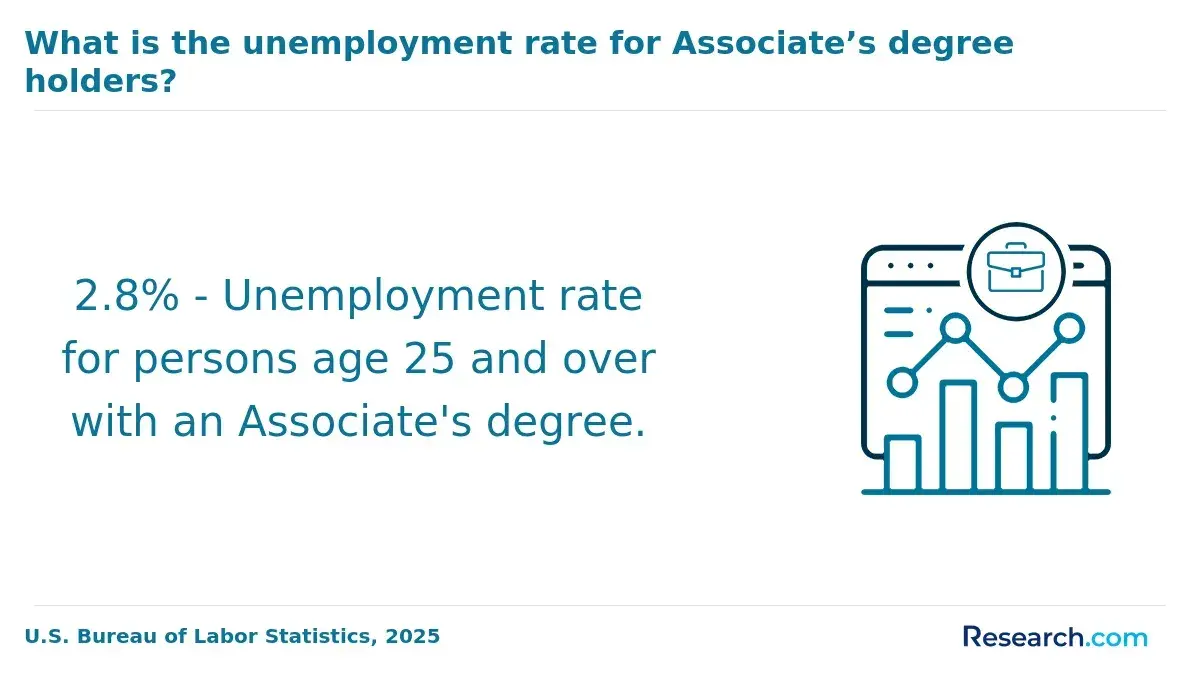
- Associate degrees: An associate of arts, associate of science, associate of applied science, or transfer-oriented associate degree may cover a large general education block, but applied degrees may leave more bachelor's-level requirements.
- Technical and IT courses: Programming, Linux, networking, systems administration, database, or cloud courses can help, but cybercrime programs may review course age and lab rigor closely.
- Criminal justice and legal studies courses: These may support cybercrime investigation, digital evidence, privacy, legal procedure, or cyber law requirements, depending on the degree design.
- Online coursework from accredited institutions: Completed online classes can transfer similarly to campus courses when they appear on an official transcript from an accepted institution.
The most transfer-friendly situation is not always the largest pile of credits. A student with 60 well-matched credits from an associate degree in cybersecurity, networking, IT, or criminal justice may be closer to graduation than a student with 90 scattered credits that do not satisfy the major.
How Do Residency and Upper-Division Requirements Affect Cybercrime Transfer Students?
Residency requirements define how many credits you must complete at the school awarding the degree. They do not usually mean living near campus; in an online degree, "residency" usually means institutional credit. This is why a school may accept up to 90 credits but still require at least 30 credits through its own courses.
Upper-division requirements are equally important. Cybercrime bachelor's programs often reserve advanced coursework for the final two years, including digital forensics, incident response, cyber threat intelligence, secure systems, cyber law, malware analysis, or a capstone. If most of your previous credits are lower-division, they may not replace these requirements.
The table below shows how residency and upper-division rules can change the real value of transferred credits. These are common patterns, not universal rules.
| Requirement type | What it means | How it can affect a student with 60, 75, or 90 credits | Question to ask |
| Institutional residency | Minimum credits that must be completed at the new university | A 90-credit transfer cap often still leaves at least 30 credits to take at the school | What is the minimum number of credits I must complete through this university? |
| Major residency | Minimum major credits that must be completed in the program | Prior electives may transfer, but core cybercrime courses may still be required in-house | How many cybercrime, cybersecurity, or digital forensics major credits must I take here? |
| Upper-division requirement | Minimum credits at the junior or senior level | Lower-division community college credits may not satisfy advanced major requirements | How many 300- or 400-level credits remain after transfer evaluation? |
| Capstone requirement | Final project or integrative course completed near graduation | Usually cannot be transferred, even with extensive prior credit | Is the capstone required through your institution? |
Do not treat residency rules as a minor detail. They often determine whether transferring 90 credits leaves you with one year of coursework or more than one year because of sequencing, prerequisites, and course availability.
How Does the Transfer Credit Evaluation Process Work for an Online Cybercrime Degree?
The transfer evaluation process is where your prior coursework becomes a real degree plan. For cybercrime students, this review may involve both the registrar and academic faculty because technical and investigative courses must align with current curriculum standards.
Follow this sequence to get a reliable answer before you enroll. Skipping these steps can lead to surprise tuition costs or an extra semester of coursework.
- Collect official transcripts from every college or university you attended, even if you completed only one course.
- Gather course descriptions or syllabi for technical, criminal justice, digital forensics, programming, networking, or cybersecurity courses that may need faculty review.
- Submit admissions and transfer-evaluation materials early, because unofficial estimates may not be binding.
- Review the degree audit line by line and identify credits applied to general education, electives, major requirements, upper-division requirements, and institutional residency.
- Ask for clarification on any course that transfers as an elective but appears similar to a required cybercrime course.
- Compare audits from at least two programs using remaining credits, remaining courses, tuition per credit, term length, and start dates.
One common mistake is enrolling based on a verbal transfer estimate. Another is sending transcripts only from the school where you earned your most recent degree. A complete evaluation requires the full academic record, especially if credits were transferred into a prior institution from somewhere else.
Also ask how long the evaluation remains valid. Cybersecurity curricula change as threats, tools, and employer expectations change, so a transfer decision may not stay open indefinitely if you delay enrollment.
How Long Does It Take to Finish an Online Cybercrime Degree With 60, 75, or 90 Transfer Credits?
Completion time depends on the number of credits remaining, how courses are sequenced, whether you study full time or part time, and whether required cybercrime courses are offered every term. A high transfer total helps most when the remaining courses are available in a clean sequence.
The table below estimates common completion timelines. It assumes a 120-credit bachelor's degree and does not account for remedial work, repeated courses, delayed transfer evaluations, or term-specific course availability.
| Credits transferred | Approximate credits remaining | Possible full-time pace | Possible part-time pace | Main timing risk |
| 60 credits | About 60 credits | About 2 academic years | About 3 to 4 years | Many upper-division major courses may still remain |
| 75 credits | About 45 credits | About 1.5 academic years | About 2.5 to 3 years | Prerequisite chains may slow progress |
| 90 credits | About 30 credits | About 1 academic year | About 1.5 to 2 years | Residency, capstone, and major-course sequencing may extend the timeline |
Cybercrime is also a field where speed should not be the only goal. Employers may value hands-on skills in network defense, incident response, evidence handling, scripting, cloud security, and risk analysis. If a shorter path skips labs, projects, or certification-aligned courses, it may not serve you as well as a slightly longer but stronger curriculum.
That said, transfer credit can be a powerful acceleration tool. Students who are comparing fast online degrees that pay well should look closely at cybercrime and cybersecurity pathways because the field offers strong labor-market relevance, but the smartest choice is still the program with the best fit between prior credits and remaining requirements.
How Much Can Transfer Credits Reduce the Cost of an Online Cybercrime Degree?
Transfer credits can lower the cost of an online cybercrime degree by reducing the number of credits you must pay for at the new institution. The savings can be substantial, but only for credits that actually apply toward graduation. If 90 credits are accepted but only 72 apply to requirements, the cost benefit is smaller than the headline number suggests.
For context, the College Board's 2024 pricing report listed average published tuition and fees for public four-year in-state students at $11,610 for 2024-25 and private nonprofit four-year students at $43,350. Those figures are not online cybercrime program prices, but they show why avoiding unnecessary credits can meaningfully affect total education cost.
The table below illustrates how transfer credits can change remaining tuition exposure. Because schools charge different tuition rates, use your target program's per-credit price to calculate your own estimate.
| Transfer scenario | Credits you may avoid retaking | Remaining credits in a 120-credit degree | Cost impact to calculate |
| 60 transfer credits | Up to 60 credits | About 60 credits | Multiply the program's per-credit tuition by 60 remaining credits, then add fees and materials |
| 75 transfer credits | Up to 75 credits | About 45 credits | Compare the 45-credit cost against the 60-credit cost to estimate the value of the extra applied credits |
| 90 transfer credits | Up to 90 credits | About 30 credits | Confirm the 30-credit path is allowed by residency rules and does not hide extra prerequisites |
When you compare programs, ask for the total cost of the remaining degree rather than only the per-credit rate. Fees, technology charges, textbooks, proctoring, lab software, certification exam vouchers, and repeated courses can all affect the final cost.
Be cautious with the cheapest apparent option. A lower tuition rate may cost more overall if the school applies fewer of your credits, requires extra prerequisites, or offers required courses less frequently. Conversely, a higher per-credit school may be less expensive if it accepts and applies more of your prior work.
Can Prior Learning, Military Training, Exams, or Certifications Count Toward an Online Cybercrime Degree?
Many online cybercrime and cybersecurity programs consider credit beyond traditional college transcripts. This can help adult learners, military students, law enforcement professionals, IT workers, and students with industry certifications reduce repeated coursework. However, alternative credit is usually capped, documented separately, and reviewed differently from regular transfer credit.
These are the prior-learning sources to ask about when comparing programs. The value depends on the school's policy and how closely the learning matches the degree requirements.
- Military training: Joint Services Transcript or Community College of the Air Force credit may apply to electives, leadership, information systems, security, or technical requirements.
- Standardized exams: CLEP, DSST, Advanced Placement, or International Baccalaureate credit may satisfy general education or elective requirements if the school accepts the exam and score.
- Professional certifications: Credentials such as CompTIA A+, Network+, Security+, CySA+, PenTest+, Cisco, AWS, Microsoft, or GIAC may be evaluated for IT or cybersecurity credit at some institutions.
- Portfolio or prior-learning assessment: Some schools allow students to document college-level learning from work experience, training, law enforcement practice, or technical projects.
- Corporate and noncollege training: ACE- or NCCRS-reviewed training may transfer if the institution recognizes the recommendation and the content fits the degree.
Alternative credit can be useful, but it can also create false confidence. A certification may transfer as elective credit even when the cybercrime major still requires a separate hands-on course. Ask whether certification credit replaces a specific requirement or only increases the total accepted credit count.
Also be careful with unrelated electives. For example, courses in communication, business, or social media university courses may be valuable for broader career skills, but they may not reduce the cybercrime major unless they fit approved general education or elective categories.
Do Older College Credits Expire When Transferring Into an Online Cybercrime Degree?
Older credits do not always expire automatically, but cybercrime programs may treat them differently depending on subject area. English composition, history, humanities, social science, and many general education courses are often more durable. Technical courses in networking, operating systems, cybersecurity tools, programming, or digital forensics may face closer review because the field changes quickly.
The Bureau of Labor Statistics reported a 2024 median annual wage of $124,910 for information security analysts, a related role often connected to cybersecurity education and experience. That labor-market context helps explain why programs may be strict about technical currency: employers need current skills, not just old credit totals.
If you have older coursework, ask these questions before assuming it will count. They are especially important for students returning after several years away from college.
- Does the school have a formal time limit for technical, computer science, cybersecurity, networking, or digital forensics courses?
- Can an older course satisfy general education even if it cannot satisfy a current major requirement?
- Will the department review old syllabi, projects, or course descriptions to determine equivalency?
- Can recent work experience, certifications, or exams update or support older academic credit?
- If an older course transfers only as an elective, how many required major credits will still remain?
The practical answer is to separate "old but usable" from "old and no longer equivalent." A 10-year-old psychology or writing course may still help you graduate, while a 10-year-old cybersecurity tools course may not replace a current incident response or forensics lab.
Other Things You Should Know About Cybercrime
Not exactly. Cybersecurity focuses broadly on protecting systems, networks, data, and organizations from digital threats. Cybercrime programs often include cybersecurity but may also emphasize digital investigations, cyber law, fraud, evidence handling, criminology, and law enforcement procedures.
Yes, many students do. Criminal justice credits may apply to general education, electives, legal studies, or cybercrime investigation requirements. However, you may still need technical courses in networking, security, programming, digital forensics, or systems analysis.
It can be, especially if the institution is properly accredited and the curriculum includes practical cyber, investigative, legal, and technical skills. Employers may also look for experience, projects, internships, labs, certifications, and the ability to explain security or investigative work clearly.
Choose cybercrime if you are most interested in investigations, digital evidence, fraud, cyber law, and criminal behavior. Choose cybersecurity if you want a broader technical path in security operations, network defense, risk management, cloud security, or incident response. Some programs blend both areas.
References
- Cybersecurity Degree Requirements: What’s New for 2025 - Programs.com https://programs.com/resources/cybersecurity-degree-requirements/
- Transfer Credits to a Cybersecurity Program at CTU https://www.coloradotech.edu/degrees/studies/information-systems-and-technology/cybersecurity-transfer-credits