2027 Online Curriculum & Instruction Doctorate Programs for First-Time Doctoral Students

Co-Founder and Chief Data Scientist
Choosing an online curriculum and instruction doctorate is a high-stakes decision, especially if this would be your first doctoral program. The degree can support leadership, research, instructional design, and faculty roles, but it also requires sustained writing, independent inquiry, and careful financial planning. The U. S. Bureau of Labor Statistics reported a May 2024 median salary of $74,720 for instructional coordinators, showing that advanced curriculum expertise has market value, though outcomes vary by role. This guide helps you compare program types, support systems, admissions expectations, costs, timelines, and career fit before enrolling.
Key Things You Should Know
- First-time doctoral students usually do best in online curriculum and instruction programs with structured research courses, early faculty advising, clear dissertation or capstone milestones, and transparent completion expectations.
- Cost planning matters: graduate students can borrow up to $20,500 per year through the federal Direct Unsubsidized Loan program, but that limit may not cover total tuition, fees, travel, books, and lost work time.
- Career value depends on the role you want; BLS May 2024 median pay was $74,720 for instructional coordinators and $103,960 for postsecondary education administrators, but a doctorate is not a guaranteed salary increase.
Which Online Curriculum & Instruction Doctorate Programs Are Best for First-Time Doctoral Students?
The best online curriculum and instruction doctorate for a first-time doctoral student is not simply the highest-ranked or most recognizable school. It is the program whose doctoral pathway, research expectations, faculty support, schedule, and total cost match your experience and career goal.
Most programs fall into a few practical categories. The table below summarizes the main options and why each may or may not fit someone entering doctoral study for the first time.
| Program type | Best fit for first-time doctoral students | Typical final project | Main trade-off |
| EdD in Curriculum and Instruction | Experienced teachers, instructional coaches, curriculum leaders, district specialists, and education professionals who want applied leadership training | Dissertation in practice, applied dissertation, capstone, or problem-of-practice project | Often more practice-oriented than theory-building, so it may be less ideal for students targeting research-intensive faculty roles |
| PhD in Curriculum and Instruction | Students who want to conduct original research, pursue tenure-track faculty roles, or build expertise in curriculum theory, learning sciences, or education policy | Traditional research dissertation | Usually requires stronger research preparation, more independent scholarship, and a longer time horizon |
| EdD in Education with a Curriculum and Instruction concentration | Working professionals who want a broader education leadership degree with curriculum-focused electives | Applied dissertation, capstone, or leadership project | The concentration may be narrower than a full curriculum and instruction doctorate |
| Online doctorate with short residencies | Students who want online flexibility but benefit from in-person research seminars, writing retreats, or cohort meetings | Varies by program | Travel costs and required dates can affect working professionals and caregivers |
| Fully online asynchronous doctorate | Self-directed students with strong time management, writing discipline, and reliable access to academic support | Varies by program | Less real-time interaction can make motivation and mentoring more difficult if the support model is weak |
For first-time doctoral students, an EdD is often the more direct fit if the goal is to improve curriculum systems, lead professional learning, evaluate instructional programs, or advance within schools, districts, nonprofits, or education companies. A PhD may be the better choice if you want to publish research, teach future educators at the university level, or study curriculum and learning problems through advanced research methods.
A strong beginner-friendly online doctorate usually has several markers. Before you compare school names, compare the structure behind the program.
- It offers a required doctoral orientation or first-term seminar that explains research expectations, academic writing standards, library use, and program milestones.
- It sequences research methods before major proposal work, instead of expecting students to arrive with advanced qualitative, quantitative, or mixed-methods skills.
- It assigns faculty advisors early and explains how dissertation chairs or capstone mentors are selected.
- It publishes realistic time-to-degree expectations, residency requirements, transfer-credit rules, and continuation policies.
- It has faculty whose scholarship or practice expertise aligns with your interests, such as literacy, STEM education, assessment, instructional design, culturally responsive curriculum, teacher learning, or education technology.
The programs that are least suitable for first-time doctoral students tend to be vague about mentoring, unclear about the final project, overly independent from the first term, or marketed mainly around speed. A doctorate can be flexible, but it should not feel academically unsupported.
What Should First-Time Students Expect From an Online Curriculum & Instruction Doctorate?
An online curriculum and instruction doctorate is an advanced degree focused on how curricula are designed, implemented, evaluated, improved, and studied. Students examine learning theory, equity, assessment, teacher development, research methods, instructional leadership, and the design of learning experiences across schools, higher education, corporate learning, nonprofit education, or educational technology settings.
First-time doctoral students should expect the experience to feel different from a master's program. Master's coursework often asks students to apply established knowledge; doctoral study asks students to critique research, identify gaps, design inquiry, defend decisions, and produce original or practice-based scholarship.
The table below shows how the doctoral experience commonly differs from prior graduate study. This distinction is important because many first-time doctoral students underestimate the amount of independent reading and writing required outside the online classroom.
| Area | Master's-level expectation | Doctoral-level expectation |
| Reading | Understand and apply assigned scholarship | Analyze, compare, critique, and synthesize bodies of research |
| Writing | Produce course papers and applied projects | Develop publishable-quality arguments, literature reviews, proposals, and research reports |
| Research | Use research to support practice | Design and justify research or applied inquiry methods |
| Faculty interaction | Course-based feedback | Long-term mentoring, proposal review, committee feedback, and independent revision |
| Time management | Course deadlines guide most work | Students must manage extended milestones that may not have weekly deadlines |
Common courses include curriculum theory, instructional design, assessment and evaluation, equity and culturally responsive pedagogy, education policy, qualitative research, quantitative research, mixed methods, leadership for instructional improvement, and dissertation or capstone seminars. Many programs also include specialization electives in literacy, STEM, online learning, teacher education, special education, or educational technology.
The degree is usually a good fit for educators who can connect doctoral work to a real professional problem. It may not be the right next step if you are still unsure whether you want curriculum leadership, research, higher education, policy, or school administration, because each path may point to a different credential.
What Admissions Requirements Should First-Time Applicants Expect for an Online Curriculum & Instruction Doctorate?
Admissions requirements vary by university, but first-time applicants should expect schools to evaluate both academic readiness and professional fit. A master's degree in education or a related field is commonly required, though some institutions may consider applicants from adjacent fields such as instructional design, educational psychology, leadership, or learning sciences.
The table below summarizes common admissions components and how first-time doctoral applicants should interpret them. Requirements vary, so applicants should confirm details with each program before applying.
| Requirement | What schools commonly look for | Why it matters for first-time doctoral students |
| Master's degree | Graduate preparation in education, curriculum, instruction, leadership, or a related field | Shows readiness for advanced academic work, but it does not automatically prove research readiness |
| Graduate GPA | Many programs set a minimum GPA, often around the B or better range | Signals academic consistency, though schools may also weigh writing, experience, and goals |
| Professional experience | Teaching, curriculum design, instructional coaching, school leadership, training, or education program work | Helps students connect doctoral inquiry to authentic curriculum problems |
| Statement of purpose | Clear goals, research or practice interests, and reasons for choosing the program | Often the strongest place to show fit if you have limited formal research experience |
| Writing sample | Evidence of analytical writing, citation ability, and graduate-level argumentation | Helps faculty judge whether you can handle dissertation or capstone writing |
| Recommendations | Academic or professional references who can speak to leadership, writing, persistence, and intellectual ability | Gives admissions committees context beyond transcripts |
| Interview | Discussion of goals, readiness, time commitment, and faculty fit | Allows applicants to evaluate the program as much as the school evaluates them |
Applicants should not assume that being a strong teacher or curriculum professional automatically means they are prepared for doctoral research. Before applying, review a recent graduate paper and ask whether it shows synthesis, citation discipline, and argument development rather than personal reflection alone.
A practical preparation sequence can help first-time applicants submit stronger applications and avoid entering before they are ready.
- Identify the professional problem you want to study, such as literacy outcomes, curriculum equity, teacher implementation, assessment design, or online learning quality.
- Read recent peer-reviewed articles on that topic and note whether you understand the research methods, limitations, and implications.
- Ask admissions staff whether applicants need prior statistics, research methods, or education theory coursework.
- Request details about transfer credits, including whether prior graduate coursework can reduce tuition or time-to-degree.
- Clarify whether the program is intended for licensed educators, school leaders, higher education professionals, or broader learning professionals.
GRE requirements have become less common in many education doctorates, but policies vary. If a program is test-optional, applicants should strengthen the statement of purpose, writing sample, and recommendations because those materials carry more weight.
Support for doctoral research is one of the biggest differences between a manageable online doctorate and a frustrating one. First-time doctoral students should look for programs that teach research progressively instead of assuming students already know how to design a study, complete a literature review, or prepare for institutional review board approval.
Good research support usually appears throughout the curriculum, not only at the dissertation stage. As you compare programs, look for support systems that reduce ambiguity while still building independence.
- Required research-methods courses in qualitative, quantitative, or mixed-methods inquiry that are aligned with education problems.
- Library training that covers database searching, citation management, systematic literature review techniques, and source evaluation.
- Writing-center support staffed by reviewers familiar with doctoral-level argument, APA style, and dissertation or capstone structure.
- Early research-interest mapping that helps students connect with faculty before the final project becomes urgent.
- Milestone courses that break the proposal, literature review, methods chapter, data collection plan, or applied-project design into smaller deadlines.
- Clear institutional review board guidance for students studying classrooms, teachers, minors, or workplace learning environments.
AI is also changing doctoral work in curriculum and instruction. Students may study AI-supported instructional design, adaptive learning, assessment integrity, teacher workload, or ethical technology use, but they must also follow strict academic-integrity rules. A strong program will explain how generative AI can and cannot be used in literature searching, outlining, coding assistance, editing, and data analysis.
One red flag is a program that advertises flexibility but provides little detail about research mentoring. Flexibility helps working adults, but doctoral research requires expert feedback. First-time students should ask who reviews the proposal, how often students meet with chairs, what happens if a chair leaves, and whether students can change topics if the initial idea proves too broad.
The final doctoral project shapes the entire student experience. A traditional dissertation, applied dissertation, dissertation in practice, and capstone can all be rigorous, but they differ in purpose, methods, audience, and career alignment.
The table below explains the most common final-project models. First-time doctoral students should use this comparison to choose a program whose culminating requirement matches the kind of work they actually want to do.
| Final project type | Typical purpose | Common fit | What first-time students should verify |
| Traditional dissertation | Contribute original research to the academic literature | PhD students and research-focused EdD students | Faculty expertise, methodology support, publication expectations, and committee process |
| Applied dissertation | Investigate a real education problem using scholarly methods | EdD students in schools, districts, higher education, nonprofits, or learning organizations | Whether workplace data access is required and how the school defines acceptable evidence |
| Dissertation in practice | Study and improve a problem of practice in a professional setting | Practitioners focused on improvement science, equity, curriculum implementation, or instructional systems | Whether the project requires collaboration with an employer or site partner |
| Capstone or applied project | Create, evaluate, or improve a curriculum, program, assessment system, or instructional intervention | Students pursuing practice leadership rather than academic research careers | How the project is evaluated and whether it is accepted for the roles you want |
Dissertation or capstone support affects time-to-completion more than many applicants realize. Students often move smoothly through coursework and then slow down when the work becomes less structured. First-time doctoral students should prefer programs with formal proposal checkpoints, committee timelines, writing intensives, and transparent continuation fees.
Before enrolling, ask focused questions about the final project. The answers can reveal whether a program is built for new doctoral learners or mainly for students who already know how research works.
- When do students begin developing the dissertation or capstone topic?
- Are students matched with faculty based on topic, method, availability, or student preference?
- How many proposal revisions are typical before approval?
- Are there required residencies, defenses, oral presentations, or synchronous meetings?
- What support exists for students who need to change topics, data sources, or methodology?
- Does the program publish completion outcomes or typical time spent after coursework?
A common mistake is choosing the fastest-sounding program without understanding the final-project model. A shorter coursework sequence does not necessarily mean a shorter doctorate if dissertation support is weak or if the project requires data access you do not have.
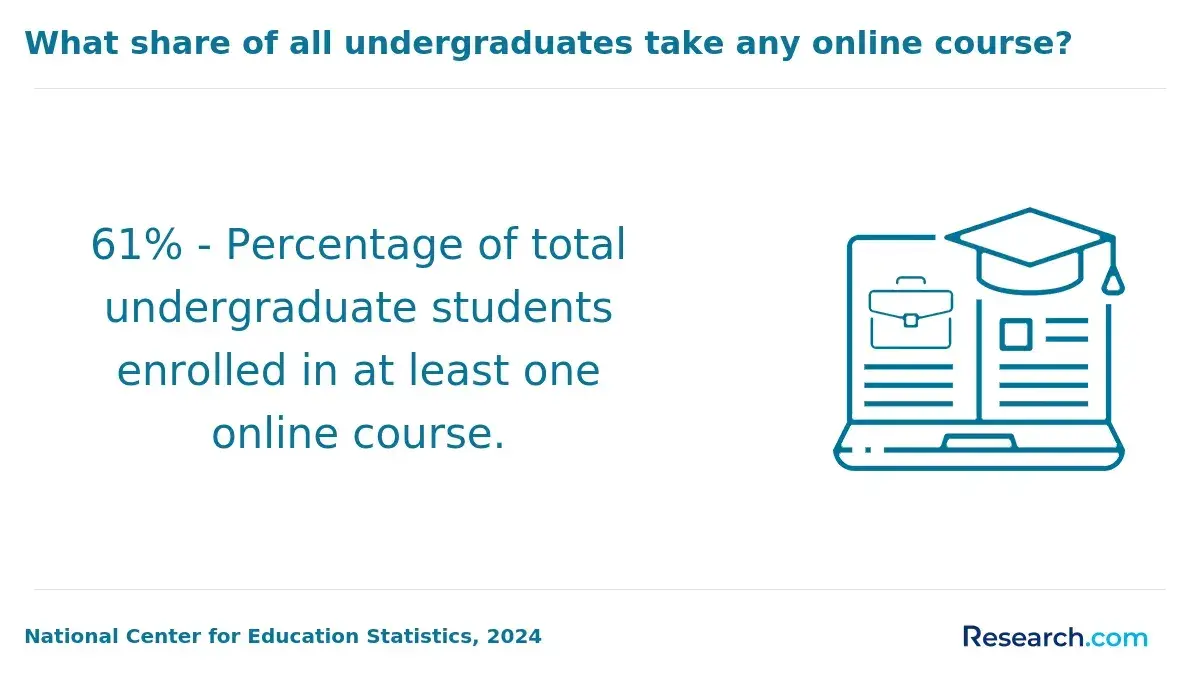
Online curriculum and instruction doctorates can be flexible, but "online" does not always mean self-paced. Programs may require weekly live classes, weekend intensives, summer residencies, cohort meetings, proctored assessments, synchronous defenses, or scheduled advising sessions.
Format differences matter because most first-time doctoral students are also working professionals. The table below outlines common delivery models and the kind of student each model tends to serve best.
| Online format | How it usually works | Best fit | Potential challenge |
| Asynchronous online | Students complete weekly modules, readings, discussions, and assignments on their own schedule | Students with unpredictable work hours or family responsibilities | Requires strong self-discipline and proactive communication |
| Synchronous online | Students attend scheduled live virtual classes or seminars | Students who value real-time discussion and faculty access | May conflict with teaching schedules, caregiving, or time zones |
| Cohort-based online | Students move through courses with the same group | First-time doctoral students who want structure and peer accountability | Less flexibility if you need to stop out or reduce course load |
| Hybrid or low-residency | Most coursework is online, with required campus visits or intensives | Students who benefit from face-to-face mentoring and writing support | Travel, lodging, time off work, and fixed attendance dates |
| Part-time online | Students take fewer courses per term and extend the timeline | Full-time educators, administrators, and parents | Longer enrollment can increase total fees and delay career benefits |
To test whether a program fits your life, do not ask only whether classes are online. Ask for a sample term calendar, weekly workload estimate, residency dates, dissertation meeting expectations, and policies for taking a leave of absence.
A realistic schedule audit can prevent burnout. First-time doctoral students should estimate time for reading, discussion posts, research design, writing, revision, group work, advising, and administrative tasks. If your work year includes peak periods such as testing season, curriculum adoption, accreditation reviews, or school openings, choose a program that allows part-time pacing or lighter summer and fall options.
Cohorts, mentorship, and student support can strongly affect whether a first-time doctoral student stays engaged after the first year. Online students may not have hallway conversations, informal campus networks, or spontaneous faculty access, so the program must intentionally create connection.
A cohort model can be especially useful for students new to doctoral culture. It provides peer accountability, shared deadlines, familiar discussion partners, and emotional support during difficult research phases. However, it can also limit flexibility if the schedule is fixed and course availability depends on staying with the group.
Mentorship should be more than a name on an advising sheet. First-time doctoral students should look for a defined advising structure that explains who helps with course planning, who supports research development, who approves the dissertation or capstone, and who intervenes if progress slows.
Strong support systems often include several layers. When comparing programs, look for evidence that these services are available to online doctoral students, not only campus-based students.
- Dedicated doctoral advisor for registration, policy questions, and degree planning.
- Faculty mentor or research chair with expertise in the student's topic or methodology.
- Online library support with education research databases and individual consultation options.
- Doctoral writing support that goes beyond grammar and addresses argument structure, synthesis, and revision.
- Peer writing groups, research forums, or virtual residencies that reduce isolation.
- Career services for education leadership, higher education, instructional design, consulting, or research roles.
Students interested in designing learning experiences may also consider how a master's in instructional design could complement a doctorate in curriculum and instruction. While the master's degree can provide specialized preparation in learning technologies, course development, and instructional strategies, a doctorate typically emphasizes advanced research, program evaluation, leadership, and evidence-based improvement. The better pathway depends on whether your immediate goal is to develop instructional design skills or pursue broader educational leadership and research responsibilities.
One mistake is assuming that expensive tuition automatically means stronger support. Support quality depends on staffing, faculty workload, advising policies, dissertation processes, and institutional commitment to online doctoral students. Ask current students how quickly faculty respond, how feedback is delivered, and whether expectations are consistent across courses and committees.
Most online curriculum and instruction doctorates take several years, with the timeline shaped by credit requirements, enrollment intensity, transfer credits, dissertation or capstone progress, and whether the student works full time. A common range is about 45 to 75 post-master's credits, but exact requirements vary by institution and degree type.
Cost also varies widely. The federal Direct Unsubsidized Loan annual limit for graduate and professional students is $20,500, so students whose annual cost exceeds that amount may need savings, employer support, scholarships, payment plans, assistantships, or Graduate PLUS loans. This matters because borrowing capacity is not the same as affordability.
The table below summarizes the main cost and timeline factors first-time doctoral students should compare. Use it to estimate total cost of completion, not just tuition for the first year.
| Factor | What to check | Why it affects first-time students |
| Credits required | Total post-master's credits and whether dissertation or capstone credits are included | More credits usually mean more tuition and a longer course sequence |
| Per-credit tuition | In-state, out-of-state, online, and program-specific rates | Online programs may use flat tuition or different rates from campus programs |
| Fees | Technology, distance-learning, graduation, dissertation, continuation, and residency fees | Fees can add meaningful cost even when tuition appears affordable |
| Residencies | Required travel, lodging, meals, and time away from work | Low-residency programs can be valuable but may not be low-cost |
| Transfer credits | Maximum transferable graduate credits and age limits on prior coursework | Approved credits may reduce cost, but not all doctoral core or research courses transfer |
| Enrollment pace | Full-time, part-time, year-round, or cohort lockstep options | Part-time study can protect work-life balance but may extend fees and delay completion |
| Final-project timeline | Average time after coursework and continuation registration rules | Dissertation delays can become one of the largest hidden costs |
First-time doctoral students should build a full budget before committing. That budget should include tuition, mandatory fees, books, software, research expenses, conference travel if expected, residency travel, childcare, reduced work hours, and loan interest.
For students balancing military-family responsibilities with doctoral study, researching the best online colleges for military spouses may also help identify institutions with flexible scheduling, military-affiliated student services, or potential tuition assistance options. However, verify eligibility requirements and available benefits directly with each school and the relevant military education program, since assistance and support vary.
A practical cost-check process can make the investment clearer.
- Multiply total required credits by the correct online tuition rate, not the general graduate rate unless the school confirms it applies.
- Add mandatory fees for every term you expect to enroll, including dissertation or continuation terms.
- Ask whether tuition is charged for dissertation supervision after coursework is complete.
- Confirm whether employer tuition assistance applies to doctoral study and whether you must stay employed for a set period afterward.
- Compare the total estimated cost with the specific role, promotion pathway, or salary band you are pursuing.
A doctorate may be worth it when it is tied to a clear advancement goal, such as curriculum director, instructional leadership, higher education administration, applied research, teacher education, or senior instructional design leadership. It is harder to justify financially if the student has no defined career target or if a certificate, endorsement, second master's degree, or leadership license would meet the same goal at lower cost.
An online curriculum and instruction doctorate can support several career paths, but outcomes depend on prior experience, location, employer expectations, licensure rules, and the type of doctorate. The degree is most valuable when it builds on an existing education career rather than replacing the need for field experience.
The table below connects common career directions with the kind of doctoral preparation that may be most relevant. Salary figures are national medians from BLS May 2024 data where the occupation is clearly tracked, so they should be treated as context rather than a prediction of individual earnings.
| Career direction | How the doctorate may help | Relevant salary context | Important limitation |
| Instructional coordinator or curriculum specialist | Strengthens expertise in curriculum evaluation, assessment, teacher support, and instructional improvement | BLS reported a May 2024 median salary of $74,720 for instructional coordinators | Some roles require teaching experience or state educator credentials |
| District curriculum leader or instructional administrator | Supports leadership in curriculum adoption, professional learning, standards alignment, and program evaluation | Pay varies widely by district, state, contract, and administrative level | Administrative licensure may be required for some public school leadership roles |
| Postsecondary education administrator | Can support roles in academic programs, assessment, faculty development, or teaching and learning centers | BLS reported a May 2024 median salary of $103,960 for postsecondary education administrators | Higher education hiring often weighs experience, institutional fit, and leadership record |
| Teacher educator or adjunct faculty member | Provides doctoral credentialing and advanced expertise for teaching education courses | Compensation varies by institution, rank, discipline, and full-time or adjunct status | Tenure-track roles may prefer or require a PhD and a research publication record |
| Training and development manager | Can translate curriculum expertise into workplace learning, leadership development, and instructional systems | BLS reported a May 2024 median salary of $127,090 for training and development managers | Corporate roles may prioritize business impact, technology skills, and management experience |
| Education consultant or learning designer | Builds credibility in curriculum design, evaluation, research use, and learning strategy | Income varies by client base, employment model, and specialization | Consulting requires market demand, portfolio evidence, and client-development skills |
Current career trends make the degree more relevant in some areas. Schools and learning organizations are dealing with learning recovery, curriculum equity debates, digital curriculum adoption, AI-assisted instruction, teacher professional development, assessment redesign, and evidence-based intervention decisions. A doctorate can help professionals lead these conversations if the program develops both research literacy and practical implementation skills.
When researching admission options, some applicants also look for online colleges no application fee to reduce the upfront cost of applying to multiple institutions. Although this can be a useful way to manage application expenses, compare doctoral programs based on accreditation, faculty expertise, curriculum, total tuition, and student support rather than application fees alone.
However, first-time doctoral students should avoid assuming the degree alone will produce a promotion. Employers often care about demonstrated leadership, successful curriculum initiatives, data use, people management, and communication skills. The strongest candidates can show how doctoral work improved a program, solved a learning problem, informed policy, or produced measurable instructional insight.
How Should First-Time Students Choose an Online Curriculum & Instruction Doctorate Program?
First-time students should choose an online curriculum and instruction doctorate by starting with the role they want after graduation, then working backward to the degree type, final project, faculty expertise, schedule, cost, and support model. A program that is excellent for a district curriculum leader may not be ideal for an aspiring research professor, and a program built for independent scholars may not support a student who needs close structure.
Use the following decision process before applying. It is designed to move you from general interest to a realistic enrollment decision.
- Define the career outcome first: curriculum leadership, teacher education, instructional design leadership, higher education administration, research, consulting, or policy work.
- Choose the doctoral pathway that fits that outcome: EdD for applied leadership and improvement work, PhD for research-intensive academic pathways, or a broader education doctorate if curriculum is one part of your goal.
- Verify institutional accreditation and any state-specific licensure rules if you plan to use the degree for public school leadership, administrative advancement, or educator salary movement.
- Compare faculty expertise with your likely topic instead of assuming any education faculty member can support any curriculum question.
- Ask for the exact online schedule, including live sessions, residencies, defenses, summer expectations, and dissertation meetings.
- Calculate total completion cost, including fees, travel, continuation enrollment, and possible extra terms after coursework.
- Evaluate support for first-time doctoral students, especially writing help, research-methods scaffolding, advisor access, and dissertation or capstone milestones.
- Talk with current students or recent graduates about workload, faculty responsiveness, topic approval, and what they wish they had known before enrolling.
If completion time is a major consideration, you may come across searches for the shortest EdD program online. However, the fastest advertised timeline should not be the only deciding factor. Check the total credit requirements, transfer-credit policies, enrollment schedule, and dissertation or capstone expectations to determine whether the stated completion time is realistic for a first-time doctoral student.
Several red flags should make you slow down or keep looking. These issues do not always mean a program is poor, but they do mean you need clearer answers before committing.
- The program cannot clearly explain how dissertation chairs or capstone mentors are assigned.
- Admissions staff emphasize speed but cannot provide realistic information about final-project timelines.
- The curriculum has limited research-methods preparation before students begin proposal work.
- Residency, synchronous, or field-site requirements are difficult to find or described inconsistently.
- Tuition is advertised clearly, but continuation fees, technology fees, and dissertation enrollment costs are unclear.
- The program has few faculty members working in your area of interest.
- You cannot find evidence that online doctoral students receive library, writing, advising, and career support comparable to campus students.
The best choice is usually the program that makes the doctoral path visible. First-time doctoral students should leave the admissions process understanding what they will study, who may mentor them, how the final project works, how much the degree may cost, how long completion may take, and what career problem the doctorate is intended to solve.
Other Things You Should Know About Curriculum & Instruction
Not always. Some programs are designed for licensed educators, while others accept instructional designers, higher education professionals, trainers, nonprofit education staff, or learning specialists. If you want a public school leadership role, check state and district rules because the doctorate itself may not provide licensure.
Many students do, but it requires careful planning. Ask whether the program offers part-time pacing, predictable deadlines, summer options, and flexibility during high-demand school periods such as testing, curriculum adoption, or start-of-year planning.
It can be, especially when the university is properly accredited and the program has a rigorous curriculum, qualified faculty, and a meaningful dissertation or capstone. Employers usually evaluate the institution, degree type, experience, leadership record, and relevance of the doctoral work to the role.
You may benefit from more experience if you do not yet have a clear curriculum problem to study or a career goal that requires doctoral preparation. A few additional years in teaching, coaching, instructional design, or education leadership can make doctoral research more focused and useful.
- Funding your Degree https://gradsense.org/funding-your-degree/
- Doctoral Education Programs | ACE https://ace.edu/degree-programs/doctoral-degrees/doctoral-education/
- PhD Scholarships: Explore Your Online Education Aid Options https://www.oedb.org/phd-scholarship/
- Applying for admission to doctoral schools https://nawa.gov.pl/en/recognition/recognition-for-academic-purposes/applying-for-admission-to-doctoral-studies
- Educational Funding https://phdproject.org/educational-funding/
- CourseCareers https://coursecareers.com/blog-posts/college-vs-online-career-training
- 25 Best Online EdD Programs of 2025 https://www.eddprograms.org/schools/best-online-doctor-of-education-programs/
- Doctoral Research Application Requirements https://entrustdn.eu/application/
- Scholarships for Doctor of Education (EdD) Students | Teach.com https://teach.com/online-ed/education-degrees/online-edd-programs/scholarships/
- PhD Application Requirements https://www.applykite.com/blog/phd-guide-application-requirements