2027 Online Curriculum & Instruction Doctorate Accreditation Guide: Institutional, Programmatic, and Licensure Considerations

Co-Founder and Chief Data Scientist
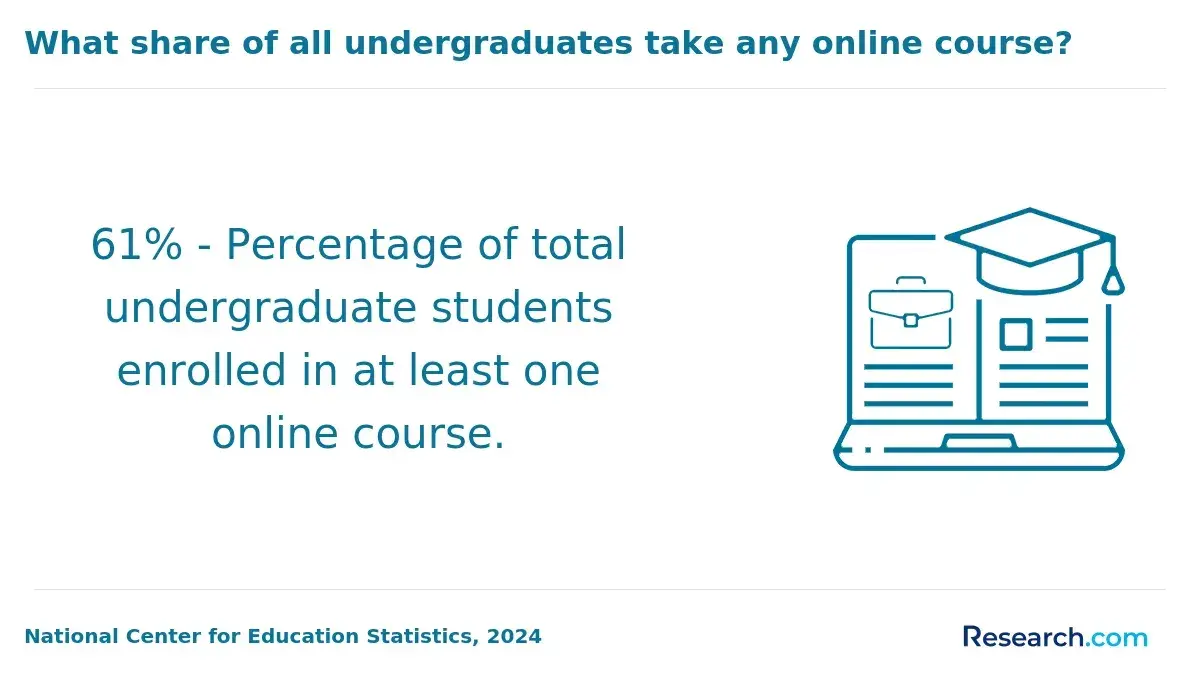
Choosing an online Curriculum & Instruction doctorate is not just about format, cost, or reputation; it is about whether the degree will be recognized. NCES data released in 2024 shows that more than half of postbaccalaureate students took at least one distance education course, making online program quality harder to judge at a glance.
This guide explains institutional accreditation, programmatic accreditation, state authorization, and licensure disclosures so prospective doctoral students can avoid programs that may not support employment, transfer, financial aid, or state credential goals.
Key Things You Should Know
- For an online Curriculum & Instruction doctorate, the school itself should be accredited by an accreditor recognized by the U.S. Department of Education or CHEA. Without it, federal aid, transfer credit, employer recognition, and admission to later study may be limited.
- Curriculum & Instruction doctorates may not always need separate programmatic accreditation, but educator-preparation accreditation or state approval can matter if the program is tied to teacher, instructional specialist, curriculum supervisor, principal, superintendent, or other education credentials.
- Federal professional licensure disclosure rules updated for programs serving online students require schools to disclose whether a program meets, does not meet, or has not been determined to meet educational requirements in each state, but students should still confirm directly with their state licensing board before enrolling.
Is an Online Curriculum & Instruction Doctorate Accredited Differently From an On-Campus Program?
An online Curriculum & Instruction doctorate is not supposed to have a separate or weaker form of accreditation simply because it is delivered online. Accreditation evaluates the institution, and sometimes the program, against standards for academic quality, faculty qualifications, assessment, student support, integrity, and continuous improvement.
Delivery format matters only because accreditors expect online programs to provide comparable learning outcomes, student services, technology support, and assessment practices. The practical difference is that online students have more to verify before enrolling.
A campus student usually studies in the same state as the institution. An online student studying EdD online programs, for instance, may live in a different state, complete field experiences locally, and seek a credential from a state board that the university does not control. That is why accreditation, state authorization, and licensure approval must be checked separately.
This comparison shows how accreditation expectations generally apply across delivery formats and where online students face extra risk.
| Issue | On-campus doctorate | Online doctorate | Why it matters |
| Institutional accreditation | Applies to the institution | Applies to the institution | The credential should come from an accredited school regardless of format. |
| Program review | May be reviewed by a programmatic accreditor or state agency | May be reviewed by the same programmatic accreditor or state agency | Separate program approval can matter when the doctorate is connected to educator licensure. |
| Student support | Campus advising, library, and research resources are evaluated | Online advising, digital library access, research supervision, and technical support are evaluated | Doctoral students need sustained support for research, dissertation, capstone, or applied inquiry work. |
| State authorization | Usually less complex if the student studies in the institution's state | Can be complex when students live in different states | A school may be accredited but still unable to enroll online students in every state. |
| Licensure eligibility | Often aligned to the institution's state | Must be checked against the student's state | Online enrollment does not automatically make a program eligible for every state credential. |
A common mistake is assuming "online" means "less accredited" or, conversely, assuming that a well-known university's online doctorate will automatically meet every state's educator credential rules. Neither is true.
The question is not whether the program is online. The question is whether the institution is recognized, the program is approved where necessary, and the curriculum aligns with the credential or career outcome you need.
What Is the Difference Between Institutional and Programmatic Accreditation for an Online Curriculum & Instruction Doctorate?
Institutional accreditation reviews the college or university as a whole. It is the first accreditation status to verify because it affects access to federal financial aid, graduate credit recognition, employer confidence, and eligibility for many later academic pathways.
The older "regional versus national accreditation" shorthand is less reliable than it used to be because federal terminology has changed; what matters most is whether the accreditor is currently recognized by the U.S. Department of Education or CHEA.
Programmatic accreditation reviews a specific academic program, school of education, or educator preparation unit. In Curriculum & Instruction, programmatic review may be most important when the doctorate is housed in an educator preparation provider or is connected to a professional credential.
Common names students may see include CAEP and AAQEP, but state approval can be just as important as national programmatic accreditation depending on the credential.
The table below separates four terms that are often confused. Understanding the distinction helps you ask the right question instead of accepting a vague "yes, we are accredited" from an admissions office.
| Term | What it evaluates | Who typically recognizes or oversees it | How it affects online doctoral students |
| Institutional accreditation | The college or university as a whole | U.S. Department of Education-recognized or CHEA-recognized institutional accreditors | Baseline legitimacy for the degree, federal aid, transfer review, and broad employer recognition. |
| Programmatic accreditation | A specific program, school, department, or educator preparation unit | Specialized accreditors, professional bodies, and sometimes state agencies | May matter for educator preparation, state credentials, school leadership pathways, or employer preferences. |
| State authorization | Whether the institution may offer distance education to students in a state | State authorization agencies, often through reciprocity arrangements such as NC-SARA | Determines whether the school can enroll you online in your state, but does not by itself grant licensure eligibility. |
| Professional licensure approval | Whether the program satisfies educational requirements for a credential | State education departments, professional standards boards, or licensing agencies | Determines whether the doctorate or related preparation can support certification, endorsement, or administrative licensure. |
The decision rule is simple: verify institutional accreditation for the cheapest accredited online doctoral programs, then verify programmatic accreditation or state approval only when your target role requires it.
If you are pursuing a doctorate for curriculum leadership, research, faculty roles, or district-level advancement without a new credential, institutional accreditation may be enough. If you need a state-issued license or endorsement, institutional accreditation alone is not enough information.
How Can You Verify That an Online Curriculum & Instruction Doctorate and Its Accreditor Are Legitimate?
The safest approach is to verify accreditation through independent databases, not only through the program website. Schools can describe accreditation in ways that are technically accurate but incomplete, especially when a program is new, being phased out, in candidacy, or approved only for certain states.
Use this sequence before submitting an application or paying a deposit. It helps separate recognized accreditation from misleading claims, membership language, or unrecognized "accrediting" organizations.
- Find the exact legal name of the institution, not just the brand name used on the program page.
- Check the institution in the U.S. Department of Education's Database of Accredited Postsecondary Institutions and Programs and confirm the accreditor, accreditation status, and dates.
- Check the accreditor's own directory to confirm the institution is currently listed and that the listing matches the school's claim.
- If the program advertises educator preparation accreditation, check the programmatic accreditor's directory and confirm whether the Curriculum & Instruction doctorate, school of education, or educator preparation unit is included.
- Ask whether the program is fully accredited, in candidacy, teach-out, probation, warning, or another monitoring status.
- Request the school's professional licensure disclosure for your state and the specific credential you may seek.
- Confirm state authorization for your state of residence, especially if you may move during the program.
- Contact your state licensing board or education department and ask whether this specific program satisfies educational requirements for the credential you want.
Accreditation red flags are often visible before enrollment if you know what to look for. The following table highlights common warning signs and the better verification standard.
| Red flag | Why it is risky | Better evidence to request |
| The school says it is "fully approved" but does not name the accreditor | Approval can refer to business licensing, state registration, or membership rather than recognized accreditation | The exact accreditor name and independent database listing |
| The website uses "regional accreditation" language without current details | The term may be outdated or copied from older marketing pages | Current institutional accreditation status and accreditor recognition |
| The program is "designed for licensure" but the state is not identified | Licensure requirements vary by state and credential | A state-by-state professional licensure disclosure |
| The program is in candidacy and presented like full accreditation | Candidacy is not the same as accredited status | Written explanation of candidacy status, timeline, risks, and refund or teach-out policies |
| The school pressures immediate enrollment before providing documentation | High-pressure recruitment can hide unresolved accreditation or authorization issues | Written answers from accreditation, licensure, and registrar offices before enrollment |
Keep copies of every accreditation and licensure statement you receive. If a program later changes status, written documentation may help you evaluate teach-out options, refund policies, transfer requests, or complaints to state agencies.
Many online Curriculum & Instruction doctorates are advanced academic or professional degrees for experienced educators, instructional leaders, curriculum specialists, district administrators, higher education professionals, or education researchers. If the program does not lead to a new state credential, separate programmatic accreditation may be helpful but not mandatory in every case.
The key question is whether the program is tied to educator preparation or a regulated credential. If the doctorate includes a pathway to an endorsement, administrative license, supervisor credential, or specialist certification, programmatic accreditation or state approval may become central to your decision.
Programmatic accreditation is more likely to matter in the following situations because an outside body may evaluate whether the educator preparation unit meets professional standards.
- You need the doctorate to support a state-issued education credential, endorsement, or license.
- The program includes principal, superintendent, curriculum supervisor, instructional leader, reading specialist, or other regulated preparation.
- Your employer, district, or salary schedule requires graduation from a state-approved or professionally accredited educator preparation program.
- You plan to move states and need the strongest possible documentation for credential review.
- You want assurance that field experiences, assessments, faculty qualifications, and candidate outcomes are reviewed against educator preparation standards.
Programmatic accreditation is less likely to be required when the doctorate is a PhD or EdD focused on research, curriculum theory, learning design, teacher education scholarship, higher education teaching, or organizational leadership without a licensure pathway.
Even then, you should still evaluate faculty expertise, dissertation support, completion expectations, and institutional accreditation even if the program is from the best online colleges.
A good way to frame the decision is this: institutional accreditation answers, "Is the university recognized?" Programmatic accreditation or state approval answers, "Is this specific professional preparation recognized for the role I want?" For licensure-linked goals, you need both questions answered in writing.
The accreditation that matters most depends on the credential, not the degree title. A doctorate in Curriculum & Instruction may support career advancement, but state licensure agencies usually evaluate whether the candidate completed an approved preparation pathway, required coursework, supervised experience, exams, and background checks. They may not treat a doctorate alone as sufficient.
Labor market context matters because many students pursue this doctorate for leadership or specialist roles rather than classroom entry. The BLS reported a 2024 median annual wage of $74,720 for instructional coordinators, but that figure reflects a broad occupation and does not determine licensure or salary placement for any individual doctoral graduate. Use salary data as career context, not as proof that a specific program will qualify you for a credential.
The table below connects common professional goals with the accreditation or approval evidence students should prioritize.
| Professional goal | Most relevant recognition to verify | Important limitation |
| Curriculum specialist or instructional coordinator | Institutional accreditation; state approval if the role requires an endorsement or license | Some districts require teaching experience or a state credential even when the job title is not "teacher." |
| Teacher leader or advanced classroom role | Institutional accreditation; state-recognized educator preparation if an endorsement is involved | A doctorate may not replace required state exams, classroom experience, or renewal requirements. |
| Principal or school administrator pathway | State-approved administrator preparation; institutional accreditation; possible programmatic educator-preparation accreditation | Curriculum & Instruction programs do not automatically meet administrator licensure standards. |
| Superintendent or district leadership credential | State-approved superintendent or district-level leadership preparation | Many states require prior administrative licensure and supervised leadership experience. |
| Higher education faculty or researcher | Institutional accreditation; discipline fit; dissertation quality; faculty research alignment | Programmatic educator accreditation is usually less important than scholarly preparation and institutional reputation. |
| Private-sector learning design or training leadership | Institutional accreditation; portfolio and applied research relevance | State educator licensure may not be required, but employers may still screen for accredited degrees. |
Before relying on program marketing language, ask the school to identify the exact license, endorsement, or certificate the program prepares students for. If the answer is broad, such as "education leadership opportunities," treat that as career preparation, not a licensure promise.
It might, but you should not assume it will. Licensure rules are controlled by the state where you seek the credential, not necessarily the state where the university is located. Online doctoral students are especially vulnerable to mismatch because they may enroll from one state, complete fieldwork in another, and apply for licensure in a third.
State education agencies commonly evaluate more than the degree name. They may review coursework, educator preparation approval, teaching experience, supervised field hours, clinical evaluations, licensure exams, background checks, and whether the program has a formal agreement for placements in your state.
Use this practical checklist before enrolling if licensure, certification, or endorsement is part of your plan.
- Identify the exact credential you want, such as curriculum supervisor, instructional specialist, principal, superintendent, reading specialist, or teacher leader endorsement.
- Find the state agency that controls that credential and read the current requirements for out-of-state or online programs.
- Ask the university for its written professional licensure disclosure for your state and your intended credential.
- Ask whether the program has determined, not merely guessed, that it meets your state's educational requirements.
- Confirm whether field placements, internships, or practicums can be completed in your state and supervised by approved personnel.
- Ask whether additional exams, prior licensure, years of experience, background checks, or mentoring are required after graduation.
- Save written responses from both the school and the state licensing agency.
One common mistake is asking, "Is this program accredited?" when the more important licensure question is, "Does this program meet the educational requirements for my specific credential in my state?" Accreditation is necessary for many pathways, but it is not a substitute for state approval.
Field-based requirements can determine whether an online Curriculum & Instruction doctorate supports licensure, even when the academic coursework is acceptable. State agencies often want evidence that candidates completed supervised practice in appropriate settings, under approved supervisors, for the correct number of hours or competencies.
In doctoral education, "residency" can mean different things. It may refer to short on-campus research sessions, online synchronous seminars, dissertation intensives, or professional field experiences. Only some of these count for licensure. Do not assume that a doctoral residency satisfies a state-required internship or clinical placement.
Before enrolling, ask detailed placement questions because these requirements are difficult to fix after coursework is complete.
- Ask whether the program includes field experiences required for your intended credential or only academic research experiences.
- Confirm whether placements can be completed in your state, school district, or workplace.
- Ask who approves the site and supervisor: the university, the state licensing agency, the district, or all three.
- Verify whether the supervisor must hold a specific license, endorsement, degree, or administrative role.
- Ask how hours, competencies, observations, and evaluations are documented for state review.
- Confirm whether virtual supervision is accepted or whether in-person observations are required.
- Ask what happens if you cannot secure a placement in your local area.
A frequent mistake is choosing a program because the coursework is convenient while overlooking placement logistics. For working educators, the most important question may be whether your current school or district can serve as an approved field site. If not, the program could become difficult to complete or unusable for licensure.
Accreditation has practical consequences beyond academic quality. It can affect whether you can use federal student aid, whether another university will review your credits, whether an employer recognizes the degree for advancement, and whether you can enter a postdoctoral, faculty, or additional graduate pathway later.
For federal aid, institutional accreditation is essential. Graduate students may be eligible for federal unsubsidized loans up to $20,500 per academic year under current Federal Student Aid rules, with Grad PLUS loans potentially available for remaining eligible costs. That does not make borrowing advisable in every case, but it shows why accreditation is directly tied to financing options.
Accreditation can influence several high-stakes outcomes that students often discover too late.
- Federal financial aid: The institution generally must participate in federal aid programs and hold recognized accreditation for students to use federal loans.
- Transfer credit: Receiving institutions usually review credits from accredited schools more favorably, but transfer is never guaranteed and doctoral credits can be especially hard to move.
- Employer recognition: School districts, universities, state agencies, and employers may require an accredited degree for salary advancement, leadership eligibility, or tuition reimbursement.
- Licensure review: State agencies may require both institutional accreditation and state-approved educator preparation for regulated credentials.
- Further study: Accredited doctoral preparation can matter for postdoctoral research, faculty applications, certificate programs, or additional licensure pathways.
Before committing, compare total cost with the credential value you actually need. A lower-priced doctorate may be a poor investment if it lacks recognition for your state or employer. Alternatively, consider affordable online counseling programs if you wish to stay in the same field but prefer a clinical role.
A more expensive program may also be a poor investment if it adds programmatic features you do not need. The best choice is the accredited program that matches your career goal, licensure target, research interests, and ability to complete the dissertation or capstone.
What Happens if an Online Curriculum & Instruction Doctorate Loses Accreditation or Is Only in Candidacy?
Accreditation status can change. A program or institution may be fully accredited, in candidacy, on warning, on probation, under show-cause review, in teach-out, or no longer accredited. These categories have different implications, and students should not treat them as interchangeable.
Candidacy means an institution or program is progressing toward accreditation, but it is not the same as full accreditation. Depending on the accreditor and the type of accreditation, candidacy may or may not carry the benefits students expect. If your goal involves licensure, transfer, employment screening, or federal aid, get written confirmation before enrolling in a candidate program.
The table below summarizes accreditation statuses students may encounter and why each should trigger additional questions.
| Status | What it generally means | Student implication |
| Fully accredited | The institution or program currently meets accreditor standards | Still verify scope, dates, licensure alignment, and any state-specific limits. |
| Candidacy or pre-accreditation | The institution or program is seeking full accreditation | Benefits may be limited; licensure boards and employers may not treat it like full accreditation. |
| Warning or monitoring | The accreditor has identified concerns that must be addressed | Ask whether student aid, program continuity, and licensure disclosures are affected. |
| Probation or show-cause | Serious compliance issues may threaten accreditation | Enrollment risk is higher; request written teach-out and refund information. |
| Teach-out | The institution or program is closing or losing approval and has a plan for enrolled students | Students may need to finish quickly, transfer, or complete through a partner institution. |
| Loss of accreditation | The institution or program no longer holds the claimed accreditation | Financial aid, transfer, licensure, and employer recognition may be affected. |
If you are already enrolled when accreditation status changes, act quickly. Contact the registrar, financial aid office, program director, accreditor, and your state licensing agency if applicable.
Ask for your transcript, degree audit, teach-out plan, refund options, and written explanation of how the change affects your intended credential or employment requirement.
The biggest mistake is waiting until graduation to investigate. Accreditation problems are easier to manage when you still have time to transfer, pause enrollment, or change plans.
Other Things You Should Know About Curriculum & Instruction Programs
An EdD is often designed for applied leadership, school improvement, professional practice, and district-level problem solving. A PhD is usually more research-intensive and may be a better fit for scholarship, faculty roles, or policy research. Accreditation checks are important for both, but the better degree depends on your career goal.
Many online programs are built for working educators, but the workload can still be demanding. Dissertation research, cohort meetings, residencies, and field-based projects may require scheduled time during the school year, so review pacing and attendance requirements before enrolling.
Many do, but some EdD programs use a dissertation in practice, capstone, applied research project, or improvement science project. The format matters less than whether the research requirement fits your goals, timeline, and available site access.
It can support applications for higher education teaching roles, but hiring depends on the institution, discipline fit, research record, teaching experience, publications, and whether the doctorate is from an accredited university. It does not automatically qualify someone for a faculty position.
- Online EdD Programs in K-12 Leadership and Administration (PK-12 Leadership) https://www.onlineeddprograms.com/specializations/k-12-leadership
- The Role of Quality Assurance in Online and Distance Learning https://www.internationaleducationboard.co.uk/post/the-role-of-quality-assurance-in-online-and-distance-learning
- 25 Best Online EdD Programs of 2025 https://www.eddprograms.org/schools/best-online-doctor-of-education-programs/
- Brief Introduction to USA Accrediting Agencies for Primary, Secondary, and Higher Education https://www.qahe.org/article/brief-introduction-to-usa-accrediting-agencies-for-primary-secondary-and-higher-education/
- Doctoral Education Programs | ACE https://ace.edu/degree-programs/doctoral-degrees/doctoral-education/
- Accreditation as a Strategic Driver of Alignment Across Higher Education and Industry https://acbspjournal.org/2026/05/22/accreditation-as-a-strategic-driver-of-alignment-across-higher-education-and-industry/
- Curriculum and Instruction Ed.D. https://www.gcsu.edu/education/proflearning/curriculum-and-instruction-edd