
2027 Online Crisis Management Doctorate Programs That Give Credit for Prior Graduate Work

Co-Founder and Chief Data Scientist
If you already hold graduate credits, the key question is whether an online Crisis Management doctorate will make you repeat work you have already completed. Federal Student Aid allows graduate students to borrow up to $20,500 per year in Direct Unsubsidized Loans, so even a small reduction in required credits can affect total borrowing.
This guide explains how prior master's, certificate, or unfinished doctoral coursework may be evaluated, what usually transfers, what rarely transfers, and how to compare programs by cost, legitimacy, residency rules, and realistic completion time.
Key Things You Should Know
- Prior graduate credits can sometimes apply to an online Crisis Management doctorate, but schools usually require accredited graduate-level coursework, a minimum grade of B or 3.0, close course alignment, and approval before or soon after enrollment.
- Common doctoral transfer limits range from about 6 to 30 graduate credits, but the practical limit may be lower because dissertation, capstone, doctoral seminar, and residency credits are often non-transferable.
- Accepted credits can reduce tuition and time, but only if they replace required courses; for example, 12 accepted credits at $900 per credit lowers billed tuition by $10,800 before fees, books, and residency costs.
Can Prior Graduate Credits Be Applied to an Online Crisis Management Doctorate?
Yes, prior graduate credits may be applied to an online Crisis Management doctorate, but transfer is never automatic. Schools usually review whether the earlier coursework is graduate-level, academically equivalent, current enough, completed at an appropriately accredited institution, and relevant to the doctoral curriculum.
In this context, "prior graduate work" can include master's courses, post-master's certificates, specialist-level courses, or doctoral courses from an unfinished program. "Transfer credit" usually means individual courses are accepted in place of specific requirements. "Advanced standing" may mean the program recognizes a completed master's degree or a block of graduate study and reduces the total credits required, even if every course is not matched one by one.
Online Crisis Management doctorates are commonly designed for working professionals in emergency management, homeland security, public safety, organizational resilience, disaster response, cybersecurity-adjacent risk roles, public administration, healthcare preparedness, or military and government leadership. The Bureau of Labor Statistics projects employment of emergency management directors to grow 3% from 2023 to 2033, which signals steady rather than explosive demand.
For students, that means the degree decision should be based on fit, leadership goals, research interests, and cost control rather than an assumption that the credential alone will transform career outcomes.
Students comparing doctorate options should distinguish between three outcomes. Some credits may be accepted and reduce the degree total. Some may be accepted only as electives, which may or may not shorten the program. Others may be recognized for admissions strength but not applied to the degree. That is why a written transfer evaluation is more important than a verbal estimate from an admissions representative.
What Types of Prior Graduate Work Can Count Toward an Online Crisis Management Doctorate?
The strongest transfer candidates are graduate courses that clearly overlap with the doctoral program's crisis leadership, risk, emergency management, public policy, organizational continuity, research methods, or security-focused curriculum. Students coming from an online criminal justice degree, public administration master's program, homeland security program, or emergency management graduate certificate may have usable coursework if the syllabi show doctoral-program relevance.
The table below summarizes common categories of prior graduate work and how schools often treat them. Use it to estimate whether your credits are likely to replace core requirements, count as electives, or serve mainly as admissions evidence.
| Prior graduate work | Possible fit for crisis management doctorate | Typical transfer outcome |
| Emergency management or disaster science courses | High fit when topics include mitigation, preparedness, response, recovery, resilience, or crisis leadership | May replace core or concentration courses |
| Homeland security, criminal justice, or public safety courses | Moderate to high fit when focused on terrorism, infrastructure protection, intelligence, public safety administration, or interagency coordination | May count as electives or specialization credits |
| Public administration or policy courses | Moderate fit when coursework covers governance, public budgeting, policy implementation, ethics, or public-sector leadership | Often reviewed course by course |
| Research methods or statistics courses | Potentially strong fit if methods are graduate-level and recent | May transfer, but many schools require doctoral research courses in residence |
| Business continuity, risk management, or organizational leadership courses | Moderate fit for programs with organizational resilience or executive leadership tracks | Often applied as electives |
| Clinical, counseling, education, or unrelated professional courses | Limited fit unless the course directly addresses crisis response, trauma systems, leadership, or organizational risk | Often not accepted or accepted only as general electives |
Course title alone is not enough. A class called "Leadership Seminar" may be too broad unless the syllabus shows crisis decision-making, emergency operations, public-sector command structures, or risk communication. Conversely, a course from another field may transfer if assignments, readings, and learning outcomes align closely with the doctorate's required competencies.
How Many Credits Can You Transfer Into an Online Crisis Management Doctorate Program?
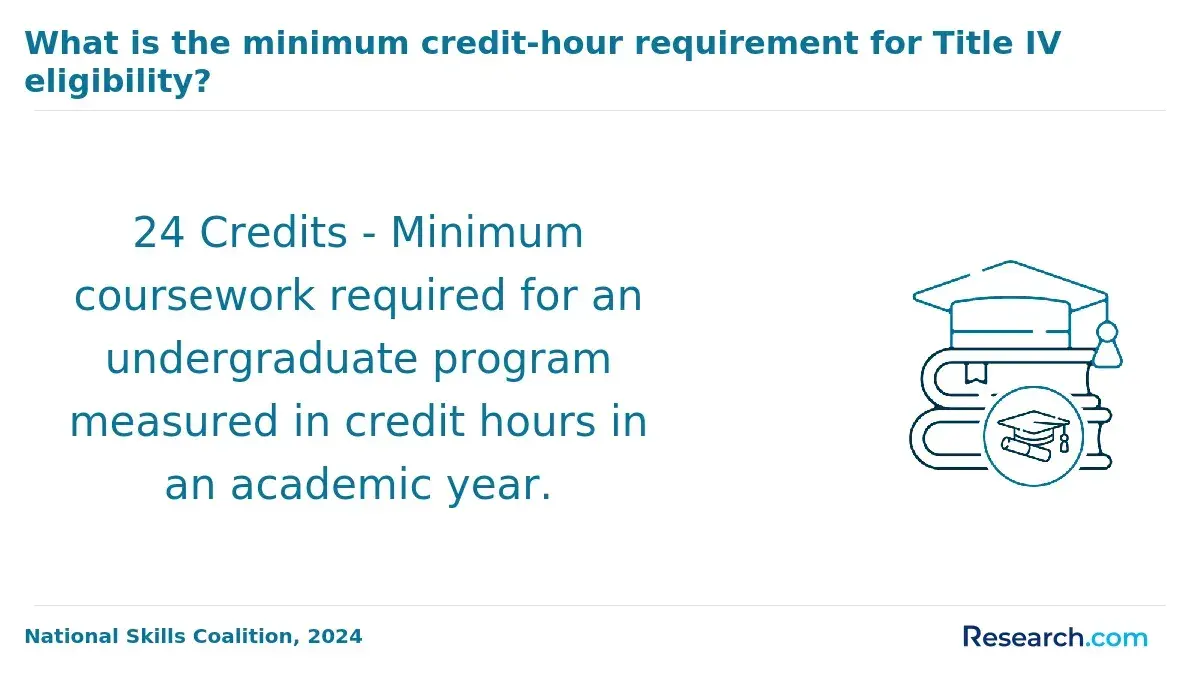
Transfer limits vary widely by institution and degree type. Many online doctorates allow a limited number of post-master's credits, while others award advanced standing for a relevant master's degree but still require most doctoral credits to be completed through the awarding university.
The table below shows common transfer-credit models students may encounter. These are policy patterns, not universal rules, so applicants should confirm each program's catalog language before applying.
| Transfer model | How it works | Best fit | Main caution |
| Course-by-course transfer | Each prior course is matched to a required or elective course | Students with closely related graduate coursework and detailed syllabi | Time-consuming review; fewer credits may be accepted than expected |
| Block transfer or advanced standing | A completed master's degree or post-master's sequence reduces total required credits | Students with a directly related master's degree | The school may still require all doctoral core, research, and dissertation credits |
| Elective-only transfer | Prior credits fill elective space but do not replace core courses | Students with related but not identical graduate work | May not shorten the program if electives are limited |
| No doctoral transfer credit | Program requires all credits in residence | Students seeking a tightly sequenced cohort or research-intensive experience | Usually higher total tuition and longer completion time |
A high advertised transfer maximum does not always equal high practical savings. For example, a school may allow up to 30 transfer credits but require 42 credits in residence, including research seminars, comprehensive exams, dissertation preparation, and dissertation enrollment. In that case, a student with 30 eligible credits may still need several years to finish because the remaining requirements are sequential.
When comparing programs, ask whether the transfer cap applies to the entire degree, only post-master's credits, only electives, or only credits not used to satisfy a previous degree. Some universities will not transfer courses already counted toward a completed master's degree unless the doctorate is explicitly structured as a post-master's program with advanced standing.
What Grades, Course Matches, and Credit-Age Rules Apply to an Online Crisis Management Doctorate?
Most online Crisis Management doctorate programs use three filters before accepting graduate transfer credits: academic performance, course equivalency, and credit age. These rules protect the integrity of the doctorate, but they also determine whether your previous work has real financial value.
Applicants should review these criteria before paying application fees or requesting transcripts. The most common rules include:
- Minimum grade: Many schools require at least a B, 3.0, or equivalent graduate grade for transfer consideration; pass/fail courses may need documentation showing graduate-level mastery.
- Course level: Credits usually must be graduate-level, and some doctoral programs prefer post-master's or doctoral-level coursework for advanced standing.
- Course match: The syllabus should show comparable learning outcomes, readings, assignments, contact hours, and assessment rigor.
- Credit age: Programs often restrict older credits, especially for research methods, technology, cybersecurity, emergency systems, or regulatory content that changes over time.
- Duplication rule: Schools typically will not award credit twice for overlapping courses or for coursework that duplicates required doctoral seminars.
- Institutional status: Coursework from an unaccredited or non-recognized institution is often ineligible, even if the topic appears relevant.
Credit-age rules matter in crisis management because the field changes as technology, climate risk, public health systems, infrastructure vulnerabilities, and emergency communication practices evolve. A leadership or ethics course may remain relevant longer than a course focused on specific software, regulations, threat models, or operational protocols.
If your credits are older, do not assume they are useless. Some programs allow exceptions when applicants can show current professional experience, continuing education, certifications, publications, or recent work in emergency planning, risk assessment, incident command, or resilience strategy. The stronger your documentation, the easier it is for faculty reviewers to justify an exception.
How Does the Transfer-Credit Evaluation Process Work for an Online Crisis Management Doctorate?
The transfer-credit evaluation process usually happens in stages. Admissions staff may provide an informal estimate, but the binding decision generally comes from the registrar, department chair, doctoral program director, or faculty committee after official records are reviewed.
Because policies vary, students should treat transfer evaluation as a due-diligence process rather than a simple admissions formality. A careful sequence looks like this:
- Collect official transcripts from every graduate institution attended, including completed degrees, certificates, and unfinished doctoral study.
- Gather syllabi, catalog descriptions, course objectives, reading lists, major assignments, and proof of credit hours for each course you want reviewed.
- Map your prior courses against the target doctorate's curriculum so you can identify likely core matches, elective matches, and weak matches.
- Ask the school whether it offers a preliminary transfer review before enrollment and whether the result will be provided in writing.
- Confirm whether accepted credits reduce total required credits, only fill electives, or merely waive introductory courses without lowering tuition.
- Request the final degree plan showing remaining courses, residency requirements, dissertation sequence, estimated terms, and tuition after transfer credit is applied.
The written degree plan is the most important document. It should show exactly which credits were accepted, which requirements remain, and whether the program length changes. Without that document, a student may enroll expecting a shorter doctorate and later learn that key credits were applied only as electives or not at all.
One common mistake is sending only transcripts. Transcripts show the course title and grade, but they rarely prove content depth. A syllabus from a graduate seminar in emergency operations, for example, can demonstrate whether the course covered incident command, intergovernmental coordination, risk communication, and after-action analysis at the level the doctoral program expects.
How Do Accreditation and Academic Recognition Affect Crisis Management Doctoral Transfer Credits?
Accreditation affects transfer credit because doctoral institutions need confidence that prior coursework met recognized academic standards. In the United States, colleges and universities are generally evaluated by institutional accreditors recognized by the U.S. Department of Education or the Council for Higher Education Accreditation.
Programmatic accreditation is less common for crisis management doctorates than for fields such as nursing, psychology, or education, so institutional accreditation is often the key baseline.
Students with earlier coursework in public safety, emergency services, or criminal justice should also think about academic recognition across the full pathway. Someone who began with one of the best online associate degree programs in criminal justice, later completed graduate study, and now wants a doctorate should verify that each step came from institutions with recognized accreditation, because weak links can limit credit mobility.
The table below explains how institutional status commonly affects transfer review. It can help you identify potential red flags before investing time in an application.
| Prior institution status | Likely transfer-credit impact | What to verify |
| U.S. institution with recognized institutional accreditation | Usually eligible for review | Whether the credits are graduate-level, relevant, recent, and completed with acceptable grades |
| Institution with specialized or faith-based recognition only | May be reviewed cautiously or rejected depending on school policy | Whether the accreditor is recognized for federal or academic transfer purposes |
| Unaccredited institution | Often ineligible for transfer | Whether any exception exists; many doctoral programs will not make one |
| International university | May be eligible after credential evaluation | U.S. equivalency, credit-hour conversion, grading scale, and official translation requirements |
| Professional training provider | Usually not accepted as graduate transfer credit | Whether the program awards university transcripted graduate credit |
Accreditation also matters for financial aid, employer tuition assistance, faculty hiring, government roles, and future teaching opportunities. A transfer-friendly program is not a good value if the institution lacks recognition that your employer, licensing board, or future university employer expects.
Employer Confidence in Online vs. In-Person Degree Skills, Global 2024

How Do Transfer Credits Affect the Curriculum, Residency, and Dissertation Requirements of an Online Crisis Management Doctorate?
Transfer credits can reduce coursework, but they usually do not erase the most program-specific parts of a doctorate. Online Crisis Management doctorates often include required doctoral seminars, research methodology, comprehensive assessments, applied projects, dissertation or doctoral capstone work, and sometimes short residencies or synchronous intensives.
The following requirements are the ones most likely to remain even after transfer credit is accepted. Review them carefully because they often control the real completion timeline:
- Residency or in-person intensives: Some online programs require campus visits, virtual residencies, weekend institutes, or applied emergency-simulation experiences that cannot be transferred.
- Doctoral research sequence: Schools frequently require students to complete their own research design, qualitative or quantitative methods, proposal development, and dissertation-preparation courses in residence.
- Dissertation or capstone credits: These credits are normally completed at the degree-granting institution because faculty supervision, committee approval, and institutional review board processes are school-specific.
- Comprehensive exams or portfolio reviews: Prior coursework may prepare students for these milestones, but it rarely replaces them.
- Minimum institutional residency credits: Universities often require a minimum number of credits to be completed through their own institution before awarding the doctorate.
This is where a shorter curriculum can still feel long. A student may transfer 18 credits and reduce classroom coursework, but if the dissertation sequence takes multiple terms, the total calendar time may not fall as sharply as tuition. Ask whether courses are offered every term, whether dissertation enrollment has minimum term requirements, and whether part-time students can keep moving during proposal and committee review.
Students should also consider the learning trade-off. Skipping foundational courses can save money, but it may leave gaps if the previous program did not cover current crisis analytics, resilience planning, equity in disaster response, cybersecurity-informed continuity planning, or AI-supported emergency decision systems. The best transfer plan shortens the degree without weakening preparation for the dissertation or leadership goals.
How Much Time and Tuition Can Transfer Credits Save in an Online Crisis Management Doctorate?
Transfer credits can lower tuition only when they reduce the number of billable credits. They can shorten completion time only when they remove courses from the sequence and do not create scheduling gaps. For students comparing programs, the practical question is not "How many credits can I transfer?" but "How many required, tuition-bearing credits will I no longer need to take?"
Recent federal aid limits make this calculation important. Graduate students may borrow up to $20,500 per academic year in Direct Unsubsidized Loans, with Grad PLUS Loans often used for remaining eligible costs. Reducing even one year of enrollment may lower borrowing needs, interest accrual, fees, and opportunity costs, but the exact effect depends on tuition rate, course sequencing, and dissertation pace.
The table below shows simple tuition-only scenarios. These examples do not include fees, books, travel, residency costs, loan interest, or employer reimbursement, so students should use them as a starting point rather than a final budget.
| Accepted credits that replace required courses | Tuition rate per credit | Tuition reduction before fees | Possible time effect |
| 6 credits | $700 | $4,200 | May remove one to two courses |
| 12 credits | $900 | $10,800 | May remove one term or more if courses are not sequential |
| 18 credits | $1,100 | $19,800 | May meaningfully reduce coursework, but dissertation timing may still dominate |
| 24 credits | $1,300 | $31,200 | Can be significant if the program allows those credits to replace required doctoral coursework |
Students researching the criminal justice degree price landscape may notice the same principle at the doctoral level: tuition per credit is only one part of value. A lower-cost program that accepts few credits may be cheaper than a high-tuition program with a generous transfer policy, while a more expensive program may still be a better fit if it accepts substantial relevant doctoral work and supports the student's dissertation topic.
To estimate your own savings, multiply only the credits that replace required courses by the program's per-credit tuition. Then subtract any fees that still apply, including technology fees, dissertation continuation fees, graduation fees, residency travel, transcript evaluation charges, and payment-plan costs. Finally, ask whether transferring credits changes your expected number of terms, because term-based fees can remain even when credit totals fall.
Can Students Transfer Credits From Another Field, an International University, or an Unfinished Crisis Management Doctorate?
Students can sometimes transfer credits from another field, an international university, or an unfinished doctorate, but each situation has extra review issues. The closer the coursework is to crisis management, emergency leadership, public safety, homeland security, environmental risk, public administration, or organizational resilience, the stronger the case.
Related-field credits can be valuable when crisis management overlaps with health, environmental, infrastructure, or safety risks. For example, students comparing the best online environmental health and safety programs may have graduate coursework in risk assessment, regulatory compliance, occupational safety, or emergency preparedness that could support a crisis management doctorate if the doctoral curriculum includes resilience or continuity planning.
These three transfer situations require different evidence. Before applying, identify which one fits your background and prepare the right documentation:
- Credits from another field: Provide syllabi that show direct relevance to crisis leadership, risk communication, emergency operations, policy, analytics, organizational continuity, or research methods rather than relying on the degree title.
- Credits from an international university: Expect to use an approved credential-evaluation service, submit translated records if needed, and document U.S. graduate-level equivalency, grades, and credit-hour conversion.
- Credits from an unfinished doctorate: Ask whether doctoral-level credits can transfer, whether dissertation or proposal credits are excluded, and whether the new school will accept research-methods courses completed under another program's framework.
Unfinished doctoral credits can be especially useful, but they can also be complicated. A previous doctoral seminar in crisis leadership may transfer more easily than dissertation credits tied to a different committee, methodology, or institutional review board approval. If you left a prior program because of academic dismissal, time-limit expiration, or unresolved financial holds, ask the new school whether those issues affect admission or transfer review.
Students should also be careful with professional certifications and agency training. FEMA, military, law enforcement, public health, and emergency-services training may strengthen an application and demonstrate experience, but it usually does not become doctoral transfer credit unless it appears on an accredited university transcript as graduate credit.
How Should Students Compare Online Crisis Management Doctorate Programs That Accept Prior Graduate Work?
The best online Crisis Management doctorate for a student with prior graduate work is not always the one with the highest transfer limit. It is the program that accepts the right credits, preserves academic quality, fits the student's research and career goals, and provides a clear remaining degree plan before enrollment.
Use the following questions when speaking with admissions advisors, program directors, or registrar staff. They are designed to reveal whether a program is truly transfer-friendly or only appears that way in marketing language:
- What is the maximum number of graduate credits that can transfer into this doctorate, and is that maximum realistic for crisis management students?
- Do transferred credits reduce the total credits required for graduation, or do they only satisfy elective space?
- Are credits used toward a completed master's degree eligible for transfer or only credits beyond the master's?
- What minimum grade, credit age, accreditation, and course-equivalency rules apply?
- Who makes the final transfer decision: admissions, registrar, faculty, department chair, or doctoral committee?
- Can I receive a written preliminary evaluation before enrolling or paying a deposit?
- Which requirements cannot be transferred, including residency, doctoral seminars, comprehensive exams, dissertation, capstone, or research sequence?
- How will accepted credits change my tuition estimate, term-by-term schedule, and expected completion date?
- Are there dissertation faculty available in my area of interest, such as disaster resilience, homeland security, organizational crisis leadership, healthcare emergency preparedness, or public-sector risk governance?
- Will this degree meet the expectations of my employer, promotion system, teaching goal, or professional field?
The table below summarizes common red flags and better alternatives. Use it as a final screening tool before committing to a program.
| Red flag | Why it matters | Better approach |
| Only verbal transfer promises | Verbal estimates may not survive faculty or registrar review | Request a written evaluation and revised degree plan |
| High transfer cap with unclear exclusions | Dissertation, residency, and research credits may still be required | Ask which exact requirements can be replaced |
| No clear accreditation information | Recognition affects credit transfer, financial aid, employers, and future teaching options | Verify institutional accreditation through recognized sources |
| Tuition quote excludes fees | Technology, dissertation, residency, and continuation fees can change the real cost | Ask for a full cost-of-attendance estimate after transfer credit |
| Program does not support your research topic | A good transfer policy cannot fix poor dissertation fit | Review faculty expertise before enrolling |
| Pressure to enroll before evaluation | You may lose leverage or discover fewer credits transfer later | Delay deposit until the transfer decision is documented |
Students who should prioritize transfer-friendly programs include those with recent graduate credits in emergency management, homeland security, public administration, risk, safety, or an unfinished related doctorate.
Students who may be better off starting without transfer credit include those changing fields substantially, those with very old credits, those needing a highly structured research foundation, or those whose employer values a specific doctoral curriculum more than a faster timeline.
Other Things You Should Know About Crisis Management
A PhD is usually better for students focused on academic research, university teaching, or theory development. A professional doctorate, such as a Doctor of Management, Doctor of Public Administration, or Doctor of Strategic Leadership with a crisis-focused concentration, may fit working professionals who want applied research tied to organizational resilience, emergency planning, or public-sector leadership.
Many programs prefer or require professional experience in emergency management, public safety, military service, healthcare administration, public administration, homeland security, or organizational leadership. Even when experience is not required, it can strengthen the application and help the student develop a practical dissertation or capstone topic.
Crisis management doctorates generally do not lead to a single required state license. Some related roles may require separate credentials, security clearances, emergency management certifications, teaching qualifications, or employer-specific requirements. Students should verify requirements for their target role before enrolling.
Possible paths include emergency management leadership, continuity planning, homeland security administration, public safety leadership, risk management, disaster policy analysis, consulting, higher education teaching, and executive roles in government, healthcare, utilities, transportation, or large organizations. The degree is most useful when paired with relevant experience and a clear professional goal.
References
- Search icon https://waldorf.edu/online/academics/online-resources/pillars-articles/careers-in-public-safety-fire-homeland-security-emergency-management/
- Online Ph.D. in Crisis Human Services | AcademicEarth.org https://academicearth.org/ph-d-in-crisis-human-services/
- The Pros and Cons of Online Education Graduate Programs - Graduate Programs for Educators https://www.graduateprogram.org/blog/the-pros-and-cons-of-online-education-graduate-programs/
- Transfer Credit - Graduate Studies https://graduatestudies.mines.edu/transfer-credit/
- 2025 Most Affordable Online Emergency Management Degrees https://www.onlineu.com/most-affordable-colleges/emergency-management-degrees
- UMass Global Announces New Ed.D. Transfer Credit Policy https://www.umassglobal.edu/blog-news/umass-global-announces-new-edd-transfer-credit-policy


