2027 Online Crisis Management Doctorate Accreditation Guide: Institutional, Programmatic, and Licensure Considerations

Co-Founder and Chief Data Scientist
Choosing an online crisis management doctorate is partly an academic decision and partly a risk-management decision. More than 2.4 million students were enrolled exclusively online at SARA-participating U. S. institutions in fall 2023, according to NC-SARA's 2024 reporting, making accreditation and state oversight more important for distance learners.
This guide explains institutional accreditation, programmatic accreditation, state authorization, and licensure considerations for prospective doctoral students in emergency management, homeland security, public safety, disaster leadership, and related fields so you can avoid programs that may not meet employer, financial aid, transfer, or state licensing requirements.
Key Things You Should Know
- Institutional accreditation is the baseline requirement: verify the school in the U.S. Department of Education or CHEA-recognized accreditation databases before considering curriculum, cost, or online format.
- Programmatic accreditation is not universally required for crisis management doctorates, but it can matter when the doctorate is housed in public health, psychology, counseling, nursing, healthcare management, safety, or another regulated professional field.
- Licensure is state-specific: state authorization allows an institution to enroll you online, while professional licensure rules decide whether your degree, fieldwork, residency, exams, and supervised hours qualify you for a credential in your state.
Is an Online Crisis Management Doctorate Accredited Differently From an On-Campus Program?
Online crisis management doctorates are not accredited under a separate "online accreditation" system. A legitimate online doctorate should be covered by the same institutional accreditation that applies to the university's campus-based degrees, and any programmatic accreditation should be awarded by the relevant discipline-specific accreditor regardless of delivery format.
The main difference is not the accreditation label; it is the evidence reviewers examine. Online programs must show that distance students receive appropriate faculty access, academic support, library services, identity verification, secure assessment, and equivalent learning outcomes. For a doctorate, reviewers may also examine dissertation supervision, research ethics training, residencies, applied projects, and field placements.
This comparison helps clarify what should be the same and what may require extra scrutiny in an online format.
| Accreditation issue | Online doctorate | On-campus doctorate | Why it matters |
| Institutional accreditation | Should apply to the institution offering the online degree | Should apply to the institution offering the campus degree | It affects federal aid, transfer recognition, employer trust, and doctoral legitimacy |
| Programmatic accreditation | May apply if the discipline has a recognized accreditor | May apply if the discipline has a recognized accreditor | It may influence licensure, certification, internships, or professional recognition |
| State authorization | Required for the school to enroll students located in certain states | Usually less central unless instruction crosses state lines | It determines whether the institution can legally deliver online education to you |
| Licensure eligibility | Must be checked in the student's state, especially for regulated roles | Must be checked in the student's state, especially for regulated roles | A degree can be accredited yet still fail to meet one state's professional requirements |
A common mistake is assuming that "online" makes the degree less credible or, conversely, that a familiar university name removes the need to verify details. The better approach is to confirm the institution's accreditation, program-level approvals, state authorization, and any licensure disclosures before enrolling.
What Is the Difference Between Institutional and Programmatic Accreditation for an Online Crisis Management Doctorate?
Institutional accreditation evaluates the whole college or university. Programmatic accreditation evaluates a specific academic program, school, department, or professional preparation pathway. For online crisis management doctoral students, this distinction matters because the credential may sit in different academic homes, such as emergency management, public administration, criminal justice, public health, safety science, business continuity, leadership, or homeland security.
The table below separates the major approval categories students often confuse. Use it to understand what each category does and what it does not do.
| Category | What it reviews | Who recognizes or oversees it | What it can affect | What it does not automatically prove |
| Institutional accreditation | The university's governance, finances, faculty, student services, academic quality, and integrity | U.S. Department of Education-recognized or CHEA-recognized institutional accreditors | Federal aid eligibility, transfer review, employer recognition, graduate school review | That a specific doctorate meets licensure rules in every state |
| Programmatic accreditation | A particular program or professional school | Discipline-specific accreditors, where applicable | Licensure pathways, certification eligibility, practicum standards, professional reputation | That the whole university is institutionally accredited |
| State authorization | The institution's legal permission to offer distance education to students in a state | State agencies and, for many institutions, NC-SARA participation | Whether you can enroll online from your state | That the program satisfies professional licensure requirements |
| Professional licensure approval | Education, supervised experience, exams, and fieldwork required for a license | State licensing boards | Eligibility for regulated titles or practice authority | That the degree is automatically accepted by employers outside that regulated role |
Another common mistake is relying on old "regional" versus "national" accreditation language. The U.S. Department of Education no longer uses that distinction the way students often use it. Instead, focus on whether the accreditor is recognized for institutional accreditation and whether the school's current status is active, not expired, withdrawn, or limited.
How Can You Verify That an Online Crisis Management Doctorate and Its Accreditor Are Legitimate?
Verification should happen before you apply, before you pay an enrollment deposit, and again before you begin any practicum or residency tied to licensure. The goal is to confirm both the school's legitimacy and the relevance of the accreditor to your degree and professional goal.
Use this sequence to verify an online crisis management doctorate without relying only on marketing language from the school.
- Search the institution in the U.S. Department of Education's Database of Accredited Postsecondary Institutions and Programs and confirm that the accreditor is recognized for institutional accreditation.
- Check the Council for Higher Education Accreditation database as a second source, especially if the school names an accreditor you do not recognize.
- Review the accreditor's own website to confirm the institution's current status, branch campuses, online offerings, sanctions, probation, or teach-out information.
- Ask the program to identify any programmatic accreditation, approval, candidacy, or professional recognition that applies specifically to the crisis management doctorate.
- If the program claims licensure preparation, compare the school's professional licensure disclosure with your state licensing board's education rules.
- Save dated screenshots or PDF confirmations from the school, accreditor, and licensing board before signing an enrollment agreement.
Be cautious if a school says it is "fully accredited" but does not name the accreditor, names an agency that is not recognized by the U.S. Department of Education or CHEA, uses vague terms such as "internationally approved," or implies that accreditation is unnecessary because the program is "career-focused."
Doctoral students should also be careful with programs that advertise unusually short completion times without explaining dissertation expectations, research supervision, or applied doctoral project standards.
An online crisis management doctorate does not always need programmatic accreditation, because crisis management is an interdisciplinary field rather than a single licensed profession. Many doctorates in emergency management, homeland security, disaster science, public safety leadership, or organizational resilience rely primarily on institutional accreditation.
Programmatic accreditation becomes more important when the doctorate is designed to prepare students for a regulated or professionally credentialed field. Before enrolling, identify the academic home of the degree and whether that field has a recognized program-level accreditor.
- Public health or emergency preparedness programs may be affected by CEPH accreditation expectations, particularly when students want public health leadership roles or academic recognition in that field.
- Psychology-related crisis, trauma, or behavioral health doctorates may require APA accreditation for certain licensure pathways, depending on the state and license type.
- Counseling-related doctoral programs may involve CACREP considerations, although counseling licensure is usually based on master's-level preparation plus supervised experience.
- Nursing, healthcare administration, occupational safety, social work, or education-focused doctorates may have their own discipline-specific accreditation or approval expectations.
- Criminal justice, homeland security, and public safety leadership doctorates often do not have a single mandatory programmatic accreditor, so institutional accreditation and employer expectations usually carry more weight.
Students comparing crisis management with adjacent public safety pathways may also want to understand how accreditation works at earlier degree levels, such as an online criminal justice degree, because undergraduate and graduate credits may be evaluated differently by doctoral programs.
The safest conclusion is this: programmatic accreditation is not automatically required for every online crisis management doctorate, but it may be essential if your goal is licensure, board certification, academic employment in a specific discipline, or advancement in a profession that names an approved accreditor.
The accreditation that matters most depends on the professional outcome you want. Crisis management itself is not typically licensed as a standalone profession in the same way as psychology, counseling, nursing, social work, or teaching. However, crisis-related roles often overlap with regulated areas, especially when the work includes clinical care, public health authority, school safety, environmental health, emergency medical systems, or occupational safety.
The table below shows how accreditation and licensure concerns can change by career direction. It is not a substitute for state board review, but it can help you identify which questions to ask.
| Career or credential goal | Likely accreditation concern | Licensure or certification issue to verify |
| Emergency management director or disaster resilience executive | Institutional accreditation is usually the main academic requirement | Professional certifications may value experience, training, and exams more than a specific doctorate |
| Public health emergency preparedness leader | CEPH accreditation may matter if the degree is in public health | Some roles may prefer or require public health credentials, but requirements vary by employer and jurisdiction |
| Trauma, crisis counseling, or behavioral health leadership | APA, CACREP, CSWE, or nursing accreditation may matter depending on the profession | State licensure rules may require specific clinical coursework, supervised hours, internships, and exams |
| Occupational safety, environmental health, or risk compliance leader | Programmatic expectations vary by degree field | Credentials may require specific education, experience, or board-approved coursework |
| Higher education faculty or researcher | Institutional accreditation is essential; programmatic accreditation may strengthen discipline fit | Licensure may not be required unless teaching or supervising in a regulated professional program |
Labor market data can help frame the decision without overstating the value of the doctorate. The U.S. Bureau of Labor Statistics reported a May 2024 median annual wage of $86,130 for emergency management directors; that figure reflects an occupation, not a guaranteed doctoral outcome.
For students interested in safety-heavy crisis roles, comparing related fields through resources on the best online environmental health and safety programs can help clarify whether a specialized safety pathway fits better than a broad crisis management doctorate.
An online crisis management doctorate may meet licensure requirements in one state and not another. This is especially important when the doctorate includes clinical, counseling, psychology, education, nursing, public health, or safety components. State boards can differ on required degree titles, accredited program types, faculty qualifications, practicum hours, residency format, supervised post-degree experience, and exams.
Before enrolling, use a state-specific review process rather than relying on national assumptions. These steps are especially important if you may move before graduation or seek licensure in multiple states.
- Identify the exact license, certification, or regulated role you want, such as psychologist, licensed professional counselor, school administrator, registered nurse leader, public health officer, or safety professional.
- Find the licensing board in the state where you plan to practice and read its education requirements directly.
- Check whether the board requires graduation from an institutionally accredited school, a programmatically accredited program, specific coursework, or in-person fieldwork.
- Ask the university for its professional licensure disclosure for your state, not just a general national statement.
- Send the program plan, course list, practicum description, and accreditation details to the licensing board if the rules are unclear.
- Repeat the review if you relocate, because your state of residence for online enrollment and your future state of practice may not be the same.
Students sometimes discover that a doctorate is unnecessary for their intended credential or that a lower-cost pathway fits the role better. For example, those exploring entry-level public safety careers before a doctoral pathway may compare the best online associate degree programs in criminal justice before committing to a long graduate sequence.
The key point is practical: do not ask, "Is this program accredited?" and stop there. Ask, "Does this exact program, completed from my state, satisfy the education rules for the credential I plan to pursue?"
Practicum, internship, clinical, and residency requirements can be decisive for licensure eligibility. Many crisis management doctorates are research or leadership degrees with no clinical practice authority. Others include applied fieldwork, emergency exercises, public agency placements, healthcare leadership projects, or behavioral health components that may need to satisfy professional standards.
Before treating a field experience as licensure-relevant, confirm the details in writing. Licensing boards may care not only about the number of hours but also about supervision credentials, setting type, client contact, documentation, evaluation, and whether the experience was completed before or after the degree.
- Ask whether the program requires in-person residencies, campus intensives, simulation labs, emergency operations exercises, or local agency placements.
- Confirm who is responsible for finding placements: the university, the student, or both.
- Verify whether supervisors must hold a specific license, certification, rank, or professional credential.
- Check whether online or remote fieldwork is accepted by the relevant licensing board or certifying body.
- Review whether your state requires background checks, immunizations, liability insurance, fingerprinting, or site contracts before placement begins.
- Ask how the school handles placement barriers if no approved site is available near you.
Students often focus on dissertation topics and overlook fieldwork logistics until late in the program. That is risky because a doctoral curriculum can be academically accredited while a practicum structure still fails to satisfy a particular state board's requirements.
Accreditation affects the practical value of an online crisis management doctorate beyond licensure. It can influence access to federal financial aid, transfer credit review, employer tuition reimbursement, military or veteran education benefits, faculty hiring, postdoctoral study, and eligibility for some professional certifications.
Cost is a major part of the accreditation decision because a low advertised tuition can become expensive if credits do not transfer or the degree is not recognized.
Federal graduate Direct Unsubsidized Loans are capped at $20,500 per academic year, so doctoral students often compare tuition, fees, residency travel, technology costs, and dissertation extension fees carefully. Students evaluating public safety pathways can use discussions of criminal justice degree price as a useful comparison point for how tuition and fees vary across related online programs.
The table below summarizes common downstream effects of accreditation status. It is meant to help you identify where an unverified or weakly accredited program may create risk.
| Decision area | Why accreditation matters | Risk if accreditation is missing or unclear |
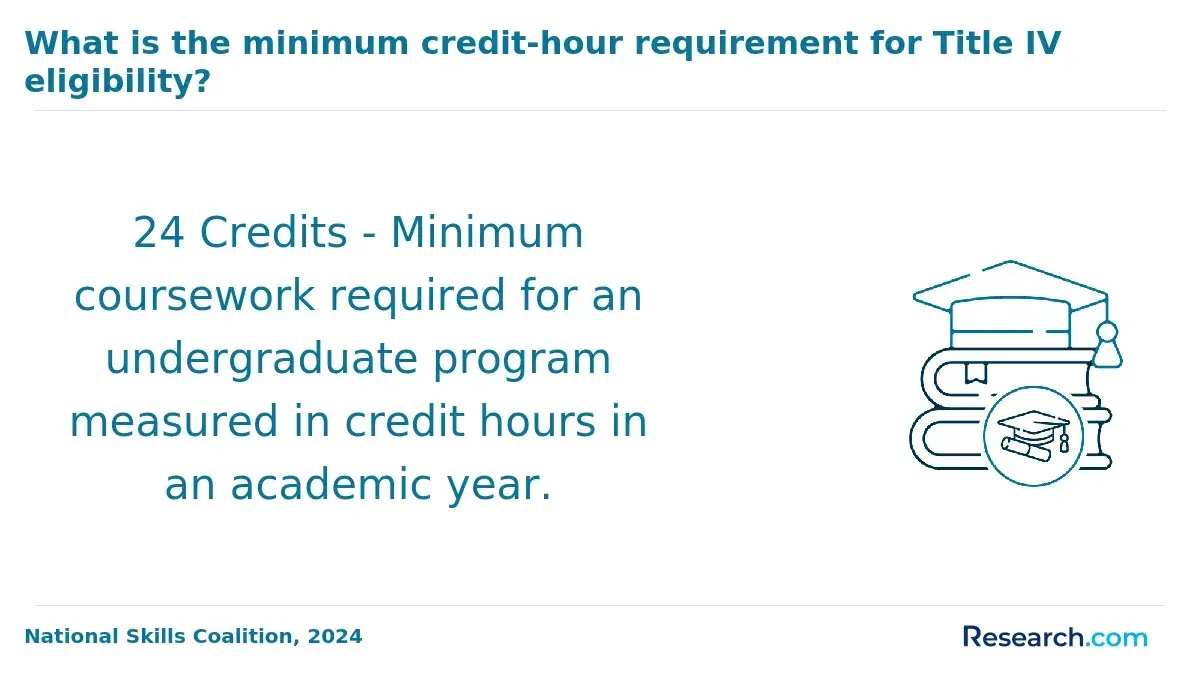
| Federal financial aid | Title IV aid generally requires attendance at an eligible accredited institution | Students may need private financing or out-of-pocket payment |
| Transfer credits | Receiving schools commonly review institutional accreditation and course comparability | Credits may be denied even if coursework was completed |
| Employer recognition | Employers may screen for accredited degrees in leadership, public safety, and academic roles | The doctorate may not support promotion, reimbursement, or hiring requirements |
| Further study | Postdoctoral, certificate, or second doctorate programs may require accredited prior degrees | Applicants may be ineligible or asked for additional coursework |
| Professional credentials | Some certifying bodies require accredited education or specific program approval | Graduates may need alternate experience, exams, or additional degrees |
Accreditation should not be treated as the only measure of quality, but it is the first gate. After verifying it, compare faculty expertise, dissertation support, completion policies, cohort model, research methods training, crisis simulation opportunities, alumni outcomes, and the total cost through graduation.
What Happens if an Online Crisis Management Doctorate Loses Accreditation or Is Only in Candidacy?
If an online crisis management doctorate loses accreditation, is placed on probation, or is only in candidacy, the implications can be serious. Candidacy means a program or institution is being reviewed for possible accreditation; it is not the same as full accreditation. Probation or warning status means the accreditor has identified compliance concerns that require correction.
The table below explains common accreditation statuses and what they may mean for students. Always confirm details with the accreditor and the school because teach-out plans and student protections vary.
| Status | What it generally means | Student implication |
| Full accreditation | The institution or program currently meets accreditor standards | Students should still verify state licensure fit and any program-specific requirements |
| Candidacy or pre-accreditation | The institution or program is pursuing accreditation but has not yet fully earned it | Students may face uncertainty if full accreditation is delayed or denied |
| Warning, monitoring, or probation | The accreditor has identified issues that must be addressed | Students should ask about timelines, sanctions, and possible effects on aid or graduation |
| Accreditation withdrawn or terminated | The accreditor has ended recognized status | Students may need a teach-out, transfer option, or written documentation for employers and boards |
| Teach-out agreement | An approved plan allows students to complete or transfer after closure or loss of approval | Students should review deadlines, costs, credit acceptance, and degree-conferral details |
If you are already enrolled when accreditation status changes, act quickly and document everything. Contact the accreditor, financial aid office, registrar, program director, and any relevant licensing board. Ask whether your expected graduation date, degree title, transcript language, aid eligibility, field placements, and licensure eligibility will be affected.
The biggest mistake is assuming candidacy will become full accreditation before you graduate. If licensure, employer reimbursement, transfer, or faculty employment depends on full accreditation, wait for confirmation or choose a program that already holds the required status.
Other Things You Should Know About Crisis Management
Common options include a PhD, EdD, DBA, Doctor of Public Administration, Doctor of Public Health, or professional doctorate in emergency management, homeland security, public safety, disaster science, organizational leadership, or resilience. The best fit depends on whether you want research, executive leadership, teaching, policy, or applied practice.
Not usually. Many emergency management leadership roles value experience, incident command knowledge, public-sector leadership, planning skills, and professional certifications. A doctorate may be useful for senior strategy roles, consulting, research, teaching, or specialized leadership, but it is rarely the only path into the field.
Many online programs are designed for working professionals, but the workload can still be substantial. Dissertation research, applied projects, residencies, and field-based assignments may require scheduled time away from work, especially during research approval, data collection, or emergency management exercises.
Look for faculty with crisis leadership, emergency management, homeland security, public health preparedness, disaster research, public administration, or safety experience that matches your goals. Strong dissertation supervision and methodological expertise are especially important at the doctoral level.
- Online Ph.D. in Crisis Human Services | AcademicEarth.org https://academicearth.org/ph-d-in-crisis-human-services/
- Online Degree vs Certification: What Gets You Hired 2026 https://unima.ecampus.ac.mw/online-degree-vs-short-certification-in-2026-which-one-actually-gets-you-hired/
- How to Become a Crisis Counselor: Step-by-Step Guide https://onlinecounselingprograms.com/become-a-counselor/counseling-careers/crisis-intervention-counselor/
- Crisis and Disaster Management, BS https://www.ucmo.edu/academics/programs/majors/hcbps/cdm/crisis-and-disaster-management-bs/
- Accredited vs Non-Accredited Training: Understanding Your Options https://www.qahe.org/article/accredited-vs-non-accredited-training-understanding-your-options/
- Are Online PhD Programs Credible? https://henryharvin.ae/blog/are-online-phd-programs-credible/
- Crisis Helplines - International Council for Helplines https://councilforhelplines.org/accreditation/crisis-helplines
- Crisis Specialist Training and Certification Course© – American Association of Suicidology https://suicidology.org/services/certification/crisis-specialist-training-and-certification-course/
- 25 Most Affordable Disaster Management MPH Degrees - MPH Online https://www.mphonline.org/best-disaster-management-mph/