2027 Online Criminal Justice Degree Programs With Monthly Tuition Payment Plans

Co-Founder and Chief Data Scientist
Paying an online Criminal Justice tuition bill in one lump sum can be difficult even when a program is affordable. Monthly tuition payment plans divide a term balance into scheduled installments, usually after financial aid is applied.
For context, College Board reported average 2024-25 published tuition and fees of $11,610 at public four-year in-state institutions. This guide helps prospective online students compare payment-plan availability, total cost, deposits, financial aid timing, and contract terms so they can choose a program and payment method that fit their budget.
Key Things to Know About Criminal Justice Programs with Monthly Tuition Payments
- Online Criminal Justice programs may offer installment plans, but the plan is typically administered by the university for a semester or term - not as a long-term loan for the entire degree.
- A monthly plan can reduce a term bill into predictable payments, but it may include enrollment or late fees and usually does not cover every charge, such as books, technology, or graduation fees.
- Using the 2024-25 public four-year in-state average tuition figure of $11,610 as broad context, a student should compare the program's actual per-credit price, term schedule, aid disbursement date, and installment count rather than relying on a national average.
Which online Criminal Justice degree programs have monthly tuition payment plans?
Monthly payment availability is usually determined at the institution level, not by the Criminal Justice major itself. A university may let eligible online students in a Criminal Justice bachelor's, master's, or certificate program enroll in an installment plan for a particular term, subject to account standing, enrollment status, and payment deadlines.
The following examples identify schools with online Criminal Justice study options and institutional payment-plan processes. Plan availability, installment counts, fees, and eligibility can change by term, so confirm the details with the bursar or student accounts office before paying an enrollment fee.
| Institution and online study option | Payment-plan approach | What to verify before enrolling |
| University of Maryland Global Campus, online bachelor's in criminal justice | Institutional payment-plan options may allow term charges to be paid in installments. | Whether your session length, residency category, and account balance qualify. |
| Arizona State University, online criminology and criminal justice programs | Students may have access to university tuition-payment arrangements for eligible charges. | Plan opening date, number of installments, and whether aid must post first. |
| Southern New Hampshire University, online criminal justice programs | Billing arrangements can be available for students with remaining balances after aid and other payments. | Whether the plan applies to your specific online term and payment method. |
Do not treat this as a guarantee that a plan is available at admission. Ask for the current written payment-plan agreement, then compare its covered balance with your actual student account statement.
How much do online Criminal Justice degree programs typically cost?
Online Criminal Justice costs vary more by institution, residency policy, transfer credits, and course load than by the monthly plan itself. College Board's 2024-25 average published tuition and fees were $11,610 for public four-year in-state students, $30,780 for public four-year out-of-state students, and $43,350 at private nonprofit four-year institutions. These are broad undergraduate benchmarks, not the price of a particular online Criminal Justice degree.
Many online programs publish a per-credit tuition rate. To estimate a term balance, multiply the per-credit rate by enrolled credits, then add required program charges and subtract confirmed grants, scholarships, employer benefits, and disbursed aid. Students comparing Criminal Justice with an online cyber security degree should also compare course requirements and career fit, not only tuition per credit.
This comparison shows why a stated "monthly payment" is not a universal price. The payment changes with the balance and the number of installments the school permits.
| Illustrative remaining term balance | Four equal installments | Six equal installments | Important limitation |
| $2,400 | $600 per payment | $400 per payment | Excludes any enrollment fee, late fee, or charges billed separately. |
| $4,800 | $1,200 per payment | $800 per payment | Schools may not offer six installments for a short session. |
| $7,200 | $1,800 per payment | $1,200 per payment | Financial aid timing can reduce or change the financed balance. |
These are arithmetic examples, not average program payments. There is no single reliable national average monthly payment for online Criminal Justice degrees because schools set different tuition, term lengths, fees, and installment schedules.
How common are monthly tuition payment plans among Criminal Justice programs?
Installment plans are common across U.S. higher education, especially at institutions that bill tuition by semester, quarter, or online session. They are not universal, however, and a school may offer a plan only for certain terms, balances, or payment methods. The Criminal Justice department generally does not control the plan.
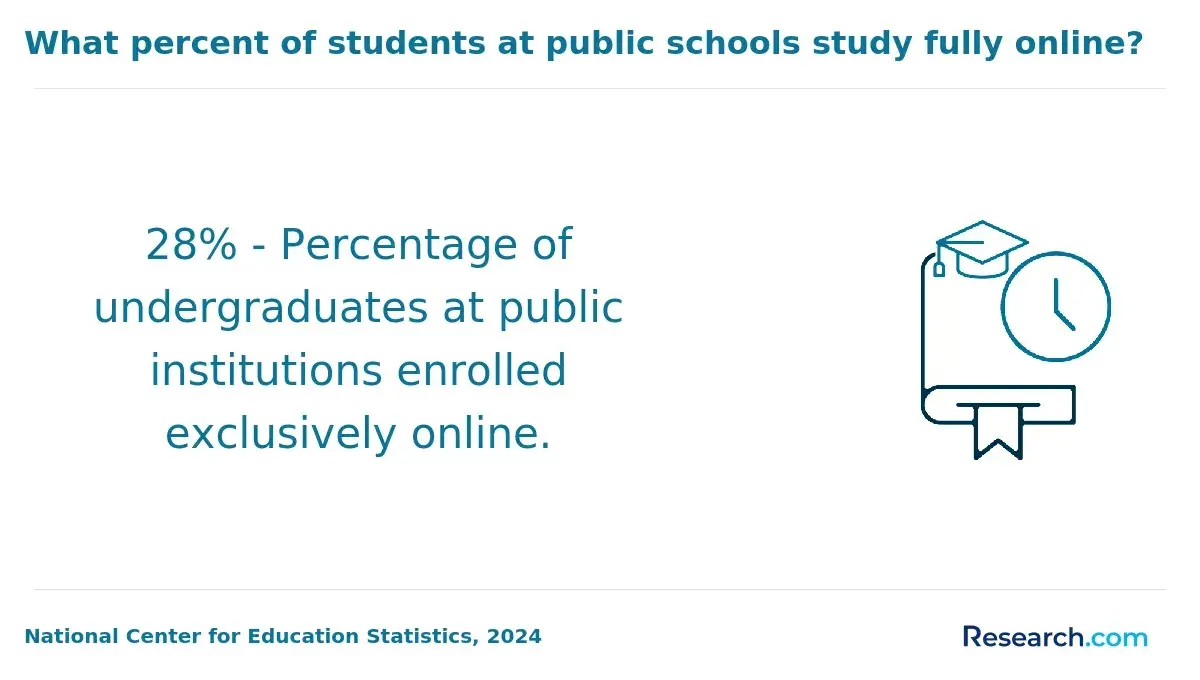
Online enrollment has made billing flexibility more relevant because many adult learners take classes while working. The National Center for Education Statistics reported that 54% of students enrolled exclusively in distance education in fall 2022 were age 25 or older, showing why term-based budgeting can matter for online learners; it does not establish that those students used payment plans.
When comparing programs, look beyond the word "monthly." If you are also exploring quantitative fields, online math degrees may have different course sequences and billing calendars, even when offered by the same institution.
A practical way to check availability is to follow these steps:
- Find the student accounts, cashier, or bursar page - not just the academic program page.
- Confirm that fully online students and your specific session are eligible.
- Request the current schedule of due dates, enrollment fee, missed-payment policy, and covered charges in writing.
- Compare the plan's final payment date with your expected paychecks, reimbursement date, or aid disbursement.
Can monthly tuition plans make paying for Criminal Justice degrees more attainable?
A monthly plan can make a Criminal Justice degree more attainable for a student who can pay the full term balance over a short period but cannot pay it all before classes begin. It is a cash-flow tool: it spreads an existing obligation across several due dates. It does not reduce tuition, replace an aid application, or create more funding.
It tends to work best for employed learners with stable monthly income, students using employer reimbursement after completing a course, and families bridging a modest gap after grants and federal aid. Students considering career paths and majors broadly can also review fun majors in college that pay well, but expected earnings should not be used to justify a payment amount that is unaffordable now.
The trade-offs are clearer when payment plans are compared with other ways to cover a remaining balance.
| Option | May fit best when | Main trade-off |
| Short-term monthly payment plan | You can clear the balance within the school's term schedule. | Missed payments can trigger fees, account holds, or plan cancellation. |
| Federal student loan, if eligible | Your funding need extends beyond the current term. | Borrowing can add interest and long-term repayment obligations. |
| Employer tuition reimbursement | Your employer has a written benefit and you meet its rules. | You may need to pay first and wait for reimbursement. |
| Paying upfront | You have sufficient savings without harming essential expenses. | A large immediate payment reduces short-term liquidity. |
A plan is usually a poor fit if meeting every installment would require high-cost credit-card debt, if income is unpredictable, or if the plan ends before expected employer reimbursement arrives. In those cases, reduce the course load, seek aid counseling, or compare lower-cost accredited options before signing an agreement.
Does monthly payment plans have an effect on the overall cost of Criminal Justice degrees?
Monthly payment plans normally do not change the school's tuition rate. They can increase the amount paid if the institution charges a plan enrollment fee, returned-payment fee, late fee, or reinstatement fee. A plan that is advertised as interest-free can still have these administrative costs.
Before choosing installments, calculate the total contractual cost rather than focusing only on the monthly figure. Compare the school's lump-sum balance with the sum of all installments plus every mandatory plan fee. A shorter plan may have a larger monthly amount but lower exposure to missed-payment charges.
Common cost mistakes include assuming all fees are included, selecting the maximum number of installments without checking the fee, and using a credit card that carries interest to make each payment. A payment plan can be less expensive than private borrowing when it has a modest fixed fee and is paid on time, but that comparison depends on the actual terms.
Do monthly payment plans affect your financial aid eligibility for Criminal Justice programs?
Enrolling in a tuition payment plan generally does not by itself change eligibility for federal financial aid. Eligibility is determined through the FAFSA, program enrollment, satisfactory academic progress, and other federal and institutional requirements. The plan affects how you pay the balance that remains after aid is applied.
The timing matters. Federal aid often disburses after enrollment and attendance requirements are met, while an installment may be due earlier. Ask the financial aid office whether estimated aid can be reflected in the payment-plan balance and what happens if a grant, loan, or scholarship is reduced, delayed, or canceled.
Keep financial aid and billing decisions separate but coordinated. A student should accept only the aid needed, understand loan obligations before accepting them, and avoid assuming a payment plan protects them from a balance created by withdrawing from a course. Withdrawal can lead to aid recalculation and an unexpected amount due.
Is there a deposit required before starting Criminal Justice monthly payment plans?
Some schools require an initial payment or down payment when a student enrolls in a plan; others require only a nonrefundable plan enrollment fee and make the first installment due soon afterward. The amount is institution-specific and may depend on the term balance, enrollment date, and whether financial aid is pending.
Do not confuse a payment-plan down payment with an admissions deposit. An admissions deposit may reserve a place in a program, while a plan down payment reduces the bill that will be divided into installments. Either payment may be nonrefundable under the school's published rules.
Before enrolling, ask the student accounts office for the exact amount due today, the date it will be applied to your account, and the refund treatment if you drop or withdraw. Get a revised payment schedule after any aid posts, because the required installments may change.
Are there fees not covered by monthly tuition payment plans for Criminal Justice programs?
Usually, yes. A plan may cover eligible tuition and mandatory institutional fees on the student account, but schools often exclude costs paid to third parties or charged at a different time. Criminal Justice students may also have course-related expenses for background checks, field experiences, software, or professional requirements, depending on the curriculum.
This table separates common bill categories so students can ask whether each one is included before building a monthly budget.
| Charge category | Often included in a plan? | What to confirm |
| Tuition for registered courses | Often | Whether all enrolled credits are eligible. |
| Mandatory institutional fees | Sometimes | Whether technology, distance-learning, and course fees are included. |
| Books, access codes, and supplies | Often not | Whether they are billed by the school or purchased separately. |
| Background checks, fingerprinting, or field-placement costs | Often not | Who collects the payment and when it is due. |
| Plan enrollment, late, or returned-payment fees | No; these are plan costs | Amount, trigger, and whether the fee is refundable. |
Request an itemized estimate for the full academic period, not only the next tuition bill. That helps prevent a manageable first-month payment from being followed by an unplanned course or compliance expense.
What should you look for in payment plan terms for Criminal Justice programs?
Read the payment-plan agreement as carefully as the tuition schedule. The most important question is whether the schedule matches your cash flow through the final due date, not whether the first payment is low. Students weighing other professional pathways, such as an BCBA programs online option, should apply the same term-by-term comparison because program pacing and licensure-related costs can differ.
Use the following checklist to compare written offers from schools:
- Identify the exact balance included, the required down payment, and every plan enrollment fee.
- Count installments and record each due date, including whether payments are monthly or tied to shorter online sessions.
- Check late-payment, returned-payment, cancellation, and reinstatement fees and consequences.
- Confirm whether pending financial aid, scholarships, veteran benefits, or employer reimbursement are credited before the schedule is set.
- Ask whether a missed payment creates a registration, transcript, course-access, or graduation hold.
- Review refund and withdrawal rules, including how the schedule changes if you drop a course.
Red flags include vague statements about "low monthly payments" without a total-cost disclosure, a final balloon payment you cannot meet, and verbal answers that conflict with the agreement. Keep copies of the contract, account statement, and confirmation emails.
How do you know if online Criminal Justice degrees with monthly payments are right for you?
A monthly payment plan is right for you when it supports - not strains - your plan to complete an accredited online Criminal Justice degree. First assess program fit: curriculum, transfer-credit policy, online course format, total credits, accreditation, and any career or state-specific requirements. Criminal Justice degrees can support varied roles, but agency hiring standards, background requirements, and credentials vary by employer and jurisdiction.
The plan is a reasonable choice when your verified remaining term balance can be paid from reliable income by the final due date, after housing, food, transportation, emergency savings, and other essential obligations. It is not a substitute for a realistic degree budget. If you expect to advance into management later, an MBA AACSB online program may be a separate future decision with different admissions, tuition, and payment considerations.
Make the decision in this order:
- Compare the full program price and completion timeline after transfer credits, rather than comparing a single monthly installment.
- Submit financial aid materials early and separate confirmed aid from estimates.
- List all non-tuition costs, including technology, books, and any course-specific compliance charges.
- Test the payment schedule against your monthly budget and leave room for an unexpected expense.
- Choose the plan only after reviewing the written fees, due dates, and missed-payment consequences.
For students who can pay a term balance within a few months, installments can preserve cash flow without adding loan interest. For students facing a persistent gap each term, a lower-cost program, reduced course load, employer benefit, scholarship search, or financial aid counseling may be safer than repeatedly relying on a plan.
Other Things You Should Know About Criminal Justice
Possibly. Payment plans are generally tied to the institution and term, not degree level. Confirm that online associate-degree students are eligible and ask whether shorter sessions have fewer installments.
Many school-administered short-term tuition installment plans do not function like private loans and may not require a traditional credit check. Requirements vary, so review the agreement and ask the school directly.
Often, schools coordinate billing with eligible education benefits, but certification and payment timing vary. Contact the school's veterans services office before enrolling so you understand any amount due while benefits are pending.
A degree may help with qualifications or advancement, but it does not automatically meet police hiring, academy, physical fitness, background investigation, or state and local requirements. Check the standards of the agencies where you intend to apply.
References
- How Much Does A Criminal Justice Degree Cost? https://imagine-america.org/blog/much-criminal-justice-degree-cost
- Online Associate in Criminal Justice | AcademicEarth.org https://academicearth.org/associate-in-criminal-justice/
- Should I Earn an Associate or Bachelor's in Criminal Justice? https://www.allcriminaljusticeschools.com/blog/associate-vs-bachelors-in-criminal-justice/
- Why Tuition Payment Plans Help Students Stay Enrolled - Campus Commerce https://campuscommerce.com/blog-why-tuition-payment-plans-help-students-stay-enrolled/
- Return on Investment for a College Degree in Criminal Justice ROI or a College Degree in Criminal Justice https://www.criminaljusticeprograms.com/articles/return-on-investment-for-a-college-degree-in-criminal-justice/
- 2025 Most Affordable Online Criminal Justice Degrees https://www.onlineu.com/most-affordable-colleges/criminal-justice-degrees
- Online Criminal Justice Degree | BS in Criminal Justice | King https://online.king.edu/online-degree-programs/bachelor-of-science-in-criminal-justice-and-criminology/
- Earn An Online Criminal Justice Degree | OEDb.org https://www.oedb.org/rankings/online-criminal-justice-programs/
- What Is a Tuition Payment Plan and How Can You Benefit from One? | NC Assist Loans https://www.ncassist.org/paying-for-college-101/blog/tuition-payment-plan/
- Most Affordable Online Criminal Justice Degrees https://www.affordablecollegesonline.org/degrees/criminal-justice-programs/