2027 Online Business Administration Degree Programs With No Personal Statement or Admissions Essay Required

Co-Founder and Chief Data Scientist
An online business administration degree with no personal statement can shorten an application, but it does not remove every admissions standard. National Center for Education Statistics data released in 2024 show that 54% of U.S. postsecondary students took at least one distance education course in fall 2022, making online program comparison increasingly important.
This guide is for applicants who want less writing-intensive admissions and need to understand GPA, transcripts, transfer credit, accreditation, costs, and scholarship requirements before applying.
Key Things You Should Know
- A true no-essay online business administration program does not require a personal statement for standard admission, but it may still review transcripts, GPA, prerequisites, residency, prior college credits, or identity documentation; it is not the same as automatic or open admission.
- Essay-optional means writing can strengthen or explain an application, while essay-waived usually means a school has removed an essay for a particular applicant group, term, or pathway; honors programs, scholarships, and competitive majors may still require written responses.
- Application simplicity should not outweigh program value: the 2024-25 average published in-state tuition at public four-year institutions was $11,610, according to College Board, so compare total cost, transfer policies, institutional accreditation, business curriculum, and career support before enrolling.
What Does No Personal Statement or Admissions Essay Required Mean for Online Business Administration Degree Programs?
"No personal statement or admissions essay required" generally means the standard application for a particular online business administration program does not ask applicants to submit a narrative about their background, goals, challenges, or interest in the school. The admissions office instead makes its initial decision using more structured evidence, such as academic records and completed application fields.
This policy is most common when a college uses published minimum criteria, particularly for adult, transfer, or degree-completion applicants. It does not mean the college ignores academic preparation, has no capacity limits, or will admit every applicant. A school can still deny admission when an applicant does not meet academic, documentation, residency, or program-specific requirements.
Business administration is a broad undergraduate pathway covering subjects such as accounting, finance, marketing, operations, management, economics, and business communication. Students still need to choose a program that supports their goals rather than choosing solely by application length.
Reviewing best majors in college can also help applicants decide whether a general business administration degree or a more specialized major better fits their intended career direction.
A no-essay policy should be confirmed for the exact degree level, online format, entry term, and applicant category. A university may not require an essay from a transfer applicant while requiring one from a first-time student, international applicant, or applicant seeking admission to an honors college.
What Admissions Requirements Do Online Business Administration Degree Programs Use Instead of an Essay?
Without an essay, admissions teams commonly rely more heavily on records that can be verified consistently across applicants. Requirements vary by institution, degree level, and whether a student is applying as a first-year, transfer, returning, or adult learner.
The following table shows common alternatives to an admissions essay and what each item helps a school assess. It is a planning tool, not a universal checklist:
| Requirement | What the school reviews | Why it may matter |
| Official or unofficial transcripts | Completed coursework, grades, graduation status, and academic trends | Usually the central record for determining eligibility and transfer credit |
| Minimum GPA | High school or prior college cumulative GPA | May determine regular admission, conditional admission, or denial |
| Prerequisite courses | English, mathematics, or introductory business preparation | Can affect admission or placement into foundational courses |
| Standardized test scores | SAT or ACT scores when requested or voluntarily submitted | Many schools are test-optional, but policies can differ by applicant type |
| Transfer-credit evaluation | Courses from accredited institutions, military training, or approved prior learning | Determines remaining credits, time to degree, and total cost |
| Resume or work history | Professional experience, particularly for adult or degree-completion pathways | May support placement, prior-learning review, or a holistic review |
| Recommendations or short responses | External perspectives or limited written answers | May be required for selective tracks even when the main application has no essay |
Ask whether a stated GPA is a minimum for application, guaranteed consideration, or regular admission. A student who falls below a threshold may be offered conditional admission, asked to complete preparatory coursework, or required to submit additional information. Test-optional also addresses test scores, not essays; a program can be test-optional and still require a personal statement, or require no essay while retaining test-score rules.
Who Is a Good Fit for Online Business Administration Degree Programs With No Admissions Essay?
No-essay admission can be a practical fit for applicants whose academic history already communicates their readiness and who prefer an efficient, document-based process. This includes working adults returning to school, students transferring a substantial number of credits, military-connected learners, and applicants who need to apply to several programs while balancing work or family responsibilities.
It can also work well for students with a solid transcript and a clear goal, such as moving into supervisory work, sales operations, office management, small-business ownership, or an entry-level business role.
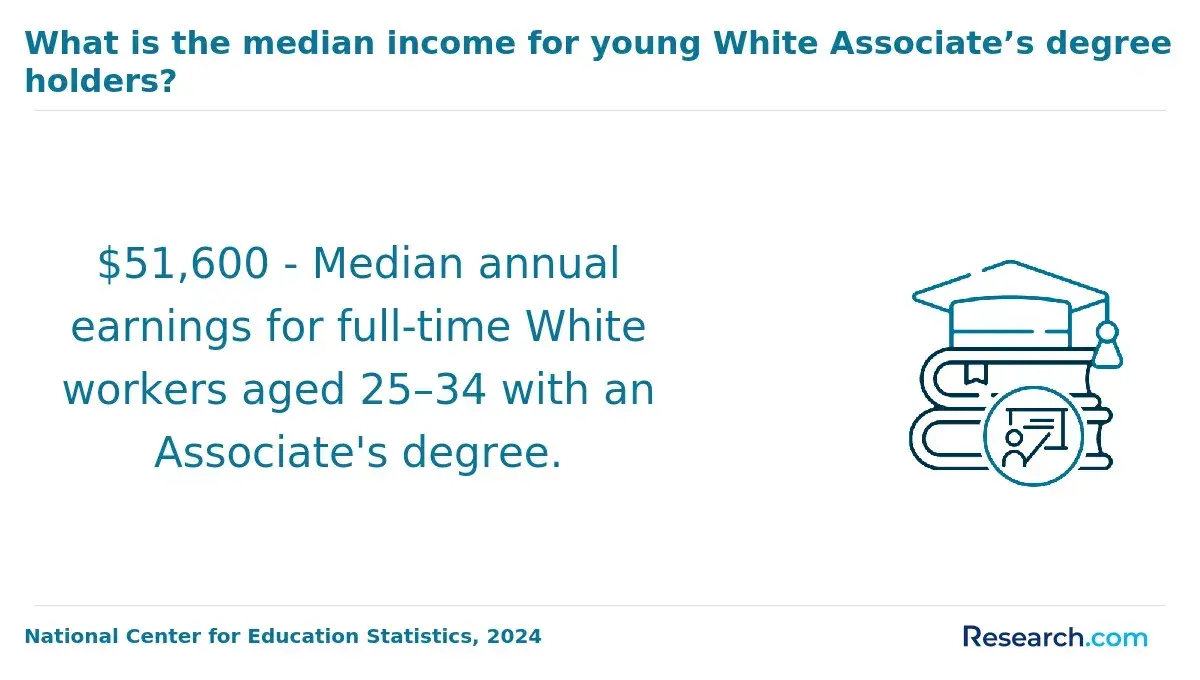
For learners who want an earlier, lower-commitment route into college before completing a bachelor's degree, an accelerated associate degree online may be another option to evaluate alongside direct bachelor's enrollment.
A no-essay route may be less suitable for applicants whose records do not reflect their current ability. An essay can sometimes provide meaningful context for a low GPA, a long enrollment gap, caregiving responsibilities, military service, a career change, or an upward academic trend.
Students with unusual circumstances should consider essay-optional programs that allow them to submit a concise explanation rather than treating the absence of an essay as automatically advantageous.
Business administration graduates can pursue varied roles, so no program can promise a particular job or salary. The U.S. Bureau of Labor Statistics reported a 2023 median annual wage of $99,410 for management analysts in its 2024 Occupational Outlook Handbook update, but that occupation commonly requires related experience in addition to a bachelor's degree.
Use career services, internships, concentrations, and local employer connections to assess whether a program supports the role you actually want.
What Is the Difference Between No-Essay, Essay-Optional, and Essay-Waived Business Administration Degree Admissions?
The wording on an admissions page matters because these policies create different choices for applicants. Read the requirements for the exact application cycle rather than relying on search results, promotional language, or a policy that applied in a prior term.
This comparison clarifies what each policy usually means and when an applicant may still need written materials:
| Policy | Meaning for standard admission | Applicant decision | Important limitation |
| No essay required | No personal statement is part of the regular application. | Submit required records and forms without preparing an admissions essay. | Separate scholarships, honors programs, or appeals can still request writing. |
| Essay-optional | The essay is not mandatory, but the school will consider it if submitted. | Submit one when it adds relevant context or demonstrates strengths not shown elsewhere. | Not submitting may remove an opportunity to explain a weaker record. |
| Essay-waived | The school has removed an essay requirement for a defined group, term, or condition. | Confirm that the waiver applies to your applicant category and program. | The waiver can expire or exclude transfers, special populations, or competitive pathways. |
| Essay required | A written statement is part of the complete application. | Plan time to answer the prompt directly and proofread carefully. | Requirements may differ between university admission and business-school admission. |
Do not confuse a waived essay with a permanent no-essay policy. A waiver may be tied to a partnership agreement, a specific campus, a direct-admission pathway, or an enrollment period. If the policy language is unclear, request written confirmation from admissions before paying an application fee or submitting incomplete materials.
Are Online Business Administration Degree Programs With No Admissions Essay Easier to Get Into?
Not necessarily. A no-essay application is easier to complete, but admission can remain selective because the school may use GPA, course rigor, transfer performance, available seats, prerequisite completion, or other criteria. The absence of one application component does not reveal an institution's academic standards or the likelihood of admission.
Applicants should separate application burden from admissions selectivity. A program with a clear GPA threshold and no essay may be predictable for a qualified student. By contrast, an essay-optional program may be more flexible for someone whose transcript needs context. Neither model is inherently better.
Watch for two common mistakes: assuming "no essay" means open enrollment, and treating conditional admission as identical to regular admission. Conditional admission can require a student to meet a first-term GPA, complete developmental coursework, or limit course loads. Ask the school whether business administration majors have additional progression requirements after general university admission.
A stronger decision uses several signals together: published admission criteria, retention support, required foundational courses, transfer-credit rules, institutional accreditation, and the transparency of the school's costs. If a college will not clearly explain these factors, a short application should not outweigh that concern.
How Can You Verify Accreditation and Quality in No-Essay Online Business Administration Degree Programs?
Start by confirming institutional accreditation through the college itself and the U.S. Department of Education or Council for Higher Education Accreditation databases. Institutional accreditation is important for federal financial aid eligibility, credit transfer, graduate-school consideration, and employer confidence. An easy application does not substitute for recognized accreditation.
Then determine whether the business program has specialized accreditation. Organizations such as AACSB, ACBSP, and IACBE accredit some business schools or programs, but specialized accreditation is not required for every credible business administration degree. Its value depends on the student's target employers, graduate-school plans, budget, and the program's outcomes.
Quality review should extend beyond accreditation. The following checks help distinguish a well-supported online degree from a minimally documented option:
- Verify that the diploma and transcript identify the same institution and degree as the school's campus-based equivalent when that matters to you.
- Review the curriculum for accounting, finance, economics, management, marketing, analytics, communication, and an applied capstone or internship opportunity.
- Ask whether online students receive tutoring, academic advising, library access, career coaching, networking support, and technical assistance.
- Confirm faculty qualifications, course delivery format, expected weekly workload, and whether exams require proctoring.
- Check how transfer credits are evaluated before enrollment and obtain any evaluation in writing when possible.
The same verification mindset applies across online professional fields. Students comparing institutional quality in other disciplines can see how program-specific review changes when researching best online architecture schools, where licensure and studio requirements can add considerations beyond general accreditation.
How Does the Application Process Work for Online Business Administration Degree Programs With No Personal Statement?
A no-personal-statement process is usually document-driven, but it still requires careful sequencing. Missing transcripts, incorrect applicant classification, or an overlooked prerequisite can delay a decision even when no essay is needed.
Use the following steps to verify the policy and submit a complete application:
- Choose the exact online business administration degree, concentration, start term, and applicant category before reviewing requirements.
- Read the official admissions page and program page together to confirm that no personal statement is required for your category.
- Create the application account and enter educational history, residency details, and any requested work or military information accurately.
- Request required high school, college, or GED records early, because transcript delivery often takes longer than completing the form.
- Submit test scores, recommendations, identification, or prerequisite evidence only when the school requires them or when they materially improve your file.
- Review the applicant portal for missing items, then save confirmation of your submission and any written admissions guidance.
- After admission, compare the financial-aid offer, transfer evaluation, program plan, and enrollment conditions before accepting.
Before submitting, distinguish between admission requirements and enrollment requirements. For example, a college may admit a student without an essay but require placement testing, immunization documentation, orientation, or a technology check before classes begin. A school can also request an additional written explanation when records conflict or documentation is incomplete.
Can Transfer and Adult Students Apply to Online Business Administration Degree Programs Without an Essay?
Yes, many online business administration programs offer no-essay routes for transfer and adult students, but these applicants often face the most detailed record review. The key question is not only whether an essay is required; it is how many completed credits will apply to the degree and whether prior coursework meets lower-division business or general education requirements.
Transfer applicants may need transcripts from every previously attended college, including institutions where they withdrew or earned few credits. Adult students may be asked for work history, military records, or proof of prior learning when seeking credit for experience. These documents are different from a personal statement and may be evaluated under separate institutional policies.
Before accepting an offer, ask admissions or a transfer evaluator the following questions because the answers affect time to completion and cost:
- How many credits have been accepted, and which remaining courses are required specifically for business administration?
- Is the transfer evaluation preliminary or final, and can it change after enrollment?
- Are there minimum grades for transferred business, math, accounting, economics, or statistics courses?
- Does the program award credit for military training, professional certifications, standardized exams, or prior-learning assessment?
- Does the no-essay policy apply to returning students, students with a long enrollment gap, and students transferring from multiple institutions?
Adult learners planning beyond a bachelor's degree should also check later admissions expectations. A graduate pathway such as a doctorate in organizational leadership online may require recommendations, professional experience, and substantial written materials even if the undergraduate completion program did not.
Do No-Essay Online Business Administration Degree Programs Affect Tuition, Financial Aid, or Scholarships?
A no-essay admissions policy does not inherently make tuition lower, financial aid more available, or scholarships easier to receive. Tuition is set by the institution and may differ by residency, delivery format, credit load, fees, books, technology charges, and whether transfer credits reduce the number of courses a student must take.
College Board's 2024 Trends in College Pricing reported average published 2024-25 tuition and fees of $11,610 for in-state students at public four-year institutions and $43,350 at private nonprofit four-year institutions. Published prices are not the same as net price after grants, but the difference shows why applicants should compare full costs rather than using an application policy as a proxy for affordability.
Federal financial aid eligibility generally depends on factors such as enrollment, satisfactory academic progress, program eligibility, and information submitted through the FAFSA, not on whether a personal statement was required. Students should evaluate grant aid, loans, work-study eligibility, employer tuition assistance, and payment plans separately from admission.
Scholarships are a major exception to the no-essay expectation. An institution may admit a student through a no-essay process while requiring essays, short answers, recommendations, interviews, or separate applications for merit awards, leadership scholarships, and honors opportunities. Ask whether scholarship consideration is automatic and whether submitting optional writing can affect eligibility or award amount.
How Should You Compare Online Business Administration Degree Programs With No Admissions Essay?
Compare programs as complete educational and financial decisions, not as application forms. The best choice is the program that accepts your academic background, transfers the right credits, fits your schedule, and offers credible preparation for your intended next step.
This table organizes the main comparison categories and explains why each one matters when two programs both advertise no-essay admission:
| Comparison factor | What to review | Decision value |
| Essay policy | Whether the policy applies to your applicant type, term, scholarships, and special programs | Prevents an incomplete or misclassified application |
| Admission criteria | GPA minimums, prerequisites, test policy, conditional admission rules, and deadlines | Shows whether the program is realistically accessible |
| Accreditation | Institutional accreditation and any specialized business accreditation | Supports aid eligibility, transfer planning, and future education options |
| Total cost | Tuition per credit, mandatory fees, books, technology costs, and likely transfer-credit savings | Creates a more useful affordability estimate than tuition alone |
| Online design | Asynchronous or scheduled classes, term length, group work, exams, and support hours | Determines whether the format fits employment and family obligations |
| Business curriculum | Core courses, concentrations, analytics tools, capstone work, and internship access | Connects the degree to career and graduate-school goals |
| Student outcomes support | Career coaching, employer partnerships, alumni access, and graduate-school advising | Helps evaluate support beyond admission and enrollment |
After narrowing the list, request a written transfer evaluation, a sample degree plan, and a net-price estimate. Compare completion time using the credits the school will actually accept, not the program's advertised minimum length.
Also verify whether accelerated terms are realistic alongside your work schedule; students considering graduate business education can separately explore a 6 month MBA after confirming that an accelerated format aligns with their academic preparation and career goals.
Red flags include vague accreditation claims, unclear transfer rules, pressure to enroll before receiving a cost estimate, no written explanation of conditional admission, and marketing that suggests no essay equals guaranteed acceptance. A transparent school should be able to explain requirements, costs, course sequencing, and student support before you commit.
Other Things You Should Know About Business Administration
No. Policies can differ for first-time students, transfers, international students, returning students, honors applicants, and applicants to selective business tracks. Confirm the policy for your specific degree, start term, and applicant classification.
Yes. Admissions may request clarification about inconsistent records, disciplinary history, academic gaps, residency, or prior coursework. This is not always a standard personal statement requirement, but applicants should respond promptly and accurately.
Often, yes. Institutional scholarships, honors programs, leadership awards, and outside scholarships may have separate essays or short-answer prompts even when standard admission does not require one.
Only submit extra writing if the application explicitly allows it or admissions recommends it. Unrequested materials may not be reviewed. If your transcript needs context, ask whether the school accepts an optional statement or has another way to document relevant circumstances.
References
- A Guide to GMAT-Free Online MBA Degree Programs https://www.coloradotech.edu/articles/studies/business-and-management/online-mba-options-working-professionals
- How to Get Into Business School https://teach.com/online-ed/business-degrees/online-masters-business-administration/how-to-get-into-business-school/
- Colleges Without Supplemental Essays? Yes, Please. - Top Tier Admissions https://toptieradmissions.com/colleges-without-supplemental-essays-yes-please/
- Aspiring Business Majors: A How-To Guide to Building a Strong Case for Admission https://www.collegeessayguy.com/blog/aspiring-business-majors
- Top Careers for Psychology Master's Graduates https://www.onlinemastersdegrees.org/best-programs/mba-programs/non-business-majors/
- How to Write a Great MBA Personal Statement: Length, Structure, Examples https://www.bschools.org/blog/mba-personal-statement
- What Are the Requirements to Get Into Business School Graduate Program? https://freemannews.tulane.edu/2025/01/30/what-are-the-requirements-to-get-into-business-school-graduate-program
- College Essays Aren't Personal Statements Anymore https://www.westa-eep.org/articles/college-essays-arent-personal-statements-anymore
- College Applications Without Essays: Do They Exist? https://collegewise.com/blog/college-application-without-essay
- Admission Essay vs Personal Statement | What's the Difference? https://www.proof-reading.com/resources/admission-essay-vs-personal-statement