2027 Online BS in Business Administration Admissions with An Admission Offer Without a Written Graduation Audit: What to Check
Audited and Verified:
Our Editorial and Data Verification Process
Research.com uses government datasets, official education statistics and primary institutional information to support its career and degree guides. Our review process checks factual accuracy, occupational definitions, source dates and the requirements associated with the credentials discussed.
How This Article Was Fact-Checked
Our editorial team verifies salary estimates, employment projections, education requirements and program information against original data providers and official organizations. Salary figures are checked against the relevant occupational definitions and reporting periods. Information about licensure, accreditation and required in-person training is reviewed separately.
Fact-checked and verified on:

Co-Founder and Chief Data Scientist
An admission offer means a school is willing to enroll you; it does not establish how close you are to finishing its online BS in Business Administration. For transfer and returning students, that gap can change the number of courses, the bill, and the graduation date.
This guide explains what a written graduation audit should show, who can confirm it, and how to handle an acceptance deadline if the evaluation is still pending. You can then decide whether to accept, request more time, or keep another option open.
Key Things You Should Know
- An admission offer is not a degree-completion plan. Ask for a written evaluation showing where accepted credits apply and which requirements remain.
- Check business prerequisites, course sequencing, residency rules, and the enrollment term before relying on a projected graduation date or cost.
- If the audit will arrive after the acceptance deadline, get deposit, refund, withdrawal, and extension terms in writing before committing.
What does an online BS in Business Administration prepare you to do?
A BS in Business Administration typically combines general education with accounting, finance, marketing, management, operations, and quantitative business coursework. It can help students interpret financial information, communicate recommendations, and coordinate organizational work. An online format changes how you attend classes, not the need to meet the school's degree requirements.
For a returning student, the important question is which of those requirements prior courses actually satisfy. Workplace leadership or an earlier business course may be valuable preparation without automatically replacing a required class. If you are comparing programs while staying employed, explore business administration colleges for working professionals, then ask each school for a degree-specific evaluation rather than relying on its general description of flexibility.
How can you verify an online business administration program's accreditation?
Check the institution's name and current status in the U.S. Department of Education's accreditation database or the accreditor's directory. Confirm that the recognized institutional accreditation covers the school awarding the degree. Then check the school's own catalog to identify the exact BS program and the entity that teaches it.
AACSB, ACBSP, and IACBE accreditation, when present, concerns a business school or specified programs; it is not interchangeable with institutional accreditation. Check the accreditor's listing for scope rather than assuming every online program or location is covered. If you explore US business bachelor's fast-track rankings, verify accreditation and the requirements that apply to your enrollment term directly with each school. Neither accreditation nor a ranking establishes how your credits will count.
What should you check before accepting admission without a written graduation audit?
A written graduation audit maps your record against the degree requirements for an identified catalog year or enrollment term. A transfer-credit total is less useful: credits may be accepted as electives while accounting, statistics, general education, or concentration requirements remain open. Until the institution evaluates your official records and applies its policies, a proposed completion date is an estimate.
Request the following records and decisions in a form you can save. Ask which office has final authority for each item, particularly if an admissions adviser has given you an informal estimate.
- Send official transcripts and documentation for any military, exam, prior-learning, or international credit through the school's required process. Ask the transfer office or registrar whether anything is still missing.
- Request an audit identifying accepted credits, their application to general education, business core, prerequisites, concentration, and electives, and every remaining requirement. Ask who approves substitutions or transfer appeals.
- Confirm course recency, repeat-course rules, quarter-to-semester conversions, minimum grades, upper-level requirements, and credits that must be earned at the admitting institution.
- Ask the business adviser to map remaining courses by term, including prerequisite chains, online availability, and any required capstone or approved experiential component.
- Get a financial-aid review based on the remaining eligible coursework and intended enrollment intensity. Ask admissions for the acceptance deadline and written deposit, refund, and withdrawal terms.
If the final audit cannot be issued before the deadline, request an extension. If that is unavailable, ask for a written provisional course map that labels unresolved credits and explains when a final determination will be made. Accepting without either document carries more risk when many credits are disputed or a required course is offered infrequently. A student comparing a general business degree with an HR-specific route, for example, may also finish an HR bachelor's using previous college credits; the relevant comparison is how each institution applies those credits, not its advertised transfer maximum.
Requirements vary by school and by whether you apply as a first-year, transfer, or returning student. Schools commonly request prior-school transcripts and may set GPA or prerequisite rules; admission to the university may also be separate from admission to the business major. A non-business background does not necessarily prevent entry, but missing mathematics, statistics, accounting, or economics preparation may add courses to the completion plan.
Before submitting a deposit, identify any conditional admission terms in the offer: outstanding official records, minimum grades, prerequisite completion, or a later business-major application. An admission decision confirms eligibility to enter under its stated conditions; it does not approve a course substitution. If your goal is more specialized, compare requirements for project management degrees with prior-credit pathways before assuming the same credits will serve both degrees equally well.
Delivery mode matters most when it affects access to the courses on your unfinished audit. The comparison below describes questions to resolve, not advantages guaranteed by either format.
| Factor | Online program | Campus-based program |
| Attendance | May use asynchronous work, live sessions, or both | Usually requires travel for scheduled classes |
| Required courses | Online sections may have limited term availability | Campus sections may offer different schedules or seats |
| Applied work | Group projects, presentations, or approved local work may still be required | In-person projects and campus resources may be easier to access |
| Assessment | May involve scheduled exams or proctoring | May involve scheduled classroom exams |
Ask for the schedule of your remaining required courses, not just a sample student timetable. An accelerated calendar can help only if prerequisites, available sections, work hours, and caregiving responsibilities align. For format comparisons, review flexible fast-track routes in business education, then confirm live attendance and exam obligations with the admitting school.
Business administration programs generally include a business core alongside general education and electives. The core may cover financial and managerial accounting, economics, marketing, finance, organizational behavior, operations, statistics, business law, and strategy. A school may also offer a formal concentration, but taking related electives does not necessarily award one.
For an incoming student, the course sequence matters as much as the course list. A prior accounting class might transfer as an elective rather than meet the prerequisite for finance; a missing statistics course might block later analytics work. Ask the business department to identify these dependencies on your proposed audit. If leadership is your main goal, faster bachelor's routes in organizational leadership offer a comparison, but check whether a narrower curriculum would leave fewer of your completed courses applicable.
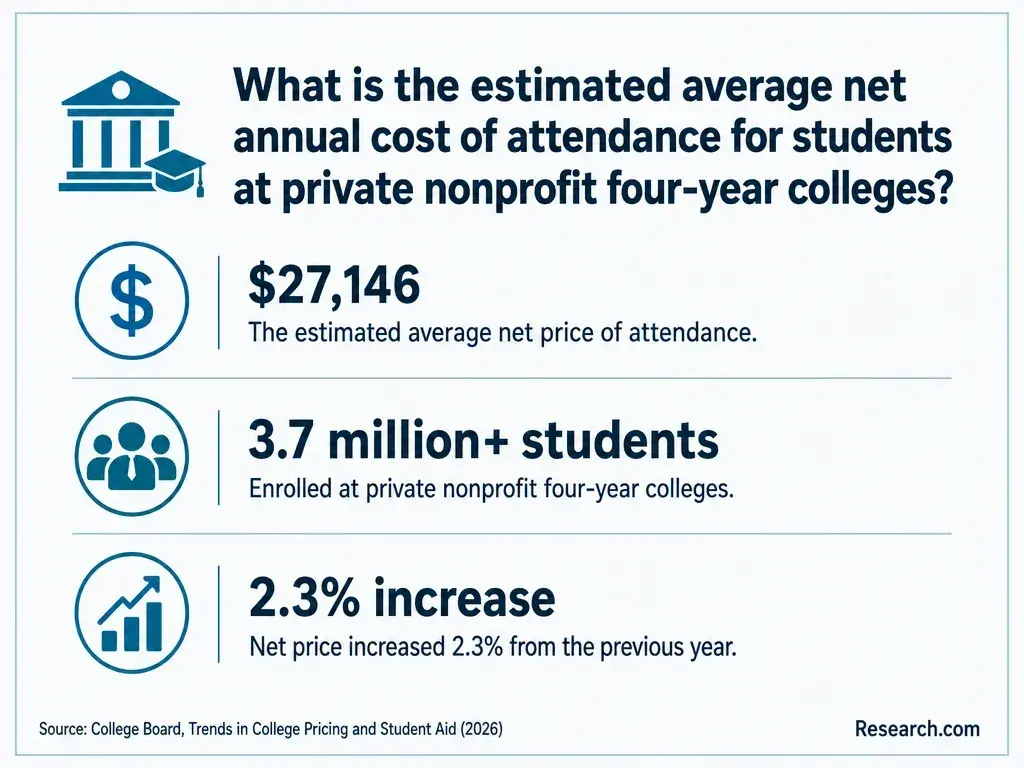
There is no dependable personal estimate until the school identifies your remaining required courses and when you can take them. Compare programs using the same intended enrollment pace and a term-by-term plan. Count tuition for courses you still need, mandatory fees, books or software, possible proctoring costs, and any travel. Include the financial effect of a delayed prerequisite or a course that transfers only as an elective.
Ask the financial-aid office whether your planned courses and enrollment intensity meet applicable aid rules; ask your employer separately about reimbursement conditions if you intend to use that benefit. A low per-credit price can still produce a higher completion cost if more coursework is required. You can reduce tuition spending on an online business administration degree by comparing verified remaining-course totals rather than advertised tuition alone.
Depending on prior experience, graduates may pursue operations coordination, administrative, sales-support, marketing-coordination, purchasing, or HR-support work. The degree can establish broad preparation, but employers assess role-specific skills and experience. A working student should consider whether current responsibilities can provide documented examples of budgeting, process improvement, customer communication, or spreadsheet analysis; academic approval is required before treating workplace activity as degree credit.
Concentration choice may matter more than the general degree title for a specific target role. If purchasing or logistics is your goal, planning an affordable supply chain education route can help frame a comparison with a specialized degree. Check the actual coursework and how your prior credits apply before changing programs.
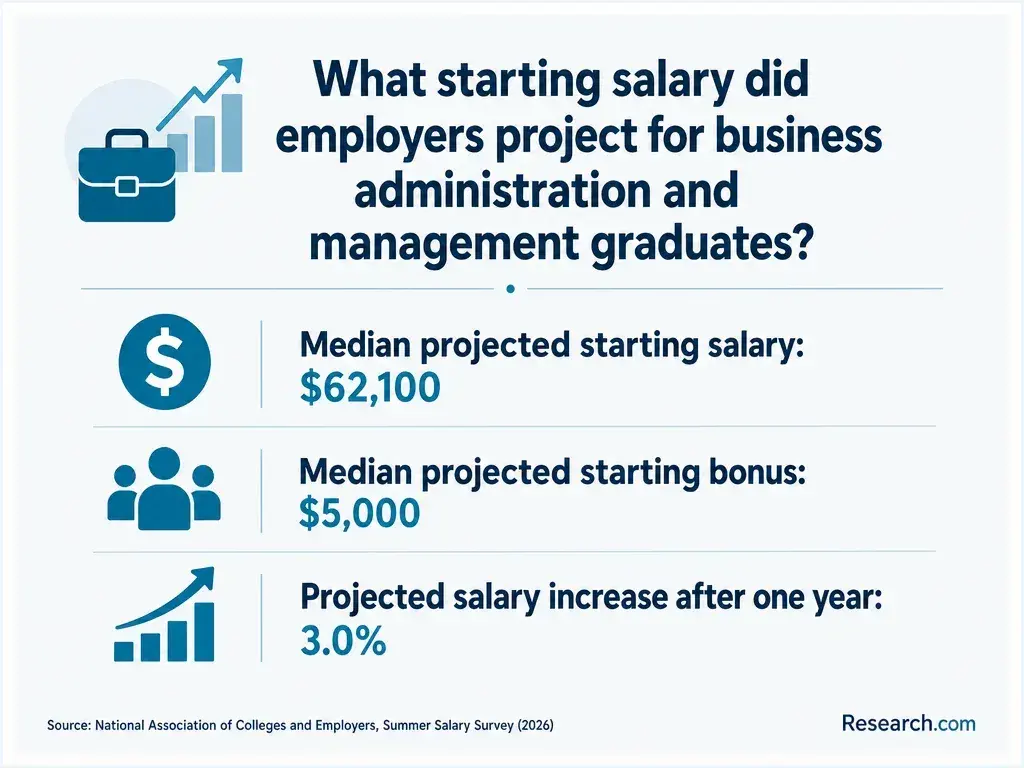
There is no single salary or growth rate for BS in Business Administration graduates: labor statistics describe occupations, not degree holders. For one possible path, the U.S. Bureau of Labor Statistics reports a May 2025 median annual wage of $75,940 for human resources specialists. That occupation-wide median includes experienced workers and is not an expected starting salary for a new graduate.
Use occupation data only after identifying a realistic target role, its hiring requirements, and your relevant experience. A faster degree does not by itself move someone into a specialist or management position. For a supply chain goal, compare shorter online supply chain bachelor's pathways against the business administration offer, but first establish whether the alternative would actually shorten your remaining coursework.
Which certifications or professional standards matter for business careers?
Credentials depend on the function you intend to enter. HR, project management, accounting, and financial services have different professional standards; some credentials require experience, examinations, additional education, or a license. A business administration course or concentration does not automatically satisfy those requirements or grant professional authority.
If a certification is part of your plan, check the issuing organization's eligibility rules separately from the university's degree audit. Compare the full education expense before choosing a specialized degree chiefly for that goal: project management program fees explained can inform a cost comparison, but only the school can confirm your remaining degree requirements, and only the credentialing body can confirm certification eligibility.
Other Things You Should Know About Business Administration
Yes. Ask admissions for an extension before the deadline and explain that your graduation audit is pending. Approval is up to the school; keep its response in writing.
Not necessarily. Acceptance, paying a deposit, registering, and remaining enrolled are separate steps. Check the school's terms for each before acting.
The institution's catalog and readmission policies determine that. Ask the registrar to identify the applicable catalog year on your audit, especially if you previously attended the school.
Request the written basis for the decision and the school's transfer-credit appeal procedure. Preserve syllabi and course descriptions; continue planning around the current decision unless an authorized office changes it.
- School-Determined Requirements | 2024-2025 Federal Student Aid Handbook https://fsapartners.ed.gov/knowledge-center/fsa-handbook/2024-2025/vol1/ch1-school-determined-requirements
- Rule 3342-3-01.1 - Ohio Administrative Code https://codes.ohio.gov/ohio-administrative-code/rule-3342-3-01.1
- General Education Requirements - The City University of New York https://www.cuny.edu/about/administration/offices/undergraduate-studies/pathways/gened/
- Transfer Information | Montgomery Community College https://www.montgomery.edu/catalog/transfer-information/
- Transfer Conditions of Admission | ucsb.edu https://admissions.sa.ucsb.edu/transfer-conditions
- Transfer Student Frequently Asked Questions | University of Tampa https://www.ut.edu/academics/academic-support/academic-success-center/academic-advising-office/transfer-student-frequently-asked-questions
- Transfer Credit Evaluation - TXST Admissions https://www.admissions.txst.edu/future-students/transfer-credit-evaluation.html
- 7000 J. Mack Robinson College of Business | gsu.edu https://catalogs.gsu.edu/preview_entity.php
- Conditional Admission FAQ | SMU https://www.smu.edu/admission/conditionaladmission/conditionalfaq
- Catalog Year and Degree Requirements | University of Louisville Academic Catalogs https://catalog.louisville.edu/undergraduate/university-wide-unit-specific-policies/catalog-year/