
2027 Online Behavioral Health Leadership Doctorate Programs with No Dissertation Requirement

Co-Founder and Chief Data Scientist
Choosing a doctorate without a dissertation can be appealing if your goal is to lead behavioral health programs, not become a full-time academic researcher. The timing matters: the U. S. Bureau of Labor Statistics projects 23% growth for medical and health services managers from 2024 to 2034, far faster than average.
This guide is for clinicians, counselors, administrators, and health services professionals comparing online behavioral health leadership doctorates. You will learn which programs use alternatives to dissertations, what those alternatives require, how to verify legitimacy, and how to decide whether this pathway fits your career goals.
Key Things You Should Know
- Yes, some online behavioral health leadership doctorates do not require a traditional dissertation, but they usually replace it with a doctoral capstone, applied project, internship, portfolio, or practice-focused research project.
- No-dissertation does not mean no research: legitimate programs still require doctoral-level analysis, writing, evidence review, ethics, data use, and a final deliverable tied to behavioral health practice or leadership.
- Career value depends on fit: BLS data show medical and health services managers had a May 2024 median wage of $117,960, while substance abuse, behavioral disorder, and mental health counselors had a May 2024 median wage of $59,190, so applicants should match the doctorate to leadership roles rather than assume a salary outcome.
Which Online Behavioral Health Leadership Doctorate Programs Do Not Require a Dissertation?
The clearest no-dissertation online options in this field are usually professional doctorates, especially Doctor of Behavioral Health programs. These degrees are designed around integrated care, health systems, behavioral health operations, population health, care coordination, and organizational leadership rather than traditional academic dissertation research.
Because schools can revise catalogs, students should verify the current doctoral completion requirement directly with the program before applying. The table below summarizes programs that publicly position their online behavioral health doctorate around applied or practice-based doctoral work rather than a conventional dissertation.
| School | Online doctorate | Behavioral health leadership fit | Published dissertation alternative | Best-fit student |
| Arizona State University Online | Doctor of Behavioral Health, Management concentration | Strong fit for behavioral health administration, integrated care management, program leadership, and health systems roles | Applied doctoral work, internship or culminating practice experience rather than a traditional dissertation | Behavioral health professionals who want leadership roles in integrated care, managed care, public health, or service delivery organizations |
| Arizona State University Online | Doctor of Behavioral Health, Clinical concentration | Strong fit for licensed or clinically trained professionals who want to lead care integration, behavioral health teams, and evidence-based service models | Applied clinical and practice-based doctoral requirements rather than a traditional dissertation | Clinicians seeking leadership responsibilities while remaining connected to patient care systems |
| Cummings Graduate Institute for Behavioral Health Studies | Doctor of Behavioral Health | Strong fit for integrated behavioral healthcare, care coordination, population health, and behavioral health systems improvement | Doctoral project, field-based work, or applied practice deliverables rather than a conventional dissertation | Working professionals who want an applied doctorate focused on implementation and leadership in behavioral health settings |
Applicants may also encounter adjacent online doctorates in health administration, public health, counseling education, psychology, or organizational leadership with behavioral health electives or projects. Those can be useful, but they are not always behavioral health leadership doctorates, and many still require a dissertation.
If you are still building the clinical foundation for doctoral study, an online clinical psychology master's can be a more appropriate step before a leadership doctorate.
When comparing programs, ask the admissions office to point you to the exact catalog language for the final doctoral requirement. Terms such as "doctoral project," "applied research project," "capstone," "scholarly project," and "practice inquiry project" can mean different things across institutions.
What Replaces the Dissertation in an Online Behavioral Health Leadership Doctorate?
In a no-dissertation behavioral health leadership doctorate, the dissertation is commonly replaced by an applied doctoral requirement. The purpose is to prove that the student can use research evidence to solve a real organizational, clinical, policy, or systems problem.
The table below compares common completion models so you can tell whether a program is genuinely dissertation-free or simply using different terminology for a large research requirement.
| Completion requirement | What it usually involves | How it differs from a dissertation | Typical behavioral health example |
| Doctoral capstone | A structured final project that applies evidence to a practice, leadership, or systems problem | Usually narrower and more implementation-focused than a dissertation | Designing a workflow to improve behavioral health screening in a primary care clinic |
| Applied doctoral project | A practice-based investigation, intervention, or program improvement project | May use data and research methods, but the goal is solving a practical problem rather than producing generalizable theory | Evaluating staff training methods for trauma-informed care implementation |
| Internship or field experience | Supervised professional work tied to leadership competencies and applied deliverables | Focuses on demonstrated practice performance, not a stand-alone dissertation manuscript | Completing leadership work in an integrated behavioral health organization |
| Portfolio | A collection of evidence showing mastery of doctoral competencies | May include papers, project artifacts, reflections, and evaluations instead of a single dissertation document | Documenting strategic planning, quality improvement, ethics, and interprofessional leadership competencies |
| Scholarly project | A formal evidence-based project with a written paper, presentation, and faculty review | Can resemble a dissertation in rigor but is usually practice-oriented and shorter in scope | Using outcomes data to recommend changes to a behavioral health access model |
The main difference is purpose. A dissertation typically asks the student to contribute original research to a scholarly field. A capstone or applied doctoral project asks the student to improve practice, operations, quality, access, care coordination, or leadership decisions in a real setting.
That distinction matters for your career. If you want to become a professor in a research-intensive university, a dissertation-based PhD may be a better match. If you want to lead programs, improve care delivery, manage behavioral health teams, or influence organizational strategy, an applied doctoral project may be more relevant.
Are Online Behavioral Health Leadership Doctorate Programs Without Dissertations Legitimate and Accredited?
Yes, no-dissertation online behavioral health leadership doctorate programs can be legitimate and accredited. The absence of a traditional dissertation does not automatically make a doctorate weaker, less rigorous, or unaccredited. What matters is the institution's accreditation, the degree's academic level, the quality of the curriculum, and the standards used to evaluate the final doctoral project.
For U.S. students, the most important baseline is institutional accreditation from an accreditor recognized by the U.S. Department of Education or the Council for Higher Education Accreditation. Institutional accreditation affects federal financial aid eligibility, transfer recognition, employer trust, and whether other schools may recognize the degree for future academic work.
Behavioral health leadership programs also require careful licensure review. A Doctor of Behavioral Health or similar leadership doctorate usually does not create initial eligibility for independent clinical licensure by itself. Licensure for counseling, psychology, social work, marriage and family therapy, and substance use treatment is governed by state boards, and those boards often specify degree level, supervised hours, exams, and program content.
Before applying, students should verify the following details with the school and, when relevant, their state licensing board:
- Whether the institution is currently accredited by a recognized institutional accreditor.
- Whether the doctorate is a professional doctorate, research doctorate, clinical doctorate, or leadership doctorate.
- Whether the program is intended for already licensed professionals, administrators, or students seeking future licensure.
- Whether the final doctoral requirement is a capstone, applied project, internship, portfolio, scholarly project, or dissertation.
- Whether any in-person residencies, intensives, internships, or field placements are required.
- Whether the degree title and transcript will clearly reflect doctoral-level study in behavioral health or a related field.
A major red flag is a school that markets "no dissertation" as if it means little writing, no research, or guaranteed fast completion. Legitimate doctoral programs still require advanced reading, applied research skills, faculty review, and a defensible final product.
Are No-Dissertation Online Behavioral Health Leadership Doctorate Programs Easier to Complete?
No-dissertation online behavioral health leadership doctorates are not necessarily easier. They may be more practical for working professionals because the final project is connected to workplace problems, but that does not remove the doctoral-level workload.
The difficulty changes shape. Instead of spending years designing a traditional study, collecting data, and defending a dissertation, students may need to complete a high-quality applied project while managing fieldwork, organizational approvals, stakeholder feedback, ethics requirements, and implementation barriers.
For many working professionals, the applied model can feel more manageable because the work is relevant to their current role. For others, it can be difficult because applied projects require access to a real setting, cooperation from supervisors or partner organizations, and the ability to translate research into operational decisions.
Common mistakes include assuming that "no dissertation" means the following:
- No major writing requirement.
- No research methods courses.
- No data analysis or outcomes evaluation.
- No faculty committee or formal review process.
- No final presentation, defense, or project approval.
- No need to secure an appropriate site for applied work.
A better way to evaluate difficulty is to ask what the final project requires week by week. A capstone with organizational data, site permissions, multiple drafts, and a formal presentation can be demanding even if it is not called a dissertation.
How Long Does It Take to Complete an Online Behavioral Health Leadership Doctorate Without a Dissertation?
Completion time depends on transfer credits, enrollment intensity, course length, fieldwork, and how efficiently the student finishes the final project. Many online professional doctorates are built for working adults, but "online" does not always mean self-paced or accelerated.
The table below gives a practical comparison of common doctoral pathways. Use it to estimate how the final requirement can affect your time to completion.
| Doctoral pathway | Typical structure | Timeline considerations | What can delay completion |
| Online DBH with applied project | Coursework plus practice-focused doctoral project, fieldwork, or internship | Often designed for completion in a shorter, structured sequence than many traditional research doctorates | Project approval, site access, data availability, internship scheduling, and workload conflicts |
| Professional doctorate with capstone | Leadership, policy, quality improvement, and applied research courses ending in a capstone | Usually predictable if the capstone is embedded throughout the curriculum | Changing project topics late, weak faculty alignment, or lack of employer support |
| Dissertation-based PhD | Research coursework, comprehensive exams, dissertation proposal, original study, and defense | Often less predictable because dissertation research can expand or stall | IRB review, recruitment problems, data collection issues, committee delays, and topic changes |
| Hybrid doctorate with residencies | Online coursework plus required campus or intensive meetings | Can be efficient if residencies are scheduled well in advance | Travel costs, missed residencies, employer scheduling conflicts, and family obligations |
Students who want the fastest realistic route should look for programs that integrate the capstone or applied project from the first year. Waiting until the end to choose a topic can add unnecessary time, especially if the project needs organizational approval or data access.
Ask whether the program has fixed course sequences, whether courses are offered every term, and whether students can continue directly from coursework into the final project. A program can advertise flexibility but still create delays if required courses are offered infrequently.
How Much Do Online Behavioral Health Leadership Doctorate Programs Without Dissertations Cost?
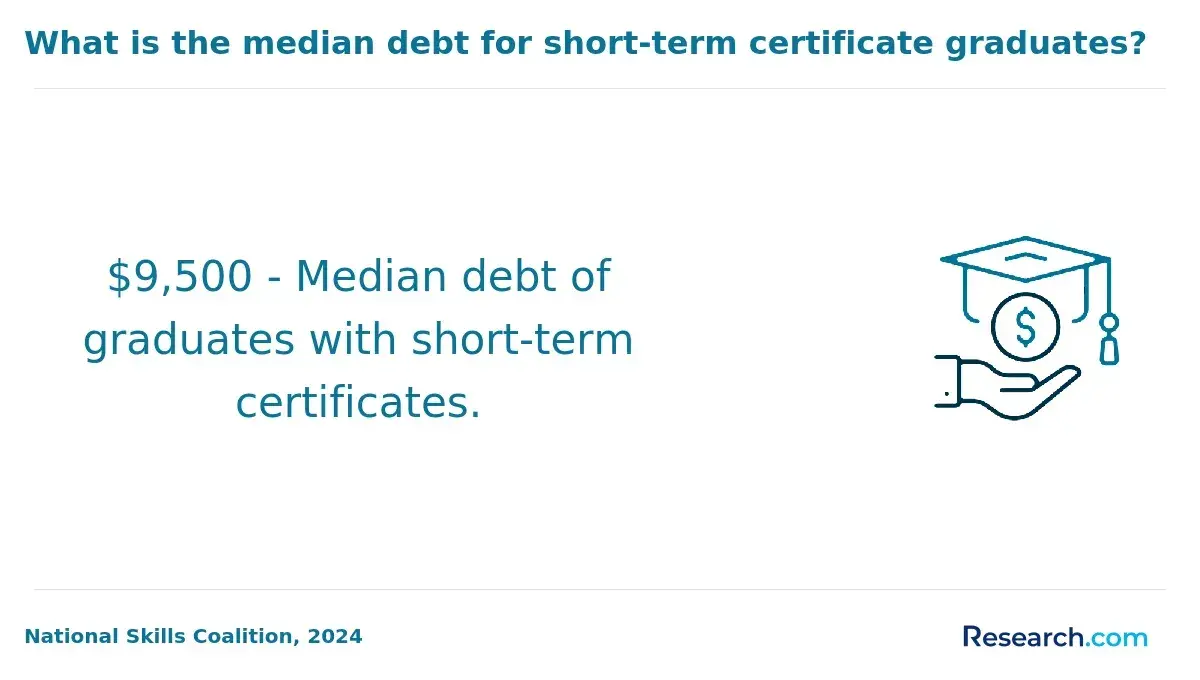
Costs vary widely because online behavioral health leadership doctorates charge differently by credit, term, residency, technology fee, internship fee, or project continuation fee. The safest way to compare programs is to calculate total cost of attendance, not just tuition per credit.
Graduate students should also consider borrowing limits. Federal Student Aid lists the Direct Unsubsidized Loan annual limit for most graduate or professional students at $20,500, which means students in higher-cost doctoral programs may need savings, employer tuition assistance, scholarships, payment plans, or Grad PLUS borrowing to cover remaining costs.
When reviewing a school's cost page, look for all required charges, not only tuition. Common cost categories include:
- Per-credit tuition for all required doctoral credits.
- Mandatory university, technology, online learning, or student services fees.
- Residency, intensive, conference, or campus visit expenses if required.
- Internship, field placement, background check, immunization, or site documentation costs.
- Books, software, assessment tools, data tools, and professional memberships.
- Continuation or doctoral project fees if the capstone extends beyond the planned timeline.
The biggest financial mistake is comparing only sticker tuition. A lower per-credit rate can be less affordable if the program requires more credits, expensive residencies, or extra terms to complete the final project. Conversely, a higher per-credit program may be financially reasonable if it has fewer required credits, predictable scheduling, and strong employer tuition reimbursement alignment.
ROI should be evaluated cautiously. A doctorate may strengthen candidacy for senior leadership, consulting, teaching, policy, or program director roles, but it does not guarantee promotion or income growth. Compare the cost against roles you are realistically pursuing, your current licensure or management experience, and whether employers in your area value applied doctorates.
Who Benefits Most From an Online Behavioral Health Leadership Doctorate Without a Dissertation?
A no-dissertation online behavioral health leadership doctorate is usually best for professionals who want to use evidence to improve systems, programs, and services rather than conduct traditional academic research. It often fits people already working in mental health, substance use treatment, integrated care, public health, health administration, social services, or managed care.
This pathway may be especially useful for several types of students:
- Licensed clinicians who want to move into clinical leadership, integrated care management, quality improvement, or executive roles.
- Behavioral health administrators who need doctoral-level credibility but not a dissertation-based research career.
- Program directors who want to evaluate services, improve outcomes, lead teams, and communicate with executives or funders.
- Public health and community behavioral health professionals who work on access, prevention, crisis response, care coordination, or population health.
- Educators or trainers who teach in professional, continuing education, or practice-oriented settings rather than research-intensive universities.
Some students should be cautious. If your goal is tenure-track academic research, psychology licensure, or a faculty role that strongly prefers a PhD, a dissertation-free professional doctorate may not be the strongest match. It may also be the wrong degree if you still need a licensure-qualifying master's program before entering the behavioral health workforce.
Students earlier in their education may benefit more from master's-level preparation before doctoral study. For example, accelerated mental health counseling programs online may be more relevant for those who need a counseling pathway before pursuing leadership training.
How Does a No-Dissertation Online Behavioral Health Leadership Doctorate Affect Career Opportunities?
A no-dissertation online behavioral health leadership doctorate can support career advancement when the role values applied leadership, systems thinking, evidence-based management, and interprofessional collaboration. It is usually most relevant for people who already have behavioral health experience and want to move into higher-level responsibility.
Possible career directions include behavioral health program director, integrated care leader, clinical operations manager, quality improvement director, population health manager, behavioral health consultant, care management leader, nonprofit executive, health system administrator, and adjunct or practice-focused instructor.
The labor market context is favorable for health leadership roles, but outcomes vary. The BLS reported a May 2024 median wage of $117,960 for medical and health services managers, a category that includes many healthcare leadership roles. That figure should be treated as a broad benchmark, not a promise, because compensation depends on employer type, region, management scope, licensure, and prior experience.
Technology is also changing behavioral health leadership. Employers increasingly expect leaders to understand telebehavioral health, electronic health records, outcomes dashboards, privacy rules, digital access tools, and ethical use of AI-supported documentation or triage systems. A strong applied doctorate should help students evaluate technology through clinical quality, equity, compliance, and workflow lenses.
The doctorate may be less useful if the target role requires a specific license or research doctorate. For example, roles in forensic evaluation, licensed psychology, or court-related assessment may require a different pathway; students comparing specialized psychology careers may also want to review how much do forensic psychologists make and what credentials those roles require.
How Do No-Dissertation Online Behavioral Health Leadership Doctorates Compare With Traditional Doctorates?
The best doctoral format depends on what you want the degree to do for you. A traditional dissertation is not automatically better, and a no-dissertation format is not automatically easier. They serve different professional and academic purposes.
The table below compares the major trade-offs students should understand before choosing between an applied doctorate and a traditional dissertation-based doctorate.
| Factor | No-dissertation applied doctorate | Traditional dissertation-based doctorate | Best choice when |
| Primary purpose | Apply evidence to practice, leadership, quality improvement, or systems change | Produce original scholarly research that contributes to the field | Choose applied for leadership practice; choose dissertation for research-intensive academic goals |
| Final deliverable | Capstone, applied project, internship deliverable, portfolio, or scholarly practice project | Dissertation proposal, original study, written dissertation, and defense | Choose based on whether your work will be judged by employers or academic research committees |
| Flexibility for working adults | Often designed around workplace application and online delivery | Can be flexible, but dissertation work may be less predictable | Choose applied if you need a structured path tied to practice problems |
| Research intensity | Moderate to high applied research expectations | High original research expectations | Choose dissertation if advanced independent research is central to your future work |
| Career alignment | Behavioral health leadership, operations, integrated care, consulting, teaching in practice settings | Research faculty roles, scholarly research, policy research, some academic leadership paths | Choose the format that matches the expectations of your target employers |
| Risk of delay | Often tied to project scope, site access, and implementation barriers | Often tied to committee review, data collection, analysis, and dissertation revisions | Choose a program with strong advising and clear milestones either way |
A dissertation-based doctorate makes more sense if you want to publish original research, pursue tenure-track roles, compete for research grants, or enter a field where the PhD is the expected credential. A no-dissertation doctorate makes more sense if your career is centered on leading behavioral health organizations, improving care delivery, managing programs, or translating evidence into practice.
Employers may not evaluate all doctorates the same way. Some focus on accreditation and degree relevance; others care more about licensure, management experience, measurable outcomes, or reputation of the institution. Before enrolling, review job postings for your target roles and note whether they request a doctorate, a specific degree type, a license, or simply graduate-level leadership experience.
How Should Students Choose an Online Behavioral Health Leadership Doctorate Without a Dissertation?
Choosing a dissertation-free online behavioral health leadership doctorate requires more than finding the fastest program. You need to confirm that the degree is legitimate, the final project matches your career goals, and the total investment makes sense.
Use this step-by-step process before applying:
- Define your target role first, such as program director, integrated care leader, behavioral health executive, quality improvement director, consultant, or educator.
- Check whether that role requires a specific license, degree type, accreditation, or supervised clinical background.
- Verify institutional accreditation using official accreditation databases, not only the school's marketing page.
- Ask the program to identify the exact final doctoral requirement in the current catalog.
- Compare whether the final project is a capstone, applied doctoral project, internship, portfolio, scholarly project, or hidden dissertation-equivalent requirement.
- Request details on fieldwork, residencies, synchronous meetings, project approvals, and expected weekly workload.
- Calculate total cost of attendance, including fees, travel, project continuation charges, and lost work time.
- Ask how students are supported during the final project, including faculty advising, site selection, ethics review, and project templates.
- Review faculty expertise to see whether instructors have behavioral health leadership, integrated care, policy, clinical operations, or applied research experience.
- Compare the curriculum with job postings to see whether it builds the skills employers actually request.
Good questions to ask admissions advisors include: "Is there any dissertation requirement under another name?" "How many students complete the capstone on schedule?" "Can I use my current workplace as a project site?" "What happens if my site will not share data?" "Are there required campus visits?" "Does this degree meet any licensure requirement, or is it only for leadership advancement?"
Also think about specialization. If your long-term goal is leadership in children's behavioral health, school-based mental health, or family services, reviewing child psychology master's programs can help you compare whether a child-focused graduate foundation or a broad leadership doctorate better supports your next step.
The strongest choice is usually the program that combines recognized accreditation, transparent completion requirements, strong applied project support, relevant faculty expertise, realistic cost, and clear alignment with your career path. The weakest choice is the one selected only because it advertises "no dissertation."
Other Things You Should Know About Behavioral Health Leadership
In academic and professional settings, graduates of accredited doctoral programs may generally use the title "Doctor," but workplace norms and state rules can vary. In clinical settings, be careful not to imply that you are a physician, psychologist, or licensed clinician unless you hold the required credential.
Many professional online doctorates no longer require the GRE, especially programs designed for experienced working adults. However, admissions requirements vary, so review each school's current catalog for GPA, master's degree, resume, license, interview, writing sample, and recommendation requirements.
Often, yes, but it depends on the program and your employer. You may need site approval, supervisor cooperation, access to appropriate data, privacy safeguards, and faculty approval that the project meets doctoral standards.
No. A Doctor of Behavioral Health is typically a professional, practice-focused doctorate centered on integrated care and behavioral health systems. A PhD in psychology is usually research-focused and may follow a different path for academic research, clinical training, or licensure depending on the program.
References
- What Makes a PhD Program in Organizational Development the Best https://vinuni.edu.vn/best-phd-programs-in-organizational-development/
- 90+ Online Ed.D. Programs With No Dissertation in 2026 https://www.eddprograms.org/schools/no-dissertation/
- Doctor of Behavioral Health - Cummings Graduate Institute for Behavioral Health Studies https://cgi.edu/dbh/
- 2026 Online EdD Programs No Dissertation Required (Applied Capstone Projects) https://www.onlineeddprograms.com/faqs/edd-programs-no-dissertation
- What Is a Non-Dissertation Doctorate, and Is It Right for You? https://www.snu.edu/blog/what-is-a-non-dissertation-doctorate-and-is-it-right-for-you
- Making sure you're not a bot! https://janeway.uncpress.org/jethe/article/id/1482/download/pdf/
- Education, Employability, and Development of PhD candidates (2025) (CLC) - EUTOPIA https://eutopia-university.eu/opportunities/education-employability-and-development-of-phd-candidates-2025/
- Evolving Education: Which Behavioral Health PhD Is Right for You? https://www.socialworktoday.com/archive/Summer22p30.shtml
- The Role of Professional Doctorates in Bridging Academia ... https://jies.cultechpub.com/index.php/jies/article/download/16/11/94
- Top 10 Low-Cost Online Doctorate in Psychology Programs with no GRE https://www.greatvaluecolleges.net/rankings/online-doctorate-psychology-no-gre/


