2027 Online BA in Psychology - Mental Health: When a Broad Psychology Degree Is Better Than a Narrow Track
Audited and Verified:
Our Editorial and Data Verification Process
Research.com uses government datasets, official education statistics and primary institutional information to support its career and degree guides. Our review process checks factual accuracy, occupational definitions, source dates and the requirements associated with the credentials discussed.
How This Article Was Fact-Checked
Our editorial team verifies salary estimates, employment projections, education requirements and program information against original data providers and official organizations. Salary figures are checked against the relevant occupational definitions and reporting periods. Information about licensure, accreditation and required in-person training is reviewed separately.
Fact-checked and verified on:

Co-Founder and Chief Data Scientist
A mental health focus can make an online psychology BA sound more relevant to your goals, but it may also leave less room for research methods, other electives, or a change in direction. This choice matters if you are considering support-service work, graduate study, or both—and especially if you need an online program to fit around work or caregiving. This guide compares what broad and focused degrees actually offer, where their professional limits are, and which program details to check before you commit.
Key Things You Should Know
- Choose a broad psychology BA when your career direction is unsettled or you need room for statistics, research, and graduate-school prerequisites; choose a mental health track when its required courses and applied opportunities serve a specific goal.
- Neither route, including one with a mental health concentration, qualifies you by itself to diagnose conditions or provide psychotherapy.
- Compare the remaining credits and total cost in a written degree audit: a conventional bachelor's path often takes about four years of full-time study, but transfer credit and course availability can change your timeline substantially.
What Is an Online BA in Psychology With a Mental Health Focus?
It is a bachelor of arts degree in psychology that adds coursework related to mental health, such as psychopathology, health psychology, substance use, prevention, or behavioral health systems. "Mental health focus" might mean a formally recorded concentration, a recommended set of electives, or simply the way a school describes its program. Check the catalog and transcript policy to learn which it is.
A broad BA generally leaves more elective space across psychology and related fields. Either version can provide a foundation for nonclinical service work, including the kinds of roles described in career options in recovery services. Studying recovery or mental disorders, however, is different from holding a state-recognized recovery credential or delivering treatment.
Is a Broad Psychology Degree Better Than a Narrow Mental Health Track?
Usually, yes, if you have several plausible destinations. Breadth preserves space to test interests and build transferable methods skills. A narrow track is more useful when you know which setting or next degree you want and can show that its required courses and experiences match that destination. The concentration label alone is weak evidence of fit.
The comparison below shows what each option gives up as well as what it offers. Requirements vary by school, so use its actual degree plan rather than the track name to make the final choice.
| Decision factor | Broad psychology BA | Mental health track |
| Best fit | Uncertain career plans or several possible graduate routes | Clear interest in behavioral health systems or support work |
| Elective space | Often easier to combine methods, developmental, social, or organizational courses | May reserve electives for specified mental health subjects |
| Applied preparation | Depends on the experiences you select | May offer relevant projects or placements, but these are not guaranteed |
| Professional qualification | No clinical license from the BA alone | No clinical license from the concentration alone |
If your objective is a particular substance-use counseling credential, compare the state's rules and consult an addiction counseling program selection guide before assuming either psychology BA meets them. Conversely, if you might pursue research, public health, human resources, or several kinds of graduate study, protecting elective space may be worth more than a specialized transcript label.
What Careers Can You Pursue With a Bachelor's in Psychology?
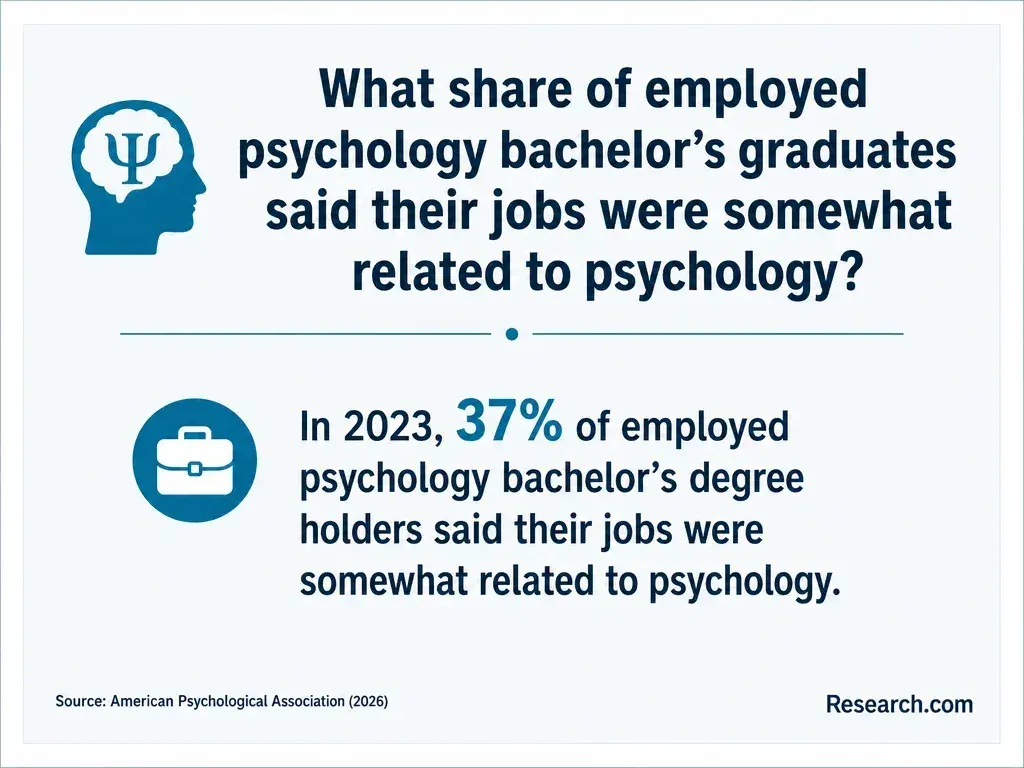
A psychology BA can support applications for nonclinical positions such as behavioral-health program assistant, intake or referral coordinator, victim-services assistant, community outreach worker, or research assistant. Duties may include explaining services, maintaining records, coordinating appointments, recruiting research participants under supervision, or summarizing program data. Employers may also require relevant experience, a driver's license, a background check, language skills, or a separate credential.
For an early-career student, a supervised project or job that demonstrates accurate documentation, respectful communication, confidentiality, and appropriate referral decisions is more persuasive than the concentration name alone. A career changer should first compare those requirements with existing experience; targeted coursework or an employer-supported move may be more direct than a second bachelor's degree.
A BA is also not a shortcut into advanced specialties. For example, forensic psychology master's pathways under two years concern further academic study, not automatic qualification for forensic assessment or other licensed work. Work backward from the duties and qualifications in actual job postings.
No. A general psychology BA or mental health concentration does not independently authorize psychotherapy, diagnosis, clinical psychological assessment, or use of a protected clinical title. Counseling, clinical social work, psychology, and other regulated professions have different qualifying degrees and jurisdiction-specific requirements for supervised experience, examinations, and licensing.
If your goal is to become a licensed counselor, identify your intended state's board and check its educational rules before choosing either BA. Then compare qualifying graduate programs on curriculum, professional recognition where relevant, placement arrangements, and cost. A guide to planning an accelerated clinical counseling master's can help frame the time question, but speed does not replace confirmation that a particular program meets your jurisdiction's requirements.
Common foundations include introductory psychology, development, social or cognitive psychology, statistics, research methods, and ethical reasoning. A mental health route may add courses on psychological disorders, substance use, or community services. Course names are not enough: compare required credit hours, prerequisites, and whether you can complete a substantial research or applied project.
For undecided students, statistics and methods deserve particular attention. They help you evaluate claims about treatment, prevention, and service outcomes, and may matter for later research-oriented study. For support-service work, coursework on development and cultural context can be equally useful when paired with supervised experience and clear boundaries around client information.
A specialized elective can still be worthwhile without committing your entire major to a track. If forensic interests are competing with mental health interests, review the actual course sequence and expected time to completion rather than assuming the specialized option is faster; forensic psychology undergraduate graduation timelines illustrate a separate planning question from which curriculum best fits your goals.
The meaningful difference is often access, not the degree label. An online student may complete readings and discussions asynchronously but still need live group meetings, scheduled exams, research supervision, or an approved local site for an applied course. Campus students may find it easier to join an in-person lab or build relationships with local agencies, though those opportunities are not automatic.
Ask each program how online students obtain faculty feedback, research experience, and references for future applications. If you work or provide care for family, request the expected weekly schedule and ask whether required courses rotate predictably. Do not assume an undergraduate program's flexibility carries over to professional graduate training: shorter online counseling master's financial comparisons involve different placement, scheduling, and credential questions from those of an online BA.
Confirm that the institution holds recognized institutional accreditation by checking the accreditor's own directory and the U.S. Department of Education's accreditation records. Match the institution's name, location, and current status to the school offering the degree. Then ask the school whether the online BA and any advertised concentration appear in its current catalog.
Do not reject a general psychology BA because it lacks APA program accreditation: APA accreditation applies to specified professional psychology training programs and internships, not ordinary bachelor's majors. Equally, institutional accreditation does not establish that a BA meets a state clinical licensing requirement. Apply the same checks when comparing inexpensive distance learning psychology options; a low advertised price says nothing by itself about accreditation scope or degree fit.
Requirements differ for first-year, transfer, and degree-completion applicants. Schools commonly review prior transcripts, while some have separate criteria for entering the psychology major. Applicants without previous psychology study should not assume they need a psychology background to enter a bachelor's program; they should check when introductory courses, statistics, and methods must be completed.
For transfer students, the decisive document is a written degree audit showing which accepted credits satisfy general education, major, elective, and residency requirements. A course can transfer without fulfilling the requirement you expected. Ask admissions or the registrar to resolve uncertain equivalencies before relying on an advertised completion timeline. If you have substantial prior study, start with finding psychology colleges that consider prior credits, then obtain each institution's own evaluation.
A conventional full-time bachelor's route often spans about four years; your remaining time depends on applicable transfer credits, enrollment pace, prerequisite order, and when required courses are offered. A faster course calendar does not necessarily shorten the path if methods, a capstone, or a concentration course must be taken in sequence.
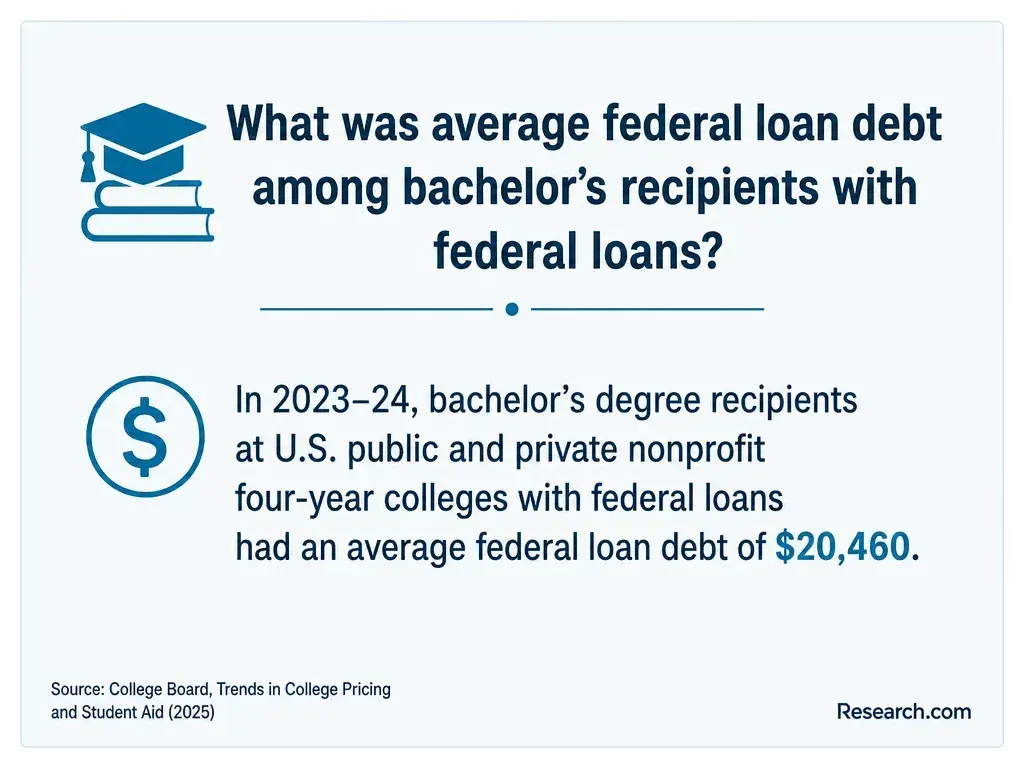
For a useful cost comparison, request the tuition rate, mandatory fees, required materials, and estimated remaining credits from each school. Add likely costs for travel or unpaid applied work if those are required, and check financial-aid eligibility at your intended enrollment pace. Published lists of psychology degree completion through accelerated study can identify options to investigate, but only your approved audit and the school's current charges can support a personal time-and-cost estimate.
What Are the Salary and Job Outlook for Psychology Graduates?
There is no single reliable salary or job-growth figure for "psychology graduates": a BA can lead to jobs classified across community services, research support, education, and other fields. The U.S. Bureau of Labor Statistics reports wages and projections for occupations, not for everyone holding a particular major. Its figures for licensed counselors or psychologists should not be presented as expected outcomes from an undergraduate psychology degree.
For a realistic comparison, choose a target job title, check its current BLS Occupational Outlook Handbook entry for typical education, pay, and projected employment, and compare those requirements with local postings. Treat published wages as occupation-wide benchmarks that include workers with different credentials and experience. The same caution applies when comparing forensic psychology master's career earnings: an advanced degree's possible occupations are not the salary outlook for a BA graduate.
Other Things You Should Know About Psychology
Often, if the school offers the minor and your elective space permits it. Request a degree audit to see whether it adds credits or delays graduation.
That depends on the school's catalog and declaration rules. Ask an advisor which completed courses would still count and whether changing tracks affects your expected graduation term.
Only if the program approves the project and supervision. Employer permission, appropriate data access, confidentiality protections, and any required research review must be addressed separately.
Usually, basic comfort with spreadsheets and quantitative reasoning is enough to begin. Check the program's methods sequence before paying for separate software training.
- Requirements Related to the Practice of Counseling - NCBI https://www.ncbi.nlm.nih.gov/books/NBK259170/
- Frequently Asked Questions - California Board of Psychology https://www.psychology.ca.gov/licensees/faq.shtml
- DAPIP | Homepage - Office of Postsecondary Education (OPE) https://ope.ed.gov/dapip/
- Is a Psychology Degree Worth It? - ASU Online https://asuonline.asu.edu/newsroom/online-learning-tips/is-a-psychology-degree-worth-it/
- Career Skills | BS in Psychology Degree | Capella University https://www.capella.edu/online-psychology-degrees/bs-psychology-program/bachelors-general-psychology/career-skills/
- How to Choose the Right Clinical Mental Health Counseling Master's Program - Boston Graduate School of Psychoanalysis https://bgsp.edu/how-to-choose-the-right-clinical-mental-health-counseling-masters-program/
- FAQ | Department of Counseling - NSU's College of Psychology https://psychology.nova.edu/departments/counseling/faq.html
- Choosing a Program - APA Accreditation https://accreditation.apa.org/choosing-a-program
- Psychology | Bowling Green State University https://www.bgsu.edu/academics/psychology.html
- How to Become a Licensed Mental Health Counselor | NU-MAC https://counseling.northwestern.edu/blog/become-mental-health-counselor/