2027 Online BA in Psychology - Mental Health for Shelter Staff: What to Check Before Changing Careers
Audited and Verified:
Our Editorial and Data Verification Process
Research.com uses government datasets, official education statistics and primary institutional information to support its career and degree guides. Our review process checks factual accuracy, occupational definitions, source dates and the requirements associated with the credentials discussed.
How This Article Was Fact-Checked
Our editorial team verifies salary estimates, employment projections, education requirements and program information against original data providers and official organizations. Salary figures are checked against the relevant occupational definitions and reporting periods. Information about licensure, accreditation and required in-person training is reviewed separately.
Fact-checked and verified on:

Co-Founder and Chief Data Scientist
Shelter work may have given you experience with crisis response, referrals, documentation, and building trust with clients. An online BA in psychology could deepen your understanding of behavior and mental health, but it may not be the fastest route to the job you want. This guide helps current shelter staff and career changers compare the degree with more direct options, check whether online study fits shift work, and separate nonclinical opportunities from careers that require professional training and licensure.
Key Things You Should Know
- A psychology BA can strengthen shelter-related support and coordination skills, but it does not qualify you to diagnose conditions or provide psychotherapy.
- Before enrolling, compare the target job's requirements with your existing shelter experience; employer training or a different degree may be more direct.
- Check institutional accreditation, the credits still needed for graduation, total cost, and whether classes or placements conflict with shelter shifts.
What Is an Online BA in Psychology for Shelter Staff?
An online BA in psychology is an undergraduate degree in the scientific study of behavior and mental processes. It is usually a broad psychology major, not a qualification created specifically for shelter employment. A program may offer mental-health, addictions, or community-focused electives; check whether an advertised focus is an official concentration or simply a choice of courses.
For shelter staff, the value lies in connecting workplace experience with evidence about development, stress, social relationships, and service access. The degree may help someone move toward program coordination or prepare for later study. It will not replace agency training in safety procedures, local resources, and client confidentiality. When selecting an online psychology bachelor's program, start with the duties you want to perform, then assess whether its courses and applied opportunities build evidence of those skills.
Can a Psychology Bachelor's Degree Prepare You for Shelter Staff Roles?
Yes, for some nonclinical duties - but relevant experience often matters as much as the major. Shelter roles can involve welcoming residents, explaining services, documenting contacts, coordinating referrals, supporting groups under agency policy, and escalating safety concerns. A psychology BA can improve your understanding of behavior and research evidence; supervised work shows whether you can apply that knowledge respectfully and reliably.
If you already perform these tasks, first identify the gap between your current role and the one you want. For advancement within the same shelter, a supervisor may value stronger documentation, resource coordination, or team leadership more than another credential. If a position specifically calls for substance-use counseling preparation, compare its state and employer requirements with a psychology major and distance learning bachelor's degrees in addiction psychology. Neither degree title alone establishes counseling eligibility.
Ask a prospective employer what its staff may do independently, what requires a supervisor, and which credentials are mandatory. This matters especially for crisis conversations: recognizing distress, following a safety protocol, and referring a client are not the same as conducting a clinical assessment or providing treatment.
What Accreditation Should an Online Psychology Bachelor's Program Have?
Confirm that the institution holds recognized institutional accreditation and that it applies to the school awarding the online BA. Check the accreditor through the U.S. Department of Education's accreditation database or the accreditor itself. Institutional accreditation is relevant to academic quality oversight and can affect federal aid eligibility and how other schools evaluate credits, but it does not guarantee transfer or admission to graduate study.
Do not reject a general psychology BA because it lacks American Psychological Association accreditation: APA accreditation does not cover general undergraduate psychology majors. Likewise, a page about forensic psychology academic pathways and tuition should not be read as evidence that a forensic concentration - or any BA - grants clinical or investigative authority. Match accreditation claims to the actual degree level and credential you intend to pursue.
Most programs combine general education with psychology foundations, statistics, research methods, and upper-level courses. For shelter work, developmental and social psychology can inform communication across ages and communities; abnormal psychology can provide academic context for mental-health terminology. Research methods can help you judge claims about a service without treating a small, uncontrolled improvement as proof that it caused the change.
Look beyond course titles to assignments and supervision. A useful program might let you practice writing an evidence brief about referrals, evaluating an outreach measure, or communicating findings to a nontechnical audience without using identifiable client records. If your goal is substance-use services, compare the actual coursework and credential requirements rather than assuming that psychology and lower-tuition bachelor's pathways in substance use counseling prepare students for identical responsibilities.
Requirements depend on the institution and whether you apply as a first-year or transfer student. Schools may request prior transcripts, proof of secondary-school completion, and other application materials. A previous major outside psychology does not automatically disqualify you; experience in shelter operations, education, health, or community work may also help you explain your goals.
If you have college credits, request an official evaluation showing not just which credits are accepted, but which satisfy general education, psychology prerequisites, major requirements, and credits that must be completed at the new school. This distinction is central when applying associate-level credits to psychology study. Ask an admissions or transfer advisor for a degree audit before relying on an estimated graduation date.
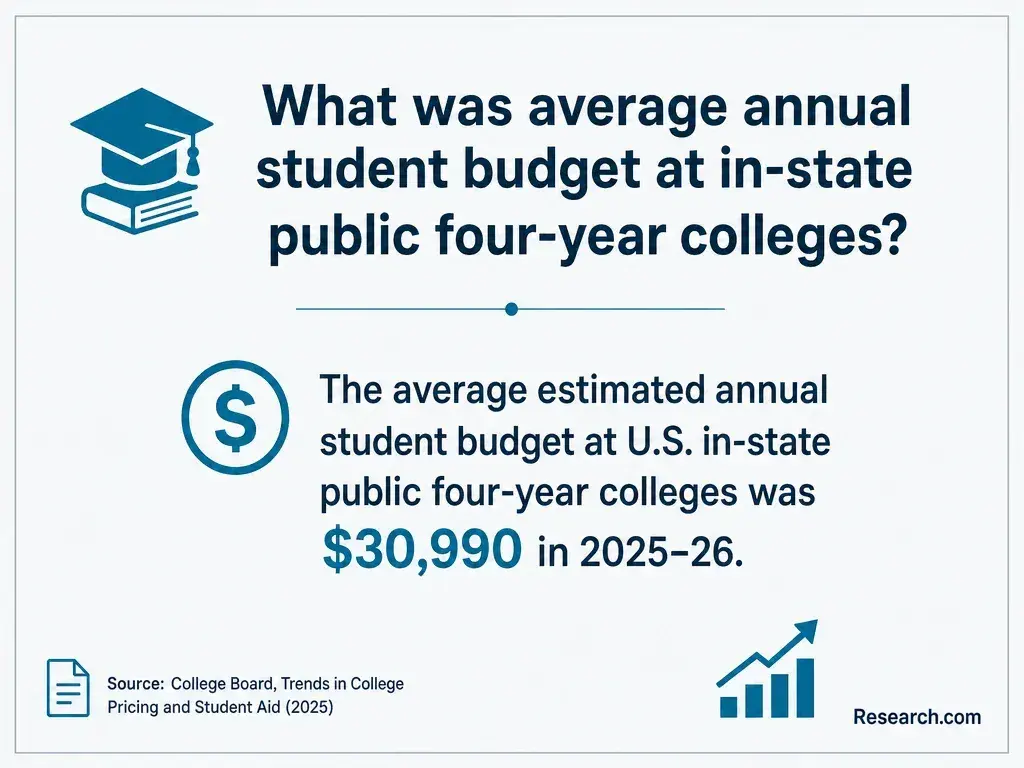
Time and cost depend on accepted credits, required courses, enrollment pace, tuition rules, and fees. A working shelter employee may need a slower schedule during rotating or overnight shifts. An apparently inexpensive per-credit rate can also become less attractive if required courses are offered infrequently or an internship requires unpaid time away from work.
Compare schools using an individualized remaining-degree plan, not an advertised starting price. Ask for the tuition and mandatory fees for the credits you still need, the expected course sequence, any travel or placement expenses, and the effect of part-time enrollment on aid. Economical online psychology program choices can provide a starting comparison, but only the school can evaluate your credits and confirm its charges and aid terms.
Before committing, ask your employer whether education assistance applies to this degree and whether a change in shifts would affect your earnings. Weigh the resulting cost against a targeted course or employer-supported training if your desired promotion does not require a bachelor's degree.
Online delivery removes a routine commute, but it does not necessarily remove scheduled obligations. Some courses have live discussions, timed exams, group meetings, or placements at approved sites. Campus programs may make in-person faculty contact and local placement connections easier; online programs may better suit shelter employees whose shifts prevent regular travel.
Ask for a sample term schedule and confirm whether required activities can be completed around your shifts. If speed is your priority, treat examples such as accelerating a forensic psychology bachelor's degree as illustrations of scheduling trade-offs, not evidence that a compressed forensic program fits shelter mental-health work. The fastest calendar is of little use if it limits the courses or supervised experience you need.
A psychology BA may support applications for nonclinical positions such as shelter program assistant, intake coordinator, case-coordination assistant, community outreach worker, or behavioral-health support worker. Actual titles, degree preferences, and permitted duties vary by employer and state. Your shelter experience may be a stronger differentiator than the major alone, particularly when you can demonstrate sound referrals, accurate records, and respectful work with clients.
These paths differ by the work you want to do:
| Goal | Likely preparation to investigate | Important boundary |
| Advance in shelter operations | Agency experience, supervision, leadership development, and any required degree | Promotion is an employer decision, not a degree outcome |
| Move into support or outreach | Relevant experience, a bachelor's degree where requested, and agency-specific training | Support and referral are not psychotherapy |
| Provide clinical counseling | A qualifying professional education pathway, supervised experience, and state licensure | A psychology BA alone does not confer a counseling license |
If your interest is actually in justice-system research or victim services rather than shelter mental-health support, investigate those jobs separately before spending money on a specialization. Even accelerated forensic psychology master's costs and outcomes do not establish eligibility for licensed forensic assessment or a shelter clinical role.
There is no single salary or growth rate for psychology BA graduates working in shelters. Pay depends on the position, location, employer budget, experience, and shift requirements. For a closer labor-market reference, the U.S. Bureau of Labor Statistics' Occupational Outlook Handbook describes social and human service assistants, an occupation that includes support and service-coordination work. Its occupation-wide wage and employment projections are useful context, not a forecast of what a particular shelter or psychology graduate will pay or earn.
For a career-change decision, compare actual local postings for the job you want with your current pay and the total cost of study. If counseling is the eventual goal, include the additional education and time required in that calculation; shorter online counseling master's financial comparisons are a separate decision from the return on an undergraduate psychology degree. Do not use a counselor's occupational wage as an expected outcome of earning a BA.
Which Licenses and Certifications Require Education Beyond a Bachelor's Degree?
Independent psychotherapy, clinical diagnosis, and protected titles such as licensed psychologist generally require substantially more than a psychology BA. Counseling, clinical social work, and psychology are distinct professional pathways with their own qualifying education, supervised experience, examinations, and state rules. A nonclinical psychology bachelor's degree can be preparation for applying to further study, but it is not itself a license.
Requirements for addiction-counselor and peer-support credentials differ by state and credential. Some roles may be accessible without a graduate degree, while others require specific coursework, supervised hours, examinations, or lived-experience criteria. Check the state regulator or certifying body and the exact employer posting before selecting courses. If licensed counseling is your goal, compare qualifying programs and online mental health counseling master's timelines with your state's rules rather than assuming any mental-health-focused degree will count.
The practical next step is to obtain a target job description, identify its nonnegotiable credentials, and ask a prospective school which requirements its program actually meets. That check can prevent an expensive detour through a degree that is educationally valuable but insufficient for your intended role.
Other Things You Should Know About Psychology
Do not include identifiable stories or records without agency authorization and any required academic approval. Ask your instructor about a public-data, fictional, or otherwise approved alternative; changing a name alone may not protect someone's identity.
Review the syllabus before the term, use available student support, and discuss assignment alternatives with the instructor when appropriate. Coursework is not a substitute for personal mental-health support or workplace debriefing.
Not necessarily. A new employer may have its own screening process based on the role, population served, and applicable law. Ask about its requirements before assuming prior clearance carries over.
That depends on the state, your role, and the clients served. Follow your agency's policy and confirm your legal duties with the appropriate state authority; a psychology course does not replace required workplace training.
- Cost of Attendance (Budget) | 2025-2026 Federal Student Aid Handbook https://fsapartners.ed.gov/knowledge-center/fsa-handbook/2025-2026/vol3/ch2-cost-attendance-budget
- Types of Financial Aid: Grants, Work-Study, and Loans | studentaid.gov https://studentaid.gov/understand-aid/types
- Frequently Asked Questions for Mental Health Counselors | nysed.gov https://www.op.nysed.gov/professions/mental-health-counselors/faqs-education-requirements
- Accreditation in the U.S. | ed.gov http://www.ed.gov/laws-and-policy/higher-education-laws-and-policy/college-accreditation/accreditation-in-the-us
- Transfer Requirements | UIC Admissions https://admissions.uic.edu/undergraduate/requirements-deadlines/transfer-requirements
- How Do Transfer Credits Work When You Go Back to School? | Whitworth Online https://online.whitworth.edu/news-articles/how-do-transfer-credits-work-when-you-go-back-to-school/
- Tuition & cost of attendance | UC Admissions https://admission.universityofcalifornia.edu/tuition-financial-aid/tuition-cost-of-attendance/
- What Degree Do I Need to Become a Counselor or Therapist? | Palo Alto University https://paloaltou.edu/resources/blog/what-degree-do-i-need-become-counselor-or-therapist
- Frequently Asked Questions for Students - School of Social Work | Boise State Online https://www.boisestate.edu/socialwork/fieldwork/student-faqs/
- Psychology careers guide | apa.org https://www.apa.org/education-career/guide/careers