2027 Online Accounting Doctorate Programs with Practicum, Internship, Clinical, or Fieldwork Requirements

Co-Founder and Chief Data Scientist
Choosing an online accounting doctorate is not just about online classes; it is about whether you can realistically complete any required in-person, supervised, or workplace-based experience. The stakes are high: the U.S. Bureau of Labor Statistics reported a May 2024 median annual wage of $81,680 for accountants and auditors, with advanced roles often rewarding specialized expertise.
This guide is for working professionals comparing DBA, PhD, and applied doctoral options. You will learn how practicum, internship, clinical, and fieldwork requirements affect flexibility, cost, timeline, accreditation, and career fit.
Key Things You Should Know
- Most online accounting doctorates are DBA, PhD, or education/business leadership doctorates with an accounting concentration; true clinical placements are uncommon, but applied dissertations, consulting projects, residencies, teaching practica, or workplace-based field projects may be required.
- Plan for a typical 3-5 year doctoral timeline and verify required supervised hours before enrolling, because placement delays can add terms even when all coursework is online.
- Cost planning should include tuition, travel, possible unpaid field hours, technology, and financing limits. Federal Direct Unsubsidized Loans for graduate and professional students are capped at $20,500 per academic year.
Which Online Accounting Doctorate Programs Require Practicum, Internship, Clinical, or Fieldwork Experience?
Online accounting doctorates rarely use the same clinical placement model found in nursing, counseling, or social work. Instead, hands-on requirements usually appear as applied research, consulting projects, teaching experiences, executive residencies, or supervised workplace-based projects tied to an organization's accounting, audit, taxation, analytics, governance, or financial reporting problems.
Students who are still exploring foundational accounting pathways may want to compare doctoral expectations with an online accounting degree first, because doctoral programs assume strong graduate-level preparation in accounting, research, quantitative methods, and business decision-making.
The table below explains which kinds of online accounting doctorate programs are most likely to include experiential requirements and what those requirements typically look like. Use it to identify whether a program's "online" label still includes in-person, employer-based, or supervised components.
| Program type | Common hands-on requirement | How formal the requirement usually is | Best fit |
| DBA in Accounting or DBA with Accounting concentration | Applied dissertation, consulting project, organizational case study, executive residency, or practice-based research project | Moderate to high; the project may require access to company data, interviews, or an approved organizational setting | Experienced professionals seeking senior accounting, audit, finance, consulting, or executive roles |
| PhD in Accounting offered in hybrid or low-residency format | Research apprenticeship, teaching practicum, dissertation research, doctoral seminars, or campus residencies | High for research and teaching expectations, but not always described as "fieldwork" | Students targeting tenure-track faculty roles, academic research, or advanced policy-oriented work |
| Doctor of Education or leadership doctorate with accounting, business, or higher education focus | Field-based problem of practice, institutional project, teaching-related practicum, or workplace improvement study | Varies widely by school and specialization | Accounting educators, academic administrators, curriculum leaders, or training professionals |
| Executive doctoral business programs | Residencies, cohort intensives, industry projects, or applied capstone work | Moderate; often structured around short in-person sessions rather than weekly placements | Senior working professionals who can travel periodically and use their workplace as a research site |
| Fully research-based online doctorates | Dissertation, research methods sequence, and possible virtual research supervision | Lower for formal field placement, though original data collection may still require organization access | Students who need maximum location flexibility and do not need supervised practice hours |
The most important takeaway is that "practicum," "internship," "clinical," and "fieldwork" are not standardized labels in accounting doctorates. A program may have a substantial in-person requirement without using those exact words, so always review the catalog, doctoral handbook, dissertation manual, and residency policies before applying.
What Are the Practicum, Internship, Clinical, and Fieldwork Requirements for Online Accounting Doctorates?
In accounting doctoral education, experiential requirements are usually designed to connect advanced theory with real organizational problems. They can strengthen applied judgment, research design, data interpretation, leadership communication, and ethical decision-making, but they also add scheduling and site-approval complexity.
The table below distinguishes the main terms students encounter. This matters because a "field project" may be flexible and workplace-based, while a "practicum" or "internship" may require a formally approved supervisor, site agreement, and documented hours.
| Requirement | Meaning in an accounting doctorate | Typical evidence of completion | Common scheduling impact |
| Practicum | A supervised learning experience focused on applying doctoral-level accounting, teaching, analytics, governance, or leadership skills | Learning contract, supervisor evaluation, reflective assignments, project deliverables, or hour logs | May require fixed weekly hours or meetings with an approved supervisor |
| Internship | A structured professional placement, often in teaching, research, consulting, or an accounting-related organizational role | Placement agreement, performance evaluation, project report, or faculty assessment | Can be difficult for full-time workers if the internship must occur during business hours |
| Clinical experience | Uncommon in accounting; when used, it usually means closely supervised professional application rather than healthcare-style clinical practice | Supervisor observation, competency evaluation, or documented professional practice activity | May involve stricter site and supervisor rules than a general field project |
| Fieldwork | Research or professional activity conducted in an organization, classroom, audit environment, nonprofit, agency, or business setting | Approved research protocol, data collection records, interviews, case analysis, or applied dissertation findings | Often flexible, but dependent on access to people, records, systems, or organizational approval |
| Residency | Short in-person or synchronous intensive used for research workshops, presentations, comprehensive exams, networking, or dissertation milestones | Attendance, presentations, portfolio review, or faculty sign-off | Usually concentrated over several days, but travel and lodging may be required |
A common mistake is choosing a program because it says "100% online" while overlooking an applied dissertation requirement that depends on employer cooperation. If you need more practical exposure before doctoral study, a bookkeeping certification can be a lower-cost way to build applied accounting confidence before committing to a doctorate.
How Do Online Accounting Doctorate Programs Arrange Practicum and Clinical Placements?
Placement responsibility varies by institution. Some schools maintain formal site-approval processes, while others expect doctoral students to identify an organization, secure access, and obtain faculty approval before beginning field-based work.
The table below summarizes the most common placement models. It can help you ask the right questions before enrolling instead of assuming the school will automatically find a convenient site.
| Placement model | How it works | Student risk | Best question to ask |
| School-arranged placement | The program identifies or assigns approved sites and supervisors | Lower, but availability may be limited by location or capacity | "Does the school guarantee an approved placement within my state or commuting area?" |
| Student-proposed, school-approved site | The student proposes an employer, client organization, school, nonprofit, or agency; faculty approve the site and supervisor | Moderate, because approval can take time and not every site qualifies | "Can my current workplace be used, and what conflict-of-interest rules apply?" |
| Workplace-based applied project | The student studies or improves a real accounting, audit, reporting, compliance, taxation, or analytics process at work | Moderate to high if the employer restricts data access or publication | "What happens if my employer will not share data or sign a site agreement?" |
| Virtual supervision with local fieldwork | The experience occurs locally while faculty supervise remotely through meetings, logs, and deliverables | Moderate, especially if local supervisor qualifications are strict | "Are remote supervision and local site approval allowed in my state?" |
| Residency-based experiential model | Hands-on work is concentrated in short campus or conference-style sessions | Lower weekly disruption, but higher travel burden | "How many residencies are required, and are they mandatory for graduation?" |
Before you accept an offer, follow a verification sequence that forces the program to explain placement logistics in writing. This is especially important for working adults, military students, caregivers, and students in rural areas.
- Ask for the doctoral handbook section that defines practicum, internship, clinical, residency, fieldwork, and dissertation requirements.
- Confirm whether the school, the student, or both are responsible for identifying an approved site.
- Request the required number of hours, terms, residency days, supervisor qualifications, and documentation forms.
- Ask whether your current employer, accounting firm, school, nonprofit, agency, or consulting client can serve as a site.
- Verify what backup process applies if a site withdraws, a supervisor leaves, or organizational data access is denied.
A major red flag is an admissions advisor who describes placement as "easy" but cannot provide written policies, site approval forms, or examples of acceptable placements. In doctoral education, informal assurances are not a substitute for catalog-backed requirements.
Many students can complete accounting doctorate fieldwork near home, especially when the requirement is an applied dissertation, organizational improvement project, teaching-related study, or supervised workplace project.
However, local completion depends on state authorization, institutional policy, site availability, supervisor qualifications, data access, and whether the school allows students to propose their own sites.
Local completion is most realistic when the experiential requirement is tied to your existing professional environment. For example, a controller might study internal control redesign, an audit manager might evaluate analytics adoption, or an accounting educator might assess curriculum outcomes.
Students should check the following location-specific issues before enrollment because each one can determine whether a nearby placement is possible.
- State authorization: Confirm that the institution is allowed to enroll students and supervise field experiences in your state.
- Site type: Ask whether accounting firms, corporate finance departments, government agencies, schools, nonprofits, or consulting clients are acceptable sites.
- Supervisor credentials: Verify whether the supervisor must hold a doctorate, CPA license, academic appointment, management role, or specialized experience.
- Employer permission: Determine whether your employer will permit research, interviews, process analysis, or use of de-identified internal data.
- Travel radius: Ask whether the school has any commuting-distance expectations for campus residencies, oral defenses, or intensive seminars.
- Remote work rules: If you work remotely, confirm whether the site must be where you live, where your employer is located, or where the supervisor practices.
Do not assume a local accounting job automatically qualifies as fieldwork. A site may be rejected if the supervisor lacks required qualifications, the work is too routine for doctoral-level learning, the organization will not sign an agreement, or the project cannot support original research or advanced applied analysis.
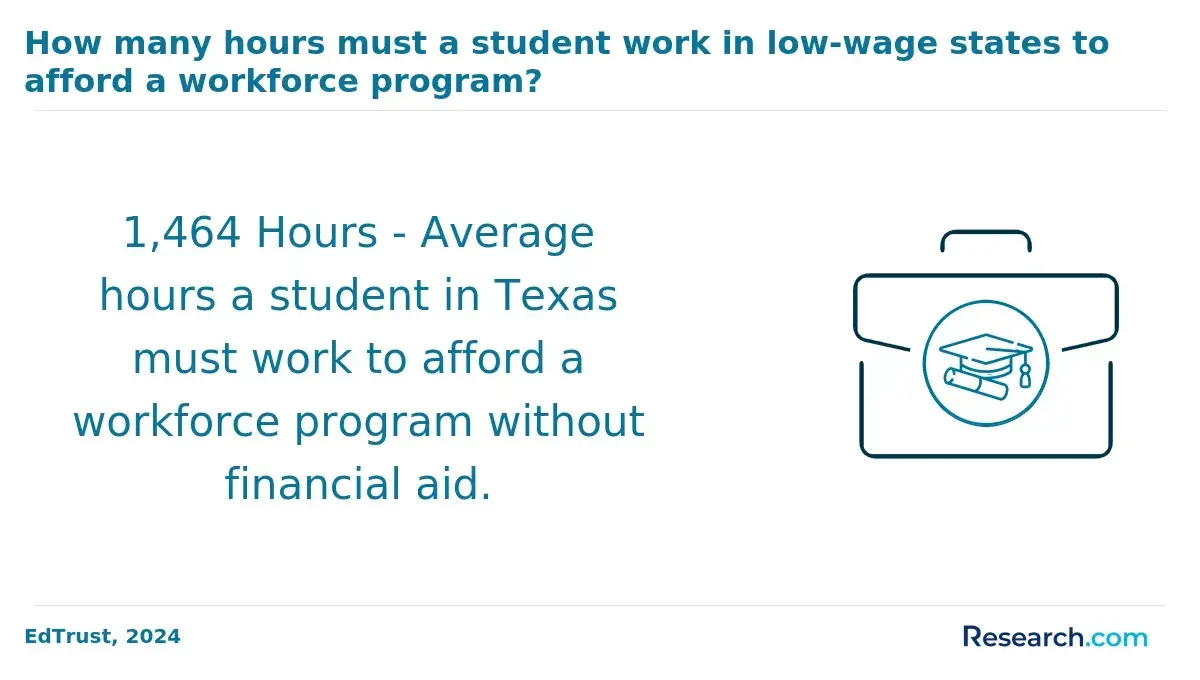
Experiential requirements can increase both direct and indirect costs. Tuition may be the largest expense, but fieldwork can add travel, residency lodging, background checks, software, research transcription, professional liability coverage, unpaid time, or delayed graduation if placement approval takes longer than expected.
Federal financing can help some students, but it has limits. Graduate and professional students may borrow up to $20,500 per academic year through the federal Direct Unsubsidized Loan program, so students who rely on loans should compare that limit with tuition, fees, residencies, and fieldwork-related costs before assuming the full cost is covered.
The table below summarizes cost and timeline factors that are easy to overlook. Use it to build a realistic budget rather than comparing tuition alone.
| Factor | How it affects cost | How it affects timeline | What to verify |
| Required residencies | Travel, lodging, meals, parking, and time away from work | Missing a mandatory residency can delay milestones | Number, location, duration, and whether virtual attendance is ever allowed |
| Practicum or fieldwork hours | May reduce paid work hours or require schedule changes | Hours may need to be completed across specific terms | Required hours, weekly schedule, and whether evenings or weekends are possible |
| Site approval process | May involve administrative fees, documentation, or employer legal review | Delayed approval can postpone enrollment in practicum or dissertation courses | Approval deadlines, agreement forms, and backup-site policy |
| Applied dissertation data collection | May require transcription, survey tools, statistical software, secure storage, or travel to interview sites | Institutional review, employer approval, and participant recruitment can extend completion time | Research ethics process, data access expectations, and faculty review timeline |
| Supervisor availability | May limit local site options if supervisors must meet strict credentials | A supervisor change can interrupt fieldwork | Supervisor qualifications and replacement procedures |
Fieldwork is worth the added cost when it directly supports your career goal, such as becoming a professor of practice, moving into senior accounting leadership, building consulting credibility, or producing a dissertation that solves a real business problem.
It may not be worth the added burden if your primary goal is academic research and the program's fieldwork does not improve research productivity, publication potential, or faculty placement.
Flexibility depends less on whether the coursework is online and more on how the program defines supervision, site approval, required hours, and deliverables. Some online doctorates are highly flexible because fieldwork is embedded in the student's existing workplace; others are less flexible because residencies, teaching practica, or structured internships occur on fixed dates.
Current accounting practice also affects flexibility. AI-assisted analytics, cloud accounting systems, remote audit procedures, and data visualization tools make some projects easier to supervise remotely, but they do not eliminate the need for approved data access, ethical review, or qualified supervision.
When comparing programs, ask detailed questions rather than relying on general claims about convenience. The questions below help reveal whether the program fits your work schedule and location.
- Can fieldwork be completed at my current workplace, or must it occur at a new organization?
- Are evening, weekend, hybrid, or remote field activities allowed?
- Does the program require live synchronous meetings during business hours?
- Can required hours be spread across multiple terms, or must they be completed in one block?
- Are residencies optional, replaceable, or mandatory for progression?
- Can students pause fieldwork if they change jobs, relocate, deploy, or lose site access?
- Does the school approve sites outside its home state?
- Are there minimum enrollment requirements during dissertation or fieldwork terms?
Students who work full time should be cautious about programs that advertise online flexibility but require weekday placements, daytime teaching practica, or multi-day residencies with little notice. True flexibility means the program has clear policies for local placements, remote supervision, schedule conflicts, and site disruptions.
Accreditation and licensure are separate issues. Institutional accreditation affects federal financial aid eligibility and broad academic legitimacy, while business or accounting-specific accreditation may influence employer perception, faculty hiring, and transferability of graduate credit. Licensure, including CPA eligibility, is controlled by state boards and is not automatically granted by earning a doctorate.
For accounting doctorates, experiential requirements may support professional credibility, but they do not automatically satisfy state CPA experience rules. CPA requirements often include specific education, examination, ethics, and supervised experience components that vary by jurisdiction, so students should check their state board before assuming doctoral fieldwork will count.
The table below shows how accreditation and licensure considerations connect to field-based doctoral requirements. It is designed to help you separate academic quality signals from professional eligibility rules.
| Issue | Why it matters | How fieldwork may affect it | What to confirm |
| Institutional accreditation | Supports federal aid eligibility, degree recognition, and basic academic legitimacy | Fieldwork should be governed by documented academic policies | Accreditor status through official institutional sources |
| Business or accounting accreditation | May matter for faculty roles, employer perception, and doctoral program quality signals | Applied projects may be aligned with learning outcomes and assessment standards | Whether the business school or accounting program holds relevant specialized accreditation |
| CPA licensure | Determines eligibility to practice as a licensed CPA | Doctoral fieldwork may not count unless it meets state board experience rules | State board education and experience requirements before enrollment |
| Teaching eligibility | Colleges may evaluate doctorate type, accreditation, research record, and teaching experience | Teaching practica can help demonstrate classroom preparation | Whether target employers prefer a PhD, DBA, CPA, publications, or teaching portfolio |
| Employer reimbursement | Employers may restrict reimbursement to accredited institutions or job-related coursework | Workplace projects may strengthen the case for sponsorship | Reimbursement rules, grade requirements, and post-completion service obligations |
A common mistake is assuming that more field hours always mean stronger accreditation or licensure value. In accounting, the better question is whether the hours are documented, supervised by qualified professionals, aligned with your goal, and recognized by the employer, board, or institution that matters to your career.
Strong support can make the difference between a manageable field experience and a delayed doctorate. Because doctoral fieldwork often depends on organizational access, students should evaluate advising, faculty responsiveness, research support, site approval help, and escalation procedures before enrolling.
The table below identifies support services that are especially important in online accounting doctorates with applied, supervised, or field-based requirements. Ask schools for concrete examples rather than general promises.
| Support area | What good support looks like | Why it matters |
| Placement advising | Clear site criteria, sample agreements, timelines, and staff who review proposed sites early | Reduces the risk of discovering too late that your site is not acceptable |
| Faculty supervision | Regular meetings, documented expectations, feedback on deliverables, and milestone tracking | Keeps applied projects aligned with doctoral-level standards |
| Research methods support | Help with qualitative, quantitative, mixed-methods, analytics, and ethics review processes | Applied accounting projects often fail when research design is weak or data access is unrealistic |
| Library and data resources | Access to accounting databases, journals, citation tools, statistical software, and librarian consultations | Supports dissertation quality and reduces dependence on unsupported web sources |
| Career and teaching support | Teaching portfolio guidance, consulting project framing, resume review, and interview preparation | Helps translate fieldwork into career evidence |
| Disruption plan | Written process for supervisor changes, site withdrawal, relocation, or employer data restrictions | Prevents one site problem from becoming a graduation delay |
Students should also speak with current doctoral candidates or recent graduates. Ask whether advisors responded quickly, whether site approvals were predictable, whether employer data restrictions caused delays, and whether the program helped when fieldwork plans changed.
Experiential requirements can improve career value when they produce credible evidence of advanced practice: a dissertation based on a real accounting problem, a teaching portfolio, a consulting case, an analytics implementation, a governance improvement, or a research agenda connected to industry needs. The value is strongest when the experience aligns with the role you want after graduation.
The labor market context is favorable but competitive. The U.S. Bureau of Labor Statistics projects 6% employment growth for accountants and auditors from 2023 to 2033, which suggests steady demand, but a doctorate is usually most relevant for specialized leadership, consulting, research, policy, or teaching roles rather than entry-level accounting work.
The table below connects common doctoral experiential requirements with career outcomes they may support. It does not guarantee employment, but it shows how to judge whether the requirement strengthens your specific career case.
| Career goal | Most useful experiential component | Why it helps | Potential limitation |
| Accounting faculty role | Teaching practicum, research apprenticeship, dissertation, conference presentations | Demonstrates classroom readiness and scholarly preparation | Research universities may prefer traditional PhD preparation and publication potential |
| Senior accounting or finance leadership | Applied organizational project, analytics implementation, governance or internal control study | Shows ability to diagnose complex systems and lead evidence-based change | Employers may value CPA, leadership record, or industry experience more than field hours alone |
| Consulting or advisory work | Client-centered capstone, case study, or practice-based dissertation | Creates a portfolio example and a structured problem-solving narrative | Confidentiality rules may limit how much detail can be shared publicly |
| Audit, risk, or compliance leadership | Field project involving controls, assurance, data analytics, ethics, or regulatory processes | Connects doctoral research to operational risk and accountability | Role requirements may still depend on certifications, sector experience, or security clearance |
| Business operations leadership | Cross-functional applied project involving accounting data, process improvement, and decision systems | Supports broader executive decision-making beyond technical accounting | Some students may be better served by a specialized business master's program |
If your goal is broader operations leadership rather than accounting scholarship or doctoral-level accounting practice, comparing a doctorate with an MBA operations management online program may reveal a shorter and more directly managerial route.
How Should Students Choose an Online Accounting Doctorate With Experiential Requirements?
The right program is the one you can complete without derailing your work, finances, location, or professional obligations while still gaining experience that supports your career goal. Start with the outcome you want, then work backward to the degree type, accreditation, fieldwork model, faculty expertise, and placement feasibility.
Use the following decision process before applying. It is designed to prevent the most common mistake: enrolling in an online doctorate before confirming that the in-person or supervised components are realistic.
- Define your target role: faculty, senior accounting leader, consultant, researcher, policy specialist, or business executive.
- Choose the degree type that matches the role: PhD for research-intensive academic goals, DBA for applied professional leadership, or education/leadership doctorate for teaching and institutional improvement goals.
- Request written fieldwork details, including required hours, residency days, site rules, supervisor qualifications, and documentation requirements.
- Confirm placement responsibility and ask whether the school has approved sites in your state or allows student-proposed sites.
- Ask whether your employer can serve as a site and whether conflicts of interest, confidentiality, or data restrictions could block approval.
- Compare total cost, including tuition, fees, travel, lodging, technology, unpaid hours, and possible extra dissertation terms.
- Verify institutional accreditation, business accreditation where relevant, and any state board implications if CPA licensure or education requirements matter to you.
- Interview current students or alumni about placement delays, faculty support, residency burden, and dissertation approval timelines.
- Ask what happens if a site falls through, a supervisor leaves, or you move during the program.
- Choose the program only if the experiential requirement clearly strengthens your career case and fits your location, schedule, and budget.
Some students will find that a doctorate is not the most efficient next step. If you want broader management advancement without a dissertation or supervised fieldwork, an online business degree may be a better fit depending on your current education level and career timeline.
Students should be especially cautious if a school cannot explain placement policies, refuses to provide a doctoral handbook, gives vague answers about local site approval, or implies that fieldwork automatically satisfies licensure or employer requirements. A credible program should be transparent about what is online, what is supervised, what is in person, and what happens if plans change.
Other Things You Should Know About Accounting Programs
Not always. Many DBA and PhD programs admit students without a CPA license, especially if they have a relevant master's degree and professional experience. However, a CPA can strengthen applications for accounting-focused programs and may matter for teaching or practice-oriented roles.
Usually, yes. PhD programs typically require a research dissertation, while DBA programs often require an applied dissertation or doctoral project. The format varies, but students should expect original research, faculty review, and a formal defense or final presentation.
Sometimes. Programs may accept a limited number of graduate credits if they are recent, relevant, earned from an accredited institution, and approved by the doctoral faculty. Transfer credit rarely eliminates dissertation, residency, or doctoral research requirements.
They can be, especially when the institution is properly accredited, the curriculum is rigorous, and the student's research or applied project aligns with the target role. Employer perception depends on the school, degree type, accreditation, faculty quality, professional experience, and career goal.
- Doctorates in Accounting | Accounting.com https://www.accounting.com/degrees/accounting/phd/
- Call for Systemic Changes to Alleviate International Students’ Practicum Barriers in APA Accredited Psychology Programs https://societyforpsychotherapy.org/call-for-systemic-changes-to-alleviate-international-students-practicum-barriers-in-apa-accredited-psychology-programs/
- Graduate Internship Program - Seneca https://senecafoa.org/careers/graduate-internship-program/
- Contemplating a Doctorate in Accounting? - The CPA Journal https://www.cpajournal.com/2025/12/05/contemplating-a-doctorate-in-accounting-2/
- Integrating Virtual and Real Worlds: Using an Online Practicum to Create Hands-on Learning Capstone Experiences https://www.iises.net/proceedings/12th-international-academic-conference-prague/table-of-content/detail
- Section 4: Professional Practice - CACREP https://www.cacrep.org/section-4-professional-practice/