
2027 Best Online Accounting Doctorate Programs for Teaching at the College Level

Co-Founder and Chief Data Scientist
Choosing an online accounting doctorate is really a faculty-career decision: the right program can strengthen your research, teaching, and academic credibility, while the wrong one may limit your options. The need is timely because the U. S. Bureau of Labor Statistics projects postsecondary teaching employment to grow 8% from 2023 to 2033, faster than average. This guide is for prospective doctoral students who want to teach accounting at colleges or universities and need to compare degree types, accreditation, cost, research expectations, and career outcomes before enrolling.
Key Things You Should Know
- For tenure-track or research university goals, a research-focused PhD in accounting or business with an accounting concentration is usually the strongest path; online DBA or professional doctorate programs may fit adjunct, community college, practitioner-faculty, or teaching-focused roles better.
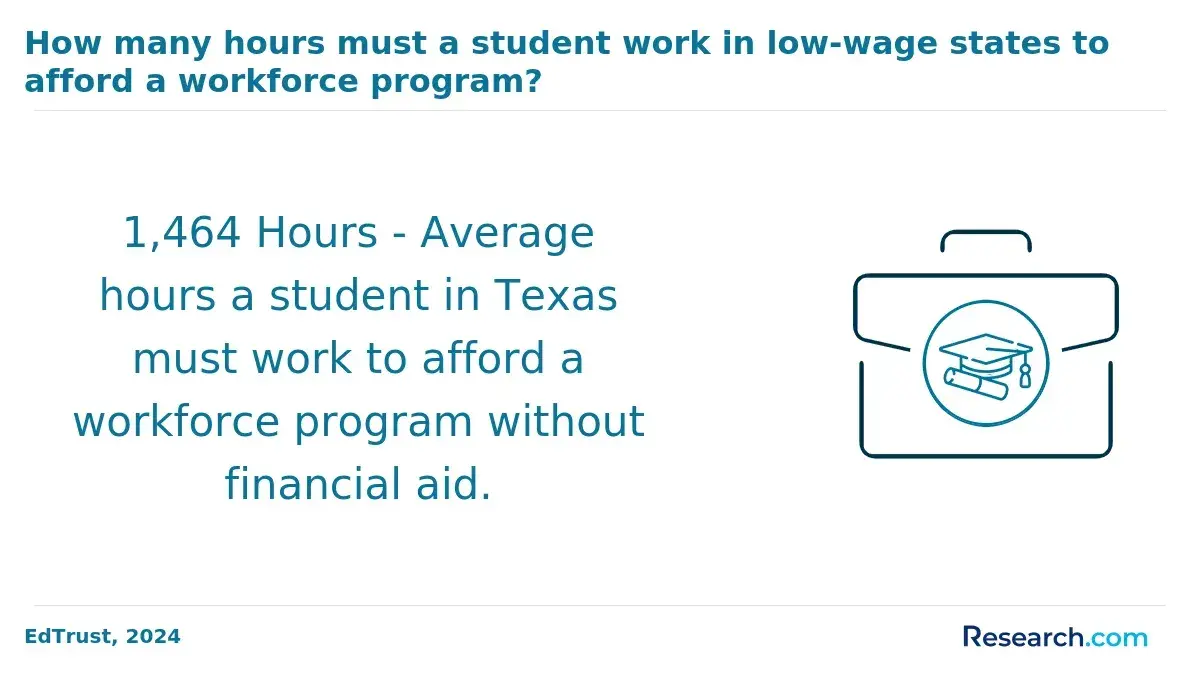
- Plan for a serious time and cost commitment: online accounting doctorates commonly require about 3 to 6 years, and NCES graduate tuition data published in 2024 shows average graduate tuition and required fees of $12,596 at public institutions and $29,931 at private nonprofit institutions for 2022-23.
- Accreditation, dissertation quality, faculty research fit, teaching experience, and publication support matter more than the word "online"; a doctorate alone does not guarantee a full-time professor job or tenure-track appointment.
Do You Need a Accounting Doctorate to Teach at the College Level?
An accounting doctorate is not always required to teach at the college level, but it becomes much more important as you move from part-time undergraduate teaching to full-time, tenure-track, or graduate-level faculty roles. Colleges generally evaluate three things together: the highest degree earned, graduate coursework in accounting, and evidence that you can teach, research, or apply accounting expertise at a high level.
If your goal is to teach introductory financial accounting as an adjunct, a master's degree in accounting, taxation, business, or a related field may be enough at some institutions. If your goal is to become a full-time accounting professor, lead graduate courses, publish research, or compete for tenure-track openings, a doctorate is usually expected and often practically necessary.
The table below summarizes how doctoral expectations often differ by teaching role. Requirements vary by institution, accreditor, collective bargaining agreement, department needs, and whether the school emphasizes research or professional practice.
| Teaching goal | Typical minimum credential | How a doctorate helps | Important limitation |
| Adjunct instructor | Often a master's degree with graduate accounting coursework | Can improve competitiveness and support higher-level course assignments | Many adjunct roles remain part-time and course-by-course |
| Community college professor | Usually a master's degree; doctorate may be preferred for leadership or competitive roles | Can strengthen promotion, curriculum leadership, and assessment roles | Teaching experience may matter as much as research output |
| Teaching-focused university faculty | Doctorate often preferred or required | Signals advanced expertise and ability to teach upper-division or graduate accounting | A practice-oriented doctorate may be accepted differently across institutions |
| Tenure-track professor | Doctorate usually required, often a PhD for research-intensive schools | Supports research agenda, publication potential, and doctoral-level disciplinary preparation | Online format may be less important than research fit, publications, and faculty mentorship |
| Graduate accounting faculty | Doctorate commonly expected | Shows preparation to teach advanced auditing, tax, analytics, accounting theory, or research methods | Schools may expect scholarship, professional credentials, or CPA experience |
Students who are earlier in the pipeline may not need to jump directly into a doctorate. If you still need undergraduate preparation, an online accounting degree can be a more appropriate first step before moving into a master's program, CPA preparation, or doctoral study.
Which Online Accounting Doctorate Programs Are Best for Aspiring College Professors?
The best online accounting doctorate for aspiring college professors is the one that matches the type of faculty job you want. A program designed for working executives can be excellent for practitioner teaching, but it may not provide the research apprenticeship, publication pipeline, or disciplinary depth expected in tenure-track accounting searches.
Use the comparison below to identify the strongest program category for your career target. This is more useful than relying on a single ranking because accounting faculty hiring is highly dependent on accreditation, scholarship, research area, and institutional fit.
| Best-fit program type | Best for | What to look for | Potential trade-off |
| Online or hybrid PhD in accounting | Aspiring tenure-track professors and research-focused faculty | Accounting seminars, econometrics or archival methods, faculty publishing in your area, dissertation mentorship | Fully online options are limited, and residencies may be required |
| Online DBA in accounting | Working professionals who want to teach applied accounting, audit, tax, controllership, or accounting analytics | Dissertation or applied research project, AACSB or ACBSP business accreditation, teaching opportunities | May be viewed as less research-oriented than a PhD at research universities |
| Online PhD or DBA in business with accounting specialization | Students who want accounting faculty roles but need broader business research training | Specialized accounting coursework, accounting faculty on dissertation committees, graduate accounting teaching eligibility | Some programs may not include enough accounting-specific doctoral depth |
| Online EdD with business or higher education focus | Academic administrators, program directors, assessment leaders, or community college faculty | Higher education pedagogy, curriculum design, assessment, and leadership research | Usually not the best fit for tenure-track accounting research roles |
To compare programs, start with the job posting you hope to qualify for and work backward. Read faculty ads from community colleges, regional universities, online universities, and research universities, then compare whether each doctorate would help you show the credentials those employers repeatedly request.
Before you apply, review each program using a short but rigorous screen. These checks help you avoid choosing a convenient doctorate that does not support the academic role you actually want.
- Confirm institutional accreditation through a recognized U.S. accreditor.
- Check whether the business school has AACSB, ACBSP, or IACBE accreditation, especially if you want to teach in a business school.
- Look for accounting-specific doctoral faculty, not only general management faculty.
- Ask whether online doctoral students can teach, assist in courses, publish with faculty, or present at academic conferences.
- Review dissertation titles from recent graduates to see whether the program supports accounting research rather than only broad business topics.
- Compare graduate outcomes carefully, including faculty placements, adjunct roles, promotions, and administrative appointments.
If your interests are still broader than accounting, you may also want to compare an online business degree pathway before committing to an accounting-specific doctorate.
Should You Choose a PhD or Professional Doctorate in Accounting for College Teaching?
The PhD versus professional doctorate decision is one of the most important choices for future accounting instructors. Both can be legitimate doctoral credentials, but they signal different types of preparation to hiring committees.
A PhD is usually built around theory, methodology, original research, and publication. A professional doctorate, such as a DBA, usually emphasizes applied research, executive decision-making, and practice-based problems. For college teaching, neither is automatically "better" in every case; the right choice depends on the institution type you want to serve.
The table below compares the two paths through the lens of faculty hiring. Use it to decide whether your priority is research placement, teaching credibility, practitioner expertise, or flexibility while working.
| Factor | PhD in accounting | DBA or professional doctorate in accounting |
| Primary purpose | Prepare scholars to produce original disciplinary research | Prepare advanced practitioners to apply research to business and accounting problems |
| Best teaching fit | Tenure-track, research-focused, graduate-level, and doctoral faculty roles | Adjunct, teaching-focused, professional program, executive education, and applied faculty roles |
| Research expectations | Usually heavy emphasis on theory, methods, seminars, and peer-reviewed publication | Usually applied dissertation or practice-based research, though rigor varies by program |
| Online availability | Less common in fully online formats | More common for working professionals |
| Hiring committee perception | Often strongest for research university appointments | Can be strong for practitioner-oriented teaching, but acceptance varies by institution |
Choose a PhD if you want to publish accounting research, compete for tenure-track roles, or teach doctoral and research-intensive graduate courses. Choose a DBA if you are an experienced accountant, auditor, controller, consultant, or executive who wants to teach applied accounting while continuing professional work.
A common mistake is assuming a DBA will be evaluated like a PhD in every academic search. Some universities welcome practitioner-scholars, while others screen heavily for PhD preparation, peer-reviewed publications, and research methods depth. Before enrolling, ask the program for examples of graduates who obtained roles similar to the one you want.
Accreditation is essential when choosing an online accounting doctorate for college teaching. It affects credit transfer, financial aid eligibility, employer recognition, and whether academic hiring committees view the credential as credible.
At minimum, choose a doctorate from an institution accredited by a recognized U.S. institutional accreditor. For business and accounting faculty goals, programmatic accreditation can add another layer of credibility, especially when the doctorate sits inside a business school.
The table below explains the accreditation signals that matter most. It also shows why a low-cost or fast online doctorate can become a poor investment if its recognition is weak.
| Accreditation type | What it tells you | Why it matters for teaching | What to verify |
| Institutional accreditation | The university meets recognized academic and administrative standards | Often required for faculty credential review and federal aid eligibility | Accreditor recognition through official U.S. Department of Education or CHEA resources |
| AACSB business accreditation | The business school meets a selective global business education standard | Highly valued by many business schools, especially for faculty qualification systems | Whether the business unit and, if applicable, accounting programs are included |
| ACBSP or IACBE accreditation | The business program meets teaching-oriented or outcomes-focused business standards | May be valuable for teaching-focused colleges and applied business programs | Scope of accreditation and current status |
| State authorization | The institution is authorized to deliver online education to students in your state | Important for enrollment eligibility and complaint processes | Whether the school can enroll students where you live |
Accreditation does not guarantee a faculty job, but weak accreditation can close doors before your application is seriously reviewed. If a school is vague about accreditation, uses unfamiliar accreditor names, or claims that accreditation is "not necessary" for academic careers, treat that as a red flag.
Before applying, take these practical steps to verify credibility rather than relying only on marketing language.
- Confirm the university's institutional accreditation on an official accreditor or federal database.
- Check whether the business school's accreditation covers doctoral-level business education.
- Ask the department how its doctorate is evaluated under faculty qualification standards.
- Review faculty credentials to see whether accounting professors hold doctorates from recognized institutions.
- Ask whether graduates have been hired by accredited colleges or universities.
The strongest online accounting doctorate programs do more than deliver advanced courses. They help you develop as a scholar, instructor, and accounting expert who can contribute to a college department.
For future faculty, curriculum should include accounting depth, research methods, teaching preparation, and a dissertation or doctoral project that demonstrates independent expertise. A non-dissertation doctorate may be convenient, but it can be a weaker signal for academic roles that expect research ability.
The table below shows the academic features to compare before enrolling. These features are especially important because faculty hiring committees often look for evidence of scholarly readiness, not just degree completion.
| Program feature | Why it matters for college teaching | What strong evidence looks like |
| Doctoral accounting seminars | Builds depth beyond master's-level accounting practice | Courses in accounting theory, auditing research, tax research, financial reporting, analytics, or governance |
| Research methods sequence | Prepares you to read, design, and publish research | Quantitative methods, qualitative methods, econometrics, archival research, behavioral research, or design science |
| Dissertation support | Shows ability to complete independent scholarly work | Named dissertation chairs, milestones, proposal defense, data access, and publication guidance |
| Teaching development | Helps you compete for instructor and professor roles | Pedagogy courses, supervised teaching, learning management system experience, and course design practice |
| Research community | Reduces isolation in online doctoral study | Residencies, virtual colloquia, writing groups, conference funding, and faculty-student research projects |
Accounting education is also changing because data analytics, AI-assisted audit tools, automation, and digital reporting are reshaping what accounting departments teach. A strong doctorate should not ignore these shifts; it should help you teach emerging topics responsibly while maintaining command of accounting standards, ethics, assurance, taxation, and research methods.
When comparing curriculum, ask specific questions that reveal whether the program can support your future classroom and scholarship goals.
- Will I complete accounting-specific doctoral seminars, or are most courses general business courses?
- Can my dissertation chair supervise accounting research in my intended area?
- Are online students invited to research workshops, colloquia, or academic conferences?
- Does the program teach college pedagogy, assessment, inclusive teaching, and online course design?
- Will I produce work that could become a conference paper, journal submission, teaching case, or academic presentation?
Admission requirements vary, but online accounting doctorate programs are usually designed for applicants who already have graduate education and substantial professional experience. The more research-focused the program, the more likely it is to emphasize academic writing, quantitative preparation, and faculty research fit.
Many applicants enter with a master's in accounting, taxation, finance, business administration, or a related field. Some programs accept applicants with an MBA if they have enough accounting coursework, CPA experience, or professional accounting responsibility.
The table below outlines common requirements and how they affect your readiness for a teaching-focused doctoral path.
| Requirement | Common expectation | Why it matters |
| Master's degree | Often required; field may need to be accounting, business, finance, taxation, or related | Shows graduate-level preparation for doctoral seminars |
| Graduate accounting coursework | May be required or strongly preferred | Supports eligibility to teach accounting courses after graduation |
| Professional experience | Often expected for DBA programs; may be less central for PhD programs | Can strengthen practitioner teaching and applied research topics |
| Academic writing sample | Frequently requested | Helps the program evaluate dissertation readiness |
| Statement of purpose | Usually required | Shows whether your teaching and research goals match the program |
| Test scores | GMAT or GRE may be required, optional, or waived | Some research-focused programs still use scores to evaluate quantitative readiness |
If your background is in management, operations, or general business rather than accounting, you may need prerequisite accounting coursework before pursuing a doctoral concentration. For example, someone comparing specialized graduate pathways such as an MBA operations management online program should confirm whether that preparation includes enough accounting content for future accounting faculty roles.
To strengthen your application, focus less on sounding impressive and more on showing fit. Admissions committees want evidence that you understand doctoral study and can complete a long, independent research project.
- Identify a realistic research interest, such as audit quality, tax compliance, accounting analytics, financial reporting, ESG disclosure, governmental accounting, or accounting education.
- Match your interest to faculty who actively publish, teach, or supervise in that area.
- Explain the type of college teaching role you want and why the doctorate is necessary for it.
- Show evidence of writing ability through a master's thesis, research paper, technical report, or professional publication.
- Address time management honestly, especially if you plan to work while enrolled.
An online accounting doctorate commonly takes about 3 to 6 years, depending on degree type, transfer credits, enrollment intensity, dissertation progress, and residency requirements. Professional doctorates may be structured for working adults, while research-focused PhD programs may require a more intensive research apprenticeship.
Working while enrolled is possible in many online DBA and hybrid professional doctorate programs, but it is not easy. Doctoral coursework, research design, data analysis, dissertation writing, and teaching preparation require sustained weekly time, especially after the coursework phase ends.
The table below compares timeline factors that affect working professionals. It can help you decide whether a faster program is truly better or simply more compressed.
| Format factor | How it affects timeline | What to consider before enrolling |
| Full-time study | May shorten completion time | Harder to balance with full-time accounting or finance work |
| Part-time study | May extend the program | Often more realistic for working professionals and adjunct instructors |
| Residencies | Can add travel time and cost | May improve networking, research feedback, and cohort connection |
| Dissertation pace | Often the biggest variable | Topic approval, data access, chair responsiveness, and writing discipline matter |
| Transfer credits | Can reduce coursework in some programs | Usually does not eliminate dissertation or research requirements |
Be cautious with programs that advertise extreme speed without explaining dissertation expectations. For a future college instructor, the goal is not only to finish quickly; it is to finish with a credible research project, teaching portfolio, and faculty-ready professional identity.
If you plan to keep working, use a practical workload test before you commit.
- Ask how many hours per week successful students typically spend on coursework during the first year.
- Ask how dissertation milestones are scheduled and what happens if you miss one.
- Confirm whether synchronous classes, residencies, or comprehensive exams conflict with work travel or tax-season responsibilities.
- Discuss your plan with your employer if you need schedule flexibility, tuition assistance, or research access.
- Protect weekly writing time early instead of waiting until the dissertation phase.
Online accounting doctorate costs vary widely because programs differ in credit requirements, tuition model, residency travel, technology fees, dissertation continuation fees, and whether students receive employer or institutional support. The safest way to compare programs is to calculate total cost to completion, not just per-credit tuition.
Cost matters because doctoral study can affect your finances for years, especially if your target job is adjunct teaching or a teaching-focused role with uncertain full-time openings. NCES data published in 2024 reported average graduate tuition and required fees of $12,596 at public institutions and $29,931 at private nonprofit institutions for 2022-23, which shows why public/private status can materially change the baseline cost of graduate study.
The table below shows major cost categories to include in your comparison. These items help reveal the real price of an online doctorate beyond advertised tuition.
| Cost factor | Why it matters | Question to ask |
| Tuition model | Per-credit, per-term, and flat-rate tuition can produce different totals | What is the estimated total tuition for the full program? |
| Required credits | More credits usually increase total cost | How many credits are required after transfer evaluation? |
| Residency travel | Online programs may still require campus visits | How many residencies are required, and where are they held? |
| Dissertation fees | Extended dissertation time can add costs | Are there continuation, defense, editing, or research review fees? |
| Technology and course fees | Fees can add up across several years | Which fees are mandatory for online doctoral students? |
| Lost work time | Reduced hours or unpaid leave can affect ROI | Will the program require weekday residencies, internships, or teaching obligations? |
Financial aid may include federal student loans for eligible students, employer tuition assistance, veterans benefits, payment plans, scholarships, assistantships, fellowships, or professional association awards. Fully funded online accounting doctorates are less common than funded on-campus PhD programs, so funding should be verified in writing before you enroll.
Use this sequence to compare affordability responsibly.
- Request a full cost-to-completion estimate from every school.
- Separate tuition from fees, travel, books, software, and dissertation expenses.
- Ask whether tuition is locked or can increase during enrollment.
- Compare debt against realistic faculty roles, not only best-case tenure-track outcomes.
- Prioritize accredited programs with strong research and teaching support over the cheapest option with weak academic recognition.
An online accounting doctorate can support several college teaching paths, but outcomes depend on the degree type, accreditation, your professional background, your teaching record, and your research productivity. The U.S. Bureau of Labor Statistics reported a median annual wage of $84,380 for postsecondary teachers in May 2023, but actual compensation varies by discipline, institution type, rank, contract length, and full-time versus adjunct status.
Accounting faculty roles often combine teaching, student advising, curriculum work, committee service, professional engagement, and scholarship. Research universities place heavier weight on publications, while community colleges and teaching-focused institutions may prioritize classroom effectiveness and professional relevance.
The table below summarizes common teaching-related roles for doctoral-prepared accounting professionals. Use it to align your doctorate with the type of academic work you actually want.
| Role | Typical responsibilities | Doctorate value | What else may be expected |
| Adjunct accounting instructor | Teach one or more courses, grade assignments, support students | Can improve eligibility for advanced or graduate courses | Teaching experience, availability, and professional expertise |
| Full-time lecturer or instructor | Teach multiple courses, advise students, participate in curriculum work | Strengthens candidacy at institutions that prefer terminal degrees | Strong teaching evaluations and course design ability |
| Assistant professor of accounting | Teach, publish, advise, serve on committees, pursue tenure if applicable | Often required for tenure-track roles | Research agenda, publications, conference activity, and faculty fit |
| Graduate accounting faculty | Teach master's-level accounting, tax, audit, analytics, or research courses | Signals advanced expertise and supports graduate faculty status | Doctoral research depth, CPA or professional experience may help |
| Program chair or academic director | Lead curriculum, assessment, faculty scheduling, accreditation work | Can support academic leadership credibility | Administrative experience and knowledge of accreditation standards |
A doctorate may also support roles outside traditional faculty lines, such as accounting education consultant, accreditation reviewer, corporate trainer, curriculum developer, or director of accounting programs. These roles can be attractive if you want to combine teaching with leadership or professional practice.
The biggest career mistake is assuming all college teaching jobs are the same. Before choosing a program, decide whether you want research, teaching, administration, adjunct flexibility, or practitioner education, because each path rewards different evidence.
How Can an Online Accounting Doctorate Help You Build a Competitive Academic CV?
A competitive academic CV is built before graduation, not after. For accounting faculty roles, the degree is only one line on the CV; hiring committees also look for teaching record, research output, professional credentials, service, and evidence that you can contribute to the department's needs.
Your online doctorate can help if it gives you structured opportunities to teach, write, present, and collaborate. If it only provides coursework without scholarly or instructional development, you may need to build those experiences independently.
The table below shows the CV areas that matter most for aspiring accounting faculty. It also explains how to develop each area during an online doctoral program.
| CV area | Why it matters | How to build it during the doctorate |
| Teaching experience | Shows you can manage a real classroom or online course | Seek adjunct roles, teaching assistant work, guest lectures, or supervised teaching |
| Research agenda | Shows scholarly direction beyond completing a dissertation | Develop a focused topic area and align papers, presentations, and dissertation work |
| Publications and presentations | Signals ability to contribute to academic conversations | Submit to conferences, practitioner journals, teaching case outlets, or peer-reviewed journals where appropriate |
| Professional credentials | Can strengthen applied accounting credibility | Maintain or pursue credentials such as CPA, CMA, CIA, CFE, or related certifications when relevant |
| Academic service | Shows readiness to participate in department life | Join committees, professional associations, assessment projects, or curriculum initiatives |
If you want to teach introductory accounting or supervise students with limited accounting experience, smaller credentials can also support your teaching toolkit. For example, understanding the structure of a bookkeeping certification can help you design clearer pathways for students who are starting below the bachelor's level.
Use your doctorate years strategically. The following steps can make your CV stronger by the time you enter the academic job market.
- Create a teaching portfolio with syllabi, sample assignments, assessment methods, student feedback, and a statement of teaching philosophy.
- Turn major course papers into conference proposals or manuscript drafts instead of letting them remain unused assignments.
- Ask faculty mentors which journals, conferences, and associations are realistic for your research stage.
- Document professional accounting expertise in ways that connect directly to courses you can teach.
- Build relationships with faculty outside your program through conferences, webinars, accounting associations, and collaborative projects.
- Track job postings early so you can identify missing qualifications before graduation.
Red flags include graduating with no teaching samples, no dissertation-to-publication plan, no faculty references who know your work well, and no clear accounting specialization. A strong online doctorate should help you avoid those gaps, but you must actively use the program's resources.
Other Things You Should Know About Accounting
Yes, an online doctorate can support online college teaching if the institution is properly accredited and you also have the accounting coursework, teaching skill, and subject expertise the hiring school requires. Online teaching experience, comfort with learning management systems, and strong course design skills can be especially helpful.
Sometimes, but the delivery format is usually less important than the university's reputation, accreditation, dissertation quality, faculty mentorship, and your teaching or research record. Avoid programs that appear academically weak or disconnected from recognized accounting scholarship.
CPA licensure is not universally required for accounting professor roles, but it can strengthen your profile, especially for audit, tax, financial accounting, and practitioner-oriented teaching. Requirements vary by institution and course level, so review job postings in your target market.
Be cautious. Research universities often prefer candidates with strong PhD training, active publication pipelines, and close faculty research mentorship. A hybrid or online program may work if it provides rigorous research preparation, but some aspiring research faculty may be better served by a traditional funded PhD program.
- Road map to applying for a doctorate in accounting - Journal of Accountancy https://www.journalofaccountancy.com/issues/2018/oct/accounting-doctorate-application-tips/
- Doctorates in Accounting | Accounting.com https://www.accounting.com/degrees/accounting/phd/
- How to Pay for a Ph.D in 2026 - ELFI https://www.elfi.com/how-to-pay-for-a-ph-d/
- Contemplating a Doctorate in Accounting? - The CPA Journal https://www.cpajournal.com/2025/10/27/contemplating-a-doctorate-in-accounting/
- Pursuing a PhD in Accounting http://archives.cpajournal.com/2007/307/essentials/p66.htm
- Best Online PhD and Doctorates in Accounting https://www.phds.me/online-programs/phd-doctorate-in-accounting/


