2027 Nursing Statistics for Nursing Students: Background Knowledge and Readiness Questions
Audited and Verified:
Our Editorial and Data Verification Process
Research.com uses government datasets, official education statistics and primary institutional information to support its career and degree guides. Our review process checks factual accuracy, occupational definitions, source dates and the requirements associated with the credentials discussed.
How This Article Was Fact-Checked
Our editorial team verifies salary estimates, employment projections, education requirements and program information against original data providers and official organizations. Salary figures are checked against the relevant occupational definitions and reporting periods. Information about licensure, accreditation and required in-person training is reviewed separately.
Fact-checked and verified on:

Co-Founder and Chief Data Scientist
Nursing students need more than a promising job statistic to choose a program. An occupation-wide salary cannot predict a new graduate's pay, and a school's advertised NCLEX pass rate says little without its cohort size or graduation rate. This guide helps prospective and current US nursing students interpret those numbers, compare routes to licensure, and assess academic and clinical readiness. Use it to identify the evidence - and the questions - that should shape your next enrollment decision.
Key Things You Should Know
- Registered nurses earned a US median annual wage of $93,600 in May 2024, according to the Bureau of Labor Statistics (BLS); that occupation-wide figure is not a starting salary or a return on any particular degree.
- ADN/ASN programs commonly take about two years of nursing study, while traditional BSN programs commonly take about four years; prerequisites, placement availability, and enrollment pace can extend either timeline.
- Before enrolling, check three separate outcomes: whether the program supports licensure in your intended state, how many students complete it, and how its first-time NCLEX candidates perform.
What nursing statistics should students know before choosing a degree program?
The most useful nursing statistics answer different questions. BLS employment and wage data describe an occupation across employers and experience levels. A program's completion and first-time NCLEX pass rates describe particular student cohorts. Neither type of statistic, by itself, predicts your result.
Ask each school for the reporting year, number of students counted, and definition behind its figures. A 90% pass rate for 18 of 20 candidates and a 90% pass rate for 90 of 100 candidates look identical as percentages but reflect different cohort sizes. Also ask how many students began the program and how many reached the exam: a high pass rate can coexist with substantial attrition.
Compare outcomes for the specific prelicensure track and campus you would attend, not an institution-wide average. If you already have a bachelor's degree in another field, exploring accessible accelerated BSN pathways can help you frame a comparison, but verify prerequisites, clinical capacity, and published outcomes for each actual program.
What education pathways lead to registered nurse licensure?
Prelicensure education prepares someone who is not yet an RN to seek initial RN licensure. An approved associate-degree, diploma, or bachelor's-degree nursing program may provide that preparation. Graduation is followed by the applicable state board's eligibility decision, the NCLEX-RN, and issuance of a license; the degree itself is not a license.
This comparison identifies the entry credential each route assumes. That distinction prevents a common mistake: applying to an RN-completion program when you need initial nursing preparation.
| Route | Starting point | Decision-relevant distinction |
| ADN/ASN or nursing diploma | Applicant without an RN license | Potential route to initial RN eligibility; compare local costs and later BSN-completion options. |
| Traditional or accelerated BSN | Applicant without an RN license; accelerated routes generally expect prior college study | Potential route to initial RN eligibility with bachelor's-level coursework; accelerated pacing can limit paid-work time. |
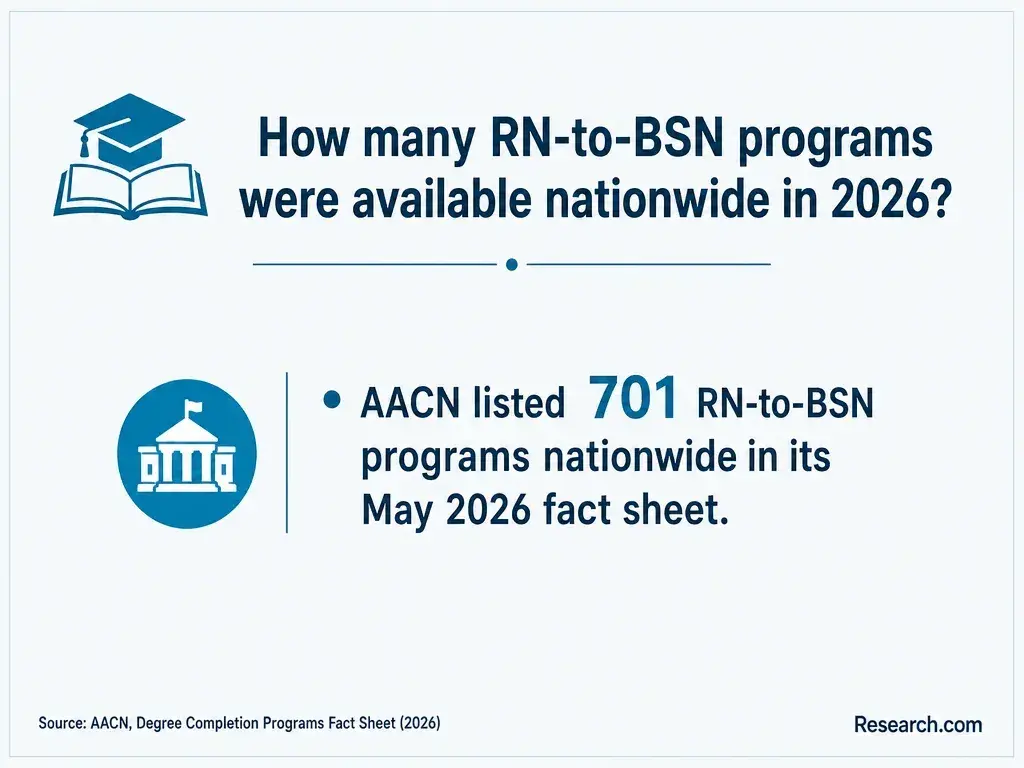
| RN-to-BSN or RN-to-MSN | Already-licensed RN | Academic advancement, not a substitute for initial prelicensure education. |
An ADN may make sense when an affordable approved program gets you to RN licensure sooner and your preferred employers accept that entry route. A BSN may fit better when target employers prefer it or its broader curriculum serves your goals. Licensed ADN graduates considering ADN-to-MSN bridge curriculum options should check whether the chosen track leads to their intended role; an MSN is not automatically advanced practice preparation.
What are the requirements for nursing school admission and licensure?
University admission, nursing-track admission, eligibility for clinical placement, and state licensure are separate decisions. Schools may assess grades in anatomy, physiology, microbiology, or other prerequisites; laboratory format, course age, entrance exams, and minimum grades vary. A prior non-nursing degree may satisfy general education requirements without satisfying the nursing sciences.
Before paying an application fee, request written answers to the requirements most likely to change your timeline:
- Which completed courses satisfy the nursing track's prerequisites, and when must outstanding courses be finished?
- Is admission directly to the nursing cohort, or is a separate competitive application required?
- What background, health, and documentation requirements apply to clinical placement?
- Does this exact program meet educational requirements for initial RN licensure in the state where you intend to apply?
State boards make licensure decisions, including applicable examination and background-check requirements. Graduate admissions standards are a different matter: resources on less restrictive DNP entry options concern advanced study, not a shortcut around an RN license or a guarantee of admission or APRN eligibility.
Online delivery can reduce classroom commuting, but prelicensure nursing still requires program-approved hands-on learning, such as labs, simulation, and supervised clinical experiences. A campus-based option may simplify access to facilities while requiring more scheduled travel. Neither label tells you who finds clinical sites or whether shifts are available near home.
For each format, obtain a term-by-term calendar showing live classes, campus visits, labs, clinical days, travel radius, and who arranges placements. This matters especially if you work or provide care at home: asynchronous lectures do not make a fixed clinical shift asynchronous. Check whether the school can enroll you where you live and whether the program supports your intended licensing jurisdiction.
For an already-licensed nurse, BSN completion options for experienced RNs may have different practice-learning requirements from prelicensure programs. Confirm the actual curriculum rather than assuming a program described as online has no in-person obligations.
Prelicensure students typically build on anatomy and physiology, microbiology, pharmacology, health assessment, and nursing care across patient populations. Programs connect classroom concepts with skills labs, simulation, and supervised clinical practice. Coursework teaches reasoning; observed performance, feedback, and competency assessment show how a student applies it.
Clinical judgment means recognizing relevant patient information, prioritizing concerns, choosing and evaluating actions within the student's supervised role, and communicating changes. A useful readiness check is whether you can explain why an assessment finding or medication-safety concern matters - not merely recall a definition. Practice documentation, escalation, infection prevention, and patient communication as deliberately as exam questions.
Advanced study has a different purpose. Discussions of DNP project-based practice expectations should not be confused with the supervised patient-care preparation required for initial licensure or for a specific APRN population focus. A project, simulation session, or current job is not automatically interchangeable with required clinical hours.
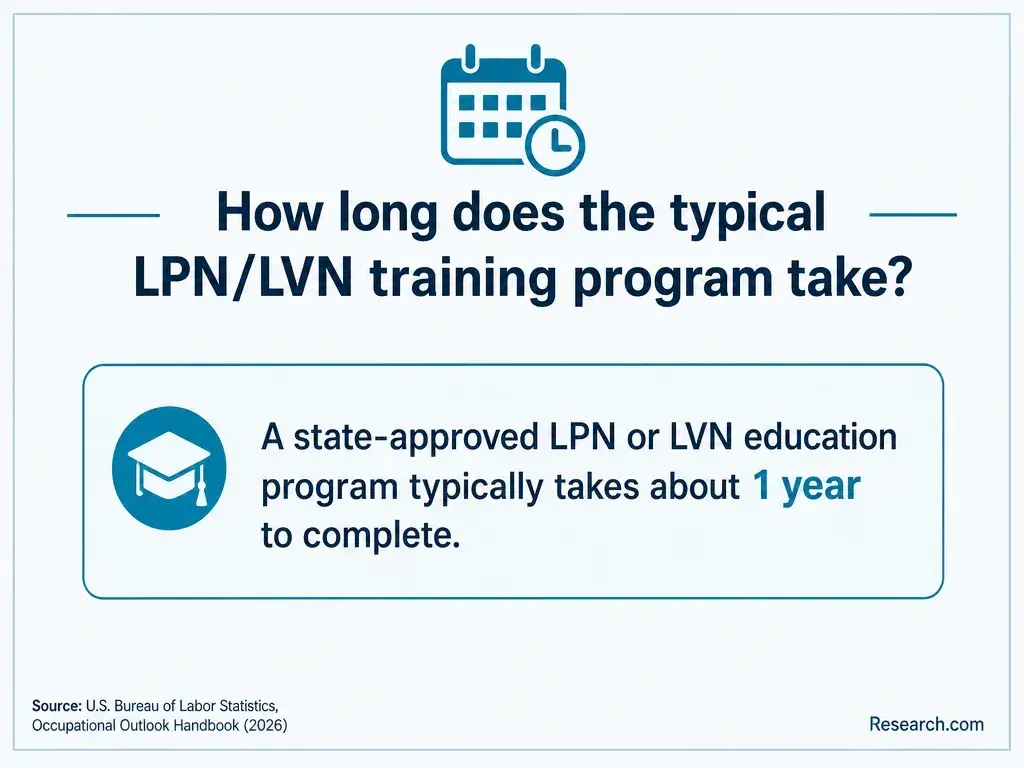
Common planning benchmarks are about two years of nursing study for an ADN/ASN and four years for a traditional BSN. An accelerated BSN may compress nursing coursework for students with prior college credit, but prerequisite gaps and intensive clinical schedules affect the actual finish date. Ask for the sequence from your completed courses to graduation, including how often required courses and placements are offered.
Published tuition is only one part of the decision. This cost comparison shows why a shorter or lower-tuition route may not have the lower total burden.
| Cost category | What to verify |
| Direct school charges | Tuition by credit or term, mandatory fees, lab charges, and repeat-course costs. |
| Clinical and completion costs | Equipment, scrubs, health documentation, background checks, travel, required visits, graduation, exam, and licensing fees. |
| Time and financing | Work hours forgone, childcare, aid eligibility, borrowing terms, and employer-reimbursement conditions. |
Request a written estimate through graduation under your expected course load, then model at least one delayed term. If graduate study is a later goal, cost-focused online psychiatric NP options are relevant only after checking the program's RN-entry requirements, population focus, supervised clinical arrangements, and full price - not as a substitute for budgeting an initial RN pathway.
RN licensure is the legal authorization to practice as an RN; specialty certification is a separate credential. New graduates should first establish safe practice through licensure, employer orientation, supervised progression, and demonstrated competencies. Experience-based specialty certifications generally become relevant after practice in the field, under the awarding organization's current eligibility rules.
For advancement, compare a credential's required license, education, practice experience, exam, renewal obligations, and relevance to actual job postings. For example, short-format family NP certificates for graduate nurses address formal preparation for a different advanced practice goal; a completion certificate alone does not confer NP certification or state APRN authorization. Professional standards, employer policies, and state scope-of-practice rules continue to apply regardless of degree or certification.
A newly licensed RN may seek supervised entry roles in hospitals, ambulatory care, long-term care, or community settings. The right first job depends less on the initials after the degree than on the employer's hiring criteria, orientation, patient population, staffing support, and your readiness to ask for help. Specialty units may hire new graduates, but their onboarding expectations should be explicit.
An LPN/LVN follows a different education and licensing route, with duties governed by state law and the workplace. An RN-to-BSN degree can broaden academic preparation for an existing RN but does not create a new license. Nurse practitioner roles require appropriate graduate population-focus preparation, national certification as applicable, and state authorization - not simply an MSN or DNP.
Graduate nurses considering a population-focus change can examine shorter online PMHNP certificate programs, but should request an individual review of prior coursework and required supervised experiences. Relevant bedside experience is valuable; it does not automatically replace formal preparation for a different role.
BLS reported a May 2024 median annual wage of $93,600 for registered nurses and $62,340 for licensed practical and licensed vocational nurses. These are dated, nationwide occupation-wide benchmarks - not current local offers, new-graduate wages, or pay attributable to a particular degree. A median means half of workers in the occupation earned more and half earned less.
Compare offers using location, shift differentials, hours, benefits, and likely progression as well as base pay. An accelerated route can bring forward potential RN earnings but may also reduce your ability to work during school; a lower-cost ADN can be financially attractive if local RN employers hire its graduates. Calculate the difference using realistic offers and your full education costs, rather than applying the national median to your expected first job.
Advanced practice wages should likewise be compared by the specific occupation, not labeled "MSN pay." If considering lower-cost online NP degree options, first confirm the program prepares you for the intended population focus and jurisdiction. Lower tuition alone cannot establish a salary return.
What is the job outlook for nurses and how should students evaluate programs?
National employment projections indicate demand across nursing occupations, but a projection counts jobs, not guaranteed openings for a particular graduate, specialty, or town. Use the latest BLS projection for the specific occupation you seek alongside local job postings and employers' new-graduate requirements. Check the projection period before comparing percentages from different publications.
To turn workforce data into a program decision, compare a short list of schools in this order:
- Confirm the exact program's state-board status, intended-state licensure eligibility, institutional accreditation, and applicable nursing program accreditation.
- Request track-specific completion and first-time NCLEX results with reporting years, cohort sizes, and explanations of missing data.
- Verify clinical-site responsibility, placement geography, scheduling, student support, and the total cost and time for your entry point.
- Compare those findings with local hiring requirements and ask current students or recent graduates about scheduling and support.
If your immediate goal is an LPN/LVN role rather than RN licensure, planning an accelerated practical nursing pathway is a separate decision: verify the practical nursing program's clinical format and eligibility for the applicable licensing exam. Do not compare its timeline or job outlook as though it awarded an RN license.
Other Things You Should Know About Nursing
You should be comfortable practicing arithmetic, proportions, and unit conversions. Schools teach and assess medication-related calculations, so ask about their required math assessments and tutoring before classes begin.
Not automatically. A nursing program determines whether an experience meets its objectives, supervision, documentation, and approval rules. Valuable volunteer work may still be separate from required clinical practice.
No. Confirm that your state board has issued the appropriate active license and that your employer has completed its required credentialing and onboarding before practicing.
Ask which outcomes it publishes, for which track and reporting year, and why others are unavailable. Compare programs using verifiable board and school information; do not treat an unsupported marketing claim as an outcome.
- Clinical Readiness for Practice of Nursing Students - PMC - NIH https://pmc.ncbi.nlm.nih.gov/articles/PMC11675653/
- Nursing and midwifery | who.int https://www.who.int/news-room/fact-sheets/detail/nursing-and-midwifery
- Health Workforce Projections | hrsa.gov https://bhw.hrsa.gov/data-research/projecting-health-workforce-supply-demand
- The Nursing Workforce - The Future of Nursing 2020-2030 https://www.ncbi.nlm.nih.gov/books/NBK573922/
- Step 4 - Gather Credible Evidence | Program Evaluation https://www.cdc.gov/evaluation/php/evaluation-framework-action-guide/step-4-gather-credible-evidence.html
- Patient Safety Amid Nursing Workforce Challenges | PSNet https://psnet.ahrq.gov/perspective/patient-safety-amid-nursing-workforce-challenges
- The clinician's guide to p values, confidence intervals, and magnitude of effects | Eye | Nature Index https://www.nature.com/articles/s41433-021-01863-w
- Strategies to prevent medical errors by nursing interns | springer.com https://link.springer.com/article/10.1186/s12912-024-01726-1