2027 Nursing Career Planning After a Physical Limitation: Role Requirements and Accommodation Questions
Audited and Verified:
Our Editorial and Data Verification Process
Research.com uses government datasets, official education statistics and primary institutional information to support its career and degree guides. Our review process checks factual accuracy, occupational definitions, source dates and the requirements associated with the credentials discussed.
How This Article Was Fact-Checked
Our editorial team verifies salary estimates, employment projections, education requirements and program information against original data providers and official organizations. Salary figures are checked against the relevant occupational definitions and reporting periods. Information about licensure, accreditation and required in-person training is reviewed separately.
Fact-checked and verified on:

Co-Founder and Chief Data Scientist
A physical limitation may change how you train or work as a nurse, but it does not automatically rule out nursing. The important distinction is between a role's actual duties, a program's clinical competencies, and the accommodations that may make those duties accessible. This guide is for prospective students and nurses reassessing their careers after an injury, illness, or change in mobility, stamina, dexterity, or sensory function. It will help you identify plausible roles, understand what schools and employers must evaluate individually, and ask the questions that matter before committing to a program or job.
Key Things You Should Know
- Match your limitation to specific tasks and settings, not to the title "nurse": bedside, ambulatory, telephone-based, and administrative jobs have different demands, and even jobs with the same title vary by employer.
- Prelicensure nursing still requires assessed clinical competence. Accommodations can change how a student accesses learning or demonstrates a skill, but schools and clinical sites must also address essential requirements and patient safety.
- ADN and BSN programs are common routes to initial RN eligibility; an RN-to-BSN program is for already-licensed nurses. Graduation, NCLEX-RN passage, state licensure, and hiring are separate steps.
What nursing roles are compatible with different physical limitations?
No nursing role is universally "disability-friendly." Start with your existing license and experience, then compare the tasks you can perform - with reasonable accommodations - to a particular employer's essential job functions. A new graduate may need supervised experience before moving into a role that primarily involves remote assessment, education, or coordination.
The comparisons below are starting points, not guarantees about a job's accessibility.
| Limitation or concern | Roles worth investigating | Demand to verify |
| Limited lifting or mobility | Ambulatory care, telephone triage, care coordination | Patient transfers, time on your feet, emergency response, and travel |
| Limited stamina or need for predictable breaks | Clinic nursing, utilization review, some education roles | Shift length, caseload, break coverage, and productivity targets |
| Limited hand dexterity | Some education, informatics, or quality roles | Required procedures, keyboard use, documentation volume, and available tools |
| Sensory limitation | Roles whose communication and assessment tasks can be made accessible | Alarms, assessment methods, communication systems, and emergency duties |
Many lower-lifting roles still require RN experience, rapid clinical judgment, or prolonged computer work. A specialty transition can also require formal preparation: for example, a licensed nurse considering psychiatric advanced practice should distinguish job accommodations from the separate admissions and clinical requirements of PMHNP certificate admissions and timelines. If the desired work is nonclinical and does not require an RN license, a targeted health administration, accessibility, or data qualification may be more direct than another nursing degree.
What physical requirements must nurses meet in clinical practice?
There is no single nationwide lifting, walking, or dexterity threshold for every RN job. Schools publish technical standards for their programs; clinical sites and employers identify duties for their settings. Requirements may include assessment, communication, safe medication administration, documentation, movement within the care environment, and responding to changes in a patient's condition.
Ask for the specific task and its purpose rather than relying on a broad statement such as "must be able to lift 50 pounds." Is the task an essential duty, how often does it occur, what equipment and team assistance are normally available, and how is it assessed? A requirement in a prelicensure rotation may differ from one in a later desk-based RN job. Conversely, planning for a less physical career after graduation does not erase the competencies required during initial RN preparation.
This distinction matters when reviewing BSN completion pathways with alternative practice experiences: an RN-to-BSN option for licensed nurses is not a way for an unlicensed student to bypass prelicensure clinical training.
Can nursing students receive accommodations for disabilities or physical limitations?
Yes. Eligible students can request reasonable accommodations under applicable disability laws and school policies. Examples may include accessible equipment, adjusted testing conditions, assistive technology, or a modified way to demonstrate a competency. An accommodation is an individualized process, not an automatic waiver of essential academic or clinical requirements.
Contact the school's disability services office early and ask how it coordinates with nursing faculty and clinical sites. The school can explain its documentation process and assess proposed accommodations against the actual competency. A placement site may also have equipment, orientation, and safety rules that need to be resolved before a rotation begins. Keep medical details within the appropriate confidential process rather than assuming every instructor or preceptor needs your full history.
At the graduate level, site arrangements deserve equal attention. For example, ask an online program who secures and approves an accessible placement; online FNP school responsibilities for preceptors can help frame that question, but a preceptor arrangement alone does not establish that a site meets an individual accommodation need.
For someone who is not yet an RN, the usual question is whether a specific prelicensure program prepares graduates to seek NCLEX-RN eligibility in the state where they intend to apply. An ADN or ASN and a prelicensure BSN are common routes; approved diploma programs and certain accelerated or direct-entry programs are other possibilities. The state board makes the licensing decision.
An ADN may offer a shorter academic route, but local employers may prefer a BSN for some positions. An accelerated BSN can build on a prior bachelor's degree, though its compressed schedule and clinical attendance can be difficult to manage alongside treatment, work, or recovery. Students with a degree outside nursing can compare non-nurse entry routes into nursing education, then verify which programs actually include the in-person preparation needed for initial licensure.
Already-licensed RNs can consider an RN-to-BSN for degree completion without repeating initial RN preparation. An RN-to-MSN or graduate program serves a different goal and may require substantial clinical work depending on its track. None of these degrees alone grants a license.
Online coursework can reduce commuting and make some learning materials easier to access. It does not make prelicensure nursing fully remote: skills labs, simulation, examinations, and supervised patient-care placements may require attendance at set times and locations. Online graduate programs can likewise require campus visits and approved clinical sites.
Request a term-by-term schedule showing required travel, hours on site, attendance rules, and who arranges placements. Ask whether accessible simulation equipment and approved clinical sites are available in your area, and what happens if a health interruption delays a rotation. The same check applies to shorter online DNP programs: a shorter advertised timeline does not remove track-specific practice requirements or guarantee flexible clinical scheduling.
Prelicensure programs generally combine sciences and nursing coursework with lab, simulation, and supervised clinical learning. Students develop assessment, medication-safety, infection-prevention, communication, documentation, prioritization, and escalation skills. Schools evaluate what a student can do safely in context - not simply whether the student completed an online lesson or attended a simulation.
Ask how a specific program assesses a task that concerns you. For instance, a student with limited grip strength needs to know which procedures are required, what adaptive equipment is permitted, and how competency is demonstrated. Do not assume a tool used successfully in one lab will automatically be approved at every clinical site.
Postlicensure coursework is different: a BSN-to-MSN track may emphasize advanced assessment, leadership, education, or specialty practice rather than repeating basic RN skills. Compare its required experiences and total cost together; a BSN-to-MSN program affordability guide is most useful after you confirm that the track's clinical demands fit your goal and circumstances.
Requirements vary by school and by entry route. A prelicensure applicant may need specified science courses and labs, minimum grades or GPA, an entrance exam, and clearance for clinical placement. A program can admit a student academically while additional clinical-site requirements remain unresolved. Prior degrees do not automatically satisfy nursing prerequisites, and an RN-to-BSN or most postlicensure graduate routes require an existing RN license.
Separate an admissions concern from a functional one. Ask admissions which prerequisites and tests apply to your cohort; ask disability services about access to admissions testing and learning; and ask the nursing program how clinical technical standards are evaluated. Schools with different exam policies can be compared using test-policy comparisons across nursing schools, but confirm each policy directly before applying.
These checks answer different questions. Institutional accreditation concerns the school; nursing program accreditation, where applicable, concerns a defined nursing program and accreditor such as ACEN or CCNE. State board approval or recognition concerns the program's relationship to that state's nursing education and licensure rules. State authorization to enroll a student at a particular location can be another separate issue.
Before enrolling, ask the school and the board in your intended licensing state whether your exact program, campus or online format, and entry term meet applicable requirements for initial RN eligibility. Do not infer approval from the university's accreditation or from a related program at the same institution. For an already-licensed RN considering a bridge, ADN-to-MSN program planning should likewise include a check of the exact degree awarded, accreditation scope, and any requirements of the intended employer or future credential.
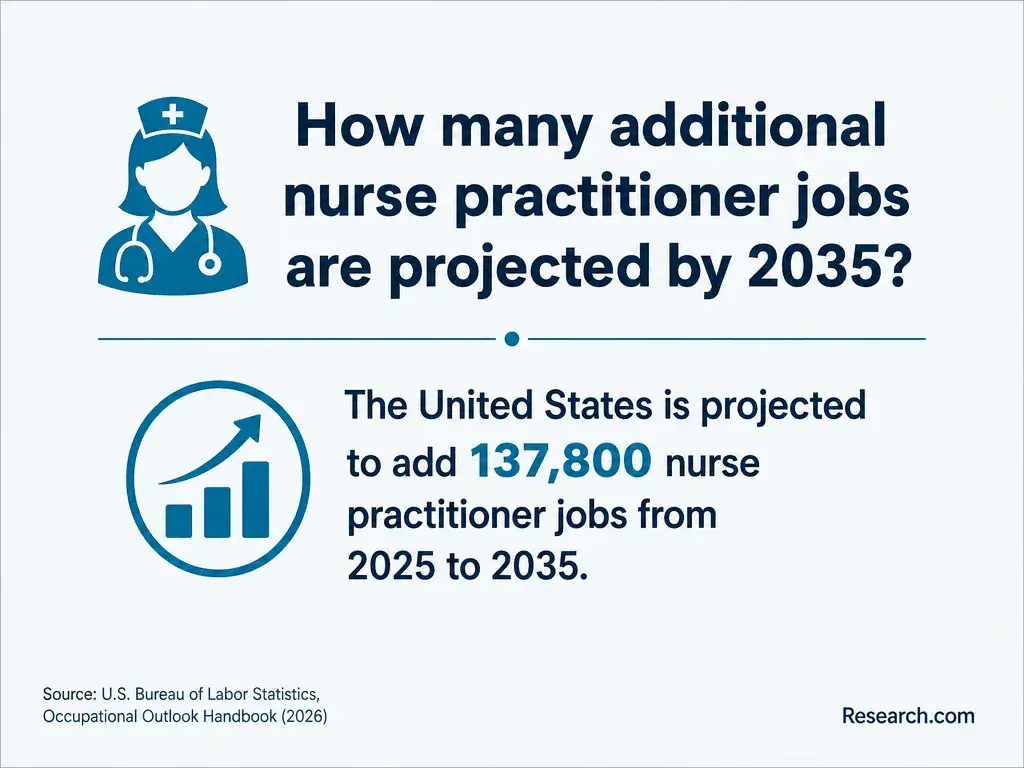
Higher pay or faster occupational growth does not identify the best physical fit - or an entry-level opening. As a historical benchmark, the U.S. Bureau of Labor Statistics reported a May 2024 median annual wage of $93,600 for registered nurses and $129,210 for nurse practitioners. It projected RN employment growth of about 5% and NP growth of about 40% from 2024 to 2034. These are occupation-wide figures, not offers, new-graduate salaries, or predictions for a particular specialty or location; consult newer BLS releases when making a current pay comparison.
NP practice requires appropriate graduate population-focus preparation, certification, and state authorization; its stronger aggregate outlook is not a reason to assume the role is less physically or emotionally demanding. Telephone triage, informatics, education, and utilization review may better fit some experienced RNs, but their qualifications and pay depend heavily on the employer. Compare actual postings for required experience, schedule, caseload, duties, and accommodations before financing another credential. If advanced practice is the goal, planning the cost of nurse practitioner education is part of that comparison, not evidence of a guaranteed salary return.
How should students evaluate nursing programs and accommodation policies?
Compare programs using your anticipated clinical tasks and likely interruptions, not an advertisement for flexibility. Request written answers where possible, and distinguish what disability services can arrange from what nursing faculty, a placement site, or a state board must decide.
These questions turn a general assurance of support into information you can use before paying a deposit:
- Which technical standards and clinical competencies apply to my exact track, and how are they assessed?
- Who reviews accommodation requests, coordinates with clinical sites, and handles a disagreement or placement change?
- What are the required on-site dates, shift lengths, travel expectations, and available placement locations?
- What are the leave, reentry, course-repeat, and clinical-sequencing rules if my condition changes?
- What will tuition, fees, travel, equipment, and a possible delayed term cost?
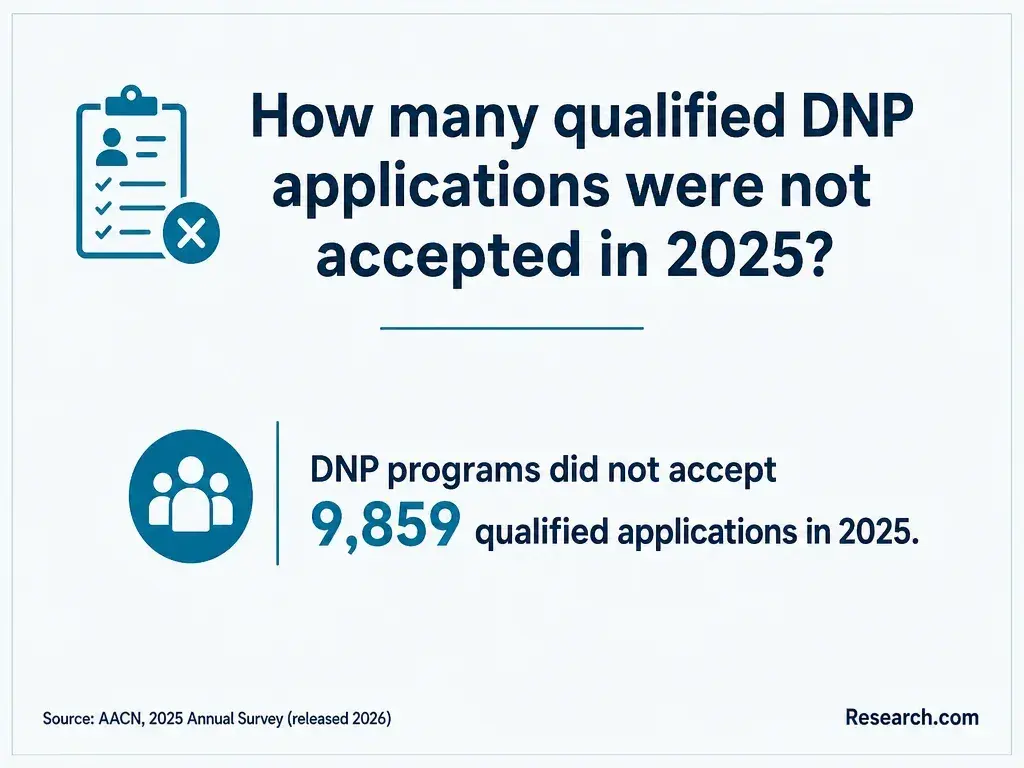
Compare the answers alongside licensure eligibility and the role you actually want. If you already hold an RN license and are considering doctoral study, comparing GPA and experience policies for DNP study may narrow admissions options, but it cannot replace a review of clinical expectations and accommodation procedures. The best-fit program is one whose required work you can plan for with an individualized, workable support process - not merely the one with the fewest campus visits.
Other Things You Should Know About Nursing
Possibly. Ask about medical leave, the deadline to return, course sequencing, and whether a clinical place will be available when you resume. Get the financial-aid implications before withdrawing.
You can discuss your ability to perform the job's duties and any accommodation you choose to request. For advice about a specific disclosure or hiring dispute, consult the employer's accommodation process or a qualified adviser.
Request an updated review of duties and possible accommodations through your employer's process. Do not assume that an accommodation approved in school automatically carries over to a workplace.
A non-bedside job does not by itself cancel an RN license. Follow your state board's renewal and continuing-competence rules, and check whether the new position requires an active license.
- Nurse Practice Act | Washington State Board of Nursing https://nursing.wa.gov/practicing-nurses/nurse-practice-act
- Chapter 13 Mobility - Nursing Fundamentals - NCBI Bookshelf https://www.ncbi.nlm.nih.gov/books/NBK591828/
- Enforcement Guidance on Reasonable Accommodation and Undue Hardship under the ADA https://www.eeoc.gov/laws/guidance/enforcement-guidance-reasonable-accommodation-and-undue-hardship-under-ada
- Reasonable Accommodations | U.S. Office of Personnel Management https://www.opm.gov/policy-data-oversight/disability-employment/reasonable-accommodations/
- Practice - Guidelines - Texas Board of Nursing https://www.bon.texas.gov/practice_guidelines.asp.html
- About Safe Patient Handling and Mobility | cdc.gov https://www.cdc.gov/niosh/healthcare/sphm/index.html
- Utah Student Nurse Physical Demands | Utah Valley University https://www.uvu.edu/nursing/physical_demands.html
- Essential Function Requirements | Virginia Peninsula Community College https://www.vpcc.edu/professional-nursing-registered-nurse/nursing-education-information-and-resources/essential-function-requirements/
- Nursing Essential Skills & Functional Abilities | Manhattan Area Technical College https://manhattantech.edu/nursing-essential-skills-functional-abilities
- Safe Patient Handling and Mobility | rehabnurse.org https://rehabnurse.org/about/position-statements/safe-patient-handling