2027 No-Exam Online Computer Science Master's Degrees: Schools, Costs & Outcomes

Co-Founder and Chief Data Scientist
Choosing a no-exam online computer science master's program is not about finding an easier degree. It is about deciding whether you can qualify for a rigorous graduate program without spending time and money on a standardized test such as the GRE. For working professionals, career changers with technical experience, and applicants who have been out of school for several years, that difference can matter. In fact, 46% of online computer science master's students report avoiding programs with exam requirements to expedite their career growth.
This guide explains how accredited no-exam online computer science master's degree programs work, what schools may review instead of test scores, how to compare cost and curriculum, and what the degree can mean for jobs, salary, and employer perception. The goal is to help you separate genuine flexibility from weak admissions standards and choose a program that fits your career plans, schedule, and budget.
Key Benefits of No-Exam Online Computer Science Master's Degrees
- No-exam online computer science master's degrees often partner with accredited universities, ensuring recognized credentials without traditional entrance tests.
- These programs typically reduce costs by 20-40% compared to on-campus degrees, benefiting students balancing work and education.
- Graduates report a 15% average salary increase within two years, reflecting strong industry demand for job-ready skills.
Why Do Some Online Computer Science Master's Programs Eliminate Admission Exams?
Some online computer science master's programs remove entrance exams because test scores are not always the strongest predictor of graduate-level success, especially for applicants with professional technology experience. Recent data shows that about 60% of online master's programs no longer require GRE or other standardized entrance exams. Instead of relying on one test, many schools use a broader review of academic history, technical preparation, work experience, recommendations, and career goals.
This shift does not mean programs are lowering expectations. A strong no-exam program still expects applicants to prove readiness for advanced topics such as algorithms, systems, software engineering, data management, artificial intelligence, cybersecurity, or machine learning. The difference is how that readiness is evaluated.
Why schools waive or remove standardized tests
- Broader access: GRE fees, preparation time, test scheduling, and score reporting can discourage otherwise qualified applicants. Removing exams can make graduate study more realistic for working adults, military learners, parents, and students from varied financial backgrounds.
- Greater emphasis on real experience: A software engineer, systems administrator, analyst, or developer may be better evaluated through professional projects, programming experience, a technical resume, or a portfolio than through a general standardized exam.
- Faster admissions decisions: Test-optional or no-test admissions can shorten the application timeline. This helps students who want to begin quickly, especially if they are pursuing a promotion, employer-funded education benefit, or career transition.
- More holistic review: Schools can consider transcripts, prerequisite coursework, statements of purpose, recommendation letters, certifications, and work history together instead of treating a test score as a gatekeeping requirement.
- Alignment with online education: Online graduate programs often serve students who are already employed. Admissions policies increasingly reflect that audience by valuing applied skills and career direction.
Students should still be selective. A no-exam policy is a benefit only when the program is accredited, academically rigorous, and aligned with the student's career goals. Applicants considering related technology pathways, including the best online masters in artificial intelligence, should review whether the school explains its admissions standards clearly and evaluates technical readiness in meaningful ways.
How Do You Compare Schools Offering No-Test Online Computer Science Graduate Programs?
Compare no-test online computer science graduate programs the same way you would compare any serious graduate degree: start with accreditation, then evaluate curriculum, cost, faculty, flexibility, and career outcomes. The absence of an entrance exam should make applying easier, not distract you from whether the degree is worth the time and money. For instance, the average tuition for these programs ranges from $12,000 to over $30,000 per year, which makes cost comparison essential before enrolling.
What to check before applying
- Accreditation: Confirm that the institution holds recognized accreditation. Accreditation affects degree credibility, access to many forms of financial aid, credit transfer, and employer confidence.
- Admission standards beyond testing: Review whether the school asks for transcripts, prerequisites, technical experience, a resume, recommendations, or a statement of purpose. A quality no-test program should still have clear criteria for graduate readiness.
- Curriculum depth: Look for advanced coursework in core computer science areas such as algorithms, systems, software engineering, databases, networks, or theory, along with electives in high-demand fields.
- Specialization options: If you want a specific role, compare tracks in areas such as artificial intelligence, data science, cybersecurity, cloud computing, or software engineering. A general program may be useful, but a targeted curriculum can better support a defined career move.
- Faculty expertise: Instructors with research, industry, or applied technical experience can improve course relevance and help students build professional insight beyond textbook concepts.
- Online format: Check whether courses are asynchronous, synchronous, hybrid, cohort-based, self-paced, or term-based. The best format depends on your work schedule, learning style, and need for structure.
- Tuition and fees: Compare total program cost, not just the cost per credit. Technology fees, software requirements, graduation fees, and residency-based tuition differences can change the actual price.
- Career support: Review access to career coaching, employer partnerships, alumni networks, project-based learning, interview preparation, and internship or capstone opportunities.
- Graduate outcomes: When available, look for job placement data, employer relationships, alumni roles, and examples of graduate projects. Be cautious if a school makes broad career promises without evidence.
Common comparison mistakes
- Choosing only by speed: A shorter program may be convenient, but make sure it still covers the technical depth required for your target role.
- Ignoring prerequisites: Students without a computer science background may need bridge courses, which can add time and cost.
- Assuming all online programs are equally flexible: Some online programs still require live attendance, group project meetings, or fixed deadlines.
- Focusing only on rankings: Reputation matters, but curriculum fit, accreditation, affordability, and career services may matter more for your individual outcome.
Students comparing online graduate formats in other fields can also review examples such as accelerated online MSW programs to understand how program length, flexibility, and admissions models vary across disciplines. For computer science, however, the most important question is whether the program can help you build advanced technical competence without requiring an entrance exam.
What Are the Admission Requirements for No-Exam Online Computer Science Master's Programs?
No-exam online computer science master's programs waive standardized tests such as the GRE, but they still expect applicants to show that they can handle graduate-level technical work. Many institutions prioritize comprehensive evaluation over test scores, which means the rest of the application carries more weight.
Requirements vary by school, but most no-exam programs review a combination of academic background, technical preparation, work experience, writing quality, and professional goals.
Typical admissions materials
- Bachelor's degree: Applicants usually need a bachelor's degree from an accredited institution. Some programs prefer or require a computer science or closely related major, while others accept applicants from other fields if they complete prerequisite coursework.
- Prerequisite coursework: Students without a computer science degree may need prior coursework in programming, discrete mathematics, data structures, algorithms, computer organization, databases, or calculus, depending on the program.
- Transcripts: Schools review undergraduate performance to determine academic readiness. Strong grades in technical, quantitative, or upper-division courses can help offset the absence of a test score.
- Professional experience: Technology-related work experience can strengthen an application, especially for applicants who have built software, managed systems, analyzed data, implemented security controls, or contributed to technical projects.
- Resume or curriculum vitae: A detailed resume helps admissions teams evaluate programming languages, tools, certifications, leadership experience, and project history.
- Portfolio or project samples: Some programs may invite or allow applicants to submit GitHub repositories, software projects, research work, technical writing, or other evidence of applied ability.
- Letters of recommendation: Programs commonly request two or three letters from professors, supervisors, or professional colleagues who can speak to technical ability, discipline, communication, and readiness for graduate study.
- Personal statement or essay: This document should explain why the applicant wants the degree, how the program fits their goals, and how their background has prepared them for advanced computer science study.
How to strengthen a no-exam application
- Address gaps directly: If you lack a computer science major, explain how coursework, self-study, professional projects, or certifications prepared you.
- Use specific technical evidence: Name programming languages, frameworks, systems, datasets, security tools, or cloud platforms you have used instead of making broad claims.
- Connect goals to curriculum: Show that you understand the program's courses and how they relate to your target role.
- Choose recommenders carefully: Strong, specific letters from people who know your technical work are more useful than generic letters from impressive titles.
For prospective students balancing work and study, this admissions model can reduce friction without eliminating academic expectations. Applicants exploring interdisciplinary online options may also compare resources such as online business degree programs, particularly if they are interested in technology management, analytics, or product leadership.
What Is the Average Tuition for No-Exam Online Computer Science Master's Degrees?
No-exam admissions usually do not make an online computer science master's degree cheaper by itself. Tuition is generally based on the institution, credit requirements, residency rules, delivery format, and fees. Nationwide, total tuition for these no-exam options usually falls between $15,000 and $45,000, with costs per credit typically ranging from $500 to $1,200.
Students should compare the full cost of attendance, not only the advertised tuition rate. The cost of a computer science degree can change substantially once fees, prerequisite courses, books, software, and enrollment pace are included.
Costs to review before enrolling
- Cost per credit: Many programs charge by the credit hour. A lower per-credit rate may still produce a high total cost if the program requires more credits.
- Total program cost: Ask the school for an estimated total cost through graduation, including required fees. This is the figure most useful for budgeting.
- Public vs. private pricing: Public universities often have lower tuition than private institutions, especially when online students qualify for in-state or reduced online rates.
- In-state vs. out-of-state tuition: Some public universities charge different rates based on residency. Others offer one online rate regardless of location.
- International student rates: International students may face different tuition policies, documentation costs, or additional fees.
- Technology and software fees: Computer science programs may require cloud computing access, development tools, cybersecurity labs, specialized software, or proctoring systems.
- Prerequisite or bridge courses: Applicants without a computer science background may need extra courses before or during the program, which can increase total cost.
- Course load and time to completion: Taking fewer courses per term may make tuition easier to manage, but a longer timeline can extend fees and delay the career return on investment.
Questions to ask the admissions or bursar's office
- Is the published tuition rate the same for all online students?
- Are there separate technology, distance learning, laboratory, graduation, or student service fees?
- Do prerequisite courses cost the same as graduate courses?
- Can employer tuition reimbursement be billed by term or course?
- Are scholarships available specifically for online graduate students?
A no-exam policy can reduce application costs and preparation time, but it should not be treated as a financial aid strategy. The strongest financial decision comes from comparing total cost, available funding, program quality, and likely career benefit together.
Can You Get Financial Aid for No-Exam Online Computer Science Master's Programs?
Yes. In most cases, a no-exam admissions policy does not prevent students from receiving financial aid. Eligibility usually depends on factors such as institutional accreditation, enrollment status, citizenship or eligible noncitizen status, satisfactory academic progress, and the type of aid program. Nearly 57% of graduate students benefit from some kind of financial aid. For instance, federal direct unsubsidized loans offer an annual maximum of about $20,500 for graduate students who meet enrollment and citizenship criteria.
Common funding options
- Federal student loans: Eligible graduate students in accredited programs may qualify for federal loans. Students should complete the FAFSA and confirm that the program participates in federal student aid.
- Graduate scholarships: Universities, professional associations, technology organizations, and private foundations may offer scholarships based on merit, need, field of study, background, or career goals.
- Institutional grants: Some schools provide grants or tuition discounts for online, graduate, military, transfer, or working-adult students.
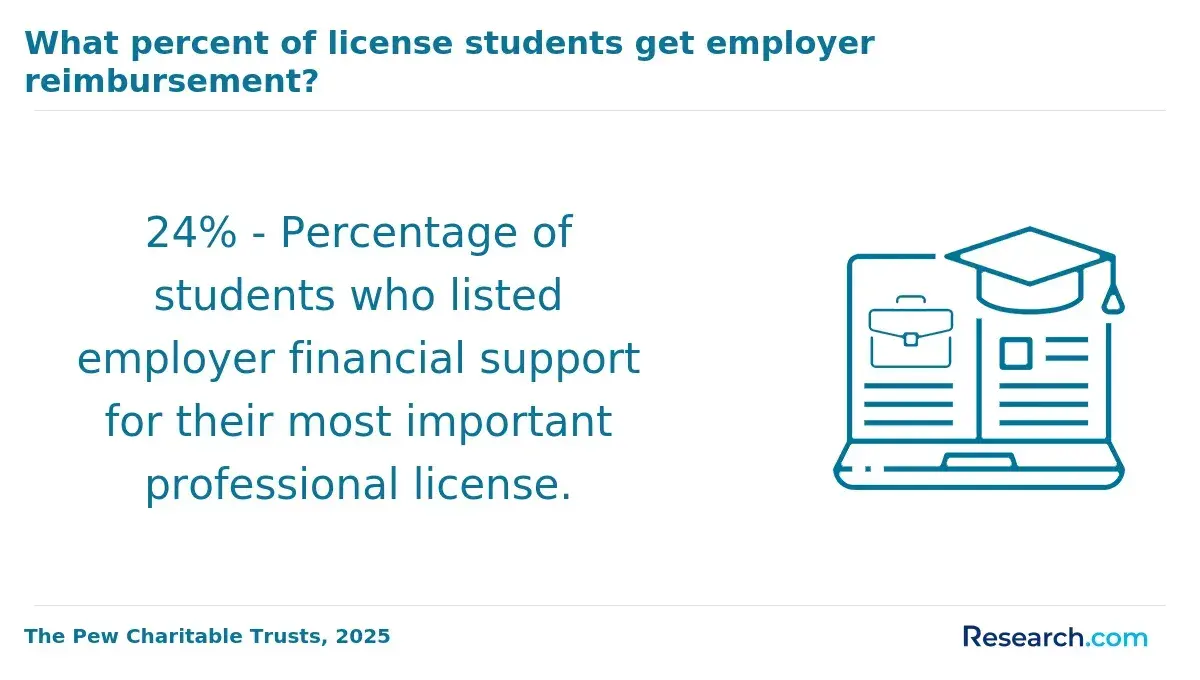
- Employer tuition assistance: Many technology employers offer tuition reimbursement or education benefits for employees pursuing relevant graduate degrees. Policies often include grade requirements, annual caps, or repayment rules if the employee leaves the company.
- Assistantships or work programs: These are less common in fully online professional master's programs than in campus-based research programs, but some schools may offer limited teaching, tutoring, research, or administrative opportunities.
- Payment plans: Monthly or term-based payment plans can help students spread costs, though they are not the same as aid and may include fees.
How to avoid funding problems
- Verify accreditation before applying: Accreditation can affect federal aid eligibility and employer reimbursement.
- Ask whether online students qualify: Some scholarships, grants, or assistantships may be limited to campus-based students.
- Check enrollment minimums: Part-time students may need to take a minimum number of credits to qualify for certain aid.
- Confirm deadlines early: Financial aid, scholarship, and employer reimbursement timelines may not match admissions deadlines.
- Read loan terms carefully: Graduate loans must be repaid, and borrowing should be weighed against expected career benefits.
Prospective students should contact the school's financial aid office before committing to a program. Ask for a written estimate of tuition, fees, aid eligibility, loan options, and any conditions that could affect online graduate students.
How Long Does It Take to Complete a No-Exam Online Computer Science Master's Degree?
A no-exam admissions policy usually does not change the length of the degree. Completion time depends on credit requirements, course availability, enrollment status, prerequisites, and whether the program includes a capstone, thesis, or applied project. Most programs demand around 30 to 36 credits for graduation and generally take between one and three years to complete.
Factors that affect completion time
- Full-time enrollment: Full-time students can often finish faster, but they must be ready for a heavier weekly workload. This option may fit students who can reduce work hours or focus intensively on school.
- Part-time enrollment: Part-time study is common among working professionals. It offers more flexibility but usually extends the timeline.
- Accelerated courses: Some programs use shorter terms or intensive sessions. These can reduce calendar time, but they may require faster reading, coding, testing, and project completion.
- Course sequencing: Not every course is offered every term. Prerequisites and limited course availability can slow progress if students do not plan carefully.
- Transfer credits: Some schools accept prior graduate-level credits, which can reduce the number of courses needed. Policies vary and may include limits on credit age, grades, and course equivalency.
- Bridge or prerequisite courses: Students entering without a computer science background may need foundational coursework before taking advanced classes.
- Capstone or thesis requirements: Applied projects and research components can be valuable, but they may require additional planning, faculty approval, data access, or team coordination.
Choosing the right pace
Students should estimate weekly time commitments before selecting full-time or part-time enrollment. A realistic plan is especially important in computer science, where assignments may involve debugging, building systems, analyzing data, or completing multi-stage projects. Finishing quickly is useful only if the pace allows enough time to master the material and produce strong portfolio work.
Breakdown of Public Fully Online Title IV Institutions

What Courses Are Included in a No-Exam Computer Science Master's Curriculum?
No-exam online computer science master's programs generally cover the same advanced material as programs that require standardized tests. Waiving an entrance exam changes the admissions process, not the expected academic rigor. Most programs require around 10 to 12 courses, totaling approximately 30 to 36 credit hours, balancing core courses with electives.
Common curriculum areas
- Algorithms and data structures: Students study efficient problem-solving methods, complexity analysis, and data organization techniques used across software engineering, systems, and artificial intelligence.
- Software engineering: Courses may cover design patterns, testing, requirements analysis, project management, DevOps practices, and maintainable software development.
- Operating systems and computer systems: Students learn how computing resources, memory, processes, concurrency, and system architecture work at a deeper level.
- Databases and data management: Coursework may include relational databases, distributed databases, data modeling, query optimization, and large-scale data systems.
- Networks and cybersecurity: Programs may address network architecture, secure systems, cryptography, threat detection, risk management, and incident response.
- Artificial intelligence and machine learning: Electives may focus on predictive modeling, neural networks, natural language processing, computer vision, or ethical AI implementation.
- Cloud computing and distributed systems: Students may study scalable architectures, virtualization, containers, cloud platforms, and high-performance computing concepts.
- Theory or foundations: Some programs include formal languages, computation theory, discrete mathematics, or advanced analysis to strengthen conceptual understanding.
Core courses, electives, and specialization tracks
- Core courses: These ensure students develop graduate-level competence in foundational computer science areas. They are especially important for students who want broad technical credibility.
- Electives: Electives allow students to tailor the degree toward specific roles, such as machine learning engineer, cybersecurity analyst, software architect, data scientist, or cloud engineer.
- Capstone or applied project: A capstone gives students a chance to solve a practical problem, build a system, analyze data, or produce portfolio evidence for employers.
- Specialization tracks: Tracks in areas such as data science, software development, cybersecurity, or artificial intelligence can help students focus their coursework around a defined career goal.
When comparing curricula, students should look beyond course titles. Read descriptions, prerequisites, project expectations, programming languages, and assessment methods. A strong curriculum should develop both theory and applied skill. Students exploring other affordable online degree paths, such as a cheap psychology degree online, may notice that computer science programs tend to require more technical prerequisites and project-based evaluation.
Do Employers Care If Your Computer Science Master's Degree Has No Entrance Exam?
Most employers care far more about the quality of the degree, the reputation of the institution, and the candidate's technical ability than about whether the program required the GRE. According to a 2023 survey by the National Association of Colleges and Employers (NACE), 78% of employers value program accreditation and reputation over standardized test requirements when making hiring decisions.
In practice, employers usually do not ask whether an online computer science master's program required an entrance exam. They are more likely to evaluate what the candidate can build, analyze, secure, design, or lead.
What employers are more likely to consider
- Accreditation: A degree from an accredited institution is easier for employers to trust because it signals that the school meets recognized academic standards.
- Institutional reputation: A school with strong faculty, known technical programs, employer relationships, or respected alumni may carry more weight than an unknown provider.
- Relevant work experience: Professional experience in software, data, systems, security, cloud computing, or analytics can be as important as the degree itself.
- Demonstrated technical skills: Employers may review coding ability, system design knowledge, machine learning experience, security practices, data analysis skills, certifications, or technical interviews.
- Portfolio and projects: Capstones, GitHub repositories, deployed applications, research projects, dashboards, or security labs can help prove applied competence.
- Communication and collaboration: Many advanced computer science roles require explaining technical decisions, working across teams, documenting systems, and leading projects.
How to present a no-exam online degree
- List the degree and accredited institution clearly on your resume.
- Highlight advanced courses that match the job description.
- Include capstone projects, technical tools, programming languages, and measurable project outcomes.
- Prepare to discuss how online study strengthened your self-management, communication, and problem-solving skills.
- Do not emphasize that the program was no-exam unless asked; focus instead on what you learned and built.
Candidates who want to strengthen employer confidence should research schools carefully and consider programs from best online accredited universities. A no-exam program can be credible when it combines recognized accreditation, rigorous coursework, and evidence of graduate-level technical skill.
What Jobs Can You Get With a No-Exam Online Computer Science Master's Degree?
A no-exam online computer science master's degree can lead to the same types of roles as a traditional computer science master's degree, provided the program is credible and the graduate can demonstrate relevant skills. The U.S. Bureau of Labor Statistics projects a 15% growth rate for computer and information technology occupations from 2021 to 2031, reflecting strong demand. Median entry-level salaries for graduates often start around $80,000 annually.
Common career paths
- Software developer: Designs, builds, tests, and maintains applications, platforms, and services. Graduate coursework in algorithms, software engineering, databases, and systems can support this role.
- Data scientist: Uses statistical methods, programming, machine learning, and domain knowledge to analyze complex datasets and guide business or research decisions.
- Systems analyst: Evaluates organizational technology systems, identifies requirements, improves workflows, and helps align technical solutions with business needs.
- Cybersecurity analyst: Monitors systems, identifies vulnerabilities, investigates threats, and helps protect networks, applications, and data.
- Machine learning engineer: Builds and deploys models, develops data pipelines, optimizes algorithms, and works with production AI systems when the curriculum includes relevant specialization.
- Cloud engineer: Designs, deploys, and manages cloud infrastructure, distributed systems, and scalable applications.
- Database administrator or data engineer: Builds and maintains data systems, pipelines, warehouses, and performance-optimized databases.
- IT project manager or technical lead: Combines technical knowledge with leadership, planning, and team coordination to guide software, systems, or infrastructure projects.
How to connect the degree to a job target
Students should choose electives, projects, and capstones based on the roles they want after graduation. For example, aspiring cybersecurity analysts should look for network security, cryptography, secure software, and incident response coursework. Students targeting data science should prioritize machine learning, statistics, databases, and data engineering. Those aiming for software development should build a portfolio with production-quality code, testing practices, and system design experience.
The degree can help graduates qualify for more advanced technical roles, but it is rarely enough by itself. Employers typically want evidence of applied skill through projects, interviews, certifications, internships, prior work, or open-source contributions.
What Is the Average Salary After Earning a No-Exam Online Computer Science Master's Degree?
Salary outcomes for graduates of no-exam online computer science master's programs are generally tied to role, experience, skills, employer, and location rather than the admissions testing policy. Data shows the median yearly salary for computer science master's graduates in the U.S. hovers around $115,000.
Factors that influence salary
- Work experience: Candidates with several years of relevant technical experience often command higher salaries than new graduates, regardless of whether their program required an entrance exam.
- Job role: Software engineering, data science, cybersecurity, cloud computing, and artificial intelligence roles can vary widely in pay based on specialization and responsibility level.
- Geographic location: Salaries vary significantly by region, with major tech centers like Silicon Valley, Seattle, and New York offering premium compensation to meet local demand and living costs.
- Industry sector: Technology and finance roles may offer higher compensation than some academic, nonprofit, or government positions, though benefits and stability can differ.
- Skill specialization: Expertise in artificial intelligence, cybersecurity, cloud computing, distributed systems, or data engineering can increase market value when paired with practical experience.
- Portfolio strength: Employers may reward candidates who can show well-documented projects, production experience, research, or measurable technical contributions.
- Leadership ability: Graduates who move into technical lead, architecture, engineering management, or product-facing roles may see different compensation patterns than individual contributors.
How to think about return on investment
Before enrolling, compare total tuition, fees, time to completion, and likely career benefits. A lower-cost program may offer a stronger return if it provides the skills and credentials needed for your target role. A more expensive program may be worthwhile if it has stronger faculty, employer connections, specialization options, or alumni outcomes. The key is to evaluate the degree as a career investment, not simply as a credential.
Completing a no-exam program does not typically limit salary potential. Employers usually focus on what graduates can do, how well they solve technical problems, and whether their degree comes from a credible institution.
What Graduates Say About Their No-Exam Online Computer Science Master's Degrees
- Benny: "Choosing the right no-exam online computer science master's program was challenging, but I appreciated schools that prioritized flexibility and support. Considering the cost, I opted for a program that balanced affordability with strong industry connections. This degree truly opened doors in my career, allowing me to transition into software development without the stress of traditional exams."
- Greyson: "Reflecting on my experience, the most important factors were the cost and the ability to learn at my own pace without exams. The no-exam format reduced my anxiety and let me focus on mastering practical skills. Since graduating, I've seen a significant boost in my professional opportunities, particularly in data analysis roles."
- Cooper: "From a professional standpoint, I valued how no-exam online computer science master's programs let me continue working full-time while earning my degree. The relatively lower tuition compared to traditional programs was a deciding factor. Ultimately, the degree enhanced my credibility and helped me land a management position in tech."
Other Things You Should Know About Computer Science Degrees
Many do. A common no-exam route in 2027 replaces a final exam with a capstone, thesis, or applied project, often worth 3 to 6 credit hours. Programs may require a faculty advisor, a written report, and a public presentation or recorded defense.
Many no-exam online computer science master's programs offer flexible enrollment options, including part-time study. This flexibility allows working professionals to progress at a manageable pace while balancing career and personal responsibilities.
In 2027, scholarships for no-exam online computer science master's degrees are available from various sources, including universities, private organizations, and government programs. Prospective students should research specific scholarships to find those that meet eligibility requirements and personal financial needs.
References
- Explore Computing Scholarships for Computer Science Majors https://blog.iefa.org/2023/10/23/computing-scholarships/
- Why I'm No Longer Giving Paper Exams in My Computer Science Courses | The Renegade Coder https://therenegadecoder.com/teach/why-im-no-longer-giving-paper-exams-in-my-computer-science-courses/
- How to Evaluate and Compare Schools’ Graduate Programs - Graduate Programs for Educators https://www.graduateprogram.org/blog/how-to-evaluate-and-compare-schools-graduate-programs/
- Master of Computer Science | School of Computing - College of Engineering | USU https://engineering.usu.edu/cs/students/graduate/mcs
- Online master's degree in CS at the Georgia Institute of Technology https://academia.stackexchange.com/questions/64653/online-masters-degree-in-cs-at-the-georgia-institute-of-technology
- Tuition fees - Polish-Japanese Academy of Information Technology https://pja.edu.pl/en/informatyka/oplaty/
- MS-CS and MS-AI Online FAQ https://www.colorado.edu/cs/academics/online-programs/mscs-coursera/faq
- Affordable Master's in Computer Science Degrees | ComputerScience.org https://www.computerscience.org/degrees/affordable-online-masters-computer-science/
- How to Compare Online Colleges: 7 Key Factors to Know https://exsci.cuchicago.edu/compare-online-colleges-guide/
- Computer Science Graduate Jobs | Gradcracker - Careers for STEM Students https://www.gradcracker.com/search/computing-technology/computer-science-graduate-jobs