2027 Most Affordable Online Master's Degrees for Students Who Need Transfer Credit

Co-Founder and Chief Data Scientist
Already earned graduate credits? The cheapest online master's degree may not be the one advertising the lowest tuition. What matters is how many of your courses fulfill its requirements and what you must pay to finish. The stakes extend beyond tuition: the U.S. Bureau of Labor Statistics reports median weekly earnings of $1,840 for workers with a master's degree in 2024, although that figure does not show what any particular degree will add to your pay. This guide compares fields, explains transfer rules, and shows how to estimate your remaining cost before enrolling.
Key Things You Should Know
- Compare the cost of remaining required credits plus fees, not tuition per credit alone; accepted graduate coursework saves money only when it replaces courses you otherwise must take.
- A transfer allowance is a ceiling, not an award: course equivalency, grades, credit age, program approval, and credits-in-residence rules determine what applies to your degree.
- For a purely illustrative 30-credit program, accepting 6 applicable graduate credits leaves 24 credits to complete; compare that remaining workload with each school's actual tuition and required fees.
Top 10 Most Affordable Online Master's Degrees for Students Who Need Transfer Credit
Business / MBA Programs
An MBA suits professionals seeking broad management preparation; an MS in business often concentrates more narrowly on finance, marketing, or another specialty. For students with prior graduate business courses, the affordable option is the program that applies those courses to required classes, not merely electives. Ask whether transferred coursework can replace foundational classes and whether the school charges separate MBA or online-program fees. Experience still matters for management roles, so a graduate business certificate may cost less if you need only one skill set.
Healthcare Administration & Management Programs
A Master of Healthcare Administration (MHA), healthcare-focused MBA, or related MS can support advancement in healthcare operations. Previous graduate coursework in finance, policy, or organizational leadership may apply, but specialized requirements can limit substitutions. Compare differential tuition, internship or capstone expenses, and the credits left after evaluation. These management degrees do not confer a clinical license; prospective administrators should weigh the degree against their existing healthcare experience and the requirements of roles they actually want.
Information Technology Programs
An MS in information technology often emphasizes systems, cloud infrastructure, and organizational technology needs. It can fit experienced practitioners seeking specialization, while career changers should check programming and networking prerequisites before comparing prices. Graduate courses in computing may transfer as electives but not replace a program's core. Look for required software, laboratory access, and capstone fees. If an employer values a specific technical credential, compare the cost of that credential with the remaining cost of the degree.
Computer Science Programs
An MS in computer science generally requires deeper computing theory and software coursework than a broad IT degree. Prior graduate courses may reduce the bill when their technical content matches current requirements; older courses may face stricter review in rapidly changing subjects. Applicants without the necessary undergraduate preparation may need foundation courses that increase cost without counting toward the master's. Compare thesis and non-thesis options, course availability, and whether your intended work needs graduate study rather than additional projects or experience.
Cybersecurity Programs
A cybersecurity MS may focus on technical defense, governance, or both. That distinction affects whether previous graduate computing or policy courses will satisfy requirements. Check the remaining cost of hands-on labs, specialized tools, and any required capstone; do not assume that an online course has no scheduled activities. For a narrowly defined security role, relevant experience and a professional certification may be a less expensive route. A master's degree alone does not qualify someone for every security position.
Data Science / Analytics Programs
An MS in data science or analytics can build statistical, programming, and applied modeling skills. Prior graduate statistics courses may be especially useful if the receiving program accepts them for its core, rather than only as electives. Compare prerequisite costs for calculus or programming, required software, and project requirements before selecting the lowest published tuition. Choose a broader analytics degree for business applications or a more technical program for intensive modeling; neither path automatically leads to a data scientist job.
Education / Educational Leadership Programs
A Master of Education (MEd), MA, or MS in educational leadership may serve practicing educators seeking instructional or administrative development. Prior graduate education courses can reduce costs, but state-specific coursework, supervised experiences, and program sequence requirements may limit transfers. Check whether the program prepares students for the credential required in your state and whether placements can be completed locally. An inexpensive non-licensure degree may be poor value if your goal is a licensed school leadership position.
Counseling / Psychology Programs
Counseling master's degrees may prepare students for a specific license, while many psychology master's degrees are academic or non-licensure programs. That distinction should come before tuition comparisons. Required clinical courses, supervised placements, and state rules can sharply limit transferable credit and require local in-person work despite online classes. Confirm that the degree and its programmatic accreditation, where relevant, fit your state's licensing rules before applying. A low-cost degree that misses those requirements may require additional education.
Nursing Programs
A Master of Science in Nursing (MSN) may support leadership, education, or an advanced-practice pathway; those purposes have different admissions and clinical requirements. Applicants generally need the nursing qualifications specified by the program. Previous graduate nursing courses may transfer only if they meet current specialty, clinical, and accreditation expectations. Compare clinical-placement support, fees, and local placement obligations alongside tuition. An MSN does not by itself grant advanced-practice licensure or certification, and the least expensive specialty may not match your goal.
Engineering Management Programs
An MS in engineering management combines technical decision-making with operations and leadership coursework. It may fit engineers moving toward project or organizational responsibilities, but a degree alone does not secure a management job. Prior graduate engineering, operations, or business courses may lower cost if they replace required classes. Check quantitative prerequisites, team-project schedules, and capstone requirements. Compare this degree with an MBA: the better value depends on your technical career goals and how much of your earlier coursework each program accepts.
How Do Transfer Credits Work for Online Master's Degree Programs?
Graduate transfer credit is previously earned graduate-level coursework that a receiving university accepts toward a new master's degree. Accepted by the university does not necessarily mean applied to your program: a course might be eligible for transfer yet fail to replace a required class. Most programs also require some credits to be earned at the degree-granting institution.
Evaluations commonly consider the sending institution's accreditation, the course grade, subject match, credit age, and the receiving department's approval. Graduate certificates sometimes stack into a related degree, but only under the school's published rules. Undergraduate coursework ordinarily supplies preparation, not master's-level transfer credit, unless a documented combined-degree pathway says otherwise. Work or military experience likewise does not automatically become graduate credit.
Before committing, request a written, course-by-course evaluation showing which requirements remain, including electives and the capstone or thesis. If evaluation is unavailable before enrollment, ask what documentation is needed and whether your enrollment or payment becomes binding before a decision is issued.
Which Accredited Online Master's Programs Accept the Most Transfer Credits?
There is no dependable field-wide winner for the most transferable credits. An institution may publish a generous graduate transfer limit while a particular MBA, nursing, or counseling curriculum permits fewer useful substitutions. Program approval and credits-in-residence requirements are as important as the advertised maximum. Without current, program-specific evaluations, naming an online master's program as the leader would mislead applicants.
The comparison below shows how to interpret transfer policies. It is a screening tool, not a ranking of schools or a claim about any institution's current limit.
| Policy feature | What it means for affordability |
| Maximum transferable graduate credit | Sets a possible ceiling, not the amount you will receive. |
| Required credits in residence | Sets a minimum amount you must still pay the new institution to complete. |
| Course-to-requirement match | Determines whether accepted credits replace costly core or concentration courses. |
| Grade and credit-age rules | May exclude otherwise relevant earlier coursework. |
| Capstone, thesis, or clinical rules | May reserve substantial requirements for completion at the new institution. |
Limit your shortlist to institutionally accredited schools that offer the intended online degree, then compare their official graduate catalog and program-specific rules. Ask for an evaluation using your transcript and course syllabi. The program that accepts the most credits on paper is not necessarily the one that leaves you with the fewest or least expensive requirements.
How Much Do Affordable Online Master's Degrees Cost After Transfer Credit?
The useful price is your estimated cost to finish, not a school's headline tuition. Calculate it from the credits you must take after transfer evaluation, the tuition charged for those credits, and every required expense. A lower per-credit rate can lose its advantage if the program requires more remaining coursework or carries substantial fees.
These cost categories make competing offers comparable. Ask schools for an itemized estimate based on your evaluated transcript, not a standard new-student example.
| Cost category | Why it can change the final bill |
| Remaining graduate tuition | Depends on applicable transfer credit, required courses, and any residency-based rate. |
| Mandatory and program fees | May include online, technology, laboratory, or specialty charges. |
| Prerequisites and foundation courses | May be necessary for admission or progression without reducing degree credits. |
| Experiential and travel costs | May arise from placements, residencies, or required campus visits. |
| Financing costs | Borrowing can increase the amount ultimately repaid even when the tuition bill is modest. |
For eligible students, federal aid, scholarships, and employer tuition assistance can change out-of-pocket cost; eligibility and award amounts vary. Filing the FAFSA does not make every school or program affordable. A list of cheapest online colleges that accept FAFSA can help start a school search, but verify graduate-level aid and the exact program's total cost separately. Compare any employer benefit with its reimbursement timing and continued-employment conditions.
What Are the Admission Requirements for Online Master's Programs Accepting Transfer Students?
Admission generally requires a completed bachelor's degree and an application to both the graduate school and, where applicable, the specific program. Schools may review undergraduate GPA, relevant coursework, recommendations, a statement of purpose, experience, or a portfolio. GRE or GMAT rules, waivers, and conditional admission vary by program; the absence of a test requirement on a general university page is not proof that every master's program waives it.
Transfer applicants may also need official graduate transcripts and syllabi. Eligibility for admission and eligibility to transfer a course are separate decisions. Clinical, advanced-practice nursing, and educator pathways can impose additional licenses, prerequisites, or placement checks. If you have not finished a bachelor's degree, graduate transfer rules are not the immediate issue: compare bachelor's completion routes first, rather than treating easy associate degrees that pay well as direct entry to a master's program.
How Long Do Online Master's Degrees Take With Transfer Credits?
Completion time depends on remaining credits, how often required courses run, and whether the program permits your intended full-time or part-time load. An accepted course can shorten study only if it replaces coursework on the critical path; a capstone offered in a fixed sequence or a required placement may still set the graduation date. Prerequisites taken before admission can add time as well as cost.
Ask an advisor for a term-by-term plan based on your actual transfer evaluation. Compare that plan with advertised fast track degrees carefully: an accelerated timeline may assume a particular starting credential, course load, or already-approved graduate credit. Short course terms describe individual classes, not necessarily the time to complete the entire master's degree.
Which Online Master's Degrees Offer the Strongest Career Outcomes?
The strongest career outcome depends on the job you want and what you already bring to it. An MSN aligned with a qualifying nursing pathway or a counseling degree meeting state requirements may have a clearer credential purpose than a general management degree - but each carries additional eligibility and practice requirements. Computer science, cybersecurity, and analytics degrees can add specialized skills, while employers also assess experience and demonstrated work.
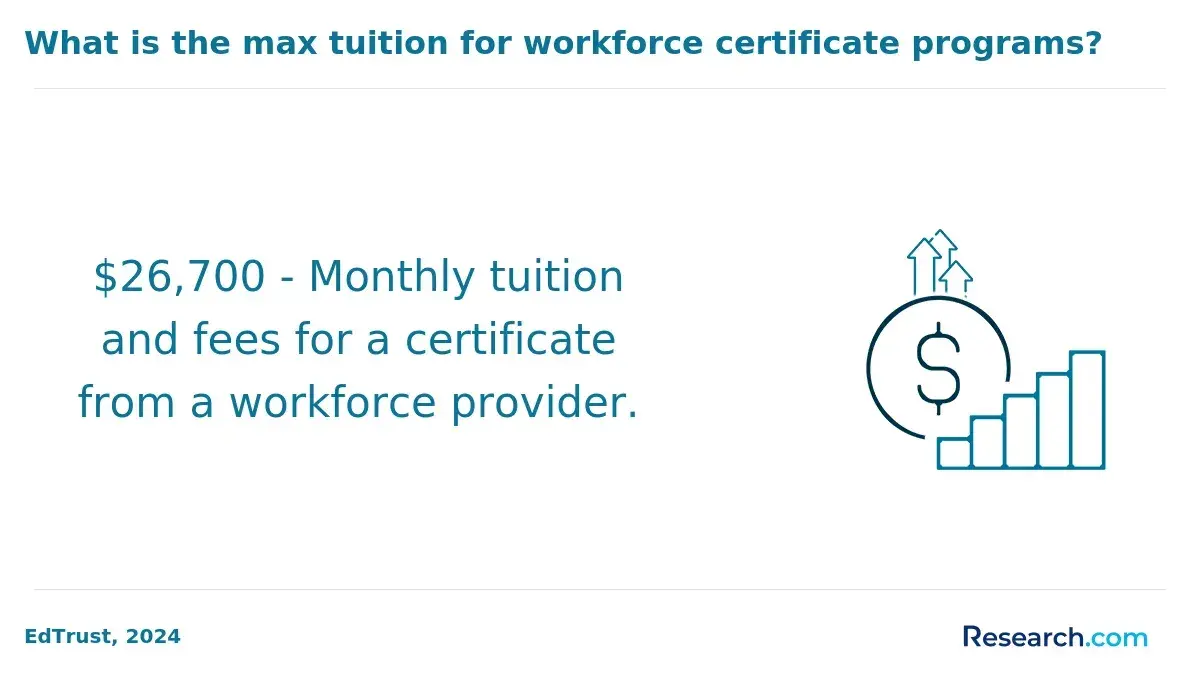
Before taking on the remaining degree cost, compare postings for your target roles with your current qualifications. If the gap is a discrete tool or skill rather than a required master's credential, a graduate certificate, industry certification, or one of the 6-month certificate programs that pay well may be a cheaper alternative. Check whether that alternative is actually recognized for your intended role; short training cannot substitute for a required professional license.
What Salaries Can Graduates Earn With Affordable Online Master's Degrees?
Occupational wages provide context for comparing career paths, not a prediction of what graduates will earn. For example, the U.S. Bureau of Labor Statistics reports a 2024 median annual wage of $124,910 for information security analysts. That figure includes workers with varied education and experience; it does not measure the pay increase caused by a cybersecurity master's degree, and entry into the occupation may require relevant experience.
For a useful return-on-investment estimate, compare your own likely job options before and after the degree with its remaining tuition, fees, borrowing costs, and time demands. Seek program-level outcomes when schools publish a clear methodology, but do not mistake occupational medians or a school's career services for a salary or employment guarantee.
Do Online Master's Degrees Require Licensure or Professional Certification?
Some paths do; many do not. Counseling, certain education roles, and advanced-practice nursing can require a particular qualifying program plus examinations, supervised experience, certification, or state licensure. Requirements differ by occupation and state. Business, IT, data science, and engineering management degrees generally do not themselves grant a professional license, although an employer may prefer separate certifications or experience.
For a regulated career, confirm requirements with the state board and the program before paying a deposit. Check programmatic accreditation when it affects eligibility, and verify that an online program's local clinical, practicum, or student-teaching arrangements can be completed where you live. "Online" describes much of the instruction, not necessarily every required activity.
How Can Students Choose a Reputable Online Master's Program?
Start with institutional accreditation, then verify the exact degree, delivery requirements, and any programmatic accreditation your intended occupation requires. An attractive tuition rate or ranking cannot fix a program that will not apply your earlier graduate work or meet your licensing goal.
Use this sequence to turn a shortlist into a defensible choice. Request written answers so you can compare the same facts across schools.
- Send transcripts and syllabi for a course-by-course graduate transfer evaluation, including where each accepted credit applies.
- Request an itemized remaining-cost estimate covering tuition, mandatory fees, prerequisites, travel, and placement expenses.
- Confirm the credits-in-residence rule, course schedule, attendance requirements, and a realistic term-by-term completion plan.
- Check accreditation and any state licensing requirements against the exact program, not just the university's general claims.
Watch for claims that all prior coursework will transfer, a completion date that assumes unapproved credits, or a "fully online" description that omits required visits or placements. The best-value program is the accredited, career-appropriate option with the lowest credible cost for your remaining requirements, not necessarily the lowest advertised tuition.
Other Things You Should Know About
Ordinarily, no. Undergraduate courses may satisfy prerequisites, but master's-level transfer usually requires graduate coursework. A published combined bachelor's/master's pathway may have different rules.
Some offer a formal pre-enrollment review; others provide only a preliminary estimate until admission or registration. Ask when the decision becomes final and whether it identifies the degree requirements each course fulfills.
No. Compare remaining tuition and fees, prerequisites, and required experiences. Credits accepted only as excess electives may produce no savings.
Eligible students may be able to use federal aid at an eligible institution and program. Confirm the program's eligibility, your enrollment status, and the terms of any borrowing or employer assistance before budgeting.
References
- Eligibility Requirements | Federal Student Aid https://studentaid.gov/understand-aid/eligibility/requirements
- School-Determined Requirements | 2025-2026 Federal Student Aid Handbook https://fsapartners.ed.gov/knowledge-center/fsa-handbook/2025-2026/vol1/ch1-school-determined-requirements
- .14 Evaluation and Review Process for Transfer of Courses and Credits. | Library of Maryland Regulations https://regs.maryland.gov/us/md/exec/comar/13B.06.02.14
- Credit for Prior Learning - Graduate College https://gradcollege.nsuok.edu/Credit%20for%20Prior%20Learning.aspx
- Master's Degree Requirements | University of South Carolina https://academicbulletins.sc.edu/graduate/degree-requirements/masters-degree-requirements/
- Tuition in Detail - One Stop Student Services https://onestop.utk.edu/billing-payments/tuition-detail/
- Transfer and Award of Graduate Academic Credit | txst.edu https://policies.txst.edu/division-policies/academic-affairs/02-02-13.html
- 5. Master's Degrees | Rackham Graduate School https://rackham.umich.edu/policy/section5/
- Transfer Credit Evaluation - TXST Admissions https://www.admissions.txst.edu/future-students/transfer-credit-evaluation.html
- Policy 1.1: Graduate Degree Requirements | UW Graduate School https://grad.uw.edu/policies/1-1-graduate-degree-requirements/