2027 Most Affordable Associate Degrees for Salary Growth

Co-Founder and Chief Data Scientist
Which low-cost associate degree can lead to better pay without leaving you with an expensive credential that employers cannot use? The College Board reported average published in-district tuition and fees of $4,050 at public two-year colleges in 2024-25, but program fees and living costs can make the final bill much higher. This guide compares degree fields - not individual colleges - for prospective students and career changers. You'll see where an associate degree can support workforce entry, where further credentials are essential, and how to weigh total cost against realistic salary prospects.
Key Things You Should Know
- Best direct-to-work candidates: Compare accredited nursing, dental hygiene, diagnostic medical sonography, and radiologic technology programs where available; clinical capacity, fees, and licensing requirements can change their value substantially.
- Pay is occupation-specific: The U.S. Bureau of Labor Statistics (BLS) reported a May 2024 median annual wage of $94,260 for dental hygienists, not for everyone who earns an associate degree in the field.
- Compare the complete bill: A lower tuition rate may lose its advantage after mandatory fees, equipment, commuting, unpaid clinical time, or credits that do not apply toward graduation.
Top 10 Most Affordable Associate Degrees for Salary Growth
Business Programs
An affordable business AA or AS can make sense if you plan to transfer into accounting, finance, or another bachelor's program. An AAS may better fit an immediate goal in bookkeeping, payroll, or office operations. Ask whether the curriculum teaches accounting software and spreadsheets that local employers use. Because higher-paying analyst and management roles commonly require a bachelor's degree or experience, compare the associate degree's cost with both its likely entry-level opportunities and any later transfer expenses.
Healthcare Programs
Dental hygiene, diagnostic medical sonography, radiologic technology, and respiratory therapy can connect associate-level study with specialized occupations. They are not interchangeable: each has different clinical hours, equipment costs, admission standards, and credentialing rules. A nearby public program may have attractive tuition but limited clinical seats or a long prerequisite sequence. Before comparing prices, confirm that graduates are eligible for the relevant examination or state credential and ask for the full cost of supplies, screenings, and clinical travel.
Information Technology Programs
An IT AAS can prepare students for support or networking work through hands-on labs; an AS may be better if a bachelor's degree is the goal. Compare required hardware, software, certification-exam fees, and internship access, not tuition alone. Employers may value demonstrated troubleshooting skills and industry credentials alongside a degree. Advanced cybersecurity and engineering positions often require substantial experience or further education, so do not price an entry-level IT program against an advanced occupation's salary.
Nursing / Pre-Nursing Programs
An associate degree in nursing (ADN) is a potential route to registered nurse licensure after graduation and passage of the required examination; state approval and employer expectations also matter. A pre-nursing AA or AS generally covers prerequisites and does not itself qualify someone for RN licensure. Separate admission into an ADN program may be competitive even at an open-admission college. Budget for prerequisite terms, clinical travel, uniforms, screenings, and testing, and ask whether an RN-to-BSN transfer agreement would reduce future costs.
Criminal Justice Programs
A low-cost criminal justice AA can be useful for transfer or for exploring public-safety work, but it is not a universal ticket into policing or investigations. Hiring standards, academy training, background checks, and experience vary by agency and role. An AAS may emphasize applied procedures, while an AA may preserve more bachelor's transfer options. Compare the degree's full cost with agency-specific hiring requirements before enrolling; some entry routes may not require this major.
Psychology / Counseling Programs
A psychology AA or AS is usually a transfer foundation rather than a direct path to becoming a licensed counselor or psychologist. Some behavioral-health support jobs may be accessible with an associate degree, but duties and qualifications vary. For a counseling goal, check how general education and psychology credits apply to the intended bachelor's program; eventual clinical licensure generally requires graduate education and supervised experience. The cheapest associate program is a poor bargain if its credits do not advance that longer pathway.
What Are the Most Affordable Associate Degrees With High Salary Potential?
The most affordable high-potential choice depends on total local cost and the job it can realistically lead to. Public community colleges are a useful starting point, but no degree field is automatically the cheapest: selective admission, clinical requirements, and nonresident tuition can reverse a tuition-based comparison. The table identifies promising paths and the expense most likely to change their value.
| Associate degree field | Primary pathway | Cost or salary-potential trade-off |
| Dental hygiene or diagnostic medical sonography | Specialized healthcare work after applicable credentialing | Strong occupational pay potential; clinical placements and program fees can raise total cost. |
| Associate degree in nursing | RN licensure pathway, subject to program and state requirements | Broad occupational opportunities; prerequisites and selective admission may extend the timeline. |
| Information technology | Entry-level technical work or transfer | Often fewer clinical expenses; starting roles should not be confused with advanced IT salaries. |
| Business or accounting | Office work or bachelor's transfer | Potentially accessible at many colleges; higher-paying roles may require further study or experience. |
| Psychology or criminal justice | Primarily transfer or role-specific entry | Low tuition helps most when credits apply to the next credential or an identified job. |
If your target occupation usually requires a four-year degree, compare the combined associate-to-bachelor's expense with entering a bachelor's program directly. A guide to best bachelor's degrees can help frame that longer-term comparison, but verify transfer credit with your intended university.
Which Associate Degrees Offer the Best Job Outlook and Career Growth?
Healthcare has some of the clearest associate-level growth pathways, provided you can meet clinical and credentialing requirements. BLS projects diagnostic medical sonographer employment to grow 13% from 2024 to 2034. That national projection signals demand; it does not predict openings in your area or guarantee admission to a local program.
Dental hygiene and nursing are also worth investigating for their defined occupational pathways. IT can offer room to develop, but hiring for individual support roles differs from hiring for advanced cybersecurity jobs. Business, criminal justice, and psychology graduates should identify a specific entry role or transfer destination rather than treating growth across an entire field as their personal job outlook. Check local postings for required credentials, schedules, and experience before committing.
How Much Do Graduates With Affordable Associate Degrees Earn?
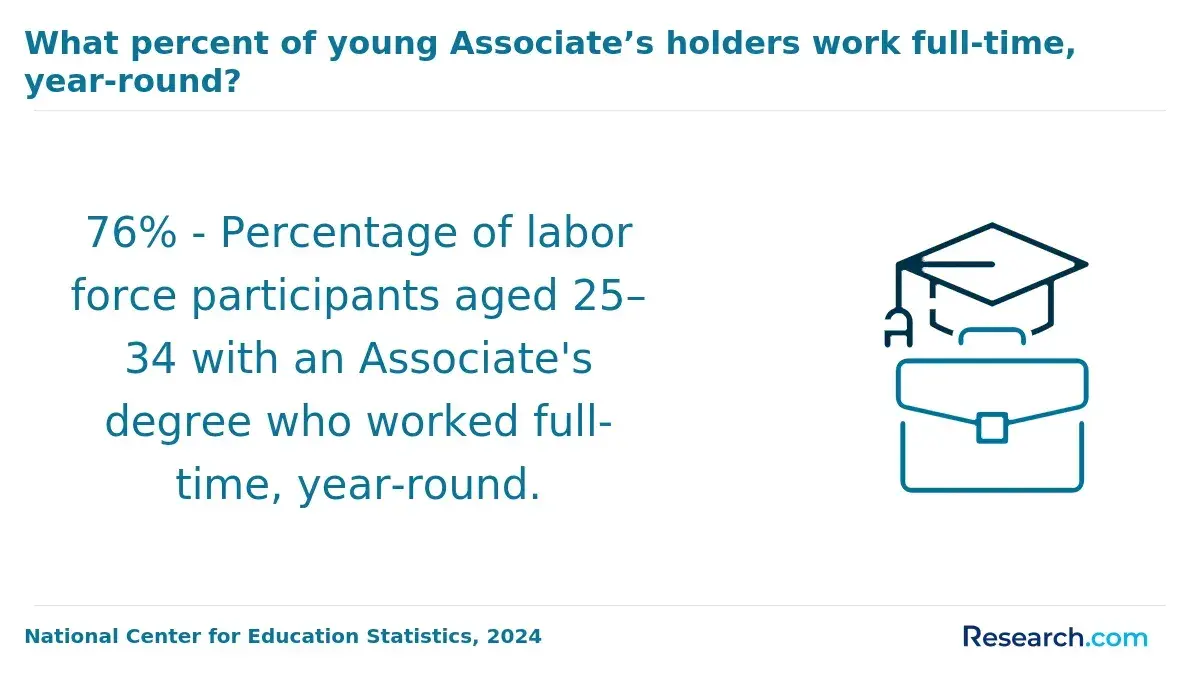
Occupational medians are comparison points, not starting salaries or earnings forecasts for associate degree graduates. BLS reported a May 2024 median annual wage of $93,600 for registered nurses. That figure covers employed RNs with different degrees, locations, specialties, and experience levels; an ADN graduate must first meet licensure requirements and obtain a position.
Use the same caution when comparing dental hygiene or technology wages. A more useful personal calculation pairs local entry-level job postings with the college's estimated total charges, expected grants, and income you may forgo during study. Request program-level completion, examination-pass, and employment information where available, and ask what population each outcome measure includes. A high occupational median cannot offset a program you cannot afford to finish.
What Accreditation Should an Associate Degree Program Have?
Start with institutional accreditation recognized by the U.S. Department of Education; it matters for federal aid eligibility and can affect transfer options. Recognition alone does not mean every course will transfer or every program meets professional requirements.
For regulated healthcare fields, confirm the specific program accreditation, state approval, and examination eligibility required for the occupation and state where you intend to work. Nursing programs, for example, should be checked against state board requirements; programmatic accreditation may matter for future study or employment. Ask the receiving university whether credits will fulfill your intended major - not merely appear on a transcript as electives. Treat a school's vague "accredited" claim without an identifiable accreditor as a red flag.
Which Careers Require Licensing or Certification After an Associate Degree?
A degree and permission to practice are separate things. Registered nurses generally need state licensure and must pass the NCLEX-RN. Dental hygienists need state licensure; examination and clinical requirements vary. Sonography and radiologic technology employers or states may require particular certifications or licenses. Confirm eligibility with the relevant state board or credentialing body before paying a deposit.
Other paths have different boundaries: a criminal justice degree does not replace police academy and hiring requirements, and a psychology associate degree does not qualify someone as a licensed mental health counselor. If counseling is your ultimate goal, do not choose among easiest online masters solely for convenience; the eventual graduate program must meet your intended state's licensure rules.
How Long Do Affordable Associate Degree Programs Take to Complete?
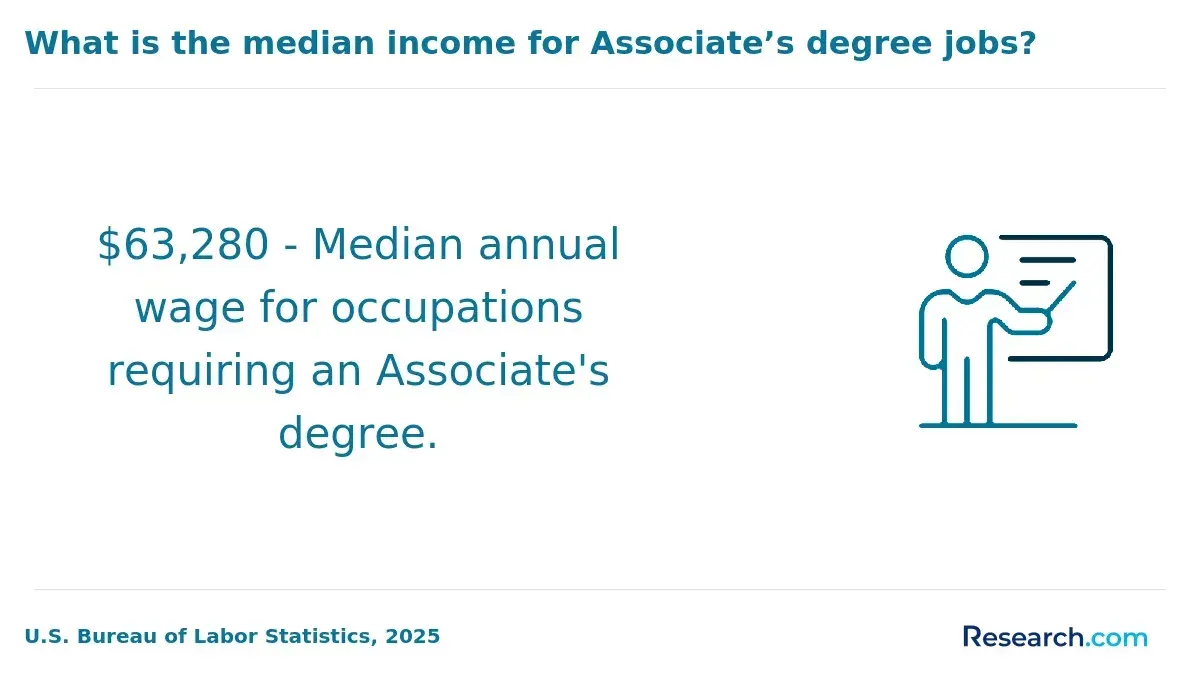
Many associate degrees require roughly 60 semester credits, making about two years plausible for a student attending full time with courses available when needed. Part-time enrollment, prerequisites, developmental coursework, selective admission, and clinical sequencing can extend that schedule. Accepted transfer or prior-learning credit may shorten it, but only if those credits satisfy actual graduation requirements.
Ask for a term-by-term plan showing when required courses are offered. A short online course is not evidence that the entire degree is accelerated. If you intend to continue studying, compare the combined timeline with an accelerated bachelor's degree; its advertised pace may assume prior credits or a demanding course load.
What Courses Do High-Value Associate Degree Programs Include?
High-value programs pair transferable general education with the skills or prerequisites their stated pathway requires. A business student might need accounting and spreadsheet work; an IT student, networking and troubleshooting labs; a healthcare student, anatomy, science labs, and supervised clinical practice. Nursing and allied-health prerequisites can add time and cost before admission to the major.
Read the course map alongside your target job requirements or bachelor's transfer agreement. A course that sounds relevant may count only as an elective at the receiving institution. Conversely, a cheaper certificate may be sufficient for a narrowly defined entry role, while an associate degree can be more useful when it adds required clinical preparation or credits that apply toward further study.
Are Online Associate Degrees as Affordable and Valuable as Campus Programs?
Online study can reduce commuting costs, but it is not automatically cheaper or fully remote. Compare tuition by residency status, online and technology fees, equipment, and required travel. Business, psychology, and some IT coursework may be available online; nursing and allied-health programs typically still require in-person labs or clinical placements. An online class may also have live sessions or fixed deadlines.
Ask where hands-on requirements occur and who arranges placements. Check whether online students receive the same advising and transfer support as campus students. Waived application charges at no application fee online colleges may reduce the cost of applying, but that saving says little about the total price of the degree.
How Can You Choose a Reputable Affordable Associate Degree Program?
Compare colleges using a written estimate for the credential you actually need, not a published per-credit rate. Tuition and mandatory fees are only the sticker price; grants can lower your net price, while books, equipment, transport, and living expenses still affect what you must pay. Financial aid eligibility, employer assistance, and payment plans depend on your circumstances and the institution.
Use these checks to narrow your options before applying:
- Identify a target occupation or transfer destination, then confirm whether an AA, AS, AAS, certificate, or bachelor's pathway fits its requirements.
- Request the full program cost for your residency status, including prerequisites, fees, supplies, clinical travel, and likely remaining credits after a transfer evaluation.
- Verify institutional accreditation, relevant program approval, credential eligibility, and whether transfer credits will satisfy specific degree requirements.
- Ask for a realistic course sequence and available completion, licensing-exam, and employment outcomes; clarify how the college measures each result.
Be wary of salary promises, unclear clinical-placement arrangements, or a low advertised price that omits required terms. The strongest affordable option is the one you can complete at a manageable total cost and use for your intended next step.
Other Things You Should Know About
It can be when its total cost is manageable and it leads to a defined occupation or an efficient transfer pathway. Compare local entry requirements and expected debt rather than assuming an occupational median will be your starting pay.
Nursing and several allied-health programs offer defined routes, but they often have selective admission, clinical costs, and licensing or certification requirements. The best choice depends on your location and eligibility.
Neither abbreviation determines price. An AAS often emphasizes workforce preparation; an AA often emphasizes transfer. Compare required credits, fees, and how each degree applies to your goal.
Typically not without in-person components. Classroom courses may be online, but required labs and supervised clinical work usually occur in person; verify the program's exact schedule and placement rules.
References
- Associate's degree - Career Outlook - Bureau of Labor Statistics https://www.bls.gov/careeroutlook/subject/associates_degree.htm
- THE VALUE OF EDUCATIONAL DEGREES IN TURBULENT ECONOMIC TIMES: EVIDENCE FROM THE YOUTH DEVELOPMENT STUDY - PMC https://pmc.ncbi.nlm.nih.gov/articles/PMC4792031/
- Annual Earnings by Educational Attainment - COE https://nces.ed.gov/programs/coe/indicator/cba/annual-earnings
- Cost of Attendance (Budget) | 2025-2026 Federal Student Aid Handbook https://fsapartners.ed.gov/knowledge-center/fsa-handbook/2025-2026/vol3/ch2-cost-attendance-budget
- How Long Until Your Degree Pays Off? A Timeline by Program | Nebraska Methodist College https://blog.methodistcollege.edu/degree-pays-off-timeline
- Workforce Outcomes for Associate Degree Recipients in Utah | ushe.edu https://udrc.ushe.edu/research/RA12_AssociateDegree/index.html
- What Career Paths Can I Pursue With an Associate Degree? - mwcc https://mwcc.edu/blog/career-paths-to-pursue-with-an-associate-degree/
- California College Programs That Pay - The HEA Group https://www.theheagroup.com/blog/college-programs-that-pay
- Questions to Ask About Costs and Finances | hlcommission.org https://www.hlcommission.org/for-students/student-guide/costs-and-finances/
- ROI on degrees, certificates | Community College Daily https://www.ccdaily.com/2024/10/roi-on-degrees-certificates/