
2027 MLIS Programs for Family Literacy Outreach

Co-Founder and Chief Data Scientist
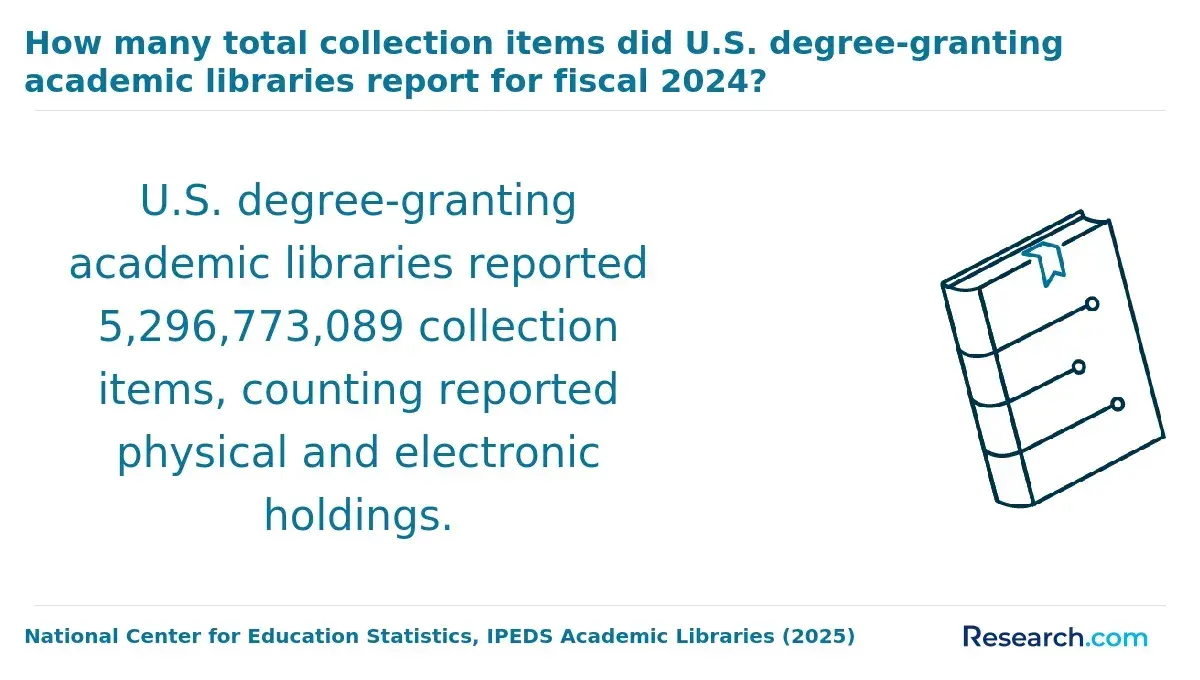
Choosing an MLIS for family literacy outreach means looking beyond a degree title to the courses and field experience that prepare you to work with children and caregivers. The U.S. Bureau of Labor Statistics projects 2.6% employment growth for librarians and media collections specialists from 2025 to 2035, so a relevant portfolio may matter when competing for roles.
This guide helps prospective public and school librarians identify useful training, check credential requirements, compare costs, and decide whether an MLIS fits their goals.
Key Things You Should Know
- Look for an ALA-accredited master's program with children's services coursework and a feasible way to gain family-facing experience; a relevant elective is not necessarily a formal concentration.
- School library jobs may require state educator certification in addition to a graduate degree, while public library requirements vary by employer and jurisdiction.
- The May 2025 median pay for librarians and media collections specialists was $68,270 nationwide, not a salary prediction for family literacy positions or MLIS graduates.
What are MLIS programs for family literacy outreach?
These are library and information science master's programs that students use to prepare for work connecting children, caregivers, books, and learning resources. Family literacy outreach can include caregiver-and-child programs, early-literacy activities, library card access, multilingual materials, and partnerships with schools or community organizations. The goal is to make library services useful to families, including those who do not regularly visit a branch.
"Family literacy outreach" describes a career focus, not a standard MLIS degree designation. A school may offer a documented children's services track, individual electives, an applied project, or only broadly relevant coursework. Likewise, an MLIS, MLS, or differently named LIS master's degree may support this work; evaluate the specific program rather than assuming its title establishes a specialization.
Why choose an ALA-accredited MLIS program for family literacy careers?
ALA accreditation evaluates a graduate library and information studies program against professional standards. It can matter because some librarian employers specify or prefer a degree from an ALA-accredited program. Check the specific master's program in the current ALA directory: a university's institutional accreditation does not establish ALA accreditation for its LIS degree.
Accreditation does not verify that a children's literature course will run when you need it, that a family literacy concentration exists, or that an internship is available near you. Treat it as an initial credential check, then examine the catalog, course schedule, and fieldwork policies. If you want a school library job, check state educator requirements separately; ALA accreditation alone does not confer a school librarian license.
What career paths can an MLIS prepare you for in family literacy outreach?
Family literacy work appears under several job titles. The distinctions below help you match a program's training to the setting where you want to work; actual degree requirements come from the job posting and applicable state rules.
| Path | Typical work | Credential consideration |
| Children's or youth services librarian | Plans collections, programs, reader guidance, and caregiver engagement in a public library. | An MLIS or equivalent LIS master's is commonly sought for professional librarian roles; check the employer's requirements. |
| Outreach librarian or coordinator | Builds partnerships and brings library services to families beyond the branch. | Requirements vary; community engagement experience can be important alongside LIS training. |
| School librarian or library media specialist | Supports students' reading, inquiry, and access to resources within a school. | State educator certification or endorsement may be required. |
| Library assistant or technician | Helps deliver services and programs under local staffing arrangements. | An MLIS is not universally required; this can be a way to test career fit. |
These paths overlap, but they are not interchangeable. An early-childhood educator or literacy program coordinator may work closely with families without needing an MLIS. If you prefer direct reading instruction over library services and outreach, compare education or literacy qualifications before committing to a library degree.
What coursework covers children's services and family literacy programming?
A useful curriculum combines LIS foundations with courses and projects that address children and caregivers directly. Start by separating required courses from electives, then ask whether the electives you need are scheduled often enough for your planned graduation date.
Children's and young adult literature can develop selection and reader-guidance skills. Children's services or early-literacy courses may address developmentally appropriate programming and caregiver participation. Community information services, outreach, accessibility, and collection development can help you reach families facing language, disability, transportation, or digital-access barriers. Research methods or program evaluation can help you assess whether an activity served its intended audience.
Applied work makes these subjects more concrete. A supervised practicum, capstone, or approved independent project might produce a family program plan, an accessible resource guide, or a partnership proposal. Confirm what the school permits, who arranges a placement, and whether a nearby public library or community organization can host it. A catalog listing by itself does not guarantee that a course or placement will be available.
Are online MLIS programs effective for family literacy outreach careers?
An online MLIS can provide relevant academic preparation, but online delivery does not replace practice with families. Compare programs on the same terms you would use for campus study: accreditation, children's services electives, supervised experience, scheduling, and total cost. An accredited online MLIS comparison can help you organize an initial search before confirming details with each school.
Ask whether classes are asynchronous or require live attendance, whether electives have prerequisites, and whether fieldwork can be completed where you live. A student already employed in a library may be able to connect assignments to local programs, subject to university rules. Someone changing careers may need a more deliberate plan to find a placement or volunteer experience. Neither an online format nor an internship guarantees a job.
What are the admission requirements for family literacy MLIS programs?
Applicants should expect each university to publish its own graduate admission rules. Common application materials include evidence of a completed bachelor's degree, transcripts, a statement of purpose, and recommendations; programs may also set academic or language-proficiency requirements. Experience with children can strengthen an application, but it does not automatically replace a required degree or other published condition.
Use your statement to explain the families you hope to serve and how your experience connects to library work. If your academic history does not match a published requirement, request an individual review rather than assuming you are ineligible or will receive an exception. A guide to flexible admission library science programs can frame that conversation, but the admissions office must confirm its current policy.
How long do MLIS programs take and what do they cost?
Completion time depends on required credits, course sequencing, enrollment pace, and any fieldwork. A part-time student may also have to wait for an elective offered less frequently. Use a library science degree timeline to identify scheduling questions, then ask each program for a term-by-term plan using its current course rotation.
Compare costs using the same enrollment assumptions for every school. The categories below show why a published tuition rate alone is not a complete program budget.
| Cost category | What to verify |
| Tuition | Rate applicable to your residency and study format, multiplied by required credits. |
| Required fees | University, program, and technology charges across the terms you expect to attend. |
| Materials and equipment | Books, software, and any equipment required for coursework. |
| Fieldwork and travel | Placement-related costs and any required campus visits. |
| Additional terms | Fees or living costs if course sequencing extends your enrollment. |
Ask financial aid offices about aid eligibility for your planned enrollment level, and verify any scholarship or employer reimbursement before subtracting it from your budget. Keep three figures separate: the full cost of attendance, what you expect to pay out of pocket, and what you may need to borrow. That comparison is more useful than choosing the lowest advertised per-credit rate.
Do family literacy librarians need state licensure or certification?
There is no single U.S. credential rule for every family literacy role. Public library employers and jurisdictions may set different qualifications for professional librarian positions. School librarians often face a separate state educator certification or endorsement process, which may include approved preparation or other requirements beyond an MLIS.
Before enrolling for a school-based career, identify the state where you intend to work and check its education authority's current requirements. Then ask the university whether its particular program prepares graduates for that state's credential. For an example of why location matters, see library jobs in Illinois requirements; do not treat one state's rules as national policy.
What salaries and job outlook can family literacy professionals expect?
The U.S. Bureau of Labor Statistics reports a May 2025 median annual wage of $68,270 for librarians and media collections specialists, with projected employment growth of 2.6% from 2025 to 2035. This occupation is broader than family literacy outreach, and its national median does not establish pay for a particular public library, school, region, or new graduate.
Compare local postings by duties and required credentials rather than degree title alone. Full-time librarian, school, and library assistant positions can differ substantially in compensation and qualifications. For perspective on other settings - not as a family literacy salary estimate - academic librarian pay potential illustrates why specialization and employer type matter when evaluating career options.
How can you choose the best MLIS program for family literacy outreach?
The best fit is the program that meets your intended employer's credential rules and gives you a workable route to relevant practice at a cost you can manage. Narrow your options with questions that reveal what you can actually complete, not just what appears in a catalog.
- Confirm the specific degree's current ALA accreditation status and, for school careers, the preparation required by your target state.
- Ask which children's services courses are required or elective, when they are expected to run, and what happens if one is unavailable.
- Ask how students arrange family-facing practica or projects and whether local placements are permitted.
- Request a term-by-term schedule and a cost estimate that includes applicable tuition, fees, and fieldwork expenses.
If you already have strong library experience, prioritize the credential and coursework needed for advancement. If you are new to the field, weigh accessible fieldwork more heavily. If your primary goal is teaching children to read rather than providing library outreach, compare education pathways as well. An MLIS is most worthwhile when it supports the work and qualifications you actually want.
Other Things You Should Know About Library Science
Yes. A family-centered program can give caregivers resources and opportunities to participate alongside children. Design activities around the community's stated needs rather than assuming every family wants the same service.
Ask families which languages and formats they use, provide relevant materials where possible, and work with trusted community partners. Avoid treating English-language proficiency as a measure of a caregiver's commitment to literacy.
No. Librarians can help families find accessible materials and appropriate services, but diagnosis belongs to qualified professionals. Know the boundaries of your role and the local referral options.
Attendance is one signal, but brief caregiver feedback, repeat participation, and partner observations can reveal whether the activity was accessible and met its purpose. Collect only information the library needs and follow its privacy practices.
References
- Barriers to, and facilitators of, education for children... - PMC https://pmc.ncbi.nlm.nih.gov/articles/PMC10824976/
- Using family engagement to strengthen literacy: Lessons from the field with practical resources | IES https://ies.ed.gov/learn/blog/using-family-engagement-strengthen-literacy-lessons-field-practical-resources
- Family Literacy Programs | delaware.gov https://education.delaware.gov/families/college-career-life/adult-education/family-literacy-programs/
- About California Library Literacy Services | California State Library https://www.library.ca.gov/services/to-libraries/clls/about/
- Families as Learners | HeadStart.gov https://headstart.gov/school-readiness/article/families-learners
- Early Literacy and Family Engagement | Colorado Department of Early Childhood https://cdec.colorado.gov/early-literacy-and-family-engagement
- Youth Services (MLIS) | missouri.edu https://cehd.missouri.edu/degree/youth-services-mlis/
- Family Literacy Program | fcps.edu https://www.fcps.edu/academics/multilingual-learners/family-literacy-program
- The Family and Child Education Programme (FACE), United States of America | unesco.org https://www.uil.unesco.org/en/litbase/family-and-child-education-programme-face-united-states-america
- Integrating Digital Literacy into Family Literacy Programming | National Center for Families Learning https://familieslearning.org/blog/integrating-digital-literacy-into-family-literacy-programming/


