2027 LPN-to-BSN Pathways for Nurses in Kansas: Direct Bridges and RN-to-BSN Alternatives
Audited and Verified:
Our Editorial and Data Verification Process
Research.com uses government datasets, official education statistics and primary institutional information to support its career and degree guides. Our review process checks factual accuracy, occupational definitions, source dates and the requirements associated with the credentials discussed.
How This Article Was Fact-Checked
Our editorial team verifies salary estimates, employment projections, education requirements and program information against original data providers and official organizations. Salary figures are checked against the relevant occupational definitions and reporting periods. Information about licensure, accreditation and required in-person training is reviewed separately.
Fact-checked and verified on:

Co-Founder and Chief Data Scientist
A Kansas LPN who wants a BSN must choose where to complete initial RN preparation: in a bachelor's program or through an LPN-to-RN bridge followed by an RN-to-BSN program. That choice affects clinical scheduling, transfer credit, cost, and how soon you can seek RN licensure.
This guide explains both routes and the questions to put to schools before enrolling, so you can compare a feasible path to the same goal rather than relying on a program's "bridge" label.
Key Things You Should Know
- A direct LPN-to-BSN route includes prelicensure RN preparation; an RN-to-BSN program generally requires an RN license first. Neither an LPN license nor BSN graduation alone grants RN licensure.
- The alternative has two educational stages: an LPN-to-RN bridge, often leading to an associate degree, followed by RN-to-BSN completion. Compare the combined cost and time, not just the bridge.
- Before paying a deposit, confirm Kansas approval for the prelicensure RN program, the program's clinical schedule, and a written evaluation of how prior credits apply to graduation.
What LPN-to-BSN pathways are available for nurses in Kansas?
There are two principal routes: enter a prelicensure BSN program that grants appropriate advanced placement for LPN preparation, or become an RN through a bridge program and complete an RN-to-BSN degree afterward.
"LPN-to-BSN" is not a standardized program designation. A school may use it for a distinct track, an advanced-placement option within its traditional BSN, or a sequence involving two institutions.
This comparison shows where RN licensure occurs and what each route asks you to verify:
| Route | Starting status and award | Key decision point |
| Direct LPN-to-BSN or LPN advanced placement in a BSN | LPN enters prelicensure RN coursework and, after meeting degree requirements, earns a BSN | How much LPN preparation actually applies to the nursing sequence, and when are clinical courses offered? |
| LPN-to-RN bridge, then RN-to-BSN | LPN completes RN preparation, commonly earning an associate degree; licensed RN then completes a BSN | Will the receiving BSN program apply the associate degree and remaining general education credits as expected? |
An existing non-nursing bachelor's degree may change the comparison: a school might evaluate you for an accelerated prelicensure BSN, but your degree does not waive RN clinical preparation.
If you are still working toward LPN licensure, hybrid practical nursing study options concern that earlier credential, not an RN or BSN shortcut.
How do Kansas LPN-to-RN bridge programs lead to a BSN?
An LPN-to-RN bridge builds on practical nursing education while adding the coursework and supervised clinical learning required by its RN program.
Completing an approved prelicensure program can put a graduate on the path to the NCLEX-RN and an RN license; the Kansas State Board of Nursing determines individual licensure eligibility. The associate degree awarded by many bridges is not a BSN.
After RN licensure, you can apply to an RN-to-BSN program. This can be attractive if you need an earlier opportunity to seek RN employment or can use employer education assistance for the later degree. Its risk is a poorly coordinated transfer: a BSN school may accept credits without applying all of them to its degree requirements.
Ask both schools for an articulation agreement or individualized degree audit showing outstanding sciences, general education, upper-division nursing credits, and residency requirements.
Advertisements for very short bridges need careful reading. A guide to faster practical-to-registered nursing routes can help frame the comparison, but a short advertised nursing sequence may exclude prerequisites, waiting periods, clinical scheduling, and the later RN-to-BSN stage.
What RN-to-BSN alternatives can Kansas LPNs pursue?
An LPN cannot ordinarily skip directly into a postlicensure RN-to-BSN track: that track is designed for nurses who have already completed RN preparation and meet its RN-license policy.
For an LPN, the relevant alternative is to reach RN licensure through an approved associate-degree or other prelicensure RN program first, then select an RN-to-BSN program that accepts that preparation.
Compare the timing of the second application as well as the first. Some RN-to-BSN programs may allow an applicant awaiting an RN license to begin selected coursework conditionally; others require an active license before enrollment.
Get the policy for your intended entry term in writing. If your long-term goal is graduate study, investigate ADN-to-MSN admission requirements separately: that route may reduce duplicated degree work for an eligible RN, but it does not necessarily award a BSN or suit an employer that specifically requires one.
For the prelicensure portion, check the Kansas State Board of Nursing's current program-approval information and ask the school whether its specific track qualifies graduates to apply for Kansas RN licensure and the NCLEX-RN.
If you plan to study outside Kansas, ask the board and school how that program meets Kansas eligibility requirements. Graduation, examination eligibility, passing the exam, and receiving a license are separate events.
Also check institutional accreditation and whether the specific nursing program and degree hold applicable nursing accreditation, such as ACEN or CCNE accreditation.
These are different reviews: institutional accreditation concerns the institution, nursing accreditation concerns a defined program, and board approval concerns prelicensure education under the relevant regulator. Confirm status and scope with the responsible organizations rather than relying on a university-wide badge.
Do not confuse a graduate program for non-nurses with an LPN bridge. Online direct-entry MSN program comparisons address a different admissions and degree route; their availability does not establish that an LPN can bypass RN preparation or Kansas licensure requirements.
Expect the prelicensure RN portion to include scheduled, supervised learning that cannot be completed solely through independent online coursework.
Depending on the program, lectures may be online while skills labs, simulation, assessments, and clinical placements require attendance at specified times and locations. Ask who arranges clinical sites, how far students may travel, and whether placements or labs occur on weekdays, evenings, or weekends.
The postlicensure RN-to-BSN portion may offer more online coursework, but "online" does not settle whether there are synchronous classes, campus visits, group meetings, or practice-based assignments. Exploring RN-to-BSN nontraditional clinical formats may help you formulate questions; do not assume that a program described as having "no clinicals" has no field-based work.
For an LPN working shifts or managing family care, request a sample schedule for each term of the RN nursing sequence. A flexible RN-to-BSN finish cannot offset a prelicensure clinical schedule you cannot attend.
Prelicensure RN study generally combines required sciences and general education with RN-level assessment, pharmacology, clinical judgment, care across patient populations, and supervised practice.
An LPN's prior coursework may support advanced placement, but the receiving school decides which courses and competencies it accepts. Employment experience alone does not replace its required clinical evaluation.
RN-to-BSN coursework usually emphasizes population health, evidence-based practice, leadership, quality improvement, and care coordination, alongside any remaining degree requirements.
That academic progression does not by itself provide advanced practice preparation. For example, online FNP certificate routes after an MSN concern a later, population-specific graduate pathway - not coursework included in an LPN-to-BSN bridge.

Requirements depend on whether you are applying to a prelicensure BSN, an LPN-to-RN bridge, or a postlicensure RN-to-BSN program. Schools may separately admit students to the institution and to a limited-capacity nursing sequence.
An LPN applicant should be prepared to document license status, prior transcripts, prerequisite sciences and labs, and any required entrance assessment; clinical participation may additionally depend on site-specific health and background requirements.
Before applying, request a course-by-course review. Ask which sciences must be recent, whether online labs qualify, whether LPN credit is awarded by transcript or examination, and which requirements must be complete before nursing-course entry.
Entrance-test policies vary: alternatives to HESI-based nursing admission are worth exploring if testing is an obstacle, but verify the exact assessment policy of each Kansas program rather than assuming "no HESI" means no test.
There is no reliable statewide completion time or single Kansas LPN-to-BSN price. The decisive variables are prerequisites already completed, awarded LPN or transfer credit, the nursing-course sequence, clinical-seat availability, enrollment pace, and whether you need a second program for RN-to-BSN completion.
A school's advertised nursing-course length may leave out prerequisites and general education.
Compare total cost to the BSN, not tuition for the first stage alone. Include per-credit tuition at both institutions, mandatory fees, books and equipment, health and background requirements, travel to clinical sites, examination and licensure expenses, and any reduction in paid work hours.
Ask each school for a term-by-term estimate based on your evaluated credits and check employer reimbursement rules before counting that assistance.
If you already hold a non-nursing bachelor's degree, admission-focused accelerated nursing comparisons may identify another prelicensure route to evaluate. Compare its remaining prerequisites and full-time clinical demands with LPN advanced placement; the faster-looking calendar is not necessarily the lower-cost choice.
After receiving an RN license, a BSN graduate can seek RN roles in settings such as hospitals, ambulatory care, community health, and care coordination, subject to hiring requirements and appropriate orientation.
A BSN may also meet an employer's education preference for later leadership or specialized positions. It does not guarantee a particular unit assignment, promotion, or higher wage than another RN with comparable experience.
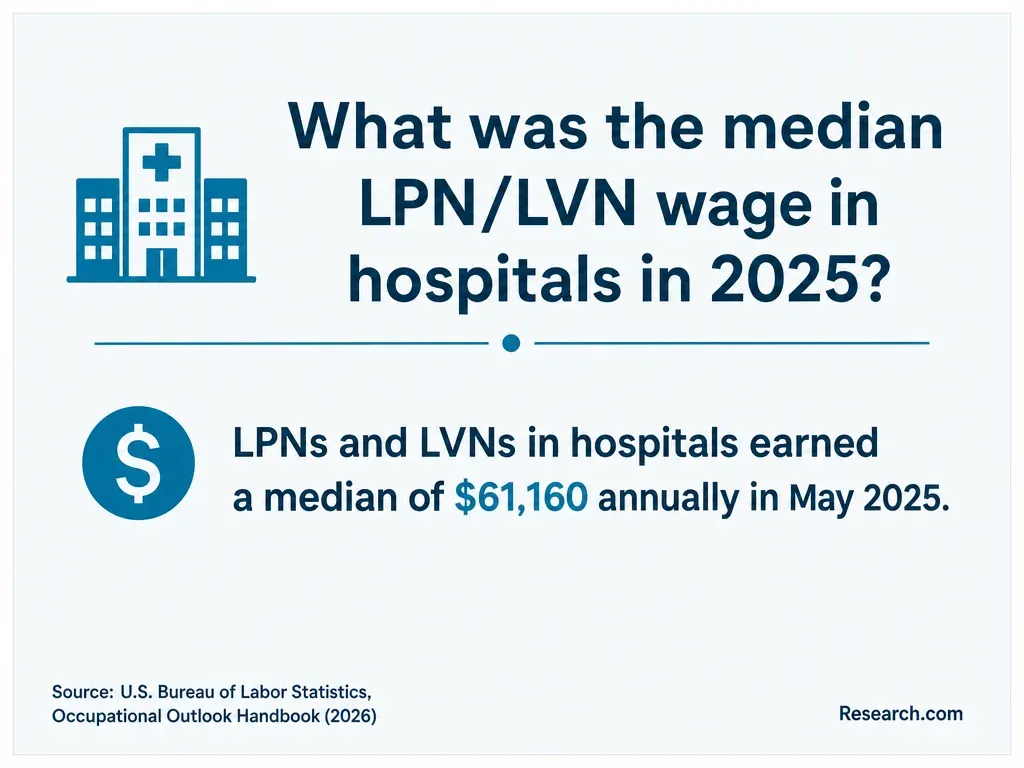
Use wage data with the occupation and location in view: the U.S. Bureau of Labor Statistics reports pay for registered nurses and licensed practical and vocational nurses as occupations, not a guaranteed salary for Kansas BSN graduates.
Compare local RN job postings and actual offers against your education costs, shift expectations, benefits, and experience. Advanced practice is a separate goal: cost-focused online psychiatric NP options concern later graduate preparation and credentialing, not roles authorized by a BSN alone.
How can you choose an accredited Kansas nursing program?
Start with the credential you need next: RN licensure, or a BSN after you are already an RN. Then compare programs using written, track-specific answers rather than a general admissions brochure. This sequence helps prevent an attractive transfer or online offer from hiding a clinical or graduation barrier.
Use the following checks for each route you are considering:
- Confirm the prelicensure RN track's current board-approval status, the nursing degree's accreditation status, and whether its graduates can apply for Kansas RN licensure.
- Obtain a written degree audit showing accepted credits, credits applied to nursing and graduation requirements, remaining courses, and any required sequence or residency credits.
- Request the clinical and campus schedule, placement responsibilities, geographic limits, and rules for missed or repeated courses.
- Compare a term-by-term completion plan and full cost through the BSN, including the second institution if you choose the associate-degree bridge.
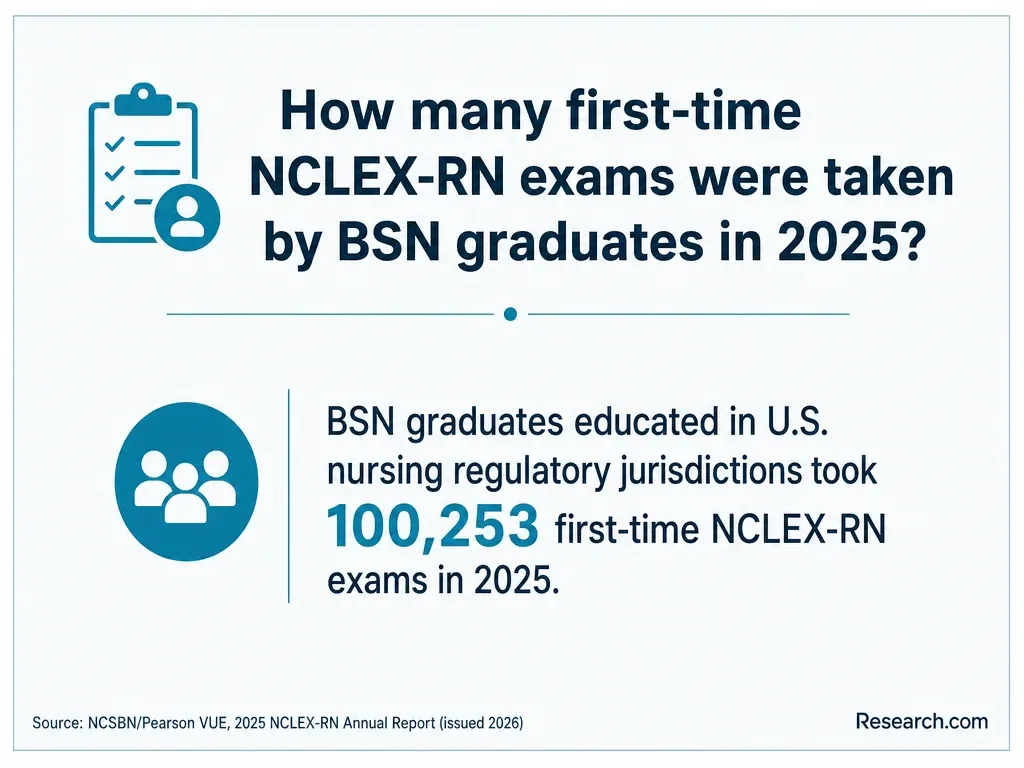
- Ask for recent, clearly dated NCLEX-RN and completion outcomes for the relevant prelicensure program, and ask what cohort each figure represents.
Choose the route you can complete and finance under its actual schedule. If graduate study is a later objective, master's nursing education on a BSN graduate's budget is a separate comparison; do not let a possible future degree obscure the immediate RN-licensure and BSN decision.
Other Things You Should Know About Nursing
Not automatically as a general rule. The status of each license depends on its renewal and regulatory requirements. Check your individual record and ask the Kansas State Board of Nursing before relying on either credential for work.
Potentially, if your schedule and employer allow it. Keep paid LPN duties separate from student RN clinical activities, which must follow the school's supervision and placement rules.
That depends on the program's license and enrollment policies. Separately verify your authority to practice wherever any required learning activities occur; admission and practice authorization are different questions.
Only if the receiving institution evaluates and awards applicable credit under its policies. Submit transcripts or training documentation, but do not assume workplace training replaces nursing courses or supervised clinical requirements.
- Foreign Nurses - Kansas State Board of Nursing https://ksbn.kansas.gov/foreign-nurses/
- How Do Clinicals Work During Online Nursing Programs? | Xavier University https://degrees.xavier.edu/blog/how-clinicals-work-during-online-nursing-programs
- How Long Is an RN to BSN Degree Program? | MACU https://www.macu.edu/blog/how-long-is-rn-bsn-degree-program/
- RN to BSN Transfer Credits Explained: How Many Do You Need? - The University of Olivet https://www.uolivet.edu/rn-to-bsn-transfer-credits-explained-how-many-do-you-need/
- Professional Nursing Program - Admissions Requirements | Jersey College https://www.jerseycollege.edu/admissions/professional-nursing-rn-program
- LPN to BSN Program | Albertus Magnus College https://www.albertus.edu/lpn-bsn/
- Accelerated Second Bachelor's Degree in Nursing | SDSU Global Campus https://globalcampus.sdsu.edu/program/health-care/accelerated-second-bachelor-nursing/
- LPN to RN | butlercc.edu https://www.butlercc.edu/academics/degrees-certificates/nursing/lpn-to-rn
- Quick Path from LPN to RN | jccc.edu https://www.jccc.edu/academics/credit/nursing/lpn-rn-bridge/
- ASN to BSN Transfer Credits: How Your Credits Apply | West Coast University https://westcoastuniversity.edu/blog/asn-to-bsn-transfer-credits-explained-how-your-asn-credits-apply