2027 Low-Cost Online Occupational Safety & Health Associate Degree Programs with Financial Aid: FAFSA, Grants, and Scholarships

Co-Founder and Chief Data Scientist
Choosing an online occupational safety and health associate degree is mostly a net-cost decision, not just a tuition decision. Public two-year colleges averaged $4,050 in tuition and fees for 2024-25, according to College Board, while the federal Pell Grant can cover up to $7,395 for eligible students. That gap can make a FAFSA-eligible program far cheaper than its sticker price. This guide is for working adults, career changers, and entry-level safety workers who want to compare programs, aid types, enrollment rules, and career value before committing.
Key Things You Should Know
- FAFSA-eligible online associate programs can be much cheaper than advertised tuition suggests: the maximum federal Pell Grant is $7,395 for eligible students, but awards depend on financial need, enrollment intensity, and cost of attendance.
- Low sticker tuition is not always the lowest real cost; compare net price after grants, scholarships, fees, books, technology costs, transfer credits, and any loan borrowing.
- Occupational safety and health associate degrees are usually 60 to 70 credits and best fit students seeking entry-level safety roles, promotion into safety coordination, or a lower-cost transfer path toward a bachelor's degree.
Which Low-Cost Online Occupational Safety & Health Associate Degree Programs Offer Financial Aid?
Low-cost online occupational safety and health associate degree programs are most likely to offer financial aid when they are offered by institutionally accredited colleges that participate in federal student aid programs.
The safest starting point is to look for public community colleges, technical colleges, and accredited online universities that clearly publish a school code for FAFSA, a total cost of attendance, and a financial-aid office contact.
Students should distinguish between "online," "low-cost," and "financial-aid eligible." A program can be fully online but not eligible for federal aid, or it can have low tuition but high required fees. The table below shows the program types most commonly worth comparing and what to verify before applying.
| Program type | Typical degree format | Financial-aid potential | Best fit | What to verify |
| Public community or technical college | AAS, AS, or certificate-to-associate pathway | Often eligible for FAFSA if the college participates in Title IV aid | Cost-conscious students, local residents, and workers seeking practical safety training | Online availability, residency tuition rules, lab or internship requirements, and transfer options |
| Public four-year university with an associate pathway | AS or AAS connected to bachelor's programs | Often eligible if the institution and program meet federal aid rules | Students planning to transfer into safety, environmental health, or industrial technology bachelor's programs | Whether associate credits apply cleanly to a bachelor's degree |
| Private nonprofit online college | AAS or AS | May be eligible if institutionally accredited and Title IV-participating | Adult learners who need flexible terms and structured online support | Total fees, transfer-credit limits, and institutional scholarship renewal rules |
| Private for-profit online college | AAS or career-focused associate degree | May be eligible, but net price and borrowing should be reviewed carefully | Students who need frequent start dates or employer-aligned training | Graduation rates, loan borrowing, accreditation, and employer recognition |
| Noncredit OSHA or safety certificate provider | Certificate or continuing education course | Usually not FAFSA-eligible | Workers who need short training rather than a college degree | Whether credits transfer into an associate degree later |
A practical definition of "low-cost" should include total cost, not only tuition per credit. For an online occupational safety and health associate degree, the total bill may include tuition, online course fees, books, exam-proctoring charges, safety software, graduation fees, and transcript fees. A school with a slightly higher tuition rate can still be cheaper if it awards more grant aid or accepts more transfer credits.
Before choosing a program, ask each school for a written cost estimate based on your expected enrollment load. Use this checklist to identify programs that are genuinely affordable rather than merely advertised as affordable.
- Confirm that the institution participates in federal student aid and that the specific associate degree is eligible for aid.
- Ask whether online students pay different tuition or technology fees than campus students.
- Request the full cost of attendance, not only tuition and mandatory fees.
- Ask whether prior college credits, military training, OSHA courses, or industry certifications can reduce required credits.
- Compare the estimated net price after grants and scholarships before considering loans.
How Does FAFSA Work for Online Occupational Safety & Health Associate Degree Programs?
The Free Application for Federal Student Aid, or FAFSA, is the gateway to federal grants, federal student loans, some state grants, and many institutional aid programs. Online students generally use the same FAFSA process as campus students, but aid depends on whether the school participates in federal aid, whether the program is eligible, and whether the student meets federal and school-level requirements.
FAFSA does not guarantee free money. It calculates eligibility using household and financial information, then schools build aid offers based on cost of attendance, enrollment intensity, federal rules, state rules, and available institutional funds. For associate degree students, the most valuable aid is usually grant funding because it does not have to be repaid if requirements are met.
For an online occupational safety and health associate degree, the FAFSA process usually works like this.
- Create or access your federal student aid account and complete the FAFSA using the correct academic year.
- Add each school's federal school code so the financial-aid office can receive your information.
- Confirm that the occupational safety and health associate degree, not just the institution, is eligible for aid.
- Review the school's aid offer and separate grants, scholarships, work-study, and loans.
- Compare net cost across schools after gift aid, then decide whether any remaining balance is manageable.
Enrollment status matters. A full-time student may receive more aid per term than a half-time student, but full-time study can be harder for working adults. A part-time student may receive a smaller Pell Grant disbursement but may also reduce the risk of dropping courses and losing satisfactory academic progress.
The most common FAFSA mistake is assuming that "online" and "accredited" automatically mean "federal-aid eligible." Some legitimate education providers offer noncredit safety training that can be useful for employment but does not qualify for federal aid. Always ask the financial-aid office, "Is this exact program Title IV eligible for the term I plan to start?"
What Grants Can Help Pay for an Online Occupational Safety & Health Associate Degree?
Grants are usually the highest-value aid source because they typically do not require repayment when students meet the conditions of the award. For associate degree students, grant eligibility is often tied to financial need, state residency, enrollment intensity, satisfactory academic progress, and whether the school participates in the relevant aid program.
The most important grant to understand is the federal Pell Grant. The maximum Pell Grant is $7,395 for eligible students, but the actual amount can be lower depending on the student's aid index, cost of attendance, and enrollment intensity.
For a low-cost online associate degree, Pell funding can cover a large portion of annual tuition, but students should still budget for books, fees, and terms when they enroll less than full time.
The table below summarizes the grant categories students should investigate before using loans. It is not a guarantee of eligibility, but it shows where the strongest non-repayable funding opportunities usually come from.
| Grant source | Who may qualify | Why it matters for OSH associate students | Key limitation |
| Federal Pell Grant | Undergraduate students with demonstrated financial need | Can substantially reduce tuition at low-cost two-year colleges | Award varies by need, cost of attendance, and enrollment intensity |
| Federal Supplemental Educational Opportunity Grant | Students with exceptional financial need at participating schools | Can add extra grant funding on top of Pell at some colleges | Campus-based funds are limited and may run out early |
| State grant programs | Often state residents attending eligible in-state institutions | Can make community college or technical college programs especially affordable | Rules vary by state, school type, deadlines, and enrollment status |
| Institutional grants | Students meeting school-specific need or merit criteria | Can lower net price even when tuition is higher than a public college | Renewal may require GPA, credit completion, or continuous enrollment |
| Workforce or dislocated-worker grants | Eligible workers, job seekers, veterans, or displaced employees | May support safety training tied to manufacturing, construction, energy, logistics, or public-sector work | Funding is local or state-specific and may require career-center approval |
Students should prioritize grants before scholarships and loans because grant applications are often tied to the FAFSA and state deadlines. A strong approach is to submit the FAFSA early, then ask the school whether it automatically reviews students for institutional grants or requires a separate application.
This applies to students pursuing various fields, including a criminal justice bachelor degree, who should also review financial aid options before enrolling.
Scholarships can come from colleges, safety organizations, employers, unions, local foundations, professional associations, and community groups. Unlike grants, scholarships may focus on academic performance, career goals, military service, first-generation status, industry experience, or a specific safety-related field such as construction safety, industrial hygiene, environmental health, emergency management, or risk management.
Online occupational safety and health associate degree students should search broadly because some scholarships are not restricted to bachelor's students. The best scholarship strategy is to combine small local awards with larger school or industry awards, especially if the student can explain how the degree supports a specific workplace safety goal.
Use the categories below to organize a scholarship search and avoid missing awards that are not labeled exactly "occupational safety and health."
- College scholarships for online, adult, transfer, part-time, or career-technical students.
- Safety-focused scholarships from professional associations, local safety councils, construction groups, manufacturing associations, and risk-management organizations.
- Employer or union scholarships for workers moving into safety coordinator, safety technician, or compliance-support roles.
- Community foundation scholarships for local residents attending accredited two-year colleges.
- Military, veteran, first-responder, and public-service scholarships for students whose safety career connects to service experience.
Scholarship renewal rules are a major cost issue. Some awards require full-time enrollment, a minimum GPA, a specific major, or continued membership in an organization. Before counting on a scholarship for the full associate degree, ask whether it renews automatically, whether it can be used for online courses, and whether it pays before or after tuition is due.
A useful scholarship essay for this field should be practical rather than vague. Students can strengthen applications by describing a specific safety problem they want to help solve, such as reducing forklift incidents, improving hazard communication, supporting OSHA recordkeeping, assisting with incident investigations, or building a safety culture in a construction, warehousing, healthcare, utilities, or manufacturing environment.
Financial aid can reduce the cost of an online occupational safety and health associate degree from "manageable" to "very low out of pocket," but the amount depends on the student and the school. The correct question is not "How much aid can I get?" but "What will I owe after grants and scholarships, and how much would I need to borrow?"
College Board reported average tuition and fees of $4,050 for public two-year in-district students in 2024-25. That figure is useful because it shows why community colleges can be financially strong options: for Pell-eligible students, grants may cover a large share of direct tuition and fees, though books, online fees, and living expenses can still create a balance.
The table below uses simplified cost scenarios to show how aid changes the real price. These are not promises; they are examples of how students can compare programs using net price rather than sticker price.
| Scenario | Estimated annual tuition and required fees | Gift aid applied | Estimated annual remaining direct cost | Decision point |
| Low-cost public two-year college, high grant eligibility | $4,050 | Up to the student's eligible Pell and state or institutional grants | Could be low if grants cover tuition and required fees | Check books, course materials, and whether out-of-district tuition applies |
| Moderate-cost online college with institutional scholarship | Higher than a local public college | Pell plus school scholarship if eligible | May compete with public options after aid | Confirm scholarship renewal and total fees |
| Program with low advertised tuition but no FAFSA eligibility | May look affordable upfront | No federal Pell Grant or federal loans | Student may owe most or all costs directly | Compare against FAFSA-eligible programs before enrolling |
| Higher-cost program with strong transfer-credit acceptance | Higher per credit | Grants and scholarships may apply | May drop if many credits are accepted | Ask for an official transfer evaluation before committing |
Aid also changes the risk calculation. Grants and scholarships lower risk because they reduce what the student must pay or borrow. Loans can improve short-term affordability but increase long-term cost through repayment, so they should be evaluated after the student knows the grant and scholarship portion of the package.
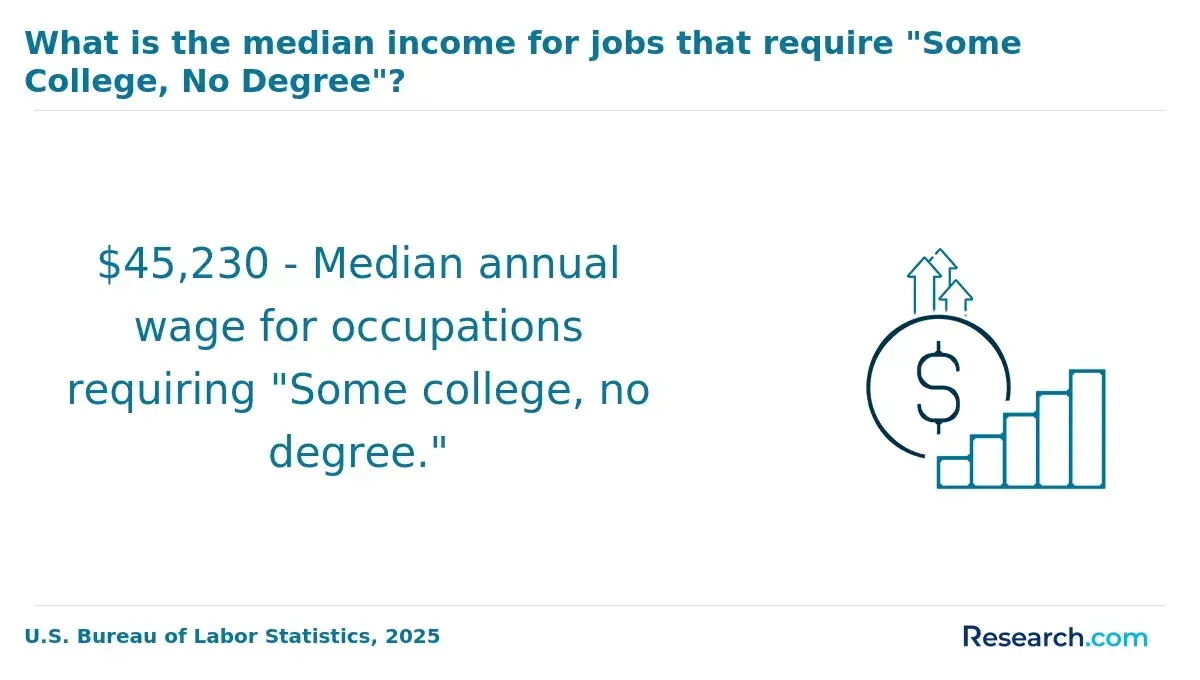
For career context, the U.S. Bureau of Labor Statistics reported a 2024 median annual wage of $81,140 for occupational health and safety specialists and technicians. That figure does not mean an associate degree will lead directly to that wage; it includes workers with different education levels and experience.
It does show, however, that the field can have meaningful earnings potential when students use the associate degree as a step toward experience, certifications, advancement, or transfer. Students exploring related academic pathways may also compare the best online colleges for forensic science to identify programs that align with their educational and career goals.
Financial aid packages can look similar at first because schools often list grants, scholarships, loans, and work-study together. For a cost-conscious student, the most important comparison is gift aid versus repayable aid. A larger package is not necessarily better if much of it is loans.
When comparing offers, separate each package into four categories. This helps you identify the lowest realistic out-of-pocket cost and avoid choosing a school because its aid letter appears larger.
- Grants: Need-based aid that usually does not need to be repaid if requirements are met.
- Scholarships: Merit, need, career, employer, or community-based aid that may have renewal conditions.
- Loans: Borrowed funds that must be repaid, usually with interest, even if the student does not finish the degree.
- Work-study or employment support: Earnings-based aid that can help with expenses but is not the same as a tuition discount.
The table below shows how two programs with different sticker prices can reverse positions after aid. The goal is to compare the amount you must pay or borrow, not the size of the award letter.
| Comparison factor | Program A: lower tuition | Program B: higher tuition | Better-value question |
| Sticker price | Lower | Higher | Does lower tuition remain lower after all aid is applied? |
| Grant aid | Limited to federal or state aid | Federal, state, and institutional grants may be available | Which program has the lower net price after gift aid? |
| Scholarship rules | Few or no program-specific scholarships | May offer online or adult-learner scholarships | Are scholarships renewable and realistic for your enrollment schedule? |
| Fees and materials | May charge online, lab, or proctoring fees | May include some materials in tuition | Which school gives the clearer full-cost estimate? |
| Transfer credits | May accept limited prior learning | May accept more credits or industry training | Which program requires fewer paid credits to graduate? |
| Loans in aid package | Lower borrowing may be needed | Higher borrowing may be offered | How much debt would remain after graduation? |
Common red flags include aid letters that emphasize the total award but bury loan amounts, tuition pages that omit online fees, and programs that will not confirm whether the specific degree is eligible for federal aid.
Students researching options such as a paralegal school should also check whether the institution clearly explains its financial aid policies. Another red flag is a school that recommends borrowing before it has reviewed transfer credits or grant eligibility.
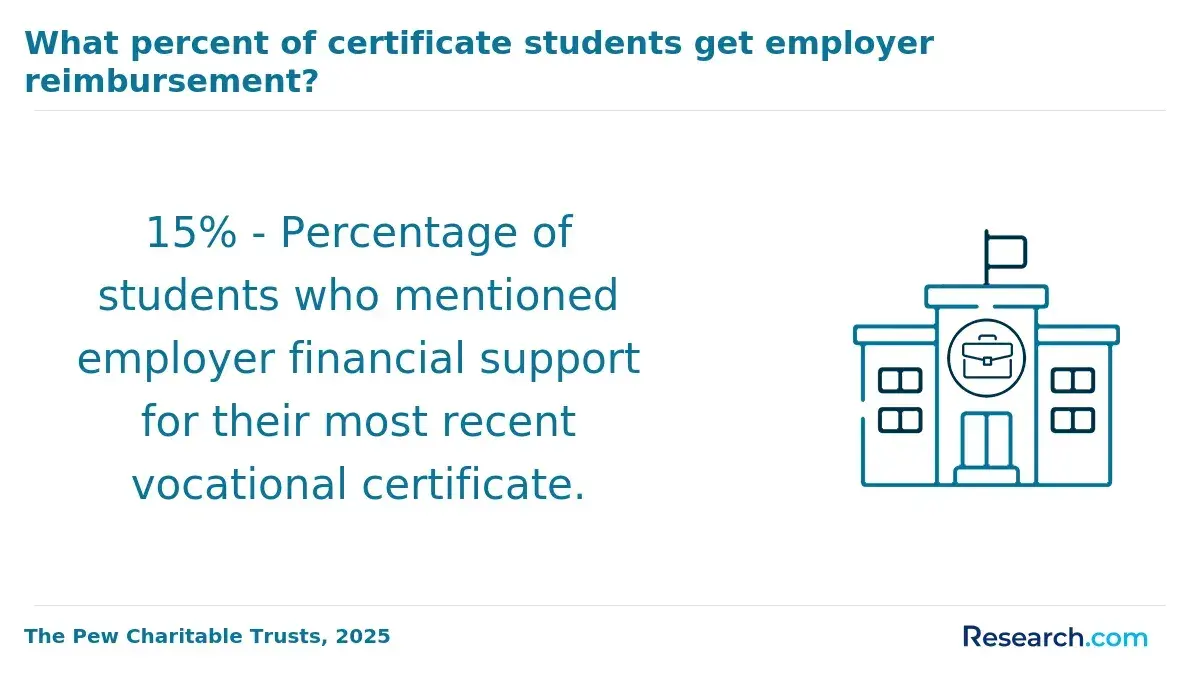
Employer tuition assistance can be one of the best funding sources for occupational safety and health students because the degree often connects directly to workplace risk, compliance, incident prevention, training, and operations. Employers in construction, manufacturing, logistics, utilities, healthcare, energy, and public agencies may support safety education when it improves internal safety capacity.
Employer benefits vary widely. Some employers reimburse tuition after a course is completed, while others pay the school directly. Some require a minimum grade, job relevance, manager approval, or continued employment for a set period. Students should understand these rules before relying on employer funding to cover a tuition deadline.
Ask the employer or human resources department these questions before enrolling.
- Does the tuition benefit apply to online associate degree programs?
- Does the program need to be institutionally accredited or job-related?
- Is payment made upfront, after grades are posted, or through reimbursement?
- Are books, fees, technology costs, or certification exams covered?
- Is there an annual reimbursement cap or lifetime education maximum?
- Will using employer aid reduce grants or scholarships from the school?
- Is there a service commitment or repayment requirement if employment ends?
Employer tuition support can also combine with FAFSA-based aid, but coordination matters. The school may count employer payments as educational assistance when building the financial-aid package. Students should disclose employer benefits to the financial-aid office so they do not receive an award that later has to be revised.
Other benefits may also help. Veterans education benefits, workforce-development funding, union training funds, apprenticeship-related education support, and public-agency professional development budgets can reduce or eliminate out-of-pocket costs. The key is to confirm whether the benefit pays for credit-bearing college courses, short-term safety training, or both.
Accreditation and enrollment status directly affect financial-aid eligibility. For federal aid, the institution must be eligible to participate in Title IV programs, and the student must enroll in an aid-eligible program. A school may be accredited and still offer certain courses or noncredit certificates that do not qualify for federal student aid.
For occupational safety and health associate degrees, students should look first for institutional accreditation recognized for federal aid purposes. Programmatic accreditation is less common at the associate level in this field, so students should focus on whether the college itself is properly accredited, whether credits can transfer, and whether employers recognize the credential.
Enrollment intensity changes aid amounts and pacing. Full-time enrollment can speed completion and may maximize term-based aid, but part-time enrollment may be more realistic for students working in safety, operations, construction, emergency services, or shift-based roles. Dropping below required enrollment levels can reduce aid or create a balance owed.
These rules are especially important for working adults who may need to adjust their course load.
- Satisfactory academic progress: Students must usually maintain a minimum GPA and complete enough attempted credits to keep aid eligibility.
- Half-time enrollment: Federal loan eligibility generally requires at least half-time enrollment, while Pell Grant amounts can adjust based on enrollment intensity.
- Course applicability: Aid may only cover courses that count toward the declared degree plan.
- Withdrawals: Withdrawing from courses can trigger aid recalculation and may leave a balance due.
- Transfer credits: Accepted credits can reduce total cost, but they may also change how many aid-eligible credits remain.
AAS, AS, and AA pathways can also affect long-term value. An AAS is usually more career-focused and may be efficient for students aiming for safety technician or coordinator roles. An AS or transfer-oriented associate degree may be better for students planning to continue into a bachelor's degree in occupational safety, environmental health, industrial technology, public health, or emergency management.
A low-cost online occupational safety and health associate degree with financial aid is most valuable when it fits a clear career or education goal. It can be a strong choice for students who need a recognized college credential but want to avoid the time and cost of starting with a bachelor's degree.
The students most likely to benefit are those who can combine low net cost with relevant work experience, transfer credits, employer support, or a plan for advancement. The degree can help build knowledge in hazard recognition, OSHA standards, incident investigation, industrial hygiene basics, workers' compensation, ergonomics, safety training, environmental compliance, and risk control.
This pathway is often a good fit for the following student profiles.
- Working adults already in construction, manufacturing, warehousing, utilities, transportation, energy, healthcare support, or public works who want to move into safety responsibilities.
- Entry-level safety assistants or operations employees who need a credential to qualify for coordinator or technician roles.
- Students who qualify for Pell Grants, state grants, institutional aid, employer tuition assistance, or workforce funding.
- Military-connected students whose safety, logistics, maintenance, emergency response, or compliance experience may align with degree requirements.
- Students who plan to transfer later but want a lower-cost first credential before committing to a bachelor's degree.
Some students should consider alternatives. If a target role requires a bachelor's degree, professional certification, engineering coursework, or extensive science preparation, an associate degree alone may not be enough.
Students aiming for advanced environmental health, industrial hygiene, safety management, or corporate risk leadership roles should ask whether the associate degree transfers smoothly into a bachelor's program. Those exploring other specialized career paths, such as becoming an FBI profiler, should also consider the educational requirements associated with their long-term goals.
Current workplace trends strengthen the value of practical safety education. Employers are increasingly using digital incident-reporting tools, safety analytics, wearable monitoring, and learning-management systems for compliance training. An online associate program that teaches both safety fundamentals and technology-supported documentation may be more useful than a program focused only on general regulations.
How Should Students Minimize the Total Cost of an Online Occupational Safety & Health Associate Degree?
The best way to minimize cost is to make schools compete on net price, not advertised tuition. Students should gather written financial-aid offers, transfer evaluations, fee estimates, and completion plans before enrolling. This turns a vague affordability claim into a real comparison.
Use the following sequence to reduce the total cost and avoid common financing mistakes.
- Shortlist only institutionally accredited schools with the exact online occupational safety and health associate degree or a closely related safety pathway.
- Confirm FAFSA participation for the institution and aid eligibility for the specific program.
- Submit the FAFSA early and meet state and school priority deadlines.
- Request a total cost of attendance that includes tuition, online fees, books, technology, proctoring, graduation fees, and any required in-person components.
- Ask for an official transfer-credit review before choosing a program, especially if you have prior college, military, OSHA, emergency response, or industry training.
- Apply for grants first, then scholarships, then employer benefits, and consider loans only for the remaining necessary balance.
- Compare financial-aid offers by net price, gift aid, loan amount, renewal requirements, and expected time to completion.
- Choose a course load you can realistically complete so you do not lose aid through withdrawals or unsatisfactory academic progress.
- Ask whether credits transfer into a bachelor's degree if you may continue your education later.
- Recalculate your cost every term because enrollment changes, scholarship renewals, and fee changes can affect aid.
The biggest mistakes are easy to avoid: assuming every online program accepts FAFSA, focusing only on tuition, ignoring fees, overlooking part-time aid rules, and treating loans as discounts. A program is genuinely low-cost only if the student can complete it with manageable out-of-pocket payments and limited borrowing.
Before enrolling, ask the financial-aid office one final question: "Based on my credits, enrollment plan, and aid eligibility, what is my estimated remaining balance for the full degree?" If the school cannot provide a clear answer, continue comparing options before signing an enrollment agreement.
Other Things You Should Know About Occupational Safety & Health
No. OSHA 10 and OSHA 30 are short safety training courses, while an associate degree is a college credential that usually includes broader coursework in hazard control, regulations, incident analysis, communication, and general education. OSHA training can support a resume, but it does not replace a degree.
It can help prepare students for future safety credentials, but certification requirements vary by organization and often include work experience. Students should review the eligibility rules for any credential they plan to pursue before assuming the degree alone is enough.
Some are fully online, while others may require proctored exams, local field assignments, labs, internships, or site-based projects. Students should confirm in-person requirements before enrolling, especially if they live outside the school's state.
Students may explore entry-level or advancement roles such as safety assistant, safety technician, safety coordinator, compliance assistant, environmental health and safety support worker, or training support specialist. Job titles and requirements vary by employer, industry, and region.
- Safety and Health (BAAS) Competency-Based | East Texas A&M University, ETAMU https://www.etamu.edu/programs/safety-health-baas/
- 2026 Best Online Occupational Safety Degrees https://www.onlineu.com/degrees/occupational-safety
- Top 25 Best Value Online Occupational Safety and Health Certificates for 2021 - Delaware Valley Safety Council https://dvsconline.org/public/top-25-best-value-online-occupational-safety-and-health-certificates-for-2021/
- Educational Scholarships - The American Occupational Therapy Foundation https://www.aotf.org/educational-scholarships/
- NASP Financial Aid, Scholarships, and Grants | NASP https://www.naspweb.com/resources/financial-aid/
- Online Occupational Safety & Health Programs | Northampton Community College https://www.northampton.edu/education-and-training/programs/occupational-safety-health.html
- AIHF Scholarships: Application & Eligibility https://www.aiha.org/get-involved/aih-foundation/aih-foundation-scholarships/aih-foundation-scholarships-application-eligibility
- Certificate and Degree Programs - By Education Center Location http://www.osha.gov/otiec/degreeprograms/bylocation
- Safety Education Scholarships | ASSP https://www.assp.org/students/scholarships
- How does a college degree improve graduates’ employment and earnings potential? - APLU https://www.aplu.org/our-work/4-policy-and-advocacy/publicuvalues/employment-earnings/