
2027 Low-Cost Online General Studies Associate Degree Programs with Financial Aid: FAFSA, Grants, and Scholarships

Co-Founder and Chief Data Scientist
Choosing an online general studies associate degree is often a cost decision as much as an academic one. The maximum Federal Pell Grant is $7,395 for the current aid year, which can cover a large share of tuition at many low-cost community colleges.
This guide is for students who want flexibility, transfer options, or a practical credential without overborrowing. You'll learn how FAFSA, grants, scholarships, employer benefits, accreditation, enrollment status, and net price affect what you actually pay.
Key Things You Should Know
- The strongest low-cost options are usually regionally accredited public community colleges that participate in federal student aid; the College Board reports average published in-district tuition and fees at public two-year colleges of about $4,050 for the current academic year.
- FAFSA does not guarantee free college, but it determines eligibility for Pell Grants, federal loans, work-study, and many state or institutional awards; Pell funding can reduce or eliminate tuition at some low-cost programs before books and fees.
- Net price matters more than advertised tuition: compare tuition, online fees, books, transfer-credit acceptance, enrollment requirements, scholarship renewal rules, and loan amounts before choosing a program.
Which Low-Cost Online General Studies Associate Degree Programs Offer Financial Aid?
Low-cost online general studies associate degree programs that offer financial aid are typically offered by accredited public community colleges, state colleges, and some nonprofit universities that participate in Title IV federal student aid. The key is not whether the program is online; it is whether the institution is accredited, approved for federal aid, and lists the online associate degree as an eligible program.
A general studies associate degree is usually a broad, interdisciplinary program that lets students complete general education courses, explore several fields, and prepare for transfer. Common formats include the Associate of Arts, Associate of Science, and, less commonly, Associate of Applied Science. AA and AS programs usually work best for transfer to a bachelor's degree, while AAS programs are more career-focused and may not transfer as smoothly.
The table below shows the main types of low-cost online providers and how they commonly differ in financial-aid fit. Use it to narrow your search before asking schools for a formal aid estimate.
| Program provider type | Typical financial-aid access | Best fit | Cost consideration |
| Public community college | Often FAFSA-eligible if accredited and Title IV participating | Students seeking the lowest tuition and transfer pathways | Residency status and online fees can change the final cost |
| Public state college or university | Often FAFSA-eligible for approved associate programs | Students who want a direct path into a bachelor's program at the same institution | Tuition may be higher than a community college but transfer planning may be simpler |
| Nonprofit online university | May be FAFSA-eligible if institution and program qualify | Adult learners needing flexible schedules and multiple start dates | Flat-rate or competency-based pricing can help fast completers but may cost more for part-time students |
| Private career-focused college | Varies by accreditation and federal-aid participation | Students seeking structured advising and career services | Higher tuition can outweigh aid if grants are limited or loans dominate the package |
| Noncredit or certificate platform | Usually not FAFSA-eligible | Students seeking short skills training rather than a degree | Lower upfront price may not lead to transferable college credit |
A common mistake is assuming that every online associate degree accepts FAFSA. Before applying, search the school's financial-aid page, confirm the federal school code, and ask whether the specific online general studies associate program is aid-eligible. If your real goal is a licensed helping profession, compare a broader general studies route with a field-specific option such as the cheapest online counseling degree, because licensure-focused careers usually require later specialized study.
How Does FAFSA Work for Online General Studies Associate Degree Programs?
FAFSA, the Free Application for Federal Student Aid, is the gateway application for federal grants, federal loans, work-study, and many state and college-based awards. Online students use the same FAFSA as campus students, but the school and program must be eligible for federal aid.
For an online general studies associate degree, FAFSA generally works in this sequence. Following the steps in order helps you avoid choosing a school before you know whether it can actually package federal aid for your program.
- Create or access your StudentAid.gov account and complete the FAFSA using accurate income, household, and dependency information.
- Add every school you are seriously considering by using its official federal school code.
- Confirm with each school that the online general studies associate degree is an aid-eligible program, not merely that the institution accepts FAFSA.
- Review your FAFSA Submission Summary and respond quickly if a school requests verification documents.
- Compare official aid offers after admission, separating grants and scholarships from loans.
- Accept free aid first, consider work-study if available, and borrow only what you need after calculating remaining costs.
FAFSA eligibility is not the same as affordability. A school may offer federal loans that technically cover the cost, but loans raise your long-term price. A better package uses Pell Grants, state grants, institutional scholarships, or tuition waivers to lower the amount you must pay or borrow.
Enrollment intensity also matters. Many aid formulas depend on whether you enroll full time, three-quarter time, half time, or less than half time. If you plan to study part time while working, ask the financial-aid office how your Pell Grant, state grant, and scholarship eligibility changes at your expected credit load.
What Grants Can Help Pay for an Online General Studies Associate Degree?
Grants are usually the most valuable form of financial aid because they generally do not need to be repaid if you meet the program's requirements. For low-cost online general studies associate degree students, grants can come from federal, state, institutional, and sometimes local sources.
The table below summarizes common grant sources and the decision factor that matters most for online associate degree students.
| Grant source | Who may qualify | Why it matters for online general studies students |
| Federal Pell Grant | Undergraduate students with demonstrated financial need who meet federal eligibility rules | Can substantially reduce tuition at low-cost public two-year colleges |
| Federal Supplemental Educational Opportunity Grant | Students with exceptional financial need at participating schools | Funding is limited, so early FAFSA completion can matter |
| State need-based grants | Residents who meet state deadlines and eligibility rules | Some states restrict awards by residency, institution type, enrollment level, or program |
| State promise or free-college programs | Often recent high school graduates or adult learners meeting state-specific conditions | May cover tuition after other aid but may not cover books, fees, or technology |
| Institutional grants | Students selected by the college based on need, merit, or enrollment goals | Can make a higher-tuition school competitive, but renewal rules must be checked |
The most important grant strategy is timing. File the FAFSA as early as possible, check your state aid deadline, and ask whether the school has a separate institutional-aid application. Some limited grants are awarded until funds run out.
Students should also read the fine print. Grants may be reduced if you drop a course, fail to meet satisfactory academic progress, enroll below half time, or take classes outside your degree plan. If you are balancing work and family responsibilities, ask how withdrawing from one online course would affect both current aid and future eligibility.
Scholarships can lower the out-of-pocket cost of an online general studies associate degree, especially when Pell or state grants do not cover the full bill. Unlike grants, scholarships may be based on academic performance, community service, military affiliation, employer partnerships, adult-learner status, first-generation status, or career goals.
Because general studies is broad, students should search beyond scholarships labeled "general studies." The strongest matches often connect to who you are, where you live, or what you plan to do after the associate degree.
- College foundation scholarships for online or community college students
- State and local scholarships from civic groups, community foundations, and workforce boards
- Adult learner, returning student, first-generation, single-parent, or military-connected scholarships
- Transfer scholarships for students planning to continue into a bachelor's degree
- Career-intent scholarships tied to education, business, human services, public service, health administration, or technology pathways
A practical approach is to build a scholarship calendar before the term starts. Prioritize awards that have clear eligibility, reasonable essay requirements, and renewal potential. Avoid any scholarship service that charges a fee, guarantees an award, or asks for sensitive financial information outside a legitimate application process.
Scholarships are most useful when they stack with other aid. Ask each school whether outside scholarships reduce loans first or reduce institutional grants first. If an outside award simply replaces grant aid you already had, it may not lower your net price as much as expected.
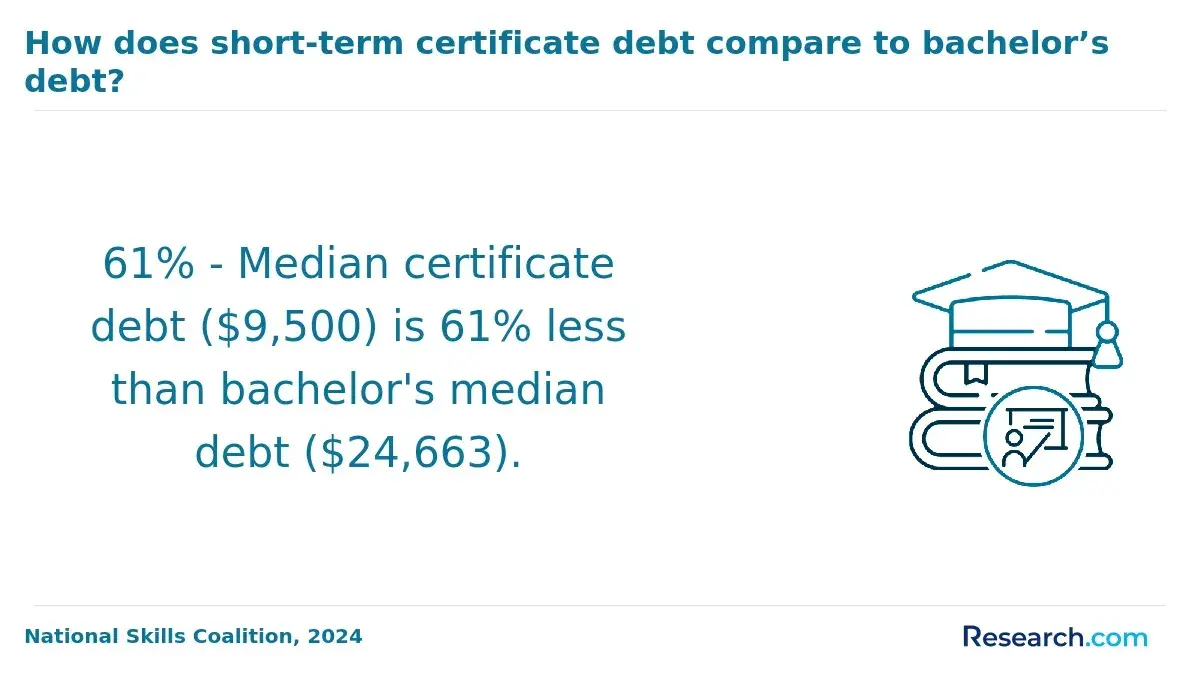
Financial aid can reduce the cost of an online general studies associate degree dramatically, but the effect depends on tuition, fees, enrollment level, financial need, residency, and whether the aid package relies on grants or loans. The maximum Pell Grant of $7,395 can cover more than published tuition and fees at many in-district public two-year colleges, but books, technology, course materials, and living expenses may still create a balance.
The table below illustrates how students should think about net cost. These are comparison scenarios, not promises, because each school calculates aid according to its own cost of attendance and federal rules.
| Scenario | Tuition position | Aid pattern | Likely affordability result |
| Low tuition plus strong grant eligibility | Community college or low-cost public online program | Pell, state grant, or institutional grant covers much of tuition | Lowest out-of-pocket option if fees and books are modest |
| Low tuition but limited grant eligibility | Affordable program | Student receives little need-based aid | Still may be affordable, but payment plans or employer aid become more important |
| Higher tuition with institutional scholarship | Nonprofit or public university option | Scholarship lowers tuition but may have renewal conditions | Can compete with cheaper schools if the award is renewable and loans are low |
| Higher tuition with mostly loans | Any higher-cost program | Aid offer covers cost mainly through borrowing | May be less affordable despite a large aid package |
The best comparison is net price, not sticker price. Net price is the estimated cost after grants and scholarships, before optional loans. If two schools show similar tuition but one adds higher online course fees, proctoring fees, or textbook costs, the advertised cheaper option may not be cheaper in practice.
Students should also consider opportunity cost. A program with generous transfer credit, short terms, or flexible start dates may help working adults finish faster. Faster completion can improve value, but only if the pace is realistic enough to maintain grades and financial-aid eligibility.
Financial aid packages can look similar on the surface but differ sharply in real value. A $10,000 aid offer made mostly of loans is not as strong as a smaller package made mostly of grants and scholarships. For online general studies students, the best aid package lowers the amount you pay now and protects your future transfer or career plans.
Use the following comparison method when you receive aid offers from multiple schools. It helps you separate genuine affordability from large but loan-heavy awards.
- Write down the full cost of attendance for each school, including tuition, mandatory fees, online fees, books, supplies, and estimated technology costs.
- Subtract only grants and scholarships to find the net price before loans.
- Check whether each grant or scholarship is renewable and whether it requires full-time enrollment or a minimum GPA.
- Identify how much of the remaining balance would be covered by loans, payment plans, savings, employer benefits, or work income.
- Ask whether transfer credits, prior learning credit, or placement testing can reduce the number of credits you must pay for.
- Compare the total projected cost for the whole associate degree, not just the first term.
One red flag is a school that emphasizes the total "aid awarded" without clearly separating free aid from debt. Another is an aid package that looks generous for the first term but does not explain renewal conditions. Ask the financial-aid office to provide a term-by-term estimate based on your expected enrollment level.
Also ask academic advising and financial aid the same question: which courses count toward the degree plan? Federal aid generally applies to coursework required for your eligible program. Taking extra courses outside the plan can raise your cost and may not be covered.
Employer tuition assistance can be a strong funding source for online general studies students because the degree is flexible and often relevant to advancement in business, public service, health administration, human services, and operations roles. Many working adults use a general studies associate degree to complete foundational credits before moving into a more specialized bachelor's program.
Employer benefits vary, so students should review the policy before enrolling. Focus on the details that affect cash flow and degree planning.
- Annual reimbursement cap and whether payment is upfront or reimbursed after grades are posted
- Minimum grade requirement for reimbursement
- Approved school or accreditation requirements
- Whether part-time online enrollment is eligible
- Required connection between the degree and current or future job duties
- Repayment rules if you leave the employer soon after receiving benefits
Employer aid can pair well with FAFSA, but coordination matters. Tell the financial-aid office about tuition assistance so the school can package aid correctly and avoid later adjustments. If you plan to build from general studies into social services or nonprofit work, an accelerated human services degree online may be worth comparing as a next-step option after the associate degree.
Other benefits may also help. Military education benefits, workforce-development funds, union education programs, AmeriCorps education awards, and state retraining programs can reduce the need for loans. Eligibility rules vary, so students should confirm whether funds can be used for online associate-level coursework.
Accreditation and enrollment status can determine whether an online general studies associate degree is eligible for federal financial aid. In most cases, students should look for institutional accreditation from an agency recognized by the U.S. Department of Education and confirm that the school participates in federal student aid.
Accreditation also affects transfer value. A low-cost associate degree is most valuable when credits can move into a bachelor's program without excessive loss. If your long-term plan includes a bachelor's degree, ask for written transfer information, articulation agreements, or degree maps before you enroll.
Enrollment status affects both aid and pacing. Full-time students may receive larger term-based aid amounts but must manage a heavier workload. Part-time students may receive less aid per term but may be more likely to persist while working. Neither option is automatically better; the right choice depends on schedule, academic readiness, and cash flow.
Common financial-aid risks include dropping below half time, failing to meet satisfactory academic progress, repeating courses too many times, or withdrawing after aid has been disbursed. These situations can create repayment obligations or reduce future eligibility. Before dropping a class, contact both financial aid and academic advising.
A low-cost online general studies associate degree with financial aid is most beneficial for students who need an affordable, flexible starting point and are not yet ready to commit to a narrow major. It can also help adults with prior credits finish a credential, meet promotion requirements, or prepare for transfer into a bachelor's program.
The degree is often a strong fit for these students because the curriculum usually includes communication, math, science, social science, humanities, and elective courses. Those credits can support multiple pathways if planned carefully.
- Students who want to complete general education requirements before transferring
- Working adults who need online flexibility and a broad credential
- Students with prior college credits who want to finish an associate degree efficiently
- Learners exploring several fields before choosing a bachelor's major
- Employees seeking advancement where an associate degree is preferred but the major is flexible
Some students should consider a more specialized route. If your goal requires licensure, clinical training, or a defined major sequence, general studies may be only a starting point. For example, students planning a counseling career should understand that licensure commonly requires graduate education, so comparing online masters programs for counseling later in the pathway can help estimate the full education investment.
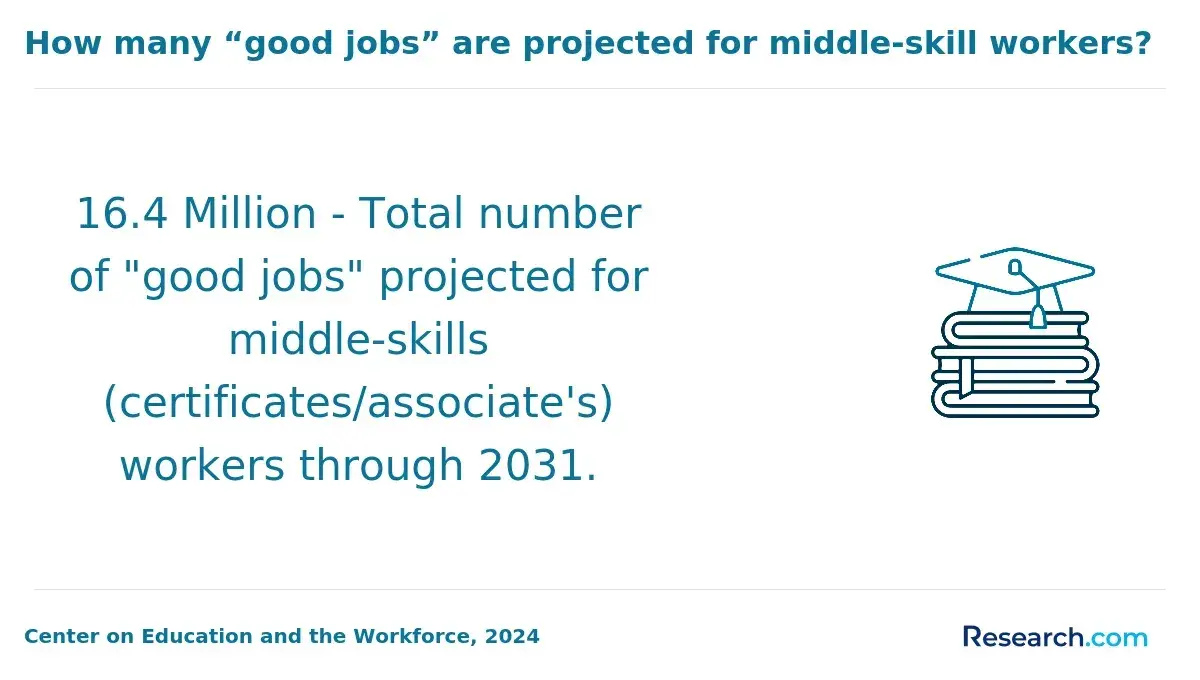
Career value depends on how the degree is used. The Bureau of Labor Statistics reports that workers with an associate degree had higher median weekly earnings than workers with only a high school diploma in the latest annual education-pay data. That does not mean every general studies graduate will see the same outcome, but it shows why completing a recognized credential can matter when paired with experience, transfer planning, or job-specific skills.
How Should Students Minimize the Total Cost of an Online General Studies Associate Degree?
Students minimize the total cost of an online general studies associate degree by managing three numbers: credits required, net price per credit, and borrowed amount. The cheapest program is not always the best value if it rejects prior credits, lacks transfer agreements, or requires fees that raise the final bill.
Before enrolling, use this practical checklist to turn advertised affordability into a realistic cost estimate.
- Confirm institutional accreditation and federal student-aid participation.
- Ask whether the specific online general studies associate degree is FAFSA-eligible.
- Request a full cost breakdown that includes tuition, online fees, books, technology, proctoring, graduation fees, and residency-based charges.
- File the FAFSA early and complete any state or institutional aid applications by their deadlines.
- Compare net price after grants and scholarships, not total aid including loans.
- Ask how financial aid changes at full-time, half-time, and less-than-half-time enrollment.
- Submit transcripts for transfer-credit evaluation before committing to a start date.
- Choose courses that apply directly to the degree and, if relevant, to a planned bachelor's pathway.
- Use employer tuition assistance, payment plans, and scholarships before relying on loans.
- Recheck satisfactory academic progress, scholarship renewal, and withdrawal rules every term.
Students with long-term professional goals should also estimate the cost of the next credential. A general studies associate degree can be a low-cost first step, but fields such as counseling, psychology, education, and healthcare administration may require a bachelor's or graduate degree. If you are already thinking about doctoral-level counseling study, reviewing the cheapest online PhD in counseling can help you understand how early credit choices fit into a much longer academic path.
The safest financial strategy is to borrow conservatively. Federal loans can help cover gaps, but they should be evaluated against expected program value, transfer plans, current income, and repayment obligations. If a school is affordable only when you borrow the maximum available amount each term, compare more options before enrolling.
Other Things You Should Know About General Studies
Most programs include English composition, college math, natural science, social science, humanities, communication, and electives. Some programs let students choose a concentration or elective cluster that supports transfer into business, education, psychology, human services, or another bachelor's major.
A full-time student typically completes an associate degree in about two academic years, while part-time students may take longer. Prior credits, accelerated terms, summer enrollment, and course availability can change the timeline.
Often, yes, especially when the degree comes from an accredited community college or public institution with transfer agreements. However, transfer rules vary by school and major, so students should confirm which credits apply before enrolling.
It can be broad, but that is not always a disadvantage. The degree is most useful when paired with work experience, technical skills, certifications, or a clear transfer plan. Students seeking a regulated or highly specialized occupation may need a more specific major later.
- Everything You Need to Know About the FAFSA https://www.onlineu.com/resources/financial-planning/fafsa
- Online College Costs: A Breakdown of Tuition and Fees | OnlineColleges.net https://www.onlinecolleges.net/for-students/online-college-costs/
- 50+ Scholarships & Grants for Study Abroad in 2025 | Go Overseas https://www.gooverseas.com/blog/study-abroad-scholarships-grants
- Financial Aid for Adult Learners: Grants, Scholarships & How to Pay for College (2026 Guide) https://www.straighterline.com/blog/financial-aid-resources-adults
- CANDIDATE PORTAL https://uz.zgora.pl/en/study-at-uz/scholarships-and-grants-for-international-students
- Private vs. Public Colleges: Differences, Pros & Cons https://collegewise.com/blog/private-vs.-public-colleges-differences
- Making College Affordable by Improving Aid Policy https://issues.org/long-2/
- FAFSA Requirements: A Complete Guide | Bankrate https://www.bankrate.com/loans/student-loans/fafsa-requirements/
- Financial Aid For Online Colleges https://www.affordablecollegesonline.org/financial-aid/financial-aid-for-online-colleges/
- Free Application for Federal Student Aid (FAFSA) | USAGov https://www.usa.gov/fafsa


