2027 Low-Cost Online Early Childhood Development Associate Degree Programs with Financial Aid: FAFSA, Grants, and Scholarships

Co-Founder and Chief Data Scientist
Choosing an online early childhood development associate degree is partly an academic decision and partly a financial-aid calculation. The U. S. Department of Education's maximum Federal Pell Grant remains $7,395 for eligible students in the current aid cycle, which can substantially change the real cost of a community-college program. This guide is for future preschool teachers, childcare workers, aides, and career changers who need a low-cost path. You'll learn how FAFSA, grants, scholarships, employer benefits, accreditation, and enrollment status affect what you actually pay.
Key Things You Should Know
- FAFSA-eligible online associate programs must be offered by institutions that participate in federal student aid; an online format alone does not make a program eligible.
- The maximum Federal Pell Grant is $7,395 for eligible students, but awards depend on FAFSA results, cost of attendance, enrollment intensity, and satisfactory academic progress.
- The lowest tuition is not always the lowest net price; compare direct charges, required fees, books, practicum costs, grants, scholarships, loans, and transfer value before enrolling.
Which Low-Cost Online Early Childhood Development Associate Degree Programs Offer Financial Aid?
Low-cost online early childhood development associate degree programs are most often found at public community colleges, technical colleges, and some public universities. The strongest options usually combine Title IV federal-aid participation, regional or institutional accreditation, affordable in-district or in-state tuition, and a curriculum that supports either employment or transfer.
The table below shows common types of FAFSA-eligible online associate programs students may encounter. Program names, online availability, residency pricing, and field-placement rules can change, so use this as a comparison framework rather than a substitute for checking the school's financial aid office.
| Program example or type | Common award | Typical fit | Financial-aid consideration | Cost factor to verify |
| Public community college early childhood education program | AA, AS, or AAS | Students seeking the lowest tuition and local practicum placement | Often participates in FAFSA if the college is Title IV eligible | In-district versus out-of-district tuition |
| Public technical college early childhood education program | AAS | Students preparing for childcare center, preschool, or paraprofessional roles | Federal and state aid may apply when the program is degree-seeking | Program fees, background checks, and field-experience costs |
| Public university online associate pathway | AA, AS, or AAS | Students who want a direct bachelor's-degree bridge | FAFSA may apply, but tuition may be higher than at a community college | Whether associate credits apply cleanly to a bachelor's program |
| Private nonprofit online associate program | AA or AS | Students who need flexible terms or faith-based/general education alignment | May participate in FAFSA if institutionally accredited and Title IV eligible | Net price after institutional aid, not advertised tuition alone |
| Non-degree CDA or certificate program | Certificate or credential preparation | Students needing a shorter workforce credential | May not qualify for FAFSA unless it is an eligible program at a participating school | Whether credits later apply to an associate degree |
When comparing schools, ask whether the program is fully online or only online for lectures. Early childhood programs often require observation, practicum, student teaching, or fieldwork in approved childcare or preschool settings, and those requirements can affect scheduling, transportation, and total cost.
A practical shortlist should include at least one local community college, one statewide online public option, and one transfer-focused program. This lets you compare the real net price rather than assuming that the cheapest advertised tuition automatically produces the lowest bill.
How Does FAFSA Work for Online Early Childhood Development Associate Degree Programs?
FAFSA is the Free Application for Federal Student Aid. For an online early childhood development associate degree, it determines eligibility for federal grants, work-study, and federal loans, and many states and colleges also use FAFSA data to award their own aid.
The most important recent change is the FAFSA Simplification rollout, which replaced the Expected Family Contribution with the Student Aid Index beginning with the 2024-25 aid year. For students, that means aid offers may look different from older examples online, especially for part-time enrollment, family income changes, or dependency-status questions.
Use this process before you commit to any online program:
- Confirm that the college participates in federal student aid and that the specific associate degree is an eligible degree-seeking program.
- Complete the FAFSA using the school's correct federal school code, then list every college you are seriously considering.
- Review each financial-aid offer for grants, scholarships, loans, work-study, and remaining balance after direct charges.
- Ask how your award changes if you enroll full time, three-quarter time, half time, or less than half time.
- Check whether online course fees, practicum expenses, background checks, books, and technology costs are included in the cost of attendance.
FAFSA eligibility is not the same as guaranteed free tuition. Your award depends on your FAFSA results, enrollment intensity, the school's cost of attendance, annual federal limits, and whether you maintain satisfactory academic progress.
What Grants Can Help Pay for an Online Early Childhood Development Associate Degree?
Grants are usually the best form of financial aid because they generally do not need to be repaid if you meet the program's conditions. For online early childhood development associate students, the most relevant grants usually come from federal, state, college, and workforce-development sources.
The table below summarizes grant categories and how they may reduce the cost of an online associate degree. Use it to identify which offices or agencies to contact after filing the FAFSA.
| Grant type | Who may qualify | How it helps | Important limitation |
| Federal Pell Grant | Undergraduate students with financial need who meet federal eligibility rules | Can reduce tuition, fees, books, and other cost-of-attendance items | Amount depends on FAFSA results and enrollment intensity |
| Federal Supplemental Educational Opportunity Grant | Students with exceptional financial need at participating schools | Adds campus-based grant aid on top of other funding | Funds are limited and not every school participates |
| State need-based grant | Residents who attend eligible in-state institutions | Can make public community colleges especially affordable | Deadlines and residency rules vary by state |
| State early childhood workforce grant | Childcare employees, preschool workers, or students entering high-need care fields | May pay tuition, books, fees, or credential costs | May require employment in an approved early childhood setting |
| College foundation grant | Students enrolled at a specific college | Can fill gaps after federal and state aid | Usually requires a separate institutional application |
Students working in childcare should pay special attention to state early childhood workforce initiatives. Many states use childcare-development, workforce, or quality-improvement funds to help current educators earn credentials, especially when the student agrees to keep working in the field.
Scholarships can be need-based, merit-based, career-based, employer-sponsored, or tied to a student's local community. They are especially useful for early childhood development students because many awards target childcare workers, first-generation college students, adult learners, and future teachers.
The best scholarship search starts close to the program and then expands outward. Early childhood students should look in these places because each source tends to evaluate applicants differently:
- College foundation scholarships for associate degree students in education, human services, or early childhood programs.
- State early childhood association scholarships, including T.E.A.C.H. Early Childhood-style programs where available.
- Childcare employer scholarships for aides, assistant teachers, floaters, and lead-teacher candidates.
- Local civic scholarships from community foundations, school districts, libraries, nonprofits, and faith-based organizations.
- Transfer scholarships for students who plan to move from an associate degree into a bachelor's program in education, child development, or family studies.
Read renewal rules carefully. A scholarship that looks generous in the first term may require a minimum GPA, continued employment, a set number of credits, or a commitment to remain in an early childhood setting after graduation.
Financial aid can reduce the cost of an online early childhood development associate degree substantially, but the effect depends on net price rather than sticker price. Net price is the cost of attendance minus grants and scholarships; it is the number that best estimates what you must pay through savings, payment plans, work income, or loans.
The table below explains how different aid combinations affect out-of-pocket cost. It avoids school-specific estimates because tuition, residency pricing, fees, and grant eligibility vary by institution and student.
| Aid situation | Likely effect on direct charges | What the student should compare | Main risk |
| Maximum Pell Grant plus low public-college tuition | May cover a large share of tuition and required fees | Whether books, technology, and practicum costs remain unpaid | Assuming every expense is covered |
| Partial Pell Grant plus state grant | Can lower the remaining balance enough to avoid or reduce loans | State residency, deadlines, and credit-load rules | Missing an early state-aid deadline |
| Institutional scholarship plus federal aid | May make a higher-tuition program competitive with a cheaper school | Renewal requirements and whether the award applies every term | Choosing based on first-term aid only |
| Loans without grants or scholarships | Can cover costs now but raises repayment obligations later | Total borrowed for the full degree, not one semester | Borrowing more than entry-level wages comfortably support |
| Employer assistance plus grants | Can reduce or eliminate out-of-pocket tuition for working students | Payment timing, grade requirements, and work-commitment rules | Needing to pay upfront before reimbursement arrives |
The most affordable program is the one with the lowest total unpaid cost after gift aid, not necessarily the one with the lowest tuition. A higher-cost school can become cheaper if it offers renewable institutional scholarships or a stronger state-aid match, while a low-tuition program can become more expensive if online fees, books, or required fieldwork costs are not included in the estimate.
Financial-aid packages can look similar at first glance, but they may differ in ways that matter over two years. Compare grants and scholarships separately from loans, and compare one-year aid with the cost of completing the entire associate degree.
The table below shows how to read aid offers across online early childhood development programs. It is designed to help students identify the offer with the lowest realistic out-of-pocket cost.
| Comparison point | Better sign | Red flag | Why it matters |
| Gift aid | Most aid is grants and scholarships | Package looks large because it includes loans | Gift aid lowers cost without adding repayment |
| Renewability | Aid continues if GPA and credit requirements are met | Scholarship applies only to the first term | Associate degrees usually require multiple terms |
| Enrollment assumptions | Aid offer clearly shows full-time and part-time amounts | Offer assumes full-time attendance when you plan part time | Pell and some scholarships can change with credit load |
| Fees | Online, technology, lab, practicum, and graduation fees are listed | Only tuition appears in the estimate | Hidden fees can erase the advantage of low tuition |
| Transfer value | Credits apply to a related bachelor's pathway | Career credits may not transfer widely | Lost credits can raise long-term education cost |
Students who plan to continue into leadership, curriculum, or administrative roles should compare transfer value early. A student who eventually explores 1 year EdD programs online will benefit from building a clean academic pathway from the associate degree through later credentials, even if that goal is years away.
Employer tuition assistance can be a strong funding source for students already working in childcare centers, preschools, Head Start programs, school districts, or after-school programs.
Under current IRS educational-assistance rules, up to $5,250 in qualifying employer-provided educational assistance can generally be excluded from taxable income, although students should confirm details with payroll or a tax professional.
Employer benefits are especially useful when they stack with grants and scholarships. Before counting on them, ask the employer for written answers to the following questions:
- Does the benefit pay the school directly, reimburse after grades are posted, or reimburse after the term ends?
- Which costs are covered: tuition only, fees, books, technology, background checks, or certification exams?
- Is there a minimum grade, continued-employment requirement, or repayment obligation if you leave the job?
- Does the employer require the program to be accredited, related to your current role, or approved before enrollment?
- Can the benefit be combined with Pell Grants, state grants, scholarships, or payment plans?
Some early childhood workers use an associate degree as the first step toward curriculum, training, or learning-design roles. If that long-term path interests you, compare later options such as the best online instructional design master's programs only after confirming that your associate credits can transfer efficiently.
Accreditation affects both financial aid and the value of the degree. To qualify for federal student aid, the institution generally must be accredited by an agency recognized for Title IV purposes and must offer the associate degree as an eligible program.
Programmatic quality also matters in early childhood development. Some associate programs align with state childcare licensing standards, NAEYC-related expectations, CDA preparation, or transfer agreements with teacher-preparation programs, but requirements vary by state and employer.
Enrollment status is another major affordability factor. Pell Grants can be prorated by enrollment intensity, federal loans usually require at least half-time enrollment, and scholarships may require a minimum number of credits. Dropping a class can also affect satisfactory academic progress, future aid eligibility, and whether you owe money back for a term.
Students planning beyond the associate degree should ask how credits apply to bachelor's, master's, or doctoral pathways. Those comparing future administrative or policy-oriented study can later review options such as cheapest online EdD programs, but the first priority is choosing an accredited associate program with transferable coursework.
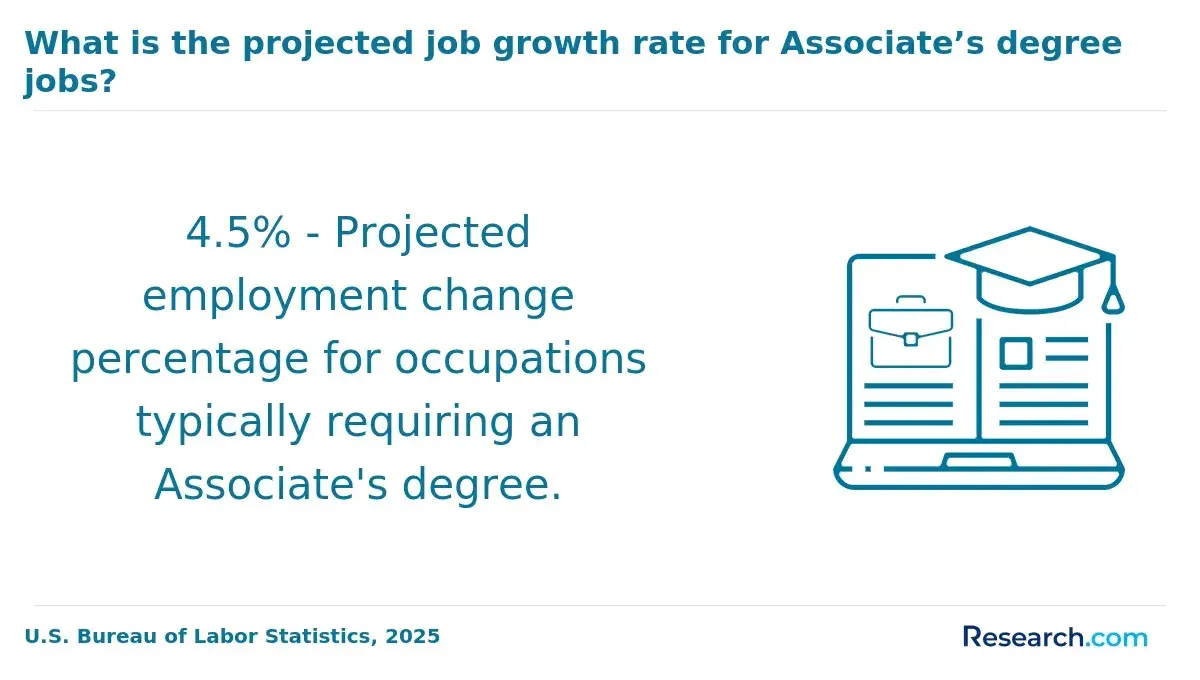
A low-cost online early childhood development associate degree with financial aid is most valuable for students who need a practical, affordable credential for childcare, preschool, assistant teacher, paraprofessional, family-service, or transfer-track roles. It can be especially useful for working adults who need online coursework but can complete field experiences locally.
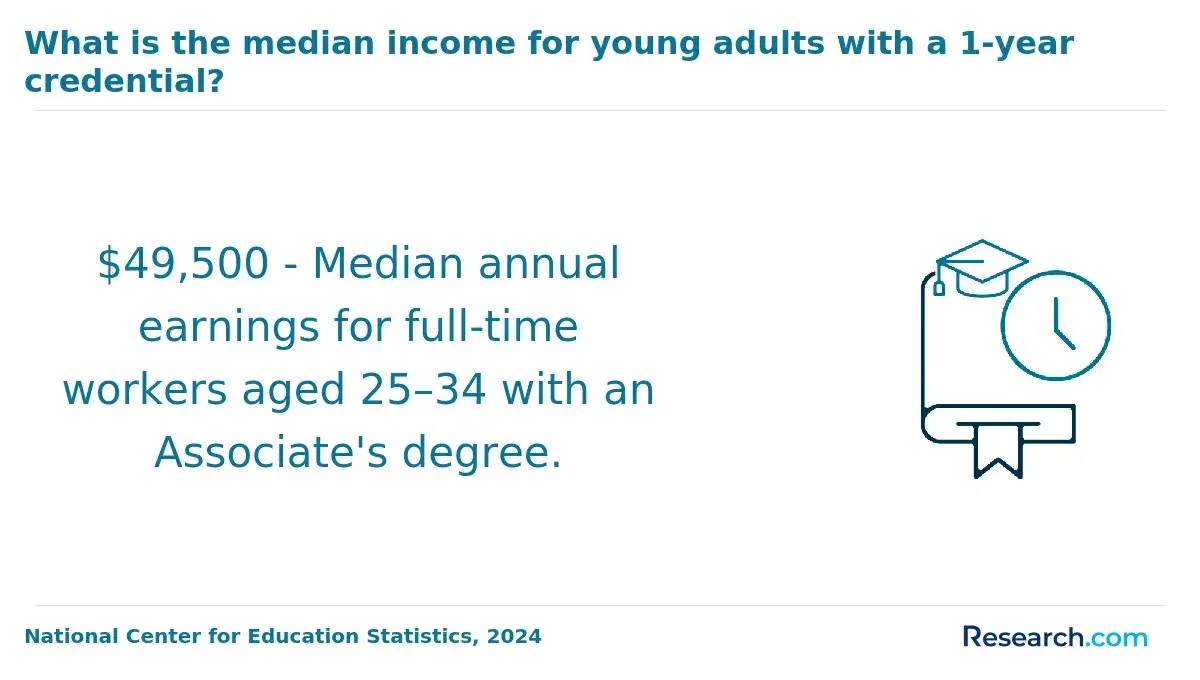
The salary context should be realistic. The U.S. Bureau of Labor Statistics reported a median annual wage of $37,120 for preschool teachers in May 2024, which means students should be cautious about taking on debt for a field where entry-level pay can be modest and advancement often depends on state credentials, experience, or further education.
Students who often benefit most include:
- Current childcare employees whose employers, states, or workforce agencies help pay for credentials.
- Low-income students who qualify for Pell Grants and choose low-tuition public colleges.
- Adult learners who need flexible online classes and local practicum options.
- Students planning to transfer into a bachelor's degree in early childhood education, elementary education, family studies, or child development.
- Career changers testing the early childhood field before committing to a more expensive four-year degree.
Students may want a different path if their state requires a bachelor's degree for the role they want, if the program's credits do not transfer, or if they are aiming for clinical or advanced developmental roles.
For example, students interested in assessment, counseling-adjacent work, or developmental research may eventually compare child psychology master's programs after completing the appropriate bachelor's preparation.
How Should Students Minimize the Total Cost of an Online Early Childhood Development Associate Degree?
To minimize the total cost of an online early childhood development associate degree, treat affordability as a full-degree calculation. The goal is to reduce the unpaid balance across all terms while preserving transferability, accreditation, and career value.
Use this sequence before enrolling:
- Build a shortlist of accredited online or hybrid associate programs that participate in federal student aid.
- Separate transfer-focused AA or AS degrees from career-focused AAS degrees, then match the degree type to your goal.
- File the FAFSA early and list every school you are considering.
- Request a full cost-of-attendance estimate that includes tuition, online fees, books, technology, practicum expenses, background checks, and graduation fees.
- Compare net price after grants and scholarships before considering loans.
- Ask whether aid changes if you attend part time, change majors, withdraw, or repeat a course.
- Apply for college foundation scholarships, state early childhood workforce aid, and employer tuition assistance before the term begins.
- Verify transfer agreements if you may pursue a bachelor's degree later.
- Borrow only after calculating the total debt needed to finish the degree, not just the first semester.
- Keep records of scholarship renewal rules, satisfactory academic progress standards, and employer reimbursement conditions.
Common mistakes include assuming every online program accepts FAFSA, confusing loan eligibility with affordability, overlooking online fees, ignoring scholarship renewal rules, and choosing the largest aid package without checking how much of it must be repaid.
A genuinely low-cost program should be affordable after aid, academically recognized, realistic for your schedule, and useful for your next career or transfer step.
Other Things You Should Know About Early Childhood Development
No. A Child Development Associate credential is a professional credential, while an associate degree is a college degree. Some associate programs include coursework that supports CDA preparation, but they are not the same qualification.
Many students do, especially in asynchronous programs. However, field observations or practicums may require scheduled hours in an approved early childhood setting, so working students should confirm placement timing before enrolling.
Most programs require a high school diploma or GED. Some may also require placement testing, immunization records, background checks, fingerprinting, or documentation needed for fieldwork with children.
Usually not by itself for public school lead-teacher roles. Licensing rules vary by state, and many teaching licenses require a bachelor's degree, approved teacher-preparation program, exams, and supervised teaching experience.
- Program Details https://www.eastern.edu/academics/undergraduate-programs/aa-early-childhood-studies-online
- TEACH NC Eligibility | Early Years, Inc https://www.earlyyearsnc.org/program/teach-nc/teach-nc-eligibility
- Early childhood education as a public good: Challenges and possibilities https://www.nzcer.org.nz/nzcerpress/early-childhood-folio/articles/early-childhood-education-public-good-challenges-and
- Top 10 Online Associates of Early Childhood/Special Education Programs | Special Education Degrees https://www.special-education-degree.net/top-online-associates-of-early-childhoodspecial-education-programs/
- Financial support to study and work in early childhood https://www.vic.gov.au/financial-support-study-and-work-early-childhood
- 2025 Most Affordable Early Childhood Education Degrees Online https://www.onlineu.com/most-affordable-colleges/early-childhood-education-degrees
- FAFSA Eligibility: Requirements & Income Limits | Ascent Funding https://www.ascentfunding.com/blog/fafsa-eligibility/
- Early Childhood Scholarships https://www.nmececd.org/scholarships/
- FAFSA as a Pathway to Postsecondary Education https://www.nasbe.org/fafsa-as-a-pathway-to-postsecondary-education/
- How to Get Your Child Development Associate (CDA) Certification Without Breaking the Bank - post https://www.childcareed.com/a/how-to-get-your-child-development-associate-cda-certification-without-breaking-the-bank.html