
2027 Low-Cost Online Business Management Associate Degree Programs with Financial Aid: FAFSA, Grants, and Scholarships

Co-Founder and Chief Data Scientist
Choosing an online business management associate degree is often a cost decision before it is an academic one. College Board reported public two-year in-district tuition and fees at about $4,050 for a recent academic year, while the maximum federal Pell Grant is $7,395 for eligible students.
That gap matters because the right aid package can turn a low-tuition program into a very low out-of-pocket option. This guide is for students comparing online associate programs, FAFSA eligibility, grants, scholarships, employer benefits, and transfer value so they can estimate the real cost before enrolling.
Key Things You Should Know
- A FAFSA-eligible online associate program must participate in federal student aid; low tuition alone does not mean students can use Pell Grants, federal loans, or work-study.
- The maximum Pell Grant is $7,395 for eligible students, which can cover a large share of tuition at many public two-year colleges but may not cover books, technology fees, or living costs.
- The best-value program is usually the one with the lowest net price after grants and scholarships, clear transfer options, regional accreditation, and aid rules that fit the student's enrollment status.
Which Low-Cost Online Business Management Associate Degree Programs Offer Financial Aid?
Low-cost online business management associate degree programs usually offer financial aid when they are provided by accredited colleges that participate in federal Title IV student aid programs. The key is not whether the course is online; it is whether the institution and the specific program are eligible for federal aid, state aid, institutional scholarships, and transfer credit.
Students comparing an online business degree at the associate level should look beyond the advertised per-credit tuition rate. Fees, books, business software, proctored exam charges, graduation fees, and transfer-credit limits can change the final cost.
The table below summarizes common low-cost program types and how financial aid usually works for each. Use it to identify which options are most likely to support FAFSA-based aid and which require closer verification before applying.
| Program type | Common degree options | Typical affordability advantage | Financial aid considerations | Best fit |
| Public community college online program | AA, AS, AAS in business administration or business management | Often the lowest tuition, especially for in-district or in-state students | Frequently FAFSA-eligible if the college participates in federal aid; state grants may also apply | Students seeking a low-cost start, transfer pathway, or entry-level business credential |
| Public four-year university offering online associate pathways | AA or AS in business, sometimes as part of a bachelor's pathway | May provide smoother transfer into a bachelor's program | FAFSA eligibility is common, but tuition may be higher than community college rates | Students planning to continue into a bachelor's degree at the same institution |
| Private nonprofit online college | AS or AAS in business management | May offer institutional grants or adult-learner scholarships | Federal aid may be available, but net price should be compared carefully | Working adults who need flexible terms, transfer credit evaluation, or year-round scheduling |
| Career-focused online business program | AAS in business management, entrepreneurship, office management, or supervision | May emphasize job-ready courses and applied skills | FAFSA eligibility varies; some short certificate-style options may not qualify | Students seeking employment or promotion rather than immediate transfer |
An AA or AS is often more transfer-oriented, with general education and business foundation courses designed to move into a bachelor's degree. An AAS is usually more career-focused, with more applied coursework in supervision, accounting, marketing, human resources, or small-business operations. Neither is automatically better; the right choice depends on whether the student wants the fastest workforce credential or the most efficient path to a four-year degree.
Before treating a program as affordable, confirm the following details with the admissions or financial aid office. These questions help reveal whether the advertised price matches the likely out-of-pocket cost.
- Does the institution participate in federal student aid, and is this specific online associate degree eligible?
- Is the tuition rate different for in-state, out-of-state, online, military, or part-time students?
- Are business courses charged extra fees for software, exams, textbooks, access codes, or learning platforms?
- Can transfer credits, prior learning, military training, or industry credentials reduce the number of credits required?
- Does the degree transfer into a bachelor's program without losing credits?
How Does FAFSA Work for Online Business Management Associate Degree Programs?
The FAFSA is the main application used to determine eligibility for federal grants, federal student loans, and federal work-study. Many states and colleges also use FAFSA information to award their own grants and scholarships. For an online business management associate degree, FAFSA works only if the school participates in federal aid and the program is an eligible degree program.
The FAFSA does not guarantee free aid. It calculates eligibility using financial and household information, then the school builds an aid offer based on the student's cost of attendance, enrollment status, dependency status, and available funding. The simplified FAFSA uses the Student Aid Index instead of the older Expected Family Contribution, so returning students should pay close attention to how their aid eligibility is presented.
Students considering an accelerated business degree online should also ask how shorter terms affect aid disbursement. Accelerated schedules can reduce time to completion, but federal aid still follows school-defined academic periods, credit loads, and satisfactory academic progress rules.
Use this sequence to avoid the most common FAFSA mistakes for online associate programs.
- Confirm that the college is institutionally accredited and participates in federal Title IV aid.
- Ask whether the specific online business management associate degree is aid-eligible, not just whether the college accepts FAFSA.
- Complete the FAFSA with the correct school code and submit it as early as possible because some state and institutional funds are limited.
- Review the school's cost of attendance, including tuition, fees, books, technology, transportation, and personal expenses.
- Compare the aid offer by separating grants and scholarships from loans, since loans reduce upfront cost but must generally be repaid.
- Ask how changing from full-time to part-time enrollment would affect Pell Grant amounts, institutional scholarships, and completion time.
The most important FAFSA red flag is assuming that "online" and "accredited" automatically mean "federal-aid eligible." Some schools are accredited but do not participate in federal student aid, and some programs at eligible schools may not qualify because of length, credential type, or delivery structure.
What Grants Can Help Pay for an Online Business Management Associate Degree?
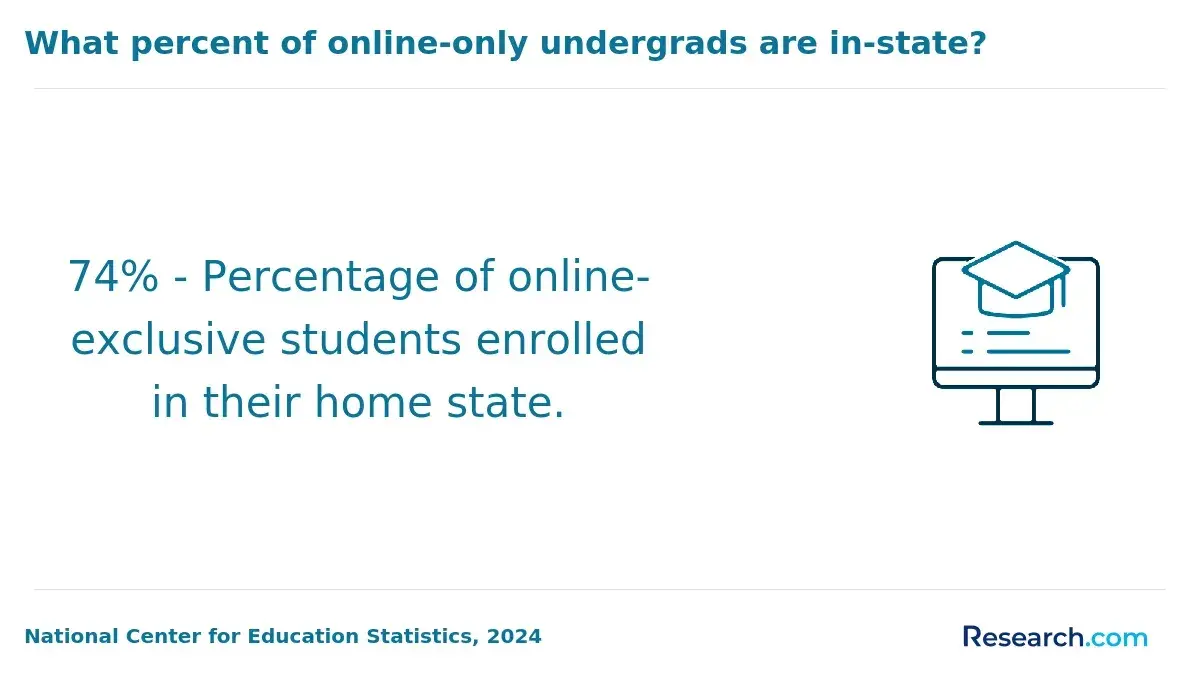
Grants are usually the most valuable form of aid because they generally do not need to be repaid if the student meets the conditions of the award. For low-income and moderate-income students, grants can significantly reduce the net price of an online business management associate degree, especially at public two-year colleges.
The largest federal grant for many associate degree students is the Pell Grant. The maximum Pell Grant is $7,395 for eligible students, but the actual amount depends on FAFSA results, enrollment intensity, cost of attendance, and annual federal rules. A student taking fewer credits may receive a reduced amount, which can change the semester-by-semester budget.
The table below explains the main grant categories students should investigate. It is designed to help readers separate broad federal options from state and school-based aid that may have more specific deadlines.
| Grant source | Who may qualify | Why it matters for online associate students | What to verify |
| Federal Pell Grant | Undergraduate students with financial need who have not earned a bachelor's degree | Can cover a major share of tuition at many low-cost community colleges | Enrollment level, lifetime Pell eligibility, and program eligibility |
| Federal Supplemental Educational Opportunity Grant | Students with exceptional financial need at participating schools | Can add grant aid on top of Pell, but funds are limited | Whether the school participates and whether funds remain available |
| State need-based grants | Residents who meet state financial, enrollment, or academic rules | May make an in-state online program much cheaper than an out-of-state option | Residency rules, deadlines, eligible institutions, and minimum credit load |
| Workforce or adult-learner grants | Adults returning to school, displaced workers, or students in approved workforce programs | Can support students using business management training for career advancement | Approved program lists and whether online students qualify |
| Institutional grants | Students selected by the college based on need, merit, major, or enrollment goals | Can make a higher-tuition school competitive after aid | Renewal rules, GPA requirements, and whether grants apply every term |
Grant aid is strongest when students apply early and keep their enrollment status stable. A common mistake is budgeting for the maximum Pell amount without checking whether part-time enrollment, dropped courses, or repeated classes will reduce the award.
Scholarships can come from colleges, foundations, employers, professional associations, local civic groups, and business organizations. Unlike grants, scholarships may focus less on financial need and more on academic performance, career goals, leadership, community service, military affiliation, first-generation status, or interest in entrepreneurship.
Online students should not assume they are excluded from scholarships. Many awards are open to degree-seeking students regardless of delivery format, as long as the college is accredited and the student meets enrollment requirements.
The list below shows scholarship categories that are especially relevant for business management associate degree students. Each category may have different deadlines and renewal rules, so students should track requirements before counting the funds in their budget.
- Institutional business scholarships for students majoring in business administration, management, accounting, entrepreneurship, marketing, or related fields.
- Community college foundation scholarships funded by alumni, local businesses, civic organizations, or donors supporting workforce education.
- Adult learner and returning student scholarships for students balancing work, family, and part-time online study.
- First-generation and need-based scholarships that can supplement Pell Grants or state grants.
- Career-focused scholarships for students pursuing supervision, small-business management, office administration, supply chain, retail management, or operations roles.
- Military, veteran, spouse, and dependent scholarships that may combine with federal or state education benefits.
The biggest scholarship mistake is focusing only on national awards with large applicant pools. Smaller college foundation awards, local business scholarships, and program-specific funds may be more realistic because they target a narrower group of students.
Before applying, students should ask whether a scholarship is renewable, whether it requires full-time enrollment, whether it can be used for online courses, and whether it reduces other institutional aid. A scholarship that looks generous for one term may be less valuable than a smaller renewable award that supports the full associate degree.
Financial aid can reduce the cost of an online business management associate degree dramatically, but the exact reduction depends on tuition, fees, grant eligibility, enrollment level, and how the school calculates cost of attendance. The most useful number is net price: total cost minus grants and scholarships.
Because the maximum Pell Grant is $7,395 for eligible students and public two-year tuition and fees are often far lower than many four-year options, some students may be able to cover most direct tuition charges with grant aid. However, that does not mean the degree is free. Books, course materials, technology, internet access, transcript fees, and graduation fees can still create out-of-pocket costs.
The sample comparison below shows how the same Pell-eligible student could face very different net costs depending on tuition and grant packaging. These are simplified examples for decision-making and should not replace a school's official aid offer.
| Scenario | Estimated direct annual tuition and fees | Grant and scholarship aid | Estimated annual net direct cost | Decision insight |
| Low-tuition public two-year program with strong grant eligibility | $4,050 | $4,050 or more | $0 for direct tuition and fees | Likely strong value if credits transfer and fees are limited |
| Moderate-tuition online associate program with partial grants | $7,500 | $4,000 | $3,500 | May be affordable if scheduling flexibility speeds completion |
| Higher-tuition online program with institutional scholarship | $12,000 | $6,000 | $6,000 | Could still cost more than a public option despite a larger aid package |
| Low-tuition program without FAFSA eligibility | $4,500 | $0 federal aid | $4,500 | Advertised tuition may be low, but out-of-pocket cost can be higher than a FAFSA-eligible option |
Students should compare aid packages by asking, "How much will I pay after grants and scholarships?" rather than "Which school offered the biggest aid amount?" A higher-cost school can advertise a larger aid package and still leave the student paying more.
Loan offers require extra caution. Federal student loans can help manage cash flow, but they increase the long-term cost of the credential. For a low-cost associate degree, loans should usually be treated as a gap-filling tool after grants, scholarships, employer aid, payment plans, and transfer credits have been reviewed.
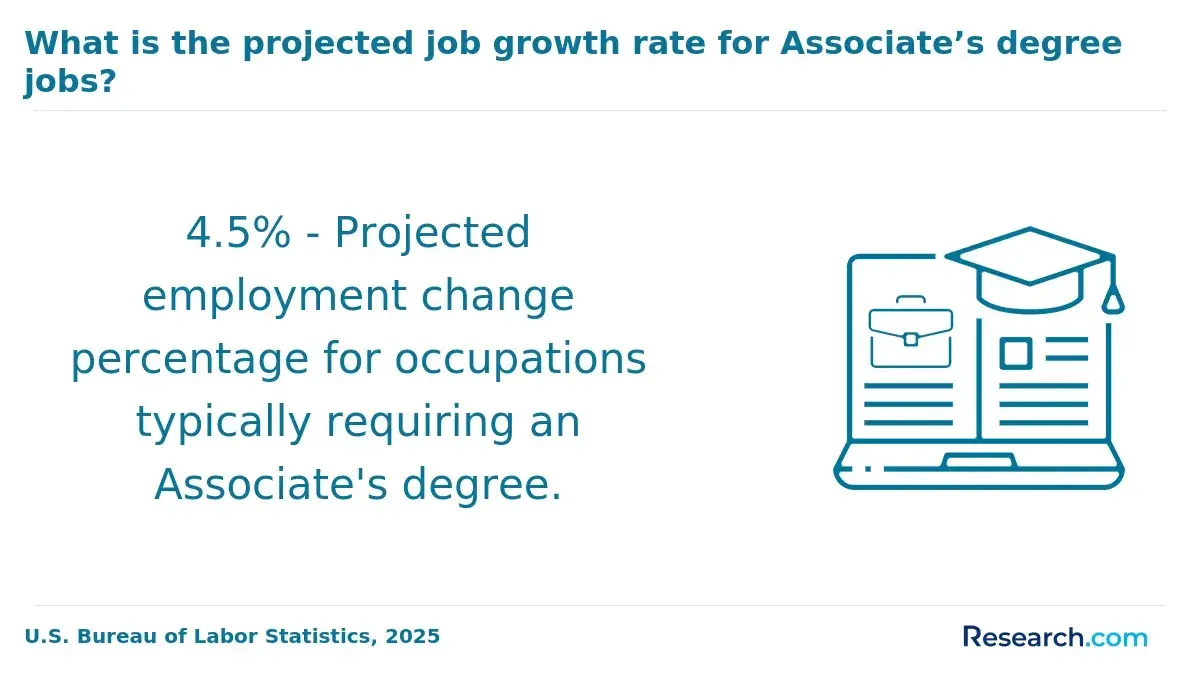
Financial aid packages can look similar on the surface while producing very different out-of-pocket costs. A useful comparison separates gift aid from loans, annual cost from total program cost, and direct school charges from indirect costs such as supplies or transportation.
When comparing programs, students should request a written cost estimate for the entire associate degree, not just the first term. This matters because some scholarships are one-time awards, some courses carry special fees, and part-time enrollment can extend the number of terms in which fees are charged.
The table below shows the most important comparison fields to place side by side when reviewing multiple online business management associate degree offers.
| Comparison factor | Why it affects affordability | Question to ask the school |
| Total credits required | More required credits usually mean more tuition and more time in school | How many credits will I need after transfer credits are evaluated? |
| Per-credit tuition | Advertised tuition is only one part of the total price | Is this rate guaranteed for online students and does it differ by residency? |
| Mandatory fees | Technology, online learning, course, and graduation fees can raise net cost | What fees will I pay each term and at graduation? |
| Gift aid | Grants and scholarships reduce cost without adding repayment obligations | Which parts of my award are grants or scholarships, and which are loans? |
| Renewal rules | Aid can disappear if GPA, credit load, or progress requirements are not met | What GPA and enrollment level do I need to keep each award? |
| Transfer pathway | Lost credits can raise the long-term cost of completing a bachelor's degree | Does this associate degree transfer into a bachelor's program through an articulation agreement? |
A good financial aid package is not always the largest package. It is the package that leaves the lowest realistic net cost, uses the most gift aid, has conditions the student can maintain, and supports the student's next step after graduation.
Common red flags include a package dominated by loans, unclear online fees, vague scholarship renewal language, no written transfer-credit evaluation, or pressure to enroll before receiving a complete cost breakdown. Students should slow down when any of these issues appear.
Employer tuition assistance can be one of the most overlooked ways to reduce the cost of an online business management associate degree. Business management coursework often aligns with workplace needs in supervision, operations, customer service, accounting support, retail leadership, office administration, and project coordination, so some employers are willing to support it.
Under federal tax rules, employers can generally provide up to $5,250 per year in tax-free educational assistance to eligible employees when the benefit meets program requirements. For a low-cost online associate degree, that amount can cover a meaningful share of annual tuition and fees, especially when combined with grants or scholarships.
Students interested in operations or coordination roles may also compare business management with a project management degree online, especially if their employer funds credentials tied to team leadership, scheduling, budgeting, or process improvement.
Employer benefits vary widely, so students should review the policy before enrolling. The following items are especially important because they determine whether the benefit lowers upfront cost or reimburses the student later.
- Whether the employer pays the school directly or reimburses the employee after grades are posted.
- Whether the degree must relate to the employee's current job or a defined internal career path.
- Whether the employee must earn a minimum grade to receive payment or reimbursement.
- Whether part-time employees, new employees, union employees, or remote workers are eligible.
- Whether the employee must stay with the company for a certain period after receiving assistance.
- Whether books, fees, technology charges, and prior-learning assessments are covered.
Students using employer aid should coordinate it with the school's financial aid office. Employer payments can affect billing timelines, refunds, and unmet need calculations, so it is better to clarify the order of funding before the first term begins.
Accreditation and enrollment status directly affect whether students can receive and keep financial aid. For federal aid, the institution must be properly accredited and approved to participate in federal student aid programs. Programmatic business accreditation can be a quality signal, but institutional accreditation and Title IV participation are the core financial-aid issues.
Enrollment status matters because many awards are adjusted based on credit load. Full-time students may qualify for larger term-based aid amounts, while part-time students may receive prorated aid and take longer to finish. Longer completion time can increase fees and delay career or transfer benefits.
The table below explains how common enrollment and academic rules can affect aid eligibility and total cost.
| Rule or status | How it affects aid | Cost implication |
| Full-time enrollment | May support maximum eligibility for some grants and scholarships | Can speed completion but may be harder for working adults |
| Part-time enrollment | Federal and institutional aid may be reduced based on credits taken | Can improve work-life balance but may extend the total timeline |
| Satisfactory academic progress | Students must usually meet GPA and credit-completion standards | Failing or withdrawing from courses can put future aid at risk |
| Repeated courses | Aid for repeated coursework may be limited by federal and school rules | Retaking classes can raise cost and slow completion |
| Transfer credits | Accepted credits can reduce required coursework | Strong transfer evaluation can lower both tuition and time in school |
| Non-degree or certificate enrollment | Some non-degree coursework may not qualify for aid | Students may have to pay out of pocket if courses are not part of an eligible program |
Online learners should also check whether any required campus visits, internships, proctored exams, or synchronous sessions affect their ability to complete courses successfully. Financial aid can help pay for school, but it cannot fix a program format that does not match the student's schedule.
A low-cost online business management associate degree with financial aid tends to benefit students who need a practical credential, want to limit debt, and can use the degree for entry-level business roles, promotion, transfer, or career change. It can be especially useful for working adults who already have job experience but need a formal credential to qualify for supervisory or administrative opportunities.
Business management associate programs commonly include courses in accounting, marketing, management principles, business communication, economics, spreadsheets, entrepreneurship, and human resources. These courses can support roles such as office coordinator, retail supervisor, customer service supervisor, administrative assistant, sales support specialist, or small-business operator. According to BLS wage data published in 2024, the median annual wage for first-line supervisors of office and administrative support workers was about $65,510, but wages vary by industry, location, experience, and responsibility level.
Some students should also compare business management with a project management degree if they are more interested in planning, scheduling, budgets, risk tracking, or team coordination. Business management is broader, while project management is more specialized.
The students most likely to benefit share several characteristics. This list can help readers decide whether the degree fits their situation before committing time and money.
- Students who qualify for Pell Grants, state grants, institutional aid, or employer tuition assistance and can reduce the net price below the advertised tuition.
- Working adults who need online flexibility but can still maintain satisfactory academic progress each term.
- Students who want a transfer-oriented AA or AS before pursuing a bachelor's degree in business, management, accounting, marketing, or human resources.
- Students seeking an applied AAS for entry-level advancement in office administration, retail management, customer service, operations support, or entrepreneurship.
- Students with prior college credits, military training, workplace learning, or certifications that the school may accept for credit.
Students may want another pathway if they already know their target job requires a bachelor's degree, if the program's credits will not transfer, if they cannot meet aid renewal requirements, or if the net cost after aid is close to the cost of a bachelor's pathway with stronger career alignment.
How Should Students Minimize the Total Cost of an Online Business Management Associate Degree?
The best cost strategy is to minimize the total price of the credential, not just the first semester bill. Students should compare net price, aid stability, credit transfer, time to completion, and career relevance together. A program that costs slightly more per credit may be cheaper overall if it accepts more transfer credits or provides a guaranteed bachelor's pathway.
Use the following process to build a realistic affordability plan before enrolling. Each step helps turn financial aid estimates into an actual payment strategy.
- Create a shortlist of accredited online business management associate programs that clearly state tuition, fees, credit requirements, and online course availability.
- Verify FAFSA eligibility for each institution and each specific associate degree program.
- Submit the FAFSA early and meet state, school, and scholarship deadlines.
- Request a full cost-of-attendance estimate and separate direct charges from indirect expenses.
- Compare grants, scholarships, employer benefits, payment plans, and loans in that order.
- Ask for a transfer-credit evaluation before enrolling, especially if you have prior college, military, or workplace training.
- Choose the enrollment pace that preserves aid eligibility while remaining realistic for your work and family schedule.
- Recheck aid renewal requirements every term, including GPA, completed credits, and maximum timeframe rules.
- Keep borrowing as low as possible by using free aid, employer benefits, low-cost textbooks, and summer or accelerated terms only when they reduce total cost.
Students planning to continue beyond the associate degree should also calculate the combined cost of the associate and bachelor's pathway. An associate degree with poor transferability may be cheap at first but expensive later if many credits do not apply toward the next credential.
The final decision should balance affordability with academic fit. A low-cost program is a strong choice when it is FAFSA-eligible, transparent about fees, realistic for the student's schedule, aligned with career goals, and built to preserve transfer value. When those conditions are missing, a slightly higher-cost program with better aid, stronger support, or clearer transfer outcomes may be the better investment.
Other Things You Should Know About Business Management
Yes, it can support entry-level business, administrative, retail, customer service, sales support, and operations roles. However, outcomes depend on work experience, local labor demand, internships, software skills, and whether the employer prefers or requires a bachelor's degree.
They overlap, but they are not always identical. Business administration is often broader and may include finance, accounting, marketing, and operations, while business management may focus more on supervising people, organizing work, and making day-to-day business decisions.
Policies vary by school, but many colleges do not list the delivery format on the diploma. Students who are concerned should ask the registrar whether the transcript or diploma identifies online coursework.
Useful skills include spreadsheets, business writing, customer service, basic accounting, data interpretation, scheduling, conflict resolution, presentation, and team coordination. Students can strengthen the degree's value by building a portfolio of class projects or workplace examples.
- Online Associate Business Degrees | University of Phoenix https://www.phoenix.edu/online-business-degrees/associate.html
- 2025 Most Affordable Online Associate Degrees in Management https://www.onlineu.com/most-affordable-colleges/management-associate-degrees
- Tuition-Free Distance Learning Program in Business Administration - UNYBT https://unybt.com/tuition-free-program-business-administration/
- FAFSA Guide for Business Schools | Accounting.com https://www.accounting.com/resources/fafsa-guide/
- Grant Eligibility https://grants.gov/learn-grants/grant-eligibility
- Financial Aid Guide for Online College Students | Onlinedegrees.com https://www.onlinedegrees.com/degree360/student-loans-scholarships/
- SCHOLARSHIP - National Business Association https://nationalbusiness.org/scholarship/


