2027 Is an Online BS in Business Administration the Right Next Step for Merchandising Assistants?
Audited and Verified:
Our Editorial and Data Verification Process
Research.com uses government datasets, official education statistics and primary institutional information to support its career and degree guides. Our review process checks factual accuracy, occupational definitions, source dates and the requirements associated with the credentials discussed.
How This Article Was Fact-Checked
Our editorial team verifies salary estimates, employment projections, education requirements and program information against original data providers and official organizations. Salary figures are checked against the relevant occupational definitions and reporting periods. Information about licensure, accreditation and required in-person training is reviewed separately.
Fact-checked and verified on:

Co-Founder and Chief Data Scientist
Merchandising assistants already see how product availability, pricing, promotions, and customer demand affect sales. An online BS in business administration can help turn that experience into broader analytical or operational responsibility - but it may be more education than your next role requires.
This guide is for assistants deciding whether to study while working. It connects the degree to realistic merchandising careers, explains what to check about online schedules and costs, and shows when a more focused route may be the better next step.
Key Things You Should Know
- An online BS in business administration is most useful when your target merchandising role calls for stronger analytical, financial, or operational skills - or a bachelor's degree you do not yet have.
- A degree alone does not qualify you to manage a buying team. Documented work with sales reports, inventory decisions, vendors, and cross-functional projects remains important.
- The U.S. Bureau of Labor Statistics projects 18% employment growth for logisticians from 2025 to 2035, but that occupation is only one possible supply-chain direction - not a forecast for merchandising assistants.
Is an online BS in business administration right for merchandising assistants?
It may be the right next step if a bachelor's degree is a recurring requirement for the roles you want and the program lets you build on your merchandising experience without leaving work. It is less compelling if your immediate goal is a skill your employer will let you learn through a short course, mentorship, or a new assignment.
Start with the work you want to do next. An assistant who wants to interpret assortment performance may need stronger spreadsheet, statistics, and finance skills. One who wants to coordinate replenishment may benefit more from operations and supply-chain coursework. Ask a supervisor which responsibilities you could take on now; a degree is more valuable when you can apply its lessons and demonstrate results on the job.
Read local job postings before choosing the credential. If the jobs consistently require a bachelor's degree, a BS in business administration offers broad preparation. If they emphasize a specific function, compare a specialized degree or targeted training instead. For example, someone aiming to leave merchandising for retail HR should compare the curriculum and hiring requirements in a guide to studying human resources, rather than assuming a general business degree is the most direct route.
What careers can a business administration degree unlock in merchandising?
A degree can support applications for more specialized positions, but merchandising experience determines which transitions are plausible. Titles vary by retailer; compare duties rather than relying on the title alone.
The following paths show how an assistant's existing work might connect to a next role - and what additional evidence an employer may expect.
| Possible next role | Relevant work | Evidence to build |
| Merchandising or allocation analyst | Review sales, stock, and assortment performance | Accurate spreadsheet analysis and clear recommendations |
| Assistant buyer or buying coordinator | Support assortment planning and vendor communication | Product knowledge, margin awareness, and dependable coordination |
| Inventory or supply-chain coordinator | Track availability, replenishment, and delivery issues | Process knowledge, data interpretation, and issue resolution |
| Retail marketing coordinator | Coordinate promotions and assess customer response | Campaign execution, communication, and measurement |
A move into project coordination is possible if you can show ownership of timelines, stakeholders, and deliverables - not simply that you took a project management class. If that becomes your primary goal, compare the specialized path and its financing separately; this guide to financial aid for online project management bachelor's degrees is a starting point. Buying management and other roles with budget or staff authority generally require a record of decisions and results beyond the degree.
What does an online business administration bachelor's degree teach?
A BS in business administration typically combines general education with accounting, finance, marketing, management, operations, and quantitative work. For a merchandising assistant, the payoff is learning to connect a store-level observation - such as a product selling out - to questions about demand, purchasing, margins, and fulfillment.
Programs differ in depth. A general business core may introduce inventory and customer analysis without teaching the tools used by a particular retailer. Compare actual course descriptions, electives, and assignments with the skills in your target job postings. A BS and a BBA can overlap substantially; the degree title alone does not establish which has stronger merchandising preparation.
Look for assignments that let you explain a decision, not just calculate a figure: a forecast with stated assumptions, a promotion analysis that distinguishes sales from profit, or a process review with practical limits. An accelerated business college program guide can help you explore shorter formats, but check whether the compressed schedule leaves enough time for the courses and applied work you need.
Online study may let you keep working and apply coursework immediately. It does not necessarily let you study whenever you want. Classes can have fixed deadlines, live discussions, group presentations, scheduled exams, or required visits. Campus programs may offer more in-person access to recruiting and classmates, but commuting and class times can conflict with retail shifts.
Before enrolling, ask for sample schedules for required upper-level courses - not just introductory classes. Confirm live-session times, exam procedures, group-work expectations, internship or capstone rules, accessibility services, and whether required courses run in the terms you plan to attend. If your shifts change weekly, an asynchronous course with fixed weekly deadlines may be manageable; a required evening presentation may not be.
Use American business schools offering online degree study to identify options, then verify each school's current delivery rules directly. Compare the time needed to complete assignments alongside paid work, not just the absence of a commute.
The most relevant courses depend on whether you want to move toward buying, analysis, operations, or supervision. Review the required sequence before choosing electives: a useful advanced course may require accounting, statistics, or another prerequisite first.
These course areas offer a practical way to compare curricula against merchandising tasks:
- Accounting and finance: Interpret costs, margins, budgets, and financial statements without confusing revenue with profit.
- Statistics and business analytics: Evaluate sales patterns, forecasts, and the limits of incomplete data.
- Marketing and consumer behavior: Connect product placement and promotions to customer needs and measurable outcomes.
- Operations and supply chain: Study inventory flow, purchasing processes, and service trade-offs.
- Management and communication: Present recommendations, coordinate teams, and make responsible decisions.
Ask whether a concentration is formally listed on the transcript, requires extra credits, and offers courses when you can take them. If your goal is primarily people leadership rather than buying or analysis, compare that curriculum with fast-track online colleges for leadership majors. Leadership coursework is not a substitute for merchandising-specific analytical experience.
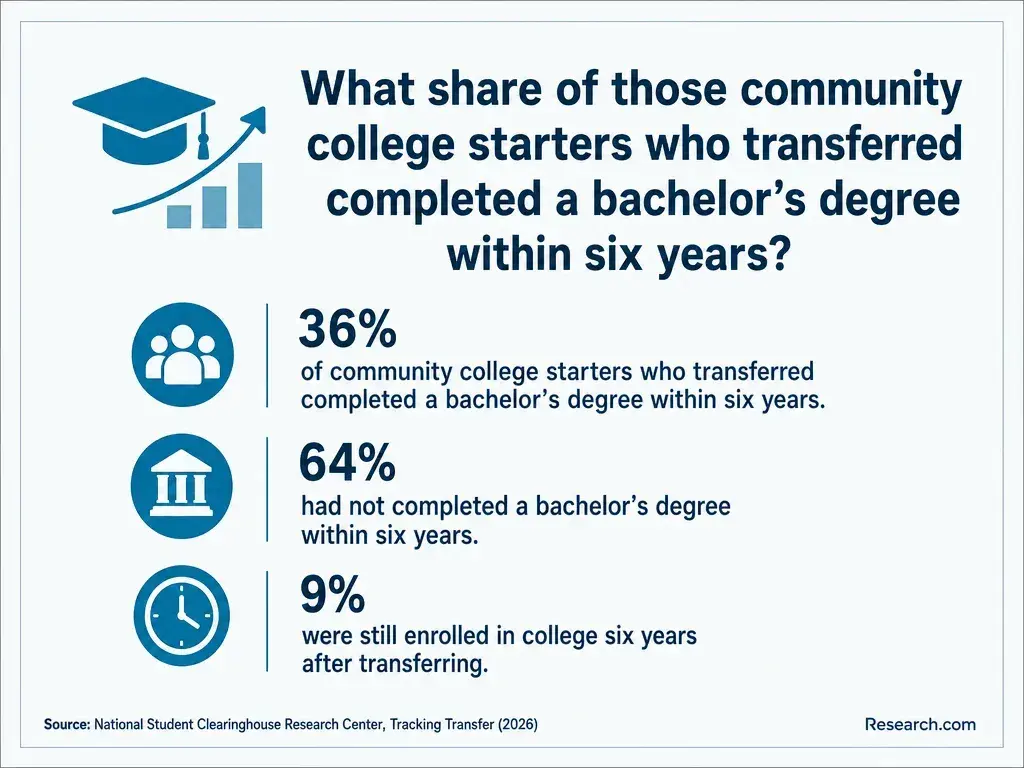
Requirements vary by institution and by whether you apply as a first-year, transfer, or returning student. Schools commonly request prior academic transcripts; some also set GPA standards or require preparation in mathematics or other subjects. Admission to a university, admission to its business major, and application of transfer credits toward that major are separate decisions.
If you have college coursework, request an official evaluation showing which credits satisfy general education, business-core, elective, and residency requirements. An accepted course may count only as a general elective. If you have not studied recently, ask whether introductory accounting, algebra, or statistics must be completed before upper-level courses and what academic support is available.
Gather transcripts before comparing completion estimates. The school - not a general guide - has final authority over admission and credit applicability; credit and eligibility rules for business administration admission can help you prepare questions for its admissions and transfer offices.
Completion time depends mainly on credits that apply to the degree, required-course sequencing, and how many courses you can sustain alongside work. An accelerated calendar may shorten elapsed time without reducing coursework. A part-time plan may protect your income and performance at work but extend the period over which you pay fees.
Compare each school's written degree audit and cost estimate using the same enrollment pace. Include tuition for remaining courses, mandatory fees, books and software, possible proctoring or travel charges, and any reduction in work hours. Ask whether your employer offers education assistance, which courses qualify, when reimbursement arrives, and whether repayment conditions apply.
Financial aid eligibility depends on the school, program, and your circumstances; submitting the FAFSA is a way to learn what federal aid you may qualify for, not a guarantee of funding. When comparing FAFSA-accepting colleges for business administration students, focus on your estimated remaining cost after the school evaluates your credits - not the advertised tuition alone.
First, confirm that the institution holds recognized accreditation and that the online BS in business administration is offered by that institution. Check the institution's current accreditation information against the accreditor's own directory and ask the school about any status or policy changes affecting your enrollment term.
Then check any business-specific claim separately. AACSB, ACBSP, and IACBE accredit within stated scopes; a school's claim does not establish that every business degree or location is covered. Ask which accreditor covers the business unit or program and confirm the scope with the accreditor. Business-specific accreditation can be a useful comparison factor, but it is not proof of job placement or a substitute for reviewing courses and student support.
An application-fee waiver says nothing about academic recognition. If you are considering online college options without an application fee, apply the same accreditation checks before sending transcripts or paying tuition.
There is no single "business administration graduate salary" or reliable national wage figure for every merchandising assistant career path. Pay depends on the occupation, employer, location, responsibilities, and experience. Use occupation-wide data to understand a possible destination - not to predict your first salary after graduation.
For example, the U.S. Bureau of Labor Statistics reports a May 2025 median annual wage of $78,760 for market research analysts. That occupation can be relevant to someone moving toward customer or product analysis, but its median includes workers at different experience levels and is not a merchandising-assistant starting wage. Retail buying and allocation jobs may also differ substantially from market research analyst roles.
To judge the degree's financial value, compare pay ranges in actual local postings for your target job with your current compensation and the cost of finishing. Note which postings require a bachelor's degree and which prioritize tools or relevant experience. Business administration programs for advancement while working can help you frame school comparisons, but a program cannot promise a promotion or salary increase.
Do merchandising assistants need certifications or licenses to advance?
Most merchandising, buying-support, and allocation roles do not have a general occupational license. Employers may instead value competence with their reporting systems, spreadsheets, inventory processes, and vendor workflows. A software certificate or industry credential can demonstrate focused learning, but it does not replace a required bachelor's degree or prove you have managed an assortment.
Choose a credential only after checking the jobs you want. If postings repeatedly request a particular tool, targeted training and a work sample may be the quickest response. If they consistently require a bachelor's degree, compare the full degree's cost and schedule with fast-track bachelor's degree options; faster study is worthwhile only if you can complete it while meeting work and course obligations. For either path, ask for opportunities to demonstrate sound decisions with data you are authorized to use.
Other Things You Should Know About Business Administration
Possibly, if a school offers a prior-learning assessment and your experience meets its documented standards. Employment alone does not award credit. Ask what evidence is required, what fees apply, and whether any awarded credit satisfies a degree requirement.
Only with appropriate employer permission and within the school's project rules. Otherwise, use public or simulated data. Remove confidential prices, customer information, and other restricted details from anything you share or place in a portfolio.
Describe the decisions you supported, the tools you used, and the reports or processes you handled. Be precise about your contribution; do not claim ownership of a forecast or sales result that belonged to a team.
That depends on the institution's diploma and transcript policies. Ask the registrar how the degree title and delivery format appear on official records before enrolling if the distinction matters to you.
- Employer-offered educational assistance programs can help pay for college | Internal Revenue Service https://www.irs.gov/newsroom/employer-offered-educational-assistance-programs-can-help-pay-for-college
- Types of Financial Aid: Grants, Work-Study, and Loans | studentaid.gov https://studentaid.gov/understand-aid/types
- Can Work Experience Count Toward a College Degree? | Whitworth Online https://online.whitworth.edu/news-articles/can-work-experience-count-toward-a-college-degree/
- Opportunities With a Business Administration Degree | Saint Mary's University of Minnesota https://www.smumn.edu/blog/what-doors-can-a-business-administration-degree-open/
- A list of fashion industry jobs you didn't know existed (and how to get them) | Harvard FAS https://careerservices.fas.harvard.edu/blog/2022/09/16/a-list-of-fashion-industry-jobs-you-didnt-know-existed-and-how-to-get-them-2/
- Earn College Credit for Your Experience | SUNY Empire https://sunyempire.edu/academics/get-credits/index.html
- Types of Business Degrees: Your Complete Guide | UWA Online https://online.uwa.edu/news/types-business-degrees/
- How Long Does It Take to Get a Bachelor's Degree Online? | Southeast Missouri State University https://semo.edu/blog/blog-posts/how-long-does-it-take-bachelors-degree-online
- Careers in Retail Merchandising | Texas Woman's University https://twu.edu/fashion/career-outlook/careers-in-retail-merchandising/
- 8 Types of Business Degrees & Specializations | Bellevue University https://www.bellevue.edu/articles/types-of-business-degrees/