2027 How to Choose an Online Christian Ministry Doctorate Program: Accreditation, Cost, Format, and Career Fit

Co-Founder and Chief Data Scientist
Online Christian Ministry doctorates can look similar on the surface, but accreditation, total cost, and format can change the value of the degree dramatically. NCES reported in 2024 that more than 3 million US students were enrolled in postbaccalaureate education, which means adult learners have many graduate options competing for their time and money.
This guide is for pastors, ministry leaders, chaplains, educators, and counseling-adjacent professionals comparing online doctorate programs. You will learn how to verify accreditation, estimate real costs, compare formats, and choose a program that fits your ministry goals.
Key Things to Know About Choosing Christian Ministry Doctorate Programs
- Most practice-focused online Christian Ministry doctorates, especially Doctor of Ministry programs, commonly require about 30 to 36 graduate credits and take roughly 3 to 5 years, so a shorter timeline is not automatically better.
- Accreditation should be verified through recognized sources, not marketing language; there is no single national 2024 public accreditation-rate benchmark for online Christian Ministry doctorates, so students must check each school individually.
- A practical tuition-only estimate often starts with per-credit pricing: at $500 to $900 per credit, a 30-credit to 36-credit doctorate can place base tuition roughly between $15,000 and $32,400 before fees, travel, books, and project costs.
What criteria should you use to assess an online Christian Ministry doctorate program?
The best way to assess an online Christian Ministry doctorate is to treat it as both an academic decision and a ministry investment. A strong program should be credible, affordable, manageable, and clearly connected to the kind of leadership, teaching, pastoral care, chaplaincy, or nonprofit work you want to do.
Use the following comparison areas to build a shortlist before you speak with admissions. The goal is not to find the program with the most attractive slogan, but the one with the strongest evidence of fit.
| Criterion | What it tells you | Why it matters |
| Institutional accreditation | Whether the school is recognized by an accreditor accepted by US education authorities | It can affect transfer credit, federal aid eligibility, employer acceptance, and academic credibility |
| Theological or ministry-specific recognition | Whether the school has specialized review connected to theological education | It may matter for ministry employers, denominational roles, chaplaincy settings, or later teaching |
| Degree type | Whether the program is a DMin, PhD, ThD, EdD, or ministry-focused professional doctorate | Different doctorates serve different goals: applied ministry leadership, research, teaching, or organizational development |
| Curriculum and project model | Whether courses build toward a dissertation, applied ministry project, portfolio, or capstone | The final requirement should support your intended ministry context rather than distract from it |
| Delivery format | Whether courses are asynchronous, synchronous, cohort-based, hybrid, or residency-based | Format determines how easily the program fits work, family, church duties, and travel limits |
| Total cost | Tuition plus fees, residency expenses, books, technology, continuation fees, and project costs | The advertised per-credit price often understates the real cost of finishing |
| Faculty fit | Whether faculty have expertise in your area, such as preaching, leadership, pastoral care, missions, chaplaincy, or counseling ministry | Your advisor and committee can strongly affect the quality and feasibility of your doctoral project |
After you review those factors, narrow your list using a simple sequence. This prevents a common mistake: falling in love with a program's theme before confirming whether it is credible, affordable, and realistic.
- Confirm the institution's accreditation status through recognized databases before reviewing marketing claims.
- Identify the exact degree type and ask whether the final requirement is a research dissertation, applied ministry project, portfolio, or capstone.
- Calculate tuition and required fees for the full program, not just the first term.
- Map required live sessions, residencies, intensives, and deadlines against your weekly ministry and family schedule.
- Compare the curriculum with your target role and remove programs that do not support that path.
AI comparison tools can help you organize tuition, credits, and format details from program pages, but they should not replace verification. Always check the current catalog, accreditation database, financial aid office, and program handbook before relying on any summary.
How do you check if an online Christian Ministry doctorate program is accredited?
Accreditation is the first filter because it affects whether the degree is likely to be respected by employers, other schools, federal aid systems, and some denominational or chaplaincy organizations. In the US, you should focus on institutional accreditation from a recognized accreditor and, when relevant, specialized theological accreditation.
The practical problem is that accreditation language can be confusing. Schools may say they are "approved," "authorized," "recognized," "licensed," or "affiliated," but those words do not always mean the same thing as accreditation from a recognized agency.
Follow this verification process before applying or paying an enrollment deposit. These steps are especially important for online doctoral programs because diploma-mill-style marketing often targets adult learners looking for flexible religious degrees.
- Find the school's legal name in the academic catalog, not just the brand name used on the admissions page.
- Search the US Department of Education's Database of Accredited Postsecondary Institutions and Programs for that exact institution.
- Check the Council for Higher Education Accreditation database to see whether the accreditor is recognized in the higher education community.
- Open the accreditor's own institution directory and confirm the school's current status, branch campuses, distance education approval, and any public sanctions.
- Ask admissions to identify the accreditor, the date of the last review, the next review cycle, and whether the online doctorate is included under the institution's scope.
- Save screenshots or PDFs of the accreditation pages for your records before enrolling.
Be cautious if a school lists only state authorization, church recognition, international affiliation, or membership in a professional association. Those may have value in some contexts, but they are not substitutes for recognized institutional accreditation when you need academic portability or federal financial aid eligibility.
What programmatic accreditations matter most for an online Christian Ministry doctorate?
Programmatic accreditation is more specialized than institutional accreditation. For Christian Ministry doctorates, the most relevant question is whether the school or program has theological education recognition that aligns with your goals, especially if you are seeking a Doctor of Ministry, seminary teaching role, chaplaincy advancement, or denominational credentialing.
The table below summarizes the types of accreditation and recognition you are most likely to encounter. Use it to understand what each signal means, but remember that requirements vary by employer, denomination, and school.
| Accreditation or recognition type | Common relevance to Christian Ministry doctorates | How to interpret it |
| Institutional accreditation | Applies to the college, university, or seminary as a whole | This is the baseline credibility check and is usually the most important factor for aid, transfer, and recognition |
| Association of Theological Schools accreditation | Commonly associated with seminaries and graduate theological education, including many DMin programs | It can be especially relevant for students who want a seminary-based doctoral experience or future theological education roles |
| Association for Biblical Higher Education accreditation | Often connected to Bible colleges and ministry-centered institutions | It may be relevant when a school's mission is closely tied to biblical studies, ministry preparation, or Christian higher education |
| Transnational Association of Christian Colleges and Schools accreditation | Often appears among faith-based institutions with Christian mission statements | It can support institutional legitimacy when recognized, but students should still verify doctoral scope and employer acceptance |
| Denominational approval | May affect ordination, appointment, promotion, or ministry standing within a tradition | It can be important for church roles but should not be confused with academic accreditation |
A DMin applicant should pay particular attention to whether the program is designed for advanced ministry practice rather than general religious studies. A PhD or ThD applicant should look more closely at research expectations, language requirements, methodology training, and faculty publication activity.
If your ministry focus overlaps with family systems, pastoral counseling, or congregational care, compare doctoral ministry options with adjacent graduate pathways as well. For example, students whose long-term goal is clinical family therapy may need licensure-focused preparation through the best online MFT programs rather than a ministry doctorate alone.
To assess cost, start with the total price to finish, not the tuition rate on the first admissions page. Online Christian Ministry doctorates often look affordable because they are part-time, but fees, residencies, continuation enrollment, and project expenses can change the final budget.
A useful current planning benchmark is to calculate tuition from the credit requirement. Many online ministry doctorates publish per-credit tuition that falls in the mid-hundreds to upper-hundreds range, so students commonly model tuition with a $500 to $900 per-credit range before adding fees.
- 30 credits at $500 per credit: $15,000 before required fees and other expenses
- 30 credits at $900 per credit: $27,000 before required fees and other expenses
- 36 credits at $500 per credit: $18,000 before required fees and other expenses
- 36 credits at $900 per credit: $32,400 before required fees and other expenses
That range is not a promise of what any specific school will charge; it is a practical screening tool. If a program falls far below the range, investigate accreditation and degree legitimacy carefully. If it falls far above the range, ask what additional value you are receiving, such as intensive mentoring, specialized faculty, strong alumni networks, or embedded residencies.
Use the following cost categories to compare programs side by side. This table helps you avoid the mistake of comparing one school's tuition-only number with another school's full program estimate.
| Cost component | Where it usually appears | Why it can change the final price |
| Tuition | Per credit, per term, subscription period, or full program | This is usually the largest cost, but it may not include fees or continuation enrollment |
| Technology or online learning fee | Per course, per term, or per credit | Small recurring fees can add up across a multi-year doctorate |
| Residency or intensive expenses | Travel, lodging, meals, local transportation, and campus fees | A "mostly online" doctorate can still require several in-person visits |
| Books and research tools | Course syllabi, library requirements, software, and style guides | Doctoral-level reading and research can be more expensive than expected |
| Continuation or project enrollment | After coursework, during dissertation or ministry project completion | Students who take longer than planned may pay additional terms |
| Graduation and document fees | Final term or completion process | These are usually smaller but should still be included in the completion budget |
Financial aid depends on the institution and your enrollment status. Under current Federal Student Aid rules, eligible graduate students at eligible US schools may borrow up to $20,500 per year in Direct Unsubsidized Loans, but borrowing should be weighed carefully against your ministry income, employer support, and personal budget.
Cost comparisons can also be useful if you are deciding between a ministry doctorate and a counseling doctorate. Readers comparing doctoral price structures across helping professions may find the cheapest online PhD in counseling helpful as a separate benchmark, although counseling doctorates and ministry doctorates serve different professional purposes.
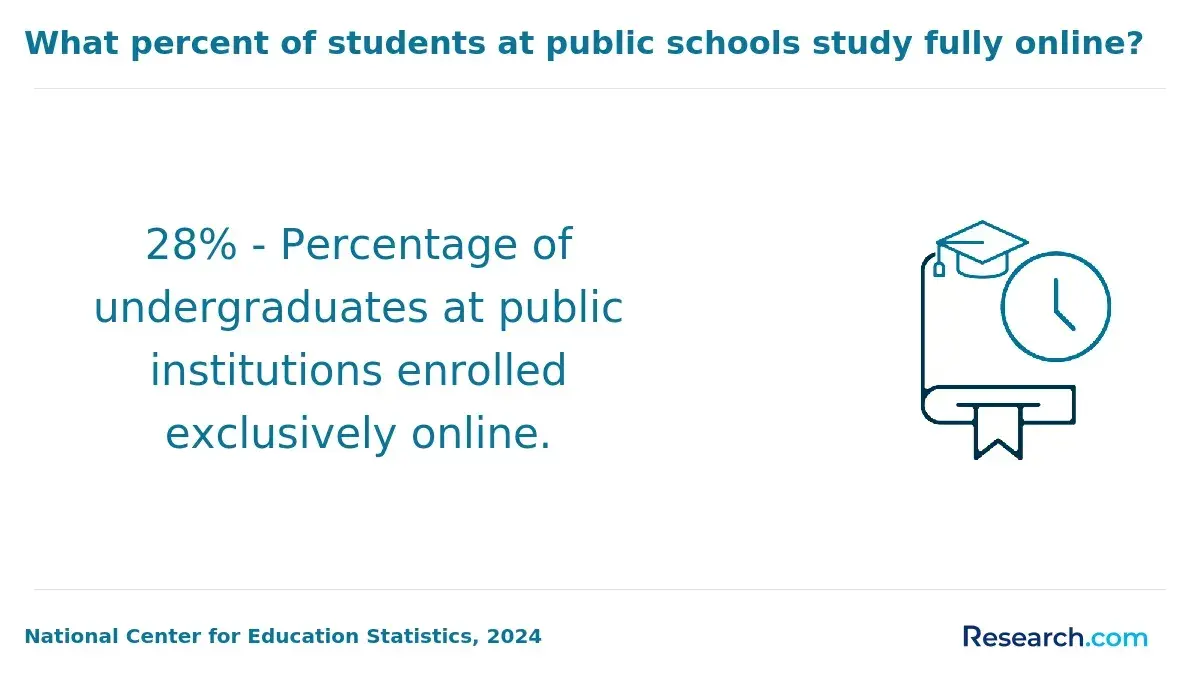
Online Christian Ministry doctorates are not all delivered the same way. Some are fully asynchronous, some require live evening classes, and many ministry doctorates use short residencies or cohort intensives to build community and support applied ministry projects.
The table below compares common formats and the kind of student each one tends to serve best. Use it to match program structure with your actual week, not your ideal week.
| Format | How it usually works | Best fit | Potential drawback |
| Fully asynchronous online | Students complete weekly readings, discussions, lectures, and assignments without required live class meetings | Pastors, chaplains, missionaries, and ministry leaders with unpredictable schedules | Requires strong self-discipline and may feel less relational |
| Synchronous online | Students attend scheduled live video sessions | Learners who want real-time discussion, faculty access, and cohort accountability | Less flexible for students with evening ministry, caregiving duties, or time-zone conflicts |
| Hybrid or low-residency | Most work is online, but students attend campus intensives or retreats | Students who value face-to-face mentoring and can plan travel | Travel costs and time away from ministry can be significant |
| Cohort-based | Students move through courses with the same group | Learners who want peer support, structured pacing, and ministry networking | Less room to slow down or customize course timing |
| Independent or project-heavy | Students complete guided research, ministry assessment, and project work with faculty supervision | Experienced leaders with a clear ministry problem to study | Can become isolating if advising is weak |
Current online delivery trends favor more flexible learning management systems, recorded lectures, virtual advising, and digital library access. At the same time, many seminaries still preserve residencies because spiritual formation, preaching labs, peer reflection, and ministry project design can benefit from live interaction.
If you are comparing formats across fields, it can help to look at how other online graduate programs structure speed and scheduling. For example, accelerated mental health counseling programs online show how intensive pacing can help some learners finish faster, while also increasing weekly workload.
Pacing determines whether a program is sustainable. Many online Christian Ministry doctorate students are already leading churches, nonprofits, chaplaincy programs, schools, or community ministries, so the question is not only "How fast can I finish?" but "Can I finish without damaging my work, health, or family life?"
A common planning range for a practice-focused online ministry doctorate is about 3 to 5 years. Programs that advertise very fast completion should be reviewed carefully, especially if they require a serious doctoral project, ministry research, field assessment, or dissertation-level writing.
Before enrolling, compare the pacing model with your real capacity. These questions help you test whether the timeline is manageable.
- How many courses will I take in a normal term, and how many hours per week does each course usually require?
- Can I pause or reduce course load during high-demand ministry seasons, such as Advent, Lent, Easter, summer camps, or annual conferences?
- Does the school require continuous enrollment during the doctoral project phase?
- What happens if my ministry context changes and I need to redesign my project?
- Are courses offered every term, or could one missed course delay graduation by a year?
- Is there a maximum time limit for completion, and what is the reinstatement process if I exceed it?
Flexible pacing makes sense if your ministry calendar is unpredictable or your employer cannot guarantee study time. A lockstep cohort may make more sense if you need external structure, scheduled deadlines, and peer accountability to stay on track.
The core curriculum should show how the doctorate develops advanced ministry judgment, not just how it adds more Bible or theology courses. A strong Christian Ministry doctorate normally combines theological reflection, research methods, leadership practice, contextual analysis, and a final applied project or dissertation.
Review the curriculum before applying and ask how each course supports the final outcome. The following elements are especially important because they indicate whether the program is rigorous, practical, and connected to real ministry problems.
- Theological and biblical integration: Courses should help you connect Scripture, doctrine, church history, ethics, and ministry practice in a mature way.
- Research methods: The program should teach qualitative, quantitative, or mixed methods appropriate for ministry settings, not simply require a project without preparation.
- Contextual ministry analysis: Look for training in congregational assessment, community demographics, organizational culture, and practical theology.
- Leadership formation: Strong programs address change management, conflict, spiritual formation, preaching, discipleship, pastoral care, or nonprofit leadership.
- Project design and evaluation: The curriculum should prepare you to define a ministry problem, design an intervention, assess outcomes, and write clearly about the results.
- Ethics and human subjects review: If your project involves interviews, surveys, counseling-ministry activities, or congregational data, the school should explain research ethics and review procedures.
Specializations can be valuable when they match your target role. Common areas include preaching, pastoral leadership, church revitalization, missions, spiritual formation, chaplaincy, pastoral care, Christian education, and counseling ministry.
Do not assume a ministry doctorate qualifies you for licensed counseling work. If your goal is professional counseling licensure rather than pastoral care or church-based support, compare requirements for online masters programs for counseling, because licensure-focused counseling degrees have different accreditation, practicum, and state board expectations.
A Christian Ministry doctorate is usually the right investment when it strengthens work you are already doing or clearly prepares you for a defined next step. It is less likely to pay off if you choose it mainly for the title, without a role, employer, denomination, or ministry problem in mind.
Start by identifying the outcome you want. A DMin is usually practice-focused and often fits experienced pastors, ministry executives, chaplains, and nonprofit leaders. A PhD or ThD is usually more research-focused and may be better for those aiming at scholarship, publishing, or academic teaching, though faculty roles often require additional qualifications and are highly competitive.
Use this career-fit checklist before applying. It helps connect the program to a realistic goal instead of a vague desire for advancement.
- Write down the exact role you want after graduation, such as senior pastor, executive pastor, chaplain supervisor, seminary instructor, denominational leader, nonprofit director, or ministry consultant.
- Check job postings, denominational guidelines, chaplaincy requirements, and employer promotion policies to see whether a doctorate is preferred, required, or simply optional.
- Ask whether the degree type matters; some roles may value a DMin, while others may prefer a PhD, ThD, counseling credential, or administrative doctorate.
- Match your intended role to faculty expertise and specialization options, not just the degree title.
- Estimate the nonfinancial return, including better leadership capacity, stronger preaching, improved organizational health, or deeper pastoral care skills.
- Compare the total cost with expected support from your employer, denomination, scholarships, personal funds, or responsible borrowing.
Use salary data carefully. The US Bureau of Labor Statistics' occupational data for clergy and related religious workers does not isolate doctorate holders, and many ministry roles are shaped by denomination, church size, region, housing benefits, and nonprofit funding. In other words, a doctorate may support advancement in some settings, but it should not be treated as a guaranteed income increase.
If your long-term goal combines ministry with mental health services, clarify whether you need a ministry doctorate, a counseling degree, or both. Clinical counseling routes have different licensure expectations, so compare them separately from pastoral and theological doctorates.
What red flags should I watch out for in an online Christian Ministry doctorate program?
Red flags do not always mean a program is fraudulent, but they do mean you should slow down and verify. The risk is highest when a school uses urgent sales tactics, vague accreditation claims, unusually fast timelines, or unclear project requirements.
The table below contrasts warning signs with stronger indicators of credibility. Use it as a final screen before you apply, pay a deposit, or submit financial aid paperwork.
| Red flag | Stronger sign | Why it matters |
| The school says it is "fully accredited" but does not name the accreditor clearly | The catalog names the accreditor, status, scope, and review information | Accreditation should be verifiable, not implied |
| The program promises a doctorate in an unusually short time with little coursework | The timeline matches the credit load, project expectations, and advising model | Doctoral work should require sustained research, reflection, and writing |
| Admissions pressures you to enroll before answering cost or accreditation questions | Admissions provides written answers and refers you to the catalog and financial aid office | Transparent schools do not need high-pressure tactics |
| Faculty credentials are missing or unrelated to ministry, theology, leadership, or research | Faculty bios show earned doctorates, ministry experience, scholarship, or relevant leadership work | Doctoral mentorship depends heavily on faculty expertise |
| The final project requirements are vague | The handbook explains proposal, research ethics, committee review, defense, and completion milestones | Unclear requirements can delay graduation and increase cost |
| The school claims the degree automatically qualifies graduates for counseling licensure, ordination, or chaplaincy certification | The school explains that external requirements vary by state, denomination, employer, or certifying body | No program should overpromise outcomes controlled by outside organizations |
Common selection mistakes are usually preventable. Pay special attention to these issues if a program looks convenient or inexpensive.
- Choosing based on the word "online" without checking live class times, residencies, and required campus visits.
- Assuming a well-known religious brand automatically has the right accreditation for your goal.
- Ignoring the final project model until after coursework begins.
- Failing to ask whether faculty can supervise your specific ministry topic.
- Borrowing for the full program without testing whether your expected ministry role justifies the debt.
A credible program should welcome detailed questions. If you cannot get clear answers about accreditation, cost, format, curriculum, faculty, and completion requirements, keep looking.
Other Things You Should Know About Christian Ministry
Usually, yes. Many DMin programs require an MDiv or a related master's degree, while some professional doctorates may accept other graduate preparation. Always check whether your prior degree meets the school's admissions and prerequisite requirements.
No. A DMin is generally a professional doctorate focused on advanced ministry practice, while a PhD is generally research-focused and designed around original scholarship. The better choice depends on whether your goal is ministry leadership, academic research, teaching, or publishing.
Sometimes, but doctoral transfer policies are often limited. Schools may restrict the number of credits, require recent coursework, or refuse transfer credit for project, dissertation, or residency requirements.
Yes, if your future role depends on ordination, appointment, chaplaincy endorsement, or promotion within a specific tradition. Ask your denomination or employer whether they recognize the school, degree type, and theological orientation before enrolling.
- Comparing Doctor of Ministry Programs https://www.southuniversity.edu/news-and-blogs/2023/09/comparing-dmin-programs
- Online Doctor of Ministry (D.Min.) Program | Northeastern Seminary https://www.nes.edu/doctorofministry
- Is Online Seminary School Right for You? What to Consider - Calvin Theological Seminary https://calvinseminary.edu/resources/is-online-seminary-school-right-for-you-what-to-consider/
- The Doctor of Ministry | Virginia Theological Seminary https://vts.edu/admissions-academics/degrees/the-doctor-of-ministry/
- Doctor of Ministry https://divinity.howard.edu/academics/degree-programs/doctor-ministry
- Doctorate Application | Pentecostal Online Seminary https://www.bcc.edu/doctorate-application
- Career Paths with a Degree in Theology or Ministry https://apcbiblecollege.org/career-paths-with-a-degree-in-theology-or-ministry
- Servants University | Training Servants for Christ https://www.servantsuniversity.com/austin-bible-university-home/
- Effects of Synchronous vs. Asynchronous Learning on ... https://ajpojournals.org/journals/AJODL/article/download/2321/3009/8772
- Accreditation - ISOM Online https://isomonline.org/accreditation/