2027 Highest-Paying Jobs with a Health Services Doctorate: Salaries, Career Paths, and Growth Outlook

Co-Founder and Chief Data Scientist
A Health Services doctorate can be a major investment, so the real question is whether it leads to leadership, research, policy, or analytics roles that pay enough to justify the time and cost. The U. S. Bureau of Labor Statistics reports that medical and health services managers had a median wage of $117,960 in May 2024 and projected 29% job growth from 2023 to 2033. This guide is for professionals comparing doctorate pathways, specializations, and salary outcomes so they can decide whether the degree fits their advancement goals.
Key Things to Know About High-Paying Jobs in Health Services
- Top-paying Health Services doctorate pathways usually cluster around executive healthcare administration, population health analytics, health informatics leadership, health policy, academic leadership, and clinical research administration.
- BLS data shows strong demand in adjacent roles: medical and health services managers are projected to grow 29% from 2023 to 2033, much faster than the average for all occupations.
- The doctorate alone is rarely the salary driver; the highest compensation usually comes when doctoral training is paired with management experience, data fluency, regulatory expertise, and measurable impact on quality, cost, access, or outcomes.
Is there high demand for Health Services doctorate graduates?
Yes, there is strong demand for doctoral-level health services expertise, especially in roles that sit at the intersection of healthcare delivery, finance, policy, technology, and outcomes improvement.
A Health Services doctorate may appear under several names, including Doctor of Health Administration, Doctor of Health Science, Doctor of Public Health, PhD in Health Services Research, or related applied doctoral programs. These degrees are valued when employers need people who can interpret evidence, lead complex systems, evaluate programs, and make high-stakes decisions.
The strongest demand is not simply for "doctorate holders." It is for candidates who can use doctoral-level research and leadership training to solve business and public health problems.
BLS projects 29% growth for medical and health services managers from 2023 to 2033, reflecting the continued expansion of healthcare organizations, aging-related service demand, and the need for leaders who can manage quality, staffing, reimbursement, compliance, and technology transformation.
For readers deciding whether to pursue the degree, the key is to match the doctorate to an identifiable labor-market need.
A doctorate is more likely to support salary growth if you are already moving toward roles such as hospital executive, health system strategy director, quality and patient safety leader, health informatics executive, population health director, policy researcher, or faculty member in a health professions program.
Several trends are shaping demand for advanced Health Services graduates:
- Health systems are using AI, predictive analytics, and automation more heavily, increasing demand for leaders who understand both patient-care operations and data governance.
- Value-based care models continue to reward organizations that can measure outcomes, reduce avoidable utilization, and improve quality, making outcomes research and implementation science more valuable.
- Employers are becoming more skills-based, which means a doctorate helps most when it documents applied competencies such as analytics, budgeting, policy evaluation, quality improvement, and strategic leadership.
- Academic health centers, universities, and research organizations need faculty and principal-investigator-level professionals who can teach, publish, secure funding, and supervise applied research.
If your goal is administrative leadership but you are not ready for a doctorate, a masters in healthcare administration may be a more efficient first step. The doctorate tends to make more sense after you have enough healthcare experience to convert advanced training into executive responsibility.
Which Health Services doctorate specializations lead to high-paying roles?
The highest-paying specializations are usually those that connect directly to revenue, risk, compliance, growth, quality, or measurable outcomes. Broad Health Services training can be useful, but niche expertise often gives candidates a clearer salary story when applying for executive, research, consulting, or academic roles.
The table below compares common doctoral specializations with the high-paying roles they most often support. Use it to identify which concentration aligns with the kind of work you want to do after graduation.
| Specialization | High-paying roles it can support | Why employers value it |
| Healthcare administration and leadership | Chief operating officer, hospital administrator, service line executive, regional operations director | Connects strategy, staffing, finance, compliance, and patient-care operations. |
| Health informatics and data analytics | Chief health information officer, analytics director, clinical informatics leader, data governance executive | Helps organizations use data, AI tools, electronic health records, and interoperability systems responsibly. |
| Population health and outcomes research | Population health director, outcomes research scientist, value-based care strategist | Supports cost control, care coordination, quality measurement, and chronic disease management. |
| Health policy and management | Policy director, government health program leader, advocacy executive, healthcare consultant | Builds expertise in regulation, payment models, access, equity, and program evaluation. |
| Quality improvement and patient safety | Chief quality officer, patient safety director, accreditation leader | Directly affects risk reduction, safety outcomes, reimbursement quality measures, and organizational reputation. |
| Academic and research leadership | Professor, research center director, doctoral program director, grant-funded investigator | Supports teaching, publication, grant activity, curriculum leadership, and research supervision. |
The strongest choice depends on your current background. For example, a nurse leader, allied health director, or healthcare administrator may benefit most from executive leadership or quality improvement.
A health information manager may see stronger salary leverage from informatics, data governance, privacy, or analytics, especially if they can connect the doctorate to measurable technology and compliance outcomes.
If cost is a major constraint, compare doctoral plans against lower-cost undergraduate or graduate options first. Some professionals use a cheapest online healthcare administration degree pathway earlier in their education before pursuing a doctorate later, when their employer, salary level, or promotion path makes the investment easier to justify.
How competitive are the applications for high-paying Health Services jobs?
Applications for high-paying Health Services jobs can be highly competitive because many senior roles attract candidates with advanced degrees, clinical credentials, management experience, and strong professional networks. A doctorate can help you stand out, but it does not replace the need for a track record of leading teams, managing budgets, improving outcomes, or producing credible research.
The competitiveness also varies by role. Executive healthcare jobs are often filled through internal promotion, retained search firms, or network-driven recruiting.
Faculty and research jobs are competitive because hiring committees look for publications, teaching experience, grants, and methodological fit. Consulting and analytics roles may prioritize demonstrated results more than the degree title itself.
Use the table below to understand how employers typically screen candidates for higher-paying roles. It shows why some doctorate holders advance quickly while others struggle to convert the credential into a salary jump.
| Role category | Typical competition level | What makes an applicant stronger |
| Hospital or health system executive | High | Progressive leadership experience, budget responsibility, operational metrics, board-facing communication. |
| Health informatics or analytics leader | High | Data strategy experience, EHR knowledge, privacy awareness, AI governance, measurable technology outcomes. |
| Quality and patient safety executive | Moderate to high | Accreditation experience, quality improvement portfolio, risk reduction results, interdisciplinary leadership. |
| Policy or program evaluation leader | Moderate | Policy analysis, statistical methods, stakeholder management, government or nonprofit program experience. |
| Professor or academic researcher | High | Peer-reviewed publications, teaching record, research agenda, grants, doctoral mentorship potential. |
A practical way to test competitiveness before enrolling is to analyze job postings for your target title. Look for repeated requirements, such as "doctoral degree preferred," "10 years of healthcare leadership," "experience with value-based care," or "record of funded research." If postings rarely mention a doctorate but repeatedly request finance, analytics, or operations experience, you may need to build those skills before or during the program.
Common mistakes that weaken candidates include assuming the doctorate alone will move them into executive roles, choosing a broad dissertation topic with no market relevance, waiting until graduation to network, and targeting senior titles without evidence of leadership impact.
To avoid these mistakes, start building a portfolio while enrolled: publish or present applied research, lead a measurable workplace improvement project, join professional associations, and connect coursework to problems your employer already cares about.
There is no single national salary figure for "Health Services doctorate holders" because graduates work in administration, academia, research, informatics, policy, consulting, and public health. The better approach is to compare salaries for roles where a doctorate is common, preferred, or useful for advancement.
BLS May 2024 data gives a useful baseline: medical and health services managers had a median annual wage of $117,960, while postsecondary health specialties teachers had a median wage of $105,650. These figures do not isolate doctorate holders, but they show the earnings range for two major pathways where advanced health services education can be relevant.
The table below summarizes salary context for common Health Services doctorate outcomes. Treat these as role-based benchmarks rather than guaranteed results for any individual graduate.
| Career pathway | Relevant salary benchmark | How to interpret it |
| Healthcare administration leadership | Medical and health services managers: $117,960 median annual wage | Doctorate holders may move above the median when they manage large departments, multiple sites, or strategic initiatives. |
| Academic health professions teaching | Postsecondary health specialties teachers: $105,650 median annual wage | Pay varies widely by institution, discipline, tenure status, research expectations, and clinical specialty. |
| Medical and health research | Medical scientists: $100,590 median annual wage | Doctoral training is often central, but pay depends on funding, sector, methods expertise, and leadership level. |
| Public health and epidemiology | Epidemiologists: $83,980 median annual wage | Doctorate holders may pursue senior research, policy, or supervisory roles, but government pay scales can cap compensation. |
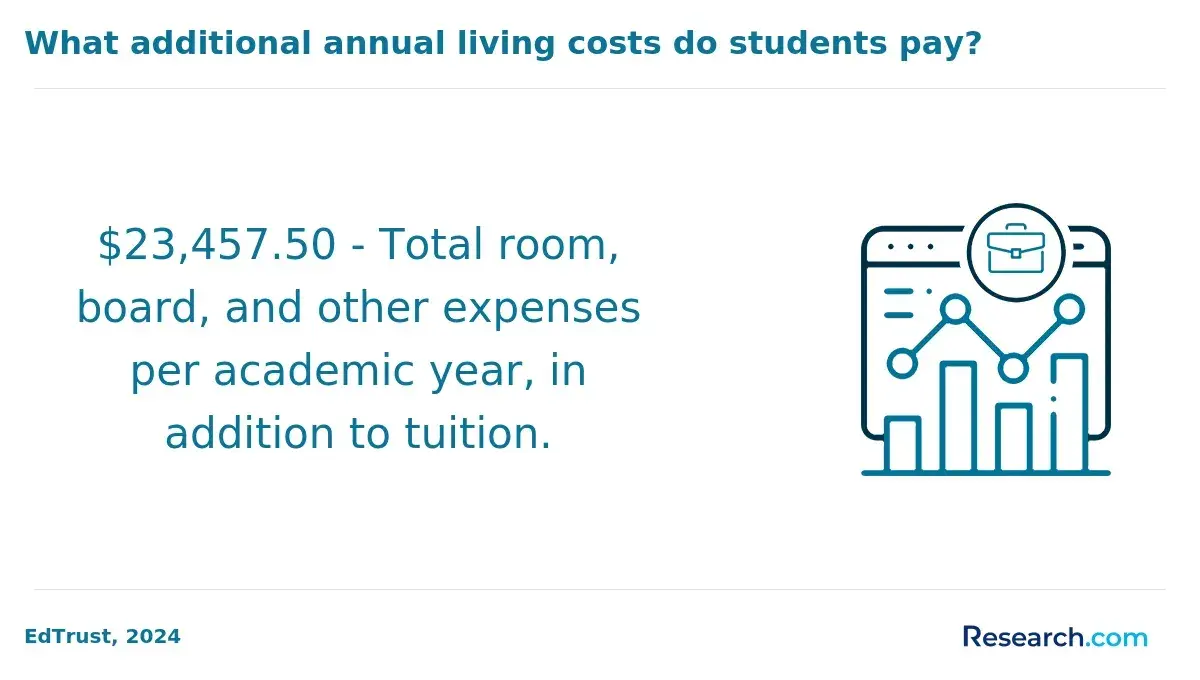
Cost matters just as much as salary. NCES data released through its 2024 reporting shows average graduate tuition and required fees of about $12,596 at public institutions and $29,931 at private nonprofit institutions for the 2022-23 academic year.
These figures are not specific to Health Services doctorates and do not include every living, travel, residency, technology, or dissertation cost, but they provide a planning baseline. To judge whether the doctorate is financially sensible, compare the full cost of attendance with the salary difference between your current role and your realistic target role.
A doctorate may be worth it if it positions you for a promotion, faculty appointment, executive track, or consulting niche that you could not access otherwise. It may be less efficient if your target role values experience, licensure, or a master's degree more than doctoral training.
Professionals focused on faster completion should also compare program length and opportunity cost. Some learners explore accelerated healthcare programs before committing to a longer doctoral route, especially when the immediate goal is administrative advancement rather than research leadership.
The highest-paying jobs for Health Services doctorate holders are typically senior roles where the degree complements substantial experience. These jobs require more than academic knowledge; they demand leadership judgment, financial literacy, regulatory understanding, and the ability to improve health system performance.
The table below highlights high-paying roles that may align with a Health Services doctorate. Salary benchmarks are based on closely related BLS occupational categories or common U.S. labor-market salary patterns where official doctorate-specific wages are not separately reported.
| Job title | Typical fit for Health Services doctorate holders | Relevant salary context |
| Chief executive or senior health system executive | Best for experienced leaders moving into enterprise strategy, operations, or multi-site management. | BLS reports top executives had a median annual wage of $103,780 in May 2024; healthcare executives in large systems may earn more depending on scope. |
| Medical and health services manager | Fits doctorate holders leading hospitals, clinics, departments, service lines, or integrated delivery operations. | Median annual wage was $117,960 in May 2024, with higher pay tied to larger organizations and senior authority. |
| Chief quality officer or patient safety executive | Fits professionals with doctoral training in quality, safety, implementation science, or health systems leadership. | Often benchmarked within senior medical and health services management roles. |
| Health informatics executive | Fits doctorate holders combining healthcare operations, data governance, EHR strategy, AI oversight, and privacy knowledge. | Pay varies by organization size and technology scope; senior roles may exceed general management medians. |
| Health policy director or senior healthcare consultant | Fits candidates who can evaluate programs, interpret regulation, advise executives, or model system-level impacts. | Compensation varies widely by employer, with consulting and private-sector roles often paying more than public agencies. |
| Postsecondary health specialties professor | Fits doctorate holders pursuing teaching, research, curriculum design, doctoral supervision, or academic administration. | BLS reports a median annual wage of $105,650 for postsecondary health specialties teachers in May 2024. |
| Medical scientist or health services researcher | Fits graduates focused on outcomes, implementation science, clinical research operations, or population health evidence. | BLS reports a median annual wage of $100,590 for medical scientists in May 2024. |
The best-paying path depends on whether you want authority, expertise, or independence. Executive roles tend to reward scope of responsibility. Informatics and analytics roles reward technical fluency and risk management. Academic roles reward publication, teaching, grants, and institutional service. Consulting rewards credibility, client outcomes, and specialization.
Before choosing a doctorate, write down three target job titles and collect at least 20 current U.S. job postings for each. If most postings request a doctorate, advanced analytics, publications, or executive experience, the degree may strengthen your candidacy.
If postings mainly request an MHA, MBA, RN license, RHIA credential, project management background, or direct operational experience, you may need a different plan.
Earnings can range from solid six-figure salaries to substantially higher executive compensation, but the range depends heavily on role scope, geography, employer size, and prior experience. A doctoral credential is most financially powerful when it moves you from a functional role into a role with enterprise-level responsibility.
BLS May 2024 data shows that the top 10% of medical and health services managers earned more than $216,750.
This matters because it shows the upper end of the management market, but it should not be read as a typical outcome for all doctorate holders. Reaching that level usually requires years of leadership experience, budget authority, performance accountability, and a strong record of organizational results.
The following comparison shows how earning potential often progresses as responsibilities expand. It can help you decide whether the doctorate aligns with the level of advancement you are targeting.
| Career stage | Common role examples | Salary logic |
| Advanced professional or specialist | Quality improvement specialist, health policy analyst, research manager, informatics project lead | Pay is influenced by technical expertise, credentials, and project complexity. |
| Manager or director | Clinic director, analytics director, population health manager, compliance director | Pay rises when the role includes staff supervision, budget responsibility, and measurable outcomes. |
| Senior executive or academic leader | Chief quality officer, chief operating officer, dean, research center director | Higher compensation is tied to enterprise impact, strategic decision-making, revenue, risk, grants, or institutional leadership. |
| Consultant or independent expert | Healthcare strategy consultant, policy advisor, outcomes research consultant | Earnings depend on client base, niche expertise, reputation, and ability to deliver measurable value. |
To estimate your personal payoff, calculate the salary gap between your current role and your realistic post-doctorate target.
Then compare that gap with tuition, fees, time away from work, residency travel, dissertation expenses, and the years it may take to qualify for senior openings. A working professional who can keep full-time employment while studying online may face a lower opportunity cost than someone leaving the workforce.
A doctorate is most likely to pay off when at least one of these conditions is true:
- Your employer explicitly links doctoral preparation to promotion, executive eligibility, faculty rank, or salary bands.
- You already have healthcare leadership experience and need a doctorate to compete for senior system-level roles.
- Your specialization is tied to a high-value problem, such as quality improvement, AI governance, health data strategy, value-based care, or program evaluation.
- You can produce a dissertation, capstone, or research portfolio that solves a real organizational problem and can be used in promotion or job interviews.
The degree is less likely to produce a quick financial return if you lack healthcare experience, choose a program without strong career outcomes, or pursue a specialization that is interesting academically but disconnected from employer demand.
Employer Confidence in Online vs. In-Person Degree Skills, Global 2024

Health Services doctorate holders work across healthcare delivery, insurance, academia, government, consulting, technology, and life sciences. The highest pay is usually found in sectors where decisions affect large budgets, regulatory risk, revenue performance, or complex data systems.
BLS industry data for medical and health services managers shows that hospitals remain one of the largest and better-paying settings for healthcare administrators. This is important because hospitals and health systems often provide the operational scale that makes doctoral-level leadership more valuable.
The table below compares major industries that may pay a premium for doctoral-level Health Services expertise. It focuses on how each sector uses the credential rather than treating all doctorate outcomes as identical.
| Industry or sector | High-paying roles | Why pay can be strong |
| Hospitals and health systems | Executive administrator, chief quality officer, service line executive, operations director | Large budgets, complex staffing, regulatory exposure, and direct accountability for quality and performance. |
| Healthcare consulting | Strategy consultant, value-based care advisor, health policy consultant, implementation lead | Clients pay for specialized expertise that can improve revenue, compliance, efficiency, or outcomes. |
| Health technology and informatics | Informatics executive, data governance director, clinical analytics leader | AI, interoperability, cybersecurity, and EHR optimization require leaders who understand both technology and healthcare operations. |
| Insurance and managed care | Population health leader, utilization strategy director, quality measurement executive | Organizations value expertise in risk adjustment, care coordination, outcomes, and payment models. |
| Life sciences and clinical research organizations | Health outcomes researcher, real-world evidence leader, clinical research operations director | Doctoral research training supports evidence generation, regulatory strategy, and market access work. |
| Universities and academic medical centers | Professor, program director, dean, research center leader | Pay depends on rank, discipline, research funding, administrative role, and clinical or professional expertise. |
| Government and public health agencies | Program director, epidemiology leader, policy evaluator, public health administrator | Compensation may be steadier than private-sector pay, but salary ceilings can be lower. |
For salary growth, do not evaluate industry by prestige alone. A well-defined role in managed care, health technology, or consulting may pay more than a traditional title in a smaller healthcare organization. Likewise, a government or academic role may offer stronger stability, mission fit, research support, loan forgiveness eligibility, or pension benefits even if the salary is lower.
The most valuable skills are those that help employers improve outcomes, manage risk, control costs, use data responsibly, and lead change. Doctoral programs can build these skills through research methods, advanced seminars, leadership coursework, dissertation work, and applied projects, but students should choose courses and capstones strategically.
Employers increasingly pay for evidence of applied capability, not just the degree title. The following skills are especially important for high-paying roles:
- Healthcare finance and strategy: Ability to understand reimbursement, budgets, service line performance, staffing costs, and long-term planning.
- Quantitative and qualitative research methods: Ability to design studies, evaluate interventions, interpret evidence, and translate findings into operational decisions.
- Health informatics and data governance: Ability to work with EHR data, privacy rules, interoperability, dashboards, AI tools, and responsible data use.
- Quality improvement and patient safety: Ability to lead measurable improvements using frameworks such as Lean, Six Sigma, root-cause analysis, and implementation science.
- Policy and regulatory analysis: Ability to interpret federal and state requirements, accreditation expectations, payment models, and compliance risks.
- Executive communication: Ability to present evidence clearly to boards, senior leaders, clinicians, funders, community partners, and policymakers.
- Change leadership: Ability to move teams through technology adoption, care redesign, mergers, staffing challenges, and performance improvement initiatives.
One mistake is treating doctoral coursework as separate from career positioning. Instead, choose assignments, research questions, and dissertation topics that produce interview-ready evidence. For example, a dissertation on reducing readmissions, improving care coordination, or evaluating telehealth outcomes may be easier to discuss with employers than a purely theoretical topic.
Health information and informatics skills are especially valuable because healthcare organizations are under pressure to turn data into better decisions. If you are comparing pay potential in that area, reviewing health information management salary pathways can help you decide whether to build toward informatics leadership, compliance, analytics, or executive administration.
The most stable sectors are usually those tied to essential healthcare delivery, public health infrastructure, regulated payment systems, education, and long-term population needs. Stability does not always mean the highest salary, but it can reduce career risk and improve long-term return on investment.
BLS projects much faster-than-average growth for medical and health services managers from 2023 to 2033, which supports stability for professionals who can manage complex healthcare operations. However, stability still depends on location, employer finances, reimbursement changes, and whether your skills match current organizational priorities.
The table below compares stability and salary trade-offs across common sectors for Health Services doctorate holders.
| Sector | Stability outlook | Salary trade-off |
| Hospitals and integrated health systems | Strong demand for experienced leaders, especially in operations, quality, compliance, and service line management. | Can be high, but roles may involve intense pressure, long hours, and financial accountability. |
| Public health agencies | Stable need for program evaluation, epidemiology, emergency preparedness, and community health leadership. | Often lower than private-sector executive pay, but benefits and mission alignment may be strong. |
| Universities and academic medical centers | Stable for strong teachers and researchers, though tenure-track roles can be competitive. | Pay varies widely; administrative appointments can raise compensation. |
| Insurance and managed care | Stable demand for population health, quality measurement, utilization, and value-based care expertise. | Can be strong for candidates who understand data, risk, and payment models. |
| Healthcare technology | Growing demand for informatics, AI governance, analytics, and interoperability expertise. | Potentially high, but stability may vary by company size, funding, and product market fit. |
| Consulting | Stable for experts with a strong niche and client network, less stable for generalists. | High upside, but income can fluctuate with contracts and market conditions. |
If stability is your priority, choose a doctorate specialization that maps to persistent healthcare needs rather than short-lived trends. Quality improvement, health informatics governance, population health, policy evaluation, and healthcare administration tend to remain relevant across economic cycles because organizations cannot stop managing cost, safety, compliance, access, and outcomes.
For working adults, an online doctorate can support stability by allowing continued employment while studying. That said, online format alone does not determine ROI. Accreditation, faculty expertise, dissertation support, employer recognition, alumni outcomes, and flexibility for working professionals matter more than whether the program is online or campus-based.
What do employers of high-paying jobs look for when hiring Health Services doctorate holders?
Employers hiring for high-paying Health Services roles look for proof that the doctorate improved the candidate's ability to lead, analyze, communicate, and deliver results. The degree may open a conversation, but evidence of impact usually wins the job.
Hiring committees and executive recruiters commonly look for these indicators:
- Relevant experience: Progressive responsibility in healthcare, public health, research, informatics, academia, consulting, or policy.
- Measurable achievements: Examples such as improved quality metrics, reduced costs, higher patient satisfaction, stronger compliance, successful accreditation, grants, publications, or completed transformation projects.
- Leadership scope: Experience managing people, budgets, departments, cross-functional teams, or enterprise initiatives.
- Methodological strength: Ability to evaluate evidence, use data correctly, design studies, and communicate limitations.
- Business and regulatory judgment: Understanding of reimbursement, privacy, accreditation, risk, ethics, and health policy.
- Communication fit: Ability to translate technical findings for executives, clinicians, staff, boards, policymakers, or community stakeholders.
The table below shows how to position your doctorate for different employers. It can help you tailor your resume, dissertation topic, and interview examples.
| Employer type | What they usually want to see | How to position the doctorate |
| Hospitals and health systems | Operational leadership, quality results, budget awareness, staff management. | Emphasize applied projects that improved performance, safety, access, or efficiency. |
| Universities | Teaching, research agenda, publications, service, mentoring ability. | Highlight dissertation quality, publications, presentations, teaching evaluations, and curriculum work. |
| Consulting firms | Client-ready communication, analytical rigor, industry specialization, business value. | Frame doctoral work as a problem-solving toolkit for measurable client outcomes. |
| Government agencies | Policy analysis, program evaluation, compliance, stakeholder coordination. | Connect research methods to public accountability, equity, and program effectiveness. |
| Health technology companies | Data literacy, workflow understanding, privacy, AI governance, product relevance. | Show how your doctoral expertise bridges technical teams and healthcare users. |
When comparing programs, ask career-centered questions before enrolling:
- Where do graduates work five years after completion, and what roles do they hold?
- Does the program publish outcomes, completion rates, dissertation support resources, and career services for doctoral students?
- Can you tailor coursework or research toward informatics, leadership, quality, policy, or population health?
- Will faculty help you build a publishable, employer-relevant dissertation or applied doctoral project?
- Does the program schedule residencies, practicums, or research expectations in a way that fits working professionals?
Do not choose based on reputation alone. A less famous program with strong mentoring, relevant faculty, employer recognition, and flexible structure may produce a better return than a prestigious program that does not match your career target. Institution type alone does not determine ROI, and private and nonprofit categories should not be treated as opposites because many private institutions are nonprofit.
Other Things You Should Know About Health Services
Not always. Many executive healthcare roles accept a master's degree plus extensive leadership experience. A doctorate is most useful when the role involves research, academic leadership, advanced policy work, system-level strategy, or when the employer clearly prefers doctoral preparation.
Many applied Health Services doctorates are designed for working professionals, especially online or hybrid programs. Before enrolling, confirm the residency schedule, dissertation timeline, weekly workload, practicum expectations, and whether your employer will support flexible scheduling.
It can help if you connect the degree to measurable value. Salary negotiations are stronger when you can show outcomes such as cost savings, improved quality metrics, better compliance, successful grants, stronger analytics capacity, or leadership over larger teams and budgets.
Clarify your target job titles, review current postings, compare tuition and total costs, speak with alumni, ask employers how they value the credential, and choose a specialization that matches real hiring demand. The best program is the one that supports your specific career goal, not just the one with the most impressive name.
- A Deep Dive Into Ph.D. Employment Data from NSF https://www.christophertsmith.com/reflections/a-deep-dive-into-phd-employment-data-from-nsf
- Careers https://www.publichealthdegrees.org/careers/
- The Physician-OnlySalary Platform. https://www.salarydr.com/
- How is the Job Outlook for the Public Health Field? - Healthcare Management Degree Guide https://www.healthcare-management-degree.net/faq/how-is-the-job-outlook-for-the-public-health-field/
- Future of American Healthcare: Medical Jobs Outlook https://www.css.edu/about/blog/the-future-of-american-healthcare-what-is-the-fate-of-medical-jobs/
- Health Care Employment Growth is Projected to Moderate but Remain Higher Than Other Industries https://altarum.org/news-and-insights/health-care-employment-growth-projected-moderate-remain-higher-other-industries
- 2026 Healthcare Trends: Insights for Physicians and Advanced Practitioners https://medicushcs.com/locum-tenens/resources/healthcare-trends-insights-for-physicians-and-advanced-practitioners
- 6 Most Valuable Certifications for Healthcare Leaders https://www.healthstream.com/resources/6-most-valuable-certifications-for-healthcare-leaders
- Top Skills and Certifications Needed to Land High-Impact Healthcare Roles | GHR Healthcare https://www.ghrhealthcare.com/blog/certifications-high-impact-healthcare-roles
- Highest Paying Jobs in Public Health and their Salaries - MPH Online https://www.mphonline.org/highest-paying-jobs-public-health/