2027 Highest Level of Educational Studies Degree You Can Achieve: Academic Progression Explained

Co-Founder and Chief Data Scientist
Many prospective students and professionals in educational studies struggle to identify the highest academic qualification that can significantly impact their career trajectory. According to the U. S. Bureau of Labor Statistics, employment in education, training, and library occupations is projected to grow 5% from 2021 to 2031, emphasizing the need for advanced credentials.
This article clarifies the academic progression in educational studies, outlining the key degrees from undergraduate to terminal levels. It guides readers through each stage, helping them make informed decisions about advancing their education and enhancing their professional prospects in a competitive workforce.
Key Benefits of the Highest Level of Educational Studies Degree
- Achieving the highest educational studies degree provides advanced expertise, enabling professionals to design and implement impactful educational policies based on evidence and theory.
- It fosters leadership and academic influence, preparing graduates for senior roles within educational institutions, shaping curricula, and mentoring future educators.
- Doctoral-level qualifications enhance research capabilities, promoting innovation and increasing earning potential by opening careers in academia, consulting, and specialized education sectors.
What is the Highest Level of Educational Studies Degree You Can Earn?
The highest level of educational studies degree you can earn is typically a doctorate, such as a Doctor of Philosophy (PhD) in educational studies or a Doctor of Education (EdD). These terminal degrees signify the pinnacle of academic achievement in the field, representing mastery in research, theory, and practical application related to education.
This advanced educational studies degree programs build upon the complete academic progression: starting with a bachelor's degree, followed by a master's, and then the doctoral level. The highest degree best suits those aiming for careers in academia, policymaking, or senior administrative roles. PhD candidates usually focus on theoretical frameworks and original research, preparing for university faculty positions or scholarly publication.
Conversely, EdD students often emphasize applied leadership, targeting roles such as education consultants, principals, or superintendents. According to the National Center for Education Statistics, the number of doctoral graduates in education has increased by 15% from 2010 to 2020, reflecting growing demand for advanced expertise in educational leadership and research.
For those interested in advancing their credentials and specialized skills, exploring online BCBA programs may provide additional opportunities in related educational fields.
What Are the Admission Requirements to the Highest Level of Educational Studies Degree?
Admissions criteria for the highest level of educational studies degrees are highly selective due to the advanced nature and limited availability of these programs. Approximately 56% of doctoral applicants in education-related fields are admitted, reflecting the competitive landscape for candidates meeting the eligibility criteria for the highest level educational studies program. Understanding these requirements is essential for prospective students to prepare effectively and strengthen their applications. Below is a typical breakdown of what institutions expect from applicants.
- Prior Degrees: Applicants must usually hold a relevant master's degree with a strong academic record, demonstrating foundational knowledge in education or closely related areas.
- Academic Performance: A minimum GPA threshold is often required, serving as an indicator of the candidate's ability to succeed in rigorous doctoral coursework.
- Professional or Research Experience: Significant experience in educational settings or research projects enhances an applicant's profile and shows practical commitment to the field.
- Standardized Tests: Some programs still request scores from exams like the GRE; however, this requirement has become less common in recent years.
- Research Proposal: A clear, well-crafted proposal must outline the intended study focus and the scholarly contribution the candidate aims to make.
- Letters of Recommendation: Endorsements from academic or professional mentors provide insight into the candidate's qualifications and readiness for doctoral work.
- Interviews: Admissions committees may conduct interviews to evaluate motivation, research interests, and program fit.
For those interested in broader educational pathways, comparing options at online business colleges can also provide insight into diverse program offerings and affordability considerations.
What Core Subjects Are Studied in the Highest Level of Educational Studies Degree?
Doctoral or terminal degrees in educational studies demand a shift from acquiring existing knowledge to producing original research and critical analysis. This advanced coursework is designed to develop a scholar's capacity to engage deeply with complex issues, create new theories, and contribute meaningful insights to the field. Recognizing the advanced educational studies curriculum is crucial for prospective doctoral students aiming for leadership or influential research roles in education.
Below is a breakdown of core subjects commonly found in these programs.
- Advanced Educational Theory and Philosophy: Delves into complex theoretical perspectives and philosophical foundations, encouraging students to challenge existing assumptions and refine conceptual frameworks governing education.
- Quantitative and Qualitative Research Methods: Emphasizes sophisticated research designs and rigorous data analysis techniques necessary for producing original scholarly work with methodological integrity.
- Educational Policy Analysis: Focuses on the development, execution, and evaluation of education policies, preparing students to influence systems at local, state, and national levels with evidence-based insights.
- Leadership and Organizational Change: Covers leadership theories and practical strategies within educational settings, guiding students in managing change and improving institutional effectiveness.
- Specialized Electives: Allows tailoring of expertise through courses such as curriculum development, equity and diversity in education, or learning technologies, supporting individual research interests.
Familiarity with these core subjects in doctoral education degree programs helps clarify the intellectual demands and professional skills developed at this level. For those considering further educational pathways, exploring options like an online masters in psychology can also complement advanced educational studies and broaden career opportunities.
Considering the time commitment and duration of the highest academic credential in educational studies is essential for planning both personal and professional goals. Knowing how long these programs typically take helps students make informed decisions about balancing study with other responsibilities. The timeline for completing a doctoral-level degree can differ significantly depending on various elements involved in the process.
Full-time students often finish their doctoral programs in about three to five years, benefiting from a focused schedule that allows them to concentrate on coursework and dissertation research. In contrast, part-time candidates, who may be managing careers or family obligations, tend to require more time, sometimes extending their studies to six or seven years or longer. This extended duration accommodates interruptions and slower progress due to competing demands.
Several key factors impact the length of these educational studies degrees. Programs that mandate original research culminating in a dissertation generally take longer than those centered on projects or comprehensive exams. Additionally, the complexity and scope of the research topic, as well as the student's previous academic background and readiness, influence how quickly they progress. Professional responsibilities outside of academia often reduce the hours available for study and research, further affecting completion time.
National surveys indicate the median time to earn a doctorate in education-related fields is just over six years, reflecting the considerable effort required to conduct research, write a dissertation, and successfully defend it. This extensive commitment equips graduates with expertise suited for careers in academia, administration, or specialized research roles.
At the doctoral and post-master's stages of an educational studies degree, skill development advances significantly beyond foundational learning. Students engage deeply with specialized topics, cultivate independent inquiry, and develop leadership qualities that prepare them to impact educational systems at high levels. This phase demands original scholarship and strategic influence, setting it apart from earlier academic experiences.
- Advanced analytical thinking: honed through critical examination of multifaceted theories, data sets, and educational policies, enabling nuanced understanding and innovative perspectives;
- Research and problem-solving: strengthened by designing and executing independent, methodologically rigorous studies that tackle practical educational issues;
- Strategic decision-making: refined by balancing diverse educational variables to guide policy formulation or institutional improvement;
- Leadership: nurtured by managing research projects, mentoring colleagues, and shaping educational programs or reforms;
- Communication: developed via crafting scholarly articles, delivering presentations, and collaborating across various professional networks;
- Ethical judgment: sharpened by reflecting on the societal and moral consequences of research decisions and educational practices.
When discussing what skills emerge at this level, a professional who completed the highest educational studies degree recalled the intense intellectual challenge of synthesizing vast bodies of research while maintaining a clear vision for real-world impact. "Navigating complex ethical dilemmas while leading a diverse research team required constant reflection," he shared. He described moments of uncertainty balanced by a growing confidence in influencing educational policy, emphasizing that mastering these competencies transformed not only his expertise but also his approach to collaboration and innovation.
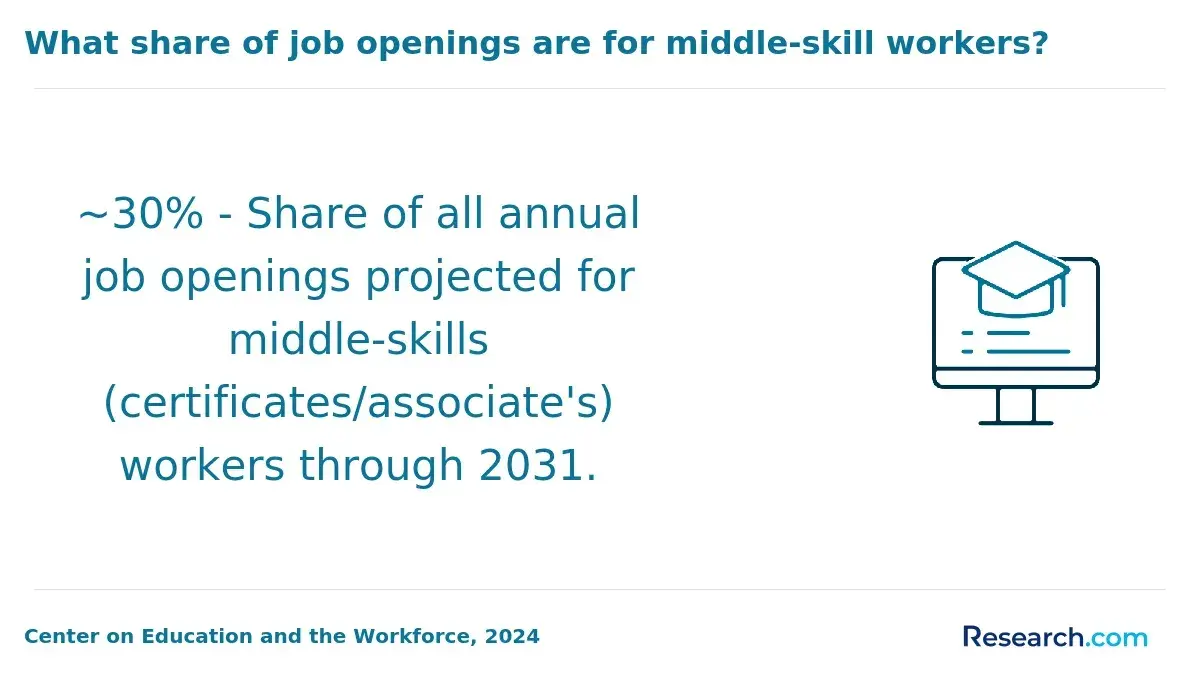
Professional certifications play a crucial role for graduates holding the highest level educational studies certifications, often enhancing their career prospects and leadership potential. These credentials formally acknowledge expertise gained through doctoral degrees like PhD or EdD programs, which emphasize research, policy, and advanced educational leadership.
Many advanced teaching certifications for education graduates build on this foundation to provide recognition in specialized areas. Below are some significant certifications that graduates can pursue to complement their academic achievements and expand career opportunities:
- National Board Certification: This prestigious teaching credential demonstrates advanced teaching skills and a commitment to continuous professional development. It complements doctoral-level research and leadership training by validating instructional expertise recognized nationally, often leading to higher salaries and leadership roles.
- School Administration and Supervision Credentials: These certifications prepare graduates for roles in school leadership, management, and district administration. They amplify the leadership capabilities developed in highest level educational studies programs, making candidates competitive for principal, superintendent, or director positions.
- Instructional Coordination Certification: Focused on curriculum development and instructional strategies, this certification aligns with doctoral research skills and educational policy knowledge. It enables professionals to oversee educational programs and improve teaching quality in diverse settings.
- Educational Technology Certification: This credential highlights expertise in integrating technology into learning environments, a growing priority in education systems. Graduates leverage their advanced studies to implement innovative tech-driven solutions for curriculum and instruction.
- Counselor Licensure: For those branching into student services, counselor licensure builds on educational studies degrees to address student mental health, academic advising, and career guidance. It broadens career pathways beyond traditional teaching or administrative roles.
Even when highest academic degrees in educational studies do not directly grant certifications, graduates can use their rigorous academic and leadership training to qualify for these specialized credentials. This flexibility allows tailoring of professional qualifications to suit administrative, research, or policy-oriented career tracks.
For prospective students exploring the full academic pathway, including affordable degree options, resources on most affordable online colleges can provide valuable guidance.
For students planning to pursue a terminal or doctoral level educational studies degree, exploring potential career outcomes is essential to align academic efforts with future ambitions. The U.S. Bureau of Labor Statistics forecasts a 9% growth in education, training, and library occupations from 2022 to 2032, reflecting a rising demand for highly educated professionals. This trend highlights the expanding opportunities available to graduates equipped with the highest credentials. Below is an overview of typical roles and sectors where doctoral-level graduates often find impactful employment.
- Academic Faculty and Researchers: These graduates frequently engage in teaching at universities and conducting scholarly research that advances educational theory and practice. Their work influences both classroom methods and broader academic discourse.
- Policy Analysts: Professionals in this area contribute to shaping educational policies at local, state, or national levels. They analyze data and develop recommendations that can lead to systemic improvements and reforms.
- Curriculum Developers: Experts design, evaluate, and enhance educational programs to meet evolving standards and learner needs. Their initiatives support schools and organizations in delivering effective instruction.
- School Administrators and Superintendents: Many graduates progress to leadership positions managing entire school districts or large educational institutions. They oversee operations, implement strategic plans, and support educational improvement.
- Specialists in Educational Technology and Nonprofits: Some doctoral holders apply their knowledge in tech companies or nonprofit organizations focused on educational innovation, providing expert guidance on product development and program design.
When asked about the career impact of completing her terminal educational studies degree, a seasoned professional reflected on the transformative journey. She described the initial uncertainty and demanding research phases but emphasized how the process deepened her expertise and confidence. "Earning this degree was a challenging balancing act, but it opened doors I hadn't imagined," she said. Her advanced qualifications allowed her to lead significant projects and engage with policy-makers in ways that were not accessible beforehand. The degree not only enhanced her skill set but also earned her greater recognition and leadership roles within her field, illustrating how the highest level of educational studies can propel career advancement and professional fulfillment.
Salary outcomes play a significant role for students pursuing terminal or doctoral-level educational studies programs because these degrees require substantial time and financial investment. Recent data indicates a growing demand for educational leaders with doctoral qualifications, which influences competitive compensation trends. Understanding how the average salary for educational studies doctorate graduates evolves over a career is essential for assessing the return on investment in these advanced programs.
- Early-career earnings: Graduates with the highest educational studies degree typically start with salaries around $70,000. These entry-level positions are often academic or administrative, reflecting the initial phase of career development in education.
- Long-term earning potential: As professionals gain experience and expertise, salaries can increase to between $85,000 and $100,000, with leadership roles or specialized consultancy positions offering higher compensation.
- Industry variation: Salary levels vary across sectors, with private educational organizations, government agencies, and consultancy firms generally offering better pay than other settings. This variation highlights the importance of strategic career choices for maximizing earning potential with the highest educational studies degree.
- Leadership and specialization: Holding a doctoral degree equips individuals for senior roles such as university administrators, policy advisors, or curriculum developers. These positions demand advanced skills and knowledge, which typically translate to higher salaries and greater professional influence.
Students interested in alternative academic options might also explore easy degrees to get online for a comparative perspective on degree accessibility alongside potential earnings in educational fields.
Pursuing the highest level of educational studies requires thoughtful evaluation due to the significant commitment involved. The number of doctoral degrees awarded in education has steadily grown, reflecting increasing interest but also heightened competition. To decide if this path fits your goals, consider several critical factors.
- Career goals: Reflect on whether a terminal or doctoral degree will open doors to desired leadership roles, specialized fields, or administrative positions.
- Research interests: Such programs demand dedication to original scholarship, so genuine enthusiasm for research and inquiry is essential.
- Financial and time investment: Doctoral studies often take three to seven years, requiring careful planning to balance work and personal commitments.
- Prior academic preparation: A solid foundation in research methods and theoretical frameworks is usually necessary to succeed in advanced study.
- Long-term professional benefits: Consider potential increases in earning power, influence, and opportunities that align with your aspirations in the education field.
Professions in education increasingly value advanced qualifications, with individuals holding terminal degrees like an EdD or PhD often commanding higher salaries and greater job security. The U.S. Bureau of Labor Statistics notes that postsecondary education administrators with doctoral credentials tend to earn more and have more stable careers than their less qualified peers. This trend reflects growing demand for specialized knowledge and leadership within educational institutions and related sectors.
Obtaining the highest degree in educational studies equips graduates with deep expertise and research skills that enable them to drive innovation and influence policy at systemic levels. Such advanced credentials open doors to senior leadership roles across academia, government, and nonprofit organizations, providing significant career flexibility. Those with terminal degrees frequently find themselves eligible for positions involving strategic decision-making and educational reform, benefiting from expanded professional networks and the prestige associated with their qualifications.
Nevertheless, pursuing a doctoral degree requires a considerable commitment of time and resources, often spanning three to seven years beyond a master's program. The financial burden, including tuition and potential lost wages, can be substantial. Rigorous academic demands, such as producing original research and completing comprehensive examinations, add to the challenge. Prospective candidates should carefully evaluate their career objectives, motivation, and ability to balance personal and professional responsibilities. For some, targeted master's degrees combined with practical experience may offer a more suitable path, especially if the anticipated benefits do not align with their long-term goals or the evolving expectations of the education sector.
What Graduates Say About Their Highest Level of Educational Studies Degree
- Eliza: "The educational studies doctorate was a significant investment, costing around $30,000 in total, but it was absolutely worth it. I gained advanced research skills and strategic leadership abilities that have transformed the way I approach educational challenges. This degree has opened doors to senior roles where I can truly influence policy. "
- Charlotte: "At first, the cost of pursuing the highest educational studies degree felt daunting, about $28,000, but the competencies I've acquired, from data analysis to curriculum development, have been invaluable. Reflecting back, the deep critical thinking nurtured during the program has reshaped my entire professional outlook. This degree propelled my career from classroom teaching to educational consulting. "
- Harold: "Completing the terminal degree in educational studies, which ran close to $32,000, was a strategic career choice. The program's focus on evidence-based practice and leadership prepared me to effectively manage complex educational projects. Since graduating, the impact on my career has been measurable in the leadership opportunities and professional respect I've earned."
Other Things You Should Know About Educational Studies Degrees
Doctoral educational studies programs usually require a dissertation of about 60,000 to 80,000 words, approved after a proposal and ethics review. Candidates defend the work before a committee, and universities may also require coursework, comprehensive exams, and a minimum GPA before dissertation registration.
In 2027, the highest level of educational studies degree you can achieve is a Doctor of Education (Ed.D.) or a Doctor of Philosophy (Ph.D.) in Education. Both degrees indicate advanced expertise in the field, often pursued by those aiming for leadership roles in educational research, academia, or administration.
- What Can You Do with an Educational Studies Degree? https://www.gmercyu.edu/academics/learn/education-studies-degree-jobs
- College Degree Levels in Order | University of Phoenix https://www.phoenix.edu/articles/online-college/college-degree-levels-in-order.html
- International Standard Classification of Education - Wikipedia https://en.wikipedia.org/wiki/International_Standard_Classification_of_Education
- 5 Life-Changing Highest Level of Education Secrets for Success https://globalstudiestoday.com/highest-level-of-education-secrets/
- Benefits of Earning a Master's Degree in Education | UoPeople https://www.uopeople.edu/blog/masters-degree-benefits/
- Education Levels https://futuriti.org/public/page/education-levels
- What Kind of Job Can I Get with an Education Studies Degree? | A List of Careers in Education | UAGC https://www.uagc.edu/blog/What-kind-of-job-can-i-get-education-studies-degree
- Educational Studies MA - Concordia University https://www.concordia.ca/academics/graduate/calendar/current/arts-and-science-programs/educational-studies-ma.html
- Graduate Certificate in Educational Studies (Education) https://www.ualberta.ca/en/graduate-programs/graduate-certificate-in-educational-studies-education.html
- Online Education Undergraduate Tutors Spires | Is a degree in education worth it? https://spires.co/online-education-tutors/undergraduate/is-a-degree-in-education-worth-it