2027 Health Information Degrees With Embedded Revenue Cycle or Data Analytics Certificates

Co-Founder and Chief Data Scientist
Choosing between a general health information management degree and a program with revenue cycle or analytics training can shape the jobs you qualify for after graduation. U.S. Bureau of Labor Statistics data projects 15% growth for health information technologists and medical registrars from 2024 to 2034, faster than the average for all occupations.
This guide is for prospective students and working healthcare employees who want a practical route into billing, coding, compliance, informatics, or analytics. Learn how embedded certificates work, what to compare, and when the added specialization is worth the investment.
Key Things You Should Know
- Embedded certificates add focused revenue cycle, coding, business intelligence, or health analytics coursework to a health information degree; they can be especially useful when your target role requires more than general HIM knowledge.
- For labor-market context, the U.S. Bureau of Labor Statistics projects 15% employment growth for health information technologists and medical registrars from 2024 to 2034; medical and health services managers are projected to grow 23% over the same period.
- Before enrolling, verify institutional and programmatic accreditation, confirm whether certificate courses appear on your transcript, compare total cost rather than tuition alone, and match the curriculum to a specific first job.
What are health information degrees with embedded revenue cycle or data analytics certificates?
A health information degree with an embedded certificate is a degree pathway that combines core healthcare information education with a defined concentration or certificate curriculum. Instead of completing a broad health information management, health informatics, healthcare administration, or information systems degree alone, students complete a sequenced group of courses in a specialized area such as revenue cycle management, healthcare data analytics, clinical informatics, coding, or data visualization.
Revenue cycle management covers the financial process that begins when a patient schedules care and ends when a provider receives and posts payment. It commonly includes registration accuracy, insurance verification, coding, claims submission, denial prevention, accounts receivable, compliance, and reimbursement analysis. Health data analytics uses healthcare data to identify trends, measure quality, support operational decisions, and report results while protecting patient information.
The embedded model is most valuable when the certificate is formally documented by the institution, uses credit-bearing courses, and maps to recognizable employer needs. It is not automatically better than a traditional degree: a student targeting broad medical records, release-of-information, or entry-level coding work may not need a larger analytics sequence. Students still exploring options can compare this field with other best majors before committing to a specialized pathway.
The following comparison shows how the two common specializations lead to different day-to-day work and employer conversations.
| Embedded focus | Typical learning emphasis | Common first-job targets | Best fit |
| Revenue cycle certificate | Claims, reimbursement, coding workflows, denials, compliance, patient accounts | Revenue cycle representative, billing specialist, denial analyst, patient financial services specialist | Students who prefer operational finance and payer-provider processes |
| Health data analytics certificate | Databases, data quality, reporting, dashboards, statistics, visualization, governance | Health data analyst, reporting analyst, quality data coordinator, informatics assistant | Students who enjoy spreadsheets, systems, problem-solving, and quantitative work |
| Combined HIM pathway | Records management, coding, privacy, quality, informatics, plus one specialty | HIM specialist, coding or compliance support, registry specialist, analyst trainee | Students seeking flexible healthcare information careers |
Look closely at the word "embedded." At some schools, it means the certificate is included within degree requirements at no additional credit cost. At others, it means an optional add-on that may require extra courses, application steps, or separate fees. Ask for a written degree plan showing whether the certificate is awarded automatically and whether it can be completed within the advertised graduation timeline.
How do these specialized health information degrees differ from traditional HIM programs?
Traditional health information management programs prepare students to manage health records, coding processes, privacy practices, information governance, and data quality. Specialized pathways retain much of that foundation but allocate more required or elective credits to a job function. The distinction matters because employers often hire for specific workflow knowledge even when job titles sound broad.
A traditional HIM degree can be the stronger choice for students who want broad preparation, expect to pursue RHIT or RHIA eligibility, or do not yet know whether they prefer coding, compliance, records operations, or informatics. A revenue cycle or analytics certificate is more compelling when a student has a defined target - such as denial management, business intelligence reporting, or quality measurement - and wants portfolio-ready evidence of that focus.
These differences can help applicants avoid choosing a specialization based on a title alone.
| Decision factor | Traditional HIM program | HIM degree with embedded specialization |
| Career breadth | Usually broad across records, coding, privacy, and information governance | Broad foundation with a clearer niche |
| Technical depth | May include introductory analytics or reimbursement coursework | Typically adds advanced reporting, revenue cycle, database, or workflow courses |
| Credential alignment | Often designed around HIM professional credential eligibility when accredited | May support HIM credentials plus specialized certificates or exam preparation |
| Risk to evaluate | May not build enough evidence for analyst-focused jobs | May narrow elective flexibility or add credits and cost |
Do not assume that an analytics concentration makes a graduate a data scientist or that a revenue cycle certificate qualifies someone to independently perform every coding or billing role. Employers may expect proficiency with Excel, SQL, electronic health record reporting tools, payer rules, coding systems, or a particular claims platform. Read course descriptions and identify the tools students actually use.
A common mistake is choosing a program because it uses terms such as "informatics," "analytics," or "revenue cycle" without checking the syllabus. Avoid this by requesting course outlines, asking whether students create dashboards or claims-analysis projects, and confirming whether faculty have relevant healthcare operations or analytics experience.
What accredited program options exist, including online and campus formats?
Available pathways include associate degrees in health information technology, bachelor's degrees in health information management or health informatics, post-baccalaureate certificates, and master's programs in health informatics, analytics, or healthcare administration. A revenue cycle focus may also appear in healthcare administration, medical billing and coding, or business programs rather than in a standalone HIM major.
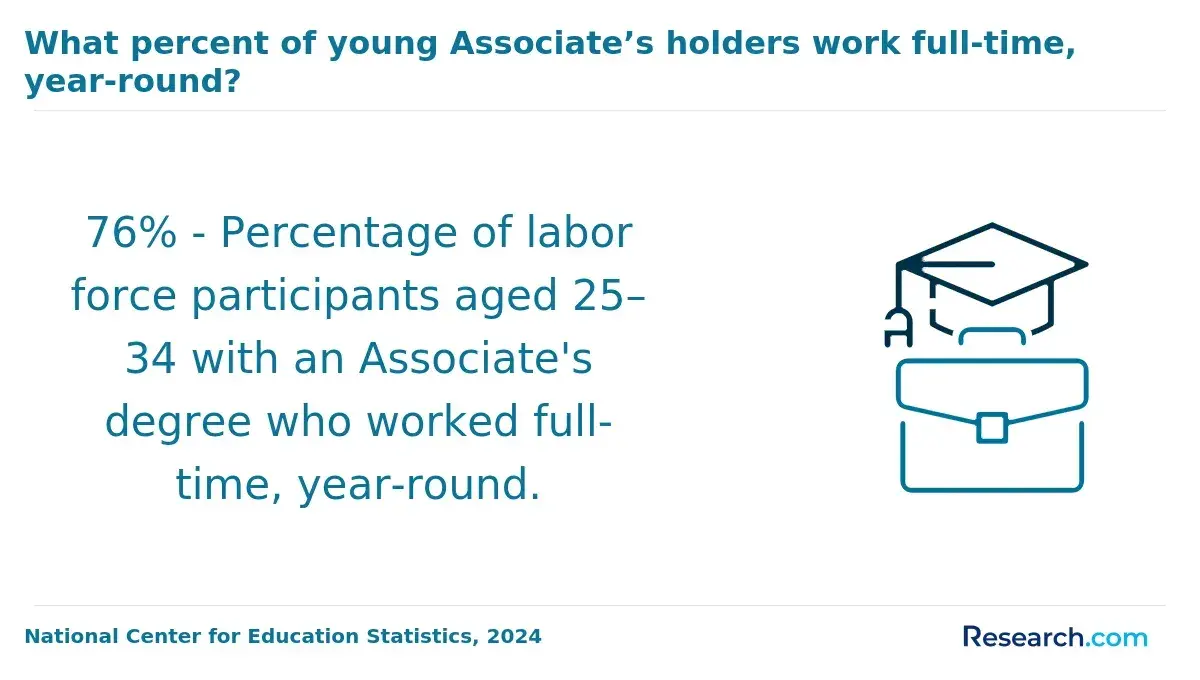
For a degree intended to support Registered Health Information Technician or Registered Health Information Administrator eligibility, prospective students should verify that the specific program - not merely the college - is accredited by the Commission on Accreditation for Health Informatics and Information Management Education. Accreditation requirements and credential eligibility can change, so confirm details directly with the school and the credentialing organization before enrolling.
Online programs can work well for employed learners because lecture-based HIM, coding, reimbursement, and analytics courses often translate effectively to asynchronous delivery. However, online does not automatically mean easier, less expensive, or more flexible. Students who need highly structured deadlines, immediate software help, or local networking may prefer campus or hybrid study. Those comparing manageable online formats may also find the guide to the easiest online bachelor's degree useful, while recognizing that "easy" should not replace career relevance or accreditation.
This format comparison identifies the trade-offs that matter more than marketing labels.
| Format | Advantages | Trade-offs to check | Often best for |
| Fully online | Location flexibility, continued employment, potentially broader program choice | Proctored exams, group projects, software access, placement support, out-of-state fees | Self-directed working adults |
| Hybrid | Mixes remote convenience with campus labs or networking | Required travel dates and scheduling conflicts | Students near campus who want some in-person support |
| Campus-based | Direct access to faculty, peers, labs, and career events | Commuting, fixed class times, possible housing costs | Students seeking a traditional college experience |
| Stackable certificate-to-degree | Lets learners test the field and apply credits later if allowed | Transfer limits, separate admissions, and whether all credits apply | Career changers who want a lower-commitment entry point |
When comparing schools, ask whether transfer credits are accepted and how old they may be, whether the embedded certificate appears on the transcript, what software is included in tuition, and whether internships or professional practice experiences are arranged or merely suggested. If you may relocate, also ask whether the school has restrictions on enrolling students in your state.
What admission requirements do schools set for these health information degree pathways?
Requirements vary by degree level and institution. Associate and bachelor's applicants commonly need a high school diploma or equivalent, application materials, and prior coursework or placement in English and math. Bachelor's completion programs typically require an associate degree or transferable college credits. Graduate certificates and master's programs usually require a bachelor's degree, and some expect prior statistics, information systems, healthcare, or quantitative preparation.
Revenue cycle pathways may welcome applicants without healthcare experience because introductory courses can teach reimbursement workflows. Analytics-focused programs may be more demanding about algebra, statistics, spreadsheet proficiency, or programming readiness. A school may admit a student who lacks prerequisites but require preparatory coursework, which can lengthen completion time and increase total cost.
Before applying, organize the evidence admissions teams are most likely to review.
- Request official transcripts early and compare completed courses against prerequisite and transfer-credit requirements.
- Ask whether a minimum GPA applies to the degree, the embedded certificate, or only upper-division courses.
- Identify any required background checks, immunizations, drug screenings, or compliance training for internships or practicum placements.
- For analytics programs, refresh basic statistics and spreadsheet skills before the first technical course.
- For international or nontraditional transcripts, ask how the institution evaluates prior education and professional learning.
Admissions requirements are not the same as professional certification requirements. For example, a school may admit students to a health information program without guaranteeing eligibility for a later credentialing exam. Get confirmation in writing about the curriculum, accreditation status, and eligibility pathway that applies to your expected graduation date.
What curriculum and courses typically cover revenue cycle and health data analytics?
Most pathways begin with healthcare terminology, anatomy and physiology, health systems, medical law and ethics, privacy, electronic health records, coding concepts, and data governance. The embedded component then adds courses that connect information work to either financial performance or data-supported decisions.
Revenue cycle courses generally examine how information errors affect payment. Students may learn patient access, insurance plans, charge capture, ICD-10-CM, CPT or HCPCS concepts, claims editing, payer denials, accounts receivable, compliance, and key performance indicators. Programs differ on whether they provide deep coding training or simply introduce coding as part of the billing workflow.
Analytics courses generally focus on the path from raw healthcare data to usable information. Expect topics such as database fundamentals, SQL or query concepts, health data standards, data cleaning, descriptive statistics, visualization, dashboards, quality reporting, population health measures, and data privacy. The strongest programs require students to interpret results, not merely produce charts.
The table below separates common course content from the practical capabilities each area is intended to develop.
| Course area | Typical topics | Workplace capability developed |
| Healthcare reimbursement | Payer types, claims lifecycle, payment methodologies, denials | Recognize where payment delays or leakage can occur |
| Medical coding and documentation | Code sets, documentation standards, audit concepts | Support accurate claims and compliant records processes |
| Health data management | Data quality, governance, privacy, retention, interoperability | Maintain reliable and appropriately protected information |
| Healthcare analytics | Statistics, SQL concepts, dashboards, KPIs, visualization | Turn operational or clinical data into understandable reports |
| Project or practicum work | Case analysis, workflow mapping, reporting projects | Show employers applied problem-solving evidence |
Artificial intelligence and automation are changing the work without removing the need for trained professionals. Automated coding assistance, claim edits, natural-language tools, and dashboard platforms can reduce repetitive tasks, but organizations still need people who can validate data quality, interpret unusual results, manage privacy risks, understand payer rules, and escalate compliance concerns. Choose programs that teach judgment, auditability, and workflow context alongside software exposure.
Ask whether students complete a capstone that can become part of a portfolio. An analytics applicant may benefit from a de-identified dashboard or data-quality project; a revenue cycle applicant may benefit from a denial-trend analysis or claims-workflow improvement case. A portfolio does not replace experience, but it gives employers concrete evidence of applied learning.
How long do these programs take, and what tuition and financial aid should students expect?
Completion time depends on the credential, transfer credits, prerequisite needs, course availability, and whether the certificate is included in the degree requirements. A full-time associate degree often takes about two years, while a bachelor's degree commonly takes about four years without substantial transfer credit. Degree-completion programs may take less time for students who enter with an associate degree. Graduate certificates are often shorter, but their duration varies widely by credit load and course sequencing.
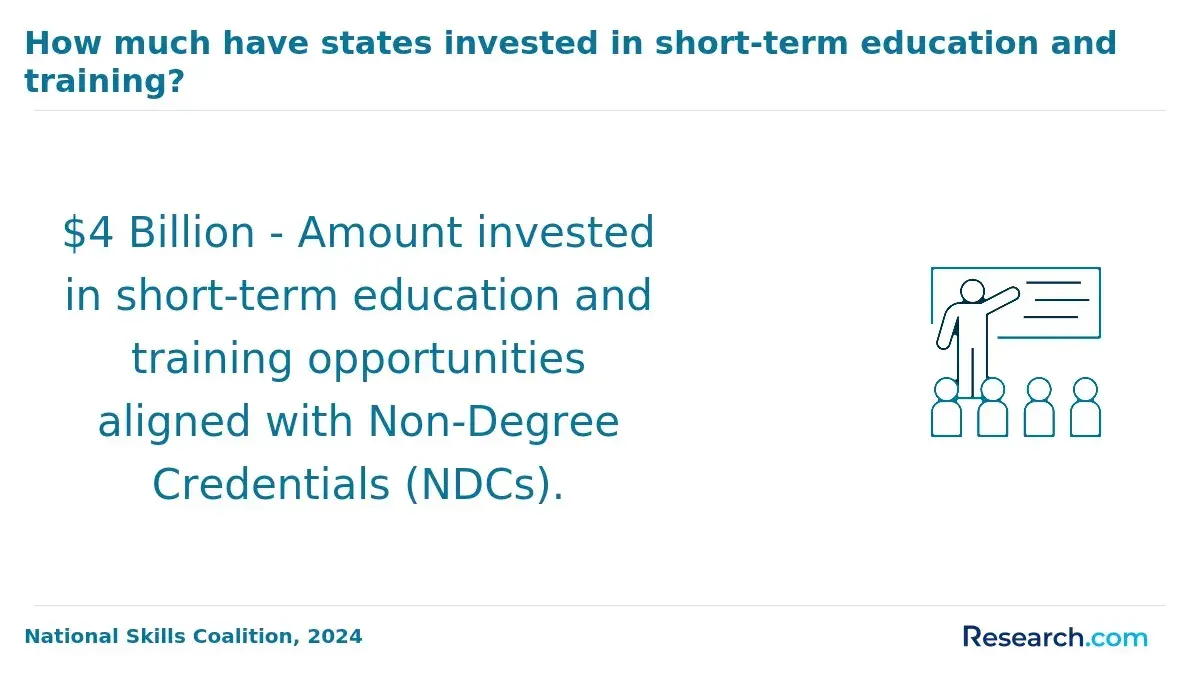
Cost should be evaluated as a total educational investment, not a single tuition figure. The National Center for Education Statistics reports that average published tuition and fees for full-time undergraduate students in 2024 were $9,750 at public institutions, $38,421 at private nonprofit institutions, and $17,699 at private for-profit institutions. These national averages do not predict what an individual program costs, and published prices can differ substantially from net price after grants.
Use this cost framework to compare offers that appear similar at first glance.
| Cost factor | Why it affects the decision | What to verify |
| Tuition by credit or term | Programs with the same advertised length may require different credit totals | Total credits needed after transfer evaluation |
| Mandatory fees | Technology, distance-learning, graduation, and course fees can materially change cost | Itemized estimate for the full program |
| Books and software | Coding manuals, analytics tools, and access codes may be recurring expenses | Required materials and renewal costs |
| Practicum expenses | Background checks, transportation, immunizations, and unpaid placement time can add costs | Placement requirements and local travel expectations |
| Lost earnings | Reducing work hours may be more expensive than a modest tuition difference | Course schedule, workload, and employer tuition assistance |
Start financial-aid planning by submitting the Free Application for Federal Student Aid if eligible, reviewing grants and scholarships before borrowing, and asking whether institutional aid applies to online students and certificate courses. Employer tuition assistance can be especially relevant for people already working in registration, billing, medical records, or patient access.
Short programs can be useful for testing a career direction or building a specific skill, but they are not interchangeable with accredited degree pathways. Compare program outcomes carefully with other short certificate programs that pay well online if speed is your main priority.
A common financial mistake is comparing a low per-credit tuition rate without checking whether previously earned credits will transfer. Obtain a preliminary transfer evaluation whenever possible, confirm that certificate credits apply to the degree, and calculate the cost of all remaining credits before accepting an offer.
What certificates, credentials, and professional certifications can students earn through these programs?
An academic certificate awarded by a college is different from a professional certification awarded by a credentialing organization. An embedded academic certificate signals completion of a defined course sequence. A professional certification typically requires an examination and may have education, experience, continuing education, or ethical requirements. Employers may value both, but they serve different purposes.
For health information management, common professional credentials include the Registered Health Information Technician and Registered Health Information Administrator designations, which have specific educational eligibility requirements. Coding-focused students may consider credentials such as Certified Coding Specialist or Certified Professional Coder, depending on the type of coding work they want. Revenue cycle professionals may pursue certifications related to patient access, billing, compliance, or revenue cycle operations. Analytics professionals may seek training or credentials in data analytics, SQL, reporting tools, or healthcare informatics.
Use the following distinctions to avoid paying for a credential that does not support your immediate goal.
| Credential type | What it demonstrates | Best use case | Important limitation |
| Embedded college certificate | Completion of a focused academic curriculum | Adding a documented specialization to a degree | Employer recognition varies by school and curriculum depth |
| HIM credential | Competence in health information management standards | HIM operations, records, compliance, and leadership pathways | Eligibility depends on the required accredited education route |
| Coding credential | Knowledge of coding systems and documentation rules | Coding, auditing, billing, and revenue integrity roles | May not substitute for employer-required specialty experience |
| Analytics tool credential | Skill with a platform or analytical method | Strengthening an analyst portfolio | Tool-specific training does not replace healthcare domain knowledge |
The best sequence is usually degree first, embedded certificate second, and external certification when you meet eligibility requirements and can connect it to a job target. Avoid collecting multiple credentials before gaining practical experience. A focused combination of relevant education, a portfolio, and one well-matched credential is often more coherent than several unrelated badges.
What entry-level and advanced careers do these degrees and certificates prepare graduates for?
These pathways can lead to jobs in hospitals, physician practices, insurance companies, revenue cycle vendors, consulting firms, public health organizations, health technology companies, and government agencies. Job titles vary widely, so focus on duties and qualifications rather than assuming a title has the same meaning across employers.
Entry-level opportunities often involve data accuracy, claim follow-up, coding support, patient accounts, reporting support, document management, quality abstraction, or electronic health record workflows. Advancement usually comes through a combination of work experience, stronger technical skills, professional credentials, and responsibility for processes, projects, or teams.
The career map below shows how each specialization can develop over time. Actual progression depends on employer size, local labor markets, prior healthcare experience, and demonstrated performance.
| Pathway | Potential entry-level roles | Potential advancement roles | Skills that support advancement |
| Revenue cycle | Billing specialist, patient account representative, claims representative, denial follow-up specialist | Revenue cycle analyst, reimbursement analyst, coding auditor, revenue integrity specialist, revenue cycle manager | Payer policy knowledge, coding accuracy, denial analysis, process improvement, compliance |
| Health information management | HIM specialist, records coordinator, release-of-information specialist, registry assistant | HIM manager, privacy officer, compliance analyst, clinical documentation integrity specialist | Governance, privacy, auditing, policy interpretation, leadership |
| Health analytics | Healthcare reporting analyst, data coordinator, quality data analyst, informatics assistant | Health data analyst, clinical informatics specialist, business intelligence analyst, analytics manager | SQL, statistics, visualization, data governance, stakeholder communication |
A bachelor's degree is often more useful for analyst, supervisory, or manager-track positions, while an associate degree or targeted certificate can be sufficient for some operational entry roles. A master's degree may make sense after you have identified a leadership, informatics, or advanced analytics goal; it is not automatically the best first investment. Review options for most useful master's degrees if you are considering graduate education as part of a longer-term plan.
Students who dislike detail-heavy documentation, payer rules, spreadsheets, or continuously changing regulations should consider related healthcare paths before specializing. This field rewards accuracy, ethical judgment, persistence with complex workflows, and clear communication with clinical, financial, and technical teams.
What salary ranges and earning growth are common in revenue cycle and data analytics roles?
Pay varies by job duties, education, credentials, experience, employer type, geographic area, and responsibility level. Revenue cycle roles often start in patient accounts, billing, or claims operations and can grow as employees gain coding, audit, denial-management, or supervisory expertise. Analytics roles may pay more when they require advanced database, statistical, reporting, or informatics skills, but they can also have higher entry requirements.
The U.S. Bureau of Labor Statistics reported a median annual wage of $67,310 for health information technologists and medical registrars in May 2024. This occupational group is a useful benchmark for health-data-oriented work, but it does not represent every billing, coding, analyst, or HIM title. Use it as a broad reference point rather than a salary promise.
These salary considerations can help you assess whether a specialization supports the type of work you want to pursue.
| Role level | Typical compensation influences | How an embedded specialization may help |
| Entry-level operations | Local employer wages, shift schedules, billing volume, prior healthcare experience | Revenue cycle coursework can demonstrate familiarity with claims and reimbursement workflows |
| Specialist or analyst | Credential status, coding or SQL skills, software proficiency, project experience | Analytics projects or denial-analysis coursework can provide job-relevant evidence |
| Supervisor or manager | Leadership scope, compliance accountability, department budget, years of experience | Combined HIM and business or analytics knowledge can support advancement discussions |
To evaluate earning potential realistically, search local job postings for required skills, compare wages by occupation and metropolitan area, and ask schools for program-specific outcome information when available. Be cautious with salary claims that do not identify the occupation, location, sample size, or experience level. No degree or certificate guarantees a particular wage.
How is the job outlook and employer demand for health information, revenue cycle, and analytics professionals?
Demand is supported by healthcare's need to manage expanding digital records, protect sensitive information, document and bill services accurately, measure quality, and make operational decisions from data. Employers increasingly look for professionals who can connect clinical documentation, financial processes, privacy rules, and technology rather than working in only one silo.
The U.S. Bureau of Labor Statistics projects employment of medical and health services managers to grow 23% from 2024 to 2034. This is a broader management category, not a forecast for every health information or revenue cycle job, but it signals sustained need for people who can coordinate healthcare operations. Candidates should not treat overall occupational growth as a guarantee of local openings or automatic advancement.
Employer demand differs by specialty. Provider organizations may prioritize denials, authorization, coding quality, patient access, and accounts receivable. Insurers and vendors may seek claims analysis, payment integrity, reporting, and regulatory knowledge. Health systems and technology organizations may seek data governance, interoperability, dashboards, quality measures, and electronic health record reporting.
To turn a degree pathway into a stronger job search, take these practical steps before graduation.
- Choose a target role and collect several local job descriptions to identify recurring software, credential, and experience requirements.
- Select electives and certificate projects that address the most common skill gaps in those job descriptions.
- Build a concise portfolio with de-identified coursework, workflow analyses, dashboards, or quality-improvement projects.
- Seek internships, practicum experiences, volunteer data work, or internal transfers that create healthcare operations experience.
- Join relevant professional communities and ask employers which credentials are preferred for the roles you want.
The strongest long-term strategy is adaptability. Revenue cycle rules, payment models, reporting requirements, and software platforms change regularly. Graduates who can learn new systems, validate automated outputs, communicate findings clearly, and protect data appropriately are better positioned than those who rely on a single tool or credential.
Other Things You Should Know About Health Information Management
It can be, especially when the courses are credit-bearing, included in the degree plan, and listed on the transcript. A separate certificate may be better if you already have a degree and need a narrow skill update. Compare curriculum depth, total cost, transferability, and employer relevance rather than assuming one format is always superior.
Yes. Some entry-level billing, patient access, claims, and accounts-receivable roles hire applicants with a high school diploma, certificate, or related experience. A degree can improve access to broader HIM, analytics, compliance, and advancement opportunities, but employer requirements differ by role.
Delivery format alone does not determine eligibility. What matters is whether the specific program meets the accrediting and credentialing organization's education requirements. Confirm the program's accreditation status and your expected credential eligibility directly before enrolling.
Choose revenue cycle management if you are most interested in reimbursement, claims, coding workflows, payer rules, and financial operations. Choose health data analytics if you prefer databases, reporting, dashboards, quality measurement, and quantitative problem-solving. If you are unsure, a broad HIM program with introductory courses in both areas may provide more flexibility.
References
- Health Information Management & Data Analytics https://www.umgc.edu/online-degrees/undergraduate-certificates/health-information-management-data-analytics
- Accredited Online HIM Degree Programs https://www.medicaltechnologyschools.com/health-information-management/online-him-degree-programs
- Council for the Accreditation of Educator Preparation. (2024). 2022 CAEP standards. https://caepnet.org/2024-standards
- U.S. Department of Education. (2024). Teacher preparation programs. https://www.ed.gov/teaching-and-administration/teacher-preparation