2027 Fastest Online Associate Degrees

Co-Founder and Chief Data Scientist
How quickly can you finish an online associate degree without choosing a program that misses your career or transfer goal? The answer depends less on short classes than on credits, course schedules, and in-person requirements. The College Board reports that average published tuition and fees at public two-year colleges were $4,050 for in-district students in 2024-25, making these programs worth comparing - but the fastest option may not be the least expensive. This guide helps first-time and returning students identify promising fields, estimate a realistic timeline, and verify a program before enrolling.
Key Things You Should Know
- Business, information technology, and transfer-oriented psychology or criminal justice programs may offer the simplest online schedules; nursing and clinical healthcare programs usually have in-person requirements.
- Many associate degrees require about 60 semester credits. Finishing sooner than the conventional two academic years generally requires accepted prior credit, year-round study, a heavier course load, or some combination - not merely shorter classes.
- Compare the remaining credits, required course sequence, total price, and any campus or clinical attendance. A fast degree is useful only if it meets your transfer, employment, or licensing goal.
Top 10 Fastest Online Associate Degrees - Fastest Online Degrees
Business Programs
An online business administration AA, AS, or AAS can be a relatively straightforward accelerated option because coursework generally does not require clinical placements or specialized labs. Common subjects include accounting, management, and business communication.
A transfer-focused AA or AS suits students planning a bachelor's degree; a career-focused AAS may emphasize immediate workplace skills. Ask whether required accounting courses run every term and whether prior general education credits will apply. Short courses help only if you can complete the full sequence on schedule.
Healthcare Programs
Healthcare administration or medical billing and coding programs may be easier to complete online than clinical allied-health degrees. A medical records-focused AAS might include terminology, health information systems, and coding, while a clinical program may require labs, supervised practice, or campus visits.
Check whether a program prepares students for a relevant certification examination and whether employers require experience. Do not assume that "online healthcare" means every degree requirement can be completed from home.
Information Technology Programs
Online IT and computer information systems associate degrees often use virtual labs, making year-round study possible where courses are offered frequently. An AAS may emphasize technical support or networking; an AS may be structured for transfer into a bachelor's program.
Compare prerequisite chains, lab software requirements, and whether core courses are available each term. Industry certifications can complement a degree, but an associate degree alone does not guarantee a technical job or certification.
Nursing / Pre-Nursing Programs
Pre-nursing AA or AS programs may put prerequisite and general education courses online, but they do not themselves qualify graduates for registered nurse licensure. An associate degree in nursing requires supervised clinical education and may have selective admission, science prerequisites, and limited clinical placements that control the timeline.
Verify state board approval, relevant nursing accreditation, examination eligibility, and where clinical work occurs. A short online term cannot bypass those requirements.
Criminal Justice Programs
Criminal justice AA, AS, and AAS programs commonly cover law, courts, and corrections through online coursework. Transfer-oriented programs may offer a direct route toward a bachelor's degree if courses apply to the intended major.
Career-focused programs may include an internship, which can affect completion time. Police officer and other public-safety roles have separate hiring, academy, physical, or background requirements; the degree alone does not replace them.
Psychology / Counseling Programs
An online psychology AA or AS can be practical for students seeking transferable general education credits with few in-person requirements. Check that research methods and other major courses meet the intended bachelor's program's requirements.
An associate degree in psychology or counseling does not qualify someone to practice as a licensed counselor or psychologist; those careers require further education and state-specific credentials. Choose this route for transfer or foundational knowledge, not as a shortcut to clinical practice.
What are the fastest online associate degrees to complete?
The fastest online associate degree is the one with the fewest remaining requirements you can complete on a reliable schedule. Among students starting without prior credit, nonclinical programs such as business, IT, criminal justice, and psychology may have fewer placement-related delays than nursing or clinical healthcare.
No field is automatically the fastest: a missed prerequisite or a course offered only once a year can change the result.
This comparison shows where scheduling obstacles commonly arise. It is a planning guide, not a ranking or a promise of completion time.
| Program type | Potential speed advantage | Requirement that may slow completion |
| Business | Coursework often fits fully online schedules | Accounting sequences or infrequent electives |
| IT | Virtual labs may support online study | Technical prerequisites and lab access |
| Criminal justice or psychology | Transfer coursework may be widely available online | Destination-school course requirements or internships |
| Healthcare administration | May avoid clinical placements | Program-specific practice or certification preparation |
| Nursing or clinical healthcare | Prior general education credit may reduce remaining coursework | Selective admission, labs, and clinical placement |
For a fair comparison, request a degree audit from each college showing which of your credits are accepted, which requirements remain, and the earliest terms in which you could take them.
How long do online associate degree programs take?
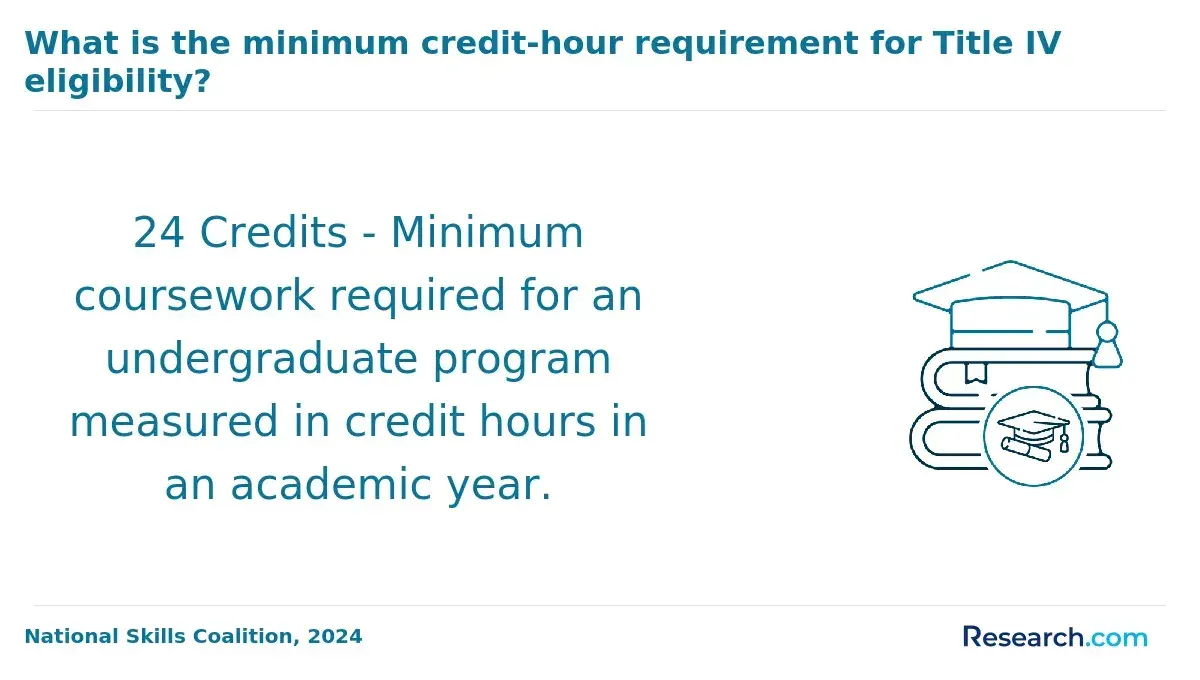
Many associate degrees require about 60 semester credits and take roughly two academic years with a conventional full-time schedule. Faster completion may be possible through accepted transfer or prior-learning credit, summer enrollment, or a heavier course load.
Part-time study generally takes longer. A six- or eight-week class is only one part of a degree; it does not make the entire program six or eight weeks long.
Ask for a term-by-term plan based on your starting credits. Check start dates, prerequisites, course availability, credit-load limits, and residency rules - the minimum number of credits you must earn at the awarding college. When comparing the top 10 online colleges, use each school's actual degree map rather than its shortest advertised course length.
Are accelerated online associate degrees accredited?
They can be, but acceleration and accreditation are separate questions. Confirm that the institution holds recognized institutional accreditation and that the specific associate program is offered in the format advertised.
Institutional accreditation matters for federal aid eligibility and may affect credit transfer; it does not guarantee that another college will apply every course toward a bachelor's degree.
For nursing and other regulated fields, also check applicable programmatic accreditation, state approval, and eligibility for the examination or license you need. Treat an unverified "100% online" claim as a warning sign when the occupation normally requires labs or clinical work.
What are the admission requirements for online associate degrees?
Typical starting requirements include a high school diploma or equivalent, an application, and transcripts from any previous colleges. A school may use placement measures to determine your starting courses. Transfer-credit evaluation can be especially important for speed: accepted credits must satisfy degree requirements, not merely appear on a transcript.
Admission to a college does not necessarily mean admission to a selective major. Nursing and some allied-health programs may require prerequisite science courses, minimum grades, background checks, or other screening. Ask when major admission occurs and whether waiting for a seat could delay graduation.
What coursework do online associate degree programs include?
Associate degrees typically combine general education with major coursework. An AA or AS often supports transfer, while an AAS often emphasizes workforce preparation, though each college's curriculum determines its actual purpose.
Business students might take accounting; IT students might complete virtual labs; healthcare students may need terminology or supervised practice.
To judge whether a program is genuinely fast for you, review the required courses in sequence. Identify prerequisites, courses offered only in certain terms, and any orientation, proctored assessment, internship, lab, clinical placement, or scheduled online meeting. Online delivery does not always mean asynchronous study.
How much do accelerated online associate degrees cost?
The College Board's 2024-25 average of $4,050 in published tuition and fees for in-district public two-year students is a useful benchmark, not a quote for an individual online program.
Your total depends on residency, remaining credits, mandatory online or lab fees, books, equipment, travel for required in-person work, and financial aid. Faster study can reduce some time-related expenses but may be harder to balance with paid work.
Compare itemized estimates for all remaining requirements, not just a per-credit price. Submit the FAFSA to check eligibility for federal aid, and ask about scholarships, payment plans, and employer assistance. Application charges are a smaller cost, but online universities with no application fee may be worth considering when comparing otherwise suitable options.
What jobs can you get with a fast online associate degree?
Possible entry-level directions include business support, IT help desk, medical records, and certain administrative roles. The match depends on your coursework, experience, local employers, and any required credentials.
Criminal justice graduates may pursue public-safety hiring processes, but an associate degree does not substitute for an academy or other agency requirements. Psychology graduates generally need additional education for counseling careers.
If your target role primarily calls for a specific skill rather than a degree, compare the time and cost of best online certificate programs with an associate program. A certificate may be quicker; an associate degree may provide broader general education or a transfer pathway.
How much can you earn with an online associate degree?
Earnings vary by occupation, location, experience, and credential. The U.S. Bureau of Labor Statistics reports a 2024 median annual wage of $93,600 for registered nurses. That is the median for people working in the occupation - not the expected pay for a new associate degree graduate.
Becoming an RN also requires an approved nursing education pathway and licensure; completing pre-nursing coursework alone is insufficient.
For any field, compare the jobs you can realistically pursue upon graduation with the degree's total cost and your likely debt. If your desired occupation typically requires further education, include that time and expense in the decision. Students planning to continue can also explore top 10 highest paying degrees while checking whether their associate courses will apply to the intended bachelor's major.
How do you choose a reputable online associate degree program?
Start with your destination: a specific job, a bachelor's program, or both. Then compare programs using a written completion plan rather than the word "accelerated." These checks help expose delays and costs before you commit:
- Verify institutional accreditation, the exact online format, and any required campus, lab, or clinical attendance.
- Request an evaluation of previous credits and confirm which satisfy general education and major requirements, plus any residency-credit minimum.
- Ask an advisor to map every remaining course to an available term, including prerequisites and possible waitlists.
- Get an itemized total-cost estimate and ask how your planned enrollment level affects financial aid.
- Confirm transfer agreements or, for regulated careers, program approval and state licensing eligibility with the relevant destination institution or authority.
Be cautious if a school advertises an exceptionally short timeline without stating the prior credits or course load it assumes. The most reputable choice is not necessarily the quickest advertised program; it is one whose verified timeline leads to a credential that serves your goal.
Other Things You Should Know About
It may be possible with substantial accepted prior credit and available courses, but it is not a standard timeline for someone starting from zero. Request a personalized degree audit before relying on a one-year claim.
Some do. Nursing and other clinical programs typically require in-person practice, while other majors may have labs, internships, or proctored activities. Check the requirements for the specific program.
Possibly, but acceptance and application toward a major are different decisions. Ask the intended bachelor's institution to review the courses and any articulation agreement.
Often, because a certificate may require fewer courses. Choose based on the target job's requirements and whether you need an associate degree's general education or transfer opportunities.
References
- Semester Course Load and Student Performance - PMC - NIH https://pmc.ncbi.nlm.nih.gov/articles/PMC7568764/
- School-Determined Requirements - FSA Partner Connect https://fsapartners.ed.gov/knowledge-center/fsa-handbook/2026-2027/vol1/ch1-school-determined-requirements
- .16 Graduation Requirements. | Library of Maryland Regulations https://regs.maryland.gov/us/md/exec/comar/13B.02.02.16
- Measuring Student Success In IPEDS: Graduation Rates (GR), Graduation Rates 200% (GR200), And Outcome Measures (OM) https://nces.ed.gov/ipeds/use-the-data/measuring-student-success-in-ipeds
- Cost of Attendance - Office of Student Financial Aid https://financialaid.wisc.edu/cost-of-attendance/
- How Many Credits Do You Need to Graduate College? | snhu.edu https://www.snhu.edu/about-us/newsroom/education/how-many-credits-to-graduate-college
- Completion Rates and Time to Degree Completion - Academic Affairs https://academicaffairs.uams.edu/irpa/office-of-institutional-studies/student-outcomes/completion-rates/
- Credit for Prior Learning | UMass Global https://www.umassglobal.edu/admissions/transfer-center/credit-prior-learning
- Credit for Prior Learning | LSU Online https://online.lsu.edu/prior-learning-assessment/
- Undergraduate and Graduate Tuition and Fees - Purdue Global https://www.purdueglobal.edu/tuition-financial-aid/undergraduate-graduate-tuition-and-fees/